
How Do Probation Officers Find Out About Police Contact: Detection Methods and What to Expect
How do probation officers find out about police contact? Learn detection methods, ✍🏼 reporting rules, database systems, and what happens after an encounter.

How do probation officers find out about police contact is one of the most common questions asked by people on supervision, and the answer involves an interconnected web of databases, mandatory reporting rules, and routine investigative habits that catch nearly every interaction. Probation officers do not rely on luck or chance discoveries. They use a combination of automated alerts, manual record checks, employer verification, and probationer self-reporting requirements to build a complete picture of supervisee behavior between scheduled meetings.
The detection process begins the moment a law enforcement officer runs a name or driver's license through the National Crime Information Center or a state equivalent. These queries leave digital footprints that supervising agencies can later review. Most departments configure automatic notifications that trigger when a person under supervision appears in any law enforcement database, regardless of whether the encounter resulted in an arrest, citation, or simple field interview documented by the responding officer.
Beyond automation, probation officers conduct deliberate weekly or monthly record checks across local, county, state, and federal systems. They review arrest logs, citation records, traffic stops, jail booking sheets, and incident reports filed in jurisdictions where the probationer lives, works, or recently traveled. This systematic approach means even contact that did not result in formal charges still surfaces through routine audits performed during case management updates.
Self-reporting is the third major detection pathway. Standard probation conditions require supervisees to notify their officer within 24 to 72 hours of any law enforcement contact, including consensual encounters, traffic stops, or being questioned as a witness. Failure to report constitutes a violation on its own, separate from anything the police contact itself revealed. Officers cross-check self-reports against database findings to test honesty and compliance simultaneously.
Modern supervision also incorporates GPS monitoring data, electronic check-in apps, license plate readers, and information shared by partner agencies under joint task force agreements. When a probationer's GPS unit places them at a known incident scene or near a recent crime report, officers investigate. These tools transform supervision from a passive administrative role into an active intelligence-gathering function that operates around the clock.
Understanding the detection ecosystem matters because probationers who assume minor incidents fly under the radar are almost always wrong. The systems are not perfect, but they are pervasive, redundant, and increasingly automated. Anyone serving a probation sentence should treat every law enforcement interaction as something their officer will eventually learn about, often within hours rather than weeks.
Police Contact Detection by the Numbers

How Detection Unfolds After Police Contact
Initial Encounter
Database Flag Triggers
Report Documentation
Officer Notification
Verification Steps
Case Decision
The technological backbone of how probation officers find out about police contact starts with the National Crime Information Center, commonly known as NCIC. NCIC is a federal database operated by the FBI that links virtually every law enforcement agency in the United States. When a patrol officer pulls someone over, walks up to a parked car, or detains a pedestrian for questioning, the standard procedure involves running that person's identifying information through NCIC and any connected state-level system within seconds.
NCIC returns include a probation or parole status indicator when a person is under active supervision. Many jurisdictions configure these returns to automatically generate an electronic notification that is forwarded to the supervising department. The notification typically includes the date, time, location, agency involved, and a brief description of the encounter. Some advanced systems include the responding officer's name and a case number that lets the probation officer pull the underlying report immediately.
State-level systems add another detection layer. Texas has TLETS, California uses CLETS, Florida runs FCIC, and similar systems exist in every state. These platforms often integrate with court management databases, jail booking systems, and traffic citation registries. A single name query can surface arrest history, pending warrants, citations issued that morning, and current probation status all in one screen, giving officers a comprehensive snapshot of recent activity.
Records management systems used by individual police departments add granular detail. When an officer writes a field interview card during a consensual encounter, that card enters the department's records system and becomes searchable. Probation departments often have query access through information-sharing agreements, letting them search for any contact involving their supervisees across dozens of local agencies without needing to request individual reports.
License plate readers, body cameras, and computer-aided dispatch logs create additional digital trails. If your vehicle plate is captured by an automated reader near an incident scene, that data point exists. If you appear in body camera footage during another person's stop, your presence is documented. Computer-aided dispatch logs every call for service, including the names of anyone identified at the scene, which becomes another data source officers can audit.
Jail booking systems are arguably the fastest detection channel. When someone is booked into a county or city jail, the booking process automatically pings statewide databases. Probation departments often receive same-day alerts, sometimes within minutes of the booking photo being taken. This is why officers almost always know about an arrest before the probationer has a chance to call from jail to report it. You can confirm officer assignment details through the probation officer lookup system used by many states.
Finally, interagency task forces and information-sharing partnerships have grown significantly over the past decade. Federal, state, and local agencies routinely share intelligence on people under supervision, especially those convicted of drug, firearm, or violent offenses. A DEA agent, ATF investigator, or local detective can flag a probationer's name in shared platforms, ensuring the supervising officer learns about contact even when the encounter occurred in a different jurisdiction or context.
Probation Officer Practice Test Questions
Prepare for the Probation Officer exam with our free practice test modules. Each quiz covers key topics to help you pass on your first try.
Probation Officer Advanced Topics
Probation Officer Exam Questions covering Advanced Topics. Master Probation Officer Test concepts for certification prep.
Probation Officer Case Management and Docu...
Free Probation Officer Practice Test featuring Case Management and Documentation. Improve your Probation Officer Exam score with mock test prep.
Probation Officer Community Supervision Te...
Probation Officer Mock Exam on Community Supervision Techniques. Probation Officer Study Guide questions to pass on your first try.
Probation Officer Core Concepts
Probation Officer Test Prep for Core Concepts. Practice Probation Officer Quiz questions and boost your score.
Probation Officer Exam Fundamentals
Probation Officer Questions and Answers on Exam Fundamentals. Free Probation Officer practice for exam readiness.
Probation Officer Industry Knowledge
Probation Officer Mock Test covering Industry Knowledge. Online Probation Officer Test practice with instant feedback.
Probation Officer Legal Framework and Offe...
Free Probation Officer Quiz on Legal Framework and Offender Rights. Probation Officer Exam prep questions with detailed explanations.
Probation Officer Practical Applications
Probation Officer Practice Questions for Practical Applications. Build confidence for your Probation Officer certification exam.
Self-Reporting Police Contact: What Probation Requires
Most probation conditions require supervisees to report any law enforcement contact within 24 to 72 hours, though some jurisdictions impose a strict 24-hour deadline regardless of weekends or holidays. The clock typically starts the moment the encounter ends, not when you next see your officer. Missing this window is itself a violation, even if the underlying contact was minor or resolved without charges.
The reporting standard usually covers all contact, not just arrests. A traffic warning, consensual interview, or being questioned as a witness all qualify. Some officers accept email or voicemail notifications, while others require in-person reporting or a phone call followed by written documentation. Always confirm your specific officer's preferred reporting method during your intake meeting and ask for the policy in writing.

Self-Reporting Police Contact: Strategic Considerations
- +Demonstrates honesty and protects long-term credibility with your supervising officer
- +Lets you present your version of events before the officer reads the police report
- +Avoids the compounding violation of non-disclosure on top of the original incident
- +Creates a documented compliance record that helps at termination hearings
- +Allows your attorney to prepare a defense before any formal violation is filed
- +Reduces the likelihood of a surprise warrant or arrest at your next office visit
- −Forces you to discuss an incident your officer might not have otherwise focused on
- −May trigger additional case plan requirements such as classes or drug testing
- −Could result in increased reporting frequency or stricter monitoring conditions
- −Requires careful wording to avoid making admissions that affect pending charges
- −May lead to a violation filing even when the police contact itself was lawful
- −Can complicate ongoing criminal cases if statements contradict defense strategy
Pros and Cons at a Glance
| Pros | Cons |
|---|---|
| Demonstrates honesty and protects long-term credibility with your supervising officer | Forces you to discuss an incident your officer might not have otherwise focused on |
| Lets you present your version of events before the officer reads the police report | May trigger additional case plan requirements such as classes or drug testing |
| Avoids the compounding violation of non-disclosure on top of the original incident | Could result in increased reporting frequency or stricter monitoring conditions |
| Creates a documented compliance record that helps at termination hearings | Requires careful wording to avoid making admissions that affect pending charges |
| Allows your attorney to prepare a defense before any formal violation is filed | May lead to a violation filing even when the police contact itself was lawful |
| Reduces the likelihood of a surprise warrant or arrest at your next office visit | Can complicate ongoing criminal cases if statements contradict defense strategy |
Compliance Checklist After Any Police Contact
- ✓Note the exact date, time, and address of the encounter immediately after it ends
- ✓Write down the responding officer's name, badge number, and agency
- ✓Photograph any paperwork including citations, warnings, business cards, or court summons
- ✓Identify the reporting deadline in your probation conditions and mark it on your calendar
- ✓Contact your probation officer by their preferred method within the required window
- ✓Provide a written summary even if you also report by phone or in person
- ✓Attach copies of all related documents to your written report
- ✓Consult an attorney before making detailed statements if charges may be pending
- ✓Keep your own dated copy of every report you submit for future reference
- ✓Follow up to confirm your officer received the report and ask about next steps
Assume your officer will find out within 48 hours
Detection systems are redundant by design. Even when one channel misses a contact, another usually catches it. Probationers who delay reporting hoping the incident slips through almost always find that database alerts, jail booking notifications, or routine record checks expose the contact within days. Self-reporting promptly is the only reliable way to control how the story reaches your officer.
Consequences after a probation officer finds out about police contact depend on what the contact involved, how it was discovered, and whether the probationer reported it. A minor traffic stop that resulted in a warning rarely triggers significant action when the supervisee disclosed it promptly. The officer typically documents the incident in the case file, asks a few clarifying questions during the next contact, and moves on. The encounter becomes a data point rather than a turning point.
Citations and misdemeanor arrests usually prompt a more involved response. Officers may schedule an unscheduled office visit, increase reporting frequency for a few weeks, require additional drug testing if substances were involved, or adjust treatment requirements. Whether the officer files a formal violation depends on the underlying offense, the probationer's history, and department policy. Many jurisdictions reserve formal violations for new convictions or for cases involving the same offense category as the original sentence.
Felony arrests almost always trigger an immediate hold or warrant request. Probation officers in most states have authority to detain supervisees pending a violation hearing, and judges frequently issue no-bond holds when a new felony arrest occurs. The supervisee may sit in jail for weeks before a violation hearing, even if the new charges are later dismissed. The lesson is that the severity of the new contact directly shapes how aggressively the supervising agency responds.
Non-reporting amplifies every consequence. When officers discover contact through databases before the probationer reports it, the response is almost always harsher than it would have been for the same incident reported promptly. Officers and judges interpret non-disclosure as evidence of dishonesty and risk of further violations. A first-time minor stop becomes a documented integrity problem. A misdemeanor arrest becomes grounds for revocation rather than a manageable setback.
The court process for violations varies by jurisdiction but generally includes notice, a preliminary hearing to establish probable cause, and a full revocation hearing. The burden of proof is lower than at a criminal trial, often preponderance of the evidence rather than beyond reasonable doubt. The supervisee has rights to counsel, to present evidence, and to cross-examine witnesses, but the simplified process means decisions usually come within weeks rather than months.
Sanctions following a sustained violation range from verbal admonishment and case plan modifications to short jail terms, treatment placements, electronic monitoring, and full revocation with reinstatement of the suspended sentence. Many states use graduated sanction matrices that match response severity to violation type and history, providing some predictability about what to expect. Knowing your jurisdiction's matrix helps you understand how an incident will likely be handled before it happens.
Finally, the impact on supervision relationships matters beyond formal sanctions. Officers who feel deceived become harder to work with for the remainder of the term. Travel permission becomes harder to obtain, requests for reduced reporting are denied, and recommendations for early termination disappear. Maintaining honest communication, even when delivering bad news, preserves long-term flexibility that strict rule-following alone cannot earn.

If you are arrested on new felony charges while on probation, expect a no-bond hold to attach within hours. Even if you bond out on the new case, the probation hold keeps you in custody pending a violation hearing. Contact an attorney immediately and have a family member notify your probation officer to establish your reporting effort on the record.
Protecting yourself within the rules starts with understanding exactly what your probation conditions require. Many supervisees sign their conditions during a busy intake without fully reading them, then discover later that reporting deadlines, travel restrictions, and association rules are stricter than they assumed. Request a printed copy on your first day, read it line by line, and ask your officer to clarify anything ambiguous. Keep the document accessible because it governs every decision you make for the duration of supervision.
Build a reporting routine that does not depend on memory. Save your probation officer's phone number and email in your contacts, set calendar reminders for monthly reporting dates, and keep a simple notebook or app where you log any law enforcement contact the moment it happens. The goal is to remove decision-making from stressful moments and make compliance automatic. People who rely on remembering to report later are the ones who miss deadlines and trigger violations.
Know your rights during police encounters without becoming confrontational. You retain constitutional protections on probation, but exercising them poorly creates friction that can backfire. Be polite, identify yourself when legally required, and avoid consenting to searches you can decline. If officers want to question you about anything beyond identification, ask whether you are free to leave and request an attorney if you are detained. Calm, respectful assertion of rights creates fewer problems than silence or hostility.
Carry a probation contact card. Some jurisdictions issue official cards listing your supervising agency and officer; others let you create your own. Showing the card during a stop demonstrates transparency, gives the responding officer a direct line to your probation department, and prevents misunderstandings about your status. It also reinforces in your own mind that any contact will be reported, helping you behave consistently with that expectation. You can locate your supervising agency through probation office locations directories maintained by most states.
Develop relationships with the people in your support network. Family members, employers, and treatment providers can verify your activities and provide context when questions arise. Officers weigh corroborating information heavily when deciding how to respond to a contact. Someone who can confirm you were at work, at home with family, or attending required programming has stronger credibility than someone whose schedule is unverifiable. Invest in those relationships throughout supervision, not just when problems emerge.
Keep careful records. Save every receipt, paystub, attendance record, GPS log, and treatment certificate. When questions arise about your whereabouts, activities, or compliance, the documentation makes your case. Officers and judges respond to evidence, not assertions. The supervisee who walks into a meeting with a folder of documentation supporting their account almost always fares better than the one who shows up empty-handed and relies on memory.
Finally, treat your probation officer as someone whose job involves verifying your behavior, not as an adversary. Most officers respond positively to supervisees who communicate honestly, follow through on commitments, and ask for help when problems emerge. Building that working relationship over months pays dividends when something goes wrong. A police contact reported promptly to an officer who trusts you looks very different from the same contact discovered through a database alert when the relationship is already strained.
Practical tips for navigating police contact while on probation start with rehearsing what you will do before any encounter happens. Run through the steps in your head: stay calm, comply with lawful instructions, document the details mentally or with your phone if possible, and plan to report within your required window. People who think through scenarios in advance respond more effectively under pressure than those reacting in real time without preparation.
If the contact involves a traffic stop, keep your hands visible, retrieve documents slowly while announcing your movements, and avoid volunteering information beyond what is asked. Do not mention your probation status unless directly asked or required by your conditions. Some jurisdictions require disclosure during any law enforcement contact, while others do not. Know your jurisdiction's rule because incorrect disclosure or non-disclosure can both create problems.
If you are detained or arrested, invoke your right to remain silent clearly and ask for an attorney. Do not try to explain your way out, even if you are confident you did nothing wrong. Statements made during stress get used in unexpected ways at later hearings. The hours immediately after an arrest are the most dangerous time to talk, and the protections you invoke now preserve options for both the criminal case and any subsequent violation proceeding.
Contact a probation-experienced attorney as quickly as possible. Public defenders handle criminal cases capably but may not focus on the probation implications. A private attorney with violation hearing experience can coordinate strategy across both proceedings, advise on what to disclose to your probation officer, and represent you at the violation hearing if one is filed. Even a single consultation before reporting can prevent missteps that affect outcomes for years.
Document everything from your perspective immediately after the contact. Write down what was said, what you observed, names of any witnesses, and any inconsistencies you noticed in officer behavior. Memories fade fast and details that seem unimportant initially often become crucial later. A contemporaneous written account carries more weight at a hearing than reconstructed testimony given weeks afterward, especially when your version differs from the police report.
Continue meeting every other probation obligation during the period after the contact. Attend scheduled meetings, complete required programming, submit drug tests on time, and pay any fees or restitution due. Compliance with the rest of your conditions while a violation issue is pending demonstrates good faith and gives your officer and the judge concrete reasons to respond moderately rather than harshly. Visible commitment to compliance often shifts outcomes more than legal arguments.
Finally, learn from the experience. After the situation resolves, review what happened and identify what you would do differently. Did you put yourself in an avoidable location? Did associations with certain people create risk? Did you miss a reporting deadline because of a process you can now fix? Each contact is data about how to navigate the remainder of your supervision more successfully. Probationers who reflect and adjust tend to complete supervision; those who repeat patterns often do not.
Sample Probation Officer Practice Questions
Try these questions from our free Probation Officer practice tests. The correct answer and an explanation follow each question.
An officer conducting a warrantless search of a probationer's home relies on which legal basis most commonly upheld by courts?
- A. Probable cause and a warrant
- B. A search condition in the probation agreement requiring only reasonable suspicion
- C. Consent of a neighbor
- D. Exigent circumstances alone
Answer: B. A search condition in the probation agreement requiring only reasonable suspicion
Probation search conditions typically allow searches on reasonable suspicion rather than full probable cause.
Assume you're working as a Probation Officer. Mrs. Wilson, the mother of a 16-year-old boy probationer on your current caseload, is speaking with you. Mrs. Wilson informs you that her husband hits her during the conversation. In this case, which of the following is the best course of action for you to take?
- A. Tell her you'll use your position of authority to "straighten out" her spouse.
- B. Make a police report and have her spouse arrested.
- C. Because your major role is to oversee her son, you should stay away from getting involved.
- D. Give her information on how to plan for her protection and the services that are available to victims of abuse.
Answer: D. Give her information on how to plan for her protection and the services that are available to victims of abuse.
As a Probation Officer, your role includes connecting individuals with appropriate resources, even if the issue isn't directly related to the probationer's case. Domestic violence is a serious concern, and providing Mrs. Wilson with information on safety planning and available victim services is an ethical and responsible course of action. This empowers her to seek help and ensures her safety.
A probation officer discovers an error in a previously submitted court report. The correct action is to:
- A. Ignore it since the report has already been filed
- B. Immediately notify the supervisor and submit a corrected report with documentation of the error
- C. Alter the original report without noting the change
- D. Wait until the next scheduled report to mention it
Answer: B. Immediately notify the supervisor and submit a corrected report with documentation of the error
Errors in court reports must be corrected promptly and transparently to preserve integrity and accuracy of the legal record.
When supervising a high-risk offender, which of the following contact frequencies is most appropriate according to EBP?
- A. Annual check-in only
- B. Intensive contact including multiple weekly in-person meetings and collateral checks
- C. Biannual mailed report only
- D. Monthly phone calls with no in-person contact
Answer: B. Intensive contact including multiple weekly in-person meetings and collateral checks
High-risk offenders require intensive supervision with frequent, varied contact to monitor compliance and address criminogenic needs effectively.
Probation Officer Questions and Answers





About the Author
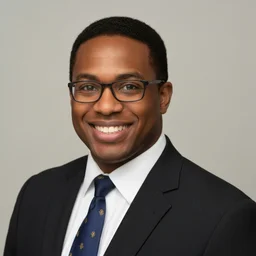
Law Enforcement Trainer & Civil Service Exam Specialist
John Jay College of Criminal JusticeMarcus B. Thompson earned his Master of Arts in Criminal Justice from John Jay College of Criminal Justice and served 12 years as a law enforcement officer before transitioning to full-time academy instruction. He is a POST-certified instructor who has prepared candidates for police entrance exams, firefighter assessments, and civil service examinations across dozens of agencies.