
Degree for Probation Officer: Complete Education Requirements & Career Guide
What degree do you need to become a probation officer? 🎓 Explore education requirements, best majors, and career steps for 2026 October.

Choosing the right degree for probation officer work is one of the most important decisions you will make on the path to this rewarding criminal justice career. Most agencies across the United States require candidates to hold at least a bachelor's degree before they can be hired, and many competitive jurisdictions now prefer applicants with graduate-level education. Understanding which degree programs best prepare you for the day-to-day realities of supervising individuals on probation will save you both time and tuition dollars as you plan your academic path.
Probation officers are responsible for monitoring offenders who have been sentenced to community supervision instead of, or in addition to, incarceration. They conduct risk and needs assessments, write detailed presentence investigation reports for judges, coordinate treatment referrals, enforce court-ordered conditions, and appear at revocation hearings. These tasks demand a strong grounding in criminology, psychology, social work, and legal procedure — all subjects that appear in accredited four-year degree programs specifically designed for criminal justice careers.
The most commonly accepted undergraduate majors include criminal justice, criminology, sociology, psychology, and social work. According to the Bureau of Labor Statistics, approximately 72 percent of working probation officers hold a bachelor's degree, while roughly 18 percent have completed a master's degree. A smaller percentage enter the field after earning an associate degree paired with several years of qualifying work experience, though this pathway is becoming rarer as competition for open positions intensifies nationwide.
State and county agencies set their own minimum education requirements, which means the degree you need can vary significantly depending on where you plan to work. For example, California's Board of State and Community Corrections requires a bachelor's degree in a behavioral science, while Texas allows candidates with an associate degree and two years of relevant experience to qualify. Federal positions with the U.S. Probation and Pretrial Services System consistently require a bachelor's degree and one year of specialized experience, making graduate study an especially attractive differentiator for federal applicants.
Beyond the degree itself, most agencies require completion of a state-certified training academy after hiring. These academies cover defensive tactics, legal updates, evidence-based supervision techniques, and agency-specific policies. Degree coursework that mirrors academy content — such as classes in offender rehabilitation, risk assessment instruments, and community supervision law — gives new hires a significant head start and often leads to faster promotion timelines. Many probation officers who aspire to supervisory or administrative roles eventually return to school to earn a master's in public administration, criminal justice leadership, or counseling.
Online degree programs have expanded access to criminal justice education dramatically over the past decade. Accredited universities such as Arizona State University, Penn State World Campus, and Southern New Hampshire University now offer fully online bachelor's and master's programs that are recognized by state certification boards in all 50 states.
These programs allow working adults to complete coursework on flexible schedules, making it possible to hold a part-time job in a related field — such as a corrections officer or case manager aide — while finishing your degree and building the hands-on experience many employers want to see on your application.
This guide walks you through every education requirement you need to understand, compares degree programs side by side, explains how to maximize your academic investment, and shows you how to prepare for the probation officer selection process once your diploma is in hand. Whether you are a high school senior mapping out a college plan or a career changer exploring a second act in public safety, the information here will help you make a confident, well-informed decision about your educational path.
Probation Officer Education by the Numbers

Degree Requirements by Education Level
Accepted by a handful of states when paired with 2–4 years of qualifying work experience in corrections, counseling, or social services. Becoming less common as competition increases. Best viewed as a stepping stone toward a bachelor's program.
The standard minimum requirement for the vast majority of state, county, and municipal probation agencies. Degrees in criminal justice, criminology, psychology, sociology, or social work all qualify at most hiring authorities across the United States.
Strongly preferred for federal probation positions and supervisory-track roles. An MPA, MSW, or MS in Criminal Justice can boost starting salary, accelerate promotion eligibility, and qualify candidates for specialized units such as sex offender supervision or mental health courts.
Post-hire state certification academies (typically 4–16 weeks) are required in most jurisdictions regardless of degree level. Some states also recognize pre-service criminal justice certificates that substitute for limited experience requirements when applying with an associate degree.
When selecting a major for a probation officer career, criminal justice and criminology programs are the most direct pathways. These degrees typically include coursework in corrections management, juvenile justice, criminal law, research methods, and statistics — all of which map directly onto the skills tested in civil service exams and used on the job every day. Graduates enter agencies already familiar with the legal frameworks, risk-assessment tools, and evidence-based practices that define modern community supervision.
Psychology is a highly valuable alternative major that gives future probation officers deep insight into behavioral motivation, mental health disorders, substance use treatment, and therapeutic communication. Because a large percentage of individuals on probation supervision have co-occurring mental health and substance use disorders, officers with a psychology background are better equipped to conduct meaningful needs assessments and make appropriate treatment referrals. Many agencies specifically recruit psychology graduates for positions in mental health court or specialized caseload units that handle high-risk populations.
Social work degrees are another excellent preparation route, particularly for officers who want to emphasize the rehabilitative and case management dimensions of the role. Bachelor of Social Work (BSW) and Master of Social Work (MSW) programs teach motivational interviewing, trauma-informed care, community resource navigation, and family systems theory. These skills align closely with the evidence-based supervision models — such as the Effective Practices in Community Supervision (EPICS) model — that many probation departments now mandate for all officers.
Sociology rounds out the top four undergraduate majors by providing a macro-level understanding of crime, inequality, community disorganization, and social institutions. Sociology graduates understand how poverty, housing instability, and lack of social support networks contribute to recidivism, which helps them develop more realistic and effective case plans. Their training in research methods and data interpretation also translates well to the report-writing and outcome-tracking demands of modern probation work.
For students still deciding on a program, it is worth comparing accredited programs specifically. The Academy of Criminal Justice Sciences (ACJS) and the Council on Social Work Education (CSWE) each certify programs that meet rigorous academic standards. Employers — particularly larger county and state agencies — recognize these accreditations and may give preference to graduates of certified programs during background investigations or oral board interviews. Confirm accreditation status before enrolling, especially in online programs where quality varies considerably between institutions.
Internships and field placements are arguably as important as the degree itself. Most bachelor's programs in criminal justice and social work require supervised field placements, and many offer optional or required internship semesters with local probation departments, community supervision agencies, or court systems. These placements provide real-world exposure to risk-assessment instrument administration, home visits, drug testing protocols, and court report preparation — exactly the tasks you will perform during your probationary employment period after hiring. Agencies routinely hire from their intern pools, making field placement one of the fastest routes to a full-time job offer.
Elective coursework choices can further distinguish your application. Students should prioritize classes in substance abuse counseling, forensic psychology, grant writing, and computer-based case management systems whenever these are available. Many departments now use proprietary software platforms such as Northpointe COMPAS or similar risk-assessment tools, and any classroom exposure to data-driven case management practices will shorten your learning curve during the post-hire training academy. Planning your electives strategically is a low-cost way to maximize the career return on your tuition investment.
State vs. Federal Probation Officer Degree Requirements
State and county probation agencies set their own minimum education standards, resulting in a patchwork of requirements across the country. Most states require a bachelor's degree in a social or behavioral science, criminal justice, or a closely related field. Some states — including Florida, Michigan, and Ohio — accept any four-year degree combined with specified coursework in behavioral sciences or corrections. A few rural jurisdictions still permit associate degrees paired with qualifying work experience, but these positions are limited in number and highly competitive.
Beyond the degree, state agencies typically require candidates to pass a civil service written exam, physical fitness test, psychological evaluation, and comprehensive background investigation. Many states also mandate completion of a POST (Peace Officer Standards and Training) or equivalent state academy within the first year of employment. Candidates who have completed relevant coursework in criminal law, offender rehabilitation, and report writing consistently outperform peers on both the written exam and the structured oral board interview, where scenario-based questions test applied knowledge.

Bachelor's Degree vs. Master's Degree: Which Path Is Right for You?
- +Bachelor's degree meets minimum requirements for 90%+ of state and county agencies immediately
- +Lower tuition cost — average $40K–$80K total vs. $60K–$120K for a master's
- +Faster entry into the workforce — finish in 4 years and begin building seniority
- +Eligible for most promotional tracks after 3–5 years of field experience
- +Combines well with employer-sponsored tuition reimbursement for graduate school later
- +Sufficient for many specialized units such as juvenile, DUI, and GPS monitoring caseloads
- −Master's degree holders often receive higher starting pay grades at state and federal agencies
- −Graduate degree candidates are preferred for federal U.S. Probation positions
- −Advanced research and clinical skills from MSW programs are increasingly valued in mental health courts
- −Supervisory and administrative roles increasingly list master's as preferred or required
- −Master's degree opens doors to related fields (social work licensure, academic research) if career goals shift
- −Graduate-level training in evidence-based practices is now expected in high-accountability jurisdictions
Probation Officer Education & Application Checklist
- ✓Confirm your target state or agency's minimum degree requirement before enrolling in any program.
- ✓Choose an accredited bachelor's program in criminal justice, criminology, psychology, sociology, or social work.
- ✓Complete at least one supervised field placement or internship with a probation or corrections agency.
- ✓Select electives in substance abuse counseling, forensic psychology, and criminal law to strengthen your application.
- ✓Research whether your target agency requires a specific civil service exam and begin early practice.
- ✓Maintain a GPA above 3.0 to remain competitive for federal positions and graduate school admission.
- ✓Apply for at least one part-time or volunteer role in corrections, social services, or victim advocacy during school.
- ✓Request letters of recommendation from professors and internship supervisors at least six months before graduation.
- ✓Prepare a professional resume highlighting field placements, relevant coursework, and any bilingual language skills.
- ✓Enroll in a physical fitness program 12+ weeks before applying — most agencies include a fitness assessment.
Criminal Justice & Behavioral Science Degrees Outperform General Studies
Agencies consistently report that candidates with targeted degrees in criminal justice, psychology, or social work perform significantly better on structured oral board interviews and post-hire training academies than candidates with general liberal arts degrees. Investing in a specialized program — even online — pays dividends in both hiring speed and starting salary placement within the agency's pay scale.
Career advancement within probation is closely linked to education level, specialized certifications, and years of experience. Entry-level officers typically begin as Probation Officer I and progress through a series of grade levels — Officer II, Senior Officer, Supervisor, and eventually Chief or Deputy Chief Probation Officer at larger agencies. At most state agencies, promotion from Officer I to Supervisor requires a minimum of five to seven years of experience, a satisfactory performance record, and completion of in-service leadership training. A master's degree can reduce the required experience threshold at many agencies by one to two years.
Salary progression is substantial for officers who invest in advanced education. According to the Bureau of Labor Statistics, the median annual wage for probation officers and correctional treatment specialists was approximately $64,000 as of May 2024. However, this figure conceals enormous geographic variation. Officers in California, New York, New Jersey, and Connecticut routinely earn between $85,000 and $110,000 at the mid-career level, while rural Midwestern and Southern states may top out near $50,000 for experienced officers. Federal probation officers typically earn 20–35 percent more than their state counterparts at equivalent experience levels.
Specialized certifications can accelerate both salary growth and promotion eligibility. The American Probation and Parole Association (APPA) offers the Certified Probation Officer (CPO) credential, which requires a combination of education, experience, and a written examination. Officers who hold the CPO credential demonstrate a standardized knowledge base and professional commitment that is recognized favorably on promotional applications. Additional certifications in motivational interviewing, COMPAS risk assessment, domestic violence supervision, and sex offender management are available through state training academies and national training organizations.
Lateral transfers and specialization opportunities open up after three to five years of general supervision experience. Many agencies operate specialized units focused on mental health, sex offenders, gang members, DUI offenders, juvenile transition cases, or electronic monitoring. These units often carry higher pay differentials and offer more intellectually stimulating caseloads. Officers who have completed graduate coursework in forensic psychology, substance abuse treatment, or public administration are strongly positioned to transfer into these units, which frequently require demonstrated advanced knowledge in the specialty area.
Leadership pathways beyond the line officer level include supervisory positions, program coordinator roles, and administrative appointments. Probation department directors and chief probation officers at large urban agencies can earn between $110,000 and $160,000 annually, with some California county chief probation officers earning over $200,000. Most of these positions require a master's degree plus extensive supervisory experience. Aspiring administrators should also cultivate skills in budget management, grant writing, labor relations, and strategic planning — competencies often developed through MPA programs or executive leadership academies sponsored by state associations.
Academic and policy careers represent another trajectory for officers with advanced degrees. Probation professionals who earn doctoral degrees in criminology, public policy, or social work can transition into university teaching, government research roles, or consultancy positions advising agencies on evidence-based program design. These careers allow experienced practitioners to shape the profession at a systemic level, publishing research that influences supervision standards, sentencing guidelines, and community corrections funding across entire states or regions.
Regardless of which career trajectory you pursue, the foundational investment in the right degree program remains the single most important early decision. Officers who enter the field with the strongest academic preparation adapt more quickly, earn promotions faster, and report higher job satisfaction over the long arc of their careers. The research consistently shows that education-focused probation systems produce lower recidivism rates — which means your degree choice ultimately benefits not just your career, but the communities your work is designed to protect and serve.

During the hiring background investigation, agencies verify that your degree was awarded by a regionally accredited institution. Degrees from unaccredited or nationally-only-accredited diploma mills will disqualify your application — even if your GPA was outstanding. Always verify accreditation status through the U.S. Department of Education's DAPIP database or CHEA before enrolling. This is especially critical when evaluating low-cost online programs advertised through social media.
Preparing for the probation officer selection process requires more than just earning the right degree — it demands a strategic approach to testing, physical conditioning, and professional documentation. Most state and county agencies use a multi-stage selection process that begins with a written civil service examination testing reading comprehension, report writing, data interpretation, and knowledge of criminal justice concepts. Candidates who performed well in their academic programs consistently outscore peers who have not engaged in systematic test preparation, making study time in the weeks before the exam a high-return investment.
The written civil service exam is usually followed by a structured oral board interview in which a panel of experienced officers and administrators poses scenario-based questions. These scenarios test your ability to apply supervision principles, respond appropriately to a client in crisis, explain how you would handle a probation violation, and demonstrate familiarity with evidence-based practices. Candidates who completed internships with probation agencies have concrete real-world examples to draw on during these interviews — a significant advantage over candidates whose experience is purely classroom-based.
Physical fitness testing is required by most state agencies and virtually all county-level departments that grant officers peace officer status with arrest authority. Typical components include a timed 1.5-mile run, push-up and sit-up repetition tests, and sometimes an obstacle course or defensive tactics assessment. Agencies generally use the Cooper Standards or a similar law enforcement fitness rubric, with passing thresholds varying by age and gender. Beginning a structured fitness program at least three months before you expect to test is strongly advisable, as last-minute conditioning rarely produces reliable results on evaluation day.
The background investigation is the most thorough component of the selection process and the one that eliminates the largest number of otherwise-qualified candidates. Investigators examine your criminal history, driving record, credit history, employment record, social media activity, and personal references going back seven to ten years.
Academic fraud — including misrepresenting your GPA, claiming a degree you did not finish, or listing coursework you did not complete — is an automatic disqualifier. Be scrupulously accurate on every application document and prepare your references by letting them know they may be contacted and explaining the nature of the position you are seeking.
Drug testing is conducted at the conditional offer stage and typically covers a standard 10-panel urine screen. Many agencies also test for synthetic cannabinoids and other emerging substances. Given that marijuana remains federally illegal regardless of state law, federal probation positions uniformly disqualify candidates with recent marijuana use.
State agency policies vary, but candidates with recent use of any controlled substance should research specific agency policies carefully before investing time and money in the application process. Proactive honesty about past use during the polygraph examination — which many agencies require — is consistently recommended by background investigators over attempts to conceal or minimize.
Financial preparation is also worth considering early. While most agencies do not charge application fees, candidates should budget for transcript requests, official degree verification letters, travel to multiple interview and testing sites, professional clothing for oral board interviews, and potential relocation costs if accepting a position in a different county or state. Some candidates pursuing federal positions must also travel to Washington, D.C., for centralized training at the Federal Law Enforcement Training Centers (FLETC) after receiving a conditional offer, with travel and lodging typically reimbursed by the agency.
The entire hiring timeline — from application submission to first day on the job — typically spans six to eighteen months for most agencies. Federal positions routinely take twelve to twenty-four months due to the depth of the background investigation and the limited number of openings at any given district.
Planning accordingly means submitting applications before you graduate, maintaining your fitness throughout the waiting period, keeping your financial records and social media profiles clean, and staying in regular professional contact with your references. Candidates who treat the waiting period as active preparation time rather than passive waiting consistently report a smoother, less stressful entry into their first officer role.
Once hired, new probation officers typically enter a probationary employment period — usually twelve months — during which their performance is closely evaluated by supervisors. This period is also when most agencies require completion of the state-certified training academy, which covers topics including defensive tactics, legal updates, use of force policy, report writing standards, risk assessment instrument administration, and evidence-based supervision techniques. Officers who arrived with strong academic preparation tend to move through academy training more quickly and receive higher evaluations on practical skill assessments.
Mentorship is an underutilized resource during the early career phase. Many agencies pair new officers with experienced veterans for the first several months, offering day-to-day guidance on case management decisions, court report preparation, and handling difficult client interactions. New officers should approach this mentorship proactively — asking questions freely, observing their mentor's home visit and court room techniques closely, and seeking feedback on their written reports before submission. Building a strong professional relationship with even one experienced officer can accelerate your learning curve by years.
Continuing education requirements keep officers current throughout their careers. Most state certification boards mandate a specific number of training hours annually — commonly 24 to 40 hours — covering topics such as implicit bias, updated risk assessment research, trauma-informed supervision, crisis intervention training (CIT), and legal developments. Officers who exceed minimum requirements and pursue voluntary training in emerging areas — such as medication-assisted treatment protocols or co-responder mental health programs — position themselves as subject matter experts within their agencies and significantly broaden their promotional options.
Technology skills are increasingly important in modern probation practice. Officers regularly use case management software, GPS monitoring dashboards, violation report databases, and risk-score tracking systems. Many agencies have also begun piloting predictive analytics tools and AI-assisted risk-flagging systems. Officers who are comfortable with data analysis — skills developed in quantitative research methods courses during their degree programs — adapt to these technology shifts more easily and are often tapped to serve on implementation committees when agencies adopt new systems.
Work-life balance is an honest concern for new officers. Caseloads in many urban jurisdictions are heavy — national research suggests the optimal supervision caseload is 50 clients per officer for general supervision, yet many officers carry 100 or more active cases.
Understanding how to manage time effectively, prioritize high-risk clients for more frequent contact, and use structured case plan tools to organize workloads efficiently is a skill that effective officers develop over their first two to three years. Many officers find that the structured analytical thinking taught in their degree programs — particularly in research methods and social work practice courses — translates directly into more effective time management on the job.
Professional associations provide ongoing support, training, and networking throughout your career. The American Probation and Parole Association (APPA), the National Association of Probation Executives (NAPE), and state-level associations host annual conferences, publish research journals, and offer online training libraries available to members. Joining these organizations as a student member — often at a reduced cost — gives you early access to job postings, mentorship programs, and national networking opportunities that can be invaluable when applying for specialized positions or lateral transfers to agencies in other states.
The investment you make in your education today will compound throughout a career that can span thirty years or more. Officers who chose their degree programs strategically, completed meaningful field placements, scored well on civil service examinations, and entered agencies with clear advancement goals consistently report greater career satisfaction, higher lifetime earnings, and a stronger sense of professional identity. The probation officer profession needs thoughtful, well-prepared practitioners — and the educational path described in this guide is the most reliable road to becoming one of them.
Sample Probation Officer Practice Questions
Try these questions from our free Probation Officer practice tests. The correct answer and an explanation follow each question.
How does specialization compare to generalization in career development?
- A. Specialization is always better
- B. Both have value — specialization provides depth and expertise, while generalization provides breadth and adaptability
- C. Generalization is always better
- D. Neither matters
Answer: B. Both have value — specialization provides depth and expertise, while generalization provides breadth and adaptability
The ideal often combines deep specialization in a core area with broad understanding of related fields (T-shaped skills), providing both expertise and versatility.
What is the purpose of continuing education in a profession?
- A. To collect certificates
- B. To maintain and expand knowledge, meet licensing requirements, and stay competitive in the field
- C. It is only for new professionals
- D. To increase tuition revenue for schools
Answer: B. To maintain and expand knowledge, meet licensing requirements, and stay competitive in the field
Continuing education ensures professionals maintain current knowledge, meet regulatory requirements, and develop new skills for career advancement.
What is the role of professional associations in a career?
- A. They are social clubs only
- B. They provide networking, continuing education, industry standards, certification, and career resources
- C. They are unnecessary
- D. They only benefit beginners
Answer: B. They provide networking, continuing education, industry standards, certification, and career resources
Professional associations serve as hubs for industry knowledge, networking, standards development, and career advancement opportunities.
The Ohio Risk Assessment System (ORAS) is unique in that it is designed to:
- A. Assess only juvenile offenders in residential placement settings
- B. Measure risk and needs across the full criminal justice continuum from pretrial to reentry
- C. Evaluate mental health treatment intensity needs in correctional institutions
- D. Score sex offenders specifically for civil commitment hearings
Answer: B. Measure risk and needs across the full criminal justice continuum from pretrial to reentry
The ORAS is a suite of complementary tools designed to assess risk and needs at multiple points in the criminal justice process, from pretrial through community supervision and reentry.
Probation Officer Questions and Answers

Federal Probation Officer Jobs: Complete Career Guide, Salary, Requirements, and How to Get Hired in 2026

Federal Probation Officer: Complete Career Guide & Requirements

Probation Officer Salary by State: A Comprehensive 2026 Compensation Guide

NYC Probation Officer Exam: Complete Study Guide & Prep Hub 2026

Probation Officer Practice Test PDF (Free Printable 2026)
About the Author
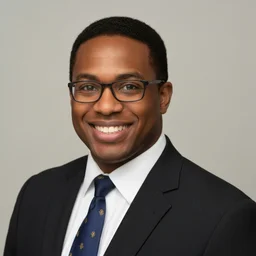
Law Enforcement Trainer & Civil Service Exam Specialist
John Jay College of Criminal JusticeMarcus B. Thompson earned his Master of Arts in Criminal Justice from John Jay College of Criminal Justice and served 12 years as a law enforcement officer before transitioning to full-time academy instruction. He is a POST-certified instructor who has prepared candidates for police entrance exams, firefighter assessments, and civil service examinations across dozens of agencies.