
Police Officer Requirements 2026 September
Free Police Officer Requirements practice test with questions and answer explanations. 🗨️ Prepare for the 2026 September exam with instant scoring.
Police Officer Practice Test Questions
Prepare for the Police Officer exam with our free practice test modules. Each quiz covers key topics to help you pass on your first try.
Police Officer Crime and Punishment
Police Officer Exam Questions covering Crime and Punishment. Master Police Officer Test concepts for certification prep.
Police Officer Entrance
Free Police Officer Practice Test featuring Entrance. Improve your Police Officer Exam score with mock test prep.
Police Officer MCQ
Police Officer Mock Exam on MCQ. Police Officer Study Guide questions to pass on your first try.
Police Officer
Police Officer Test Prep for Police Officer. Practice Police Officer Quiz questions and boost your score.
Police Officer Trivia
Police Officer Questions and Answers on Trivia. Free Police Officer practice for exam readiness.
Police Officer Vocabulary
Police Officer Mock Test covering Vocabulary. Online Police Officer Test practice with instant feedback.
Police Officer Entrance Exam Preparation
Free Police Officer Quiz on Entrance Exam Preparation. Police Officer Exam prep questions with detailed explanations.
Police Officer Incident Report Writing
Police Officer Practice Questions for Incident Report Writing. Build confidence for your Police Officer certification exam.
Police Officer Law Enforcement Mathematics
Police Officer Test Online for Law Enforcement Mathematics. Free practice with instant results and feedback.
Police Officer Map Reading and Navigation
Police Officer Study Material on Map Reading and Navigation. Prepare effectively with real exam-style questions.
Police Officer MCQ Practice
Free Police Officer Test covering MCQ Practice. Practice and track your Police Officer exam readiness.
Police Officer Observation and Memory
Police Officer Exam Questions covering Observation and Memory. Master Police Officer Test concepts for certification prep.
Police Officer Patrol Procedures and Offic...
Free Police Officer Practice Test featuring Police Officer Patrol Procedures and Officer Safety. Improve your Police Officer Exam score with mock test prep.
Police Officer Traffic Laws and Enforcement
Police Officer Mock Exam on Police Officer Traffic Laws and Enforcement. Police Officer Study Guide questions to pass on your first try.
Police Officer Reading Comprehension Skills
Police Officer Test Prep for Reading Comprehension Skills. Practice Police Officer Quiz questions and boost your score.

🧍 Police Officer Physical Requirements
| Physical Qualifications | Qualifications | Tests |
| Vision | Exists to protect officers from harm and prevent them from wrongly harming others. Moreover, this is to ensure they can provide correct information when they appear on the witness stand in court. Vision qualification does not require perfect vision, but it typically requires applicants to have 20/20 vision with correction glasses or contact lenses. | Snellen vision test - examinees must correctly identify letters or numbers of varying sizes Ishihara test - tests a person’s red-green color perception |
| Hearing | Must have an excellent hearing to recognize vocal commands, decipher information sent from dispatch, and listen to the statements of victims and suspects. | Audiometer - tests the candidate’s ability to hear sounds at different frequencies |
| Height and Weight | Must have proportional weight-to-height measurements. Applicants who are overweight or underweight may be given a chance to correct the problem. They must lose or gain weight to meet stipulated weight standards by the end of the training sessions. | |
| Muscular and Skeletal System | Aspirants must have the ability to respond to emergencies with physical agility. | Doctors will take the written health history of the applicant and look for conditions such as arthritis, missing toes, and bone abnormalities. They may also take X-rays to look for signs of misaligned joints, curvature of the spine, or dislocated vertebrae. |
| Circulation and Respiratory | Candidates must have a healthy circulatory system, and therefore, must not have conditions such as varicose veins, hardening of the arteries, asthma, emphysema, heart murmur, irregular heartbeat, or other conditions that may affect breathing. | Chest X-rays - to look for damaged or diseased lungs Blood pressure - to determine if applicants have hypertension |
| Mouth, Nose, and Teeth | Must not have deviated nasal septum or gum disease. Candidates with a sinus infection or strep throat may temporarily be disqualified. | |
| Hernia and Rectum | No history of hernias or rectal conditions. Candidates may be considered once the problem is resolved through surgery. | |
| Coordination | Candidates must be able to physically react to situations in a timely and coordinated manner. | |
| Skin and Appearance | Police aspirants must not have chronic skin conditions, such as severe psoriasis or eczema, and must maintain good hygiene and neat appearance. | |
| Nervous System and Substance | Candidates must not have nervous system disorders such as seizures or epilepsy, and not have a history of drug or alcohol abuse. |
What will disqualify a person from being a police officer?
💭 Police Officer Questions
- Felony or domestic violence conviction
- Moral turpitude conviction
- Excessive minor offenses
- Bad driving record or no driver’s license
- Bad work history
- Poor written test score
- Insufficient academic credentials
- Poor physical fitness
- Fraudulent application or background form
- Disqualifying medical conditions
- Substance abuse
- No citizenship
- ✓Confirm your exam appointment and location
- ✓Bring required identification documents
- ✓Arrive 30 minutes early to check in
- ✓Read each question carefully before answering
- ✓Flag difficult questions and return to them later
- ✓Manage your time — don't spend too long on one question
- ✓Review flagged questions before submitting
Can gang members become police officers?
Can you join the police without a degree?
What are the requirements to become a police officer in Illinois?
- A Bachelor’s Degree
- An Associate of Arts or Science Degree or comparable course work* AND one of the two employment experience requirements: three years of continuous, full-time service as a police officer with the same police agency OR three years of active military service.
- An Associate of Applied Science degree in Law Enforcement/Criminal Justice AND one of the following two employment experience requirements: three years of continuous full-time service as a police officer with the same police agency OR three years of active military service.
- There is no need for education if the applicant has been honorably discharged from the United States armed forces after active military service AND has received at least one of the qualifying medals or the applicant is a member of the Illinois National Guard or a reserve component of the US Armed Forces who has received at least one of the qualifying medals. Southwest Asia Service Medal, Kosovo Campaign Medal, Korean Defense Service Medal, Afghanistan Campaign Medal, Iraq Campaign Medal, or Global War on Terrorism Expeditionary Medal are among the medals that qualify. A DD-214 must be used as proof.
How much do police officer classes cost?
What is police chaplain training?
What is police implicit bias training?
What are the New Jersey police officer requirements?
- +Validates your knowledge and skills objectively
- +Increases job market competitiveness
- +Provides structured learning goals
- +Networking opportunities with other certified professionals
- −Study materials can be expensive
- −Exam anxiety can affect performance
- −Requires dedicated preparation time
- −Retake fees apply if you don't pass
About the Author
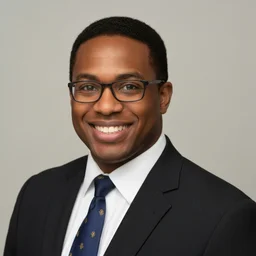
Law Enforcement Trainer & Civil Service Exam Specialist
John Jay College of Criminal JusticeMarcus B. Thompson earned his Master of Arts in Criminal Justice from John Jay College of Criminal Justice and served 12 years as a law enforcement officer before transitioning to full-time academy instruction. He is a POST-certified instructor who has prepared candidates for police entrance exams, firefighter assessments, and civil service examinations across dozens of agencies.