
PCT Career Overview: Patient Care Technician Jobs and Salary Guide 2026 July
Prepare for the PCT Career Overview: Patient Care certification. Practice questions with answer explanations covering all exam domains. 📗
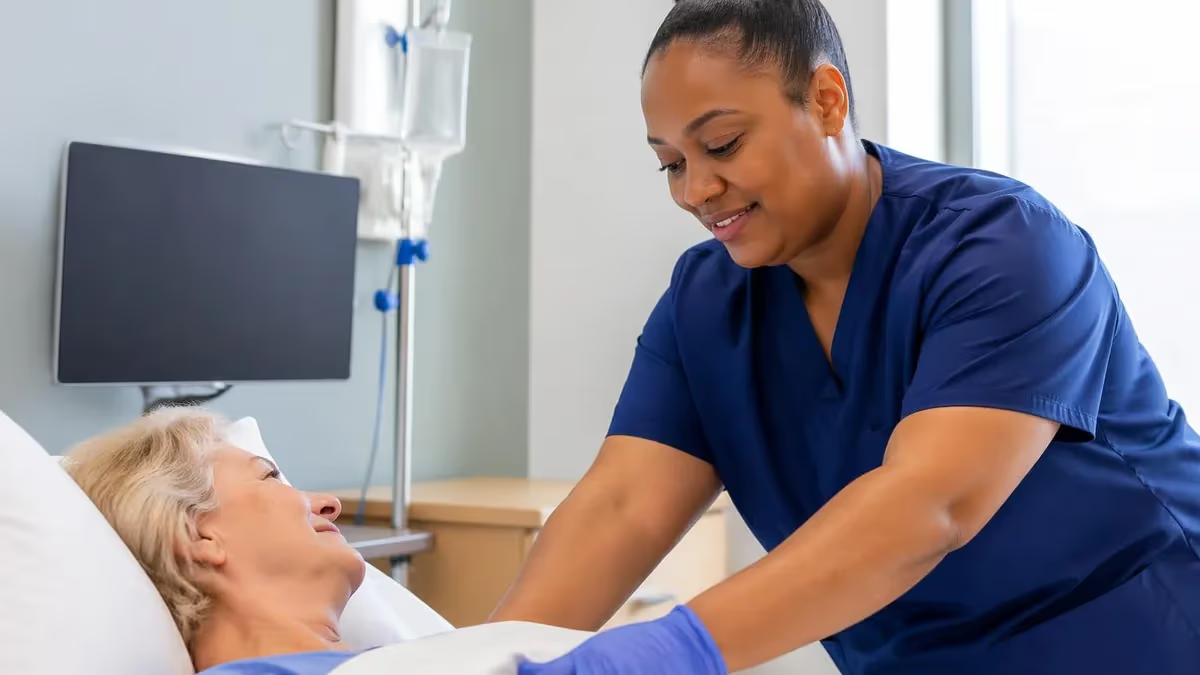
This PCT career overview breaks down everything you need to know about working as a patient care technician. If you're weighing your options in healthcare, the PCT role sits in a sweet spot -- it's more technically demanding than a CNA position but doesn't require years of schooling. You'll draw blood, run EKGs, monitor vitals, and provide hands-on bedside care every shift.
Patient care technicians work in hospitals, dialysis centers, rehabilitation facilities, and outpatient clinics across the country. The career overview numbers look strong: demand keeps climbing as hospitals expand and the dialysis industry grows. Most PCTs earn between $37,000 and $54,000 per year, with hospital-based roles paying at the higher end. It's a career that rewards people who want direct patient contact without spending four years in school first.
Whether you're brand new to healthcare or already hold CNA certification, this overview walks through what PCTs actually do on the job, how much they earn, where they work, and exactly how to get certified. You'll also find free PCT practice tests throughout this page -- they're the same question types you'll see on the NCCT and NHA certification exams. Think of this as your complete career overview for breaking into one of healthcare's most accessible technical roles.

What does a PCT actually do all day? The short answer: a lot. Patient care technicians handle a mix of bedside care and technical procedures that keeps every shift moving fast. You'll take vital signs -- blood pressure, pulse, temperature, O2 saturation -- sometimes on a dozen patients before lunch. Then there's phlebotomy. Drawing blood is one of the skills that sets PCTs apart from standard CNAs, and you'll get plenty of practice in a hospital overview of daily tasks.
EKG monitoring is the other big differentiator in this career overview. PCTs perform 12-lead EKGs, attach cardiac monitors, and flag irregularities for the nursing team. You'll also collect urine and other specimens, assist with catheter care, help patients walk and transfer safely, and document everything. Some shifts feel relentless. Others give you time to actually talk with patients -- which is often the best part of the job.
The PCT role isn't just "CNA with extras," though that's a fair overview. It's a distinct position built for acute care environments where speed and technical skill matter. Hospitals want PCTs who can pivot from a blood draw in Room 4 to an EKG in Room 12 without missing a beat. That versatility is exactly why PCT career prospects keep growing. Employers value PCTs who can handle multiple tasks independently, and strong performers often get pulled into specialty units -- ICU, cardiac step-down, or oncology -- where the clinical exposure deepens fast.
PCT salary ranges depend on where you work, what certifications you hold, and your geographic market. Hospital-based PCTs consistently out-earn their counterparts in other settings. Hourly rates of $18 to $26 are common for experienced hospital PCTs, which works out to roughly $37,000 to $54,000 per year. The national median for the broader nursing assistant/PCT category sits around $38,000 to $42,000 according to BLS data -- but that overview includes lower-paying long-term care positions that pull the average down.
Dialysis PCTs at companies like DaVita and Fresenius start around $18 to $22 per hour. The trade-off? Predictable schedules, no overnight shifts at most facilities, and clear advancement pathways. Some dialysis PCTs reach $25+ per hour within a few years as they move into senior technician or charge tech roles. Geography matters enormously in this career overview -- PCTs in California, Washington, and New York earn 20-40% above the national median thanks to higher cost of living and union contracts.
Certification bumps your pay, too. PCTs who hold the NCCT or NHA credential often start $1 to $3 per hour above non-certified candidates at the same facility. Over a full-time year, that's $2,000 to $6,000 in extra earnings -- a solid return on a certification exam that costs under $200. Night and weekend differentials add another $2 to $5 per hour at many hospitals, which significantly boosts your annual overview of total compensation.
PCT vs. Related Healthcare Roles
CNAs complete state-approved nursing assistant programs and work primarily in long-term care, home health, and some hospital floors. PCTs build on CNA certification by adding phlebotomy, EKG, and specimen collection skills. PCTs work mainly in hospitals and dialysis centers, earn higher wages, and handle more technical procedures. If you already have your CNA, adding PCT skills typically takes 4 to 12 additional weeks of training.
Understanding your career overview options means looking at where PCTs actually get hired. The two biggest employers? Hospitals and dialysis centers. They account for the majority of PCT positions nationwide, and each offers a distinctly different work experience. Long-term acute care hospitals and rehabilitation centers round out the top hiring categories. Your choice of setting shapes everything -- your schedule, your patient population, your pay, and your advancement trajectory.
Hospital PCTs rotate through medical-surgical floors, telemetry units, cardiac care, and emergency departments. You'll see a wide range of patients and conditions -- from post-surgical recovery to acute cardiac events. The pace is fast, the learning curve is steep, and the clinical exposure is unmatched. Most hospitals strongly prefer candidates who hold CNA certification plus phlebotomy and EKG competency, making the full PCT credential your absolute best ticket in.
Dialysis centers run on a different rhythm entirely. Patients come in three times per week on a set schedule. You'll learn cannulation (inserting needles into dialysis access sites), operate dialysis machines, and monitor patients throughout their treatments. Companies like DaVita and Fresenius hire CNAs and train them on-site -- paid training, no tuition. That's a significant career overview perk if you want to skip the cost of a formal PCT program. Rehabilitation facilities and long-term acute care hospitals round out the list, offering PCT roles with high-volume wound care and mobility assistance.
Becoming a PCT follows a clear path, and it starts with CNA certification. That's non-negotiable for most programs and employers. A state-approved CNA course takes 4 to 8 weeks, costs between $500 and $2,000, and covers the bedside care fundamentals you'll build on. Once you pass your state CNA exam and land on the nurse aide registry, you're ready for PCT-specific training.
PCT programs at community colleges and vocational schools run 4 to 12 months. They cover phlebotomy technique, EKG performance, specimen collection, and sometimes IV therapy basics or dialysis orientation. Community college programs are typically the most affordable option -- $1,500 to $5,000 for the full overview of training. If you already hold CNA certification, some schools offer accelerated tracks that add phlebotomy and EKG skills in just 4 to 8 weeks.
Here's a career overview tip that saves real money: employer-sponsored training. DaVita and Fresenius both hire CNA-certified candidates and provide paid PCT training in dialysis procedures. You earn a paycheck while learning instead of paying tuition. Hospital systems sometimes run similar workforce development programs -- call their HR or education departments directly, because these opportunities aren't always posted online. After training, consider sitting for national certification through NCCT (PCT credential) or NHA (CPCT/A credential) to boost your competitiveness.
Pros and Cons of a PCT Career
- +Short training timeline -- you can start working as a PCT within 4 to 12 months
- +Strong job demand across hospitals and the growing dialysis industry
- +Hands-on patient contact every shift if you enjoy direct care work
- +Clear advancement paths to nursing, dialysis tech, or specialized technician roles
- +Employer-sponsored training programs can eliminate tuition costs entirely
- +Certification exams cost under $200 and meaningfully increase starting pay
- −Physical demands are real -- lifting, standing, and moving patients for 12-hour shifts
- −Rotating schedules including nights, weekends, and holidays in hospital settings
- −Emotional toll from working with seriously ill or end-of-life patients daily
- −Starting pay is modest compared to roles requiring 2- or 4-year degrees
- −Scope of practice limits mean you can't perform certain procedures reserved for nurses
- −Competitive hospital positions often require both CNA and national PCT certification
The PCT career isn't a dead end -- it's a launchpad. Most PCTs treat the role as a stepping stone, and the career overview data backs that up. A significant percentage of registered nurses started as CNAs or PCTs before entering nursing school. That clinical foundation makes you a stronger applicant and a better student once you're in a program.
Specialized technician roles offer another advancement path. Dialysis PCTs can pursue Certified Hemodialysis Technician (CHT) or Certified Clinical Hemodialysis Technician (CCHT) credentials through BONENT or NNCO. These certifications bump pay and open charge technician and training supervisor positions. PCTs with strong phlebotomy skills can pivot to dedicated phlebotomy roles in hospital labs or reference laboratories, earning NPA certification along the way.
The nursing pathway remains the most popular career overview trajectory. PCT experience gives you clinical hours, medical terminology fluency, and a realistic picture of hospital workflows before you commit to a nursing degree. Many hospitals offer tuition reimbursement for PCT employees pursuing LPN or RN programs. LPN programs take 12 to 18 months. ADN programs take about two years. BSN programs run four years but open management and specialty nursing doors. Either way, your PCT background means you won't be starting from scratch on day one of clinicals.
PCT Career Readiness Checklist
- ✓Complete a state-approved CNA program and pass your state exam
- ✓Enroll in a PCT training program covering phlebotomy and EKG skills
- ✓Research employer-sponsored training at DaVita, Fresenius, or local hospitals
- ✓Practice blood draws on training arms until your technique feels confident
- ✓Study for the NCCT PCT or NHA CPCT/A national certification exam
- ✓Take free PCT practice tests to identify knowledge gaps before exam day
- ✓Build a healthcare resume highlighting clinical hours and technical competencies
- ✓Apply to hospital med-surg or telemetry units for maximum clinical variety
- ✓Ask about tuition reimbursement programs if you plan to pursue nursing school
- ✓Join professional associations like NAHCA for networking and job leads
One thing this career overview should make clear: PCT positions reward preparation. Walking into an interview with national certification, strong phlebotomy skills, and a polished resume puts you ahead of candidates who only hold CNA credentials. Hiring managers definitely notice the difference, and it consistently shows up in your starting wage.
Clinical rotations during your PCT program matter more than most students realize. Treat them like extended job interviews. Show up early, ask questions, volunteer for extra procedures, and build relationships with charge nurses. Many PCTs land their first job at their clinical rotation site -- it's one of the most reliable hiring pipelines in healthcare and a critical piece of any career overview for this field.
Continuing education keeps your career moving forward once you're working. Hospitals track competencies annually -- you'll recertify in BLS (basic life support), complete skills checkoffs, and potentially add new certifications. Some facilities pay for additional training in areas like IV therapy or cardiac monitoring. Don't wait for your employer to suggest it. Proactively pursuing skills makes you harder to replace and easier to promote. That's the real overview of how successful PCTs build momentum in their careers.
The job market overview for PCTs looks solid heading into 2026 and beyond. BLS projects 5% growth for nursing assistants and related roles through 2032, but the real story is in dialysis. Chronic kidney disease rates keep climbing, which means dialysis centers keep opening. Every new center needs trained PCTs. Hospitals face their own staffing pressures -- nursing shortages trickle down to PCT demand because facilities need more support staff when nurse-to-patient ratios tighten.
Regional demand varies. Urban medical centers and large health systems hire PCTs year-round. Rural hospitals may have fewer openings but often pay hiring bonuses to attract candidates. Travel PCT positions exist too, though they're less common than travel nursing contracts. If you're flexible on location, you'll have more options. States with large elderly populations -- Florida, Arizona, Texas -- consistently post high PCT job volumes.
Don't overlook the career overview benefits beyond salary. Hospital PCTs typically receive health insurance, retirement plans, paid time off, and tuition reimbursement. These benefits add $8,000 to $15,000 in annual value on top of your paycheck. Dialysis companies offer similar packages with the added perk of predictable scheduling -- something that's genuinely hard to find in healthcare. When you factor in total compensation, the PCT career stacks up well against other roles that require similar training time.
Both the NCCT PCT and NHA CPCT/A exams test clinical knowledge, not just memorization. You'll encounter scenario-based questions about patient care situations, infection control procedures, and proper phlebotomy technique. Take timed practice tests under exam conditions -- 2 hours, no notes -- to build your test-taking endurance before exam day.
Let's talk about what separates PCTs who advance quickly from those who plateau. It comes down to three things in every career overview: certifications, attitude, and a plan. Getting your national PCT credential is step one. Showing up reliably, volunteering for challenging assignments, and communicating clearly with nurses is step two. Having a written plan -- whether that's nursing school in two years or charge tech in eighteen months -- is step three.
Mentorship accelerates everything. Find an experienced PCT or nurse who's willing to teach you shortcuts, show you better phlebotomy technique, and advocate for you when promotions open up. Most hospitals don't have formal mentorship programs for PCTs, so you'll need to build those relationships yourself. Ask questions. Shadow people in roles you want. Make your ambition visible without being obnoxious about it.
Your PCT career overview wouldn't be complete without this: burnout is real in bedside healthcare. Twelve-hour shifts, difficult patients, and emotional weight take a toll. Protect yourself by maintaining boundaries, using PTO, and keeping your career plan in front of you. The PCTs who thrive long-term are the ones who see the role as a chapter, not the whole book. Whether you stay at the bedside or use PCT as a bridge to nursing, respiratory therapy, or another field -- you're building skills that transfer everywhere in healthcare.
PCT Practice Test Questions
Prepare for the PCT - Patient Care Technician exam with our free practice test modules. Each quiz covers key topics to help you pass on your first try.
PCT Anatomy and Physiology
PCT Exam Questions covering Anatomy and Physiology. Master PCT Test concepts for certification prep.
PCT Communication Skills
Free PCT Practice Test featuring Communication Skills. Improve your PCT Exam score with mock test prep.
PCT Documentation
PCT Mock Exam on Documentation. PCT Study Guide questions to pass on your first try.
PCT Infection Control
PCT Questions and Answers on Infection Control. Free PCT practice for exam readiness.
PCT Lab Procedures
PCT Mock Test covering Lab Procedures. Online PCT Test practice with instant feedback.
PCT Medical Terminology
Free PCT Quiz on Medical Terminology. PCT Exam prep questions with detailed explanations.
PCT Patient Care Fundamentals
PCT Practice Questions for Patient Care Fundamentals. Build confidence for your PCT certification exam.
PCT Patient Rights
PCT Test Online for Patient Rights. Free practice with instant results and feedback.
PCT Nutrition and Diet
PCT Study Material on PCT Nutrition and Diet. Prepare effectively with real exam-style questions.
PCT Phlebotomy
PCT Exam Questions covering Phlebotomy. Master PCT Test concepts for certification prep.
This career overview covered a lot of ground, so here's where things stand. Patient care technician roles offer a genuine entry point into clinical healthcare without requiring a college degree. You can go from zero certifications to a working PCT in under a year if you move with purpose. The pay is decent, the demand is genuinely strong, and the advancement options are real.
Your next step depends on where you are right now. If you don't have CNA certification yet, start there -- it's the foundation everything else builds on. Already a CNA? Look into PCT programs at community colleges or contact DaVita and Fresenius about their paid training. Already working as a PCT? Consider national certification if you haven't earned it, and start mapping your path to the next role -- whether that's charge tech, specialized technician, or nursing school.
Use the free PCT practice tests on this page to check your knowledge across anatomy, phlebotomy, EKG, infection control, and patient care fundamentals. They're designed around the same content areas you'll see on the NCCT and NHA certification exams. Treat them like a career overview diagnostic -- identify your weak spots, study those areas, and retest until you're consistently scoring above 80%. That's the benchmark where most test-takers pass their certification exam on the first attempt. And once you pass, your career overview changes permanently -- you're a credentialed healthcare professional with a clear path forward.
PCT Questions and Answers

PCT Job Market: Where Patient Care Technicians Work in 2026

Patient Care Technician Online Certification: A Real Guide for 2026

Patient Care Technician Training Programs: Schools, Cost & Length

PCT Medical Abbreviation: What PCT Means in Healthcare and Hospitals
PCT Medical Abbreviation: What It Stands For and Why It Matters
About the Author

Educational Psychologist & Academic Test Preparation Expert
Columbia University Teachers CollegeDr. Lisa Patel holds a Doctorate in Education from Columbia University Teachers College and has spent 17 years researching standardized test design and academic assessment. She has developed preparation programs for SAT, ACT, GRE, LSAT, UCAT, and numerous professional licensing exams, helping students of all backgrounds achieve their target scores.