
PALS Precourse Self Assessment: Answers, Practice & Study Guide (2026 October)
Get precourse self assessment PALS answers, practice questions, and study tips. Pass the AHA PALS precourse test on your first try with our 2026 October guide. 📚

If you are searching for precourse self assessment PALS answers, you are almost certainly registered for an American Heart Association Pediatric Advanced Life Support course and have discovered that you must score at least 70% on the online precourse self-assessment before you can attend. This requirement catches many nurses and paramedics off guard because the email simply says to complete the precourse work without explaining how much pharmacology, rhythm recognition, and algorithm knowledge the assessment actually tests.
The PALS precourse self-assessment is not a casual quiz. It is a gatekeeping tool the AHA built into its learning platform to ensure that every student walks into the classroom with a baseline understanding of pediatric ECG rhythms, resuscitation pharmacology, and practical application of the core algorithms. The assessment runs through your AHA account and generates a certificate when you pass, and that certificate is what your instructor checks at the door. Without it, most training centers will turn you away.
There are three distinct sections you must conquer: rhythm identification, pharmacology, and practical application. Each one draws directly from the 2020 AHA Guidelines that still govern the 2026 course materials. The rhythm section shows you ECG strips and asks you to name them. The pharmacology section quizzes you on drug indications, doses, and routes. The practical application section presents short clinical vignettes and asks what you would do next, mirroring the case-based scenarios you will face during the in-person megacode testing station.
Many candidates assume their day-to-day clinical experience will carry them through, and for seasoned PICU or pediatric ED staff that may be partly true. But the assessment uses very specific AHA terminology and weight-based dosing conventions that differ from how some hospitals phrase orders. A nurse who gives epinephrine every shift may still stumble on the exact 0.01 mg/kg IO/IV dose phrasing or the ratio used in the precourse questions. Targeted preparation closes that gap quickly and reliably.
The good news is that the assessment is open and you can review the material as much as you like before attempting it. The AHA provides a precourse self-assessment within its student website, and you are permitted to retake it until you reach the passing threshold. Smart candidates treat the first attempt as a diagnostic, identify their weak domains, drill those topics with targeted practice, and then retake to confirm mastery. That loop is the fastest path to a clean pass.
This article walks you through the assessment format, the highest-yield content in each domain, a printable preparation checklist, and ten frequently asked questions. We also link to free, full-length practice quizzes that mirror the assessment style. If you are renewing rather than certifying for the first time, our companion guide on the pals precourse self assessment renewal pathway explains how the requirement applies to recertification candidates as well. Bookmark this page and work through it section by section.
By the end, you will understand not just where to find answers, but how to genuinely learn the material so the in-person course feels like reinforcement rather than a cram session. That distinction matters because the classroom day moves fast, the megacode is unforgiving, and instructors expect you to arrive already fluent in the basics. Invest a few focused hours now and the rest of your certification experience becomes dramatically smoother and far less stressful overall.
PALS Precourse Self-Assessment by the Numbers
Key Facts at a Glance
| Item | Value | Details |
|---|---|---|
| Minimum Passing Score | 70% | Required before class entry |
| Content Domains | 3 | Rhythm, pharmacology, practical |
| Typical Completion Time | ~45 min | First attempt |

PALS Precourse Self-Assessment Format & Scoring
You are shown pediatric ECG strips and must correctly name each one, including sinus tachycardia, SVT, VT, VF, asystole, and heart blocks. Accurate rhythm naming drives every downstream treatment decision you will face.
Questions cover indications, weight-based doses, routes, and concentrations for the core PALS drugs such as epinephrine, amiodarone, adenosine, and atropine. Expect mg/kg and mcg/kg phrasing pulled straight from the AHA dosing chart.
Short clinical vignettes present a deteriorating child and ask what you would do next. These mirror the case-based megacode scenarios and test whether you can apply algorithms rather than just memorize isolated facts in sequence.
You must reach 70% overall to generate a completion certificate. Print or save it digitally; your instructor verifies it at check-in. Retakes are unlimited, so use early attempts as diagnostics to target weak domains.
ECG rhythm recognition is the domain that intimidates candidates most, and it deserves the largest share of your study time. The assessment displays realistic pediatric strips and asks you to identify them by name. The strips you must master fall into a manageable list: normal sinus rhythm, sinus tachycardia, supraventricular tachycardia, ventricular tachycardia, ventricular fibrillation, asystole, pulseless electrical activity, and the bradycardic rhythms. Knowing these patterns cold answers most rhythm questions.
The single most tested distinction is sinus tachycardia versus supraventricular tachycardia, because the treatment diverges sharply. Sinus tachycardia shows a rate that varies with the clinical situation, visible P waves before each QRS, and a rate usually below 220 in infants or 180 in children. SVT, by contrast, shows an abrupt, fixed, very fast rate, often above those thresholds, with absent or abnormal P waves. The assessment loves to pair a strip with a history, then asks you to choose the rhythm.
Ventricular fibrillation and pulseless ventricular tachycardia are the shockable arrest rhythms, and the assessment expects you to link them immediately to defibrillation plus the cardiac arrest algorithm. Asystole and pulseless electrical activity are the non-shockable arrest rhythms, treated with high-quality CPR and epinephrine while you hunt for reversible causes. Memorizing which rhythms are shockable versus non-shockable is a high-yield shortcut because it instantly narrows your answer choices on any arrest-related question that appears.
Bradycardia with a pulse is its own algorithm and its own cluster of questions. The assessment wants you to recognize that symptomatic bradycardia in a child is most often caused by hypoxia, so the first intervention is oxygenation and ventilation, not immediate drugs. Only if the heart rate stays below 60 with poor perfusion despite effective ventilation do you begin chest compressions, followed by epinephrine and, in specific cases, atropine. This hypoxia-first logic trips up adult-trained providers consistently.
To build durable rhythm recognition, practice with strips rather than just reading descriptions. Reading a paragraph that says SVT has a narrow complex and a fast fixed rate is far less effective than seeing fifty actual strips and naming each against a timer. Our free quizzes are built precisely for this kind of pattern drilling, presenting strips and vignettes in the same format the AHA uses so the transition to the real assessment feels seamless and predictable when you sit down to take it.
A practical study sequence works well here. Spend your first session simply naming rhythms with no time pressure, building accuracy. In your second session, add the timer to build speed and simulate test conditions. In your third session, mix rhythm questions with treatment questions so you practice the full decision chain: identify the rhythm, decide shockable or not, and select the next action. This staged approach mirrors how the assessment escalates from pure recognition to applied reasoning.
Finally, do not neglect the artifact and lead-placement questions that occasionally appear. A wandering baseline, loose lead, or patient movement can mimic a dangerous rhythm, and the assessment may test whether you recognize artifact before treating a non-existent arrhythmia. Always correlate the strip with the clinical picture: a child who is awake, talking, and pink does not have ventricular fibrillation no matter what the monitor shows, so check the patient and the leads first.
PALS Pharmacology: Precourse Self Assessment PALS Answers Explained
Epinephrine is the most frequently tested PALS drug because it appears in both the cardiac arrest and bradycardia algorithms. The standard dose is 0.01 mg/kg, which equals 0.1 mL/kg of the 0.1 mg/mL concentration, given IV or IO every three to five minutes during arrest. The assessment expects you to know this exact dose and route phrasing rather than a vague give epi answer.
A common distractor swaps concentrations or doubles the dose, so read carefully. Epinephrine works as a vasoconstrictor that raises coronary and cerebral perfusion pressure during CPR. There is no maximum number of doses during a prolonged arrest, and the assessment may test that you continue dosing every three to five minutes for as long as resuscitation efforts continue.
Should You Use the Online Precourse Self-Assessment Strategically?
- +It is included free with your AHA course registration at no extra cost
- +Unlimited retakes let you use early attempts as diagnostic tools
- +It pinpoints your weakest domain so study time is focused
- +Passing generates the certificate your instructor requires for entry
- +It uses the exact AHA terminology and dosing you will see in class
- +Completing it early reduces classroom-day stress dramatically
- −The platform interface can feel dated and occasionally clunky to navigate
- −It does not explain wrong answers in depth on its own
- −Some hospital dosing habits conflict with AHA phrasing, causing confusion
- −Rhythm strips on screen can be harder to read than printed ones
- −It tests memorized doses that adult-trained providers may not know
- −Without supplemental practice, a borderline pass leaves real knowledge gaps
Precourse Self Assessment PALS Answers: Preparation Checklist
- ✓Log into your AHA student account and locate the precourse self-assessment link.
- ✓Download the current PALS Provider Manual or the precourse work PDF.
- ✓Review the cardiac arrest, bradycardia, and tachycardia algorithm flowcharts.
- ✓Memorize epinephrine 0.01 mg/kg IV/IO every three to five minutes.
- ✓Memorize amiodarone 5 mg/kg and adenosine 0.1 then 0.2 mg/kg doses.
- ✓Practice naming all core ECG rhythms from strips against a timer.
- ✓Learn which rhythms are shockable versus non-shockable cold.
- ✓Drill the 20 mL/kg isotonic fluid bolus and reassessment principle.
- ✓Take a full free practice quiz to simulate the real format.
- ✓Retake the official assessment until you clear 70% comfortably.
- ✓Save or print your completion certificate for instructor check-in.
- ✓Bring a copy of your certificate, ID, and manual on course day.
Treat your first attempt as a diagnostic, not a final exam.
Because retakes are unlimited, the smartest candidates take the assessment cold to discover which domain is weakest, then spend their study hours exclusively on that gap. A nurse strong in pharmacology but shaky on rhythms should pour time into strip recognition rather than re-reading drug doses they already know. Targeted study beats blanket review every time.
The practical application domain is where many candidates underestimate the assessment, because it moves beyond recall and asks you to reason through a deteriorating child the way you will during the in-person megacode. A typical vignette opens with a brief history, vital signs, and an exam finding, then asks what you would do next. The correct answer is almost always the action dictated by the relevant algorithm at that specific decision point, which is why understanding the algorithms structurally beats memorizing isolated facts.
Consider a classic respiratory vignette: a two-year-old presents with increased work of breathing, retractions, and an oxygen saturation of 88% on room air. The assessment is testing whether you recognize respiratory distress progressing toward failure and whether you intervene early with oxygen and assisted ventilation before the child arrests. PALS hammers the principle that recognizing and treating respiratory and circulatory problems early prevents most pediatric cardiac arrests, which are usually the endpoint of untreated hypoxia or shock.
Shock vignettes follow the same logic. A child with a history of vomiting and diarrhea, delayed capillary refill, weak pulses, and tachycardia is in hypovolemic shock, and the next step is rapid isotonic fluid resuscitation at 20 mL/kg with reassessment after each bolus. The assessment may then escalate the scenario to test whether you recognize fluid overload or move toward vasoactive support. Following the systematic evaluate-identify-intervene framework keeps your answers aligned with what the test rewards.
The systematic approach itself is testable. PALS teaches the initial impression using the Pediatric Assessment Triangle of appearance, work of breathing, and circulation to skin, followed by the primary assessment using the ABCDE sequence and the evaluate-identify-intervene loop. The assessment may ask which step comes first or what the Pediatric Assessment Triangle includes. Knowing this framework cold lets you organize any vignette quickly and choose the action that the next logical step demands without second-guessing yourself.
Cardiac vignettes test the tachycardia and bradycardia decision trees most heavily. For tachycardia, you first decide whether the child is stable or unstable, then whether the QRS is narrow or wide, which routes you toward vagal maneuvers and adenosine for stable SVT or synchronized cardioversion for unstable tachycardia. For bradycardia, the hypoxia-first principle dominates: oxygenate and ventilate, then begin compressions if the rate stays below 60 with poor perfusion, then add epinephrine.
Reversible causes appear repeatedly in arrest vignettes, and the assessment expects you to recall the H's and T's: hypovolemia, hypoxia, hydrogen ion acidosis, hypo- and hyperkalemia, hypothermia, tension pneumothorax, tamponade, toxins, and thrombosis. A pulseless electrical activity scenario almost always hides a reversible cause you are meant to identify and treat. Building a quick mental checklist of these causes lets you answer the inevitable most-likely-reversible-cause question with confidence and speed during the test.
To prepare for this domain specifically, practice with full scenario-style questions rather than flashcards. Reading a vignette, choosing an action, and then seeing the explanation builds the clinical reasoning the assessment rewards. Our free quizzes present exactly these scenario chains, and working through several dozen of them trains your brain to map any presentation onto the correct algorithm branch automatically, which is precisely the skill both the precourse assessment and the in-person megacode are designed to measure.
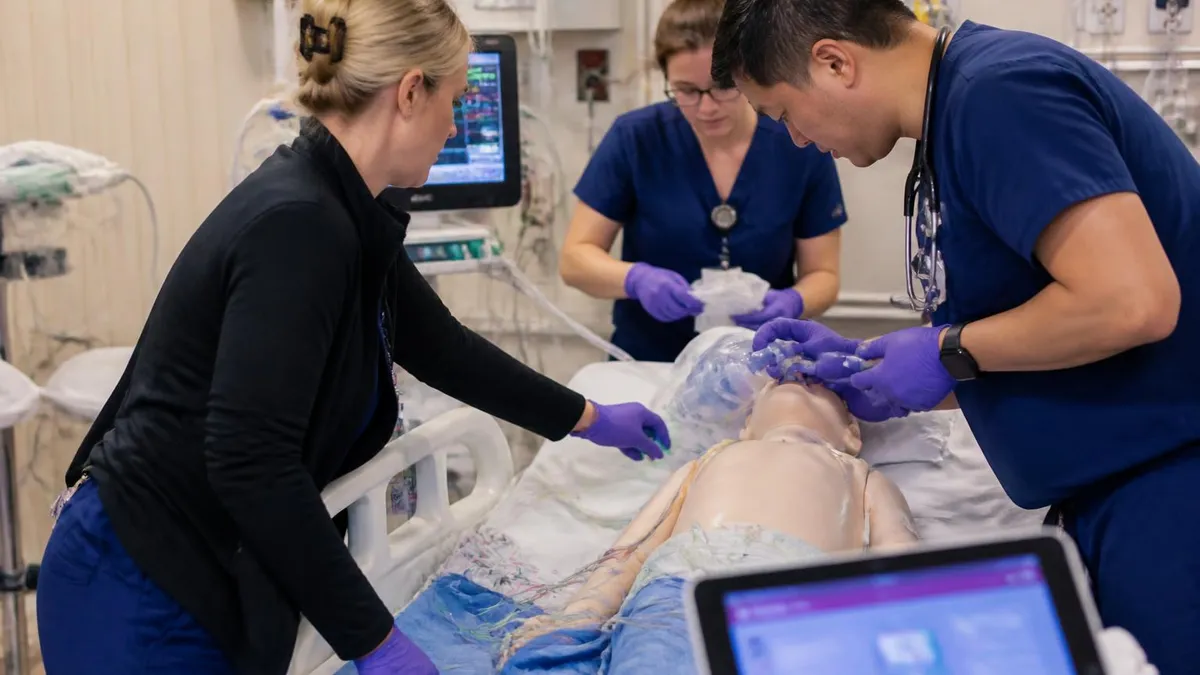
Most AHA training centers will not let you attend the in-person PALS course without a printed or digital copy of your passing precourse self-assessment certificate. If you arrive without it, you will likely be rescheduled and may forfeit your course fee. Complete and save the certificate at least a day before class to avoid a costly surprise at check-in.
Test-day strategy for the precourse self-assessment is straightforward once you understand the platform, but a few tactics meaningfully improve your score. First, set aside an uninterrupted block of about an hour for your serious attempt, even though the system allows you to start and stop. Working through the assessment in one sitting keeps your clinical reasoning warm and prevents the context-switching errors that creep in when you answer a few rhythm questions, walk away, and return cold to a pharmacology block later.
Read every question stem completely before looking at the answer choices. The assessment writers deliberately embed the deciding detail in the vignette, such as a saturation value, a capillary refill time, or the word unstable, and skimming straight to the options causes avoidable mistakes. Many wrong answers are technically correct interventions placed at the wrong point in the sequence, so the question is rarely whether this is a real treatment but rather whether it is the correct next step right now.
For pharmacology items, slow down and parse the units. Distractors frequently swap mg for mcg, alter the concentration, or change the route from IV to endotracheal, and a hurried reader picks the familiar-looking number without noticing the trap. When a question gives a child's weight, do the multiplication on paper or in your head deliberately rather than eyeballing it, because the assessment sometimes provides the correct per-kilogram dose alongside an incorrect total dose for the stated weight.
When you genuinely do not know an answer, use elimination grounded in the algorithms. If the rhythm is non-shockable, you can immediately discard any answer involving defibrillation. If the child is stable, you can discard cardioversion. If the scenario is pediatric bradycardia, you can deprioritize answers that skip oxygenation. This algorithmic elimination usually narrows four choices to two, and your clinical judgment plus the hypoxia-first and treat-early principles will reliably point you to the better option.
Do not panic over the 70% threshold. The assessment is generous in allowing unlimited retakes, and your goal on a retake is not merely to clear the bar but to consolidate the knowledge so the in-person day is comfortable. If your first attempt lands at 60% with rhythm recognition as the obvious weak spot, you now know precisely where to invest, and a focused hour of strip drilling typically moves a candidate from borderline to confidently passing on the very next attempt.
Keep the official AHA materials open as your source of truth while you study, but use practice quizzes as your training ground. The manual tells you the doses and algorithms; the quizzes build the speed and pattern recognition that turn knowledge into reflexes. If you are recertifying rather than testing for the first time, review our guide to the pals precourse self assessment renewal process, which explains how the same assessment requirement applies to busy clinicians.
Finally, print your certificate the moment you pass and store it somewhere you cannot lose it, such as an email to yourself plus a physical copy in your bag. Bring your photo ID and your provider manual to class as well. Arriving fully prepared, with the assessment behind you and the algorithms fresh in your mind, transforms the in-person course from a stressful test into a confident demonstration of skills you have already mastered through deliberate, structured preparation.
Beyond the assessment itself, a handful of practical habits separate candidates who breeze through PALS from those who struggle on course day. The first is building a one-page personal cheat sheet during your study, written in your own words, listing the core drug doses, the shockable versus non-shockable rhythms, and the first action for each algorithm. The act of writing it cements the material, and you can review it before class. Do not copy it verbatim from the manual; paraphrasing forces genuine processing.
The second habit is spaced repetition rather than cramming. Studying rhythm recognition for thirty minutes on three separate days produces far better retention than one ninety-minute block the night before, because your brain consolidates the patterns during sleep between sessions. If your course is a week away, schedule short daily reviews instead of a single marathon. This is especially true for ECG strips, where recognition speed improves measurably with repeated short exposures spread across several days.
Third, simulate the conditions you will face. Take at least one full practice quiz under timed, uninterrupted conditions, sitting at the same kind of screen you will use for the real assessment. This rehearsal reduces test-day anxiety and surfaces any logistical issues, like a slow connection or an unfamiliar interface, before they matter. Candidates who practice under realistic conditions consistently report feeling calmer and faster when they sit the official assessment, because the format itself no longer feels novel.
Fourth, study the why behind each algorithm step, not just the what. Understanding that pediatric arrest is usually the endpoint of untreated respiratory failure or shock explains why PALS emphasizes early recognition and why oxygenation precedes drugs in bradycardia. When you grasp the underlying physiology, you can reconstruct the correct answer even on a question you have never seen before, which is far more reliable than rote memorization that collapses when phrasing is unfamiliar.
Fifth, use the explanations attached to good practice questions. The official AHA assessment does not always teach you why an answer is wrong, but quality third-party quizzes do, and that feedback loop is where real learning happens. Read every explanation, even for questions you answered correctly, because a lucky guess you do not understand will betray you later during the megacode. Treat each explanation as a mini-lesson and keep a running list of concepts you keep getting wrong.
Sixth, do not study in isolation if you can avoid it. Explaining the tachycardia decision tree out loud to a colleague, or quizzing each other on drug doses during a break, exposes gaps that silent reading hides. Teaching is one of the most powerful retention tools available, and pediatric resuscitation knowledge sticks better when you have had to articulate it to someone else. If no colleague is available, explain the algorithms aloud to yourself instead.
Finally, give yourself a realistic timeline. Most candidates need somewhere between three and six focused hours of preparation to pass the precourse self-assessment comfortably and walk into class confident. Front-load that work so the assessment is finished a day or two before the course, leaving a light final review for the morning of. With the assessment behind you and these habits in place, the in-person PALS course becomes the rewarding, skill-building experience it is designed to be.
PALS Questions and Answers

About the Author

Registered Nurse & Healthcare Educator
Johns Hopkins University School of NursingDr. Sarah Mitchell is a board-certified registered nurse with over 15 years of clinical and academic experience. She completed her PhD in Nursing Science at Johns Hopkins University and has taught NCLEX preparation and clinical skills courses for nursing students across the United States. Her research focuses on evidence-based exam preparation strategies for healthcare certification candidates.
Join the Discussion
Connect with other students preparing for this exam. Share tips, ask questions, and get advice from people who have been there.
View discussion (8 replies)