

PALS Practice Test
Updated October 2026Facts verified Oct 16, 2026 against American Heart Association
PALS is the American Heart Association course for healthcare professionals who respond to emergencies in infants and children. To earn the card, you must score at least 70% on the Precourse Self-Assessment, work through the patient cases and pass a multiple-choice exam with at least 84%. This page has free practice sets by topic, three worked questions, a study plan and answers to common questions. Practice with the free PALS - Pediatric Advanced Life Support practice test on PracticeTestGeeks (11 questions with answer explanations).
Free PALS - Pediatric Advanced Life Support Study Tools
Interactive PALS - Pediatric Advanced Life Support resources on PracticeTestGeeks, free to start:
- Free PALS Tachycardia Questions and Answers — 11 questions with instant scoring and answer explanations
- PALS - Pediatric Advanced Life Support flashcards — review key terms and concepts card by card
- PALS - Pediatric Advanced Life Support study guide — topic-by-topic overview of what the exam covers
- PALS - Pediatric Advanced Life Support cheat sheet — one-page printable summary for last-minute review
PALS: upcoming dates and official changes
- Mar 1, 2026: The AHA required use of the new 2025 PALS course materials for all PALS courses beginning March 1, 2026. (American Heart Association)
Facts verified Oct 16, 2026 against American Heart Association. Dates that have passed are removed automatically.
- PALS Provider students must pass the multiple-choice exam with a minimum score of 84% after successfully completing all patient cases. (American Heart Association)
- The AHA PALS course completion card is valid for two years. (American Heart Association)
- The AHA PALS Provider card renewal date is two years after issue, through the end of the month. (American Heart Association)
- Instructor-led PALS is delivered by an AHA instructor in a classroom setting. (international.heart.org)
- Students must complete the PALS Precourse Self-Assessment with a score of at least 70% before taking the PALS course. (American Heart Association)
Facts verified Oct 16, 2026 against American Heart Association. Dates that have passed are removed automatically.
PALS Exam at a Glance
| Item | Detail | Official source |
|---|---|---|
| Passing score (PALS Provider) | 84% minimum on the multiple-choice exam | American Heart Association |
| Validity | Two-year course completion card | American Heart Association |
| Renewal (PALS Provider) | Renewal two years after issue, through month-end | American Heart Association |
| Delivery (Instructor-led PALS) | Instructor-led classroom training | international.heart.org |
| Eligibility (PALS Provider) | Precourse Self-Assessment score of at least 70% required | American Heart Association |
Facts verified Oct 16, 2026 against American Heart Association. Dates that have passed are removed automatically.
What the PALS is and how it works
According to American Heart Association, “Upon successful completion of all the patient cases, students must pass the multiple-choice exam with a minimum score of 84%.”[1]
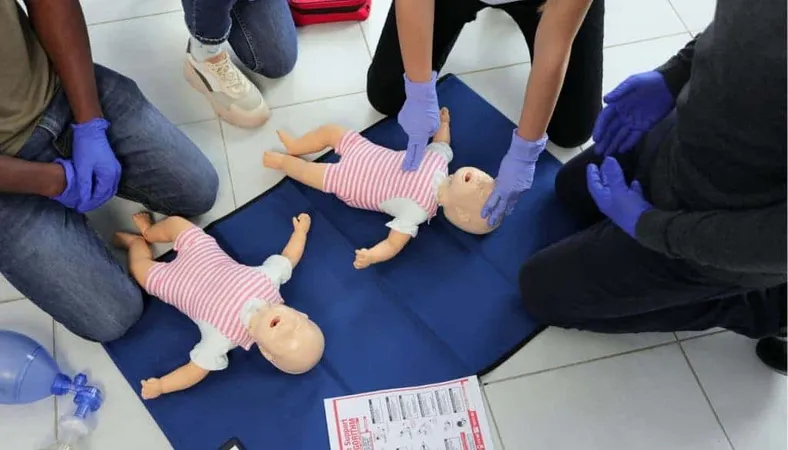
The PALS Provider course from the American Heart Association teaches how to assess and treat infants and children in respiratory distress, shock, rhythm problems and cardiac arrest. It also covers how a resuscitation team works together. It is meant for healthcare professionals who may respond to pediatric emergencies.
Before the course. All students must complete the Precourse Self-Assessment and score at least 70% before taking the PALS course.
Delivery. One option is instructor-led, where an AHA Instructor runs the course in a classroom. The AHA describes its other formats on its PALS course options page at cpr.heart.org. The formats, schedules and fees open to you depend on the training center you book with.
Scoring. First you work through patient cases. Once you have completed all of them, you must pass a multiple-choice exam with a minimum score of 84%.
Retakes. We have not verified the AHA's retake rules, so we do not state them here. Ask your training center what happens if you do not reach the passing score.
Card and renewal. Students who pass receive a PALS Provider Course Completion eCard, valid for two years. The renewal date is 2 years after issue, through the end of the month. Check the American Heart Association pages for current details before you book.
PALS Practice Test Questions
Prepare for the PALS - Pediatric Advanced Life Support exam with our free practice test modules. Each quiz covers key topics to help you pass on your first try.
PALS Cardiac Arrest
PALS Exam Questions covering Cardiac Arrest. Master PALS Test concepts for certification prep.
PALS Tachycardia
Free PALS Practice Test featuring Tachycardia. Improve your PALS Exam score with mock test prep.
PALS Airway Management
PALS Mock Exam on Airway Management. PALS Study Guide questions to pass on your first try.
PALS - Pediatric Advanced Life Support Bra...
PALS Practice Questions for - Pediatric Advanced Life Support Bradycardia With a Pulse. Build confidence for your PALS certification exam.
PALS - Pediatric Advanced Life Support Car...
PALS Test Online for - Pediatric Advanced Life Support Cardiac Arrest Algorithm. Free practice with instant results and feedback.
PALS - Pediatric Advanced Life Support Hig...
PALS Study Material on - Pediatric Advanced Life Support High-Quality Pediatric BLS. Prepare effectively with real exam-style questions.
PALS - Pediatric Advanced Life Support Man...
Free PALS Test covering - Pediatric Advanced Life Support Managing Respiratory Emergencies. Practice and track your PALS exam readiness.
PALS - Pediatric Advanced Life Support PAL...
PALS Exam Questions covering - Pediatric Advanced Life Support PALS Pharmacology. Master PALS Test concepts for certification prep.
PALS - Pediatric Advanced Life Support Ped...
Free PALS Practice Test featuring - Pediatric Advanced Life Support Pediatric Shock Management. Improve your PALS Exam score with mock test prep.
PALS - Pediatric Advanced Life Support Ped...
PALS Mock Exam on - Pediatric Advanced Life Support Pediatric Systematic Assessment. PALS Study Guide questions to pass on your first try.
PALS - Pediatric Advanced Life Support Pos...
PALS Test Prep for - Pediatric Advanced Life Support Post-Cardiac Arrest Care. Practice PALS Quiz questions and boost your score.
PALS - Pediatric Advanced Life Support Res...
PALS Questions and Answers on - Pediatric Advanced Life Support Resuscitation Team Dynamics. Free PALS practice for exam readiness.
PALS - Pediatric Advanced Life Support Tac...
PALS Mock Test covering - Pediatric Advanced Life Support Tachycardia With a Pulse. Online PALS Test practice with instant feedback.
Worked examples: how to reason through PALS questions
These are practice questions written for this site, not questions from the real exam. Each explanation shows why the right answer is right and why the others are wrong.
Example 1
Question: When a narrow QRS complex is present in both stable and unstable sinus tachycardia situations, what is the most crucial intervention?
- Obtain a 12-lead ECG
- Identify and treat the underlying cause
- Monitor blood pressure and pulse oximetry
- Provide oxygen therapy
Answer: B. Identify and treat the underlying cause
Explanation:
B is correct. Sinus tachycardia is usually the body responding to a stressor such as fever, hypovolemia, hypoxemia, pain or anxiety. The fast rate is often compensating for that stressor, so the priority is to find and treat what is causing it. A is wrong because a 12-lead ECG helps confirm the rhythm but treats nothing. C is wrong because watching blood pressure and pulse oximetry is routine support, not the step that fixes the problem. D is wrong because oxygen helps when hypoxemia is the cause, but it does nothing for fever, fluid loss or pain. Rule to remember: with sinus tachycardia, do not try to slow the heart directly. Treat the reason it is fast, and the rate will follow.
Example 2
Question: In pediatric cardiac arrest, IO access should be considered when IV access cannot be established within:
- 1–2 minutes or after 2 failed IV attempts
- 5 minutes or after 5 failed attempts
- 30 seconds
- 10 minutes
Answer: A. 1–2 minutes or after 2 failed IV attempts
Explanation:
A is correct. In pediatric cardiac arrest, drugs and fluids need a route quickly, and an IO needle can usually be inserted fast and reliably. If IV access is not established within 1–2 minutes or after 2 failed IV attempts, switch to IO instead of trying again. B is wrong because waiting 5 minutes or for 5 failed attempts delays medications and fluids far too long. C is wrong because 30 seconds is too short a cut-off under this rule, which allows a brief IV attempt first. D is wrong because going 10 minutes without vascular access during an arrest is unacceptable. Rule to remember: during an arrest, never let repeated IV attempts hold up medications. Move to IO early.
Example 3
Question: Which post-cardiac arrest intervention is recommended to prevent secondary brain injury in a comatose child after ROSC?
- Active cooling to 32°C for 48 hours
- Targeted temperature management (normothermia 36-37.5°C or mild hypothermia 32-34°C)
- Immediate warming to 38°C
- Fever induction to burn pathogens
Answer: B. Targeted temperature management (normothermia 36-37.5°C or mild hypothermia 32-34°C)
Explanation:
B is correct. After ROSC, a comatose child's brain is vulnerable, and fever makes secondary injury worse. Targeted temperature management keeps the child within a controlled range, either normothermia (36-37.5°C) or mild hypothermia (32-34°C), with close monitoring. A is wrong because it gives one fixed temperature and duration instead of the managed target ranges in the recommendation. C is wrong because warming to 38°C causes a fever, which is exactly what TTM is meant to prevent. D is wrong because fever harms the injured brain, and infection is treated with antimicrobials, not by raising the temperature. Rule to remember: after ROSC in a comatose child, hold the temperature within a target range and actively prevent fever.
How to use these practice tests
Start with the official AHA material from your training center, and take the Precourse Self-Assessment early. You need at least 70% on it before class, and your results show which topics to study first.
Next, work through our sets in the order a real case unfolds. Begin with systematic assessment and high-quality pediatric BLS, because every other algorithm builds on them. Then do respiratory emergencies, airway management, shock management and vascular access and fluids. After that, move to rhythms: arrhythmia recognition, bradycardia with a pulse, tachycardia with a pulse and the cardiac arrest algorithm. Finish with pharmacology, post-cardiac arrest care and team dynamics.
For each question you miss, write one line on why the correct option is right. Then check it against the AHA provider manual, not only our explanation. The real exam requires a minimum of 84%, so aim to score well above that on our sets before course day. In the last few days, talk through each algorithm out loud from start to finish, because you will have to apply them in the patient cases.

PALS FAQ
Written and edited by Nathan Beja, founder of Practice Test Geeks, with AI assistance. Exam facts are checked against the official sources linked below. Editorial policy
Sources & references
Exam facts on this page (fees, format, dates, passing scores) are checked against these official sources; the date is our last check. Editorial policy
- cpr.heart.org — Renewal, score release, test delivery, passing score, score validity · verified Nov 2026
- elearning.heart.org — Eligibility · verified Nov 2026