
What Is OSHA? Definition, History, and Worker Rights 2026 October
What is OSHA? Learn what the Occupational Safety and Health Administration does, its history, regulations, and how it protects workers on the job. 💡

What Is OSHA? Understanding the Occupational Safety and Health Administration
If you've ever wondered what stands between a worker and a dangerous job site, the answer is often OSHA. The Occupational Safety and Health Administration is the federal agency that sets and enforces workplace safety standards across the United States — and it's one of the most consequential regulatory bodies most workers never think about until something goes wrong.
Created in 1970, OSHA has fundamentally reshaped how American employers approach safety. It's the reason your employer can't ignore a broken machine, expose you to toxic chemicals without protection, or skip safety training just because it's inconvenient. Whether you work in construction, healthcare, manufacturing, or a warehouse, OSHA's rules likely touch your daily work life in ways you might not even notice.
This guide breaks down exactly what OSHA is, why it was created, how it operates, and what it means for you as a worker.
The History Behind OSHA
Before OSHA existed, American workplaces were genuinely dangerous — and largely unregulated at the federal level. In 1970 alone, an estimated 14,000 workers died on the job each year. Millions more suffered injuries and illnesses tied to workplace hazards. The federal government had no unified authority to intervene.
Congress passed the Occupational Safety and Health Act of 1970, and President Richard Nixon signed it into law on December 29, 1970. OSHA officially opened for business on April 28, 1971 — a date now recognized as Workers' Memorial Day. The agency was born under the Department of Labor, where it still operates today.
The results over the following decades were dramatic. By the 2020s, workplace fatalities had dropped more than 60% from the 1970 baseline, even as the total workforce more than doubled. That's not an accident — it's the direct result of enforceable standards, inspections, and employer accountability.
What Does OSHA Actually Do?
OSHA wears several hats. Understanding each one helps clarify why the agency matters:
Setting Safety Standards
OSHA's core job is writing safety rules — detailed, legally binding regulations covering everything from how high a scaffold must be before guardrails are required, to the permissible exposure limits for chemicals like benzene or silica dust. These standards go through a formal rulemaking process that includes public comment periods and review cycles.
Standards are organized into industry categories. Construction workers face different hazards than hospital nurses, so OSHA maintains separate standards for general industry, construction, maritime, and agriculture.
Conducting Worksite Inspections
Rules without enforcement are just suggestions. OSHA employs compliance officers — trained inspectors — who visit workplaces to check whether employers follow the rules. Inspections happen for several reasons: a worker files a complaint, there's a fatality or serious injury, the site is part of a targeted high-hazard program, or an employer self-reports an issue.
You can't bribe or bluff your way through an OSHA inspection. Compliance officers have the legal authority to enter any workplace, review records, interview employees privately, and issue citations with penalties.
Enforcing Penalties
When inspectors find violations, they issue citations and propose penalties. Fines aren't trivial. As of 2024, serious violations carry maximum penalties of 6,131 per violation. Willful or repeated violations can reach 61,323 per violation. Employers who contest citations go through an administrative review process with the Occupational Safety and Health Review Commission.
Training and Outreach
OSHA isn't only an enforcement agency — it also operates extensive training programs. The OSHA Training Institute provides courses for compliance officers, and OSHA-authorized outreach trainers deliver OSHA 10 and OSHA 30 certification programs to workers and supervisors across industries. These voluntary training cards are widely recognized by employers as proof of basic safety competency.
Who Does OSHA Cover?
OSHA covers most private-sector employers and their workers in all 50 states, the District of Columbia, Puerto Rico, and other U.S. territories. That's roughly 10 million workplaces and 130 million workers.
There are important exceptions, though. Self-employed workers aren't covered. Farms that employ only the immediate family of the farm owner fall outside OSHA's jurisdiction. Workers covered by other federal safety laws — miners under MSHA, nuclear workers under the Nuclear Regulatory Commission, flight crews under the FAA — also fall outside OSHA's direct authority.
Federal government agencies are covered under OSHA, but federal agencies can't be cited or fined the way private employers can. Instead, they're required to maintain programs that are at least as effective as OSHA's private-sector coverage.
State Plan Programs
Twenty-nine states and territories run their own OSHA-approved safety programs, known as State Plans. States like California (Cal/OSHA), Michigan, and Washington operate independently, but they're required to adopt standards that are at least as protective as federal OSHA's. In some cases — California being the prime example — state plans go considerably further than the federal baseline.
If you're in a State Plan state, your workplace safety agency is technically the state agency, not federal OSHA. But the standards and enforcement mechanisms work the same way.
Key OSHA Standards Every Worker Should Know
OSHA has hundreds of specific standards, but some come up repeatedly across industries:
Hazard Communication (HazCom/GHS): Employers must inform workers about the chemicals they work with through labels and Safety Data Sheets. This standard protects millions of workers from chemical exposures they might not otherwise understand.
Lockout/Tagout (LOTO): Equipment must be properly de-energized before maintenance work begins. Failure to follow LOTO procedures is one of the deadliest OSHA violations year after year.
Fall Protection: In construction, falls are the leading cause of death. OSHA's fall protection standards dictate when guardrails, safety nets, and personal fall arrest systems are required. You can test your knowledge with our OSHA fall protection practice test.
Respiratory Protection: Workers exposed to airborne hazards need fit-tested respirators and a written respiratory protection program.
Personal Protective Equipment (PPE): When engineering controls can't fully eliminate a hazard, employers must provide appropriate PPE — at no cost to the worker.
Emergency Action Plans: Most employers must have a written plan outlining what workers should do in fires, evacuations, and other emergencies.
Confined Space Entry: Workers entering permit-required confined spaces need specific training and procedures. Our confined space entry practice test covers the key rules in detail.
Your Rights Under OSHA
Here's something many workers don't realize: OSHA doesn't just regulate employers — it gives you specific rights you can use on the job.
The right to a safe workplace. Your employer must provide a workplace free from recognized hazards. This is the General Duty Clause, OSHA's catch-all provision that applies even when no specific standard addresses a particular hazard.
The right to information. You can request copies of injury and illness records, ask about chemical hazards, and review the results of any exposure monitoring your employer has done.
The right to file a complaint. If you believe your workplace has a safety violation, you can file a confidential complaint with OSHA. Complaints can be filed online, by phone, by mail, or in person at any OSHA office.
Anti-retaliation protection. This one's critical. OSHA's Section 11(c) prohibits employers from retaliating against workers who exercise their safety rights — filing complaints, participating in inspections, or refusing work they reasonably believe poses imminent danger. If your employer punishes you for reporting a safety issue, you have 30 days to file a retaliation complaint with OSHA.
Employer Responsibilities Under OSHA
The burden of compliance falls primarily on employers, not workers. Under OSHA, your employer must:
- Follow all applicable OSHA standards
- Inform workers about chemical hazards in their work environment
- Provide required training in a language workers understand
- Provide necessary PPE at no charge to employees
- Keep accurate records of work-related injuries and illnesses (required for employers with 11 or more employees)
- Post the OSHA workplace poster in a visible location
- Report any worker fatality within 8 hours, and any hospitalization, amputation, or eye loss within 24 hours
Employers who fail these obligations face inspections, citations, and fines — and in egregious cases, criminal prosecution.
How OSHA Inspections Work
Many workers — and even managers — don't fully understand what happens during an OSHA inspection. Here's the basic flow.
osha compliance first aid kit officers typically arrive without advance notice for complaint-driven visits. They present credentials, explain why they're there, and conduct an opening conference with employer representatives. Then they walk through the facility, examine records, and interview workers privately.
Those private interviews matter. OSHA officers can speak with workers without management present, and you're protected from retaliation for cooperating honestly. At the end, there's a closing conference where the officer discusses any apparent violations.
Citations arrive by mail. Employers have 15 business days to contest. The abatement process — actually fixing the problem — runs on a separate timeline, but serious hazards typically require quick correction regardless of whether the employer contests the citation.
OSHA vs. NIOSH: What's the Difference?
People often mix up OSHA and NIOSH. They're related but serve different functions.
OSHA is an enforcement agency — it sets standards and cites employers for violations. NIOSH is a research agency under the Centers for Disease Control and Prevention. NIOSH conducts scientific studies on occupational hazards, recommends exposure limits, and investigates workplace fatality clusters. It doesn't enforce anything. Think of NIOSH as the lab that identifies what's dangerous and OSHA as the authority that tells employers to fix it.
Why OSHA Knowledge Matters for Your Career
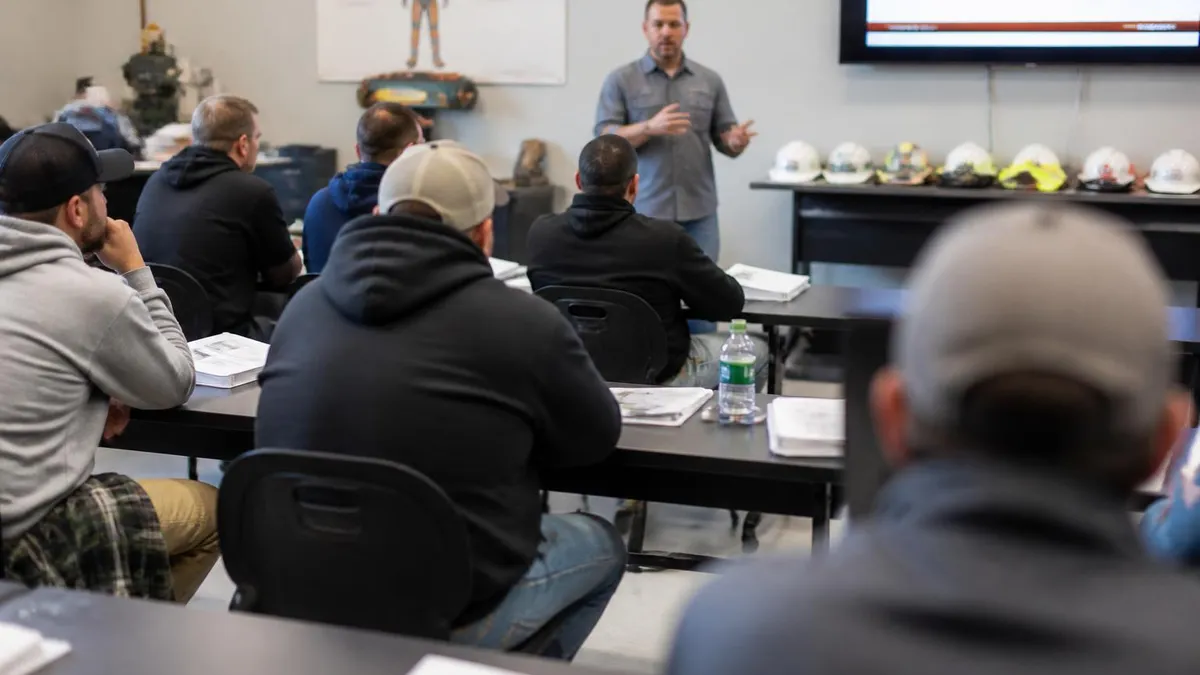
Understanding what OSHA is goes beyond theory — for many workers and job seekers, formal OSHA training is a genuine career asset. Employers in construction, warehousing, manufacturing, and healthcare increasingly treat OSHA 10 or OSHA 30 cards as a baseline hiring requirement. Some job sites won't let you set foot on them without a valid OSHA card.
The OSHA safety certificate covers the full regulatory framework: hazard identification, fall protection, electrical safety, lockout/tagout, recordkeeping, emergency planning, and more. Preparing for that credential means understanding not just the rules themselves, but the reasoning behind them — which is exactly what makes you a safer worker in the field.
Our free OSHA practice questions are organized by topic so you can zero in on the areas where you need the most work. Practicing real exam-style questions is the most effective way to retain this material and feel ready on test day.
OSHA's reach is wide — 130 million workers, 10 million workplaces, and fifty-plus years of rulemaking. Its purpose, though, is pretty simple: make sure every worker gets to go home at the end of the shift.
About the Author

Certified Safety Professional & OSHA Compliance Expert
Indiana University of Pennsylvania Safety SciencesDr. William Foster holds a PhD in Safety Science from Indiana University of Pennsylvania and is a Certified Safety Professional (CSP) and Certified Hazardous Materials Manager. With 20 years of occupational health and safety management experience across construction, manufacturing, and chemical industries, he coaches safety professionals through OSHA certification, CSP, CHST, and safety management licensing programs.
Join the Discussion
Connect with other students preparing for this exam. Share tips, ask questions, and get advice from people who have been there.
View discussion (8 replies)