
What Does OSHA Mean? The Complete Guide to the Occupational Safety and Health Administration
📝 What does OSHA mean? Learn the full acronym, the agency's history, key standards, worker rights, and how to earn an OSHA card with free practice tests.

If you have ever walked onto a job site or read a workplace poster and wondered what does OSHA mean, you are asking one of the most common safety questions in the United States. OSHA stands for the Occupational Safety and Health Administration, a federal agency created under the Occupational Safety and Health Act of 1970. Its core mission is straightforward: to ensure safe and healthful working conditions for workers by setting and enforcing standards and by providing training, outreach, education, and assistance to employers and employees alike.
The acronym itself is worth breaking down because each word carries weight. "Occupational" refers to anything related to your job or workplace. "Safety" covers protection from physical hazards like falls, machinery, and electrical dangers. "Health" addresses long-term exposures such as chemicals, noise, and airborne particles. "Administration" signals that OSHA is a government body with real authority. Understanding what does OSHA mean starts with recognizing it is both a law and the agency that enforces that law every single day across the country.
OSHA operates as part of the United States Department of Labor. Before 1970, workplace safety in America was largely a patchwork of inconsistent state rules and voluntary employer practices. Thousands of workers died each year, and many more suffered preventable injuries and illnesses. The federal government stepped in to create a single national framework. Today OSHA covers most private-sector employers and their workers in all fifty states, the District of Columbia, and other U.S. jurisdictions, either directly or through OSHA-approved state plans.
Many people first encounter OSHA through the famous workplace poster that every covered employer must display. That poster lists worker rights, including the right to a safe workplace, the right to report hazards without retaliation, and the right to request an inspection. Others learn about OSHA when they pursue an OSHA 10 or OSHA 30 training card, which has become a near-universal requirement in construction and general industry. These cards demonstrate that a worker has completed basic hazard-recognition training approved by the agency.
It also helps to clarify what OSHA is not. OSHA does not issue licenses to individual workers, and there is technically no such thing as being "OSHA certified" in a strict legal sense. Instead, workers earn completion cards from authorized training programs. OSHA itself sets the standards, conducts inspections, and issues citations and penalties to employers who violate the rules. When you understand this distinction, a lot of common confusion about safety credentials and compliance suddenly makes much more sense for everyone involved.
For workers and employers alike, knowing what OSHA means is the foundation for everything else in workplace safety. Whether you are choosing what does osha mean for your protective equipment, filling out injury logs, or preparing for an inspection, the agency's standards shape your daily routine. This guide walks through the agency's history, structure, key standards, worker rights, employer duties, and the practical steps you can take to stay compliant and protect yourself and your coworkers on the job.
OSHA by the Numbers
How OSHA Is Structured
Led by the Assistant Secretary of Labor for Occupational Safety and Health, who reports to the Secretary of Labor and sets national policy, standards, and enforcement priorities for the entire agency.
Ten regional offices and dozens of area offices handle the local work: responding to complaints, scheduling inspections, and offering compliance assistance to employers who request guidance.
About 22 states run OSHA-approved programs that must be at least as effective as federal OSHA. Cal/OSHA in California is among the largest, with rules exceeding federal minimums.
The OSHA Training Institute, Voluntary Protection Programs, and the free On-Site Consultation Program deliver education and recognition to employers and workers nationwide.
To fully grasp what OSHA means in practice, it helps to understand how the agency is structured and what powers it actually holds. OSHA is headed by an Assistant Secretary of Labor for Occupational Safety and Health, who reports to the Secretary of Labor. Below that level, the agency operates through ten regional offices and dozens of area offices spread across the country. These local offices are where the real work happens, including responding to worker complaints, scheduling inspections, and offering compliance assistance to businesses that request guidance.
One of the most important features of the OSHA system is the concept of state plans. The federal law allows individual states to run their own occupational safety and health programs, provided those programs are at least as effective as federal OSHA. Currently, about half the states operate OSHA-approved plans, some covering both private and public-sector workers and others covering only state and local government employees. California, known as Cal/OSHA, runs one of the largest and most detailed of these state programs with many rules that exceed federal minimums.
OSHA's authority rests on its power to set legally binding standards. These standards fall into major categories such as General Industry, Construction, Maritime, and Agriculture. Each set of standards is published in the Code of Federal Regulations, and employers are legally required to comply with the rules that apply to their industry. When no specific standard exists for a recognized hazard, the General Duty Clause of the OSH Act still requires employers to keep the workplace free from recognized hazards likely to cause death or serious physical harm.
Enforcement is the teeth behind the standards. OSHA compliance officers conduct workplace inspections, which can be triggered by imminent danger, severe injuries or fatalities, worker complaints, referrals, targeted programs, or follow-up visits. During an inspection, the officer holds an opening conference, walks through the site, and conducts a closing conference. If violations are found, the employer can receive citations classified as other-than-serious, serious, willful, or repeat, each carrying different penalty amounts that are adjusted for inflation each year.
Beyond enforcement, OSHA invests heavily in education and cooperative programs. The agency funds the OSHA Training Institute and a network of authorized education centers that deliver courses to thousands of workers and trainers annually. Voluntary programs like the Voluntary Protection Programs recognize worksites with exemplary safety records, while the On-Site Consultation Program offers free, confidential help to small and medium businesses without the risk of citations. These cooperative efforts reflect OSHA's belief that prevention and partnership often work better than punishment alone.
Funding and staffing shape how much OSHA can actually do. With a relatively modest budget and a limited number of inspectors covering millions of worksites, the agency cannot possibly visit every employer. This reality is why worker awareness, employer self-policing, and strong safety cultures matter so much. Knowing what OSHA means includes understanding that the law works best when everyone, from the corner office to the shop floor, takes shared responsibility for identifying hazards and fixing them before anyone gets hurt on the job.
OSHA History, Impact, and Limits
OSHA was born from a crisis. By the late 1960s, an estimated 14,000 workers were dying on the job each year in the United States, with millions more injured. Public pressure and union advocacy pushed Congress to act. President Richard Nixon signed the Occupational Safety and Health Act into law in December 1970, and OSHA officially began operating in April 1971. The agency represented the first comprehensive federal commitment to workplace safety in American history.
In its early years, OSHA faced criticism for confusing rules and aggressive enforcement that frustrated small businesses. Over the following decades, the agency refined its standards, added cooperative programs, and shifted toward a balance of enforcement and assistance. Major standards like hazard communication and bloodborne pathogens emerged in the 1980s and 1990s, reflecting growing scientific understanding of long-term workplace health risks that earlier rules had largely overlooked entirely.

Is Earning an OSHA Card Worth It?
- +Required by many employers and job sites before you can start work
- +Demonstrates hazard-recognition skills that make you more employable
- +Helps you advance into supervisory and safety-lead roles
- +Reduces your personal risk of injury on the job
- +Cards from authorized providers are recognized nationwide
- +OSHA 30 covers deeper material valued by foremen and managers
- −There is no single lifelong 'OSHA certification' for individuals
- −Courses cost money and take 10 or 30 hours to complete
- −Cards do not replace site-specific or job-specific training
- −Some states and employers have additional requirements beyond the card
- −Knowledge fades without ongoing practice and refreshers
- −Online providers vary in quality, so you must choose an authorized one
Your OSHA Worker Rights Checklist
- ✓Confirm the OSHA poster is displayed where you can read it
- ✓Request training on the hazards specific to your job tasks
- ✓Locate the safety data sheets for chemicals you handle
- ✓Ask to review the workplace injury and illness logs
- ✓Request copies of your own medical and exposure records
- ✓Know how to file a confidential complaint with OSHA
- ✓Understand that retaliation for reporting hazards is illegal
- ✓Verify that required PPE is provided at no cost to you
- ✓Identify your workplace safety representative or committee
- ✓Report hazards through the proper channels before harm occurs
OSHA standards are a floor, not a ceiling
Compliance with OSHA standards is the legal minimum, not the goal. The safest workplaces go well beyond the rules with regular hazard assessments, blame-free reporting, and ongoing training. Treat the standards as your starting line, and you will prevent far more injuries than mere checkbox compliance ever could.
Worker rights sit at the heart of what OSHA means for the average employee. Under the OSH Act, every covered worker has the right to a workplace free from recognized serious hazards. You have the right to receive information and training about hazards, methods to prevent harm, and the OSHA standards that apply to your workplace, delivered in a language and vocabulary you can understand. This training requirement is not optional window dressing; it is a legal obligation that employers must meet for hazardous tasks.
You also have the right to review records of work-related injuries and illnesses. Employers in many industries must keep an injury log, and OSHA gives you and your representatives access to that data. You can request copies of your own medical records and any exposure records the employer keeps, such as results from noise or air-quality monitoring. These records help you understand the real risks of your job and give you evidence if you ever need to pursue a workers' compensation claim or a safety complaint.
Perhaps the most powerful right is the ability to file a complaint and request an OSHA inspection without fear of retaliation. If you believe your workplace has a serious hazard or that your employer is not following OSHA standards, you can file a confidential complaint online, by phone, or in writing. OSHA keeps your identity private if you ask. The law strictly prohibits employers from firing, demoting, transferring, or otherwise punishing you for exercising your safety rights, and you can file a whistleblower complaint if retaliation occurs.
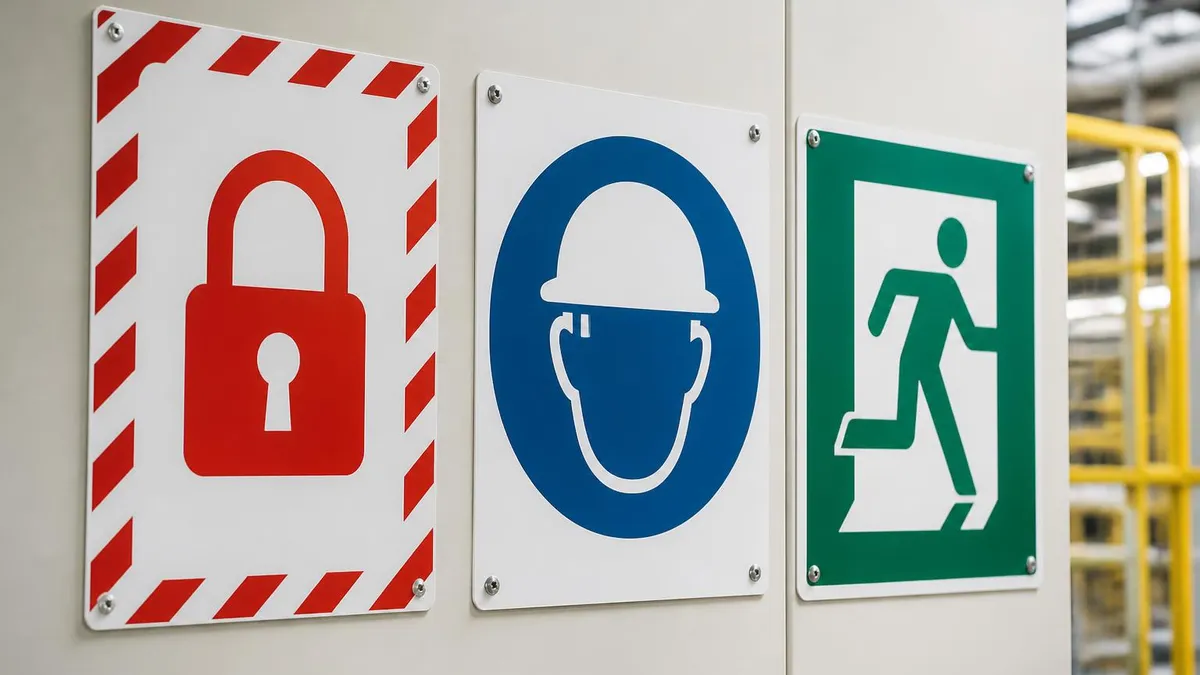
Employers carry the matching set of responsibilities. They must provide a safe workplace, comply with all applicable OSHA standards, and use color codes, posters, labels, or signs to warn employees of potential hazards. They must establish and update operating procedures, provide required personal protective equipment at no cost to workers in most cases, and offer medical examinations and training when standards require them. Employers also must post OSHA citations at or near the location of the violation so workers are aware of the issue.
Recordkeeping is a major employer duty that often surprises new business owners. Companies with more than ten employees in many industries must record serious work-related injuries and illnesses, maintain the proper logs, and report severe incidents to OSHA. A workplace fatality must be reported within eight hours, and any inpatient hospitalization, amputation, or loss of an eye must be reported within twenty-four hours. Failing to report these events accurately can itself become a serious violation with significant financial penalties attached.
Finally, both workers and employers benefit from understanding that OSHA is meant to be a floor, not a ceiling. The standards represent the legal minimum, and the best workplaces go well beyond them. A strong safety culture, regular hazard assessments, open reporting without blame, and ongoing training all reduce injuries far more effectively than mere compliance. When everyone understands their rights and duties, the abstract idea of what OSHA means turns into concrete daily habits that genuinely keep people alive and healthy at work.

Employers must report a workplace fatality to OSHA within 8 hours and any inpatient hospitalization, amputation, or loss of an eye within 24 hours. Missing these deadlines can itself become a serious violation carrying significant penalties, so know the rules before an incident ever happens.
OSHA standards touch nearly every part of a worker's day, and learning the major rule categories helps you see where the agency shows up in real life. In construction, the so-called Focus Four hazards account for the majority of fatalities: falls, struck-by incidents, caught-in or between hazards, and electrocution. OSHA devotes enormous attention to fall protection, requiring guardrails, safety nets, or personal fall arrest systems for work at heights above specified thresholds. Fall protection violations consistently top the agency's annual list of most-cited standards across the entire country.
Hazard communication is another cornerstone standard that affects general industry and construction alike. Often called HazCom or the "right to know" rule, it requires employers to maintain safety data sheets, label chemical containers properly, and train workers on the chemicals they may encounter. The standard aligns with the Globally Harmonized System of classification, giving workers consistent pictograms and signal words. If your workplace uses cleaning solvents, paints, adhesives, or industrial chemicals, HazCom is one of the OSHA rules you will run into most often.
Personal protective equipment, or PPE, is governed by its own family of standards. Employers must assess the workplace for hazards and provide appropriate protection, which may include head protection like what does osha mean when choosing compliant gear, eye and face protection, hearing protection, respiratory protection, and protective footwear. In most situations the employer must pay for required PPE. The standards also require training so workers know when PPE is needed, how to wear it correctly, and how to maintain and dispose of it safely over time.
Several specialized standards govern high-risk activities that demand extra caution. Lockout/tagout rules control hazardous energy during equipment maintenance, preventing machines from unexpectedly starting up. Confined space standards protect workers who enter tanks, silos, sewers, and other enclosed areas with limited exits and potential atmospheric hazards. Respiratory protection rules require fit testing and medical evaluation. Each of these standards exists because real workers died before the rules were written, and each continues to prevent serious incidents when employers follow them properly.
Recordkeeping and reporting standards quietly underpin the entire system. The injury and illness logs that employers maintain feed national data that OSHA uses to target inspections and identify emerging hazards. Bloodborne pathogen standards protect healthcare and other workers from exposure to infectious materials. Noise standards require hearing conservation programs once exposures reach certain levels. Together these rules show that OSHA covers not just dramatic accidents but also the slow, cumulative health risks that can take years to harm a worker's body.
For anyone trying to navigate this landscape, the key insight is that standards are industry-specific and hazard-specific. You do not need to memorize every rule in the Code of Federal Regulations. Instead, identify the hazards present in your own workplace, find the standards that address those hazards, and build your training and procedures around them. OSHA's website offers plain-language guidance, eTools, and topic pages for almost every industry, making it far easier than it used to be to understand exactly which rules apply to your particular job and workplace.
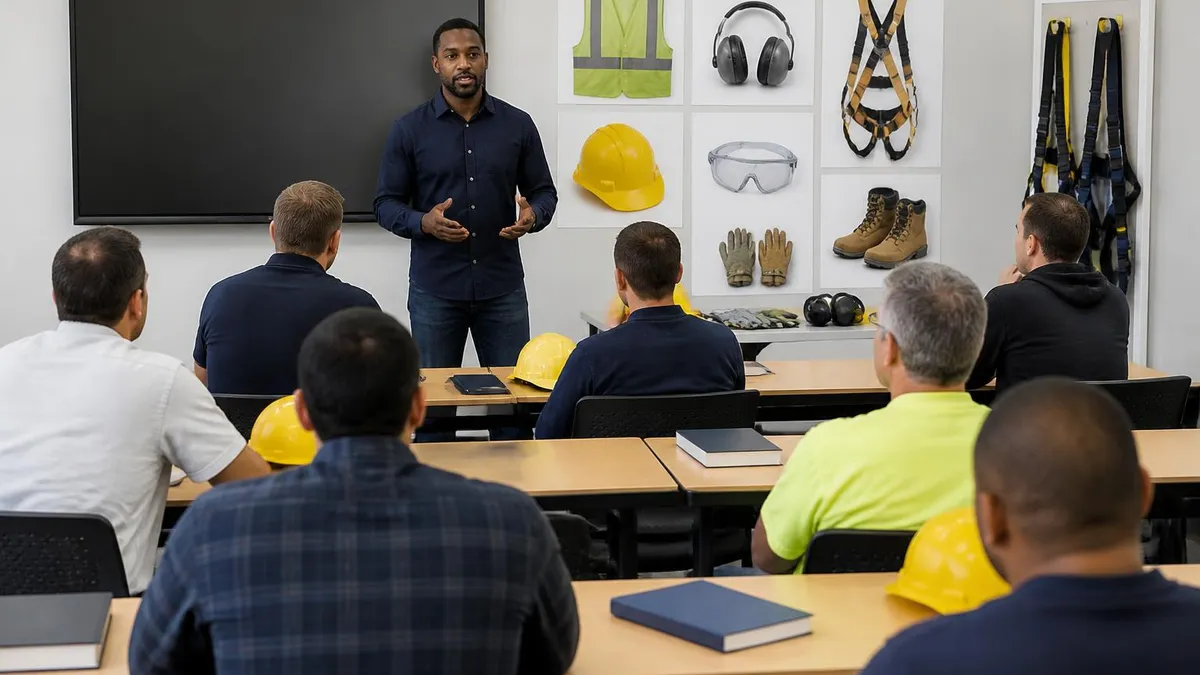
If your goal is to actually demonstrate your OSHA knowledge, the most practical step is to pursue an authorized OSHA training card and to study deliberately for it. The OSHA 10-Hour course is designed for entry-level workers and covers hazard recognition, worker rights, and common standards in either construction or general industry. The OSHA 30-Hour course goes deeper and targets supervisors, foremen, and safety leads. Many states and employers now require one of these cards before you can step onto certain job sites, so completing one can open real doors.
Preparation matters even though these courses are not pass-or-fail exams in the traditional sense. The best approach is to treat the material like any other professional knowledge: review the major standards, learn the vocabulary, and test yourself with practice questions until the concepts stick. Free practice tests are an excellent way to find the gaps in your understanding before you sit through the official training. They turn passive reading into active recall, which research consistently shows is one of the most effective ways to learn and retain technical material over the long term.
When you study, focus first on the highest-frequency topics. Fall protection, hazard communication, personal protective equipment, electrical safety, and machine guarding appear again and again in both training and real inspections. If you can confidently explain the Focus Four construction hazards and the basics of the General Duty Clause, you already understand a large share of what OSHA means in everyday practice. Build flashcards or notes around these core areas, and revisit them in short sessions spread across several days rather than cramming everything at once.
Use realistic practice questions that mirror the style of the actual training assessments. Questions that ask you to identify the correct response to a spill, the proper height that triggers fall protection, or the right way to label a chemical container force you to apply knowledge rather than just recognize it. After each practice set, review every question you missed and read the explanation carefully. Understanding why a wrong answer is wrong often teaches you more than simply memorizing the correct choice, and it builds the judgment inspectors and employers actually value.
Beyond the card itself, keep building habits that reflect a genuine safety mindset. Read the OSHA poster at your own workplace, locate the safety data sheets for the chemicals you handle, and know who your safety representative is. Practice spotting hazards during your normal routine and report them through the proper channels. These small daily actions reinforce the formal training and make the abstract rules feel concrete. Over time, you will find that compliance becomes second nature rather than a checklist you dread completing before an audit.
Finally, remember that OSHA knowledge is a career asset, not just a box to check. Workers who understand safety standards are more employable, more likely to advance into supervisory roles, and far less likely to be injured on the job. Employers value people who can recognize hazards and help maintain compliance without constant supervision. Whether you are just starting out or refreshing skills you have not used in years, investing time in understanding what OSHA means pays dividends throughout your entire working life and protects the people around you too.
OSHA Questions and Answers

OSHA Approved Hard Hats: Complete 2026 Guide to ANSI Z89.1 Compliance, Types, and Workplace Requirements

OSHA 300 Form: Complete Guide to the Log of Work-Related Injuries and Illnesses

OSHA 510: Course Content, Path to Trainer, and Realistic Path

OSHA Eyewash Requirements: Complete 2026 Guide to Eye Wash Stations, ANSI Z358.1 Compliance, and Workplace Standards
OSHA Violation Search: How to Find, Interpret, and Use Enforcement Records
About the Author

Certified Safety Professional & OSHA Compliance Expert
Indiana University of Pennsylvania Safety SciencesDr. William Foster holds a PhD in Safety Science from Indiana University of Pennsylvania and is a Certified Safety Professional (CSP) and Certified Hazardous Materials Manager. With 20 years of occupational health and safety management experience across construction, manufacturing, and chemical industries, he coaches safety professionals through OSHA certification, CSP, CHST, and safety management licensing programs.
Join the Discussion
Connect with other students preparing for this exam. Share tips, ask questions, and get advice from people who have been there.
View discussion (8 replies)