
OSHA Hole Covers: Complete Guide to Fall Protection Standards, Requirements, and Workplace Safety
OSHA hole covers requirements explained: standards, materials, load ratings, and installation rules to keep your worksite compliant. ✅
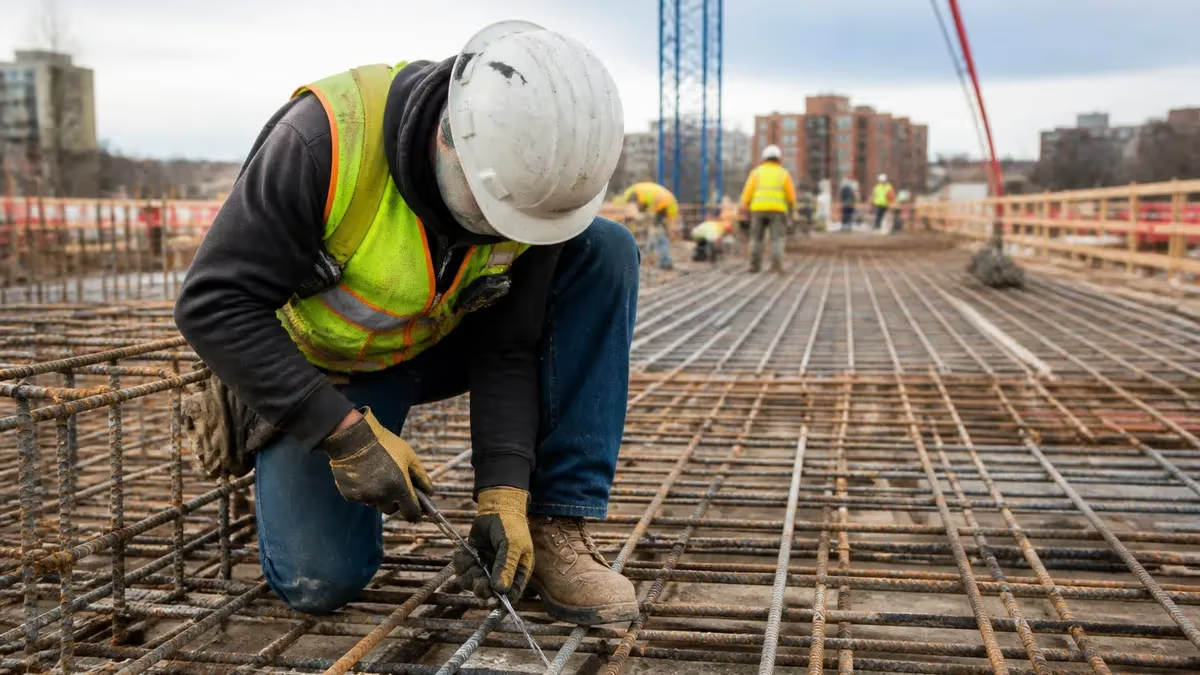
OSHA hole covers are one of the most critical yet frequently overlooked fall protection measures on any construction or industrial worksite. Under 29 CFR 1926.502(i), OSHA mandates that every hole in a walking or working surface must be covered or guarded to prevent workers from falling through. These covers apply to floor openings, roof openings, manholes, pit openings, and any other gap large enough for a person or object to pass through. Understanding the full scope of these regulations is essential for anyone responsible for worksite safety compliance.
The statistics surrounding fall-through and fall-into accidents are sobering. Falls remain the leading cause of fatal injuries in the construction industry, accounting for more than one-third of all construction worker deaths annually. A significant portion of these fatalities involve unguarded or improperly covered floor and roof openings. OSHA hole covers, when properly installed and maintained, directly prevent these tragedies. Employers who fail to meet these standards face citations, financial penalties, and the devastating human cost of preventable injuries and deaths on their job sites.
OSHA defines a hole as a gap or void two inches or more in its least dimension in a floor, roof, or other walking or working surface. This definition is broader than many employers realize — it includes not just large openings but also smaller gaps that can catch a foot, snag equipment, or allow tools and debris to fall onto workers below. Once a surface gap meets this definition, the employer must immediately address it through covers, guardrails, or other approved fall protection methods before allowing workers to access that area.
The regulations governing hole covers are detailed and specific. OSHA requires that covers be capable of supporting at least twice the weight of workers, equipment, and materials that may be imposed on the cover at any one time. This load rating requirement is not optional — it is a hard engineering standard that must be verified before a cover is placed in service. Materials like plywood, steel plate, and fiberglass grating can all qualify as hole covers, but only when they meet the structural requirements for the specific application and anticipated loads.
Color coding and labeling are also important elements of OSHA hole cover compliance. While OSHA does not mandate a specific color for hole covers, industry best practice — and many employer safety programs — call for covers to be painted or marked in high-visibility colors like safety orange or yellow. More critically, OSHA requires that covers be secured against displacement and clearly labeled with the word "HOLE" or "COVER" to warn workers not to remove or step around the barrier. This labeling requirement exists because workers unfamiliar with a site can easily mistake a cover for solid flooring.
Many workers and supervisors who deal with osha hole covers in their daily operations are surprised to learn how many different types of openings fall under these regulations. Elevator shafts, skylight openings, pipe penetrations, duct openings, and temporary construction holes all require the same level of protection as large floor openings. The rule is consistent: if it meets the dimensional definition of a hole, it must be covered or guarded, regardless of how long the opening will exist or how busy the surrounding area is.
For crane operators and workers in heavy construction, understanding OSHA hole cover requirements goes hand-in-hand with broader fall protection training. Operating around unguarded openings creates compounded risks — a worker distracted by crane signal communication or load management may not notice an uncovered hole in their path. Building comprehensive safety knowledge that spans both equipment operation and general site hazard recognition is the foundation of a truly safe worksite, and OSHA's certification and compliance standards reflect this interconnected approach to worker protection.
OSHA Hole Cover Safety by the Numbers
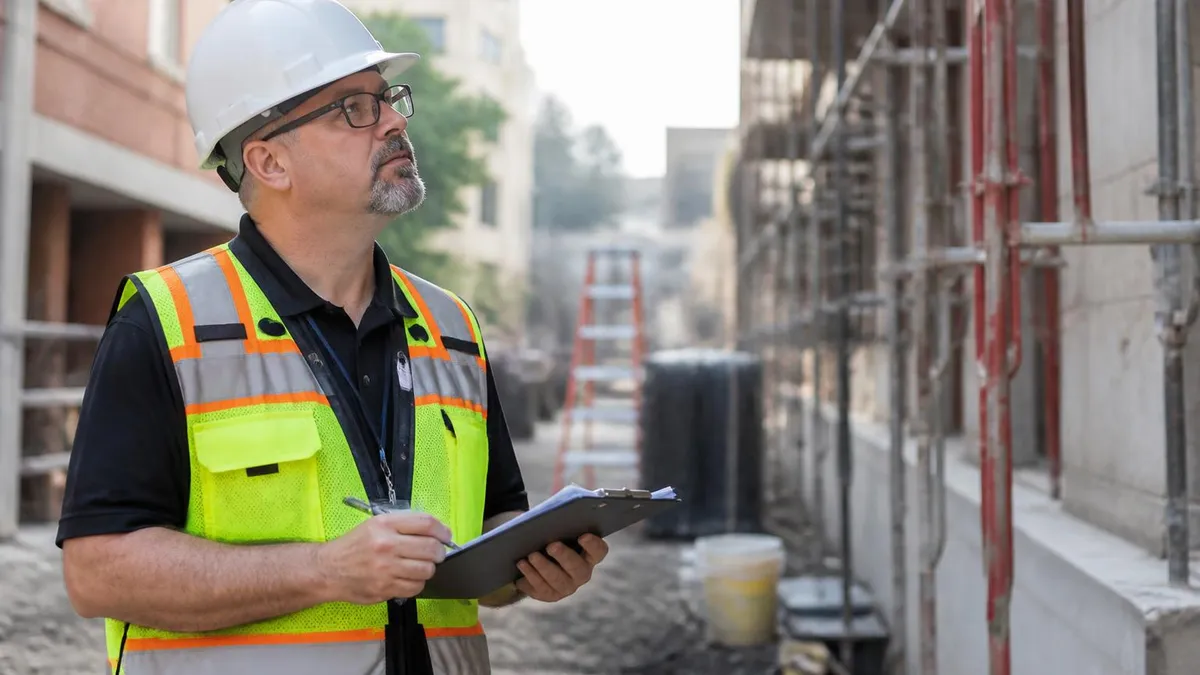
Key OSHA Hole Cover Regulatory Standards
The primary construction standard requiring covers for all holes two inches or more in any walking or working surface. Covers must be secured, labeled, and rated for twice the maximum anticipated load of workers and materials.
General industry standard governing floor and wall openings, holes, and covers in manufacturing, warehousing, and industrial facilities. Requires guardrails, covers, or equivalent protection for openings in walking and working surfaces.
The overarching fall protection subpart that establishes scope and definitions for all fall hazards in construction, including holes, floor openings, roof openings, and skylights that require systematic hazard control.
Updated general industry standard covering slip, trip, and fall hazards including holes in floors and other working surfaces. Requires employers to provide fall protection and ensure covers are strong enough to support anticipated loads.
Establishes the employer's affirmative duty to provide fall protection for every employee on a walking surface with an unprotected side, edge, or hole where a fall of six feet or more could occur.
Selecting the right materials for OSHA-compliant hole covers is not a one-size-fits-all decision. The material must be matched to the specific conditions of the opening, the anticipated loads, and the duration the cover will be in place. Common materials include plywood, oriented strand board (OSB), steel plate, aluminum checker plate, and heavy-duty fiberglass grating.
Each material has distinct advantages and limitations that make it more or less appropriate for specific applications. A steel plate cover suitable for a heavy-equipment area would be overkill — and impractical — for a light-duty pedestrian walkway in a finished building, where lighter composite materials might serve equally well.
Plywood is the most commonly used material for temporary hole covers on construction sites, and for good reason: it is readily available, inexpensive, and easy to cut to size. However, not all plywood is suitable. OSHA's requirement that covers support twice the anticipated load means that the thickness and grade of plywood must be calculated based on the size of the opening and the expected foot traffic or equipment loads.
As a general rule, 3/4-inch plywood is the minimum acceptable thickness for pedestrian use over openings up to 24 inches in diameter. Larger openings or heavier loads require thicker material or structural reinforcement around the cover's edges.
Steel plate covers offer superior strength and durability, making them the preferred choice for permanent or long-term openings in industrial facilities, parking structures, and roadway applications. A 1/4-inch steel plate can typically support thousands of pounds per square foot, far exceeding OSHA's two-times-load requirement for most applications. The main drawbacks of steel covers are their weight, which can make manual handling hazardous, and their tendency to become slip hazards in wet conditions unless fitted with anti-slip surfaces or patterns. Diamond-plate steel and galvanized grating both address the slip concern while maintaining the structural integrity required by OSHA.
Fiberglass grating has become increasingly popular in chemical plants, food processing facilities, and other environments where corrosion resistance and hygiene are priorities. Unlike steel, fiberglass does not rust or corrode, and it can be manufactured in configurations that allow liquid drainage while still meeting OSHA's load-bearing requirements. Fiberglass covers are also non-conductive, making them preferable near electrical equipment. However, purchasers must verify that the grating's load rating meets OSHA's twice-anticipated-load standard for their specific application, since fiberglass products vary widely in strength depending on the resin system, fiber orientation, and manufacturing process used.
Installation requirements are as important as material selection. OSHA mandates that hole covers be secured against accidental displacement. This means the cover cannot simply rest on the floor — it must be fastened with screws, bolts, cleats, or other positive attachment methods that prevent it from being kicked aside, shifted by equipment movement, or lifted by air pressure differences.
Many worksite covers are also marked with the word "HOLE" or "COVER" in large, clearly visible letters. While OSHA does not specify the exact font size or color, the marking must be visible to workers approaching the cover from any direction under normal worksite lighting conditions.
Edge preparation around a hole opening also affects cover performance and safety. Rough or irregular edges can prevent a cover from sitting flush with the surrounding floor surface, creating a trip hazard even when the opening itself is protected. Best practice calls for hole edges to be clean, square, and free from protruding rebar, form lumber, or other debris before covers are installed.
When the hole has a framed or reinforced edge — common in concrete construction where opening forms are left in place — the cover can often be attached directly to the framing, providing a more secure and level installation than a cover resting on unfinished concrete alone.
Temporary versus permanent covers are governed by the same OSHA standards but have different practical considerations. Temporary covers used during active construction must be treated with the same rigor as permanent installations because the construction phase is often when fall risks are highest. Workers are moving quickly, surfaces are uneven, and holes proliferate as mechanical, electrical, and plumbing penetrations are formed.
Permanent covers installed after construction is complete typically meet building code requirements as well as OSHA standards, and they may be incorporated into the finished floor surface in ways that make them nearly invisible — though they must still be labeled, accessible for maintenance, and structurally sound for their intended use.
OSHA Hole Cover Types, Applications, and Solutions
Floor and roof openings are the most common applications for OSHA-mandated hole covers. Floor holes in construction settings typically arise from plumbing and mechanical penetrations, elevator shaft openings, stairwell openings during construction, and temporary access hatches. Each must be covered or guarded continuously while the hole exists, not just when workers are actively in the area. OSHA's standard applies around the clock — a hole left uncovered overnight when workers are absent still violates the regulation if it is accessible.
Roof openings present unique challenges because they are subject to weather exposure, UV degradation, and thermal expansion. Skylight openings are a particularly dangerous subset — many workers have fallen through fragile skylight glazing that appeared solid but could not support their weight. OSHA specifically addresses skylights in 29 CFR 1926.502(i)(1)(iii), requiring covers over skylight openings that can support twice the load and are labeled appropriately. Temporary skylight covers must be installed before roofers access any area within six feet of a skylight opening, even when the skylight itself is still present but not rated for foot traffic.
Proper Hole Covers vs. Improvised Solutions: Pros and Cons
- +OSHA-rated covers provide documented load capacity, eliminating guesswork about structural adequacy
- +Properly labeled covers reduce the risk of workers mistaking openings for solid flooring in low-light conditions
- +Secured covers prevent accidental displacement by foot traffic, equipment, and air movement
- +Standardized cover systems speed up daily inspections and make compliance documentation straightforward
- +High-quality covers can be reused across multiple projects, reducing long-term material costs
- +Proper covers demonstrate employer commitment to safety culture, reducing turnover and improving morale
- −Engineered hole covers cost significantly more upfront than improvised solutions like scrap plywood
- −Heavy steel covers require mechanical assistance to install and remove, adding labor time and equipment costs
- −Pre-manufactured covers may not fit non-standard opening sizes, requiring custom fabrication
- −Workers may remove covers without authorization to access openings, requiring constant monitoring
- −Cover inventory management adds administrative burden on large sites with hundreds of openings
- −Covers in high-traffic areas require frequent inspection and replacement due to wear and damage
OSHA Hole Cover Compliance Checklist for Employers
- ✓Identify every floor, roof, and walking surface opening that measures two inches or more in its least dimension.
- ✓Verify that each cover material is rated to support at least twice the maximum anticipated load of workers, equipment, and materials.
- ✓Secure all covers against displacement using screws, bolts, cleats, or other positive fastening methods.
- ✓Label every cover with the word HOLE or COVER in letters visible from all approaching directions.
- ✓Use high-visibility color (safety orange or yellow) on temporary covers in active construction areas.
- ✓Assign a competent person to inspect all hole covers at the start of each work shift and after any significant weather event.
- ✓Document cover installations, inspections, and any covers found displaced or damaged during daily inspections.
- ✓Train all workers on the location of known openings and the requirement never to remove covers without supervisor authorization.
- ✓Replace damaged, cracked, or visibly degraded covers immediately — do not allow continued use of compromised covers.
- ✓Conduct a complete opening inventory whenever new penetrations are formed, added, or modified during construction or renovation.
Never Rely on Visual Inspection Alone to Verify Cover Strength
A hole cover that looks structurally sound may be severely compromised by hidden moisture damage, material fatigue, or improper sizing for the opening. Always verify covers against documented load calculations or manufacturer ratings before trusting them with worker weight. When in doubt, replace the cover — no schedule is worth the risk of a fall-through accident.
OSHA's enforcement history on hole cover violations reveals a consistent pattern: the most frequently cited failures are not exotic engineering oversights but basic procedural lapses. Covers that were not secured, covers that were removed and not replaced, covers with no labeling, and covers that were clearly undersized for the opening they were meant to protect appear again and again in OSHA inspection reports and citation records. These are not failures of technical knowledge — they are failures of worksite management and worker discipline. Addressing them requires both clear policies and active supervision.
The financial consequences of hole cover violations can be severe. OSHA classifies most hole cover violations as serious citations, with penalties up to $15,625 per violation as of 2024 adjusted rates. Willful violations — where the employer knew about the hazard and chose not to correct it — can reach $156,259 per violation.
For a large construction site with multiple uncovered openings, a single OSHA inspection can result in hundreds of thousands of dollars in fines. Beyond the direct financial impact, citations become part of the employer's public record, affecting bidding eligibility for government contracts and creating reputational damage with clients and insurance carriers.
Repeat violations carry especially steep consequences. When OSHA finds that an employer has been cited for the same or similar violations within a five-year lookback period, the agency can classify new violations as repeat citations, multiplying the base penalty by up to ten times. An employer who received a $5,000 citation for an unsecured hole cover three years ago could face a $50,000 repeat citation for the same infraction today. This escalating penalty structure is specifically designed to motivate employers to implement lasting corrective measures rather than treating citations as a cost of doing business.
Beyond OSHA penalties, civil liability exposure from hole cover accidents is substantial. When a worker falls through an uncovered or improperly covered hole, the resulting injuries typically include broken bones, spinal injuries, traumatic brain injuries, and in severe cases, fatalities. Workers' compensation covers medical expenses and lost wages, but it does not compensate employers for the cost of project delays, replacement labor, increased insurance premiums, and the loss of experienced workers who may never return to the field. Third-party civil suits, particularly in states where contractors can be held liable for subcontractor employee injuries, add another layer of financial exposure.
OSHA's multi-employer citation policy means that general contractors can be cited even when a subcontractor's employees are the ones who removed or failed to install a cover. If the general contractor created the hazard, controlled the worksite, or knew about the violation and failed to correct it, OSHA can cite the general contractor alongside or instead of the subcontractor. This policy has significant implications for site safety management: general contractors cannot simply delegate hole cover responsibility to subcontractors and walk away. They must actively monitor compliance and intervene when violations are observed.
Injury litigation following hole cover accidents frequently hinges on whether the employer followed industry standards and their own written safety programs. If an employer has a written fall protection plan that specifies daily cover inspections and a worker falls through a cover that was not inspected for three days, the employer's own documents become evidence of negligence. Conversely, employers with thorough documentation of inspections, corrections, and worker training are in a much stronger position to defend against claims. The lesson is clear: documentation is not just a paperwork exercise — it is legal protection.
OSHA's Site-Specific Targeting (SST) program and its Enhanced Enforcement Program (EEP) both include fall protection as priority areas for inspection. Employers in high-hazard industries like construction and roofing can expect more frequent inspections, and those with prior fall protection violations may be placed under enhanced monitoring. For crane operators and heavy construction workers, whose jobs regularly bring them near elevated surfaces, unprotected edges, and floor openings, understanding the full enforcement landscape of hole cover requirements is essential professional knowledge that connects directly to personal safety and career longevity.

When an OSHA investigation finds that an employer's willful disregard for hole cover requirements directly caused a worker's death, the case can be referred to the Department of Justice for criminal prosecution. Convictions can result in fines of up to $500,000 and imprisonment for responsible individuals. Employers must treat fall protection compliance as a legal obligation, not merely a safety preference.
Training workers on OSHA hole cover requirements is not optional — it is an explicit regulatory obligation. Under OSHA's fall protection training standard at 29 CFR 1926.503, employers must train each worker who might be exposed to fall hazards, including hole cover locations and procedures.
The training must cover recognition of fall hazards, procedures for minimizing hazards, and the correct use of fall protection equipment and covers. Training must be conducted by a qualified person and documented with records that include the date, the trainer's name, and the subjects covered. Generic safety orientations that mention hole covers in passing do not satisfy this requirement.
Competent person requirements are another critical training dimension. OSHA regulations throughout the construction standards require that a competent person — defined as one who is capable of identifying existing and predictable fall hazards and has the authority to take corrective action — oversee fall protection activities including hole cover installation and inspection.
The competent person designation is not honorary: it carries personal accountability. If a competent person identifies a cover that does not meet OSHA requirements and fails to correct it, both the individual and the employer can face citation. Companies must invest in training their competent persons on the technical requirements of hole covers, including load calculations, material specifications, and fastening requirements.
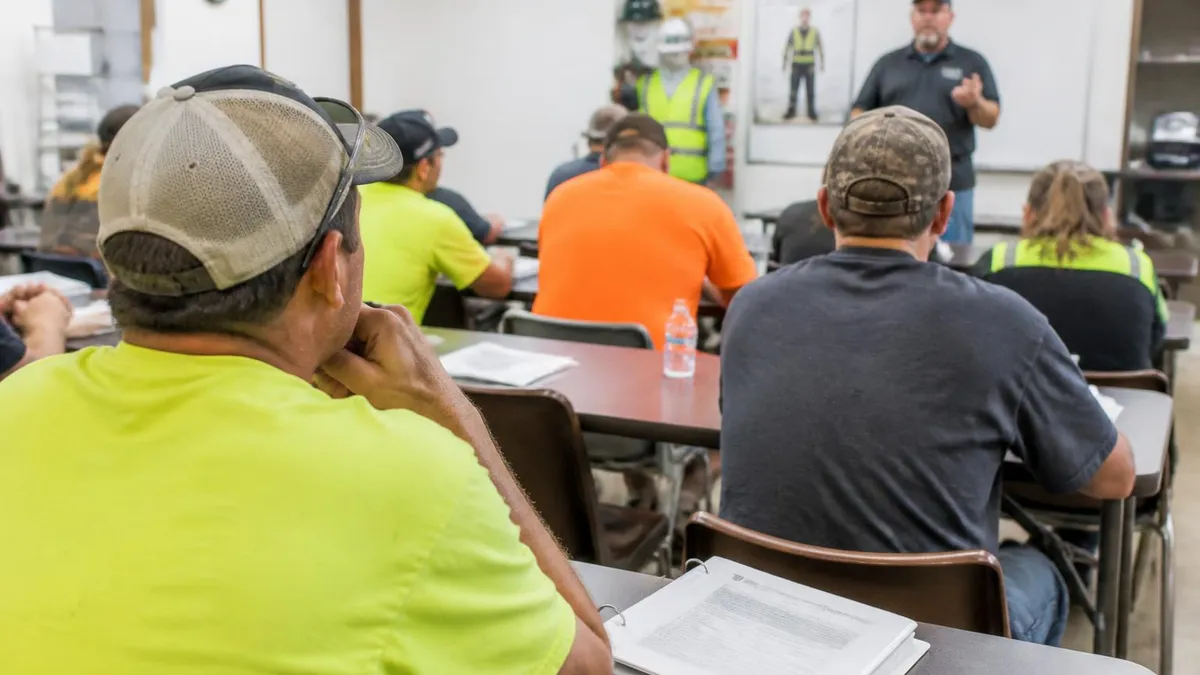
Toolbox talks are an effective vehicle for reinforcing hole cover awareness on active construction sites. A five-minute morning briefing that identifies the locations of known openings on the day's work area, reviews proper cover installation procedures, and reminds workers of the requirement to report displaced or damaged covers can prevent accidents far more effectively than an annual classroom session.
Many safety managers use photographic documentation of properly covered openings — and of violations found and corrected — to make these briefings concrete and memorable. Workers who see real examples from their own site are more likely to internalize the lesson than those who only hear abstract descriptions of the standard.
New employee orientation deserves particular attention as a training moment for hole cover awareness. Workers who are new to a site do not know where the known hazards are located. They have not yet developed the situational awareness that comes from weeks of working on a specific project.
Comprehensive site-specific orientation that physically walks new workers through the areas where holes exist — rather than simply handing them a map — establishes habits that can prevent a first-week accident. This is especially important on large projects where the hazard landscape changes rapidly and what was a covered opening yesterday may be an open hole today due to maintenance or construction activity.
Supervisors play a disproportionate role in hole cover compliance culture. Research on safety behavior consistently shows that workers are more likely to follow safety procedures when they observe their supervisors following those same procedures. A supervisor who walks past an uncovered hole without stopping to report or correct it sends a clear signal about the real priority of safety compliance on that site.
Conversely, supervisors who immediately stop work, secure the opening, and use the incident as a teachable moment build a culture where workers self-police their own compliance. Training programs for supervisors should specifically address how to model hole cover compliance behaviors and how to address non-compliance without creating adversarial relationships with workers.
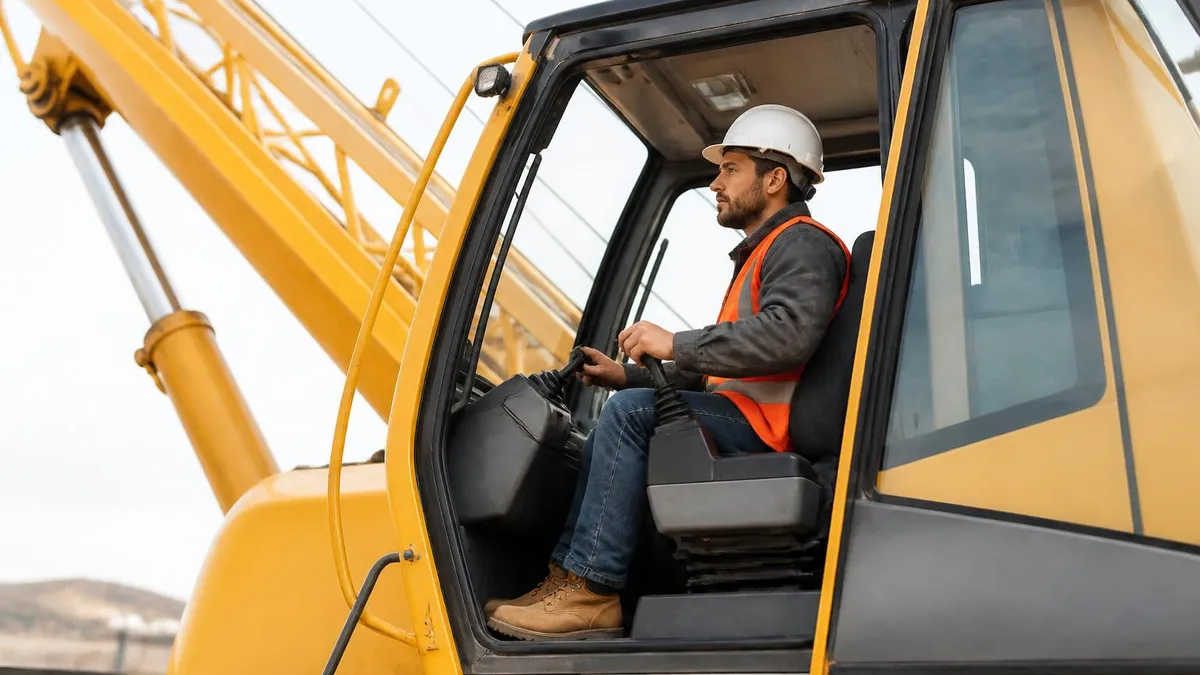
For crane operators and certified heavy equipment personnel, hole cover awareness intersects with load planning and rigging safety. Cranes often work near or over floor openings when hoisting materials through building floors or setting equipment into pits and basement areas.
The weight and vibration of crane operations can shift or damage hole covers that were properly installed for normal pedestrian use but were not designed for the dynamic loads imposed by nearby crane work. Before beginning any lift near a floor opening, the crane operator and rigging crew should verify that covers in the area are rated for the increased loads and are securely fastened to prevent displacement from vibration or downwash from the load.
Staying current on OSHA updates is an ongoing training responsibility. OSHA periodically revises its walking-working surfaces and fall protection standards, and interpretations of existing standards evolve through letters of interpretation, enforcement memos, and court decisions. Workers and safety managers who passed their initial training years ago may be operating on outdated understanding of current requirements.
Participating in continuing education through OSHA-approved training programs, industry associations, and professional safety organizations ensures that hole cover knowledge keeps pace with regulatory developments. This commitment to ongoing learning is what separates consistently compliant organizations from those who find themselves reacting to citations rather than preventing violations.
Developing a practical hole cover management system is the difference between a site that passes OSHA inspections and one that faces repeated citations. Effective systems start with a comprehensive opening inventory — a living document that lists every known opening on the site, its location by building grid coordinates or floor plan reference, the type and size of the opening, the cover material and installation date, and the assigned responsible party for daily inspection.
This inventory should be updated every time a new opening is created or an existing one is closed, and it should be accessible to every supervisor and competent person on the project.
Color coding systems add a visual management layer that complements the written inventory. Many contractors assign specific cover colors to different floor levels — red for level one, blue for level two, and so on — making it immediately apparent if a cover from one level turns up displaced on another.
Others use color to indicate load rating: green for standard pedestrian loads, yellow for light equipment, and red for heavy machinery areas. Whatever system an employer adopts, it should be documented in the site-specific safety plan and communicated to all workers during orientation and toolbox talks so that the visual cues are universally understood.
Pre-task planning for hole cover installation should be incorporated into the daily work planning process. Before any crew begins work in an area with floor openings, the crew leader should confirm that all covers are in place, properly labeled, and secured. This takes less than five minutes and can be formalized with a simple pre-task card or digital checklist completed before work begins. The pre-task check becomes especially important after breaks, shift changes, or whenever work has been performed near floor openings that might have required temporary cover removal for material handling or access purposes.
Subcontractor coordination is critical on multi-trade job sites where different crews are working in the same areas on the same day. Mechanical contractors installing pipes through floor openings, electrical contractors pulling conduit through penetrations, and concrete contractors forming and stripping deck openings all create and temporarily remove hole covers as part of their normal work.
Without explicit coordination protocols, one trade can leave an opening uncovered for the next trade's workers to encounter. General contractors should require that hole cover status be addressed in daily coordination meetings and that any trade that removes a cover is responsible for immediately replacing it before leaving the area for any reason.
Technology is increasingly being applied to hole cover management on large projects. Building information modeling (BIM) platforms can include floor opening locations as part of the coordinated construction model, allowing safety managers to overlay OSHA coverage requirements onto the construction sequence and identify periods when multiple openings will exist simultaneously on a given floor. Mobile inspection apps allow competent persons to complete daily cover inspections with photographic documentation that is automatically time-stamped and uploaded to a central safety management platform, creating an audit trail that demonstrates continuous compliance rather than after-the-fact documentation.
Weather and environmental factors affect hole cover performance in ways that require proactive management. Water infiltration through floor openings can saturate plywood covers, dramatically reducing their load-carrying capacity. A 3/4-inch plywood cover that comfortably meets OSHA's load requirements when dry may be structurally compromised after exposure to rain or standing water.
Covers in outdoor areas or near water sources should be inspected more frequently and replaced at the first signs of moisture damage, swelling, delamination, or surface deterioration. Steel covers in corrosive environments — chemical plants, coastal construction, food processing facilities — require regular inspection for rust and section loss that could affect structural integrity.
The ultimate goal of an OSHA hole cover program is not just regulatory compliance but the creation of a genuinely hazard-free working environment. When properly implemented, hole cover programs eliminate one of the most predictable categories of workplace injury.
Workers who know that every opening on their site is covered, labeled, and inspected daily can focus their attention on the productive tasks at hand — crane operations, rigging, installation, and finishing work — without the background anxiety of navigating an uncertain floor surface. That peace of mind translates into better work quality, higher productivity, and a safety culture that attracts and retains the skilled workers every successful construction organization depends on.
OSHA Questions and Answers
OSHA Restaurant Safety: Complete Guide to Workplace Compliance, Hazard Prevention, and Employee Training for Food Service Operations
360 Training OSHA 10: Complete Guide to Online OSHA 10-Hour Construction and General Industry Certification Courses
OSHA (OSHA Certified Crane Operator) Test Guide

OSHA 100: Complete Guide to Crane Safety Awareness Training and Certification

OSHA Safety Training Answers: Complete Guide to Crane Operator Certification Prep
About the Author

Certified Safety Professional & OSHA Compliance Expert
Indiana University of Pennsylvania Safety SciencesDr. William Foster holds a PhD in Safety Science from Indiana University of Pennsylvania and is a Certified Safety Professional (CSP) and Certified Hazardous Materials Manager. With 20 years of occupational health and safety management experience across construction, manufacturing, and chemical industries, he coaches safety professionals through OSHA certification, CSP, CHST, and safety management licensing programs.
Join the Discussion
Connect with other students preparing for this exam. Share tips, ask questions, and get advice from people who have been there.
View discussion (8 replies)