
How to Get OSHA 10 Certification: Complete 2026 October Step-by-Step Guide to Enrollment, Training, and DOL Card Delivery
🔎 Learn how to get OSHA 10 certification in 2026 October. Step-by-step enrollment, course content, costs, exam tips, and how to receive your DOL card.

Learning how to get OSHA 10 certification is one of the smartest career moves a construction worker, general industry employee, or jobsite supervisor can make in 2026. The OSHA 10-Hour Outreach Training Program, administered by the U.S. Department of Labor, teaches workers to recognize, avoid, and prevent the most common workplace hazards. Once you complete the course, you receive a permanent DOL wallet card that proves to employers, general contractors, and state regulators that you understand the core top osha violations governing your trade.
Demand for OSHA 10 cardholders has climbed sharply because states like New York, Connecticut, Massachusetts, Missouri, Nevada, New Hampshire, Rhode Island, and Pennsylvania now require the credential for many publicly funded construction projects. Even in states without mandates, general contractors increasingly refuse to issue site badges to workers who cannot show a valid DOL card. That means earning the certification is no longer optional for many tradespeople, electricians, laborers, and warehouse workers entering active jobsites.
The process itself is straightforward but requires planning. You must choose between the Construction Industry version or the General Industry version, register with an OSHA-authorized trainer or accredited online provider, complete all ten hours of instruction, pass each module quiz, and then wait for your physical card to arrive in the mail. The full cycle takes most students about two weeks from enrollment to card delivery, though the training itself can be finished in as little as two sitting days.
Costs vary widely depending on the delivery method. Online courses typically range from $59 to $99, while in-person classroom click safety osha 10 a community college, union hall, or trade association can run $150 to $300 because instructors charge for facility time and printed materials. Some employers, apprenticeship programs, and workforce development grants cover the fee entirely, so check with your HR department or local workforce board before paying out of pocket.
This guide walks through every step in detail, including how to verify an authorized provider, what topics appear on the exam, how to study efficiently, and what to do if your card is lost or damaged. You will also learn the difference between the 10-hour and 30-hour courses, how long the card remains valid, and which states impose strict renewal expectations.
By the end, you will know exactly what to do, what to spend, and how to avoid the scams that pop up around this credential. For a closely related walkthrough, see our companion piece on How to Get OSHA 10 Certified for additional context on classroom logistics.
Before diving in, it is worth noting that the OSHA 10 is not a license. It is a voluntary training credential that signals you have completed entry-level hazard awareness instruction. It does not authorize you to operate equipment, sign off on inspections, or supervise other workers. Those duties require additional certifications, experience, and in some cases a separate OSHA 30 credential. Understanding this distinction up front will help you set realistic expectations about what the card does and does not do for your career.
Whether you are a brand-new apprentice, a seasoned worker switching trades, or a manager trying to bring an entire crew into compliance, this guide gives you a complete roadmap. We cover registration, study strategy, exam format, card delivery timelines, employer verification, and the most common mistakes that delay completion. Read through every section before you enroll so you can budget your time and money correctly the first time.
OSHA 10 Certification by the Numbers
Key Facts at a Glance
| Item | Value | Details |
|---|---|---|
| Total Training Time | 10 hrs | Spread over 2+ days online |
| Minimum Quiz Score | 70% | Per module to advance |
| Card Delivery Time | 2 weeks | By USPS from trainer |
| Legally Required | 8 states | On public projects |

Step-by-Step Timeline to Get Your OSHA 10 Card
Choose Construction or General Industry
Verify an Authorized Provider
Register and Pay Tuition
Complete All Ten Modules
Pass Module Quizzes and Final
Receive Your DOL Wallet Card
Understanding what is actually covered in the OSHA 10 curriculum helps you study efficiently and walk into the course with realistic expectations. The Construction Industry version follows OSHA standard 29 CFR 1926, while the General Industry version aligns with 29 CFR 1910. Both share a common foundation but diverge significantly in their hazard-specific modules. Choosing the wrong version is the single most common enrollment mistake, and switching mid-course usually requires a full restart and additional payment.
Every OSHA 10 course begins with an Introduction to OSHA module covering importance of osha responsibilities, the inspection process, citations, and how to file a confidential complaint. This section is mandatory regardless of industry and accounts for roughly two of the ten total hours. Expect questions about whistleblower protections, the General Duty Clause, and recordkeeping requirements under 29 CFR 1904. Students often underestimate this module because it feels theoretical, but it carries the heaviest exam weight.
The Focus Four hazards make up the heart of the Construction version: falls, electrocution, struck-by, and caught-in or between. These four categories cause more than 60% of construction fatalities each year, so OSHA dedicates significant time to them. You learn to identify unprotected leading edges, recognize lockout-tagout failures, evaluate scaffold integrity, and avoid trench collapses. The exam tests your ability to spot violations in photographs and short scenario descriptions, not just memorize regulation numbers.
For General Industry students, the major topic blocks include walking and working surfaces, exit routes and emergency action plans, electrical safety, personal protective equipment, hazard communication, and machine guarding. Healthcare workers, warehouse staff, and manufacturing employees will recognize most of these hazards from daily experience. The course teaches you to translate that experience into formal OSHA terminology, which is what the exam ultimately measures.
Beyond the core modules, both versions include shorter electives chosen by the trainer. Common electives cover ergonomics, heat stress, bloodborne pathogens, confined spaces, fire protection, and powered industrial trucks. The trainer typically selects electives based on the audience. A class of warehouse workers might focus on forklifts and ergonomic lifting, while an electrical crew sees more on arc flash and lockout-tagout. You cannot usually choose your own electives in a group course, but online self-paced platforms sometimes offer flexibility.
Reading comprehension matters more than memorization on this exam. OSHA writes its standards in dense legal prose, and the course presents excerpts directly from the Code of Federal Regulations. If you struggle with regulatory language, plan to slow down during the policy modules. Many students benefit from pairing the official curriculum with the visual guides on osha gov forklift training, which provides free fact sheets and quick-reference cards covering every Focus Four topic.
Finally, remember that the OSHA 10 is an awareness-level course, not a competency course. You will leave knowing how to recognize hazards and report them, but not how to design control measures, conduct formal inspections, or write a corporate safety plan. Those skills require the OSHA 30, additional specialty courses, or on-the-job mentorship. Setting that expectation up front prevents the disappointment some new cardholders feel when they realize the credential alone does not qualify them for supervisor roles.
OSHA Practice Test Questions
Prepare for the OSHA - Safety Certificate exam with our free practice test modules. Each quiz covers key topics to help you pass on your first try.
OSHA Basic OSHA Practice
OSHA Exam Questions covering Basic OSHA Practice. Master OSHA Test concepts for certification prep.
OSHA Confined Space Entry
Free OSHA Practice Test featuring Confined Space Entry. Improve your OSHA Exam score with mock test prep.
OSHA Fall Protection
OSHA Mock Exam on Fall Protection. OSHA Study Guide questions to pass on your first try.
OSHA - Safety Certificate Electrical Safet...
Free OSHA Quiz on OSHA - Safety Certificate Electrical Safety Standards Questions and Answers. OSHA Exam prep questions with detailed explanations.
OSHA - Safety Certificate Emergency Action...
OSHA Practice Questions for OSHA - Safety Certificate Emergency Action and Fire Plans Questions and Answers. Build confidence for your OSHA certification exam.
OSHA - Safety Certificate Hazard Communica...
OSHA Test Online for OSHA - Safety Certificate Hazard Communication Standard Questions and Answers. Free practice with instant results and feedback.
OSHA - Safety Certificate Introduction to ...
OSHA Study Material on OSHA - Safety Certificate Introduction to OSHA Questions and Answers. Prepare effectively with real exam-style questions.
OSHA - Safety Certificate Lockout/Tagout P...
Free OSHA Test covering OSHA - Safety Certificate Lockout/Tagout Procedures Questions and Answers. Practice and track your OSHA exam readiness.
OSHA - Safety Certificate Machine Guarding...
OSHA Exam Questions covering OSHA - Safety Certificate Machine Guarding Requirements Questions and Answers. Master OSHA Test concepts for certification prep.
OSHA - Safety Certificate OSHA Recordkeepi...
Free OSHA Practice Test featuring OSHA - Safety Certificate OSHA Recordkeeping and Reporting Questions and Answers. Improve your OSHA Exam score with mock test prep.
OSHA - Safety Certificate Personal Protect...
OSHA Mock Exam on OSHA - Safety Certificate Personal Protective Equipment (PPE) Questions and Answers. OSHA Study Guide questions to pass on your first try.
OSHA - Safety Certificate Walking and Work...
OSHA Test Prep for OSHA - Safety Certificate Walking and Working Surfaces Questions and Answers. Practice OSHA Quiz questions and boost your score.
OSHA - Safety Certificate Electrical Safet...
OSHA Mock Test covering - Safety Certificate Electrical Safety Standards. Online OSHA Test practice with instant feedback.
OSHA - Safety Certificate Emergency Action...
Free OSHA Quiz on - Safety Certificate Emergency Action and Fire Plans. OSHA Exam prep questions with detailed explanations.
OSHA - Safety Certificate Hazard Communica...
OSHA Practice Questions for - Safety Certificate Hazard Communication Standard. Build confidence for your OSHA certification exam.
OSHA - Safety Certificate Introduction to ...
OSHA Test Online for - Safety Certificate Introduction to OSHA. Free practice with instant results and feedback.
OSHA - Safety Certificate Lockout/Tagout P...
OSHA Study Material on - Safety Certificate Lockout/Tagout Procedures. Prepare effectively with real exam-style questions.
OSHA - Safety Certificate Machine Guarding...
Free OSHA Test covering - Safety Certificate Machine Guarding Requirements. Practice and track your OSHA exam readiness.
OSHA - Safety Certificate OSHA Recordkeepi...
OSHA Exam Questions covering - Safety Certificate OSHA Recordkeeping and Reporting. Master OSHA Test concepts for certification prep.
Online vs Classroom vs Employer OSHA 10 Certification Routes
Online OSHA 10 courses are the most popular option in 2026 because they let you complete training on your own schedule, pause when needed, and review modules before testing. Authorized providers like ClickSafety, 360training, OSHA Education Center, and Summit Training charge between $59 and $99 for a full course bundle that includes the final exam and DOL card mailing fees.
The federal rule requires that no more than 7.5 hours of online training occur in a single 24-hour period, meaning even the fastest students need at least two calendar days. Expect a mix of narrated slides, embedded videos, interactive scenarios, and module quizzes. Online works best for self-motivated learners with reliable internet and a quiet workspace free from interruptions during seat-time enforcement.

Is the OSHA 10 Certification Worth Pursuing?
- +Permanent DOL card with no federal expiration date in most jurisdictions
- +Required for public construction work in eight states and many municipalities
- +Affordable compared with most professional credentials, often under $100
- +Recognized nationwide by general contractors, unions, and staffing agencies
- +Improves hiring chances for entry-level construction and warehouse roles
- +Can be completed in as little as two days through self-paced online study
- +Demonstrates baseline safety awareness that protects you on the jobsite
- −Does not qualify you to operate equipment, supervise, or sign inspections
- −Some states like New York require renewal periodically despite no federal expiry
- −Card replacement after 90 days from completion costs an additional fee
- −Online seat-time rules prevent finishing in a single workday
- −Course scams exist; unauthorized providers cannot issue valid DOL cards
- −Content overlap with OSHA 30 means motivated workers may outgrow it quickly
Pre-Enrollment Checklist for OSHA 10 Certification
- ✓Confirm whether your state, employer, or union requires Construction or General Industry version
- ✓Verify the provider appears on the official OSHA Outreach Training Program authorized list
- ✓Check provider reviews on Trustpilot, BBB, and trade forums before paying
- ✓Set aside at least two calendar days for online or two business days for classroom
- ✓Use your legal name as printed on government ID when registering
- ✓Confirm the course includes the DOL card mailing fee in the listed price
- ✓Test your computer, browser, and internet speed if enrolling online
- ✓Block distractions and notifications during seat-time enforced modules
- ✓Save your payment receipt for employer reimbursement or tax records
- ✓Bookmark the OSHA.gov fact sheets covering the Focus Four hazards
Always Verify Authorization on the OSHA Outreach Portal
Dozens of unauthorized websites mimic legitimate OSHA training providers, charging full price for worthless certificates that the Department of Labor will never honor. Before paying any fee, search the trainer's name and ID number on the official OSHA Outreach Training Program portal. If they do not appear, walk away. Legitimate providers proudly display their authorization number on every page of their website.
Once enrollment is complete, the next phase is actually completing the course and passing every assessment that stands between you and the DOL card. Online courses present material through narrated slides, embedded videos, interactive scenarios, and module quizzes. Each module typically ends with a five-to-ten question quiz that you must pass with at least 70% before the platform unlocks the next section. Most providers give you three attempts per quiz, and failing all three may require revisiting the module before retrying.
The final exam appears at the end of the tenth hour and combines material from every module. It usually contains 20 to 33 questions, depending on the provider, and you typically need 70% or higher to pass. Questions are multiple-choice, scenario-based, and occasionally include images of jobsite violations that you must identify. Unlike many professional exams, the OSHA 10 final is open-book in practice because online platforms allow you to scroll back through modules during testing.
If you fail the final exam, most providers allow at least one retake at no additional cost. After two failed attempts, you may need to repurchase the course or contact the trainer for a manual override. This is rare, however, because the seat-time rules mean students have already spent hours absorbing the material before reaching the test. Diligent students who complete modules without skipping content almost always pass on the first attempt.
After you pass, the provider electronically submits your completion record to OSHA, and you receive a digital certificate by email within minutes. This digital certificate is acceptable on most jobsites for the first 90 days after completion. Some general contractors, however, insist on seeing the physical plastic DOL card before issuing site badges, so plan to wait two weeks before reporting to projects with strict verification protocols.
The physical card arrives by first-class USPS mail in a plain envelope. It is roughly the size of a credit card, printed on durable plastic, and embossed with your name, the course type, the completion date, and the trainer's authorization number. Keep it in your wallet or a protective sleeve because replacement cards cost between $15 and $25 if requested within 90 days of completion. After 90 days, OSHA does not allow trainers to issue duplicates, which means you must retake the entire course.
Some students worry about the card looking too simple. The DOL card has minimal anti-counterfeit features, which has led to a black market for forgeries on certain construction sites. Contractors increasingly verify cards by contacting the original trainer or checking the trainer's roster, so do not be tempted to buy a fraudulent card from a coworker or online seller. Penalties for using a fake OSHA card include immediate termination, blacklisting from union halls, and in some states criminal fraud charges.
Once your card arrives, photograph both sides and email the image to yourself or store it in a secure cloud folder. This backup is invaluable if your wallet is lost or stolen. You will also need this image when applying for jobs through online portals that require credential uploads. Many employers ask for the card image during the application stage, before they even schedule an interview.
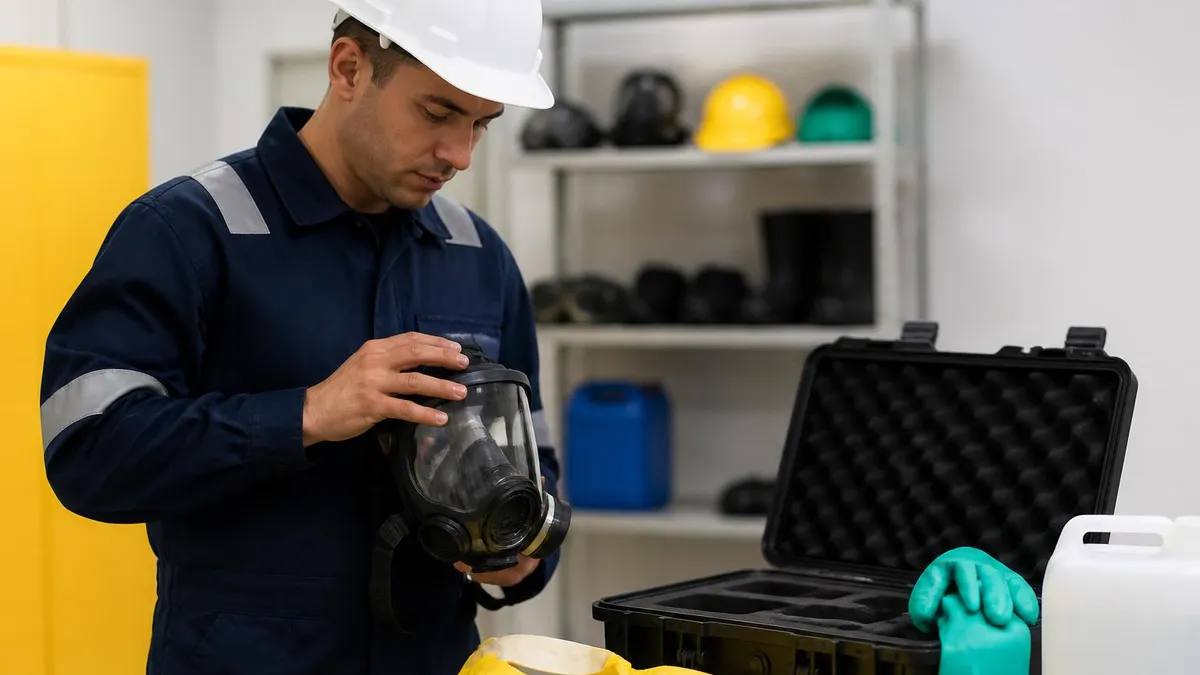
If your physical OSHA 10 card is lost, damaged, or never arrives, contact your trainer within 90 days of course completion to request a replacement. After day 90, federal OSHA rules prohibit trainers from issuing duplicates, and you will have to retake the entire ten-hour course at full cost. Photograph your card the day it arrives so you always have a digital backup.
After you have the card in hand, the next question most workers ask is how long the certification lasts and what they need to do to keep it valid. Under federal OSHA rules, the 10-hour Outreach card has no expiration date. The Department of Labor considers the credential a record of completed training rather than a license that lapses. In theory, a card earned in 2026 remains technically valid in 2046, and OSHA itself will not require you to retake the course.
However, individual states, unions, and general contractors frequently impose their own renewal rules that override the federal default. New York City, for example, requires Site Safety Training under Local Law 196 that includes OSHA 10 components, and that training must be refreshed periodically. Connecticut and Massachusetts have similar rolling requirements for state-funded projects. Always check with your state department of labor or your project's general contractor before assuming your card never expires.
Employers verify OSHA 10 cards in several ways. The simplest is visual inspection during onboarding, where HR photocopies your card and files it with your I-9 and W-4 paperwork. Larger contractors use third-party verification services that contact the original trainer to confirm authenticity. Some unions and state agencies maintain searchable databases where verification staff can enter the trainer ID and completion date to confirm the record.
If you change careers or move to a new state, your OSHA 10 typically travels with you because it is a federal credential. A card earned in Florida is valid in California, Texas, or Maine. The only exceptions are state-specific add-ons like New York's Site Safety Training, which require additional local hours beyond the federal ten. For workers planning interstate moves, this portability is one of the credential's strongest selling points.
Career-wise, the OSHA 10 is a foundation, not a ceiling. Workers who plan to advance into supervisor or safety officer roles typically pursue the OSHA 30 next, followed by specialty certifications like the CHST, STSC, or CSP. The OSHA 30 covers the same core topics in greater depth and adds modules on managerial responsibilities, accident investigation, and recordkeeping. Many employers reimburse the OSHA 30 fee for high-performing workers who demonstrate leadership potential.
For workers eyeing the trainer pathway, the next major credential is the OSHA 500 or 501, which qualifies you to teach the Outreach Training Program yourself. Becoming an authorized trainer is a multi-year commitment that requires extensive field experience, a 500 or 501 course, and ongoing continuing education. If that pathway interests you, start by reviewing the prerequisites detailed in our osha 510 training, which is the entry course for the construction trainer track.
Beyond formal credentials, your OSHA 10 should change how you actually behave on the jobsite. The training is most valuable when you apply it daily: spotting an unprotected leading edge, recognizing a damaged ladder, identifying a missing GFCI, or speaking up about an improperly stored chemical. Workers who treat the card as a piece of plastic miss the point. Workers who treat it as the start of a lifelong safety mindset see real returns in fewer injuries, faster career growth, and stronger relationships with supervisors who notice their judgment.
To maximize your chances of finishing the OSHA 10 quickly and passing the final on the first attempt, treat the course like a real college class rather than a checkbox exercise. Block dedicated time on your calendar, find a quiet space, and silence phone notifications during seat-time enforced modules. Online platforms detect inactivity and pause the timer when you tab away, so multitasking will only slow you down. The average student finishes in 12 to 14 elapsed hours when distractions are minimized, compared to 20 or more hours when learners try to study while doing other things.
Take handwritten notes as you progress through each module, even if the platform offers a digital notes feature. Research consistently shows that handwriting boosts retention more than typing, particularly for technical material like regulation numbers, exposure limits, and hierarchy of controls. Focus your notes on the four most testable areas: worker rights under the OSH Act, the Focus Four hazards, PPE selection criteria, and hazard communication labeling under the GHS standard. These four blocks account for the majority of final exam questions.
Use free practice tests aggressively. Several websites, including the PTG Quiz platform, offer practice questions modeled on actual OSHA 10 exams. Aim to score 85% or higher on practice quizzes before attempting the real final. If you consistently miss questions in a particular topic area, return to that module and re-read the slides slowly. The course platform allows unlimited module review, so use that feature without guilt.
Pay particular attention to the question framing on the final exam. OSHA exam writers often use phrases like "which is NOT," "least likely," or "all except." Misreading these negative phrasings is the most common reason otherwise-prepared students miss easy questions. Read every question twice, identify the question type, and underline the key qualifier mentally before scanning the answer choices. Slow down on questions involving fall protection thresholds, ladder ratios, scaffold heights, and excavation depths because these numerical questions trip up the largest share of test takers.
If English is not your first language, choose a provider that offers the course in Spanish, Polish, or another supported language. OSHA-authorized Spanish-language training is widely available and produces a card identical in legal weight to the English version. Mixing languages, however, is not allowed. You must complete the entire course and exam in the language you registered under. Switching mid-course requires starting over, so make the language choice deliberately at registration.
After you receive your card, share the credential strategically on your resume, LinkedIn profile, and job applications. List it under a dedicated Certifications section near the top of your resume, including the completion date and trainer authorization number. Recruiters scanning resumes for OSHA-required projects use keyword filters that prioritize candidates whose certifications appear prominently. A buried mention in the body of a cover letter often gets missed entirely.
Finally, remember that the card is only as valuable as the safety habits you build around it. Walk every jobsite with a hazard recognition mindset, speak up when you see violations, document near-misses in writing, and never assume a coworker has done the inspection for you. The cardholders who advance fastest are the ones who become the unofficial safety voice of their crew. Supervisors notice, and that reputation often translates into faster promotions, higher pay, and access to specialty training opportunities your peers never see.
Sample OSHA Safety Certificate Practice Questions
Try these questions from our free OSHA Safety Certificate practice tests. The correct answer and an explanation follow each question.
Under the Hazard Communication Standard, when must employers provide training to employees about chemical hazards?
- A. Only during annual refresher courses
- B. At the time of initial assignment and whenever a new chemical hazard is introduced
- C. Only after a workplace chemical incident occurs
- D. Every six months regardless of changes
Answer: B. At the time of initial assignment and whenever a new chemical hazard is introduced
Employers must train employees at initial assignment and whenever a new chemical hazard is introduced to their work area.
After applying locks, what step verifies that energy isolation is effective?
- A. Filling out a timesheet
- B. Attempting to start the machine using normal controls
- C. Painting the lock red
- D. Calling the manufacturer
Answer: B. Attempting to start the machine using normal controls
Verification includes trying the normal start controls to confirm the machine will not operate before returning controls to off.
Which of the following is a mandatory step in the sequence for releasing equipment from Lockout/Tagout after servicing is complete?
- A. The shift supervisor must be the first to remove their lock.
- B. Inspect the area to ensure nonessential items are removed and equipment is intact.
- C. Notify the equipment manufacturer that maintenance is complete.
- D. Conduct retraining for all affected employees before re-energizing.
Answer: B. Inspect the area to ensure nonessential items are removed and equipment is intact.
OSHA 1910.147(e) outlines the steps for release from LOTO. A key step before removing LOTO devices is to inspect the work area to ensure that nonessential items have been removed and that machine or equipment components are operationally intact.
According to OSHA 29 CFR 1910.132, what is the first step an employer must take before providing Personal Protective Equipment (PPE) to employees?
- A. Purchase the least expensive PPE available.
- B. Require employees to purchase their own PPE.
- C. Perform a written certification of a workplace hazard assessment.
- D. Train employees on how to use various types of PPE.
Answer: C. Perform a written certification of a workplace hazard assessment.
OSHA standard 29 CFR 1910.132(d) requires employers to first assess the workplace to determine if hazards are present that necessitate the use of PPE. The employer must then verify that this assessment has been performed through a written certification. This assessment is fundamental to selecting the correct PPE.
OSHA Questions and Answers

OSHA Approved Hard Hats: Complete 2026 Guide to ANSI Z89.1 Compliance, Types, and Workplace Requirements

OSHA Logo: What It Means and How to Spot the Real Thing

OSHA.gov: Your Complete Guide to the Official OSHA Website

OSHA 510: Course Content, Path to Trainer, and Realistic Path

How to Get OSHA 10 Certified: Complete 2026 Guide to Enrolling, Passing, and Receiving Your DOL Card
About the Author

Certified Safety Professional & OSHA Compliance Expert
Indiana University of Pennsylvania Safety SciencesDr. William Foster holds a PhD in Safety Science from Indiana University of Pennsylvania and is a Certified Safety Professional (CSP) and Certified Hazardous Materials Manager. With 20 years of occupational health and safety management experience across construction, manufacturing, and chemical industries, he coaches safety professionals through OSHA certification, CSP, CHST, and safety management licensing programs.
Join the Discussion
Connect with other students preparing for this exam. Share tips, ask questions, and get advice from people who have been there.
View discussion (8 replies)