
Firearm Safety Certificate Los Angeles: Complete 2026 September Guide to Requirements, Testing & Workplace Safety
Firearm safety certificate Los Angeles guide: 💡 requirements, testing, fees, workplace safety rules, and how OSHA standards apply to LA gun owners and

Getting a firearm safety certificate Los Angeles residents need has become a critical step for anyone purchasing or possessing a handgun or long gun in California. The Firearm Safety Certificate (FSC) program is administered by the California Department of Justice and requires applicants to pass a 30-question written test demonstrating basic knowledge of firearm laws, safe handling, and storage requirements. In Los Angeles County, this certificate is a legal prerequisite for nearly all firearm transactions, including private sales, dealer purchases, and certain transfers between family members.
The FSC replaced the older Handgun Safety Certificate (HSC) on January 1, 2015, expanding the scope to include long guns as well as handguns. For Los Angeles residents, the certificate is valid statewide for five years from the date of issuance, after which renewal through retesting is required. The exam covers California-specific laws, federal regulations, mechanical safety, and the responsibilities of firearm ownership, making preparation essential even for experienced shooters.
Beyond personal ownership, employers in Los Angeles whose employees handle firearms—security companies, armored car services, ranges, and law federal law enforcement training centers facilities—must navigate overlapping regulatory frameworks. osha workplace temperature top osha violations intersect with state firearm laws, creating compliance obligations that extend beyond the FSC itself. Workers handling firearms on the job face hazards including hearing loss, lead exposure, ergonomic strain, and discharge risks that must be addressed through formal safety programs.
This guide walks you through every aspect of obtaining and maintaining a firearm safety certificate in Los Angeles, from eligibility and testing through workplace integration and renewal. Whether you are a first-time buyer preparing for the test, an employer building a compliance program, or a current certificate holder approaching expiration, understanding the full landscape helps you avoid costly mistakes. You can also test your safety knowledge using free osha 10 certification practice questions to reinforce general workplace safety principles that complement firearm safety training.
Los Angeles enforces stricter local ordinances on top of state requirements, including ammunition purchase background checks, ghost gun bans, and stringent storage rules in homes with minors or prohibited persons. Failure to comply can result in criminal charges, civil penalties, and permanent loss of firearm rights. The FSC test does not cover every nuance of LA County ordinances, so supplemental research is wise for residents in unincorporated areas, Los Angeles city limits, and incorporated cities like Beverly Hills and Santa Monica that may have additional rules.
Cost-wise, the FSC test fee is $25, paid directly to a certified instructor at the time of testing. There are no separate state fees, no application paperwork to file with the DOJ in advance, and no waiting period for the certificate itself—if you pass, you receive your certificate immediately. However, the actual firearm purchase that follows is subject to California's 10-day waiting period, mandatory safe handling demonstration, and DROS (Dealer Record of Sale) processing through a licensed firearms dealer.
Throughout this article, we explain test content, study strategies, common pitfalls, workplace safety integration, and the renewal process. The goal is to give you a complete operational picture so you can approach the certificate with confidence and meet every legal obligation that follows.
Firearm Safety Certificate by the Numbers
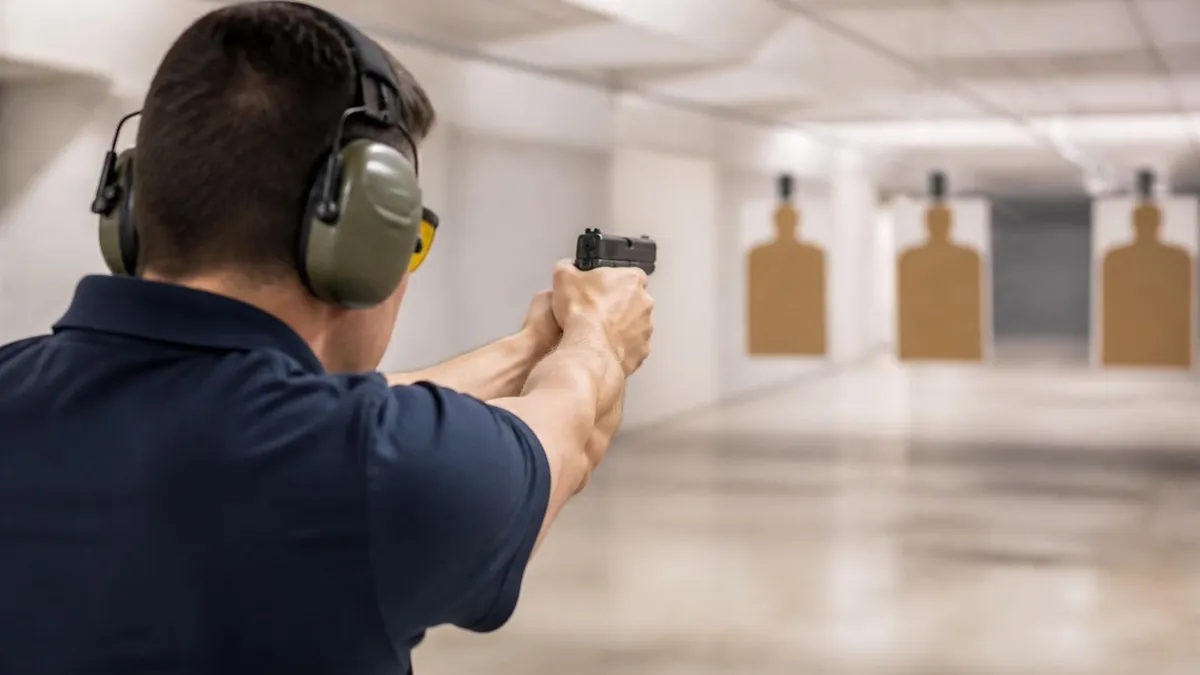
FSC Requirements & Eligibility
You must be at least 18 years old to obtain a Firearm Safety Certificate in California. However, handgun purchases require buyers to be 21 or older, while long gun purchases generally require buyers to be 21 with limited exemptions for active military and law enforcement.
A valid California driver's license or state-issued ID is required at testing. Out-of-state residents are not eligible to purchase firearms in California and therefore generally cannot use an FSC for purchase, though the certificate itself can technically be issued to any eligible test-taker.
Unlike the firearm purchase itself, the FSC test does not require a background check. The DROS background check happens at the dealer when you actually buy a gun. However, prohibited persons cannot legally possess firearms regardless of holding a valid FSC.
Applicants must score 75% or higher (at least 23 of 30 questions correct) to pass. The test is closed-book and timed informally. Failed attempts can be retaken after a brief waiting period, typically same day or next available session, at additional cost.
Active law enforcement officers, military personnel with proper credentials, licensed hunters with valid hunting licenses (long guns only), and certain federal firearms licensees may be exempt from the FSC requirement. Verify exemption status with your dealer before purchase.
The Firearm Safety Certificate test draws questions from the official DOJ study guide, which is freely available online and at most California gun shops. The 30-question exam covers six general subject areas: California firearm laws, federal firearm laws, safe handling and storage, ammunition and firing mechanics, legal responsibilities of ownership, and consequences of misuse. Each section carries roughly proportional weight, though questions about California-specific laws and safe storage tend to dominate the test.
California firearm laws form the largest block of test content. Expect questions about the 10-day waiting period, assault weapon definitions, magazine capacity limits, the roster of handguns certified for sale, gun-free school zones, and concealed carry weapon permits. The test also covers the Armed Prohibited Persons System (APPS), which identifies individuals legally barred from owning firearms due to mental health adjudications, restraining orders, or qualifying criminal convictions. Memorizing key numerical thresholds is essential.
Federal firearm law questions cover the Gun Control Act of 1968, the National Firearms Act, prohibited persons categories under federal law, interstate transfer rules, and the role of the ATF. While these questions are fewer, they often catch test-takers off guard because federal definitions sometimes differ from California's stricter standards. For example, a magazine that holds 11 rounds is legal under federal law but prohibited as a large-capacity magazine in California for most purposes.
Safe handling and storage questions test practical knowledge: how to verify a firearm is unloaded, the four universal firearm ladder safety osha proper trigger discipline, and California's storage requirements when minors or prohibited persons live in the home. Since 2020, California requires firearms to be secured when not under the immediate control of an authorized user, with criminal penalties for negligent storage that results in injury or death. Understanding lock boxes, gun safes, and trigger locks is critical.
The general workplace and personal safety mindset reinforced by the FSC also overlaps with broader occupational safety training. If your job involves firearms, you may also need to understand osha standards for first aid kits for hearing conservation, lead exposure, and personal protective equipment that apply to firing ranges, security operations, and similar workplaces. The intersection of public health regulation and firearm operation is significant in Los Angeles, where indoor range workers face documented lead exposure risks.
Ammunition and firing mechanics questions cover the differences between centerfire and rimfire ammunition, the function of single-action versus double-action mechanisms, semi-automatic versus revolver operation, and basic malfunction identification. Test-takers should know the difference between a misfire, a hangfire, and a squib load, and how to safely handle each scenario. These questions often present scenarios and ask the safest response, so understanding the reasoning matters more than memorizing definitions.
Finally, legal responsibility questions probe the test-taker's understanding of civil and criminal liability. Topics include the difference between justifiable and excusable homicide, California's castle doctrine, brandishing laws, transportation requirements for handguns and long guns, and reporting obligations for lost or stolen firearms. Within Los Angeles, additional local ordinances about reporting timelines and storage in vehicles add complexity that test materials do not always cover.
OSHA Practice Test Questions
Prepare for the OSHA - Safety Certificate exam with our free practice test modules. Each quiz covers key topics to help you pass on your first try.
OSHA Basic OSHA Practice
OSHA Exam Questions covering Basic OSHA Practice. Master OSHA Test concepts for certification prep.
OSHA Confined Space Entry
Free OSHA Practice Test featuring Confined Space Entry. Improve your OSHA Exam score with mock test prep.
OSHA Fall Protection
OSHA Mock Exam on Fall Protection. OSHA Study Guide questions to pass on your first try.
OSHA - Safety Certificate Electrical Safet...
Free OSHA Quiz on OSHA - Safety Certificate Electrical Safety Standards Questions and Answers. OSHA Exam prep questions with detailed explanations.
OSHA - Safety Certificate Emergency Action...
OSHA Practice Questions for OSHA - Safety Certificate Emergency Action and Fire Plans Questions and Answers. Build confidence for your OSHA certification exam.
OSHA - Safety Certificate Hazard Communica...
OSHA Test Online for OSHA - Safety Certificate Hazard Communication Standard Questions and Answers. Free practice with instant results and feedback.
OSHA - Safety Certificate Introduction to ...
OSHA Study Material on OSHA - Safety Certificate Introduction to OSHA Questions and Answers. Prepare effectively with real exam-style questions.
OSHA - Safety Certificate Lockout/Tagout P...
Free OSHA Test covering OSHA - Safety Certificate Lockout/Tagout Procedures Questions and Answers. Practice and track your OSHA exam readiness.
OSHA - Safety Certificate Machine Guarding...
OSHA Exam Questions covering OSHA - Safety Certificate Machine Guarding Requirements Questions and Answers. Master OSHA Test concepts for certification prep.
OSHA - Safety Certificate OSHA Recordkeepi...
Free OSHA Practice Test featuring OSHA - Safety Certificate OSHA Recordkeeping and Reporting Questions and Answers. Improve your OSHA Exam score with mock test prep.
OSHA - Safety Certificate Personal Protect...
OSHA Mock Exam on OSHA - Safety Certificate Personal Protective Equipment (PPE) Questions and Answers. OSHA Study Guide questions to pass on your first try.
OSHA - Safety Certificate Walking and Work...
OSHA Test Prep for OSHA - Safety Certificate Walking and Working Surfaces Questions and Answers. Practice OSHA Quiz questions and boost your score.
OSHA - Safety Certificate Electrical Safet...
OSHA Mock Test covering - Safety Certificate Electrical Safety Standards. Online OSHA Test practice with instant feedback.
OSHA - Safety Certificate Emergency Action...
Free OSHA Quiz on - Safety Certificate Emergency Action and Fire Plans. OSHA Exam prep questions with detailed explanations.
OSHA - Safety Certificate Hazard Communica...
OSHA Practice Questions for - Safety Certificate Hazard Communication Standard. Build confidence for your OSHA certification exam.
OSHA - Safety Certificate Introduction to ...
OSHA Test Online for - Safety Certificate Introduction to OSHA. Free practice with instant results and feedback.
OSHA - Safety Certificate Lockout/Tagout P...
OSHA Study Material on - Safety Certificate Lockout/Tagout Procedures. Prepare effectively with real exam-style questions.
OSHA - Safety Certificate Machine Guarding...
Free OSHA Test covering - Safety Certificate Machine Guarding Requirements. Practice and track your OSHA exam readiness.
OSHA - Safety Certificate OSHA Recordkeepi...
OSHA Exam Questions covering - Safety Certificate OSHA Recordkeeping and Reporting. Master OSHA Test concepts for certification prep.
Testing Process for Your Firearm Safety Certificate
Most Los Angeles residents take the FSC test at a licensed firearms dealer that is also a certified DOJ instructor location. Major LA-area gun shops, including those in the San Fernando Valley, South Bay, and Long Beach corridors, offer walk-in testing during business hours. You pay the $25 fee in cash or card directly to the instructor, who grades your test immediately and issues a paper certificate if you pass.
Advantages of in-person testing include immediate feedback, the ability to ask clarification questions before starting, and the option to begin a firearm purchase the same day if you pass. Most LA dealers process the FSC test in under 30 minutes, including paperwork. Bring a valid California ID and arrive prepared to focus, as test instructors generally do not allow phones, study guides, or note-taking aids during the exam itself.
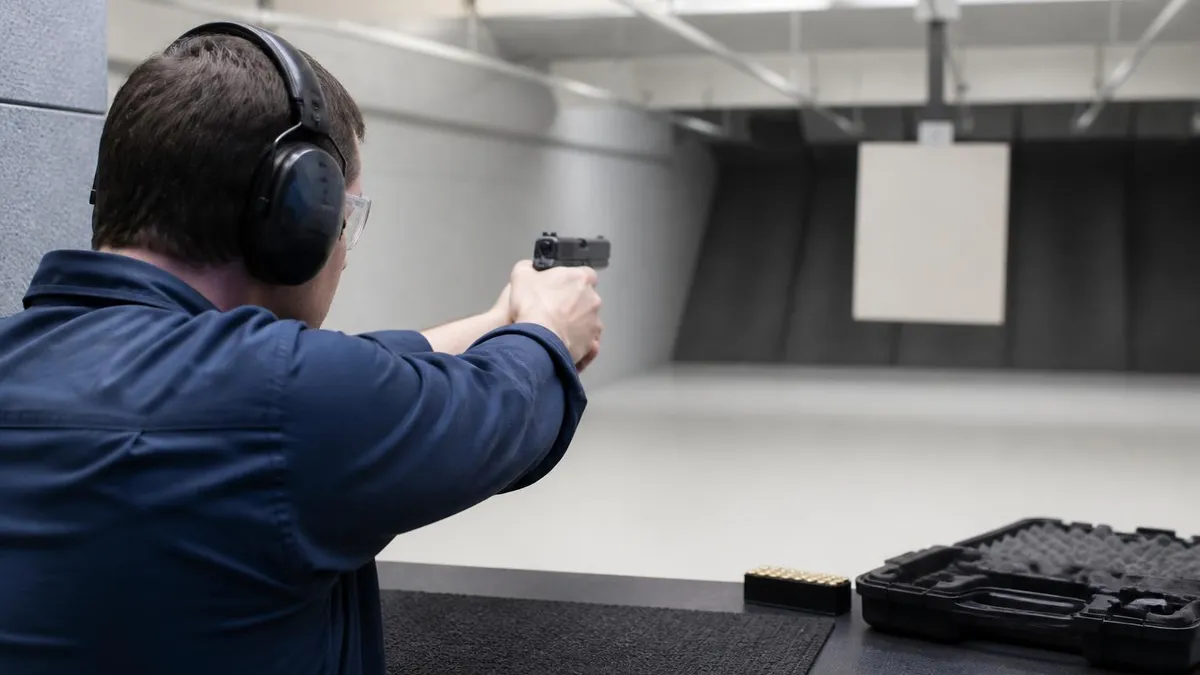
Should You Take the FSC Test Online or In Person?
- +In-person testing offers immediate instructor feedback and the ability to ask questions
- +You can begin purchasing a firearm at the dealer the same day after passing
- +Paper certificates issued in person are accepted at every California dealer
- +Online testing provides scheduling flexibility for working professionals
- +Online tests can be retaken from home without travel between attempts
- +Both options use the same DOJ-approved question pool and grading standards
- −Online testing requires reliable internet, a webcam, and a private testing space
- −Some dealers prefer paper certificates and may delay accepting digital versions
- −Online providers charge variable fees, sometimes higher than in-person rates
- −In-person testing requires travel to a certified dealer during business hours
- −Failed in-person retakes often require waiting for the next available test slot
- −Online proctoring rules can be strict—a dropped connection may invalidate your attempt
Pre-Test Preparation Checklist for FSC Success
- ✓Download the official California DOJ Firearm Safety Certificate study guide PDF
- ✓Read through every section, taking notes on California-specific laws and numerical limits
- ✓Memorize the four universal firearm safety rules verbatim
- ✓Review California's storage requirements when minors or prohibited persons live at home
- ✓Understand the 10-day waiting period and exceptions for law enforcement and CCW holders
- ✓Learn the differences between centerfire and rimfire ammunition
- ✓Study malfunction terminology: misfire, hangfire, squib load, and proper response
- ✓Practice identifying when a firearm is loaded versus unloaded across action types
- ✓Confirm your test location, payment method accepted, and required identification
- ✓Schedule the test for a time when you are alert and free of distractions
Focus on California-specific laws, not federal
The single most common reason Los Angeles applicants fail the FSC test is over-relying on general firearm knowledge while underestimating California-specific rules. Roughly 60 percent of questions test state law, including magazine limits, waiting periods, assault weapon definitions, and storage mandates. Memorize these numbers and rules before relying on common sense.
Workplace firearm safety in Los Angeles extends well beyond the FSC test for any employer whose operations involve firearms. Security companies, armored car services, indoor and outdoor firing ranges, gun shops, and firearms training facilities all face overlapping obligations from Cal/OSHA, federal OSHA, the California Department of Justice, and local LA County health departments. Building a compliant safety program requires integrating the FSC requirement with hazard assessments, written programs, training documentation, and equipment maintenance routines.
The most documented hazards in firearm-handling workplaces are noise-induced hearing loss and lead exposure. Indoor range workers and frequent shooters experience peak sound pressure levels routinely exceeding 140 decibels, well above the threshold at which permanent hearing damage can occur from even brief exposure. Cal/OSHA's hearing conservation standard requires audiometric testing, osha hearing protection availability, and a written program when employee noise exposures exceed an 85-decibel time-weighted average over eight hours.
Lead exposure at indoor ranges is documented at levels well above federal limits when hvac ventilation are poorly designed or maintained. Workers can absorb lead through inhalation of airborne particulates, ingestion via contaminated hands or food, and even skin contact in some scenarios. Cal/OSHA's osha lead standard requires air monitoring, biological monitoring of employee blood lead levels, hygiene facilities, protective clothing, and a written compliance program when exposures exceed action levels.
Employers must also address ergonomic hazards, slip-trip-fall risks on range floors littered with brass, emergency response procedures for accidental discharges, and bloodborne pathogen exposure for staff who may respond to injuries. A complete workplace safety program documents each hazard, the controls implemented, the training employees receive, and the medical surveillance offered. Recordkeeping is critical because Cal/osha inspection stagess in this industry tend to focus heavily on documentation gaps.
Training is the connective tissue across firearm and workplace safety obligations. Beyond the FSC, employers should ensure staff complete general workplace safety training appropriate to their job duties. The osha 10 hour training course is a widely accepted baseline for entry-level workers in general industry and construction, covering hazard recognition, employer and employee rights, and the OSHA tlc inspection. For firearm-industry workers, additional topics like lead awareness, hearing conservation, and emergency action plans should supplement the 10-hour foundation.
Los Angeles County requires certain employers to maintain Injury and cal osha iipps (IIPP) under Cal/OSHA Title 8, Section 3203. The IIPP must include responsibility assignments, compliance enforcement procedures, hazard identification methods, accident investigation processes, hazard correction procedures, training programs, and recordkeeping practices. For firearm-industry employers, the IIPP should explicitly address firearms-related hazards in addition to standard workplace hazards.
Finally, civil liability exposure makes documentation essential. If an employee or customer is injured at a range or during armed security operations, plaintiffs' attorneys will request the employer's training records, hazard assessments, equipment maintenance logs, and osha 301 form during discovery. A well-documented safety program reduces both regulatory penalties and civil damages. The investment in compliance infrastructure typically pays for itself many times over by preventing a single major incident.

Under California Penal Code 25100, criminal storage of a firearm is a misdemeanor or felony when a child or prohibited person gains access to an unsecured gun. Penalties include up to three years in prison if the access results in serious injury or death. Los Angeles County prosecutors actively pursue these cases, particularly after incidents involving minors.
Renewing your Firearm Safety Certificate in Los Angeles requires retaking the full 30-question test before your current certificate expires. Unlike a driver's license, there is no grace period, no abbreviated renewal exam, and no automatic extension. Once your five-year certificate expires, you must complete a fresh test and pay the standard $25 fee to receive a new certificate. Mark the expiration date on your calendar at least 60 days in advance to avoid being unable to purchase a firearm when you need to.
Common renewal mistakes include assuming the FSC is permanent, mixing up the FSC with concealed carry permits or hunting licenses, and showing up to a dealer with an expired certificate expecting to complete a purchase. Each of these errors can derail a planned transaction, triggering wasted trips, lost deposits on guns under reservation, or having to walk away from time-sensitive private party transfer windows. The certificate's expiration is printed on the document itself and on the digital version if you obtained one online.
If you let your FSC lapse, you do not lose any firearms you already own. Possession of firearms purchased while you held a valid FSC remains legal, assuming you are not otherwise prohibited. The expired certificate only prevents future purchases or certain private party transfers. Re-establishing eligibility is straightforward—schedule a new test, study the current DOJ guide (which updates periodically as laws change), and complete the exam. Many repeat test-takers find the renewal exam easier than their initial attempt because they retain core concepts.
Los Angeles residents should pay close attention to laws that have changed since their last test. California passes new firearm legislation almost every year, and the FSC study guide is updated to reflect these changes. Recent updates have addressed ghost gun manufacturing kits, ammunition background checks, large-capacity magazine rulings, and assault weapon definitions. Even an experienced gun owner can be tripped up by questions on rules that were enacted after their previous certification, so a fresh read of the current guide is essential.
If you need to study workplace safety alongside firearm safety—for example, because you are pursuing security industry employment—consider supplementing FSC prep with general safety certification training resources. The OSHA training near me directory helps locate authorized providers in the LA area for 10-hour, 30-hour, and specialized courses. Combining FSC certification with broader workplace safety credentials strengthens your job prospects in armed security, range management, and firearms instruction roles where employers value comprehensive safety knowledge.
One often-overlooked aspect of renewal is updating your dealer relationships. If your favorite local gun shop has closed or relocated since your last purchase—common in LA's competitive retail environment—you may need to identify a new certified instructor for testing and a new FFL for transfers. Reviews on local firearms community forums can help identify reputable dealers and instructors with reasonable wait times and professional service. Avoid dealers with consistent complaints about lost paperwork or DROS errors.
Finally, keep digital and physical copies of your current certificate. While dealers can verify your certificate status electronically in some cases, presenting the physical document remains the simplest path through any purchase or transfer. Store a photo of the certificate in your phone, a backup PDF in cloud storage, and the original in a fireproof document safe alongside your IDs, vehicle titles, and other essential records. Replacement certificates may require retesting, so safeguarding the original document is worthwhile.
Practical preparation for the FSC test follows a predictable formula: read the official study guide cover to cover, take notes on numerical thresholds and California-specific rules, complete at least one practice exam, and review the wrong answers carefully before testing. Most Los Angeles test-takers who follow this routine pass on their first attempt, often with scores well above the 75 percent threshold. Treat the test as a knowledge demonstration, not a memory contest, and the structure of the questions becomes much more approachable.
Time management during the test itself rarely matters, because the FSC is not strictly timed in most testing settings. Instructors typically allow 30 to 60 minutes to complete 30 multiple-choice questions, which is generous for the format. Read each question twice, eliminate obviously wrong answers, and trust your initial instinct on questions where you feel confident. Change answers only when you find a specific reason to do so, such as recalling a study guide passage that contradicts your first choice.
Many test-takers find the storage and transportation questions most challenging because the rules differ by firearm type, vehicle context, and the presence of minors. Pay particular attention to the distinctions between transporting handguns and long guns, the requirement that handguns be unloaded and in a locked container when transported in vehicles, and the rules for transporting firearms onto private property versus public spaces. These scenarios appear frequently and trip up applicants who rely on general intuition rather than specific California requirements.
For workplace integration, identify whether your employer requires the FSC, osha administrative both, or additional industry-specific credentials such as a Guard Card or Exposed Firearm Permit issued by the Bureau of Security and Investigative Services. Each credential has its own renewal schedule, fee, and testing requirements, and stacking renewals strategically can save time and money. Some employers offer to reimburse certification costs, so check your employment benefits before paying out of pocket.
Storage compliance at home is worth a separate weekend project. Audit every firearm in your possession, document make, model, serial number, and current storage method, and confirm each firearm is secured to California's required standard. A simple gun safe meets most household requirements and provides theft deterrence as a bonus. Bolt the safe to a structural element where possible, and keep keys or combinations inaccessible to children and unauthorized adults. Photograph serial numbers and store the images securely off-site for insurance and recovery purposes.
Insurance considerations often surprise new gun owners. Homeowner and renter policies may exclude or limit coverage for firearm-related losses and liability, and Los Angeles insurers vary widely in their underwriting approaches to firearm-owning households. Consider a rider, a specialty firearm insurance policy, or umbrella coverage that explicitly includes self-defense incidents. Even responsible owners benefit from coverage that protects against accidental discharge, theft, and civil liability arising from lawful use of force.
Finally, build relationships with the local firearms community. Los Angeles hosts numerous shooting clubs, training organizations, and advocacy groups that offer ongoing education, peer support, and professional connections. Continuing education through advanced courses, force-on-force scenarios, and legal seminars strengthens both your skills and your understanding of the rapidly evolving California legal landscape. Treat the FSC as the starting point of a lifelong learning commitment rather than a one-time hurdle to clear.
OSHA Questions and Answers

OSHA Training Near Me: How to Find Classes, Online Courses & DOL Cards in 2026

OSHA 10-Hour Training: Online Course, DOL Card & 2026 Guide

OSHA 30 Answers: Complete Study Guide & Test Preparation for 2026

OSHA Standards: Where to Find & How to Apply

OSHA 510 Certification: Complete Guide to the Construction Industry Trainer Prerequisite for 2026
About the Author
Certified Safety Professional & OSHA Compliance Expert
Indiana University of Pennsylvania Safety SciencesDr. William Foster holds a PhD in Safety Science from Indiana University of Pennsylvania and is a Certified Safety Professional (CSP) and Certified Hazardous Materials Manager. With 20 years of occupational health and safety management experience across construction, manufacturing, and chemical industries, he coaches safety professionals through OSHA certification, CSP, CHST, and safety management licensing programs.
Join the Discussion
Connect with other students preparing for this exam. Share tips, ask questions, and get advice from people who have been there.
View discussion (8 replies)