
OLSAT Level E PDF: Complete Study Materials Guide for Grade 4 & 5 2026 September
Master OLSAT Level E with our complete study materials guide. Practice tests, tips, and strategies for grade 4-5 gifted exam success. 📚

Finding the right OLSAT Level E PDF and study materials can feel overwhelming for parents preparing their fourth or fifth grader for gifted and talented program testing. The Otis-Lennon School Ability Test (OLSAT) is one of the most widely administered cognitive ability assessments in the United States, used by school districts from New York City to Los Angeles to identify students for gifted programs, enriched curricula, and selective middle school admissions. Level E specifically targets students in grades 4 and 5, making it a critical gateway assessment for many ambitious young learners.
The OLSAT measures reasoning ability across two broad domains — verbal and nonverbal thinking. Unlike achievement tests that assess what a child has already learned in school, the OLSAT evaluates how well a child reasons, detects patterns, and solves problems using logic. This distinction matters enormously for test preparation: you cannot simply memorize facts to succeed on the OLSAT. Instead, students benefit most from practicing the specific question types they will encounter, building fluency with each reasoning task, and learning smart strategies for managing their time under testing conditions.
Level E sits at a particularly demanding point on the OLSAT scale. Students at this level are expected to handle increasingly abstract verbal analogies, more complex arithmetic reasoning, and geometric pattern recognition that requires holding multiple rules in mind simultaneously. The jump in difficulty from Level D (grade 3) to Level E is significant, and students who begin preparation at least six to eight weeks before their test date consistently perform better than those who cram in the final days. Early preparation allows time for genuine skill development rather than last-minute familiarity.
One of the most effective preparation strategies is working through high-quality study materials that accurately replicate the OLSAT's question format, timing constraints, and difficulty progression. Generic test-prep workbooks rarely capture the nuanced reasoning demands of OLSAT question types. What students need are resources that include authentic verbal reasoning tasks — such as sentence completion, verbal analogies, and logical selection — alongside spatial reasoning, number series, and figural analogies that mirror the actual test experience closely enough to build genuine competency.
Many families search specifically for OLSAT Level E PDF resources because downloadable materials offer flexibility: children can practice on a tablet during a commute, print multiple copies for repeated practice, or work through timed sections at home without purchasing multiple physical workbooks. While free PDF resources vary widely in quality, combining a carefully chosen PDF resource with structured online practice tests gives students the most comprehensive preparation experience available outside of formal test-prep programs.
This guide provides everything you need to navigate OLSAT Level E preparation from start to finish. We cover the exam's structure and content breakdown, the most effective study strategies for grade 4 and 5 learners, how to interpret practice test scores, and where to find the best free and paid resources. Whether your child is testing for a district gifted program, a magnet school, or an independent school admissions process that uses the OLSAT, the strategies in this guide will help maximize their performance on test day.
Understanding what the OLSAT measures — and what it does not — is the single most important mindset shift for effective preparation. The test is not an IQ test, and it is not a measure of a child's worth or future potential. It is a standardized reasoning assessment with predictable question formats that respond well to focused, strategic practice. With the right materials and a consistent preparation schedule, most students can meaningfully improve their scores and approach test day with genuine confidence.
OLSAT Level E by the Numbers

OLSAT Level E Study Schedule
- ▸Take a full diagnostic practice test to identify weak areas
- ▸Review verbal analogies question types and common patterns
- ▸Practice sentence completion with answer-elimination strategy
- ▸Study 15–20 vocabulary words relevant to OLSAT verbal sections
- ▸Work through figural analogies sets (20 problems per session)
- ▸Practice pattern matrix questions with timed drills
- ▸Study number series and arithmetic reasoning question types
- ▸Review geometric shapes, rotations, and spatial relationships
- ▸Complete two timed half-length practice tests
- ▸Drill weakest question types identified in weeks 1–2
- ▸Practice process-of-elimination on hardest question types
- ▸Work through OLSAT Level E PDF practice sets with stopwatch
- ▸Complete one full-length timed OLSAT Level E practice exam
- ▸Review every incorrect answer and understand the reasoning
- ▸Practice calm breathing and focus techniques for test day
- ▸Light review only in final 48 hours — no new content
The landscape of OLSAT Level E study materials ranges from free downloadable PDFs of dubious quality to comprehensive prep programs that cost several hundred dollars. Understanding what separates genuinely useful materials from low-quality knockoffs will save you time and money — and more importantly, it will ensure your child spends their limited study hours on practice that actually builds the skills the test demands.
The best materials share several key characteristics: they use the authentic OLSAT question format, they include detailed answer explanations (not just answer keys), and they cover all nine subtypes of OLSAT questions rather than focusing only on the most common ones.
For families seeking free OLSAT Level E PDF resources, the most reliable starting points are official Pearson publications and resources distributed by school districts that use the OLSAT for gifted identification. Many districts publish sample questions and brief practice sets on their gifted program websites — these are invaluable because they reflect exactly how local administrators format and score the test. Searching for your specific district's name alongside "gifted testing sample questions" often surfaces these resources quickly. Additionally, university extension programs that support gifted education sometimes maintain free downloadable prep packets for families in underserved communities.
Paid OLSAT Level E prep books from reputable publishers offer the most comprehensive coverage. Leading options in this space typically include 200 to 400 practice questions organized by question type, two to four full-length practice tests, and detailed explanations that walk students through the reasoning process for each question rather than simply stating the correct answer. The reasoning walkthrough is critical — students who understand why an answer is correct are far better equipped to handle novel variations of that question type on the actual test than students who simply memorize answer patterns.
Online practice platforms offer an increasingly popular alternative to physical books and PDFs, with the significant advantage of providing immediate feedback and adaptive difficulty adjustment. When a child consistently answers figural analogy questions correctly, a good adaptive platform automatically increases the difficulty of subsequent questions to keep them in an optimal learning zone. This kind of dynamic adjustment is impossible with static PDF materials, which is why most effective prep programs combine both: PDFs or books for structured content review and strategic learning, and online platforms for high-volume timed practice with instant feedback.
For parents working with a tighter budget, the most cost-effective approach is to purchase one high-quality OLSAT Level E prep book and supplement it with free online resources including practice tests from sites like PracticeTestGeeks.com. This combination provides structured content coverage from the book alongside the variety and accessibility of free digital practice. Rotating between different question sources also prevents a common pitfall in test prep — students who practice exclusively with one set of materials sometimes develop familiarity with specific questions rather than the underlying reasoning skills, which can inflate practice scores without improving actual test performance.
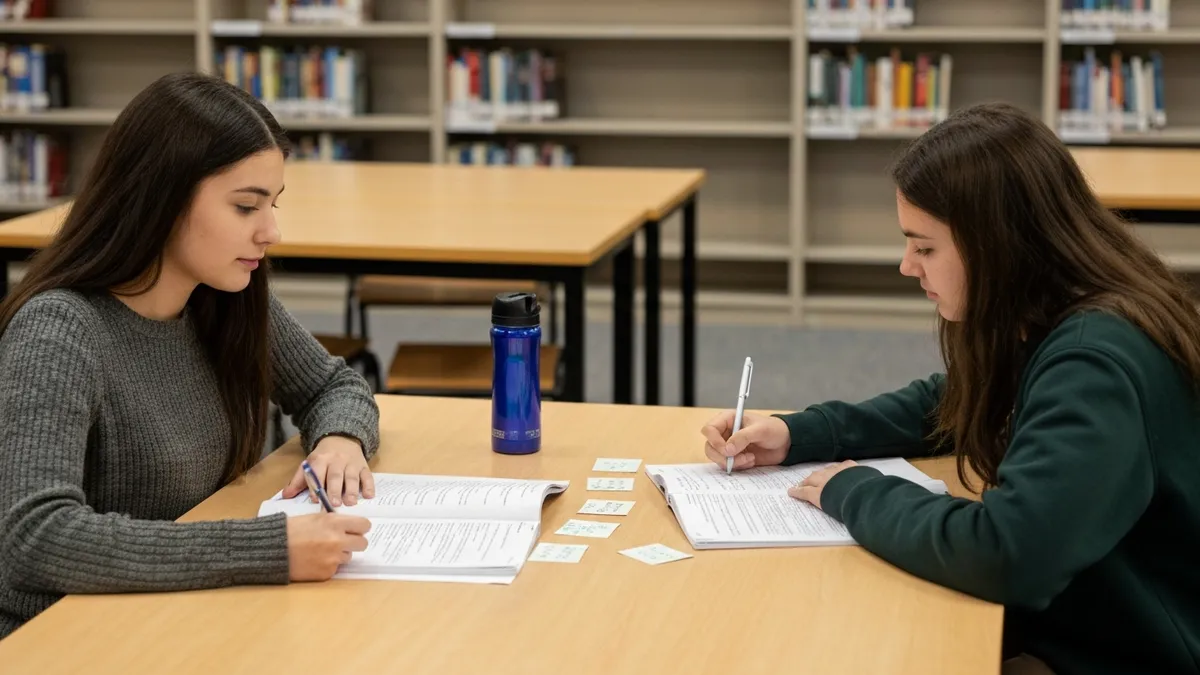
Flash cards remain an underrated tool for OLSAT Level E verbal preparation specifically. The verbal section includes question types that draw on vocabulary, verbal relationships, and the ability to identify analogical connections between word pairs. Students who build robust vocabulary knowledge and practice recognizing common analogical relationships (part-to-whole, cause-and-effect, synonym, antonym, function) perform significantly better on the verbal reasoning subsections. Creating custom flash cards based on missed practice questions is one of the highest-yield study activities available, because it directly targets each individual student's specific knowledge gaps rather than covering ground they have already mastered.
Whatever combination of materials you choose, consistency matters more than volume. Thirty minutes of focused daily practice over six weeks produces better results than cramming for five hours on weekends. The brain consolidates reasoning skills during rest periods, and spaced repetition — returning to challenging question types across multiple sessions — builds durable competency rather than short-term performance. Structure your child's study schedule to include at least five short practice sessions per week, and build in one longer timed simulation session per week to develop the pacing and stamina the real test demands.
OLSAT Level E: Verbal, Nonverbal & Scoring Strategies
The verbal reasoning section of OLSAT Level E includes six distinct question subtypes: verbal analogies, verbal classification, sentence completion, sentence arrangement, logical selection, and inference. Verbal analogies are the highest-volume subtype and ask students to identify the relationship between a pair of words and then apply that relationship to complete a second pair. Students who practice categorizing analogy relationships by type — function, synonym, part-to-whole, degree — respond more quickly and accurately because they recognize the pattern before they process the specific vocabulary involved.
Sentence completion questions on the Level E test are more complex than their lower-level counterparts, often featuring two blanks and requiring students to consider how the two missing words interact logically with each other and with the sentence context. The most reliable strategy is to read the entire sentence, predict what kinds of words would logically fill the blanks before looking at the answer choices, and then use process of elimination to rule out options that create logical inconsistencies. Students who jump directly to the answer choices without first forming their own prediction are more susceptible to distractor traps built into the test design.
PDF Study Materials vs. Online Practice: Which Is Better?
- +PDFs and books allow screen-free practice, reducing digital fatigue during long study sessions
- +Printed materials let children write directly on the page, annotate, and sketch — especially helpful for nonverbal questions
- +High-quality PDF prep books include structured content chapters that online platforms often skip
- +Downloadable materials work without internet access, making them ideal for travel or limited-connectivity households
- +Physical books build a sense of progress as children move through chapters and complete sections
- +PDF resources can be printed multiple times for repeated timed practice without additional cost
- −Static PDFs cannot adapt difficulty based on performance — every student gets the same questions regardless of skill level
- −Answer explanations in PDF materials vary widely in quality — many provide only answer keys without reasoning walkthroughs
- −Free OLSAT PDF resources online are often outdated, low-quality, or misaligned with current test formats
- −PDF practice cannot replicate the computer-based testing interface some districts use for OLSAT administration
- −Tracking progress across multiple PDF practice sessions requires manual record-keeping by parents
- −Students can inadvertently memorize specific questions when using the same PDF multiple times
OLSAT Level E Prep Checklist for Parents
- ✓Confirm your child's exact test date and the specific OLSAT level they will take (Level E = grades 4–5).
- ✓Download or purchase at least one full-length OLSAT Level E practice test before beginning any content study.
- ✓Administer the diagnostic test under timed, realistic conditions to get a true baseline score.
- ✓Review the diagnostic results to identify the two or three question subtypes with the highest error rate.
- ✓Create a six-to-eight-week study schedule with daily 25–30 minute practice sessions.
- ✓Rotate between verbal reasoning drills, nonverbal reasoning drills, and full mixed-section practice sessions.
- ✓Practice process-of-elimination explicitly — have your child explain why each wrong answer is wrong.
- ✓Administer one full timed practice test at the end of weeks 2, 4, and 6 to measure progress.
- ✓Review every incorrect answer together, focusing on understanding the reasoning rather than memorizing the answer.
- ✓Limit prep to light review only in the 48 hours before the actual test to avoid burnout and anxiety.

Process of Elimination Outperforms Guessing by 3:1
Research on standardized test performance consistently shows that students who actively eliminate wrong answers before selecting their final response score significantly higher than students who select the first answer that seems plausible. On OLSAT Level E, most questions have four or five answer choices — eliminating even one clearly wrong option increases the probability of a correct guess from 20% to 25%, and eliminating two raises it to 33%. Teach your child to cross out wrong answers physically or mentally before committing to a final choice.
Understanding how the OLSAT Level E is scored helps parents set realistic preparation benchmarks and interpret practice test results accurately. The OLSAT uses a multistage scoring process: first, raw scores (the number of correct answers) are calculated; then those raw scores are converted to scaled scores that account for differences in difficulty across test forms; finally, scaled scores are converted to the School Ability Index (SAI), the primary score reported to families and schools. The SAI is a normalized standard score centered at 100, meaning that a score of 100 represents exactly average performance for the student's age group.
One aspect of OLSAT scoring that surprises many parents is that the norming is age-based, not grade-based. Two students in the same grade who were born six months apart will be compared to different norm groups when their SAI scores are calculated.
This means a younger student in a class can sometimes achieve a higher SAI than an older classmate even if the older student answered more questions correctly — because the younger student's raw score is compared to the performance of other children their age, a smaller normative group that answered fewer questions correctly on average. Understanding this nuance prevents misinterpretation of scores and helps parents calibrate their expectations accurately.
Gifted program cutoffs vary enormously by district. In some districts, students who score at the 85th percentile (SAI approximately 116) qualify for enriched programming, while the most competitive urban gifted programs in cities like New York, Chicago, and San Francisco require scores at the 95th percentile or higher (SAI 125+). Before beginning preparation, parents should contact their district's gifted education office to learn the exact cutoff scores used locally, as preparing for a 95th percentile target requires a substantially different level of commitment than preparing for an 85th percentile target.
Practice test scores are the most reliable early predictor of actual OLSAT performance, but only when administered under realistic conditions. Students who take practice tests without time limits, with access to parental hints, or in noisy distracting environments are getting inaccurate performance data. To make practice test scores meaningful, administer each full-length practice session with a timer running, in a quiet space, with no interruptions, and grade the results immediately after the session ends. Then analyze the results by question type to understand performance patterns rather than focusing exclusively on the total score.
One common pitfall in interpreting practice test progress is score volatility — a student might score at the 80th percentile on one practice test and the 72nd percentile on the next. This kind of variability is completely normal and does not indicate that preparation is failing.
Cognitive performance on any given day is influenced by sleep quality, nutrition, stress levels, and dozens of other factors beyond academic preparation. Parents should evaluate progress by looking at the average of three or more practice tests taken over at least two weeks, not by comparing any two adjacent scores. A rising average is the meaningful signal; individual score fluctuations are statistical noise.
For students who take the OLSAT multiple times, scores from different administrations can generally be expected to improve modestly with continued preparation, but the improvement curve has diminishing returns. Students who score below the 70th percentile on their first official test often see significant score gains with targeted preparation and a retake. Students who already score above the 90th percentile on their first test are already near the ceiling of what structured preparation can achieve, and their score improvement potential is more limited. Managing expectations honestly is important for both student motivation and family stress levels throughout the preparation process.
Finally, it is worth noting that the OLSAT is one of several assessments districts use for gifted identification. Many districts also administer achievement tests like the Iowa Assessments or the Stanford Achievement Test alongside the OLSAT, and decisions about gifted placement consider both scores together. Students who score well on achievement tests but modestly on the OLSAT — or vice versa — may still qualify for gifted programs under composite scoring systems. Understanding your district's complete identification process before focusing exclusively on OLSAT preparation can help ensure you are preparing your child for all relevant assessments, not just one.
OLSAT testing windows are set by individual school districts and are often available only once per year. Missing the registration deadline — which can fall as early as October for spring gifted program admissions — may mean waiting an entire year before your child can retest. Contact your district's gifted education office at least three months before the anticipated test window to confirm registration dates, required documentation, and any accommodations request deadlines for students with IEPs or 504 plans.
Preparing a child for the OLSAT Level E is as much about building confidence and a positive testing mindset as it is about mastering specific question types. Many students who possess the reasoning ability to score in the gifted range underperform on the actual test because of test anxiety, unfamiliarity with the testing format, or poor time management under pressure. Addressing these psychological and strategic dimensions of test performance is just as important as content preparation — and yet most prep books and PDFs focus almost entirely on content, leaving families to figure out the mindset piece on their own.
Test anxiety in elementary-aged students often manifests differently than it does in older test-takers. Young children may not describe their experience as anxiety; instead, they may complain of stomachaches before practice sessions, resist sitting down to study, or become tearful when they encounter difficult questions. These behavioral signals are worth taking seriously.
The most effective antidote is reducing the stakes framing around practice sessions: frame practice tests as games or challenges rather than evaluations, celebrate effort and improvement rather than scores, and avoid discussing gifted program admissions in terms that suggest the child's value or worthiness depends on the test result.
Time management is the other major performance variable that separates students who reach their score potential from those who do not. OLSAT Level E gives students approximately 30 to 40 seconds per question on average, which feels extremely tight for students who have not practiced working under time pressure.
Students who have never taken a timed test before are often shocked by how quickly the time passes, leading them to rush through later questions or spend too long on early ones and run out of time before finishing. Building pacing awareness through repeated timed practice is the only reliable solution — no amount of content mastery compensates for poor pacing on a timed test.
A practical pacing strategy for OLSAT Level E is the two-pass approach. On the first pass, students should move through the test answering every question they can solve confidently within 20 to 25 seconds. Any question that requires more thought gets a quick mark and is skipped.
On the second pass, students return to the marked questions with whatever time remains and work through them more carefully. This approach ensures that students collect all the easy and medium points available to them before investing time in the hardest questions — a critical strategy given that each question is worth the same number of points regardless of difficulty.
Another underemphasized aspect of OLSAT Level E preparation is the importance of reading comprehension speed. Many verbal reasoning questions require students to process relatively complex sentence structures quickly to understand what is being asked. Students who read slowly — even if they are excellent comprehenders — may struggle to finish the verbal section within the time limit. Building reading speed through daily independent reading of age-appropriate books is one of the most beneficial long-term strategies parents can pursue, and it has the additional advantage of expanding vocabulary knowledge that directly supports verbal reasoning performance.
For parents who want additional support beyond self-directed study, private tutoring with a test-prep specialist who has specific OLSAT experience can be extremely effective, particularly for students who are close to a gifted program cutoff. A good OLSAT tutor can diagnose specific reasoning weaknesses, teach targeted strategies, and provide accountability that many students need to stay consistent with a preparation schedule.
Tutoring costs vary widely, from $50 to $200 per hour depending on location and the tutor's experience, but even four to six sessions focused on the student's weakest question types can produce meaningful score improvements for students who are already doing independent preparation.
Group test prep classes offered by educational enrichment centers are a more affordable alternative to private tutoring and offer the additional benefit of allowing students to practice in a classroom environment similar to actual testing conditions. Many OLSAT prep classes run for six to eight weeks on weekends and include multiple proctored practice tests as part of the curriculum. The social element of group prep can also be motivating for children who feel isolated studying alone — discovering that other students are working hard on the same challenging material can normalize the effort required and reduce performance pressure.
As test day approaches, the focus of preparation should shift from learning new content to consolidating what your child already knows and ensuring they are physically and emotionally ready to perform at their best. The final week before the OLSAT Level E should include only light review — perhaps 20 to 30 minutes per day of working through previously seen question types at a comfortable pace — rather than intensive drilling or exposure to new question formats. Introducing unfamiliar material in the final days creates unnecessary confusion and can undermine confidence built over weeks of practice.
Sleep is perhaps the single most underrated performance factor for elementary-aged test-takers. Children ages 9 to 11 require 9 to 11 hours of sleep per night for optimal cognitive function, and sleep deprivation — even a single night of shortened sleep — measurably impairs working memory, processing speed, and sustained attention.
All of these cognitive functions are directly relevant to OLSAT performance. Beginning to enforce a consistent, early bedtime at least a week before test day gives the brain time to fully adapt to the schedule rather than scrambling to compensate for accumulated sleep debt on the night before the test.
Nutrition on test day matters more than many parents realize. Research on cognitive performance in school-age children consistently shows that a balanced breakfast — including both protein and complex carbohydrates — sustains attention and processing speed better than no breakfast or a high-sugar breakfast.
A meal of eggs, whole-grain toast, and fruit consumed 60 to 90 minutes before the test provides steady energy without the blood sugar spike and crash that can impair concentration during the testing session. Avoid dramatically changing your child's diet in the days before the test; stick to familiar foods that you know they digest well and enjoy.
On the morning of the test itself, create a calm, positive atmosphere rather than reviewing content or quizzing your child. A few encouraging words, a favorite breakfast, and a relaxed drive or commute to the testing location set a far better tone than last-minute flashcard drilling.
Children absorb parental anxiety, so managing your own stress level is genuinely preparation for your child's test performance. Remind your child that they have prepared thoroughly, that the test is simply an opportunity to show what they already know, and that you are proud of the effort they have put in regardless of the outcome.
Arriving at the testing location with time to spare — at least 15 to 20 minutes early — allows your child to use the restroom, settle into the environment, and meet the proctor without the adrenaline spike that comes from rushing. Familiar, comfortable clothing that does not itch, bind, or distract is worth laying out the night before. If your child is permitted to bring water or a light snack to the testing room, pack them in advance. These logistical details sound minor but collectively create the conditions for a child to arrive calm, alert, and ready to focus.
After the test is over, resist the urge to immediately debrief your child on specific questions or probe for their confidence level. Children often misremember test content in the hours immediately after testing, and discussing specific questions can create unnecessary anxiety about answers they cannot change. Instead, celebrate the accomplishment of completing a challenging assessment and do something enjoyable together. The wait for official OLSAT results typically ranges from two to eight weeks depending on the district, and there is nothing productive to be gained from anxiety during that period.
Whether or not your child is ultimately admitted to a gifted program, the skills developed during OLSAT Level E preparation — logical reasoning, systematic problem-solving, time management, and intellectual persistence — are valuable far beyond any single test. The habits of mind built during focused, strategic preparation serve students throughout their academic careers and well into adult professional life. The test is a milestone, not a destination, and the preparation journey itself has real educational value regardless of where the scores land.
OLSAT Questions and Answers

OLSAT Exam Prep: Complete Guide for Parents and Students

Ace Your Exam: OLSAT Practice Test 2026 Prep Guide

OLSAT Practice Tests: Grade-by-Grade Prep Guide for Parents and Students

OLSAT Scores and IQ: How They Relate and What Parents Should Know

OLSAT Scores Explained: What They Mean and How to Improve
About the Author

Educational Psychologist & Academic Test Preparation Expert
Columbia University Teachers CollegeDr. Lisa Patel holds a Doctorate in Education from Columbia University Teachers College and has spent 17 years researching standardized test design and academic assessment. She has developed preparation programs for SAT, ACT, GRE, LSAT, UCAT, and numerous professional licensing exams, helping students of all backgrounds achieve their target scores.