
Where to Get NRP Certification: Complete Guide for Healthcare Providers
Where to get NRP certification in 2026 September ✅ — hospitals, online eSim, AAP courses. Steps, costs, renewal tips & free practice tests.

Knowing where to get NRP certification is the first practical step every labor-and-delivery nurse, neonatal nurse, respiratory therapist, and delivery-room physician must take before they can legally participate in newborn resuscitation. The Neonatal Resuscitation Program — developed jointly by the American Academy of Pediatrics (AAP) and the American Heart Association (AHA) — is the global standard for preparing clinicians to stabilize a compromised newborn in the critical minutes after birth. Without a current NRP card, most US hospitals will not allow a provider to attend deliveries, making certification non-negotiable for a wide range of perinatal care roles.
The good news is that access to NRP training has expanded dramatically over the past decade. Providers today can complete the cognitive portion of the course entirely online through the AAP's eSim platform, then attend a brief hands-on Skills Station at a local hospital, simulation center, or AAP-authorized training site. This blended learning model means you are no longer dependent on finding a full in-person class that fits your schedule — a major advantage for travel nurses, new graduates, and rural practitioners who previously had limited options.
Hospital-based NRP programs remain the most common route to certification in the United States. The majority of large academic medical centers, community hospitals, and children's hospitals run their own AAP-approved NRP courses, often offered monthly or quarterly and open to both staff and community providers. These institutional programs are tightly integrated with simulation labs, making them ideal for learners who want realistic, high-fidelity practice alongside their actual colleagues before sitting for the hands-on performance evaluation.
Beyond hospitals, freestanding simulation centers affiliated with medical schools and nursing programs offer NRP courses to the broader community. These sites frequently post open-enrollment sessions that any licensed clinician can register for — you do not need to be employed by the sponsoring institution. The AAP maintains a searchable provider directory on its website where you can filter by ZIP code and course type, which dramatically simplifies the search for a nearby authorized site regardless of your employer or state.
Online-only learners should understand that while the eSim cognitive examination can be completed from any internet-connected device, the AAP mandates an in-person Skills Station to earn full NRP certification. The Skills Station covers bag-mask ventilation, endotracheal intubation on a manikin, umbilical catheter placement, and the integrated simulation scenario. No provider can receive an NRP Provider card without completing and passing this hands-on component, so budget time for both elements when planning your certification timeline.
Renewal requirements add another layer of planning. NRP certification is valid for two years, and most employers begin nudging providers to recertify at the 18-month mark to avoid any lapse in coverage. Renewal follows the same blended model — online eSim module plus Skills Station — though experienced providers often find the renewal course faster than their initial certification because the knowledge base is already established. Planning ahead and knowing your renewal window is just as important as knowing where to get the initial certification.
This guide covers every major certification pathway in detail, including hospital programs, online eSim, simulation centers, costs, renewal timelines, and the most efficient way to prepare so you walk into your Skills Station confident and ready to pass on the first attempt. Whether you are a new graduate scheduling your very first NRP course or a seasoned NICU nurse approaching your renewal deadline, the information below will help you find the right program, minimize downtime, and keep your certification continuously current.
NRP Certification by the Numbers
Key Facts at a Glance
| Item | Value | Details |
|---|---|---|
| Certification Validity | 2 Years | Renewal required every 24 months |
| Typical Course Cost | $50–$200 | Varies by site; employers often reimburse |
| Total Training Time | 4–8 hrs | eSim + in-person Skills Station combined |

NRP Certification Pathways: Step-by-Step
Create Your AAP Learning Management Account
Complete the Online eSim Cognitive Module
Locate an Authorized NRP Skills Station
Attend and Pass the In-Person Skills Station
Receive Your NRP Provider Card
The AAP's eSim platform fundamentally changed how providers access NRP training by moving the cognitive examination entirely online. Before eSim was introduced, providers had to attend a full-day in-person class covering both knowledge content and skills practice.
Today's blended model separates these two elements: you master the cognitive content independently through the online modules, then spend a focused 2–3 hours at an in-person Skills Station where an NRP Instructor verifies your hands-on performance. This structure is more efficient, more flexible, and — because you come to the Skills Station with the theory already learned — generally results in stronger performance evaluations.
The eSim cognitive modules are organized into 11 lessons aligned with the 7th Edition NRP curriculum. Each lesson opens with a brief didactic overview, transitions into one or more simulated clinical cases where you make real-time decisions for a virtual patient, and closes with a scored examination.
The platform tracks your progress, allows you to pause and resume at any point, and provides immediate feedback on incorrect answers. Most providers complete the full eSim module in a single session of 4–5 hours, though the system accommodates learners who prefer to work through two or three lessons per day over a week.
Hospital-based programs are still the most frequently used pathway for US clinicians, and for good reason. Most hospitals that offer obstetric or neonatal services run their own AAP-authorized NRP programs staffed by in-house NRP Instructors — typically experienced NICU nurses, neonatologists, or neonatal nurse practitioners. These institutional programs often waive the course fee for employed staff, integrate seamlessly with hospital simulation labs, and schedule Skills Stations at multiple times each month to accommodate rotating shift workers. If you are employed by a hospital, always check with your education department before paying for an outside course.
For providers who are not affiliated with a hospital — including independent midwives, physician assistants in private practice, and travel nurses between assignments — freestanding simulation centers and community NRP programs fill the gap. Simulation centers at nursing schools and medical schools frequently offer open-enrollment NRP courses priced between $75 and $150. Some AAP chapter offices also coordinate regional NRP training events. The AAP's online provider locator at aap.org allows anyone to search by ZIP code, state, and course format, making it straightforward to identify authorized options within a reasonable distance.
Some professional organizations and continuing education providers have also begun offering NRP Skills Stations as part of broader perinatal education conferences. If you are attending a midwifery conference, a neonatal transport symposium, or a labor-and-delivery nursing symposium, check the conference agenda for NRP Skills Station slots — these sessions are often included in the conference registration fee or offered at a discounted add-on rate, making them an extremely cost-effective option compared to scheduling a standalone course.
Travel nurses face a unique challenge because NRP certification requirements vary slightly from facility to facility, and some hospitals will only honor NRP cards issued by AAP-authorized instructors rather than cards from non-standard programs. Always carry documentation of both your eSim completion and your Skills Station sign-off when starting a travel assignment. If a facility questions your card, the AAP provider portal allows you to generate a printed verification letter that shows your current certification status, completion date, and the instructor who signed off on your skills — this document resolves nearly all facility-level disputes quickly.
Renewal of NRP certification follows the same blended model as initial certification: complete the online eSim module and then attend a Skills Station. The renewal eSim may be slightly shorter than the initial version because experienced providers can challenge certain lessons. However, the in-person Skills Station is still fully required — there is no waiver for experienced providers. Most NRP Instructors recommend scheduling your renewal Skills Station at least 30 days before your card expires to give yourself a buffer in case the first session is full or needs to be rescheduled due to unforeseen circumstances.
Who Needs NRP Certification and What Are the Requirements?
NRP certification is required for any healthcare provider who attends deliveries or may be called to resuscitate a newborn. This includes obstetricians, family medicine physicians, nurse-midwives, labor-and-delivery nurses, neonatal nurses, neonatal nurse practitioners, neonatologists, pediatricians, respiratory therapists working in perinatal settings, and paramedics on neonatal transport teams. The Joint Commission and most state hospital licensing bodies mandate that at least one NRP-certified provider be present at every delivery.
Beyond direct birth attendance, many NICU staff, pediatric emergency medicine providers, and transport team members are also required to maintain current NRP certification as a condition of employment. Some states have expanded requirements to include licensed midwives practicing in birth center or home birth settings. When in doubt, check with your state board of nursing or medicine and your employer's credentialing office, as requirements can differ significantly by practice setting and geographic location across the United States.

Online eSim vs. Traditional In-Person NRP: Pros and Cons
- +Complete cognitive modules on your own schedule — evenings, weekends, or between shifts
- +Pause and resume eSim lessons without losing progress, unlike fixed-schedule classroom sessions
- +Immediate feedback on incorrect answers during eSim simulations reinforces learning in real time
- +Reduces total in-person time commitment to 2–3 hours rather than a full-day class
- +Digital provider card issued within 24–48 hours of Skills Station completion — no waiting for paper cards
- +AAP provider locator makes it easy to find an authorized Skills Station near any ZIP code in the US
- −Reliable high-speed internet required to run eSim simulations smoothly — a barrier in rural areas
- −In-person Skills Station is still mandatory; purely online completion does not earn full NRP certification
- −Some hospital Skills Stations are only open to employed staff, limiting access for community providers
- −eSim purchase fee ($30–$50) is paid out of pocket if your employer does not reimburse online course costs
- −Technical issues with the AAP learning platform can cause delays in receiving completion documentation
- −Learners who struggle with self-directed online study may retain less than in a facilitated classroom format
NRP Certification Preparation Checklist
- ✓Create your AAP account at the NRP portal and purchase the eSim cognitive module before your target Skills Station date.
- ✓Complete all 11 eSim lessons and pass each lesson examination with a score of 80% or higher.
- ✓Print or save your eSim completion certificate from the AAP portal to bring to the Skills Station.
- ✓Locate an authorized NRP Skills Station using the AAP provider locator or your hospital education department.
- ✓Confirm the Skills Station accepts external providers if you are not employed at the host institution.
- ✓Review the AAP 7th Edition NRP textbook sections on bag-mask ventilation, MR SOPA, and chest compressions.
- ✓Practice neonatal bag-mask ventilation technique using a simulation manikin before your Skills Station date.
- ✓Memorize epinephrine dosing (0.1–0.3 mL/kg of 1:10,000 IV) and volume expander dose (10 mL/kg normal saline).
- ✓Arrive at your Skills Station with government-issued ID, your nursing or medical license number, and eSim certificate.
- ✓After passing, verify your digital NRP Provider card appears correctly in your AAP account within 48 hours.
Your NRP Card Starts From the Skills Station Date — Not eSim Completion
Many providers assume their two-year certification clock starts when they finish the online eSim module. It does not. Your NRP Provider card is dated from the day you complete and pass the in-person Skills Station. If you finish eSim in January but attend your Skills Station in March, your card expires in March two years later — not January. Always schedule your Skills Station promptly after completing eSim to maximize the validity window of your new card.
Understanding the full cost picture for NRP certification helps providers and their managers plan appropriately. The eSim online module is purchased directly through the AAP portal and typically costs between $30 and $50 per provider depending on the current pricing structure. Skills Station fees are set individually by each authorized training site and range from no cost (for hospital employees whose employer absorbs the fee) to approximately $75–$200 for community providers attending a freestanding simulation center or open-enrollment program. The combined out-of-pocket cost for a new provider seeking certification outside their employer's program rarely exceeds $250 in total.
Employers across the perinatal care spectrum recognize that NRP certification is a mandatory credential, and most health systems include NRP renewal costs in their annual education budgets. If your employer does not automatically reimburse NRP costs, it is worth submitting a formal request to your department manager or HR credentialing office — many organizations will approve reimbursement when the request is made explicitly, even if it is not offered proactively. Keeping your receipts for both the eSim purchase and Skills Station registration fee is advisable so you can document the full expense for reimbursement or tax purposes.
Renewal timing is one of the most frequently mismanaged aspects of NRP certification. The two-year validity period sounds generous, but the combination of scheduling delays, course capacity limits, and institutional credentialing review periods means that providers who wait until the final month before expiration frequently experience gaps. Most employers and credentialing bodies recommend initiating renewal at the 18-month mark — approximately six months before expiration. This buffer accommodates unexpected scheduling conflicts, illness, or administrative processing delays without creating a compliance gap that could affect your clinical assignments.
NRP Instructor certification is a separate and additional pathway for experienced providers who want to teach NRP courses at their institution. To become an NRP Instructor, you must hold a current NRP Provider card, complete the NRP Instructor course (available through the AAP), and be sponsored by an AAP-recognized Regional Training Center. Instructor certification is valid for four years rather than two, and it allows you to administer Skills Stations independently, sign provider cards, and create customized simulation scenarios for your institution's specific patient population and equipment.
Regional Training Centers (RTCs) are AAP-designated organizations that coordinate NRP Instructor training and program oversight within a defined geographic area. There are RTCs affiliated with most major children's hospitals and academic medical centers in the United States. RTCs serve as the quality assurance backbone of the NRP infrastructure — they certify Instructors, audit program compliance, and ensure that all authorized NRP training sites in their region are delivering the curriculum accurately and using AAP-approved equipment and materials. Providers who encounter inconsistencies in a local NRP program can report concerns to the supervising RTC.
Providers practicing in rural or underserved areas sometimes face genuine access challenges when it comes to finding an authorized Skills Station within a reasonable distance. For these providers, the AAP offers guidance on establishing new NRP training programs at rural critical access hospitals, and some state nursing associations have funded mobile simulation units that travel to rural facilities to deliver Skills Stations on-site. If distance is a barrier for you or your team, contacting your state AAP chapter or state hospital association is a good starting point for identifying available rural access solutions.
International providers holding NRP cards from non-US programs should verify that their certification is recognized before practicing in US clinical settings. The AAP's NRP is used internationally, but some countries adapt the curriculum or use different program names. Most US hospitals require that providers present an NRP card issued under the AAP program specifically, so international-trained providers may need to complete a US-based eSim and Skills Station to obtain a recognized American NRP Provider card if their international card is not accepted by the credentialing office.

An expired NRP card — even by a single day — can trigger an automatic hold on your clinical privileges at most US hospitals. Credentialing systems flag the lapse immediately, and some facilities require a full skills re-evaluation before reinstating delivery attendance privileges. Start your renewal process at least six months before your expiration date to avoid any disruption to your clinical schedule or patient care assignments.
Preparing effectively for the NRP Skills Station is the single highest-leverage activity a provider can undertake before certification day. Unlike written examinations where memorization alone can carry you through, the Skills Station requires physical competency — your hands must perform the correct techniques fluently and in the correct sequence under the observation of an NRP Instructor. Providers who have practiced on a neonatal manikin before the Skills Station consistently report greater confidence, fewer evaluation retries, and faster overall completion compared to those who rely solely on the eSim simulations.
The five skill sets most commonly evaluated at NRP Skills Stations are: initial assessment and stabilization steps, positive-pressure ventilation with proper mask seal and MR SOPA corrective sequence, endotracheal intubation with confirmation of tube placement, cardiac chest compressions coordinated with PPV at the correct ratio, and medication administration including epinephrine dose calculation and umbilical venous catheter priming. Providers who struggle with any of these areas in the eSim simulations should seek additional hands-on practice before their Skills Station date rather than hoping the evaluation will go smoothly without preparation.
The integrated simulation scenario at the end of the Skills Station is where many candidates feel the most anxiety, because it requires them to apply all five skill sets in a flowing, time-pressured clinical simulation rather than as isolated station checks.
The scenario typically involves a depressed newborn who requires initial steps, PPV, escalation to intubation, chest compressions, and medication — essentially walking through the full NRP algorithm in real time. The best preparation for this scenario is to verbalize the NRP algorithm out loud while reviewing it, so that the decision tree becomes second nature rather than something you have to consciously reconstruct under pressure.
Practice tests are one of the most efficient tools for identifying knowledge gaps before you sit for either the eSim examinations or the hands-on evaluation. Reviewing NRP-specific practice questions on topics like airway management, medication dosing, ethical considerations for extremely premature infants, and the initial assessment algorithm will surface any areas where your understanding is incomplete, giving you targeted material to review in the eSim lessons before your examination attempt. Using validated practice resources aligned with the 7th Edition curriculum ensures that the questions reflect what the actual eSim and Skills Station evaluate.
Simulation-based rehearsal outside of formal coursework is increasingly recognized as a best practice for NRP preparation. Many hospitals have simulation labs that are available for self-directed practice during off-hours or before a scheduled renewal date. If your hospital's simulation lab stocks a neonatal manikin and a neonatal bag-mask, scheduling an informal practice session with a colleague or NRP Instructor mentor is highly worthwhile. Even 30 minutes of deliberate hands-on practice on the specific equipment you will use at your Skills Station can significantly improve performance on evaluation day.
The MR SOPA mnemonic — Mask adjustment, Reposition airway, Suction mouth and nose, Open mouth, Pressure increase, Airway alternative — is one of the most heavily tested sequences in NRP certification and renewal. Providers who can articulate and demonstrate MR SOPA fluently are much better positioned to pass the ventilation skills station without remediation. Committing this sequence to memory, understanding the rationale behind each step, and practicing the physical execution of each corrective action in order will directly translate to a smoother Skills Station performance and a more confident overall evaluation experience.
Finally, arriving at your Skills Station well-rested, with your eSim completion certificate printed and in hand, and having reviewed the NRP algorithm within the previous 24 hours puts you in the strongest possible position for success. NRP certification is achievable for every qualified provider — the program is designed to be passed, not to be a barrier. With deliberate preparation, the right practice resources, and a clear understanding of where to get NRP certification and what the process entails, you can complete your certification efficiently and start your career in perinatal care with confidence.
Providers who are preparing for their NRP Skills Station should pay particular attention to the airway management sequence, as intubation skills are among the most technically demanding components of the evaluation.
Correct laryngoscope technique involves holding the handle in the left hand, inserting the straight Miller blade along the right side of the tongue, advancing to the vallecula or below the epiglottis depending on technique, and visualizing the glottic opening before advancing the endotracheal tube to the correct insertion depth. On a term newborn manikin, the correct ET tube size is typically 3.5 mm, and the lip-to-tip depth is calculated using the weight-based formula or the nasal-tragus measurement method.
Chest compressions in the NRP context differ meaningfully from adult CPR, and many providers who are comfortable with adult resuscitation find neonatal compressions require deliberate relearning. The preferred technique is the two-thumb encircling method, where both thumbs are placed on the lower third of the sternum and the fingers encircle the chest for counter-pressure. Compressions should depress the sternum approximately one-third of the anterior-posterior chest diameter, and the compression-to-ventilation ratio is 3:1 — meaning three compressions followed by one breath, delivered at a coordinated rate of 90 compressions and 30 breaths per minute, yielding 120 events per minute total.
Epinephrine administration is triggered when the heart rate remains below 60 bpm despite 30 seconds of coordinated chest compressions and effective ventilation. The preferred route in the delivery room is intravenous via an umbilical venous catheter, using 0.1–0.3 mL/kg of 1:10,000 concentration epinephrine. The endotracheal route is considered less reliable and is used only as a bridge while IV access is being established, at a higher dose of 0.5–1.0 mL/kg. Volume expansion with 10 mL/kg normal saline is indicated when hypovolemia is suspected based on the clinical history, such as significant fetal blood loss or placental abruption.
Ethical decision-making scenarios are increasingly prominent in NRP training, particularly around resuscitation at the limits of viability and situations where parents have expressed preferences about the aggressiveness of newborn resuscitation. The 7th Edition NRP curriculum dedicates specific content to these scenarios, and the eSim includes at least one case involving an extremely premature birth at the threshold of viability where the provider must navigate the intersection of clinical assessment and family-centered care. Understanding the AAP's guidance on individualized care plans for high-risk deliveries is important context for both the eSim examination and real-world practice.
Documentation of NRP certification is a critical professional responsibility. Most healthcare providers maintain a personal credentialing portfolio that includes their NRP Provider card (physical or digital), their eSim completion certificate, and records of any additional NRP Instructor or advanced provider training they have completed. When changing employers or starting a travel nursing assignment, having these documents immediately accessible prevents delays in credentialing review. The AAP's online portal is the authoritative source for verification, and providers should periodically log in to confirm that their records are accurate and that their card's expiration date matches their expectations.
Staying current with NRP curriculum updates is also part of responsible professional practice. The AAP periodically revises the NRP curriculum based on emerging evidence from neonatal resuscitation research, and each new edition may introduce changes to algorithms, medication dosing thresholds, or equipment recommendations. The transition from the 6th to the 7th Edition in 2021, for example, introduced changes to the initial assessment algorithm and revised the approach to delayed cord clamping. Providers approaching renewal should review what has changed in the current edition rather than assuming their prior knowledge is fully up to date.
The broader takeaway for any provider navigating NRP certification for the first time or approaching renewal is that the process is well-structured, broadly accessible, and highly achievable with appropriate preparation. The AAP has invested substantially in making NRP training more flexible and available through the eSim platform, and the network of authorized training sites across the United States ensures that geographic barriers are minimal for most providers.
Approach your certification with a structured study plan, take advantage of free practice resources, connect with your hospital's education department early, and you will be well-positioned to earn and maintain the NRP certification that your patients depend on.
NRP Questions and Answers

NRP Study Guide: Complete Certification Prep for Neonatal Resuscitation Program

What Is NRP? A Complete Guide to the Neonatal Resuscitation Program
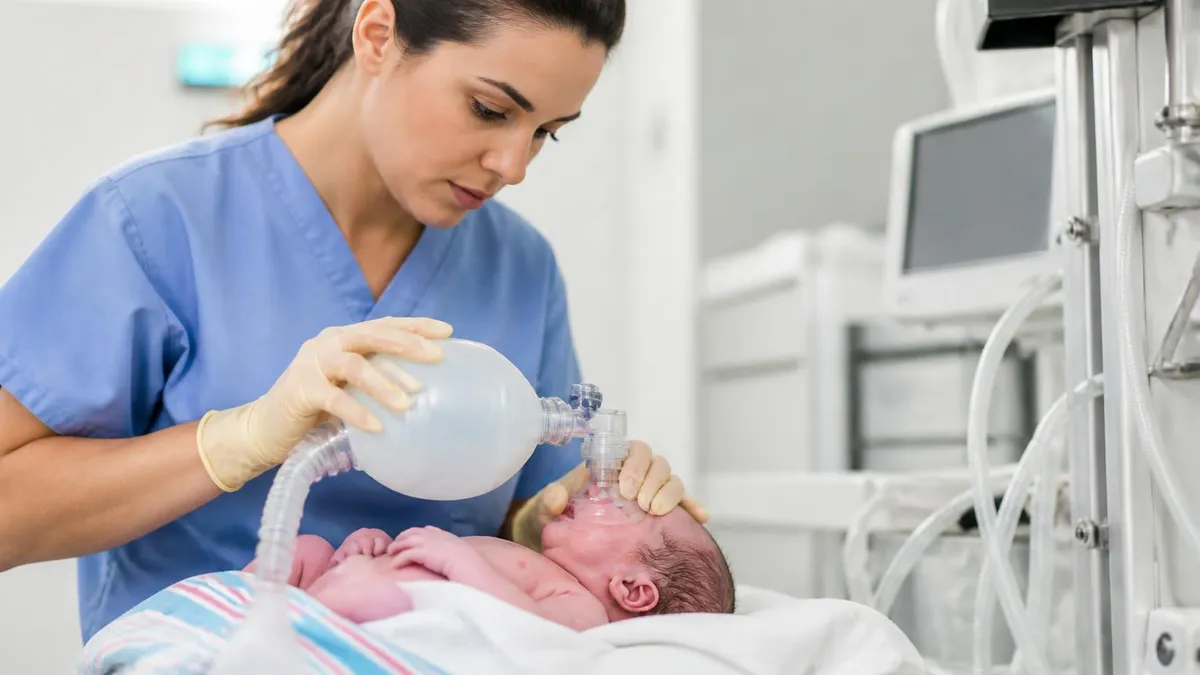
MR SOPA in NRP: The Complete Guide to Ventilation Corrective Steps
Ace Your Exam with NRP Practice Test 2026 Prep

NRP Practice Test PDF (Free Printable 2026)
About the Author

Educational Psychologist & Academic Test Preparation Expert
Columbia University Teachers CollegeDr. Lisa Patel holds a Doctorate in Education from Columbia University Teachers College and has spent 17 years researching standardized test design and academic assessment. She has developed preparation programs for SAT, ACT, GRE, LSAT, UCAT, and numerous professional licensing exams, helping students of all backgrounds achieve their target scores.