
Telemedicine Nurse Practitioner Jobs: The Complete 2026 September Guide to Remote NP Careers, Pay, Licensing, and How to Land One
📗 Telemedicine nurse practitioner jobs explained: pay ranges, multi-state licensing, top employers, pros and cons, and how to land a remote NP role in 2026 September.

Telemedicine nurse practitioner jobs have moved from a pandemic-era novelty to a permanent pillar of American healthcare delivery, and 2026 is one of the strongest hiring years yet. If you are a licensed NP weighing whether a remote, screen-based practice fits your life, this guide walks through the pay, the licensing maze, the daily workflow, and the trade-offs. Virtual care now spans urgent care, primary care, mental health, and chronic disease management, and employers actively recruit clinicians who work autonomously from home.
The appeal is easy to understand. You trade a 45-minute commute and a fluorescent-lit clinic for a quiet home office, a reliable headset, and a patient queue you manage from your own desk. But telehealth is not simply the same job over video. It rewards strong history-taking, crisp documentation, comfort with ambiguity, and the discipline to know when a virtual visit must become an in-person referral. Understanding those differences before you apply will make you a far more competitive candidate and a much safer clinician.
Compensation in this space is genuinely competitive. Full-time remote NPs commonly earn between $105,000 and $135,000, while per-visit and 1099 contractors can stack income across multiple platforms. Many roles offer flexible scheduling, asynchronous messaging visits, and the ability to live in a lower-cost area while serving patients nationwide. For NPs who value autonomy, telehealth can be one of the most lifestyle-friendly paths in the profession, especially compared with the rigid rotations of hospital floor or acute-care work.
That said, the licensing and regulatory layer is the single biggest hurdle, and it is the part most new applicants underestimate. To see patients in a given state, you generally must hold an active license in that state, which is why multi-state employers prize NPs who already hold several licenses or who qualify for compacts. Practice authority also varies: a full-practice-authority state looks very different from a restricted state that requires a collaborating physician, even when the visit happens entirely on a screen.
This article is awareness-level and beginner-friendly. We will define what these roles actually involve, show the numbers, compare the upsides and downsides honestly, and give you a concrete checklist to get hired. If you are still deciding between advanced-practice tracks, it helps to understand how the NP role compares to adjacent careers, including telemedicine nurse practitioner jobs and the broader scope differences that shape which positions you can realistically fill.
By the end, you should know whether remote NP work suits your temperament, what credentials to gather first, which employers to target, and how to position your resume so recruiters notice you. We will also point you toward free practice questions that sharpen the clinical reasoning telehealth demands, because virtual encounters leave you with fewer physical exam cues and a far greater reliance on a sharp, well-organized differential diagnosis built almost entirely from a focused history.
Telemedicine NP Jobs by the Numbers
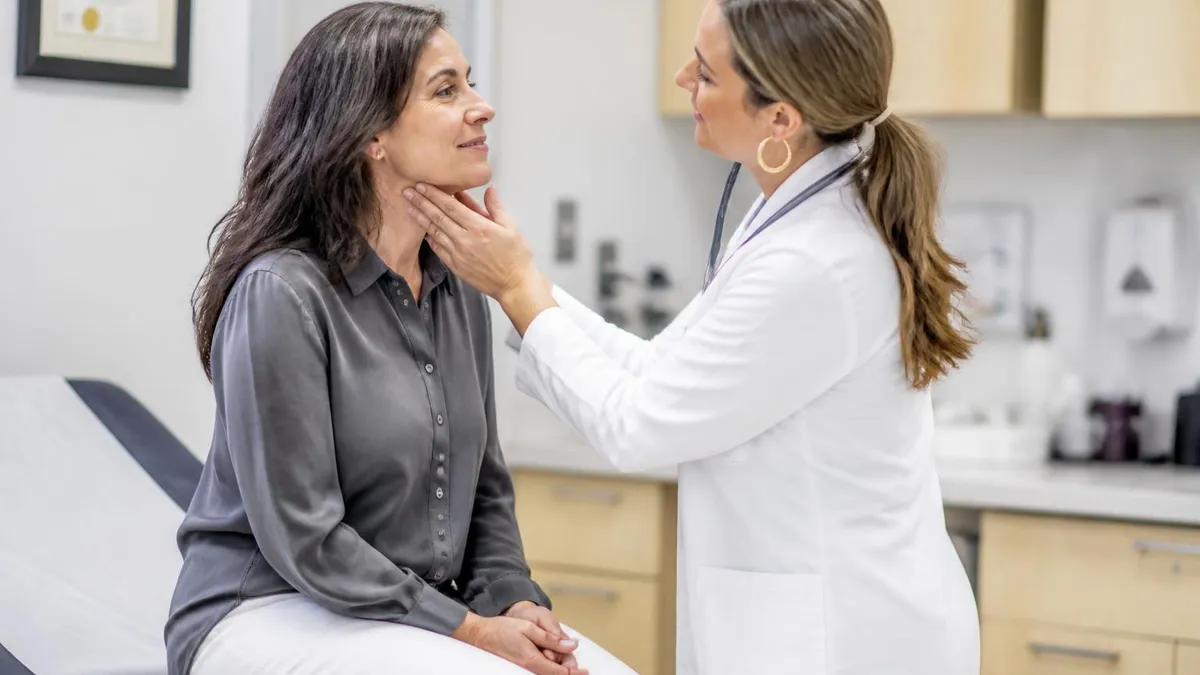
Types of Remote NP Roles You Can Pursue
Synchronous video visits for acute, low-complexity complaints like UTIs, sinusitis, rashes, and minor injuries. High volume, short slots, and strong protocol support make this an accessible entry point for new telehealth NPs.
Longitudinal panels where you manage chronic conditions, refills, and preventive care over time. Visits run longer, relationships deepen, and continuity matters, rewarding NPs who genuinely enjoy ongoing patient management.
Among the fastest-growing segments, covering anxiety, depression, ADHD, and medication management. Psychiatric NPs are in especially high demand and often command premium per-visit rates on virtual platforms.
Text-based or store-and-forward visits where patients submit symptoms and you respond without live video. Flexible and queue-driven, this model suits NPs who want schedule control without fixed appointment blocks.
Remote monitoring of diabetes, hypertension, and heart failure using connected devices and periodic check-ins. Reimbursement programs support these roles, and they blend data review with proactive patient coaching.
Compensation for remote NP work is best understood through the lens of the pay model, because salary alone tells only part of the story. Broadly, you will encounter three structures: salaried W-2 employment, hourly contracts, and per-visit 1099 arrangements. Each carries a different risk-and-reward profile, and savvy NPs often combine them. A salaried role offers predictability, benefits, and PTO, while per-visit work rewards speed and availability with uncapped earning potential during high-demand windows like cold-and-flu season or holiday weekends.
Full-time salaried telemedicine NPs in 2026 typically earn between $105,000 and $135,000, with median figures around $118,000. Geography matters less than it does for in-person roles, since you serve patients across state lines, but employers still benchmark against national advanced-practice data. Telepsychiatry and roles requiring multiple state licenses tend to sit at the higher end. Sign-on bonuses, license-reimbursement stipends, and CME allowances are increasingly common as platforms compete aggressively for credentialed clinicians.
Per-visit contractors are paid per completed encounter, often $20 to $40 for a brief urgent-care visit and considerably more for psychiatric evaluations or complex consults. A fast, accurate NP working a busy evening shift can complete dozens of asynchronous visits, and many contractors layer two or three platforms to keep their queue full. The trade-off is the absence of benefits, self-employment taxes, and income that ebbs with patient demand, so disciplined financial planning becomes absolutely essential to making this particular model work.
Hourly contracts split the difference. You are paid for scheduled coverage regardless of volume, which protects you during slow periods but caps your upside during busy ones. These arrangements are common for overnight or weekend coverage, where employers need guaranteed staffing. Rates frequently run $55 to $80 per hour for experienced NPs, and night or holiday differentials can push that higher. For NPs who value predictability without a full salaried commitment, hourly work is an attractive middle ground worth seriously pursuing.
It helps to compare these numbers against adjacent advanced-practice income to set realistic expectations. If you are curious how mobile and contract pay stacks up, our deep dive on travel NP earnings breaks down stipends and contract math, and many of those same income-stacking principles apply directly to remote work. Diversifying across W-2 stability and 1099 flexibility is how experienced telehealth NPs maximize total compensation while protecting against any single platform suddenly reducing its visit volume or per-encounter rate.
Finally, watch the fine print closely. Some platforms count only completed visits, deduct for no-shows, or impose minimum availability requirements to keep your account active. Others reimburse licensing fees only after a tenure threshold. Before signing, model your realistic weekly volume, subtract self-employment taxes and license costs, and compare the net against a salaried offer. The headline per-visit rate can look generous until you account for unpaid charting, credentialing delays, and the slow ramp while you build a reputation on a brand-new platform.
Telemedicine Nurse Practitioner Jobs by Specialty and Platform
On-demand urgent care is the most common entry point into telemedicine nurse practitioner jobs. You handle high volumes of low-to-moderate acuity complaints, working from evidence-based protocols that standardize antibiotic stewardship, dosing, and red-flag escalation. Visits are short, often 10 to 20 minutes, and the patient mix skews toward respiratory infections, urinary symptoms, skin conditions, and medication refills that do not require a hands-on physical exam.
The skill that separates strong urgent-care telehealth NPs is rapid triage paired with clear safety-netting. Because you cannot palpate an abdomen or auscultate lungs, you lean heavily on history, visual inspection, and patient-reported vitals. Knowing exactly when a virtual visit must convert to an in-person or emergency referral, and documenting that decision cleanly, is the core competency every platform screens for closely during onboarding and ongoing quality review.
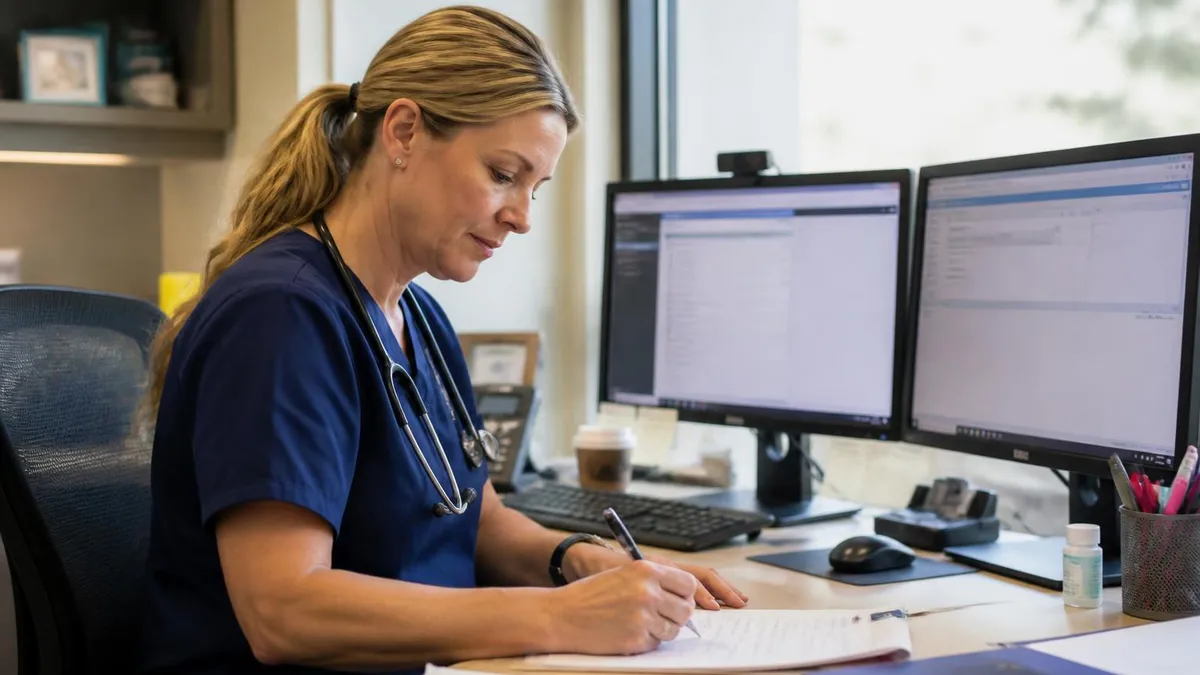
Is a Remote NP Career Right for You? Pros and Cons
- +No commute and full control over your home work environment
- +Flexible scheduling, including part-time, nights, weekends, and asynchronous visits
- +Ability to serve patients nationwide while living in a lower-cost area
- +Income stacking across multiple platforms for uncapped earning potential
- +Reduced exposure to infectious disease and physical workplace hazards
- +Strong demand, especially for psychiatric and multi-state-licensed NPs
- −Multi-state licensing is expensive, slow, and administratively heavy
- −No physical exam means greater diagnostic uncertainty and reliance on history
- −1099 roles lack benefits, PTO, and employer-paid taxes
- −Screen fatigue and isolation can affect well-being over long shifts
- −Technology failures and connectivity issues can disrupt patient care
- −Reimbursement and prescribing rules shift frequently and require vigilance
Getting-Hired Checklist for Telemedicine NP Jobs
- ✓Confirm your NP certification is active and in good standing.
- ✓Hold an unencumbered RN and NP license in at least your home state.
- ✓Add licenses in 2-4 high-population states to widen eligibility.
- ✓Verify your DEA registration and any state controlled-substance permits.
- ✓Build a quiet, HIPAA-compliant home office with reliable high-speed internet.
- ✓Update your resume to highlight autonomy, documentation, and telehealth comfort.
- ✓Gather malpractice coverage details or confirm employer-provided insurance.
- ✓Practice concise virtual history-taking and clear safety-net counseling.
- ✓Research target platforms and their pay model, volume, and onboarding timeline.
- ✓Prepare for a clinical scenario interview testing remote triage judgment.
More licenses, more interviews
The single fastest way to stand out to telehealth recruiters is holding active NP licenses in several states. Platforms route patients to whichever clinician is licensed where the patient sits, so a multi-licensed NP fills more shifts and earns more. Budget early for application fees, background checks, and renewal cycles, because credentialing delays are the most common reason a promising start date slips by weeks.
Licensing is where telemedicine NP careers become genuinely complicated, and understanding the rules early will save you months of frustration. The governing principle in U.S. telehealth is that the visit occurs at the patient's location, not yours. That means you must be licensed in the state where the patient is physically sitting during the encounter. A single home-state license limits you to patients in that state, which is exactly why national platforms favor NPs who hold or are willing to acquire multiple licenses.
The good news is that the Nurse Licensure Compact lets RNs hold one multistate license valid across participating states, which streamlines the RN layer of your credentials considerably. However, the compact covers registered nurse practice, not advanced-practice authority. The APRN Compact, designed to extend similar privileges to nurse practitioners, has been enacted by several states but has not yet reached the threshold to become operational nationwide, so most NPs still apply for individual advanced-practice licenses state by state.
Practice authority adds another layer. In full-practice-authority states, you can evaluate, diagnose, and prescribe independently, which makes telehealth onboarding cleaner. In reduced or restricted states, you may need a collaborative or supervisory agreement with a physician even for virtual care, and platforms must arrange that relationship before you can see patients there. This is why two NPs with identical certifications can have very different rosters of states they are actually permitted to work in.
Controlled-substance prescribing carries its own evolving framework. You need a federal DEA registration and, in many states, a separate state controlled-substance license. Telehealth prescribing of controlled medications has been governed by a patchwork of temporary flexibilities and proposed permanent rules, particularly for stimulants and buprenorphine. Telepsychiatry NPs especially must track these rules closely, because the requirements for an in-person evaluation before prescribing certain drugs can change and directly reshape your daily clinical workflow.
Documentation and informed consent round out the compliance picture. Many states require that you explicitly inform patients they are receiving care via telehealth and obtain consent, sometimes with specific mandated language. Your charting must capture the patient's location, the consent, the modality used, and your clinical reasoning, especially the rationale for any decision to manage virtually rather than refer. Clean, defensible documentation is both a legal safeguard and a quality marker that employers actively evaluate when they review new hires.
Finally, build credentialing into your timeline realistically. A single new state license can take four to twelve weeks, and platform credentialing adds even more. Experienced telehealth NPs treat licensing as an ongoing investment, renewing on schedule, tracking CME requirements per state, and adding new licenses strategically based on where a given employer has the most patient demand. Approached methodically and patiently, the regulatory layer becomes a genuine competitive moat rather than a frustrating barrier to entry.
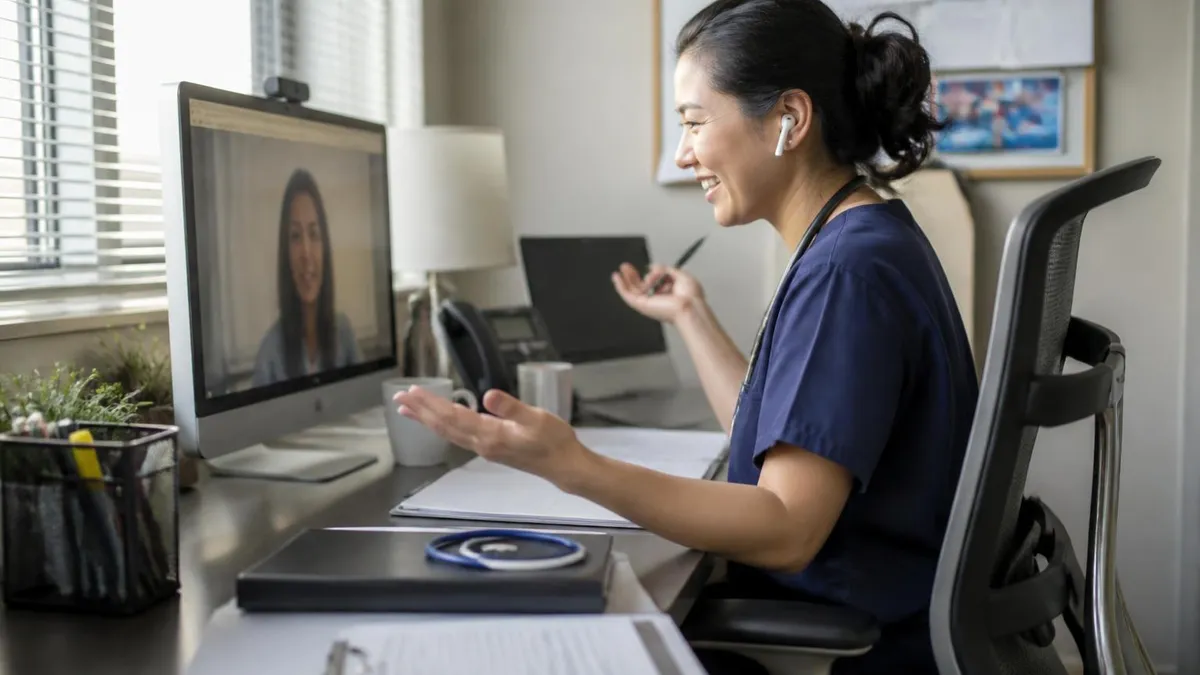
Telehealth controlled-substance prescribing rules have shifted repeatedly and vary by state and drug class. Before prescribing stimulants, buprenorphine, or other controlled medications virtually, confirm current federal and state requirements, including any in-person evaluation mandates. Relying on outdated guidance can expose you to serious regulatory and licensure risk.
The daily rhythm of a remote NP differs meaningfully from clinic life, and knowing what to expect helps you decide if it fits your temperament. A typical shift opens with logging into a secure platform, reviewing your queue, and confirming your audio, video, and EHR connections. From there you move through patients in timed slots, documenting as you go, and escalating anything beyond a virtual visit's scope. The cadence can feel relentless at peak hours, so time management and efficient charting are survival skills.
Because you lose the physical exam, your history-taking must carry far more weight. Strong telehealth NPs ask sharper questions, request patient-collected vitals and photos, and build a tighter differential from verbal cues alone. This is precisely the muscle that structured practice questions strengthen, which is why sharpening your diagnostic reasoning before you start pays real dividends. The clinicians who thrive remotely are the ones who treat every visit as a focused exercise in pattern recognition and careful risk stratification.
Communication style also shifts on camera. You learn to project warmth through a screen, summarize plans clearly, and confirm understanding without the in-person cues you once relied on. Patients sometimes arrive frustrated by technology or skeptical of virtual care, so de-escalation and rapport-building become daily tools. Setting expectations early, narrating what you are doing, and giving explicit return-precautions all build the trust that keeps satisfaction scores high and reduces unnecessary, time-consuming follow-up contacts.
The autonomy is real, and so is the isolation. Without a hallway full of colleagues, you make more decisions alone and must be genuinely comfortable with that responsibility. Many platforms provide asynchronous physician backup, clinical chat channels, or protocol libraries, but the day-to-day judgment is yours. NPs who value independence find this liberating; those who draw energy from a busy team environment sometimes find remote work quieter than they expected. Knowing which type you are matters a great deal before you commit.
Technology fluency is non-negotiable. You will troubleshoot dropped calls, switch to phone backup, and navigate multiple software systems in a single shift. A wired internet connection, a quality headset, good lighting, and a backup hotspot are baseline equipment. Employers screen for tech comfort during interviews because a clinician who freezes when the video drops cannot deliver safe care. Investing in a reliable setup signals professionalism and protects both your patients and your closely tracked performance metrics.
If you are mapping your longer career, it helps to understand how the educational path and timeline lead into these roles, since many remote employers want a year or two of in-person experience first. Reviewing the broader route to advanced practice clarifies why telehealth often suits mid-career NPs best, and how to position yourself if you are earlier on the journey. Building a foundation of strong clinical judgment in person makes the eventual transition to a screen far smoother, safer, and more sustainable over time.
Landing your first telemedicine NP role is mostly about preparation and positioning, so treat the job search as a project with concrete milestones. Start by auditing your credentials: confirm your certification, your home-state license, your DEA registration, and any malpractice coverage. Then identify the two to four states where national platforms have the most patient demand and begin those license applications early, because credentialing timelines, not interviews, are usually the real bottleneck between you and an actual start date.
Tailor your resume to telehealth specifically. Recruiters scan for evidence that you can work autonomously, document defensibly, and triage without a physical exam. Quantify your independence, highlight any prior virtual or phone-triage experience, and name the EHR and telehealth systems you have used. A generic floor-nursing resume buried in tasks reads very differently from one that foregrounds clinical judgment, panel management, and the communication skills that virtual care rewards. Small framing changes meaningfully improve your callback rates.
Prepare deliberately for the clinical interview, which almost always includes a scenario. Expect to talk through a virtual encounter, such as a patient reporting chest discomfort or a child with a fever, and to explain your differential, your red-flag thresholds, and exactly when you would convert the visit to an in-person or emergency referral. Interviewers are listening for safety-netting and clean reasoning, not encyclopedic recall, so practice articulating your thought process out loud before the call until it feels natural.
Use free practice questions to keep your diagnostic edge sharp, because the interview and the job both reward fast, structured reasoning. Working through case studies, communication scenarios, and clinical decision-making sets rebuilds the muscle memory that translates directly to virtual triage. Even experienced NPs find that a few weeks of focused review before applying improves both their confidence and their interview performance, especially for specialties like acute care or pediatrics where the stakes of a missed red flag are genuinely high.
Network where remote NPs actually gather. Telehealth-focused job boards, professional NP associations, and clinician communities on platforms like LinkedIn surface roles before they hit mass listings. Reach out to NPs already working remotely and ask candid questions about pay realities, visit volume, and platform reputation. The difference between a generous-looking per-visit rate and a sustainable income often comes down to details only current clinicians will tell you, so those honest conversations are well worth the effort.
Finally, protect yourself legally and financially from day one. Confirm whether malpractice coverage is provided and whether it includes tail coverage, understand your tax obligations if you take 1099 work, and read the fine print on minimum-availability and no-show policies. Set up your home office to be HIPAA-compliant and distraction-free, with reliable connectivity and a backup plan. Treating these foundations seriously up front is what turns a flexible remote role into a durable, satisfying long-term career rather than a stressful, short-lived experiment.
Approach the search patiently and methodically, and the pieces fall into place. The NPs who succeed in telehealth are rarely the most credentialed on paper; they are the ones who prepared their licenses, sharpened their reasoning, framed their experience well, and asked the right questions before signing anything. With demand for virtual care still climbing in 2026, a well-prepared, multi-licensed NP with strong clinical judgment is exactly the candidate employers are competing hardest to hire.
NP Questions and Answers
Nurse Practitioner vs Physician Assistant: Side-by-Side
How Long to Become a Nurse Practitioner: 6-8 Year Timeline
Travel Nurse Practitioner Salary: 2026 Pay Guide, Contract Rates, Stipends, and How to Maximize Your Earnings
Nurse Practitioner Taxonomy Code: Complete 2026 Guide to NPI Classification, Specialty Codes, and Billing Compliance
Nurse Practitioner to MD Degree: Complete 2026 Guide to Bridge Programs, Costs, and Career Paths
About the Author

Registered Nurse & Healthcare Educator
Johns Hopkins University School of NursingDr. Sarah Mitchell is a board-certified registered nurse with over 15 years of clinical and academic experience. She completed her PhD in Nursing Science at Johns Hopkins University and has taught NCLEX preparation and clinical skills courses for nursing students across the United States. Her research focuses on evidence-based exam preparation strategies for healthcare certification candidates.