
Nurse Practitioner Skills — Complete Guide (2026 October)
Nurse practitioner skills you actually need on day one — 🟢 clinical, communication, leadership, tech, and the soft skills NP school doesn't teach.
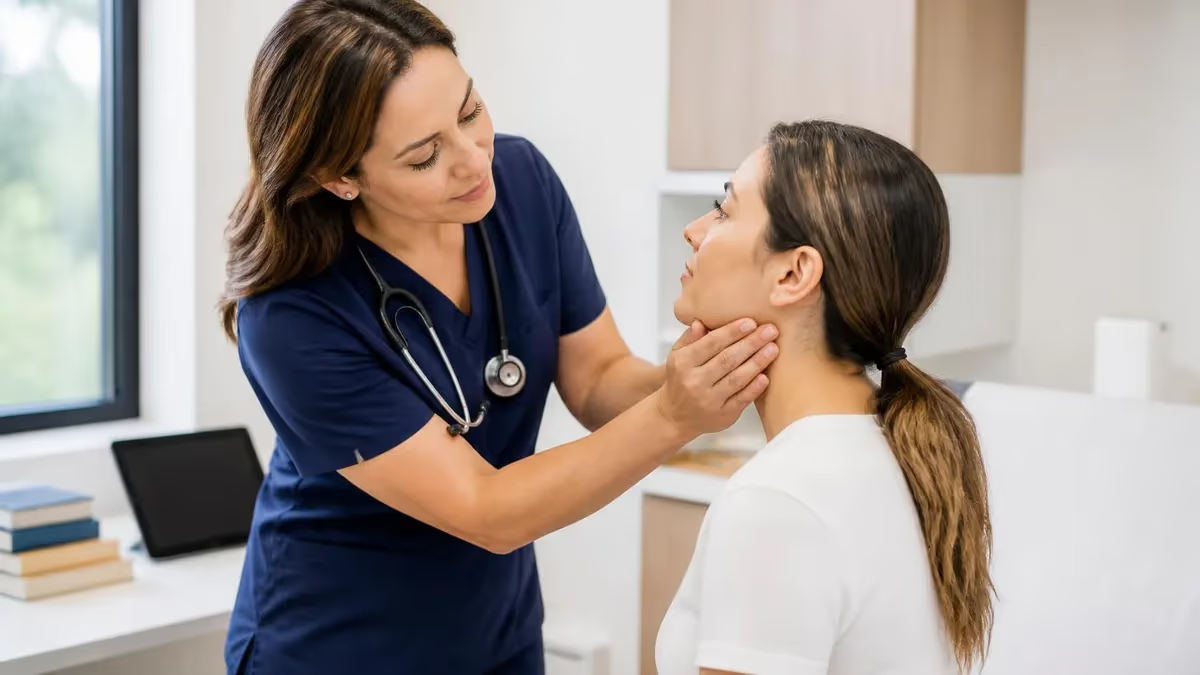
Nurse Practitioner Skills: What You Actually Use on Day One
The NP skill set isn't what most students picture in their first semester. Yes, you'll learn pharmacology and physical assessment. But the skills that decide whether you keep a panel of 1,800 patients moving smoothly — or burn out by month nine — are a mix of clinical sharpness, communication grit, and a stubborn refusal to be intimidated by a sick patient at 4:55 PM. This guide breaks down the real skills that matter, the ones preceptors actually grade you on, and the ones nobody talks about until you're already on the job.
Short version. Nurse practitioner skills split into two stacks. Hard skills are the clinical and technical pieces — differential diagnosis, suturing, EHR documentation, prescribing controlled substances. Soft skills are the human pieces — breaking bad news, leading a care team meeting, knowing when to push back on a supervising physician who's wrong. You need both. Programs spend about 80% of class time on hard skills, but 80% of your daily friction as an NP will come from the soft ones.
Here's the thing most students miss. The clinical skills are learnable. Anyone with a BSN and a few years of bedside RN experience can master nurse practitioner scope of practice through repetition. What separates a strong NP from a competent one is judgment — the ability to hear a complaint, build a differential in 90 seconds, and know when something doesn't fit. That's pattern recognition built across thousands of patient encounters, and it starts in your first clinical rotation.
Before you commit to a specialty, walk through what every NP needs regardless of track. The eight skill domains below apply whether you become an family nurse practitioner, a PMHNP, or an AGACNP working night shift in a cardiac ICU. Specialties layer extra skills on top — joint injections for ortho, ECT consent for psych, vent management for acute care — but the foundation is universal.
One more thing. Skills aren't static. The NP profession added prescriptive authority for controlled substances in most states only in the last 15 years. Telehealth went from a niche tool to 40% of some specialty practices after 2020. AI-assisted documentation tools are reshaping how NPs spend their clinical hours right now. Plan to relearn pieces of your skill set every five years. The NPs who thrive treat learning as the job, not a phase.
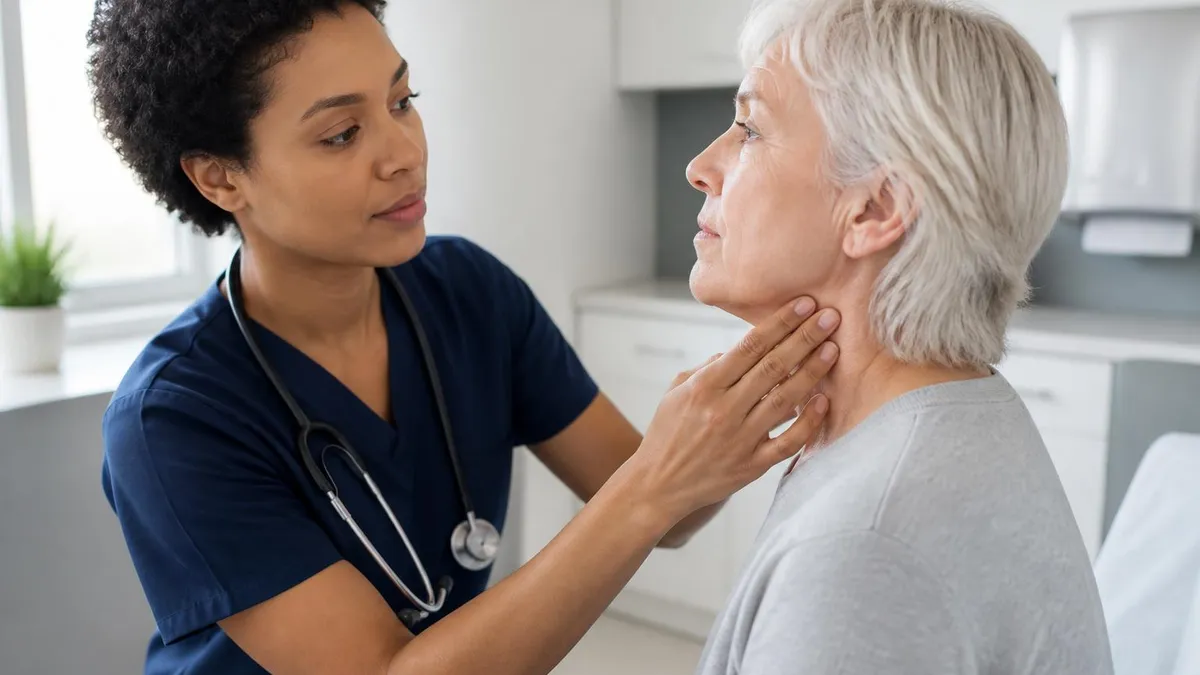
What every NP needs — regardless of specialty
- Clinical reasoning — building differentials and ruling out red flags fast
- Physical assessment — focused exams that catch what general screens miss
- Pharmacology & prescribing — drug selection, dosing, interactions, DEA compliance
- Procedural competence — suturing, joint injections, IUDs, LPs (varies by specialty)
- Communication — patient education, motivational interviewing, breaking bad news
- Leadership — team coordination, advocacy, conflict resolution
- Technical fluency — Epic/Cerner, telehealth platforms, e-prescribing
- Evidence-based practice — reading studies, applying guidelines, owning continuous learning
Hard Skills vs Soft Skills
- Examples: Suturing, EKG interpretation, prescribing, EHR charting
- Taught Where: Didactic coursework + 500-720 clinical hours
- Tested How: OSCE, board exams, employer skills checklists
- Improves With: Repetition, simulation labs, focused clinicals
- Examples: Empathy, conflict resolution, motivational interviewing
- Taught Where: Mostly OJT, preceptor modeling, lived experience
- Tested How: Patient satisfaction scores, peer feedback, retention
- Improves With: Reflective practice, mentorship, self-awareness work
- Examples: Clinical reasoning, judgment, ethical decision-making
- Taught Where: Case-based learning + thousands of patient encounters
- Tested How: Real outcomes, M&M reviews, peer review boards
- Improves With: Time on task — there is no shortcut
Clinical and Diagnostic Skills
This is the technical core. A nurse practitioner must take a focused history, perform a problem-oriented physical exam, and arrive at a working diagnosis — usually inside a 15- to 20-minute appointment slot. Compress that further for telehealth. The skills below aren't a checklist; they're a system that runs every time you walk into a room.
History-Taking
OPQRST and SAMPLE are the frameworks. Onset, provocation, quality, radiation, severity, timing for the complaint. Allergies, meds, past history, last meal, events leading up. New NPs over-document the chart and under-document the patient's actual words. Train yourself to capture the chief complaint in the patient's voice. "My chest feels like a balloon being squeezed" is better data than "patient reports chest pressure."
Differential Diagnosis
Build a list before you finish the exam. Three to five candidates ordered by likelihood and severity. The killer doesn't have to be the most likely — but it has to be ruled out. Headache plus stiff neck plus fever isn't migraine until meningitis is off the table. Chest pain in a 55-year-old isn't reflux until ACS is excluded. Discipline yourself: write the differential, then test it. Don't anchor on the first reasonable answer.
Physical Assessment
Inspection. Palpation. Percussion. Auscultation. The four maneuvers haven't changed since the 1800s and still catch most pathology. What's changed is the precision. Modern NPs need to perform focused exams — a knee exam for the knee complaint, a neuro exam for the headache. General head-to-toe screens waste time and miss subtle findings. Master the focused exam for your top 20 complaints and you'll handle 80% of your panel.
Clinical Reasoning
This is the hybrid skill. Pattern recognition plus probabilistic thinking. A pre-test probability framework helps — what's the base rate of this disease in this patient before any testing? Then update with each piece of data. A positive D-dimer in a low pre-test PE patient is mostly noise. A normal D-dimer in a high pre-test patient still needs imaging. Bayesian thinking isn't optional for NPs; it's how you avoid unnecessary tests and missed diagnoses simultaneously. Nurse practitioner board certification exams test this directly.
Red Flag Recognition
Every chief complaint has them. Headache red flags: sudden onset, fever, neuro deficit, age over 50 with new headache. Back pain red flags: cauda equina symptoms, IV drug use, unexplained weight loss. Memorize them. When one shows up, the visit changes — you're now ruling out an emergency, not managing a chronic condition. The fastest way to lose your license is to miss a red flag because you were running behind.
Daily Clinical Skills Checklist
- ✓Take a focused, patient-centered history in under 8 minutes
- ✓Perform a problem-oriented physical exam — not a head-to-toe screen
- ✓Build a 3–5 item differential before ordering tests
- ✓Scan for red flags on every chief complaint
- ✓Order tests with a clear question: what changes if positive vs negative?
- ✓Document your reasoning, not just your findings
- ✓Communicate the plan in plain language — confirm understanding
- ✓Close the loop on every abnormal result within 48 hours
Procedure Competencies
Procedural skills depend on specialty, but every NP graduates with a core set. Suturing simple lacerations. Incision and drainage of abscesses. Toenail removal. Cryotherapy for warts. Cerumen removal. Some programs include joint injections, pap smears, IUD insertion, and lumbar puncture. The graduate FNP who can do all of these will get more job offers and earn more.
Suturing
Learn the simple interrupted, simple running, and vertical mattress at minimum. Pick the right suture material — absorbable for deep, monofilament nylon for skin. Match needle size to tissue. Hand-tie if you can; instrument-tie everywhere else. Practice on pig's feet or simulation pads until your knots are square and your spacing is even. Bad suturing leaves scars patients remember for decades.
Joint Injections
Knees, shoulders, trochanteric bursae, plantar fasciae. The technique is straightforward — sterile prep, landmark identification, needle placement, aspirate then inject. The art is patient selection. Triamcinolone in a 65-year-old with bone-on-bone arthritis buys 2–3 months. The same injection in a 45-year-old runner with patellofemoral pain can make things worse. Nurse practitioner can prescribe medication includes injectables; learn when not to.
Pap Smears and Pelvic Exams
Standard for women's health, family practice, and adolescent medicine. The skill is part technical (proper speculum placement, adequate cell sampling, correct labeling) and part communication (consent, trauma-informed positioning, talking through every step). A pap smear is the most-performed gynecologic procedure in primary care; do it well and patients return for everything else.
Lumbar Puncture and Advanced Procedures
Reserved mostly for acute care and emergency NPs. AGACNPs running ICU and rapid response teams perform LPs for suspected meningitis, paracentesis for ascites, thoracentesis for pleural effusions. Central line placement under ultrasound guidance is increasingly within NP scope in academic medical centers. These are skills you build through dedicated procedure rotations and credentialing pathways — not something every NP needs, but invaluable if you want acute care work.
Skin Procedures
Punch biopsies, shave biopsies, electrocautery, cryotherapy. Dermatology NPs do these all day; primary care NPs do them weekly. The trick is recognizing which lesions to biopsy versus which to refer. A 4 mm punch through a suspicious nevus is a 5-minute procedure that can catch melanoma early. Sending the same patient to a dermatologist who books out 4 months can cost a life.
NP Procedures: Volume and Reimbursement
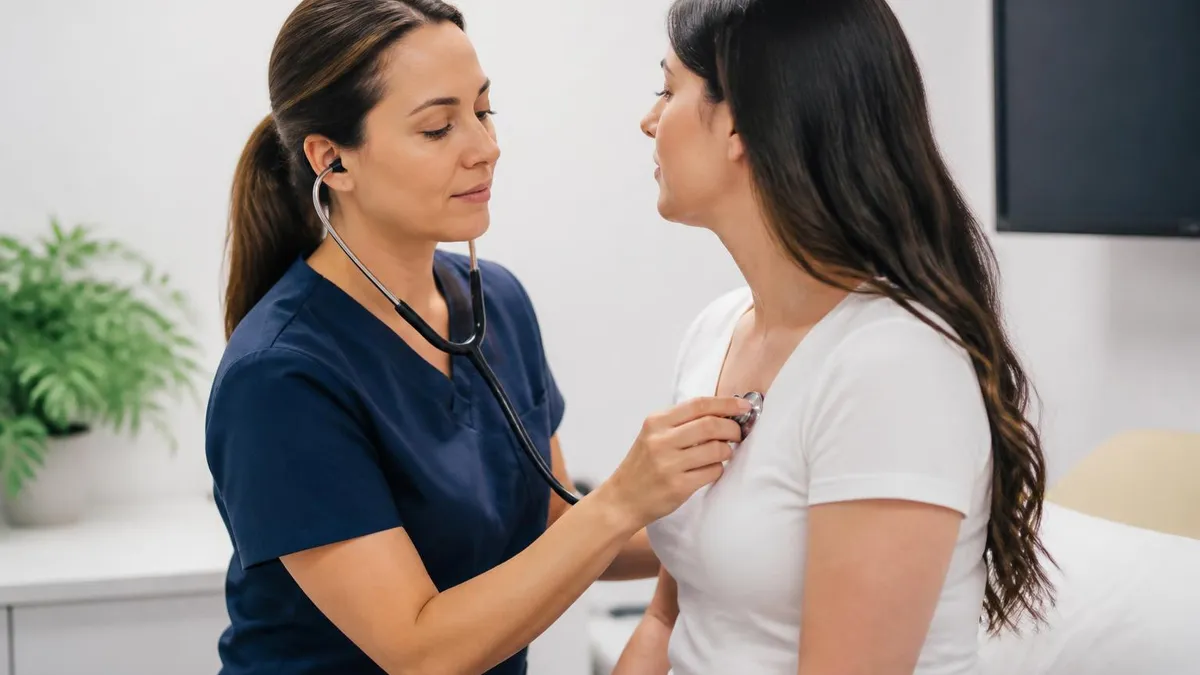
Pharmacology and Prescribing
Advanced pharmacology is the single longest course in most NP programs — usually a 3-credit didactic plus integrated practicum. It's also the area where new graduates feel weakest in their first six months. There's a reason. Memorizing drug classes in school is one thing. Writing for warfarin in an 82-year-old with a kidney clearance of 35 and a history of falls is another.
Drug Selection
Start with the indication. Match drug to disease. Then layer the patient — age, weight, organ function, comorbidities, drug interactions, cost, insurance formulary. A first-line antibiotic for a healthy 25-year-old with cystitis isn't the same drug for a 78-year-old with diabetes and recurrent UTIs. The NP who memorizes the top 200 drugs but can't reason through patient-specific selection is dangerous.
Dosing and Monitoring
Renally dosed drugs (gabapentin, metformin, most antibiotics) need adjustment based on eGFR. Hepatically metabolized drugs (acetaminophen, statins) need adjustment for liver function. Drugs with narrow therapeutic windows (warfarin, lithium, digoxin) require labs. Build monitoring into every prescription you write. "Start lisinopril 10 mg, recheck BP and BMP in 2 weeks" is the right level of detail.
Controlled Substances and the DEA
NPs prescribe controlled substances in all 50 states, but state rules vary. Some require a collaborating physician for Schedule II prescriptions. Others grant full authority after a transition-to-practice period. Get your DEA number, register with your state PDMP, and check it before every controlled prescription. Opioid prescribing is the single highest legal-risk activity in NP practice. Document the indication, the alternatives tried, the consent, and the monitoring plan every single time.
Drug Interactions
Polypharmacy is the rule, not the exception. The average Medicare patient takes 4–6 prescription medications. Add OTCs and supplements and you're often above 10. Use the EHR's interaction checker, but don't trust it blindly — false positives waste time and false negatives miss real harm. Know the high-risk pairs: SSRIs plus tramadol (serotonin syndrome), warfarin plus antibiotics (bleeding), statins plus macrolides (rhabdo). These are board exam favorites and clinical reality.
High-Risk Prescribing Areas Every NP Must Master
Highest legal-risk prescription category. Use the lowest effective dose for the shortest necessary duration. Check PDMP every visit. Document indication, alternatives, consent, and monitoring plan. Co-prescribe naloxone for doses over 50 MME/day. Many states cap initial prescriptions at 5–7 days for acute pain. Chronic opioid therapy requires pain contracts and quarterly urine drug screens.
Communication Skills
This is the skill set that determines patient satisfaction, malpractice risk, and personal sustainability. You can be the sharpest diagnostician in the building, but if you can't explain your reasoning to a frightened patient at 5:15 PM after a long day, your panel will dwindle. Communication is a hard skill that gets relabeled as soft. Don't fall for that framing.
Patient Education
The teach-back method is the gold standard. Explain a diagnosis or treatment. Ask the patient to repeat it in their own words. Correct misunderstandings. Repeat. A type 2 diabetes diagnosis explained well at the index visit predicts better A1C control at 12 months than the diagnosis explained poorly. Use plain language — "high blood sugar" not "hyperglycemia." Use teach-back without being condescending. The patient who nods politely and remembers nothing is your future no-show.
Motivational Interviewing
OARS — open questions, affirmations, reflective listening, summaries. Born in addiction medicine, now standard for any behavior-change conversation. Smoking cessation. Weight management. Medication adherence. The trick is letting the patient generate their own reasons for change rather than lecturing. "What would change for you if you stopped smoking?" works better than "You need to quit smoking." It feels slower. It produces more durable behavior change.
Breaking Bad News
SPIKES protocol. Setting (private, sitting, no interruptions). Perception (what does the patient already know?). Invitation (how much detail do they want?). Knowledge (deliver in plain language). Emotion (acknowledge the response). Strategy (next steps). Cancer diagnoses. Failed pregnancies. Terminal illness in a parent. NPs deliver these daily and most programs spend two hours total on the skill. Practice deliberately or you'll wing it on the day it matters most.
Interdisciplinary Communication
SBAR — situation, background, assessment, recommendation. The standard for talking to physicians, consultants, and hospitals. "This is Sarah, NP at Pinecrest Family Medicine. I'm calling about Mr. Johnson, 67 with new-onset chest pain, troponin 0.4, EKG with ST depression in lateral leads. I think this is NSTEMI and need cardiology to take him." Twenty seconds. Complete handoff. A vague phone call wastes the consultant's time and yours.
Difficult Conversations
Patient demands an antibiotic for a viral URI. Family wants "everything done" for a 95-year-old with multiorgan failure. Coworker dismisses your assessment because you're "not a doctor." These conversations require practiced scripts. Develop yours before you need them. The NP who can hold a boundary while staying warm and respectful is the one who lasts 20 years in clinic.
Communication Skills That Build a Loyal Panel
- ✓Use teach-back on every new diagnosis and medication
- ✓Make eye contact for the first 90 seconds — close the laptop if needed
- ✓Reflect what the patient said before offering your assessment
- ✓Use plain language — explain medical terms when you use them
- ✓Acknowledge emotion before solving the problem
- ✓End every visit with a clear plan and next-step timeframe
- ✓Document conversations, not just clinical findings
- ✓Follow up on abnormal results with a phone call, not just a portal message
Telehealth Communication: What Works and What Doesn't
- +Convenient for follow-ups, refills, and behavioral health
- +Eliminates transportation barriers for elderly and rural patients
- +Higher visit completion rates than in-person for many conditions
- +Lets you see the patient's home environment — medications on the counter, fall hazards, family dynamics
- −Physical exam is severely limited — no auscultation, no palpation
- −Connection issues break rapport — the first 60 seconds shape the whole visit
- −Easy to miss nonverbal cues like a flat affect or tremor
- −Documentation takes longer because you can't multitask while talking
Pros and Cons at a Glance
| Pros | Cons |
|---|---|
| Convenient for follow-ups, refills, and behavioral health | Physical exam is severely limited — no auscultation, no palpation |
| Eliminates transportation barriers for elderly and rural patients | Easy to miss nonverbal cues like a flat affect or tremor |
| Higher visit completion rates than in-person for many conditions | Documentation takes longer because you can't multitask while talking |

Leadership, Advocacy, and Business Skills
The DNP-prepared NP is supposed to be a clinical leader. The reality? Most NPs land in environments where they're the most experienced clinician in the room or the only mid-level practitioner on a 12-person team. Either way, you'll lead — whether your title says so or not. Build the skills early.
Team Leadership
You'll coordinate MAs, RNs, social workers, and front-desk staff. The MA who triages your inbox decides what you see first. The front desk who books your schedule decides whether you're triple-booked at 2 PM. Treat the team like the system it is. Run weekly huddles. Set expectations explicitly. Give specific feedback — "That refill was processed in 4 hours, which kept the patient safe" beats "good job." Bad NP leadership shows up as silent staff turnover and dropping patient satisfaction.
Patient Advocacy
When the insurance denies your can a nurse practitioner write prescriptions for a brand-name medication the patient needs, you write the appeal. When a specialist dismisses your patient's symptoms, you call the specialist's office and push back. When your employer cuts visit time from 20 minutes to 15 to boost RVUs, you push back through your union or professional society. Advocacy is part of the job description, not a side activity.
Business and Practice Management
The NP who opens an independent practice needs an entirely new skill stack. Credentialing with payors. CPT coding and modifier use. Compliance with HIPAA, OSHA, and state board requirements. Revenue cycle management. Hiring and firing. Marketing through Google Business Profile and patient reviews. Nurse practitioner independent practice is a path more NPs are choosing in full-practice-authority states. Plan for an MBA-level learning curve in your first two years.
Conflict Resolution
Conflict with a physician colleague, an angry patient, a manager who doesn't understand scope of practice. NPs face all of these regularly. Stay curious before getting defensive. "Help me understand your concern" disarms more conflicts than "I'm following the guideline." Document conflicts professionally — not because you'll need it in court (you might), but because writing forces clarity about what actually happened.
Cultural Competence
The patient who declines a flu shot for religious reasons. The non-English speaker who needs a certified interpreter (not the 10-year-old child). The transgender patient navigating a system that often assumes their gender wrong on intake forms. Cultural humility — the practice of approaching every patient as the expert on their own experience — outperforms checklist-style "competence" training. Listen. Ask. Don't assume. Update your knowledge constantly.
Tech and EHR Skills: Hours per Week
Tech, EHR, and Evidence-Based Practice
The clinical day is half technology. EHR documentation can consume 12–18 hours a week. Add portal messages, e-prescribing, telehealth platforms, and the patient-facing apps that send glucose readings directly to your inbox. Tech fluency isn't optional anymore; it's a core NP skill.
EHR Proficiency
Epic and Cerner dominate hospital systems. Athena, eClinicalWorks, and Practice Fusion cover most outpatient. The skills transfer. Templates and smart phrases (Epic) or auto-text (Cerner) cut your charting time in half once you build a library. Don't write the same paragraph twice — turn it into a smart phrase. Common smart phrases NPs use: chronic disease management updates, normal physical exam findings, controlled substance prescribing documentation, telehealth visit confirmations.
Telehealth Platforms
Doxy.me, Teladoc, Amwell, and EHR-integrated tools (Epic MyChart Video, Cerner Healthe Video) each have quirks. The skill is platform-agnostic — managing internet bandwidth, framing yourself well on camera, troubleshooting patient connection problems in real time without losing the rapport you just built. Test your setup before every shift. A frozen screen at the wrong moment can break trust that took months to earn.
E-Prescribing and PDMP
Surescripts handles most e-prescribing nationally. Every state has a prescription drug monitoring program. Checking the PDMP before controlled substance prescriptions is now required by law in most states — and protective even where it isn't. The 30 seconds it takes can save you from prescribing into a doctor-shopping pattern that lands you in front of the licensing board.
Evidence-Based Practice
UpToDate. DynaMed. PubMed. ClinicalKey. Pick two and use them daily. The skill isn't memorizing studies; it's knowing where to look in 60 seconds when a patient asks about a drug, a procedure, or a guideline you don't remember cold. Smart NPs build a personal knowledge stack — a tablet bookmarked to the resources they trust, an app for guideline references, a system for following the journals that matter in their specialty. Continuous learning isn't a CME requirement; it's the difference between staying sharp and falling behind.
Emerging Tech: AI and Documentation
AI scribes (Abridge, Nuance DAX, Suki) are reshaping documentation. They listen to the patient encounter and draft the note in real time. NPs who adopt them report 30–60% reduction in after-hours charting. Learn one. Stay current on which models the major health systems are integrating. The NPs who fight every new tool spend their evenings charting; the ones who pilot them get their evenings back.
Skill Differences by NP Specialty
- Top Hard Skills: Well-child exams, contraception counseling, chronic disease management
- Top Soft Skills: Long-term relationship building, family system dynamics
- Unique Skills: Lifespan continuity — newborn through geriatric in one panel
- Procedure Volume: Moderate — suturing, joint injections, IUDs, pap smears
- Top Hard Skills: Psychiatric diagnosis (DSM-5), psychotropic prescribing, risk assessment
- Top Soft Skills: Therapeutic alliance, motivational interviewing, trauma-informed care
- Unique Skills: Capacity assessment, involuntary commitment evaluation, suicide risk stratification
- Procedure Volume: Low — mostly cognitive and pharmacologic interventions
- Top Hard Skills: Vent management, vasopressor titration, central lines, LP, paracentesis
- Top Soft Skills: Calm under pressure, ICU family communication, end-of-life conversations
- Unique Skills: Rapid response, code leadership, post-op management of complex patients
- Procedure Volume: High — daily invasive procedures
- Top Hard Skills: Developmental screening, immunization protocols, pediatric pharmacology
- Top Soft Skills: Engaging children at every developmental stage, partnering with parents
- Unique Skills: Weight-based dosing, growth chart interpretation, recognizing child abuse
- Procedure Volume: Moderate — well-child visits dominate the calendar
Developing These Skills in NP School and Beyond
NP programs deliver the foundation, but the polish happens after graduation. Most new graduates report a 6- to 12-month transition where every patient feels harder than they should. That's normal. The skills below grow with deliberate practice, mentorship, and willingness to ask uncomfortable questions.
While You're in School
Pick clinical sites strategically. A site with 4 patients a day teaches less than a site with 14. Find preceptors who let you carry your own panel, write your own notes, and present cases independently. Mediocre clinicals are the single biggest predictor of new-grad anxiety. Push your program to place you in busy practices, not slow ones. Ask about the patient volume before you accept a placement.
The First Year of Practice
Take a transition-to-practice fellowship if you can. The 12-month structured programs offered by major health systems compress 3 years of clinical learning into 12 months with built-in mentorship. Skills you'll polish: efficient documentation, billing accuracy, comfort with the top 50 complaints in your specialty, the soft skills of running a panel. If a formal fellowship isn't available, build informal mentorship — find one experienced NP and meet weekly. Talk through your hard cases.
Years Two Through Five
This is when judgment compounds. You've seen enough patients to recognize patterns. You've made enough errors to know how to recover gracefully. Layer in specialty certifications — wound care, diabetes education, lactation, sexual health. Each one adds skills and earnings. Read in your specialty consistently. Five articles a month from the relevant journals adds up to 60 a year — enough to stay current without burning out.
Long-Term Skill Maintenance
Recertify every 5 years. Most boards require 100 CE hours. Use the CE strategically — focus on areas you're weakest in, not the easy stuff. Attend one in-person conference per year minimum. The hallway conversations teach things journals can't. Keep a learning log — what surprised you this week, what you handled poorly, what to ask your mentor about. Reflective practice is the closest thing to a longevity shortcut in this profession.
Emotional Intelligence and Resilience
The skill that gets least classroom time and most clinical importance. NP burnout rates hover around 30%. The strongest predictor of staying in the field is a stable support system — peers who get it, a therapist if needed, hobbies that aren't healthcare. Build the skill of noticing your own emotional state during patient encounters. The frustrated NP makes worse decisions. The resilient NP catches more red flags. Treat your own mental health as a clinical competency, because it is.
Sample NP - Nurse Practitioner Practice Questions
Try these questions from our free NP - Nurse Practitioner practice tests. The correct answer and an explanation follow each question.
Which type of bias occurs when patients who are lost to follow-up differ systematically from those who complete a study?
- A. Attrition bias
- B. Detection bias
- C. Performance bias
- D. Reporting bias
Answer: A. Attrition bias
Attrition bias (also called withdrawal bias) occurs when systematic differences exist between participants who drop out and those who remain.
According to the NONPF NP Core Competencies, which domain specifically addresses the NP's ability to use evidence to guide clinical decision-making?
- A. Scientific Foundation
- B. Leadership
- C. Quality
- D. Practice Inquiry
Answer: D. Practice Inquiry
Practice Inquiry competencies encompass the NP's ability to apply evidence-based practice and translate research into clinical decisions.
A nurse practitioner screens a 55-year-old male smoker for abdominal aortic aneurysm (AAA). Per USPSTF guidelines, what is the recommended screening test and frequency?
- A. CT angiography once at age 55
- B. One-time abdominal ultrasound between ages 65–75
- C. Annual abdominal ultrasound starting at age 50
- D. Duplex ultrasonography every 5 years starting at age 50
Answer: B. One-time abdominal ultrasound between ages 65–75
The USPSTF recommends one-time abdominal ultrasound screening for AAA in men aged 65–75 who have ever smoked (≥100 cigarettes lifetime).
What is the role of professional journals in Nurse Practitioner practice?
- A. They are optional reading
- B. They disseminate current research, best practices, and professional developments
- C. They only benefit academics
- D. They are outdated by publication time
Answer: B. They disseminate current research, best practices, and professional developments
This is fundamental to Nurse Practitioner practice. They disseminate current research, best practices, and professional developments represents the professional standard for research in the NP certification framework.
NP Questions and Answers
Related NP Career Guides
Nurse Practitioner Scope of Practice
Nurse Practitioner Qualifications: Complete 2026 Guide to Education, Certification, and Licensure Requirements
Nurse Practitioner Board Certification: Complete 2026 Guide to Exams, Eligibility, and Career Impact
Family Nurse Practitioner: Role, Salary & How to Become One
Nurse Practitioner Independent Practice: Complete 2026 Guide to Opening Your Own Clinic
About the Author

Registered Nurse & Healthcare Educator
Johns Hopkins University School of NursingDr. Sarah Mitchell is a board-certified registered nurse with over 15 years of clinical and academic experience. She completed her PhD in Nursing Science at Johns Hopkins University and has taught NCLEX preparation and clinical skills courses for nursing students across the United States. Her research focuses on evidence-based exam preparation strategies for healthcare certification candidates.