
NFPA 12: Complete Guide to the Standard on Carbon Dioxide Extinguishing Systems
📗 Complete guide to NFPA 12, the standard for CO2 extinguishing systems. Learn design, application, safety, and compliance requirements.

NFPA 12 is the authoritative standard governing the design, installation, testing, and maintenance of carbon dioxide (CO2) extinguishing systems in the United States. Published by the National Fire Protection Association, this standard applies to both total flooding and local application systems used to protect high-value equipment, flammable liquid storage areas, industrial machinery, and other special hazard environments where water-based suppression would be ineffective or damaging. Understanding nfpa 12 is essential for fire protection engineers, AHJs, and facility managers responsible for special hazard suppression.
Carbon dioxide extinguishes fires by displacing oxygen and reducing the concentration below the threshold required for combustion. Unlike water or foam systems, CO2 leaves no residue and does not damage sensitive electronic equipment, rare documents, or precision machinery. These characteristics make CO2 systems the suppression method of choice in scenarios where clean agent systems are either too costly or where the hazard characteristics align well with the physical properties of carbon dioxide gas discharged at high pressure.
NFPA 12 was first published in 1929, making it one of the oldest continuously maintained fire protection standards in the NFPA catalog. Over nearly a century of revisions, the standard has incorporated lessons learned from fire losses, agent toxicity incidents, and advances in system engineering. Each edition reflects the current state of knowledge about CO2 system performance, including updated requirements for personnel safety, agent quantity calculations, and system design parameters that govern how these systems are engineered and commissioned.
The scope of NFPA 12 covers a wide range of applications. Total flooding systems discharge CO2 into an enclosed space to achieve a uniform agent concentration throughout the protected volume. Local application systems direct agent directly onto the surface or three-dimensional space of the specific hazard. High-pressure systems store CO2 in cylinders at ambient temperature, while low-pressure systems store bulk agent in insulated tanks at refrigerated conditions — each configuration carrying distinct engineering and maintenance requirements that the standard addresses in dedicated chapters.
One of the most critical aspects of NFPA 12 is its emphasis on life safety. Carbon dioxide is an asphyxiant at the concentrations required for fire suppression, creating serious risks for any personnel who remain in or enter a protected space during or after a discharge. The standard mandates specific pre-discharge warning systems, time delays, manual abort stations, and post-discharge ventilation protocols designed to protect workers from CO2 exposure. These life safety provisions have become more stringent over successive editions following documented fatalities associated with CO2 system discharges.
Compliance with NFPA 12 is typically enforced through the adoption of the standard by state and local jurisdictions, often as a referenced standard within building codes or fire codes. Insurance underwriters also require NFPA 12 compliance as a condition of coverage for facilities using CO2 suppression. For fire protection professionals studying for certification exams or maintaining occupational competency, a thorough knowledge of NFPA 12's requirements — from hazard classification through acceptance testing — is a fundamental professional obligation.
This guide provides a comprehensive overview of NFPA 12, covering the standard's structure, design principles, life safety requirements, system types, inspection protocols, and the key compliance concepts that fire protection practitioners need to understand. Whether you are a newly licensed fire protection engineer, an AHJ reviewing submittals, or a facility manager overseeing a CO2 system installation, this resource will give you a strong working foundation in the requirements and intent of NFPA 12.
NFPA 12 Carbon Dioxide Systems by the Numbers

CO2 System Types Covered Under NFPA 12
Designed to fill an entire enclosed volume with CO2 to achieve a uniform extinguishing concentration. Used for electrical rooms, vaults, and enclosed machinery spaces where the protected hazard occupies the full volume of the room.
Direct CO2 onto a specific hazard surface or three-dimensional space without relying on room enclosure. Common applications include coating machines, printing presses, dip tanks, and open flammable liquid hazards in larger spaces.
Store CO2 in standard DOT cylinders at ambient temperature under approximately 850 psi at 70°F. These are the most common CO2 system configuration for smaller hazards requiring flexibility in agent storage location.
Store bulk CO2 in insulated refrigerated tanks at approximately 300 psi and 0°F. Economical for large systems requiring substantial agent quantities, offering lower cost per pound of agent and fewer cylinders to maintain.
Provide a prolonged application of CO2 over an extended period to prevent re-ignition in deep-seated or smoldering fires. NFPA 12 defines specific design criteria for extended discharge duration and agent quantity calculations.
The engineering and design requirements in NFPA 12 form the technical backbone of every CO2 suppression system. The standard prescribes how practitioners must classify hazards, calculate agent quantities, size piping networks, select nozzles, and determine flooding factors. These calculations must account for the specific geometry of the protected space, the type and volume of combustible materials present, the enclosure integrity, and whether the system must achieve surface or deep-seated fire control. Getting these calculations right is fundamental to system performance.
Hazard classification under NFPA 12 begins with identifying whether the fuel involved is a surface fire hazard (Class B flammable liquids, electrical equipment) or a deep-seated hazard (ordinary combustibles that can smolder below the surface). Surface fire hazards generally require lower design concentrations and shorter discharge times, while deep-seated hazards require extended discharge with higher agent quantities and longer hold times to ensure complete extinguishment. The standard provides tables and design criteria tailored to each hazard class.
Agent quantity calculations for total flooding systems are based on the protected volume, the design concentration required for the specific hazard, and correction factors for temperature and altitude. NFPA 12 Annex B provides detailed calculation methodologies and worked examples. For standard Class B surface hazards in a room at sea level and 70°F, a minimum design concentration of 34 percent by volume CO2 is required. Deep-seated hazards such as paper archives, cotton storage, or coal may require concentrations of 65 percent or higher with extended discharge periods lasting 20 minutes or more.
Piping system design under NFPA 12 follows hydraulic calculation methods similar to those used for water-based suppression systems. The standard requires that pipe sizing account for two-phase flow behavior, since CO2 transitions from liquid to gas as it travels through the distribution network. Pressure drop calculations must ensure adequate agent delivery to every nozzle within the required discharge time. NFPA 12 permits the use of flow calculation software, and it requires that software programs be validated against test data before use in system design.
Nozzle selection and placement are critical design decisions governed by NFPA 12. Nozzles must be listed for use with CO2 systems and selected based on the application type — 180-degree nozzles for overhead protection, 360-degree nozzles for local application, and specialized nozzles for duct and plenum protection. The standard defines maximum nozzle spacing, height limitations, and coverage area requirements to ensure that agent concentration develops uniformly throughout the protected volume without creating unprotected pockets where fire could continue to burn.
Enclosure integrity is a frequently overlooked but critical element of total flooding system design. NFPA 12 requires that the protected enclosure be evaluated for leakage to determine whether it can retain the CO2 concentration at or above the design level for the required hold time. The door fan test (enclosure pressure test) is the accepted method for quantifying enclosure leakage. If an enclosure fails to retain agent for the required period, remediation through sealing gaps around doors, cable penetrations, and HVAC openings must be completed before the system is accepted as compliant.
System components including cylinders, valves, pressure switches, control panels, and agent distribution hardware must all be listed and labeled by a recognized testing laboratory for use in CO2 suppression applications. NFPA 12 requires that installations conform to the manufacturer's listing and installation instructions, and that any component substitution or field modification be reviewed by the system designer and approved by the AHJ. These requirements ensure that installed systems match the engineered design and that performance assumptions made during design are realized in the actual installation.
NFPA 12 Life Safety, Discharge Modes, and System Activation
NFPA 12 mandates comprehensive life safety measures because CO2 is immediately dangerous to life and health at concentrations used for fire suppression. The standard requires a pre-discharge alarm that activates at least 30 seconds before agent release in any normally occupied space. During this delay, personnel must evacuate, and the system must provide both audible and visual warning signals inside and outside the protected space to prevent re-entry during and after discharge.
Personnel protection requirements extend beyond pre-discharge warnings. NFPA 12 mandates manual abort stations that allow workers to interrupt an automatic discharge sequence if a discharge would be inappropriate. Post-discharge, the space must not be re-entered until it has been ventilated to a safe CO2 concentration, verified by continuous-reading CO2 monitoring equipment. The standard also requires signage at all entry points clearly stating the hazard and evacuation instructions, and employee training on CO2 hazards must be documented and conducted annually for workers in or around protected areas.

Advantages and Limitations of CO2 Suppression Systems Under NFPA 12
- +Leaves no residue — CO2 dissipates completely, protecting sensitive electronics, documents, and precision equipment from secondary damage
- +Effective on Class B and Class C fires — CO2 suppresses flammable liquid and electrical fires without conducting electricity back to system components
- +Deep-seated fire control — extended discharge capability allows CO2 to penetrate smoldering materials and prevent re-ignition in ordinary combustible hazards
- +Low-pressure bulk storage reduces cost per pound of agent for large systems, making CO2 economical for high-agent-demand applications
- +No water damage risk — ideal for facilities where even small water intrusion would cause catastrophic damage to stored materials or equipment
- +Long service life — CO2 cylinders and bulk tanks properly maintained per NFPA 12 can remain in service for decades with periodic inspection and testing
- −Serious asphyxiation hazard — CO2 at extinguishing concentrations is immediately life-threatening, requiring stringent personnel protection measures and evacuation protocols
- −Enclosure integrity dependency — total flooding systems fail to maintain design concentration if the protected space has significant leakage through penetrations, gaps, or dampers
- −Not suitable for reactive metals — CO2 reacts with burning magnesium, sodium, potassium, and other reactive metals, making it ineffective and potentially dangerous on Class D fires
- −Post-discharge ventilation required before re-entry — extended downtime is necessary to safely return personnel to the protected area after a CO2 discharge
- −Accidental discharge risk — a CO2 discharge in an occupied space can be fatal, creating liability exposure and regulatory consequences if safety interlocks fail
- −Cold discharge hazard — liquid CO2 exits nozzles at extremely low temperatures, creating thermal shock and frostbite risk for personnel and causing condensation that can temporarily impair visibility in the protected space
NFPA 12 Inspection, Testing, and Maintenance Requirements
- ✓Verify agent quantity in all high-pressure cylinders by weight at least annually, replacing or recharging any cylinder that has lost more than 5 percent of net content
- ✓Inspect all cylinder brackets, hangers, and mounting hardware for corrosion, mechanical damage, or improper support that could compromise cylinder retention during discharge
- ✓Test all actuation devices including solenoid valves, pneumatic operators, and mechanical release mechanisms to confirm proper operation without discharging agent
- ✓Verify proper function of all pre-discharge alarms, abort stations, and supervisory signals through full simulation testing at least annually
- ✓Conduct enclosure integrity (door fan) testing whenever physical modifications have been made to the protected space, including new cable penetrations, HVAC changes, or door replacements
- ✓Inspect all distribution piping, nozzles, and fittings for physical damage, corrosion, blockage, and improper support consistent with NFPA 12 installation requirements
- ✓Test pressure switches, flow switches, and detection devices to confirm they actuate within specified parameters and transmit correct signals to the control panel
- ✓Review and update the as-built drawings to reflect any system modifications, verifying that current installation matches the approved design and listing requirements
- ✓Train all personnel who work in or adjacent to CO2-protected spaces on evacuation procedures, CO2 hazard recognition, and the location of all manual abort and pull stations
- ✓Document all inspection, testing, and maintenance activities in the system service record, retaining records for a minimum period required by the AHJ and insurance underwriter
CO2 Kills at Suppression Concentrations — Never Enter Without Monitoring
A CO2 concentration of 9 percent by volume causes unconsciousness within minutes; extinguishing concentrations for Class B hazards begin at 34 percent. After any discharge, a protected space must be mechanically ventilated and verified safe by a calibrated CO2 monitor before any personnel enter. NFPA 12 holds facility owners and system operators legally responsible for enforcing these protocols.
Compliance with NFPA 12 involves a multi-layered process that begins at the design stage and extends through the life of the installed system. Before a CO2 system is installed, the designer must prepare a complete set of shop drawings and hydraulic calculations that demonstrate compliance with all applicable NFPA 12 design requirements. These documents must be submitted to the AHJ for review and approval, and in many jurisdictions must be stamped by a licensed professional engineer. The submittal review process often includes comments from the fire marshal's office, the building department, and the insurance carrier's loss control representative.
During installation, NFPA 12 requires that the installing contractor follow the approved design documents and the manufacturer's installation instructions for all listed components. Field changes that affect agent quantity, piping layout, nozzle placement, or detection coverage must be reviewed by the designer and resubmitted to the AHJ for approval before being implemented. Unauthorized field changes are among the most common deficiencies identified during acceptance inspections, and they can require costly rework if the changes compromise system performance or violate listing requirements.
Acceptance testing under NFPA 12 is a formal process that must be witnessed by the AHJ and documented in a written acceptance test report. The tests include functional testing of all detection and actuation devices, verification of alarm and abort station operation, pneumatic testing of the distribution piping, and a full discharge test or agent quantity verification. For total flooding systems, a room integrity test must confirm that the enclosure can retain agent at design concentration for the required hold time. Any deficiency identified during acceptance testing must be corrected before the system is placed in service.
Ongoing compliance requires that the building owner maintain the system in accordance with NFPA 12 Chapter 5, which governs inspection, testing, and maintenance. Annual inspections must be performed by qualified personnel, and the service records must be made available to the AHJ on request. Many jurisdictions require periodic re-submission of enclosure integrity test results, particularly after building renovations that affect the protected space. Insurance underwriters conducting annual property inspections will also review CO2 system maintenance records as part of their loss control assessment.
The AHJ plays a critical role in NFPA 12 compliance by interpreting the standard's requirements in the context of local codes and the specific hazard conditions at each facility. AHJs have broad authority to require more stringent measures than the standard minimum where local conditions warrant, or to grant equivalency determinations where an alternative design can be shown to provide equivalent life safety and fire protection. Fire protection engineers working with CO2 systems must develop a collaborative working relationship with the AHJ to navigate these interpretive decisions efficiently.
Equivalency and alternative design provisions in NFPA 12 allow system designers to propose non-standard solutions backed by engineering analysis and test data. Common scenarios where equivalency is pursued include unusual enclosure geometries that cannot be addressed by standard flooding factor methods, novel hazard types not specifically addressed in the standard, or existing system retrofits where full compliance with current edition requirements is impractical. Equivalency submittals require rigorous documentation and typically must be reviewed by the NFPA Technical Committee for complex cases.
Record-keeping is a compliance requirement that is often underappreciated until a loss event triggers regulatory scrutiny. NFPA 12 requires that system design documents, acceptance test records, and all subsequent inspection and maintenance records be retained and available for review. In the event of a CO2-related fatality or property loss, these records will be central to any regulatory investigation, legal proceeding, or insurance claim. Facility managers should ensure that records are stored securely, backed up electronically, and transferred to new ownership whenever a facility changes hands.

Not all jurisdictions have adopted the most recent edition of NFPA 12. The edition in force in a given state or municipality determines which specific requirements apply to a CO2 system installation or retrofit. Always verify which edition your AHJ has adopted before beginning design, and check whether any local amendments modify the base standard requirements.
Preparing for certification exams that include NFPA 12 content requires a systematic approach to mastering both the technical design criteria and the life safety provisions of the standard. The NICET Fire Suppression Systems Level II and Level III exams cover special hazard suppression systems, including CO2 systems, and candidates are expected to demonstrate competency in hazard classification, agent quantity calculations, and enclosure integrity requirements. The PE exam in fire protection engineering also tests knowledge of NFPA 12 design methodology at an advanced level.
Effective study begins with reading the current NFPA 12 standard in full. The standard is organized into chapters covering scope and purpose, definitions, system types, design requirements, component specifications, installation requirements, acceptance testing, and inspection and maintenance. Annexes provide design calculation examples, background information, and explanatory material that helps readers understand the intent behind specific code requirements. Candidates should pay particular attention to the annexes, as exam questions frequently test knowledge of design intent as well as literal code requirements.
Practice questions are among the most valuable study tools for NFPA 12 exam preparation. Working through questions that require applying the standard's design criteria — calculating minimum agent quantities, determining flooding factors, identifying required pre-discharge delays, and selecting appropriate nozzle configurations — builds the applied knowledge and time-management skills needed to succeed on timed certification exams. Reviewing incorrect answers and tracing each error back to the specific NFPA 12 section is a highly effective method for identifying and closing knowledge gaps before the actual exam.
Understanding the rationale behind NFPA 12 requirements accelerates learning and improves retention. When a candidate understands why a 30-second pre-discharge delay is required, rather than simply memorizing the number, they are far better prepared to answer questions that test the underlying principle in a different context or with slightly different parameters. Fire protection engineering texts, NFPA training courses, and webinars hosted by SFPE chapters provide valuable contextual background that complements direct code study.
Coordination with other NFPA standards is an important dimension of NFPA 12 expertise. CO2 systems interact with NFPA 72 (fire alarm signaling), NFPA 70 (electrical requirements for system components), NFPA 101 (life safety and egress implications of CO2 hazard zones), and NFPA 2001 (clean agent systems, which offer an alternative to CO2 in occupied spaces). Understanding how these standards interrelate helps practitioners make sound design decisions and pass exam questions that test cross-standard coordination knowledge.
Field experience is the most powerful complement to code study. Practitioners who have been involved in the design, installation, acceptance testing, or maintenance of CO2 systems have an enormous practical advantage when studying NFPA 12, because they can connect abstract code requirements to concrete real-world situations they have personally encountered. For those without direct CO2 system experience, studying detailed case studies of CO2 system installations, failures, and incidents — including the NFPA Fire Investigation reports — provides a valuable substitute for direct field exposure.
Finally, staying current with NFPA 12 is an ongoing professional responsibility. The standard is revised on a three-to-five-year cycle, and each new edition may introduce significant changes to design requirements, life safety provisions, or maintenance protocols. Fire protection professionals should subscribe to NFPA update notifications and review each new edition carefully to identify changes that affect current installations or ongoing design work. Continuing education credits earned through NFPA training programs help practitioners maintain the technical currency required for professional licensure and certification renewal.
When working with CO2 systems in the field, practical knowledge of common installation challenges can save significant time and prevent costly mistakes. One of the most frequent issues encountered during CO2 system commissioning is inadequate enclosure integrity. Many facilities have protected spaces that were originally well-sealed but have accumulated leakage over time from cable pulls, HVAC modifications, and door hardware wear. Before scheduling an acceptance test, the installing contractor should perform a preliminary enclosure pressure test and address identified leakage paths before the official AHJ-witnessed test.
Agent quantity is another area where field conditions frequently diverge from design assumptions. NFPA 12 requires that agent quantity be calculated for the worst-case conditions, including maximum enclosure temperature and minimum atmospheric pressure (for high-altitude sites). If a facility has been modified since the original design — adding equipment that displaces volume, removing partitions, or extending the protected space — the agent quantity calculation must be revisited to ensure that the installed cylinder bank remains adequate for the new enclosure parameters. Facility managers should notify their system service contractor whenever significant physical changes are made to a CO2-protected space.
Nozzle orientation and obstruction are common field deficiencies that may not be apparent until a discharge test or flow verification reveals inadequate agent distribution. Storage racks, new equipment, and ceiling-mounted utilities installed after the original CO2 system design can block nozzle discharge patterns and create protected-space dead zones where agent concentration does not reach the design level. Regular site inspections by the system owner and annual service visits should include verification that nozzle discharge paths remain clear and that no obstructions have been introduced since the last inspection.
Low-pressure CO2 systems require additional attention to refrigeration unit maintenance, since the bulk storage tank must be kept within the specified temperature and pressure range at all times. NFPA 12 requires that low-pressure tanks be equipped with a refrigeration system, pressure relief valves, and continuous pressure monitoring with a supervisory alarm.
The refrigeration unit must be maintained under a service contract with a qualified refrigeration technician, and the alarm output must be connected to a constantly attended location so that refrigeration failures are detected and corrected before tank pressure rises to a point where the pressure relief valve opens and agent is vented to atmosphere.
Documentation management is a practical challenge for facility managers responsible for CO2 systems installed in large or complex facilities. NFPA 12 requires that as-built drawings, hydraulic calculations, acceptance test reports, and all subsequent service records be retained for the life of the system. Facilities that have undergone multiple renovations or ownership changes frequently have incomplete system documentation, creating gaps that complicate re-certification, insurance audits, and AHJ inspections. A proactive documentation audit — comparing current as-built drawings against the actual installed system — is a worthwhile investment for any facility where documentation continuity is uncertain.
Training and drill frequency directly impacts life safety outcomes in CO2-protected facilities. NFPA 12 requires annual training for personnel who work in or adjacent to CO2-protected areas, but the standard provides minimum requirements only. Facilities where CO2 systems protect spaces that are frequently accessed by maintenance workers, contractors, or other non-regular occupants should consider more frequent training and the use of physical demonstrations to reinforce the reality of CO2 hazards. Tabletop exercises that walk through the sequence of events from detector activation through safe re-entry reinforce procedural knowledge and identify gaps in emergency response plans.
Technology advances are beginning to influence CO2 system design and monitoring. Modern control panels for CO2 systems now incorporate digital communication capabilities that allow remote monitoring of system status, cylinder pressure, refrigeration unit performance, and supervisory alarm conditions from central facility management platforms. While NFPA 12 does not yet specifically address some of these digital monitoring capabilities, they represent best-practice additions that improve system reliability and reduce the risk of undetected agent loss or component failure between scheduled inspection visits. As these technologies mature, future NFPA 12 editions are expected to address digital monitoring requirements more explicitly.
NFPA Questions and Answers

NFPA 1710: Complete Guide to the Standard for Career Fire Department Operations, Deployment, and Response Times

NFPA 1403: Complete Guide to the Standard on Live Fire Training Evolutions
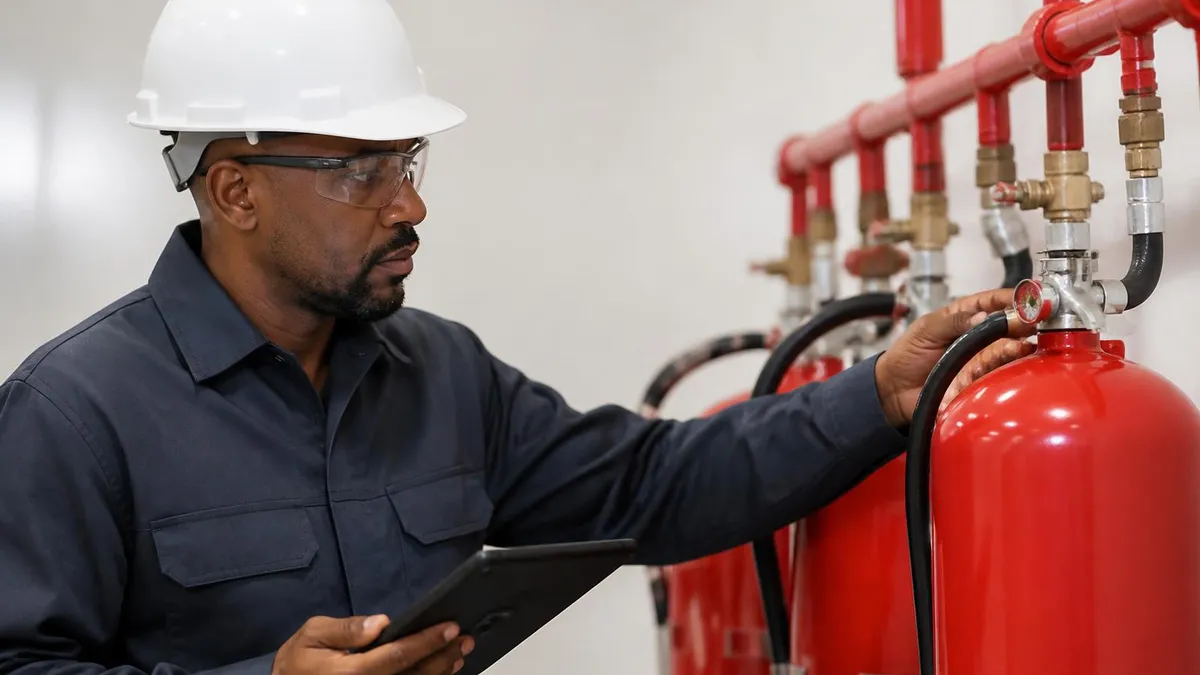
NFPA 70 NEC Explained: Complete Guide to the National Electrical Code

NFPA 72: National Fire Alarm and Signaling Code Guide
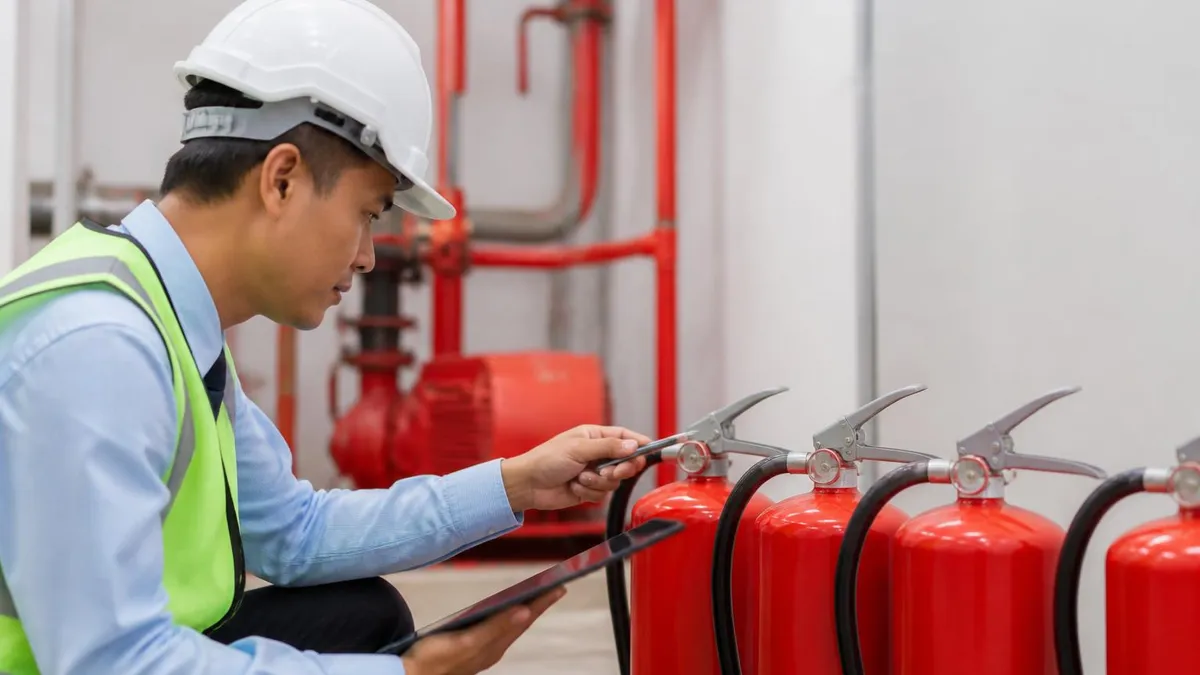
NFPA 13: Sprinkler System Standard, Design, and Compliance
About the Author

Certified Safety Professional & OSHA Compliance Expert
Indiana University of Pennsylvania Safety SciencesDr. William Foster holds a PhD in Safety Science from Indiana University of Pennsylvania and is a Certified Safety Professional (CSP) and Certified Hazardous Materials Manager. With 20 years of occupational health and safety management experience across construction, manufacturing, and chemical industries, he coaches safety professionals through OSHA certification, CSP, CHST, and safety management licensing programs.
Join the Discussion
Connect with other students preparing for this exam. Share tips, ask questions, and get advice from people who have been there.
View discussion (8 replies)