
Becoming a New York City Police Officer 2026
Pass your Becoming a New York City Police Officer exam on the first attempt. Practice questions with detailed answer explanations, hints, and instant

The New York Police Department (NYPD) is one of the most recognized and respected law enforcement agencies in the world. With its vast responsibilities in keeping New York City safe, the NYPD offers an exciting and rewarding career for those dedicated to public service. However, becoming a member of the NYPD requires passing several rigorous tests, including the NYPD Exam, which assesses a candidate's fitness for police work. Practice with the free Police Officer practice test on PracticeTestGeeks (16 questions with answer explanations).
This article will guide you through the NYPD hiring process, explain the steps needed to prepare for the NYPD exam, and provide resources to help you succeed. Whether you're just starting your law enforcement career or looking to advance, this guide will help you understand what it takes to join the NYPD.
Police Officer: upcoming dates and official changes
- Nov 2, 2026: Applications for NYPD Police Officer exam 7315 open November 2, 2026, and the test period runs December 1–5, 2026. (NYC Department of Citywide Administrative Services (DCAS), which runs the NYPD Police Officer exam. Other variants come)
- Nov 2, 2026 – Nov 7, 2026: The NYPD Police Officer exam (exams 7311–7322) is given in monthly testing periods from August 2026 to July 2027. The next one is exam 7314, tested November 2–7, 2026. (NYC Department of Citywide Administrative Services (DCAS), which runs the NYPD Police Officer exam. Other variants come)
- Nov 16, 2026: The application and scheduling period for NYPD Police Officer exam 7315 closes November 16, 2026. Filing for the whole 7311–7322 series ends June 14, 2027. (NYC Department of Citywide Administrative Services (DCAS), which runs the NYPD Police Officer exam. Other variants come)
- Jul 1, 2026: From July 1, 2026, Local Law 57 of 2025 extends NYC DCAS civil service exam fee waivers to first-time applicants and NYC high school students. (NYC Department of Citywide Administrative Services (DCAS), which runs the NYPD Police Officer exam. Other variants come)
- Updated Oct 18, 2026: Exam fee (NYPD Police Officer) is now $0 application fee (previously $0 application fee).
- Updated Oct 18, 2026: Delivery (NYPD Police Officer) is now Computer terminal (DCAS testing centers) (previously Computer terminal).
- Updated Oct 18, 2026: Passing score (NYPD Police Officer) is now 70% minimum (+10 points NYC residency credit) (previously 70% minimum).
Facts verified Oct 18, 2026 against NYC Department of Citywide Administrative Services (DCAS), which runs the NYPD Police Officer exam. Other variants come. Dates that have passed are removed automatically.
- Candidates must score at least 70% to pass the NYPD Police Officer multiple-choice test. Those who qualify for NYC Residency Credit get 10 extra points. (NYC Department of Citywide Administrative Services (DCAS), which runs the NYPD Police Officer exam. Other variants come)
- The NYPD Police Officer exam has a $0.00 application fee. Applicants select "No Fee" as their payment method in OASys. (NYC Department of Citywide Administrative Services (DCAS), which runs the NYPD Police Officer exam. Other variants come)
- The NYPD Police Officer eligible list, which sets the order of appointment, usually stays active for four years. (NYC Department of Citywide Administrative Services (DCAS), which runs the NYPD Police Officer exam. Other variants come)
- The NYPD Police Officer multiple-choice test is given on a computer terminal. (NYC Department of Citywide Administrative Services (DCAS), which runs the NYPD Police Officer exam. Other variants come)
- NYPD Police Officer candidates must be at least 17 to take the test, 20 years 6 months to be appointed, and under 43 when they file. By appointment they need a high school diploma plus 24 college credits with a 2.0 index or two years of honorable full-time U.S. military service, U.S. citizenship, and residency in NYC or a nearby county. (NYC Department of Citywide Administrative Services (DCAS), which runs the NYPD Police Officer exam. Other variants come)
- Candidates who pass the NYPD Police Officer test are told their results by email and given a list number on the eligible list. (NYC Department of Citywide Administrative Services (DCAS), which runs the NYPD Police Officer exam. Other variants come)
- The NYPD Police Officer exam (exams 7311–7322) is given in monthly testing periods from August 2026 to July 2027. The next one is exam 7314, tested November 2–7, 2026. (NYC Department of Citywide Administrative Services (DCAS), which runs the NYPD Police Officer exam. Other variants come)
Facts verified Oct 18, 2026 against NYC Department of Citywide Administrative Services (DCAS), which runs the NYPD Police Officer exam. Other variants come. Dates that have passed are removed automatically.
Police Officer Exam at a Glance
Facts verified Oct 18, 2026 against NYC Department of Citywide Administrative Services (DCAS), which runs the NYPD Police Officer exam. Other variants come. Dates that have passed are removed automatically.
Free Police Officer Study Tools
Interactive Police Officer resources on PracticeTestGeeks, free to start:
- Free Police Officer Questions and Answers — 16 questions with instant scoring and answer explanations
- Police Officer flashcards — review key terms and concepts card by card
- Police Officer study guide — topic-by-topic overview of what the exam covers
- Police Officer cheat sheet — one-page printable summary for last-minute review
Police Officer Practice Test Questions
Prepare for the Police Officer exam with our free practice test modules. Each quiz covers key topics to help you pass on your first try.
Police Officer Crime and Punishment
Police Officer Exam Questions covering Crime and Punishment. Master Police Officer Test concepts for certification prep.
Police Officer Entrance
Free Police Officer Practice Test featuring Entrance. Improve your Police Officer Exam score with mock test prep.
Police Officer MCQ
Police Officer Mock Exam on MCQ. Police Officer Study Guide questions to pass on your first try.
Police Officer
Police Officer Test Prep for Police Officer. Practice Police Officer Quiz questions and boost your score.
Police Officer Trivia
Police Officer Questions and Answers on Trivia. Free Police Officer practice for exam readiness.
Police Officer Vocabulary
Police Officer Mock Test covering Vocabulary. Online Police Officer Test practice with instant feedback.
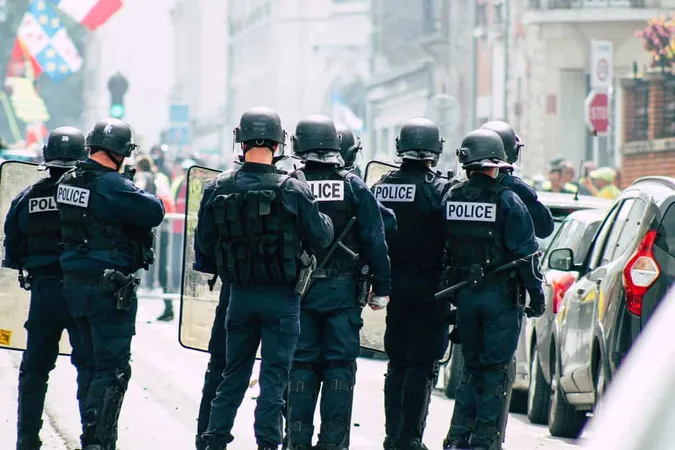
What is the NYPD Exam?
The NYPD exam is a competitive written exam that aspiring police officers must pass to become eligible for employment with the New York Police Department. The exam evaluates candidates' reasoning abilities, judgment, and general knowledge—all of which are crucial for law enforcement duties.
The NYPD exam consists of multiple-choice questions and is designed to assess several areas of cognitive ability, including:
Logical reasoning and problem-solving: This section evaluates a candidate's ability to assess situations and make decisions based on facts and circumstances.
Situational judgment: Candidates are tested on their ability to respond to various scenarios that a police officer might encounter.
Basic arithmetic and reading comprehension: This section ensures candidates can process information quickly and accurately, which is essential in police work.
In addition to the written test, candidates must pass physical fitness tests, medical exams, and a psychological evaluation.
How to Prepare for the NYPD Exam
Preparing for the NYPD exam requires focus, dedication, and the right resources. Here are some essential steps you can take to improve your chances of success:
One of the most effective ways to prepare for the NYPD exam is to take practice tests. Practice tests simulate the real exam environment and help you get a feel for the types of questions you’ll encounter. They also allow you to gauge your strengths and weaknesses, so you can focus your study efforts where they’re needed most.
You can find nypd practice questions on various websites which offers specialized resources to help you prepare for the exam.
Focus your study on the areas covered in the exam: reasoning, judgment, arithmetic, and reading comprehension. Reviewing study guides and textbooks that focus on these areas can help reinforce your knowledge. Consider joining a study group or using online resources for additional support.
The NYPD exam also includes a physical fitness test, so it’s important to maintain your physical health. To pass, you’ll need to demonstrate your ability to run, perform strength exercises, and meet other physical benchmarks. Regular exercise and training will help ensure you’re prepared for this part of the process.
Along with passing the exam, there are other steps in the NYPD hiring process, including background checks, medical exams, and psychological evaluations. Be sure to understand the full application process, as it will help you plan accordingly.
- ✓Review the official Police Officer exam content outline
- ✓Take a diagnostic practice test to identify weak areas
- ✓Create a study schedule (4-8 weeks recommended)
- ✓Focus on your weakest domains first
- ✓Complete at least 3 full-length practice exams
- ✓Review all incorrect answers with detailed explanations
- ✓Take a final practice test 1 week before exam day
Why is the NYPD Exam Important?
The NYPD exam serves as the first step in becoming a police officer with one of the largest and most influential law enforcement agencies in the United States. Here’s why it is so important:
Assessing Mental and Physical Readiness: The NYPD exam ensures that candidates have the intellectual and physical capabilities necessary to perform the duties of a police officer. Given the high demands of the job, it is essential that officers be able to make split-second decisions and respond to high-pressure situations.
Equal Opportunity: The NYPD exam helps ensure that all candidates are assessed based on the same criteria, providing a fair and equal opportunity for everyone interested in a career with the NYPD.
Gateway to a Rewarding Career: Passing the exam is a crucial step toward a rewarding and impactful career in law enforcement. Becoming a part of the NYPD allows individuals to serve and protect one of the most diverse and dynamic cities in the world.
NYPD Exam Structure
The NYPD exam consists of multiple-choice questions that cover several areas, including general reasoning, situational judgment, and basic math. Let's break down the sections of the test:
This section tests a candidate's ability to understand and analyze information. Questions may focus on logical reasoning, pattern recognition, and decision-making. For example, candidates may be asked to determine the best course of action in various law enforcement scenarios.
Candidates will be presented with real-world scenarios and asked to choose the most appropriate response. For example, they might be asked how they would handle a situation where a suspect is resisting arrest or how they would communicate with witnesses during an investigation.
The math section evaluates a candidate's ability to solve basic arithmetic problems. Police officers often need to process numbers and data quickly, and this section ensures they have the necessary math skills.
This section tests a candidate's ability to read and understand written material. Candidates will read a passage and then answer questions about its content. This skill is essential for officers, who need to accurately interpret reports, laws, and procedures.
NYPD Career Path and Opportunities
Becoming an NYPD officer is the first step toward a long and rewarding career in law enforcement. Once you’ve passed the NYPD exam and completed the required training, there are several career paths you can pursue:
Most new recruits start as patrol officers. In this role, you'll patrol city neighborhoods, respond to emergencies, and enforce laws.
As you gain experience, you may have the opportunity to join specialized units, such as the NYPD SWAT team, Traffic Enforcement, or the NYPD K-9 Unit. These roles provide an opportunity for more focused work in particular areas of law enforcement.
After serving as a patrol officer for a few years, you may choose to become a detective. Detectives are responsible for investigating serious crimes, gathering evidence, and solving cases.
NYPD officers who excel in their duties may be promoted to supervisory or leadership positions, such as sergeant or lieutenant. With further experience and leadership skills, officers can rise through the ranks to become captains, chiefs, or even work in the NYPD Command Center.
Other Law Enforcement Career Options
For those who may not be interested in joining the NYPD specifically, there are other law enforcement opportunities to consider. For example:
New York State Police (NYSP): The NYSP test evaluates candidates for positions with the state police.
Chicago Police Department: For those interested in law enforcement outside of New York, the Chicago Police Department offers another pathway to a rewarding career in public service.
Conclusion
The NYPD exam is the gateway to a career in one of the most respected and challenging law enforcement agencies in the world. By preparing with practice questions and using the right study tools, you can improve your chances of success and begin a rewarding career serving the people of New York City.
Police Officer: Pros and Cons
- +Police Officer credential is recognized by employers and industry professionals
- +Higher earning potential compared to non-credentialed peers
- +Expanded career opportunities and professional advancement
- +Structured learning path builds comprehensive knowledge
- +Professional development that stays current with industry standards
- −Preparation requires significant time and study commitment
- −Associated costs for exams, materials, and renewal fees
- −Continuing education needed to maintain credentials
- −Competition for advanced positions can be challenging
- −Requirements and standards may vary by state or region
Pros and Cons at a Glance
| Pros | Cons |
|---|---|
| Police Officer credential is recognized by employers and industry professionals | Preparation requires significant time and study commitment |
| Higher earning potential compared to non-credentialed peers | Associated costs for exams, materials, and renewal fees |
| Expanded career opportunities and professional advancement | Continuing education needed to maintain credentials |
| Structured learning path builds comprehensive knowledge | Competition for advanced positions can be challenging |
| Professional development that stays current with industry standards | Requirements and standards may vary by state or region |
Sample Police Officer Practice Questions
Try these questions from our free Police Officer practice tests. The correct answer and an explanation follow each question.
Officer A and Officer B start from the same police station at the same time, heading in opposite directions on a straight highway. Officer A travels at 55 mph, and Officer B travels at 60 mph. How much time will have passed when they are 230 miles apart?
- A. 1.5 hours
- B. 2.5 hours
- C. 2.0 hours
- D. 1.75 hours
Answer: C. 2.0 hours
Because the officers are traveling in opposite directions, their speeds combine. The combined speed is 55 mph + 60 mph = 115 mph. To find the time it takes to be 230 miles apart, use the formula Time = Distance / Speed. Time = 230 miles / 115 mph = 2 hours.
An officer witnesses a fellow officer use what appears to be excessive force against a suspect who is no longer resisting. The officer should:
- A. Intervene to stop the use of force and report the incident through proper channels
- B. Do nothing because it involves a fellow officer
- C. Wait to see if the supervisor noticed before deciding
- D. Ask the suspect if they want to file a complaint
Answer: A. Intervene to stop the use of force and report the incident through proper channels
Officers have an ethical and increasingly legal duty to intervene when witnessing excessive force and to report misconduct. Silence is a form of complicity and undermines public trust.
An officer witnesses a fellow officer using excessive force on a restrained suspect. The witnessing officer should:
- A. Wait until after the shift to report it privately
- B. Intervene to stop the excessive force and report it through proper channels
- C. Ignore it as it is not their responsibility
- D. Alert the media immediately
Answer: B. Intervene to stop the excessive force and report it through proper channels
Officers have a duty to intervene to stop excessive force by colleagues and report misconduct through official channels.
A police department policy on handling evidence states: 'All seized property must be properly tagged and sealed in an evidence bag before the end of the officer's shift. The officer must complete an evidence submission form, detailing the chain of custody, and deposit the sealed evidence into a designated evidence locker.' Which of the following actions would be a violation of this policy?
- A. An officer places a seized wallet in an evidence bag, seals it, and fills out the submission form before placing it in the locker.
- B. An officer takes a seized firearm back to the station and asks the evidence technician to tag and package it.
- C. An officer completes the evidence submission form on a laptop in their patrol vehicle before arriving at the station.
- D. An officer deposits a sealed and tagged evidence bag into the locker and then completes the digital submission form.
Answer: B. An officer takes a seized firearm back to the station and asks the evidence technician to tag and package it.
The policy explicitly states that the seizing officer must tag and seal the property. Asking another person, even an evidence technician, to perform this step on the officer's behalf violates the procedure described. The other options are consistent with the policy's requirements.
NYPD Practice Test Questions and Answers
How this page was made: written with AI tools and published by Nathan Beja, founder of Practice Test Geeks, who is responsible for its content. Exam facts are checked against the official sources listed below. Not reviewed by a subject-matter expert. Editorial policy
Sources & references
Exam facts on this page (fees, format, dates, passing scores) are checked against these official sources; the date is our last check. Editorial policy
- nyc.gov — Test delivery, eligibility, fees, passing score, registration deadline, registration, score release, test dates, score validity, exam information · verified Oct 2026
- post.ca.gov — Test delivery, retake policy, score release, score validity · verified Oct 2026
- joinlapd.com — Test delivery, score validity, eligibility · verified Oct 2026