
How Long Does It Take to Become a Nurse? 2026 September Complete Guide
Free How Long Does It Take to Become a practice test with instant feedback and detailed answer explanations. Prepare for your exam. 🎯

The time it takes to become a Registered Nurse (RN) is typically 2 to 4 years. Earning an Associate Degree in Nursing (ADN) takes about two years, while a Bachelor of Science in Nursing (BSN) takes four years. After completing a degree, all graduates must pass the NCLEX licensure exam.
Students preparing for standardized academic tests can also practice with our AMCAT practice test 2026, covering the quantitative and analytical reasoning sections tested on exam day.
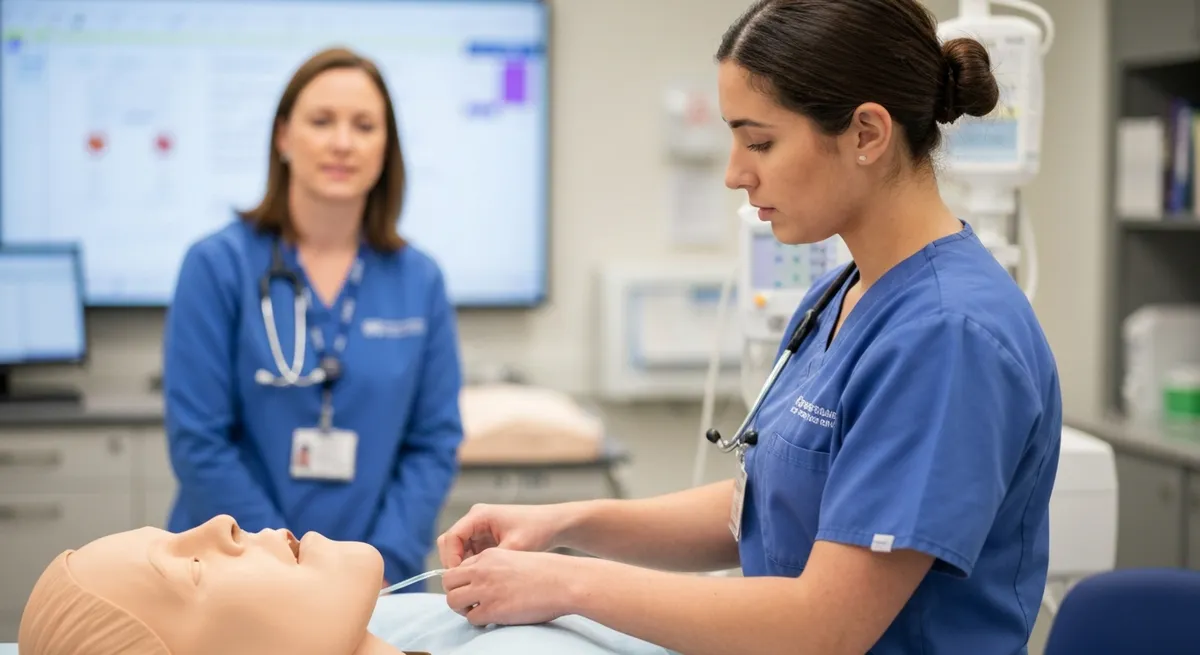
Understanding the difference in the RN vs BSN debate is crucial when asking, 'how long does it take to become a nurse?' Each path has unique nursing school requirements and timelines, impacting your journey from student to practicing professional, which often starts with mastering topics like Basic Care and Comfort.
RN vs BSN vs MSN: Which Path Is Right for You?
How long does it take to become a nurse with an Associate's Degree (ADN)?: An ADN program is the fastest route to becoming a Registered Nurse, typically taking 18 to 24 months. The curriculum is intensely focused on core nursing skills and clinical practice, preparing you directly for the NCLEX-RN exam. This is a popular answer to 'how long does it take to become a nurse?' for those seeking a quick entry into the field.
What are the nursing school requirements for an ADN program?: General nursing school requirements for an ADN include a high school diploma or GED, prerequisite courses like anatomy and biology with a minimum GPA (often 2.5 or higher), and passing a standardized entrance exam like the TEAS (Test of Essential Academic Skills).
How does an ADN affect the NCLEX pass rate?: While the NCLEX-RN is the same for all graduates, the NCLEX pass rate can vary by program. Reputable ADN programs have strong pass rates, but on average, BSN programs tend to have a slightly higher national NCLEX pass rate due to a more comprehensive curriculum.
Understanding the path to becoming a nurse involves more than just knowing the NCLEX-RN exam; it's about meeting specific requirements and understanding factors that influence the overall NCLEX pass rate. Knowing how long does it take to become a nurse can help you plan your career, whether you're aiming for an RN role or exploring the fnp meaning for future specialization.
Fastest Ways to Become a Nurse in 2026
- ✓🎓 Meet Nursing School Requirements: Fulfill prerequisites like science courses (Anatomy, Physiology) and maintain a competitive GPA to get into an accelerated program.
- ✓🏫 Choose an Accelerated Nursing Program (ADN or BSN): The answer to how long does it take to become a nurse often depends on your program. Accelerated BSN (ABSN) programs can take just 12-18 months.
- ✓📚 Excel in Coursework and Clinicals: Master core nursing concepts and skills. Focus on topics from the NCLEX exam, like delegation and prioritization, during your clinicals.
- ✓✅ Pass the NCLEX Exam: After graduation, you must pass the National Council Licensure Examination. A high NCLEX pass rate is the goal, so dedicate significant time to studying with practice questions.
- ✓📜 Obtain State Licensure: Apply for your nursing license through your state's Board of Nursing. This final step officially allows you to practice as a Registered Nurse (RN).

Nursing Career Paths and Salary Outlook
Licensed Practical/Vocational Nurse (LPN/LVN)
Provides basic nursing care. The answer to how long does it take to become a nurse at this level is typically 1-2 years after meeting initial requirements. Median Salary: ~$59,730/year.
Registered Nurse (RN)
Requires an Associate's (ADN) or Bachelor's (BSN) degree. A strong grasp of nursing school requirements is essential for achieving a high NCLEX pass rate. Median Salary: ~$86,070/year.
Advanced Practice Registered Nurse (APRN)
Includes roles like Nurse Practitioner (NP). Understanding the FNP meaning (Family Nurse Practitioner) is key for this path, which requires a Master's (MSN) or Doctoral (DNP) degree. Median Salary: ~$128,490/year.
Doctor of Nursing Practice (DNP)
The highest level of clinical nursing education. This path significantly extends how long does it take to become a nurse, focusing on leadership, policy, and complex patient care. Median Salary: ~$135,000+/year.
NCLEX Pass Rates by Program Type
When asking how long does it take to become a nurse, a crucial factor is selecting a program that prepares you for success on the licensure exam. The NCLEX pass rate is one of the most reliable indicators of a nursing program's quality. A school with a consistently high pass rate demonstrates its ability to equip students with the knowledge and critical thinking skills needed to pass the NCLEX on their first attempt, directly impacting the final answer to how long does it take to become a nurse by avoiding costly and time-consuming re-takes.
Historically, graduates from four-year Bachelor of Science in Nursing (BSN) programs have the highest first-time NCLEX pass rate. These programs often have stringent nursing school requirements, leading to a well-prepared cohort of candidates. Graduates from two-year Associate Degree in Nursing (ADN) programs also perform well, offering a faster path to licensure, though their pass rates are typically a few percentage points lower than their BSN counterparts. This difference is an important consideration when evaluating your educational options.
The journey doesn't have to end with an RN license. The path to advanced practice extends the timeline for how long does it take to become a nurse. This is where understanding the FNP meaning (Family Nurse Practitioner) becomes relevant. An FNP provides comprehensive, family-focused care, but must first pass the NCLEX-RN before pursuing a master's or doctoral degree and a separate certification exam. The quality of their initial RN program, reflected in its high NCLEX pass rate, provides a critical foundation for this advanced career. The full FNP meaning includes a scope of practice far beyond that of an RN.
Ultimately, prospective students should investigate the specific NCLEX pass rate for every program they consider. Meeting the initial nursing school requirements is just the first step; ensuring the program has a strong track record of licensure success is critical for your investment of time and money. This data is usually published by the state's Board of Nursing and often highlighted by the schools themselves.
Occupational health nurses preparing for their COHN certification often also review the MSHA Practice Test 2026 to strengthen their knowledge of workplace hazard prevention and safety regulations.
You can continue preparing with the mark k lectures, which includes answer explanations for every question.
You can continue preparing with the printable nclex questions pdf, which includes answer explanations for every question.
You can continue preparing with the nclex practice questions, which includes answer explanations for every question.
How Long Pros and Cons
- +NCLEX has a defined, publicly available content blueprint — candidates know exactly what to prepare for
- +Multiple preparation pathways (self-study, courses, coaching) accommodate different learning styles and schedules
- +A growing ecosystem of study resources means candidates at any budget level can access quality preparation materials
- +Clear score reporting allows candidates to identify specific strengths and weaknesses for targeted remediation
- +Professional recognition associated with strong performance provides tangible career and academic benefits
- −The scope of tested content requires substantial preparation time that competes with existing professional or academic commitments
- −No single resource covers the full content scope — candidates typically need multiple study tools for comprehensive preparation
- −Test anxiety and exam-day performance variability mean preparation effort does not always translate linearly to scores
- −Registration, preparation, and potential retake costs accumulate into a significant financial investment
- −Content and format can change between exam versions, making older preparation materials less reliable
NCLEX Questions and Answers
More NCLEX - National Council Licensure Examination Resources

How to Manage Your Time When Preparing for Multiple Nursing Exams

Building Expertise: The Essential Competencies of Family Nurse Practitioner Education

What to Expect in Your Nurse Practitioner Certification Exam
NCLEX Practice Test 2026 Questions - Nursing Exam Test

How Long Should You Study for the NCLEX-RN?
NCLEX-PN Sample Practice Questions, Study Guide, Prep Course & Price
About the Author

Registered Nurse & Healthcare Educator
Johns Hopkins University School of NursingDr. Sarah Mitchell is a board-certified registered nurse with over 15 years of clinical and academic experience. She completed her PhD in Nursing Science at Johns Hopkins University and has taught NCLEX preparation and clinical skills courses for nursing students across the United States. Her research focuses on evidence-based exam preparation strategies for healthcare certification candidates.
Join the Discussion
Connect with other students preparing for this exam. Share tips, ask questions, and get advice from people who have been there.
View discussion (8 replies)