
NCLEX-PN Sample Practice Questions, Study Guide, Prep Course & Price
Boost your NCLEX exam score with practice questions and detailed answer explanations. Track progress with instant feedback. 🎯
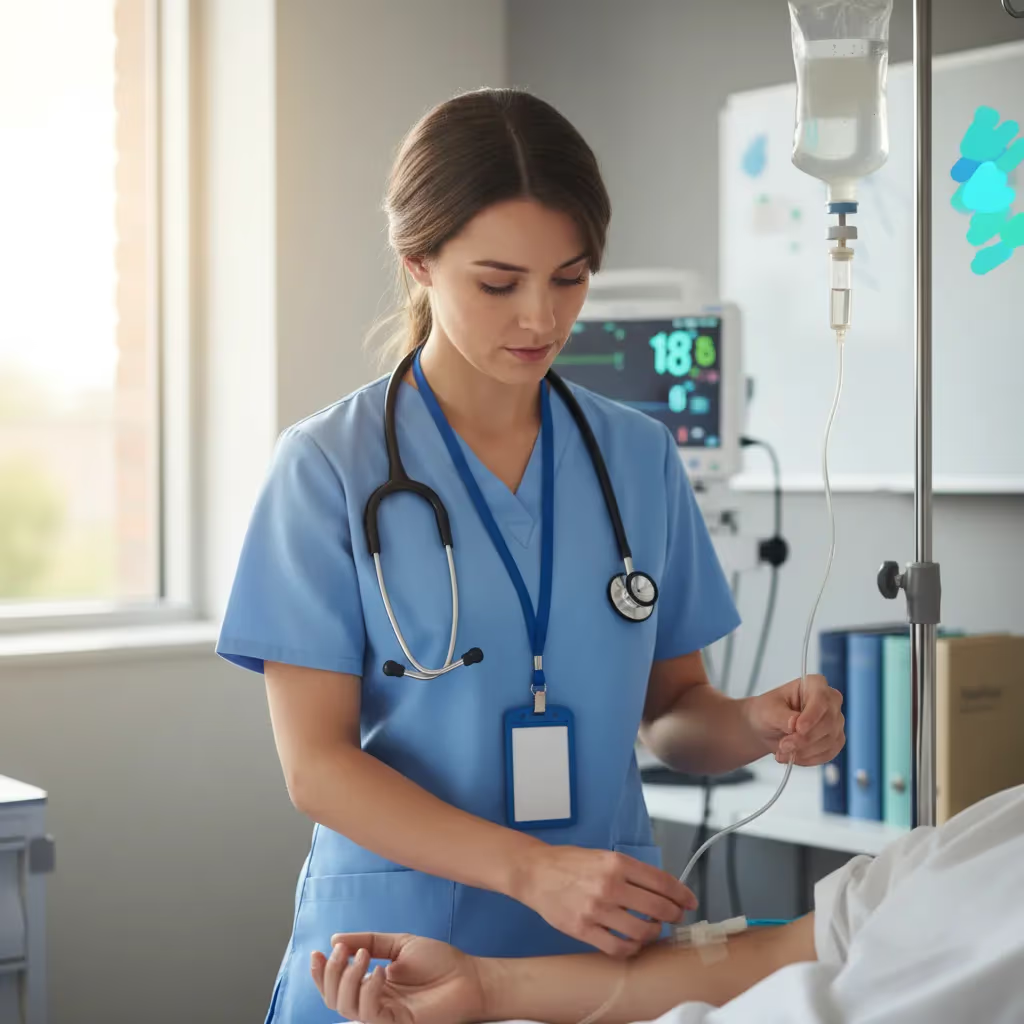
If you're searching for NCLEX-PN sample practice review questions, a study guide, prep course options, or pricing -- you're in the right place. Passing the NCLEX-PN isn't just about memorizing nursing content. It's about learning how the exam thinks, then training yourself to think the same way. That means working through hundreds of practice questions in formats that mirror what Pearson VUE actually delivers on test day.
The Archer NCLEX review platform has become one of the most popular prep tools for PN candidates. It's affordable, question-heavy, and uses a readiness assessment that predicts your likelihood of passing. But Archer isn't the only option. An NCLEX bootcamp -- either live or self-paced -- compresses weeks of study into an intensive review session that forces you to confront your weak spots fast. Some candidates thrive with bootcamps. Others need the slower drip of daily question banks. There's no single right answer.
What matters is that you're practicing with real NCLEX-style questions, not just reading textbook chapters. The NCLEX-PN uses computerized adaptive testing (CAT), which means the difficulty adjusts based on your answers. You can't cram your way through it. You need repeated exposure to clinical judgment scenarios, prioritization questions, and select-all-that-apply formats. This guide breaks down every major prep resource, what they cost, and how to build a study plan that actually works for PN candidates on a budget or a deadline.

NCLEX Bootcamp and Review Course Options
An NCLEX bootcamp packs weeks of review into a concentrated format -- usually three to five days of intensive content review, test-taking strategies, and timed practice sessions. It's designed for candidates who've already covered the material once (in nursing school) and need a structured refresher before sitting for the exam. Mark Klimek, Hurst Review, and Archer all offer bootcamp-style programs with different approaches.
NCLEX practice questions are the core of every effective review. Bootcamps build around them. The best programs don't just give you questions -- they teach you why each answer is right or wrong, which client need category it falls under, and how to apply clinical reasoning when two answers both seem correct. That last skill separates candidates who pass from those who don't. The NCLEX isn't testing whether you know facts. It's testing whether you can apply facts under pressure.
Live bootcamps cost $200 to $500 depending on the provider and format. Self-paced bootcamp programs run cheaper -- Archer's full review with question bank starts around $50. If you're a visual learner, video-based bootcamps from Hurst or Simple Nursing pair lectures with practice questions. If you learn by doing, skip straight to question banks and use bootcamp-style timed sessions on your own. Either way, don't start a bootcamp cold. Review your weakest content areas first so the intensive sessions actually stick.
NCLEX Practice Questions and Question Bank Reviews
Working through NCLEX practice questions is the single most effective study strategy for both PN and RN candidates. But not all question banks are equal. The best ones mirror the actual NCLEX exam format -- CAT simulation, NGN-style case studies, drag-and-drop, matrix questions, and rationale breakdowns for every option. NCLEX questions on the real exam test clinical judgment, not recall. Your practice tool should do the same.
The NCLEX exam itself draws from eight client needs categories: Safe and Effective Care Environment (coordinated care and safety), Health Promotion and Maintenance, Psychosocial Integrity, Physiological Integrity (basic care, pharmacology, reduction of risk, and physiological adaptation). Each NCLEX question maps to one of these categories. When you review practice results, track your accuracy by category -- not just overall score. A 75% average means nothing if you're scoring 90% on pharmacology and 55% on coordinated care.
Free NCLEX questions exist online (including ours above), but paid question banks offer better analytics, adaptive difficulty, and larger question pools. Expect 1,500 to 3,000+ questions in a paid bank. Work through at least 1,000 practice questions before your test date -- more is better. Do them in timed blocks of 50 to 75. That mimics the pacing pressure you'll feel on test day when the clock is real and the stakes are your nursing license.
Top NCLEX Prep Platforms Compared
Archer NCLEX offers one of the most affordable question banks on the market -- starting around $50 for a 3-month subscription. Their readiness assessment tool is the standout feature: it predicts your pass probability based on your practice performance. Archer covers both NCLEX-RN and NCLEX-PN with separate question pools. The platform includes video lectures, flashcards, and a CAT simulator. Most users report that Archer questions run slightly easier than the real exam, so aim for "very high" on their readiness scale before scheduling your test.
Pearson VUE NCLEX Registration and Scheduling
Pearson VUE NCLEX is the exclusive testing platform for all NCLEX exams in the United States and most international locations. You can't take the NCLEX anywhere else -- Pearson VUE handles registration, scheduling, score delivery, and the testing centers themselves. The process starts with your nursing board (state board of nursing), which issues an Authorization to Test (ATT) after verifying your eligibility. Once you have the ATT, you register through Pearson VUE's website.
The NCLEX Q (quick results) feature lets you check your unofficial pass/fail status about 48 hours after testing -- for a $7.95 fee through Pearson VUE. Official results come from your state board, usually within a few weeks. Most candidates can't wait that long, and the quick results service has proven reliable. If it says you passed, you passed. It's worth the eight bucks for the peace of mind alone.
Scheduling is straightforward once your ATT arrives. Pick a testing center, pick a date, and show up with valid government ID. Testing centers fill up fast in certain metro areas -- especially right after nursing school graduation cycles in May and December. Don't wait. Book your slot the day your ATT arrives. The longer you delay, the more content you forget and the fewer available dates you'll find. Momentum matters more than perfection.
Study Guide Resources and Bootcamp Comparisons
A bootcamp NCLEX approach works best when you've already graduated and need to compress your review. But which one? NCLEX questions vary across platforms in both quality and difficulty. Archer runs slightly below exam difficulty. UWorld NCLEX matches or exceeds it. Hurst Review focuses on core content mastery before question practice. Mark Klimek's audio lectures build prioritization instincts through storytelling. Each approach fits a different learning style.
A solid NCLEX study guide should cover all eight client needs categories with practice questions mapped to each one. Saunders Comprehensive Review is the traditional textbook choice -- thick, thorough, and organized by clinical area. It's best as a reference, not a cover-to-cover read. Pair it with a question bank for active learning. Passive reading doesn't build the clinical reasoning the NCLEX tests. You need to practice making decisions, not just absorbing information.
UWorld NCLEX stands out for rationale depth. Every question includes a detailed explanation of why each answer is right or wrong, plus illustrations and memory aids. It's the closest thing to having a tutor walk you through each scenario. At $150 for 90 days, it's more expensive than Archer but delivers more thorough answer breakdowns. If your budget allows one paid resource, make it UWorld. Add Archer as a second bank if you want more volume at lower cost.
Pros and Cons of NCLEX Prep Courses
- +Structured study plans eliminate guesswork about what to study and when
- +Adaptive question banks identify weak areas automatically so you can focus efficiently
- +Readiness assessments (Archer, UWorld) predict pass likelihood before you sit for the exam
- +Video lectures and audio resources accommodate visual and auditory learners
- +Bootcamp formats compress months of review into days -- ideal for tight timelines
- +Detailed rationales teach clinical reasoning, not just correct answers
- −Paid platforms cost $50 to $500 depending on features and subscription length
- −Information overload from multiple resources can increase anxiety instead of confidence
- −Online-only prep lacks the hands-on clinical reinforcement of in-person programs
- −Some question banks have questions easier than the actual exam, creating false confidence
- −Subscription time limits mean you lose access if your exam gets delayed
- −No prep course guarantees a passing score -- individual effort determines outcomes
NCLEX Prep Course Pricing and Cost Comparison
NCLEX test sample questions are available free, but structured prep programs cost money. Here's what you're looking at. Archer NCLEX: $50-99 for 3-6 months (question bank + videos + readiness tool). UWorld: $80-200 depending on subscription length and whether you add the self-assessment exams. Hurst Review: $299-399 for their full review course with question bank. Mark Klimek audio lectures: free recordings circulate online, though official versions cost more. Kaplan NCLEX: $299-499 for their self-paced or live program.
NCLEX exam questions don't change in difficulty based on which prep tool you used -- but your readiness does. The exam registration fee itself is $200, paid to Pearson VUE. Add state licensure application fees ($75-200 depending on your state), and the total cost of getting licensed runs $275 to $700+ when you include prep materials. That's real money for a new graduate. Budget accordingly and choose one primary resource rather than stacking three subscriptions you won't finish.
Some nursing schools bundle a prep course into tuition. Check with your program before buying separately -- you might already have access to Kaplan or ATI through your school. If not, Archer offers the best value per dollar for PN candidates. Their question bank is large, their readiness predictor works, and the price point leaves room in your budget for a supplemental resource if needed. Don't overspend on prep. Spend more time practicing and less time shopping for the perfect tool.
NCLEX-PN Study Plan Checklist
- ✓Complete all nursing school coursework and verify your program reports to your state board
- ✓Apply for licensure through your state board of nursing and pay the application fee
- ✓Register with Pearson VUE and pay the $200 NCLEX-PN exam fee
- ✓Choose a primary question bank (Archer, UWorld, or Kaplan) and start immediately
- ✓Complete at least 1,000 practice questions before your test date across all client needs categories
- ✓Track your accuracy by client needs category -- focus extra time on any category below 65%
- ✓Take at least two full-length CAT simulation exams under timed conditions
- ✓Review pharmacology and dosage calculations daily -- these are high-yield topics
- ✓Schedule your exam within 4-8 weeks of receiving your ATT -- don't let momentum fade
- ✓On test day: bring valid government ID, arrive 30 minutes early, and trust your preparation
NCLEX-RN vs. NCLEX-PN: Key Differences
The NCLEX-RN exam and the NCLEX-PN test different scopes of practice, but they share the same testing platform (Pearson VUE) and the same CAT format. The NCLEX exam for RN candidates is longer (minimum 85 questions, max 150) and covers a broader scope including independent nursing judgment, complex delegation, and advanced pharmacology. The PN version starts at 85 questions (minimum) with a maximum of 205. Pearson VUE NCLEX login works for both exams -- your ATT determines which version you sit for.
Content overlap between the two exams is significant -- roughly 60-70% of the material is shared. Both test safe and effective care, health promotion, psychosocial integrity, and physiological integrity. The difference is depth. RN questions ask you to plan and evaluate. PN questions ask you to implement and report. If you're an LPN/LVN considering bridge programs to RN, your NCLEX-PN prep gives you a strong foundation. You're not starting over -- you're building up.
The NCLEX-RN pass rate for first-time U.S.-educated candidates hovers around 87-89%. The NCLEX-PN first-attempt pass rate sits at about 86%. Both are respectable, but they mean roughly 1 in 7 candidates fails on the first try. Don't assume you'll be in the majority without putting in the work. The candidates who fail typically underestimate the exam's clinical reasoning demands or don't practice enough questions in timed conditions. Don't be that candidate.
Building Your NCLEX Practice Test Routine
An effective NCLEX practice test routine looks like this: 50-75 questions per session, timed, with a full review of every rationale afterward. Don't rush through questions just to hit a number. The learning happens in the review, not the answering. When you get a question wrong, write down why. When you get one right, make sure you got it right for the right reason -- not because you eliminated the obviously wrong options and guessed between two.
The NCLEX-RN and NCLEX-PN both emphasize clinical judgment through the Next Generation NCLEX (NGN) format. NGN questions include case studies with multiple parts, matrix grids, drag-and-drop ordering, and highlight-text selections. These aren't traditional multiple choice. They test whether you can synthesize information from a patient scenario, identify the priority concern, and select appropriate nursing actions. Practice these formats specifically -- they make up an increasing percentage of the exam.
Schedule your practice sessions like appointments. Consistency beats intensity. Four sessions of 50 questions per week is more effective than one marathon session of 200 on the weekend. Your brain needs time to consolidate what you've learned. Sleep, rest, and spacing your practice across days improves retention. The candidates who pass on their first attempt aren't always the smartest -- they're the most disciplined about showing up and doing the work day after day.
Your Authorization to Test (ATT) is valid for a limited time -- typically 60 to 90 days depending on your state board. If it expires before you test, you'll need to reapply and pay the $200 registration fee again. Schedule your exam as soon as you receive your ATT. Don't wait for the "perfect" readiness score on your prep tool. If you're scoring above 60% on UWorld or "high/very high" on Archer's readiness assessment, you're ready. Book it.
NCLEX-RN Prep and Cross-Study Benefits
If you're studying for the NCLEX-PN now but plan to pursue your RN later, your prep work transfers. The NCLEX RN exam builds on PN content -- it doesn't replace it. Pharmacology, basic care, infection control, and patient safety content overlaps heavily. What changes is the scope of independent decision-making and the complexity of delegation questions. PN candidates delegate to nursing assistants. RN candidates delegate to LPNs and manage multi-patient assignments.
The TEAS exam practice that many nursing school applicants complete before admission covers foundational science and reading skills. It's not directly related to NCLEX content, but the study habits you build for TEAS -- active recall, timed practice, content review cycles -- transfer directly to NCLEX prep. If you passed TEAS, you already know how to study for a high-stakes nursing exam. Apply the same discipline. Just swap the content.
Cross-study between PN and RN resources is fine as long as you're aware of scope differences. UWorld's RN bank includes questions beyond PN scope (independent nursing diagnosis, complex care planning), but the pharmacology and safety questions work for both exams. Archer separates their PN and RN banks, which makes targeted study easier. Use the bank that matches your exam, supplement with the other when you want extra challenge or volume.
NCLEX Practice Test Questions
Prepare for the NCLEX - National Council Licensure Examination exam with our free practice test modules. Each quiz covers key topics to help you pass on your first try.
NCLEX Basic Care and Comfort
NCLEX Exam Questions covering Basic Care and Comfort. Master NCLEX Test concepts for certification prep.
NCLEX Coordination of Care
Free NCLEX Practice Test featuring Coordination of Care. Improve your NCLEX Exam score with mock test prep.
NCLEX Medical Surgical Nursing
NCLEX Mock Exam on Medical Surgical Nursing. NCLEX Study Guide questions to pass on your first try.
NCLEX Medical Surgical Nursing Questions a...
NCLEX Test Prep for Medical Surgical Nursing Questions and Answers. Practice NCLEX Quiz questions and boost your score.
NCLEX Health Promotion and Maintenance
NCLEX Questions and Answers on Health Promotion and Maintenance. Free NCLEX practice for exam readiness.
NCLEX Management of Care
NCLEX Mock Test covering Management of Care. Online NCLEX Test practice with instant feedback.
NCLEX Exam: Nursing Prioritization, Delega...
Free NCLEX Quiz on Exam: Nursing Prioritization, Delegation and Assignment. NCLEX Exam prep questions with detailed explanations.
NCLEX-PN Test
NCLEX Practice Questions for NCLEX-PN Test. Build confidence for your NCLEX certification exam.
NCLEX-PN Test #10
NCLEX Test Online for NCLEX-PN Test #10. Free practice with instant results and feedback.
NCLEX-PN Test #1
NCLEX Study Material on NCLEX-PN Test #1. Prepare effectively with real exam-style questions.
NCLEX-PN Test #11
Free NCLEX Test covering NCLEX-PN Test #11. Practice and track your NCLEX exam readiness.
NCLEX-PN Test #12
NCLEX Exam Questions covering NCLEX-PN Test #12. Master NCLEX Test concepts for certification prep.
NCLEX-PN Test #13
Free NCLEX Practice Test featuring NCLEX-PN Test #13. Improve your NCLEX Exam score with mock test prep.
NCLEX-PN Test #14
NCLEX Mock Exam on NCLEX-PN Test #14. NCLEX Study Guide questions to pass on your first try.
NCLEX-PN Test #15
NCLEX Test Prep for NCLEX-PN Test #15. Practice NCLEX Quiz questions and boost your score.
NCLEX-PN Test #16
NCLEX Questions and Answers on NCLEX-PN Test #16. Free NCLEX practice for exam readiness.
NCLEX-PN Test #17
NCLEX Mock Test covering NCLEX-PN Test #17. Online NCLEX Test practice with instant feedback.
NCLEX-PN Test #18
Free NCLEX Quiz on NCLEX-PN Test #18. NCLEX Exam prep questions with detailed explanations.
NCLEX-PN Test #19
NCLEX Practice Questions for NCLEX-PN Test #19. Build confidence for your NCLEX certification exam.
NCLEX-PN Test #20
NCLEX Test Online for NCLEX-PN Test #20. Free practice with instant results and feedback.
NCLEX-PN Test #2
NCLEX Study Material on NCLEX-PN Test #2. Prepare effectively with real exam-style questions.
NCLEX-PN Test #22
Free NCLEX Test covering NCLEX-PN Test #22. Practice and track your NCLEX exam readiness.
NCLEX-PN Test #23
NCLEX Exam Questions covering NCLEX-PN Test #23. Master NCLEX Test concepts for certification prep.
NCLEX-PN Test #24
Free NCLEX Practice Test featuring NCLEX-PN Test #24. Improve your NCLEX Exam score with mock test prep.
NCLEX-PN Test #3
NCLEX Mock Exam on NCLEX-PN Test #3. NCLEX Study Guide questions to pass on your first try.
NCLEX-PN Test #4
NCLEX Test Prep for NCLEX-PN Test #4. Practice NCLEX Quiz questions and boost your score.
NCLEX-PN Test #5
NCLEX Questions and Answers on NCLEX-PN Test #5. Free NCLEX practice for exam readiness.
NCLEX-PN Test #6
NCLEX Mock Test covering NCLEX-PN Test #6. Online NCLEX Test practice with instant feedback.
NCLEX-PN Test #7
Free NCLEX Quiz on NCLEX-PN Test #7. NCLEX Exam prep questions with detailed explanations.
NCLEX-PN Test #8
NCLEX Practice Questions for NCLEX-PN Test #8. Build confidence for your NCLEX certification exam.
NCLEX-PN Test #9
NCLEX Test Online for NCLEX-PN Test #9. Free practice with instant results and feedback.
NCLEX Practice Exam
NCLEX Study Material on Practice Exam. Prepare effectively with real exam-style questions.
NCLEX-RN Practice Test
Free NCLEX Test covering NCLEX-RN Practice Test. Practice and track your NCLEX exam readiness.
NCLEX-RN Practice Test #12
NCLEX Exam Questions covering NCLEX-RN Practice Test #12. Master NCLEX Test concepts for certification prep.
NCLEX Select All That Apply Practice Exam
Free NCLEX Practice Test featuring Select All That Apply Practice Exam. Improve your NCLEX Exam score with mock test prep.
NCLEX Nursing Process
NCLEX Mock Exam on Nursing Process. NCLEX Study Guide questions to pass on your first try.
NCLEX Pharmacological and Parenteral Thera...
NCLEX Test Prep for Pharmacological and Parenteral Therapies. Practice NCLEX Quiz questions and boost your score.
NCLEX Physiological Integrity
NCLEX Questions and Answers on Physiological Integrity. Free NCLEX practice for exam readiness.
NCLEX Psychosocial Integrity
NCLEX Mock Test covering Psychosocial Integrity. Online NCLEX Test practice with instant feedback.
NCLEX Pass Rate Trends and What They Mean for You
The NCLEX pass rate for first-time U.S.-educated PN candidates has stayed in the 83-87% range over the past five years. That sounds high -- and it is. But remember, these are nursing school graduates who completed accredited programs and clinical rotations. They're not walking in cold. The candidates who fail typically share common patterns: insufficient practice NCLEX questions, over-reliance on passive review (reading instead of practicing), and poor time management on exam day.
International candidates face a tougher road. NCLEX-PN pass rates for internationally educated nurses drop to roughly 30-40% on the first attempt. Language barriers, unfamiliar testing formats, and differences in nursing education standards all contribute. If you're an internationally educated nurse, invest heavily in a question bank with detailed English-language rationales. UWorld and Archer both serve international candidates well. Consider adding an NCLEX bootcamp for the structured review and test-taking strategy components.
Your individual pass probability depends on three things: content knowledge, question practice volume, and test-day strategy. Content knowledge comes from nursing school. Question practice comes from your prep tools. Test-day strategy -- pacing, anxiety management, reading questions carefully -- comes from simulated exams under timed conditions. All three matter. Neglect any one and your odds drop. The NCLEX isn't the hardest exam in healthcare, but it demands respect. Give it that respect through consistent, honest preparation.
NCLEX Questions and Answers
About the Author

Registered Nurse & Healthcare Educator
Johns Hopkins University School of NursingDr. Sarah Mitchell is a board-certified registered nurse with over 15 years of clinical and academic experience. She completed her PhD in Nursing Science at Johns Hopkins University and has taught NCLEX preparation and clinical skills courses for nursing students across the United States. Her research focuses on evidence-based exam preparation strategies for healthcare certification candidates.
Join the Discussion
Connect with other students preparing for this exam. Share tips, ask questions, and get advice from people who have been there.
View discussion (8 replies)