
NBT AQL Test Past Papers: Where to Find Them and How to Practise 2026
🎯 NBT AQL test past papers aren't officially released in full; use sample questions and free quizzes. Fees, dates and format for 2026 sittings.

NBT AQL test past papers are not published in full by the National Benchmark Tests Project, but you can practise with official sample questions, the AL teachers' guide and free multiple-choice quizzes. The AQL covers Academic Literacy and Quantitative Literacy over three hours, and the 2026 combined AQL and MAT fee is R390.
NBT Aql Test Past Papers: Key Facts (Updated October 2026)
| Fact | Details | Source |
|---|---|---|
| Administrator | National Benchmark Tests Project, serving South African higher education institutions | National Benchmark Tests Project |
| AQL format | Academic and Quantitative Literacy, multiple-choice questions, three hours | NBT FAQ |
| Delivery | Equivalent online and pencil-and-paper forms; online candidates need a suitable computer and stable internet | NBT: How to book |
| Fee | R390 combined AQL and MAT (2026 calendar); re-mark application R250 | NBT 2026 brochure |
| Next listed session | 9 January 2027; online registration closes 6 December 2026, payment due 14 December 2026 | NBT: How to book |
| Results release | Institutions 1 February 2027; candidates 8 February 2027 | NBT: How to book |
| Score reporting | Proficient, Intermediate and Basic benchmark categories | NBT: Interpreting results |
| Retakes and validity | Two attempts within a cycle, full fee each time; results valid three years from the year written | NBT FAQ (page 2) |
People who search for nbt aql test past papers usually expect a download of old exam forms with an answer key, the way school boards release earlier papers. The National Benchmark Tests Project works differently. Test items come from a secure bank and are reused across sittings, so complete retired papers are not handed out. What you can get is sample material, an explanation of what is being tested, and independent practice in the same multiple-choice style.
For a wider library, start with our nbt past papers and memo hub, which gathers every free NBT resource on this site in one place. This page is narrower. It explains what exists for the AQL specifically, what does not, and how to turn limited material into a realistic routine that mirrors the real sitting. Think of it as a map to read before you commit study hours to any course or resource.
The AQL is the combined Academic Literacy (AL) and Quantitative Literacy (QL) assessment. AL measures how well you read, interpret and reason about dense texts, including inference, vocabulary in context, text structure and argument. QL measures how you handle numbers, graphs, tables and everyday quantitative reasoning, using mathematics at a level most candidates met before their final school years. Neither section rewards memorised content, so cramming a syllabus performs poorly while timed practice performs well.
Most applicants write the AQL because a South African university or faculty asks for it as part of admission, placement or funding decisions. Some programmes also require the separate Mathematics (MAT) test, which is why the combined fee is quoted for AQL and MAT together. Results are reported as Proficient, Intermediate or Basic, and institutions interpret those bands differently. Always check your own faculty's admission page before deciding which tests you need to book and by when.
A note for readers in the United States: the NBT is a South African assessment, so it is not the SAT, the ACT or any US placement exam, and US colleges do not use its results. International and exchange applicants to South African universities may be asked to write it, and the identification rules are specific. Fees are quoted in rand, so convert at the current exchange rate when budgeting, and leave extra time for payment to clear.
The rest of this guide is practical. You will see the test content, the realistic substitutes for past papers, a comparison of study options, a scoring explanation and a checklist for test day. Every section answers a question candidates actually type into search engines, including the phrases people use for aql nbt past papers and aql test past papers. Skim the headings, jump to the part you need, and bookmark the free quizzes so you can use them daily.
NBT AQL Test by the Numbers
What Does the NBT AQL Test Cover?
AL tests reading and reasoning with academic-style passages. Expect questions on main ideas, inference, vocabulary in context, author purpose, argument structure and the relationships between sentences. The skill being measured is how well you will cope with university reading loads.
QL tests numerical reasoning in realistic contexts. Typical items use tables, graphs, percentages, rates, ratios and unit conversions. It checks whether you can interpret quantitative information and make sound decisions from it, not whether you remember advanced formulas.
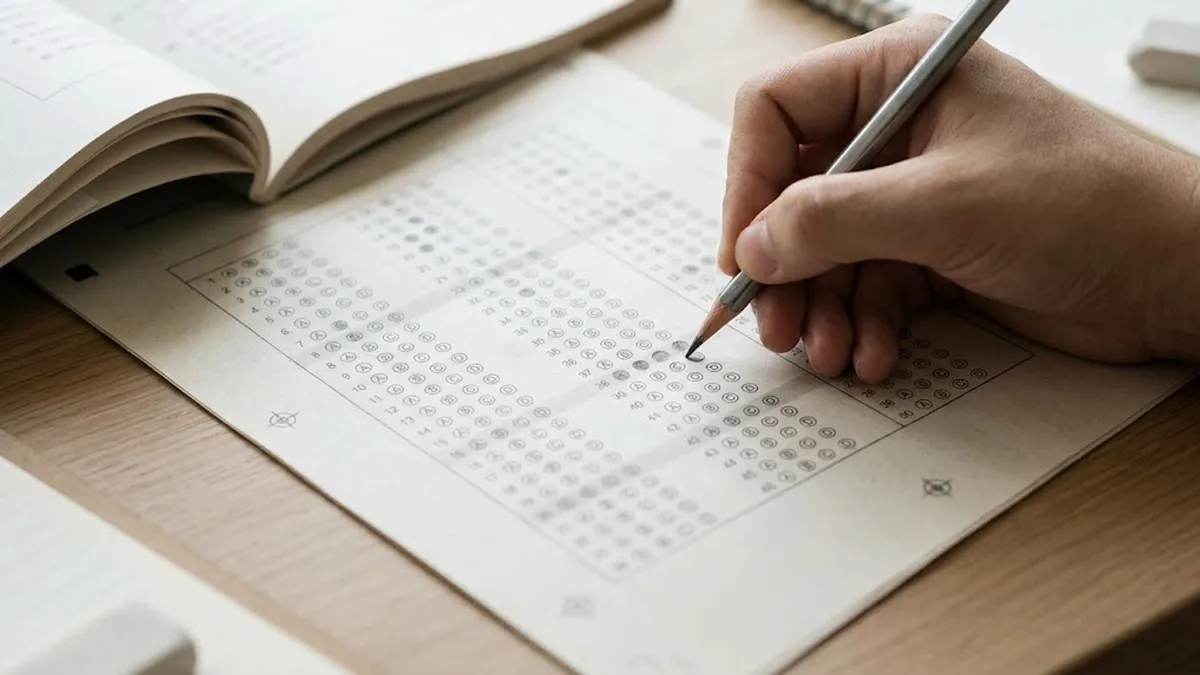
Questions are multiple choice, and the AQL runs for three hours. The project offers equivalent online and pencil-and-paper forms. Online candidates need a suitable computer and stable internet access, so confirm your venue arrangements when you book.
Scores are reported in three benchmark categories: Proficient, Intermediate and Basic. Institutions receive results before candidates do, and each faculty decides how to use them for admission, placement or support programmes.
Are NBT AQL Past Papers Available Online?
Full AQL past papers are not available as official downloads, but official sample material is. The NBT website publishes sample questions, a candidate brochure, FAQ pages and an Academic Literacy guide written for teachers. Together these show the question styles, the layout of passages and the kind of reasoning expected. They will not give you a three-hour paper to time yourself on, so you need to supplement them with other practice sets.
Why does the project hold back complete papers? Benchmark tests inform placement decisions across many institutions, and results must stay comparable from one sitting to the next. If whole forms circulated freely, candidates could memorise answers and scores would stop reflecting ability. That is the same reason many admissions tests keep operational forms secure. It also means any site claiming to sell the real, current AQL paper deserves strong suspicion before you pay anything.
Be careful with files labelled as leaked or recent NBT papers. Some are old sample sets, some come from unrelated university tests, and some are simply wrong. An incorrect answer key is worse than no key, because you will rehearse mistakes with complete confidence. Prefer material whose origin you can verify: the official site, university access programmes that publish literacy workshops, and quiz banks that show an explanation beside every answer so you can judge the reasoning.
Candidates who also need the Mathematics test should read our www.nbt companion guide to MAT papers, because the resources there differ from the AQL situation. The MAT has a larger body of worked examples tied to the school curriculum, whereas AQL preparation depends more on reading volume and quantitative reasoning habits. Since many applicants write AQL and MAT together, plan both sets of practice at the same time rather than leaving the second one until the last fortnight.
A realistic substitute for a full past paper is a layered set. Start with the official samples to learn the format. Add free quizzes that mimic the multiple-choice style, such as the Academic Literacy and Quantitative Literacy sets linked below. Then build timed blocks yourself, pairing one long reading passage with its question set, followed by a data-interpretation block, until you can sustain concentration for the full three hours without fading badly in the final stretch.
Timing deserves special attention. Three hours is a long time to read dense passages and reason about numbers, and most candidates lose accuracy in the final hour rather than the first. When you practise, record not only your score but also where your mistakes cluster. If errors bunch near the end, the fix is stamina and pacing, not more content knowledge, and the remedy is longer sessions with short, planned breaks that copy the real test day.
Keep an error log from your first session. For every missed question, note the passage type or number skill involved, the reason you missed it and the rule you will apply next time. After two weeks the log shows patterns, such as misreading qualifiers like only or most, or slipping on percentage change. Those patterns are your personalised past paper, and fixing them raises your score faster than working through another random set of questions without reflection.
What Is the Best Way to Practise with NBT AQL Past Papers?
Official samples are your starting point because they show exactly how the project words questions and lays out passages. Work through them slowly in your first week, and for each item explain aloud why the correct option is right and why each distractor fails. This builds the habit of reasoning from the text instead of guessing from familiarity, which is the core skill the Academic Literacy section rewards.
Do not treat the samples as a prediction of what you will see. They are a small slice of a much larger item bank, and the real forms mix topics and difficulty differently. Use them to calibrate format and tone, then move quickly to larger volumes of practice elsewhere. Re-reading the same few samples until you remember the answers gives you comfort but very little improvement in actual ability.

Is Practising with Free NBT AQL Papers Enough?
- +Free quiz sets cost nothing, so you can practise daily without worrying about budget.
- +Answer explanations let you learn the reasoning, not only the correct option.
- +Short sets fit around school, work or travel and are easy to repeat.
- +Official samples show the true question style and wording used by the project.
- +Error logs built from free practice highlight your personal weak spots quickly.
- +No account, registration or booking is needed before you begin studying.
- −Free sets are not retired official forms, so difficulty can differ from the real test.
- −Few free resources offer a full three-hour timed simulation without extra effort.
- −Quality varies, and some sites publish answer keys that contain mistakes.
- −Without a study plan, scattered practice can feel busy but produce little progress.
- −Reading growth takes weeks, so last-minute practice has limited effect on Academic Literacy.
- −Free material rarely adapts to your level, so you must select difficulty yourself.
What Should You Do Before Taking the NBT AQL?
- ✓Confirm with your faculty which NBT tests you must write.
- ✓Book your session before online registration closes.
- ✓Pay the fee before the stated payment deadline.
- ✓Prepare official identification, or a passport if you are not a South African citizen.
- ✓Work through the official sample questions and AL guide.
- ✓Complete one short Academic Literacy and one Quantitative Literacy set every day.
- ✓Run a full timed mock session at least once a week.
- ✓Keep an error log and review it before every new session.
- ✓Check your computer and internet connection if you write online.
- ✓Sleep well and eat before the three-hour sitting.
Two attempts within a cycle, full fee each time
The NBT Project permits two attempts within a cycle, and repeat candidates pay the full test fee again. Confirm that your institution accepts a second score before you rebook, and remember that repeating the MAT means repeating the AQL as well.
What Does a Good NBT AQL Score Look Like?
A good AQL score is one that meets the requirements of the faculty you are applying to, because the NBT reports benchmark categories rather than a single pass mark. Results fall into Proficient, Intermediate or Basic. Proficient suggests you are likely to cope with the academic demands of first-year study, while Basic signals that you may need substantial support. Institutions then apply their own rules, so the same result can carry different consequences at different universities.
Understanding the bands helps you set practical practice targets. If your practice results suggest you sit near the boundary between Intermediate and Proficient, the final weeks should focus on consistency: fewer careless errors, steadier pacing and no collapse in the last hour. If you sit well below, the priority is building reading volume and number sense over a longer period, because those skills grow slowly and cannot be fixed overnight.
Our guide to past papers of nbt explains how the different NBT components fit together, which is useful when you are comparing AQL material with MAT material. The key point is that each component is reported separately. A strong Quantitative Literacy performance does not rescue weak Academic Literacy, or the reverse, and some faculties look closely at one section more than the other, depending on the demands of the programme.
Timing of results matters for planning. For the session on 9 January 2027, results are scheduled to reach institutions on 1 February 2027 and candidates on 8 February 2027. That means you will not see your result until after your institution does. Do not schedule decisions, deposits or accommodation payments that depend on the result earlier than that date, and check your institution's own application deadlines so you are not caught out.
Results are valid for three years from the year written, subject to individual institutional requirements. This helps candidates who write early, in Grade 11 or at the start of the final year, and then apply later. It also means you can sometimes reuse a good result for a later application. Always verify with each institution, because some require a more recent score or ask for a specific test component that you may not have taken.
If you disagree with a result, the project offers a re-mark application at R250. A re-mark checks scoring, but it will not change a result that was correct for your performance on the day. Before paying, compare your result with your practice trend. If you were scoring consistently higher in mocks, the cause is more often nerves or timing than a marking error, and extra preparation for a retake will help more.
Plan your retake decision carefully. A retake means paying the full fee again, and you must confirm that your institution will accept the second score. Some institutions use the best result, some use the latest, and some only look at the first. Contact the admissions office in writing, keep their reply, and only then decide whether another sitting is worth the cost, travel and weeks of additional preparation.
Online registration for the 9 January 2027 session closes on 6 December 2026, and payment is due by 14 December 2026. Late bookings may not be accepted, so confirm your venue and identification documents well before these dates.
Can You Prepare for the NBT AQL on Your Phone?
You can practise on a phone, but you cannot rely on it for the real online sitting. The project states that online candidates need a suitable computer and stable internet access, so the test itself is a computer task. Phones are excellent for the preparation phase, though: short quizzes, vocabulary review and number drills fit easily into commutes and breaks, and they keep your daily practice streak alive without needing a desk.
Our guide to nbt mobile study options explains what is and is not available on Android and iOS, and why many candidates end up practising in a mobile browser instead of a dedicated app. Whatever tool you choose, check that questions are written in the NBT multiple-choice style and that explanations are shown. A flashy interface does not improve your reasoning if the content is shallow or inaccurate.
Use phone time for the right tasks. Reading practice works well on a phone if you choose longer, more demanding texts, such as news analysis, science explainers and opinion columns, rather than social media posts. Read one article daily, then state its main claim and two supporting points from memory. This trains the exact skill that Academic Literacy questions measure, and it costs nothing beyond ten minutes of focused attention.
For Quantitative Literacy, phone practice should stay active. Do not just scroll through solutions. Pause, work the problem on paper, then compare your method with the explanation. Focus on percentage change, ratios, rates, averages and reading values from charts. Try estimating before calculating, since estimation helps you eliminate wrong options quickly. Many QL errors come from misreading units or axis labels, and paper work makes those slips easier to catch.
Switch to a computer for at least your last three mock sessions if you will write online. Reading long passages on a small screen feels different from reading on a laptop, and scrolling between a passage and its questions affects speed. Practising in the same setup as the real sitting removes surprises. If you will write the pencil-and-paper form, print your mock sets and practise with a pencil and a plain watch.
Protect your focus when you study on a phone. Turn off notifications, use airplane mode for timed sets, and close other apps. A three-hour test demands uninterrupted attention, and the habit of resisting a buzzing screen is trainable. Start with twenty-five-minute blocks, then extend to forty and sixty minutes over several weeks, so that the full three hours feels like a familiar extension rather than a shock.
Finally, treat any app or website with caution if it asks for payment, personal documents or login credentials in return for the real NBT papers. Registration and fees are handled through the official NBT booking process, not through third parties selling shortcuts. If a promise sounds too good, such as guaranteed Proficient results or leaked questions, walk away. Your preparation time is better spent on verified samples and free practice with clear explanations.
What Are the Best Tips for NBT AQL Test Day?
The best test-day strategy is to treat the three hours as a pacing exercise, not a sprint. Before you start, decide roughly how long each section deserves and when you will check progress. Glance at the clock at fixed points rather than constantly. If a question stalls you for more than a minute or so, mark your best guess, move on and return only if time remains at the end.
For Academic Literacy, read the passage actively. Identify the main claim, the author's attitude and the structure of the argument before you touch the questions. Then answer from the text, not from your own opinion or outside knowledge. Wrong options are often plausible statements that the passage does not support. Ask yourself where in the text the evidence sits, and if you cannot point to it, choose again.
For Quantitative Literacy, read the question stem twice and underline what is actually asked. Many errors come from solving a different question than the one posed, such as giving a percentage when a difference was requested. Check units, scale labels and whether numbers are in thousands or millions. Estimate first, then compute. If the estimate and the options disagree wildly, recheck the setup before spending time on exact arithmetic.
Manage your energy. Eat a proper meal beforehand, drink water, and arrive early so you are not rushing. If you write online, test your equipment the day before and have the venue contact details ready. Bring the exact identification the booking instructions require, and a passport if you are not a South African citizen. Small logistics failures cause far more lost sittings than weak reading or maths ever do.
Do not leave answers blank. Multiple-choice scoring rewards educated guessing, so in the final minutes fill in every remaining item, using elimination to improve your odds. Even removing one clearly wrong option raises your chance of getting it right. Keep a few minutes at the very end to scan for skipped questions or misaligned answers, especially on the paper form where it is easy to shift a row.
Afterwards, avoid the temptation to replay every question in your head. The result will arrive on the published date, and your focus should move to the next step in your application. If you plan a retake, write down what felt hard while it is fresh: timing, a particular passage type, or number questions. That note becomes the starting point of a sharper study plan if you decide to sit again.
Is This the Same NBT as the Bank or Clothing Brand?
No. Readers sometimes arrive here after searching for nbt clothing, nbt bank near me, nbt routing number, nbt bank routing number, nbt online banker, nbt bank customer service, nbt bank stadium, nbt times, nbt explorer or nbt near me. Those terms refer to unrelated businesses and publications. This page covers only the National Benchmark Tests used for South African university admissions, so for banking details please use the relevant provider's official website.
NBT Questions and Answers

NBT Practice Test 2026

NBT Maths Past Papers: Where to Find Them and How to Practice for the MAT

NBT Past Papers: Your Complete Guide to Practice Tests & Exam Prep

Is There an NBT App? The Truth About NBT Android & Mobile Prep in 2026

National Benchmark Test (NBT) 2026: Complete Study Guide & Prep Hub

My NBT Account: How to Log In, Reset Your Password, and Manage Your Profile
NBT Practice Test Video Answers

How to Register for the NBT: Complete Step-by-Step Guide for 2026
About the Author

Educational Psychologist & Academic Test Preparation Expert
Columbia University Teachers CollegeDr. Lisa Patel holds a Doctorate in Education from Columbia University Teachers College and has spent 17 years researching standardized test design and academic assessment. She has developed preparation programs for SAT, ACT, GRE, LSAT, UCAT, and numerous professional licensing exams, helping students of all backgrounds achieve their target scores.