

NAUI Practice Test
Updated October 2026Facts verified Oct 31, 2026 against NAUI Worldwide
The underwater world holds endless opportunities for exploration, adventure, and scientific discovery. Whether you aim to become a recreational dive leader, scientific diver, or public safety diver, earning a certification from the National Association of Underwater Instructors (NAUI) is a critical step. NAUI is a globally recognized organization known for its high training standards and a strong commitment to diver safety and environmental awareness. This article dives into the essentials of NAUI certification, from its structure and benefits to its career implications. Practice with the free National Association of Underwater Instructors Certification practice test on PracticeTestGeeks (9 questions with answer explanations).
- NAUI course final exams require a minimum passing score of 75% unless a specific course standard says otherwise.[1]
- Each NAUI Final Instructor Knowledge Examination taken during the Instructor Qualification Program must be passed with at least 80%.[1]
- NAUI Instructor candidates may retake a failed IQP knowledge exam one more time, and failing it a second time counts as failing the IQP.[1]
- NAUI Instructors renew their membership every year by meeting the requirements set by the NAUI Training Department and Membership Committee.[1]
- NAUI diver course knowledge tests are given by the NAUI instructor and may be written or oral, open or closed book, in class or take-home.[1]
- NAUI Final Instructor Knowledge Examinations are taken closed book and must be proctored by a NAUI Course Director.[1]
- The NAUI Experienced Scuba Diver course requires no prior certification, but applicants must provide proof of at least 25 open water scuba dives.[2]
- Candidates for the NAUI Instructor Training Course must be at least 18 years old before enrollment and hold NAUI Assistant Instructor or Divemaster certification or equivalent, with at least 60 logged open water dives.[1]
Numbers in brackets link to the official sources listed under Sources & last verified. Dates that have passed are removed automatically.
NAUI Exam at a Glance
| Item | Detail | Source · Verified |
|---|---|---|
| Passing score | 75% minimum on course final exams[1] | NAUI Worldwide · Oct 21, 2026 |
| Passing score (Instructor) | 80% on each Final Instructor Knowledge Examination[1] | NAUI Worldwide · Oct 21, 2026 |
| Retake policy (Instructor) | One retake per failed IQP exam; second failure fails the IQP[1] | NAUI Worldwide · Oct 21, 2026 |
| Renewal (Instructor) | Annual membership renewal[1] | NAUI Worldwide · Oct 21, 2026 |
| Delivery | Written or oral, open or closed book, in class or take-home (instructor-run)[1] | NAUI Worldwide · Oct 21, 2026 |
| Delivery (Instructor) | Closed book, proctored by a Course Director[1] | NAUI Worldwide · Oct 21, 2026 |
| Eligibility (Experienced Scuba Diver) | Age 15+ and proof of 25 open water dives[2] | NAUI Worldwide · Oct 25, 2026 |
| Eligibility (Instructor) | Age 18+, NAUI Assistant Instructor/Divemaster, 60 logged dives[1] | NAUI Worldwide · Oct 21, 2026 |
| Eligibility (Open Water Scuba Diver) | Minimum age 15 (junior certification ages 10-14)[3] | NAUI Worldwide · Oct 25, 2026 |
Free National Association of Underwater Instructors Certification Study Tools
Interactive National Association of Underwater Instructors Certification resources on PracticeTestGeeks, free to start:
- National Association of Underwater Instructors Certification flashcards — review key terms and concepts card by card
- National Association of Underwater Instructors Certification study guide — topic-by-topic overview of what the exam covers
- National Association of Underwater Instructors Certification cheat sheet — one-page printable summary for last-minute review
According to NAUI Worldwide, “The final exam for a course shall include a sufficient number of questions to be representative of course topics and activities with a minimum passing score of 75%, unless otherwise stated in a particular course standard.”[1]
NAUI content outline and where to practise each area
The content areas below are copied from the official NAUI content outline published by NAUI Worldwide. The right-hand column shows which of our practice sets covers it.
| Official content area | Practice on this site |
|---|---|
| Applied Sciences[1] | NAUI Diving Physics & Physiology Practise gas laws, partial pressure and how the body responds to pressure, and work through each calculation step by step. |
| Continuing Education[1] | NAUI Client Assessment & Goal Setting Practise judging a diver's readiness, choosing a sensible next course and setting goals that match their experience. |
| Diving Activities[1] | NAUI Underwater Skills & Safety Procedures Practise skills, dive planning steps and the procedures that go with each type of dive. |
| Diving Environment[1] | NAUI Marine Environment & Ecology Practise recognising conditions, marine life and how the environment changes the way you plan and dive. |
| Diving Equipment[1] | NAUI Equipment Use & Maintenance Practise what each piece of gear does, which materials suit it and how to care for it between dives. |
| Diving Safety[1] | NAUI Safety & Injury Prevention Practise recognising hazards, preventing problems early and responding in the right order when something goes wrong. |
NAUI Practice Test Questions
Prepare for the NAUI - National Association of Underwater Instructors Certification exam with our free practice test modules. Each quiz covers key topics to help you pass on your first try.
NAUI Client Assessment & Goal Setting
NAUI Exam Questions covering Client Assessment & Goal Setting. Master NAUI Test concepts for certification prep.
NAUI Diving Physics & Physiology
Free NAUI Practice Test featuring Diving Physics & Physiology. Improve your NAUI Exam score with mock test prep.
NAUI Equipment Use & Maintenance
NAUI Mock Exam on Equipment Use & Maintenance. NAUI Study Guide questions to pass on your first try.
NAUI Exercise Science & Physiology
NAUI Test Prep for Exercise Science & Physiology. Practice NAUI Quiz questions and boost your score.
NAUI Instructional Techniques & Rescue Pro...
NAUI Questions and Answers on Instructional Techniques & Rescue Protocols. Free NAUI practice for exam readiness.
NAUI Marine Environment & Ecology
NAUI Mock Test covering Marine Environment & Ecology. Online NAUI Test practice with instant feedback.
NAUI Program Design & Periodization
Free NAUI Quiz on Program Design & Periodization. NAUI Exam prep questions with detailed explanations.
Worked examples: how to reason through NAUI questions
These are practice questions written for this site, not questions from the real exam. Each explanation shows why the right answer is right and why the others are wrong.
Example 1
Question: What material are most quality diving mask skirts made from, and why?
- Polycarbonate, for impact resistance
- Silicone, for durability and low-allergen properties
- Natural rubber, for superior sealing
- Neoprene, for insulation against cold water
Answer: B. Silicone, for durability and low-allergen properties
Explanation:
Silicone is correct because a mask skirt has to stay soft, keep sealing against the face and tolerate sun, salt and repeated use. It is also gentle on skin, which matters for a part pressed against your face for a whole dive.
Polycarbonate is rigid and impact resistant, which suits a lens but not a skirt, since a skirt must flex to seal. Natural rubber can seal, but it breaks down faster and is more likely to irritate skin. Neoprene insulates, but insulation is not the job of a skirt, and it does not give the clean, flexible seal a mask needs.
Rule to remember: choose the material by the function of the part. Flexible sealing parts call for silicone, rigid protective parts call for hard plastics or glass, and insulation belongs to exposure suits.
Example 2
Question: At what depth does the maximum recommended partial pressure of oxygen (1.4 ATA for working dives) occur when breathing normal air (21% O2)?
- Approximately 187 feet (57 m)
- Approximately 218 feet (66 m)
- Approximately 130 feet (40 m)
- Approximately 100 feet (30 m)
Answer: A. Approximately 187 feet (57 m)
Explanation:
Approximately 187 feet (57 m) is correct. The method is the same every time: divide the oxygen pressure limit, 1.4 ATA, by the oxygen fraction in the gas, 21% for air. That gives the total pressure at which the limit is reached. Then convert that total pressure to a depth in seawater.
Approximately 218 feet (66 m) is too deep, because oxygen pressure would already be past the limit by then. Approximately 130 feet (40 m) and approximately 100 feet (30 m) are shallower than the limit depth, so oxygen pressure there is still below 1.4 ATA. They describe safe depths, not the point where the limit occurs.
Rule to remember: the limit depth falls as the oxygen fraction rises, so always work from the limit, the gas mix and total pressure together.
Example 3
Question: Which assessment method provides the MOST reliable data for NAUI professionals making critical decisions?
- Informal verbal feedback alone
- Standardized tools combined with professional observation
- Social media reviews and testimonials
- Single-source data from one stakeholder
Answer: B. Standardized tools combined with professional observation
Explanation:
Standardized tools combined with professional observation is correct. Standard tools give consistent, comparable measurements, so two people assessing the same client use the same yardstick. Observation adds what a form cannot capture, such as how a diver handles stress or follows instructions in the water. Together they cross-check each other.
Informal verbal feedback alone is easy to give but hard to compare or verify. Social media reviews and testimonials are public opinion, not assessment, and they are open to bias. Single-source data from one stakeholder leaves out other views and gives no way to spot a mistake.
Rule to remember: for decisions that matter, use more than one source and make sure at least one is structured and repeatable.
How to use these practice tests
Start with the official material. Read the NAUI Standards and Policies section for your course, so you know the format your instructor will use and the passing score that applies. Ask your instructor whether your exam is open or closed book, written or oral.
Next, take one practice set from the list above in a relaxed first pass to see which topic areas feel weakest. Do not worry about the score. For each miss, read the explanation, then find the matching passage in your course manual and note the rule in your own words.
- Work through your weakest area first, then return to the stronger areas.
- Redo a set only after you have reviewed the manual for the questions you missed, so you are testing recall and not memory of the answer letters.
- For calculation questions, write out each step by hand before checking the answer.
- Finish with the general practice test, answered closed book and without pausing, to mimic exam conditions.
Instructor candidates should treat the 80% requirement as the target for every set, and practise without notes because those exams are closed book. Our questions are written by us and are not real exam questions, so use them to find gaps, not to predict your exam.
Start the practice test when you are ready.
Key Takeaways
Free NAUI Practice Test Online
NAUI is one of the oldest and most respected scuba diving certification agencies in the world.
Certification levels range from beginner to instructor-level and technical diving.
NAUI emphasizes "Dive Safety Through Education" and provides rigorous academic and practical training.
NAUI-certified divers are eligible for jobs in recreation, research, public safety, and military diving operations.
The certification is valid globally, allowing divers to explore underwater sites around the world.
Understanding NAUI: A Leader in Diver Education
The National Association of Underwater Instructors (NAUI), founded in 1959, is a non-profit association committed to improving diver training standards. Unlike for-profit certifying agencies, NAUI focuses on safety, education, and environmental stewardship. Its motto, “The Definition of Diving,” reflects the agency’s focus on developing competent, confident, and responsible divers.
NAUI courses are structured to encourage mastery learning. This means divers progress only after thoroughly understanding the concepts and demonstrating the required skills—making NAUI certification one of the most rigorous and respected in the industry.

Certification Levels and Specialties Offered
NAUI offers a wide array of certifications to accommodate divers at various stages of their journey:
Basic Certification:
NAUI Scuba Diver: Entry-level certification suitable for recreational diving up to 60 feet.
NAUI Junior Scuba Diver: For divers aged 10–14 under supervision.
Advanced Training:
Advanced Scuba Diver: Enhances skills in deep diving, navigation, and night diving.
Rescue Scuba Diver: Teaches how to manage diving emergencies and assist other divers.
Leadership and Instruction:
Divemaster: First professional level; assists instructors and supervises dive activities.
Assistant Instructor & Instructor: Allows you to teach and certify divers independently.
Technical and Specialty Courses:
Nitrox Diver, Deep Diver, Underwater Photography, Search & Recovery, Wreck Diver, etc.
Technical certifications: For cave diving, decompression diving, and mixed gas usage.
Training Requirements and Course Components
Each NAUI course consists of three core components:
Knowledge Development: Includes reading materials, online modules, and classroom sessions covering topics such as diving physics, physiology, equipment use, and environmental considerations.
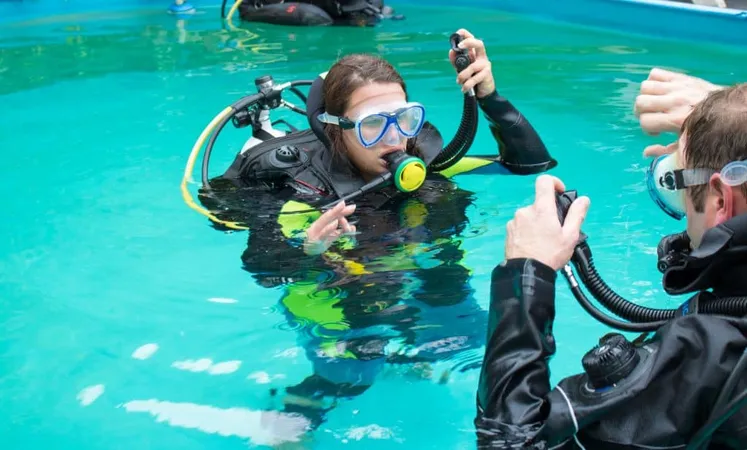
Confined Water Dives: Conducted in a swimming pool or shallow water where students learn and practice basic to advanced diving skills.
Open Water Dives: Performed in real environments like lakes, oceans, or quarries to apply what was learned in real-world settings.
To pass, students must demonstrate competency in both the academic and physical components of the course. Instructors must confirm that students can perform all skills proficiently before issuing certification.
Career Opportunities with NAUI Certification
Earning a NAUI certification opens doors to a range of diving-related careers:
Recreational Dive Leader: Work at resorts, liveaboards, or dive shops guiding certified divers.
Scientific Diver: Work with universities or environmental organizations on marine research.
Public Safety Diver: Assist law enforcement and rescue agencies in underwater operations.
Commercial Diver: After additional specialized training, work in underwater construction or maintenance.
Dive Instructor: Teach diving as a full-time or part-time career, either locally or internationally.
Many of these paths require higher levels of certification and experience, but NAUI provides the foundational training needed to grow professionally.
Global Recognition and Membership Benefits
NAUI certifications are accepted by dive operators and organizations around the globe. Being a NAUI-certified diver means you are recognized as someone who has undergone comprehensive training and demonstrated a commitment to safety.
Membership benefits include:
Access to continuing education and specialty certifications
Professional liability insurance (for leadership members)
NAUI’s Sources Magazine and training materials
Networking opportunities with fellow divers and professionals
Why Choose NAUI Over Other Agencies?
While several diving agencies exist, NAUI stands out for its:
Academic Rigor: Focus on education rather than just certification.
Non-Profit Status: Driven by educational goals, not profit margins.
Instructor Autonomy: Instructors can adapt and expand training as needed.
Emphasis on Environmental Responsibility: Promotes marine conservation and eco-conscious diving practices.
For divers seeking not just a license to dive, but comprehensive training and development, NAUI is a preferred choice.
Conclusion
Becoming NAUI certified is more than just checking off a box—it’s about becoming a capable, confident, and conscientious diver. Whether your passion lies in underwater photography, marine biology, or leading others into the depths, NAUI equips you with the skills and mindset necessary for success. Dive in and discover what lies beneath the surface with NAUI.
- +Validates your knowledge and skills objectively
- +Increases job market competitiveness
- +Provides structured learning goals
- +Networking opportunities with other certified professionals
- −Study materials can be expensive
- −Exam anxiety can affect performance
- −Requires dedicated preparation time
- −Retake fees apply if you don't pass
Pros and Cons at a Glance
| Pros | Cons |
|---|---|
| Validates your knowledge and skills objectively | Study materials can be expensive |
| Increases job market competitiveness | Exam anxiety can affect performance |
| Provides structured learning goals | Requires dedicated preparation time |
| Networking opportunities with other certified professionals | Retake fees apply if you don't pass |
Sample National Association of Underwater Instructors Certification Practice Questions
Try these questions from our free National Association of Underwater Instructors Certification practice tests. The correct answer and an explanation follow each question.
What distinguishes a National Association of Underwater Instructors Certification certified professional from a non-certified practitioner?
- A. Certified professionals always have more years of experience
- B. Certification validates competency through standardized assessment against established benchmarks
- C. There is no meaningful difference in competency
- D. Certified professionals exclusively work in larger organizations
Answer: B. Certification validates competency through standardized assessment against established benchmarks
Certification provides objective validation of competency through standardized assessment. While non-certified practitioners may be skilled, certification offers verified evidence that a professional meets established benchmarks for knowledge and performance.
How frequently should ongoing assessments be conducted in National Association of Underwater Instructors Certification practice?
- A. Only when problems are reported
- B. At regular intervals based on established protocols and as conditions change
- C. Once annually regardless of circumstances
- D. Only when required by external auditors
Answer: B. At regular intervals based on established protocols and as conditions change
Ongoing assessments should follow established protocols for regular intervals and also be conducted when conditions change. This balanced approach ensures continuous monitoring while remaining responsive to new developments.
Which foundational principle is MOST important for success in the National Association of Underwater Instructors Certification profession?
- A. Maximizing financial returns on every engagement
- B. Commitment to continuous learning, ethical practice, and quality outcomes
- C. Maintaining the minimum requirements for certification
- D. Specializing in only one narrow area of practice
Answer: B. Commitment to continuous learning, ethical practice, and quality outcomes
Success in any professional field requires a commitment to continuous learning to stay current, ethical practice to maintain trust and integrity, and a focus on quality outcomes that serve stakeholders and the public interest.
Take the full National Association of Underwater Instructors Certification practice test
NAUI Questions and Answers
Sources & last verified
- NAUI Worldwide — passing score, retake policy, renewal, delivery (official source). “The final exam for a course shall include a sufficient number of questions to be representative of course topics and activities with a minimum passing…” Verified Nov 1, 2026.
- NAUI Worldwide — eligibility (official source). “There is no certification required to enter this course, but applicant must provide proof of diving experience of at least 25 open water scuba dives.” Verified Oct 25, 2026 · source checked Oct 25, 2026.
- NAUI Worldwide — eligibility (official source). “Age: Minimum is 15 years by the water phase of the course. (Junior certification for ages 10-14 years is allowed. See “Policies Applying to All…” Verified Oct 25, 2026 · source checked Oct 25, 2026.
How we verify: editorial & fact-checking policy. Report an error: contact us.
How this page was made: written with AI tools and published by Nathan Beja, founder of Practice Test Geeks, who is responsible for its content. Exam facts are checked against the official sources listed below. Not reviewed by a subject-matter expert. Editorial policy
Sources & references
Exam facts on this page (fees, format, dates, passing scores) are checked against these official sources; the date is our last check. Editorial policy
- assets.naui.org — Test delivery, eligibility, passing score, renewal, retake policy, exam information · verified Nov 2026
- naui.org — Eligibility · verified Oct 2026