
Launching Success: A Complete Guide to NAR High-Power Rocketry Certification
NAR HPR NAR High-Power Rocketry Certification Practice Test 2026 FREE 1,057+ Questions & Answers. — Ace it First Try
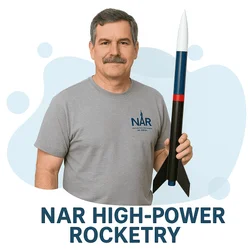
The National Association of Rocketry (NAR) High-Power Rocketry (HPR) Certification is a prestigious achievement for enthusiasts seeking to explore the upper limits of model rocketry. With roots in both scientific curiosity and hobbyist passion, high-power rocketry involves launching large, powerful rockets that exceed the thresholds set by low-power and mid-power systems. To ensure safety, regulation, and competence, NAR has developed a tiered certification program. Whether you’re a serious hobbyist or aspiring aerospace engineer, understanding the NAR HPR certification path is essential to legally and safely participate in high-power launches in the U.S.
NAR HPR Practice Test Questions
Prepare for the NAR HPR - NAR High-Power Rocketry Certification exam with our free practice test modules. Each quiz covers key topics to help you pass on your first try.
NAR HPR Aerodynamics & Stability
NAR HPR Exam Questions covering Aerodynamics & Stability. Master NAR HPR Test concepts for certification prep.
NAR HPR Electronics & Avionics
Free NAR HPR Practice Test featuring Electronics & Avionics. Improve your NAR HPR Exam score with mock test prep.
NAR HPR Flight Safety & Range Operations
NAR HPR Mock Exam on Flight Safety & Range Operations. NAR HPR Study Guide questions to pass on your first try.
NAR HPR Launch Procedures & Checklists
NAR HPR Test Prep for Launch Procedures & Checklists. Practice NAR HPR Quiz questions and boost your score.
NAR HPR Launch Safety & Recovery Procedure
NAR HPR Questions and Answers on Launch Safety & Recovery Procedure. Free NAR HPR practice for exam readiness.
NAR HPR Propulsion Systems & Motor Classif...
NAR HPR Mock Test covering Propulsion Systems & Motor Classification. Online NAR HPR Test practice with instant feedback.
NAR HPR Propulsion Systems & Motor Handling
Free NAR HPR Quiz on Propulsion Systems & Motor Handling. NAR HPR Exam prep questions with detailed explanations.
NAR HPR Recovery Systems & Deployment
NAR HPR Practice Questions for Recovery Systems & Deployment. Build confidence for your NAR HPR certification exam.
NAR HPR Regulations & Certification Levels
NAR HPR Test Online for Regulations & Certification Levels. Free practice with instant results and feedback.
NAR HPR Regulations, Documentation & Fligh...
NAR HPR Study Material on Regulations, Documentation & Flight Operations. Prepare effectively with real exam-style questions.
Key Takeaways
Free NAR HPR Practice Test Online
The certification is divided into three levels: Level 1 (H-I motors), Level 2 (J-L motors), and Level 3 (M and above).
Each level requires a successful flight and safety compliance, with written exams starting from Level 2.
Certification is mandatory for purchasing and launching high-power rocket motors.
Safety, FAA regulations, and technical planning are critical throughout the process.
NAR certification is widely recognized and mutually acknowledged by the Tripoli Rocketry Association.

Certification Levels Breakdown
Level 1 Certification (H and I Motors)
What Is High-Power Rocketry?
High-power rocketry (HPR) involves the design, construction, and launch of rockets that exceed standard model rocket limits, typically using motors rated H or higher. These rockets can weigh more than 1,500 grams, fly thousands of feet into the air, and use advanced electronic systems for guidance and recovery.
Unlike low- or mid-power rocketry, HPR activities are regulated by federal authorities like the Federal Aviation Administration (FAA) and require certified individuals to ensure safety and compliance. The NAR HPR certification validates a person's ability to handle these rockets responsibly.
This is the entry-level certification for high-power rockets.
Eligibility:
Minimum age: 18
Current NAR membership
Requirements:
Build and launch a rocket with an H or I motor.
Flight must be stable and safe, with intact recovery.
Pass a safety inspection by a certified NAR official.
Purpose:
Introduces individuals to the basics of high-power flight and ensures safe construction and recovery techniques.
Level 2 Certification (J to L Motors)
This level allows access to stronger motors and requires a demonstration of both practical and theoretical knowledge.
Eligibility:
Must have Level 1 certification
Minimum age: 18
Requirements:
Pass a written exam covering:
Rocket propulsion
Stability and aerodynamics
Recovery systems
FAA and NAR regulations
Construct and launch a rocket with a J, K, or L motor.
Complete safe recovery and post-flight inspection.
Purpose:
Ensures candidates understand deeper engineering principles and regulatory requirements involved in higher-powered flights.
Level 3 Certification (M and Above Motors)
This is the most advanced certification, reserved for experts and serious hobbyists.
Eligibility:
Must have Level 2 certification
Minimum age: 18
NAR adult member
Requirements:
Submit a detailed technical project plan for review.
Get approval from two NAR Level 3 reviewers.
Build and fly a rocket using an M-class or larger motor.
Flight must be successful with safe recovery.
Purpose:
Validates the individual’s advanced engineering skills and ability to conduct complex, high-risk rocketry missions.
Safety, Insurance, and Legal Compliance
Safety is the foundation of the NAR HPR program. Certified members must follow the NAR High Power Rocket Safety Code and all relevant FAA guidelines, including:
Filing for Certificates of Waiver or Authorization when applicable
Complying with airspace usage and altitude limits
Using certified rocket motors
NAR members also receive liability insurance coverage, protecting them during certified launch activities.
Benefits of Certification
Legal access to restricted high-power motors
Recognition in the rocketry and STEM communities
Eligibility for national launch events and competitions
Opportunities to mentor others and promote aerospace education
Gain hands-on experience in engineering design and project planning

Launching With a NAR Section
To certify, you must perform your flight during an official NAR launch event, hosted by local NAR “sections” or clubs. These events provide access to experienced mentors, certified reviewers, and FAA-compliant launch facilities. Participating in a section also encourages collaboration, learning, and fun.
Conclusion
The NAR High-Power Rocketry Certification is more than just a hobby credential—it's a demonstration of skill, safety awareness, and engineering prowess. Whether you're aiming for personal satisfaction, educational involvement, or professional development in aerospace, this certification places you among a community of responsible, passionate, and knowledgeable rocketeers. Step by step, from Level 1 to Level 3, your journey with NAR can literally and figuratively launch your ambitions into the sky.
(NAR HPR) NAR High-Power Rocketry Certification Questions and Answers
About the Author
Certified Professional Development Expert & Niche Certification Advisor
University of Pennsylvania Graduate School of EducationDr. Alexandra Kim holds a PhD in Professional Studies from the University of Pennsylvania and is a Certified Professional in Learning and Performance (CPLP) and Certified Professional in Talent Development (CPTD). With 17 years of corporate training and professional certification advisory experience, she helps professionals navigate specialized, emerging, and cross-industry certification programs.