
N-400 Form Fee: Cost, Payment Methods & Fee Waivers 2026 September
Boost your n-400 filing fee exam score with practice questions and detailed answer explanations. 🟢 Track your progress with instant feedback.

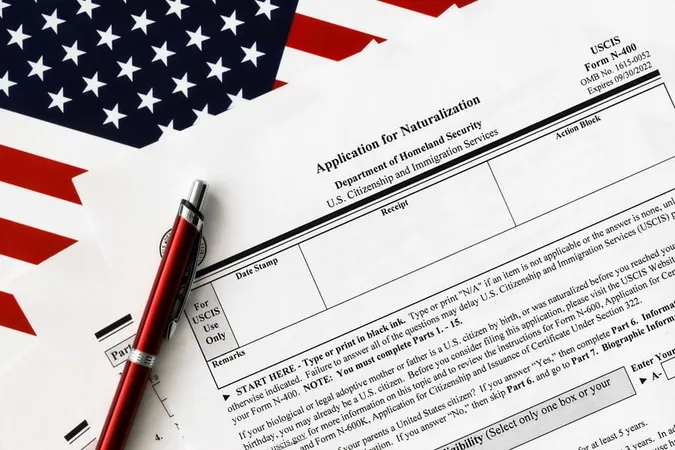
The N-400 form fee is the payment required to submit your Application for Naturalization to U.S. Citizenship and Immigration Services. It's one of the first concrete decisions you'll make in the naturalization process, and it's more nuanced than it might initially appear. The fee amount varies depending on how you file, whether you qualify for income-based assistance, and your military status. Getting the payment right the first time matters, because USCIS will reject an application with the wrong fee and return it without processing.
USCIS raised N-400 filing fees significantly in April 2024 after the previous fee schedule had been in effect for years. The new fee structure brought N-400 costs in line with processing costs and simultaneously folded the separate $85 biometrics fee into the main filing fee. The practical result is that the headline fee looks higher than before, but applicants no longer pay an additional biometrics charge on top of it. Understanding this change matters if you've been researching N-400 fees using older resources—information from before April 2024 describes a different fee structure.
Your filing method affects the fee. Online filers through the myUSCIS portal pay $710, while paper filers pay $760. USCIS established this $50 discount to encourage online filing, which reduces processing overhead and speeds up receipt generation. If you're eligible and comfortable filing online, the discount is straightforward to capture. Not all applicants qualify for online filing—certain accommodation requests or complex cases may require paper—but for most standard N-400 applicants, online filing is both cheaper and faster.
This guide covers exactly what the N-400 form fee includes, how to submit payment correctly, the full process for requesting a fee waiver or reduced fee, military and asylum exemptions, and what to do if your payment is rejected. By the end, you'll have a clear picture of the N-400 cost structure and what options exist if the standard fee creates a financial barrier.
One thing worth clarifying upfront: the N-400 form fee is distinct from any fees you may have paid during earlier immigration milestones. Green card holders who previously paid to adjust status or renew their permanent resident cards will have paid separate USCIS fees at those stages. The N-400 fee is a new, separate charge for the naturalization application specifically—it does not offset or credit any prior USCIS payments. Each immigration benefit has its own fee schedule, and the N-400 fee applies only to naturalization.
Fee assistance resources are available through many legal aid organizations and immigration nonprofits if you're unsure whether you qualify for a waiver. Accredited representatives at Board of Immigration Appeals (BIA)-recognized organizations can often help applicants determine eligibility, complete I-912 or I-942 forms correctly, and submit fee waiver requests that are more likely to be approved. Many of these organizations provide services at no cost or on a sliding scale for income-qualified applicants.

The N-400 form fee covers USCIS's cost of processing your naturalization application from receipt through adjudication. This includes reviewing your application materials, conducting background and security checks, scheduling and conducting your naturalization interview, and administering the civics and English language tests. The biometrics appointment—where USCIS takes your fingerprints and photographs for identity verification—is also included in the 2024 fee structure. Under the previous fee schedule, biometrics was a separate $85 charge that applicants paid after receiving their initial receipt notice.
The fee does not cover the N-400 processing time or expedite it in any way. USCIS processes applications in case receipt order, and the filing fee doesn't purchase priority placement or faster review. If you need expedited processing due to urgent circumstances (military deployment, medical emergency, humanitarian reasons), USCIS has a separate expedite request process that can be submitted after your application is received.
For most applicants, the N-400 form fee is a one-time cost unless your application is denied and you refile, or unless you file and then must refile with corrections. USCIS will not refund your fee if your application is denied—the fee covers the cost of processing, not the outcome. If USCIS rejects your application before accepting it (for reasons like missing signature, wrong fee amount, or incomplete form), they will return your application and payment, allowing you to correct and refile without losing your fee.
The distinction between rejection and denial matters financially. A rejection happens before USCIS formally accepts your application into processing. A denial happens after USCIS accepts and reviews your case. Rejections result in fee returns. Denials do not. This is why it's critical to submit a complete, accurate application with the correct fee the first time.
USCIS accepts several payment methods for the N-400 form fee, and the options differ slightly based on whether you're filing online or by mail. Online filers can pay directly through the myUSCIS portal using a credit card, debit card, or bank account (ACH). The payment processes immediately and your receipt notice is generated faster than with paper filing. Online payment is the most convenient method for most applicants.
Paper filers must submit payment with their physical application package. Acceptable payment methods include personal check, cashier's check, or money order. Checks and money orders must be made payable to “U.S. Department of Homeland Security.” USCIS does not accept cash for mailed applications under any circumstances. Credit card payments via paper filing are submitted using Form G-1450 (Authorization for Credit Card Transactions), which is included in the application package.
If you're filing a paper application, write your name, date of birth, and alien registration number (A-Number) on the back of your payment instrument. This links your payment to your application in the event the documents become separated during processing. It's a small step that prevents frustrating payment-tracking issues down the line. Don't use staples to attach your check to the application—USCIS processing equipment can be damaged by them.
USCIS updates filing fees through federal rulemaking. The current N-400 fees (effective April 2024) are $760 for paper and $710 for online. Fee schedules can change with regulatory updates. Always check USCIS.gov/forms/n-400 immediately before preparing your payment—using outdated information from guides or older resources may result in application rejection for incorrect fee.
The fee waiver process is one of the most important aspects of the N-400 cost structure for lower-income applicants. USCIS provides a full fee waiver through Form I-912 (Request for Fee Waiver) for applicants whose household income is at or below 150% of the Federal Poverty Guidelines. At 150% FPG, the threshold for a family of four is approximately $46,800 in 2024, though USCIS updates the income thresholds annually to match the current poverty guidelines.
To qualify for a fee waiver, you must demonstrate financial need through one of three paths: documented income at or below 150% FPG (supported by recent tax returns, pay stubs, or employer letters), receipt of means-tested public benefits (such as Medicaid, SNAP, SSI, or TANF), or documented financial hardship due to unusual circumstances. The means-tested benefits pathway is often the simplest to document—a current benefits letter showing active enrollment in an eligible program satisfies the requirement without needing to produce income documentation.
Form I-912 is submitted with your N-400 application, not separately. Include all required supporting documents as a package. If USCIS doesn't grant your fee waiver request, they will notify you and give you an opportunity to pay the filing fee before rejecting your application. They won't deny your application solely because the waiver was denied without giving you a chance to pay.
N-400 Fee Options at a Glance
| Section | Questions | Time |
|---|---|---|
| Standard Fee — Paper Filing ($760) | — | — |
| Online Filing — myUSCIS ($710) | — | — |
| Reduced Fee — Form I-942 ($380) | — | — |
N-400 Fee by Applicant Type
What you pay: $760 for paper, $710 for online. No biometrics fee is added after submission. This is the full cost for most applicants who don't qualify for income-based assistance and aren't applying based on military service.
How to pay: Online filers pay via the myUSCIS portal at submission. Paper filers submit a check, money order, or Form G-1450 with their mailed application. Make checks payable to “U.S. Department of Homeland Security.” USCIS doesn't accept cash for mailed applications.
What to expect after: You'll receive a Form I-797 (Notice of Action) confirming receipt of your application and fee. This receipt notice includes your case number for tracking and your biometrics appointment information. Keep this document—you'll need it throughout the naturalization process.

The military fee exemption for N-400 is available to a broader group than most people realize. Applicants naturalizing under INA Section 328 (honorable service for at least one year) and Section 329 (wartime service) both qualify. Additionally, the spouse or child of a U.S. citizen who died during a period of honorable military service may also be eligible for expedited naturalization without the filing fee in some circumstances. USCIS's military help line can clarify eligibility in unusual cases.
The N-400 form fee is not refundable once USCIS accepts your application for processing. This is true even if you withdraw your application voluntarily, if you become ineligible after submission due to a change in circumstances, or if your naturalization interview is delayed for years. The fee is non-refundable because it covers USCIS's processing cost, which begins immediately upon receipt. If you're unsure about your eligibility before filing, consult with an immigration attorney before submitting and paying—the cost of a consultation is much less than a lost $710 or $760 application fee.
Checking your application fee payment status is possible through the USCIS case status tool using the receipt number on your I-797 Notice of Action. If you filed online and your payment was declined or reversed, USCIS will contact you. For paper filers, if your check is returned for insufficient funds or other banking reasons, USCIS will send a notice and your application may be rejected. USCIS also charges a $30 returned check fee in addition to requiring payment of the original filing fee.
One practical issue that catches applicants off guard is the annual fee update cycle. USCIS periodically adjusts fees through the federal rulemaking process, and the changes apply to applications received on or after the effective date. If you began gathering materials when the fee was one amount and then waited to file until after a fee increase took effect, your payment will be rejected as insufficient. Check USCIS.gov for the current fee schedule immediately before preparing your payment instrument, not weeks in advance.
Applicants who are in the middle of a long preparation process should note that USCIS provides a grace period when fee increases take effect. During the transition period, applications with the old fee amount mailed before the effective date may still be accepted if postmarked before that date, but applications arriving after the change with insufficient payment will be rejected. If you're approaching a known fee change date, filing before it takes effect—even if your application preparation isn't entirely complete—may be worth discussing with an immigration attorney.
Some applicants wonder whether using a fee waiver or reduced fee could signal financial instability and negatively affect their naturalization case. It doesn't. USCIS evaluates naturalization applications on eligibility grounds defined by immigration law—continuous residence, physical presence, English language ability, civics knowledge, good moral character—not on financial status beyond fee assistance eligibility. Qualifying for and using a fee waiver is a legal accommodation that USCIS explicitly provides and does not penalize applicants for using.
N-400 Fee Payment Checklist
- ✓Confirm the current N-400 fee at USCIS.gov before preparing payment — fees can change
- ✓Decide between online ($710) and paper ($760) filing before preparing your application
- ✓If paying by check or money order, make it payable to 'U.S. Department of Homeland Security'
- ✓Write your name, date of birth, and A-Number on the back of your check or money order
- ✓If requesting a fee waiver, complete Form I-912 and gather supporting documentation
- ✓If requesting a reduced fee, complete Form I-942 and include income documentation
- ✓Military applicants: attach DD-214 or deployment orders and mark the military basis in Part 1
- ✓Do not submit cash with a paper application — USCIS does not accept cash by mail
- ✓Do not use staples to attach payment to your application package
- ✓Keep a copy of your payment instrument (front and back) before mailing your application

For applicants who are close to the 150% or 400% Federal Poverty Guideline thresholds, it's worth calculating your exact eligibility before deciding which fee category applies to you. USCIS uses household income—meaning all members of your household who share expenses—not just your individual income. If you have dependents who don't work, your household size may actually lower your per-capita income relative to the poverty guidelines and make you eligible for a waiver or reduced fee you hadn't considered.
The N-400 application process begins when USCIS receives and accepts your package with the correct fee or approved waiver. From that point, processing times vary by USCIS field office and overall application volume. The current N-400 processing time ranges from several months to over a year depending on your local office and whether your case requires additional review. Paying the correct fee on time and in the right form is the single most controllable variable in getting your application into the queue without delays.
If your fee waiver is denied and you receive a notice requesting payment, you typically have 33 days from the notice date to submit the required fee. Missing this deadline results in rejection of your application, requiring you to start over and pay a new filing fee. Track your mail carefully after submitting an I-912 waiver request—USCIS notifications can arrive at unexpected times, and a missed deadline is an expensive mistake.
Understanding the full N-400 form instructions before you file helps ensure your payment submission is handled correctly alongside the rest of your application package. The instructions specify payment methods, acceptable check formats, and how to handle fee waiver attachments in the mailing order. USCIS lockbox facilities process thousands of applications daily, and applications that don't follow packaging instructions can be separated from their payments or misrouted.
If you are an applicant who previously filed an N-400 and was denied or whose application was rejected, you must pay the full current fee when refiling—there is no credit for fees paid on a prior application. This is true even if the denial or rejection was due to a USCIS error.
In cases of administrative USCIS error, however, you can submit a motion to reopen or reconsider using Form I-290B, which has a lower fee than refiling the N-400 from scratch. An immigration attorney can advise on which path is appropriate for your specific situation.
For applicants concerned about timing, it's worth knowing that paying the correct N-400 fee on the correct form within the current fee schedule is the only payment-related requirement. There are no expedite fees, priority processing fees, or additional charges for scheduling your naturalization interview at a specific office.
USCIS interview scheduling is handled administratively after your application is received, and the filing fee covers that scheduling process as part of the overall adjudication cost. If you have questions about your specific payment situation, USCIS's National Customer Service Center (1-800-375-5283) can clarify payment options, confirm current fees, and help you understand your situation before you file your final application package.
Online vs. Paper N-400 Filing: Fee Considerations
- +Online filing saves $50 ($710 vs $760 standard fee)
- +Online payment processed immediately — faster receipt notice generation
- +Online filers can correct application before submission without reprinting
- +Online submissions eliminate risk of lost mail or payment processing delays
- +myUSCIS account provides case tracking from submission through approval
- −Not all applicants eligible for online filing (complex cases may require paper)
- −Technical issues during online submission can complicate payment processing
- −Some older applicants find online form navigation less familiar than paper
- −Online filing requires access to a computer and reliable internet connection
- −Paper filing allows attorney review of the physical package before mailing



N-400 Form Fee Questions and Answers
About the Author

Educational Psychologist & Academic Test Preparation Expert
Columbia University Teachers CollegeDr. Lisa Patel holds a Doctorate in Education from Columbia University Teachers College and has spent 17 years researching standardized test design and academic assessment. She has developed preparation programs for SAT, ACT, GRE, LSAT, UCAT, and numerous professional licensing exams, helping students of all backgrounds achieve their target scores.
Join the Discussion
Connect with other students preparing for this exam. Share tips, ask questions, and get advice from people who have been there.
View discussion (9 replies)