
N-400 Application for Naturalization: Complete Guide 2026
Pass your application for naturalization exam on the first attempt. ✍🏼 Practice questions with detailed answer explanations and instant scoring for the

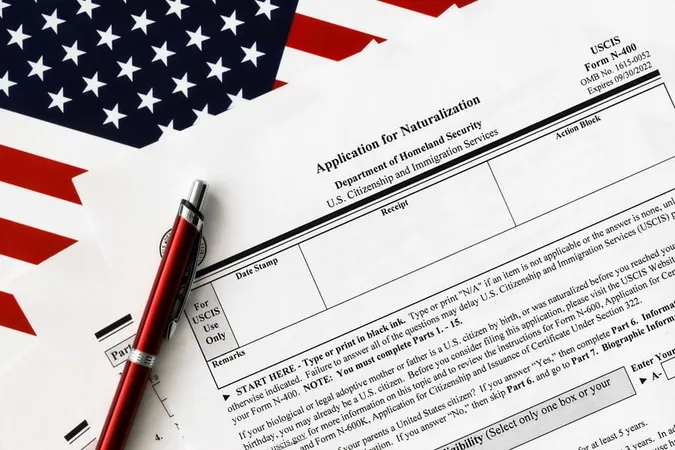
Form N-400, officially titled the Application for Naturalization, is the document you submit to U.S. Citizenship and Immigration Services (USCIS) when you're ready to apply for U.S. citizenship. It's not a short form—the N-400 runs 20 pages and includes questions about your background, travel history, employment, criminal record, organizational affiliations, and moral character. USCIS uses your answers to determine whether you meet the legal requirements for naturalization under the Immigration and Nationality Act. Practice with the free N-400 - Application for Naturalization practice test on PracticeTestGeeks (7 questions with answer explanations).
The N-400 is submitted by lawful permanent residents (green card holders) who have met the residency and physical presence requirements for citizenship. The most common path requires holding a green card for five years with at least 30 months of continuous physical presence in the United States. If you're married to a U.S. citizen, the timeline shortens: three years of permanent residence, with at least 18 months of physical presence, while still living in marital union with that citizen spouse.
The process doesn't end with filing the form. After USCIS receives your N-400, you'll be scheduled for a biometrics appointment, then a naturalization interview where an officer reviews your application, tests your English ability, and administers the civics test. Pass all three components—application, English, and civics—and you'll receive a notice to attend an oath ceremony, where you'll formally become a U.S. citizen by taking the Oath of Allegiance.
The entire process takes longer than many applicants expect. USCIS processing times for the N-400 have ranged from 8 to 26 months depending on the field office and application volume. Checking the USCIS website for your local field office's current processing time is essential before you file, so you can plan around life events and understand when you can reasonably expect a decision.
Filing fees add up: the standard N-400 filing fee is $725, which includes the $85 biometrics fee. Applicants who are 75 years or older pay only $640 (no biometrics required). Fee waivers are available for applicants who can demonstrate financial hardship—submit Form I-912 alongside your N-400 if you believe you qualify. Military service members and certain veterans may qualify for fee exemptions and expedited processing under different rules.
One thing many applicants don't realize until they're deep into the process: USCIS assigns your case to a local field office based on your address at the time of filing, and different offices operate at very different speeds. An applicant in one major city might wait 10 months; an applicant in another might wait 22. If you move after filing, you must update your address with USCIS promptly using Form AR-11—failure to update can result in notices going to your old address and missing a scheduled interview appointment, which can lead to an automatic denial of your application.
N-400: upcoming dates and official changes
- Updated Oct 20, 2026: Exam fee is now $760 paper / $710 online (previously $760 paper / $710 online).
- Updated Oct 20, 2026: Exam fee (Reduced fee) is now $380 (paper filing only) (previously $380 (paper only, income ≤400% of poverty guidelines)).
- Updated Oct 20, 2026: Passing score (English Test) is now Read 1 of 3 and write 1 of 3 sentences correctly (previously Read 1 of 3 and write 1 of 3 sentences correctly).
Facts verified Oct 20, 2026 against U.S. Citizenship and Immigration Services (USCIS), U.S. Department of Homeland Security. Dates that have passed are removed automatically.
- The 2008 naturalization civics test, for N-400s filed before October 20, 2025, is an oral test of up to 10 questions drawn from 100 civics questions. (U.S. Citizenship and Immigration Services (USCIS), U.S. Department of Homeland Security)
- The 2025 naturalization civics test, for N-400s filed on or after October 20, 2025, is an oral test of 20 questions drawn from 128 civics questions. (U.S. Citizenship and Immigration Services (USCIS), U.S. Department of Homeland Security)
- To pass the 2008 naturalization civics test, you must answer 6 of up to 10 questions correctly. (U.S. Citizenship and Immigration Services (USCIS), U.S. Department of Homeland Security)
- To pass the 2025 naturalization civics test, you must answer 12 of 20 questions correctly; 9 wrong answers is a fail. (U.S. Citizenship and Immigration Services (USCIS), U.S. Department of Homeland Security)
- The Form N-400 filing fee is $760 when filed on paper or $710 when filed online. (U.S. Citizenship and Immigration Services (USCIS), U.S. Department of Homeland Security)
- Applicants who qualify for a reduced Form N-400 fee pay $380 and must file on paper with supporting documentation. (U.S. Citizenship and Immigration Services (USCIS), U.S. Department of Homeland Security)
- Form N-400, Application for Naturalization, can be filed with USCIS online or by mail (paper), and the English and civics tests are given at the naturalization interview. (U.S. Citizenship and Immigration Services (USCIS), U.S. Department of Homeland Security)
- You can file Form N-400 up to 90 calendar days before you complete the continuous residence requirement: 5 years as a permanent resident, or 3 years if you are married to a U.S. citizen. (U.S. Citizenship and Immigration Services (USCIS), U.S. Department of Homeland Security)
Facts verified Oct 20, 2026 against U.S. Citizenship and Immigration Services (USCIS), U.S. Department of Homeland Security. Dates that have passed are removed automatically.
N-400 Exam at a Glance
Facts verified Oct 20, 2026 against U.S. Citizenship and Immigration Services (USCIS), U.S. Department of Homeland Security. Dates that have passed are removed automatically.
Free N-400 - Application for Naturalization Study Tools
Interactive N-400 - Application for Naturalization resources on PracticeTestGeeks, free to start:
- N-400 Continuous Residence and Physical Presence Requirements 1 — 7 questions with answer explanations
- N-400 - Application for Naturalization flashcards — review key terms and concepts card by card
- N-400 - Application for Naturalization study guide — topic-by-topic overview of what the exam covers
- N-400 - Application for Naturalization cheat sheet — one-page printable summary for last-minute review

The eligibility requirements for the N-400 are specific and strictly enforced—applying before you meet them is one of the costliest mistakes, since USCIS keeps your filing fee regardless of whether your application is approved or denied. Beyond the residency and physical presence requirements, you must meet several additional criteria before your application can succeed.
You must be at least 18 years old at the time you file (minor children may acquire citizenship through a parent's naturalization under different rules). You must demonstrate good moral character for the statutory period before filing—five years for most applicants, three for those married to U.S. citizens. "Good moral character" is a legal standard defined by what it excludes: anyone who has committed certain crimes, made false representations to USCIS, failed to pay legally required taxes, or failed to register with the Selective Service (for men between 18 and 26) during the statutory period may be found to lack good moral character.
The continuous residence requirement doesn't mean you can never leave the United States—it means you can't have had a single trip abroad lasting six months or more without first obtaining a reentry permit. Trips of exactly six months or more trigger a rebuttable presumption that continuous residence was broken. Trips longer than one year break continuous residence unless you had an approved N-470 Application to Preserve Residence before your departure. Travel history is one of the areas the naturalization officer scrutinizes most carefully at your interview.
There are also attachment-to-Constitution requirements: you must demonstrate attachment to the principles of the U.S. Constitution and be well-disposed toward the good order and happiness of the United States. In practice, this is assessed through the civics test and through Part 12 of the N-400, which asks about beliefs in the Constitution, connections to foreign governments, and participation in organizations that advocate for the overthrow of the U.S. government. Almost no one has these affiliations, but these questions must be answered honestly—lying on the N-400 is perjury and can result in permanent bars to naturalization.
Specific exemptions exist for applicants with disabilities. If you have a medically determinable physical or developmental disability or mental impairment that prevents you from meeting the English language or civics requirements, you can file Form N-648, Medical Certification for Disability Exceptions, completed by a licensed medical professional. This exception is significant: it means the citizenship path is genuinely open to applicants who cannot meet the standard English or civics requirements due to a qualifying disability.
The documents you submit with your N-400 matter as much as the form itself. USCIS uses supporting evidence to verify the claims you make on your application, and missing documents are one of the leading causes of interview delays or requests for evidence that extend processing times significantly.
At minimum, you'll need to submit a clear photocopy of your Permanent Resident Card (green card)—both sides. If your name on your green card differs from your legal name today (due to marriage, divorce, or court-ordered name change), you'll need the legal documents establishing that change. USCIS does not accept nicknames or informal name variations on the N-400.
Passport copies documenting all international travel during the statutory period are critical. You'll also complete a travel worksheet in Part 8 of the N-400 listing every trip outside the United States—the destination, departure date, return date, and purpose. If your records are incomplete, check old passport stamps, email confirmations for flights and hotels, and bank or credit card statements showing foreign transactions. USCIS officers cross-check the travel history you report against entry and exit records, and discrepancies—even innocent ones—raise questions at the interview.
Applicants who were ever in removal proceedings, placed in immigration court, had an arrest or conviction anywhere in the world, or had any interaction with law enforcement must submit certified court dispositions for each incident. "Expunged" records still count for immigration purposes in most states: if you had an arrest expunged from your state criminal record, USCIS still expects you to disclose it and can access federal law enforcement records. Failing to disclose anything—even something you were told was fully cleared—creates a false representation issue that can be more damaging than the underlying incident itself.
Married applicants using the three-year path must demonstrate the bona fide nature of their marriage. Typically this means submitting a marriage certificate, evidence of joint financial accounts, lease or mortgage documents showing cohabitation, and photos together over the statutory period. The bar for demonstrating a genuine marriage isn't as high in the naturalization context as it is for spousal visa applications, but the officer will ask questions at the interview about your marriage and daily life together.
One document category that surprises applicants: if you've ever registered any organizations, businesses, or nonprofits, Part 10 of the N-400 asks about organizational affiliations, and Part 12 asks whether you've ever been a member of or associated with any organization. Most routine affiliations—PTAs, neighborhood associations, professional organizations—pose no problem. But some applicants are uncertain about affiliations they had in their home countries, particularly if those organizations had political dimensions. Consulting an immigration attorney about how to characterize foreign affiliations before filing is worthwhile if you have any uncertainty—the officer will ask about this section directly at the interview.
N-400 Document Checklist
- ✓Photocopy of Permanent Resident Card (both sides)
- ✓Passport copies showing all international travel during statutory period
- ✓Tax returns and IRS transcripts for the past 5 years (or 3 years for spousal path)
- ✓Marriage certificate (if applying under 3-year married path)
- ✓Divorce decrees for all prior marriages
- ✓Court-certified dispositions for any arrest, citation, or conviction worldwide
- ✓Selective Service registration confirmation (men ages 18–26 during periods required)
- ✓Legal name change documents (if name differs from green card)
- ✓Form N-648 with physician certification (if requesting disability exception)
- ✓Two passport-style photos (if filing by mail)
- ✓Check or money order for $725 (or Form I-912 for fee waiver)

The naturalization interview is the step many applicants find most stressful, but it's also the most predictable part of the process. USCIS officers follow a standardized procedure: they review your N-400 answers, test your English, administer the civics test, and give you an opportunity to correct any mistakes or clarify answers. Most interviews last 30 to 45 minutes. Coming prepared makes the experience significantly more manageable.
The English test has three components: speaking, reading, and writing. Speaking is evaluated throughout the entire interview—the officer listens to how you communicate as you answer questions about your application. Reading requires you to read one sentence correctly from three provided. Writing requires you to write one sentence correctly from three dictated to you. These standards are not demanding for most applicants who have lived and worked in the United States for several years, but if your English is limited, taking a formal English class before filing is worth the investment in time and peace of mind.
The civics test consists of 10 questions drawn randomly from the official list of 100 civics questions published by USCIS. You must answer at least 6 of 10 correctly to pass. If you're 65 or older and have been a permanent resident for 20 or more years, you only need to study the abbreviated 20-question list and answer 6 of 10 from that shorter list. The questions cover American history, government structure, rights and responsibilities, and geography. Studying with the official USCIS flashcards or a practice app covers all 100 questions in the study list—the test only draws from that fixed pool, so there are no surprises if you've studied comprehensively.
On the day of your interview, bring your appointment notice, a valid government-issued photo ID, your green card, your passport(s), and all original supporting documents (not just copies). The officer may ask to see originals of any document you submitted. Dress professionally—this is an official government proceeding. Arrive 15 minutes early. Turn off your phone. Bring a legal pad for notes if you like, but don't bring unauthorized materials into the interview room.
If you fail the English test or the civics test at your interview, USCIS will schedule a second interview within 60 to 90 days. At that appointment, you're retested only on the component you failed—either English or civics, not both unless you failed both. If you fail again at the second interview, your N-400 is denied, and you'll need to file a new application with a new filing fee to try again.
One practical tip for the civics test portion of the interview: when the officer asks a question, give the answer from the official USCIS list exactly, without elaborating. If the answer is "Congress," say "Congress"—don't say "Congress, which is made up of the Senate and House of Representatives, established in 1789." Extra information isn't penalized, but keeping your answers crisp prevents accidental confusion and keeps the appointment moving efficiently. If you don't understand a question, it's acceptable to ask the officer to repeat it or rephrase it—this isn't counted against you.
Civics Test: Key Topics by Category
Covers the three branches of government (legislative, executive, judicial), what each branch does, the number of senators and representatives, how laws are made, the role of the Supreme Court, and the structure of the Constitution including the Bill of Rights. About 35–40 of the 100 questions fall in this category.
After you pass your interview and all components of your naturalization test, USCIS will either approve your application on the spot or mail you a written decision within a few weeks. In most cases, officers tell you the result at the end of the interview. Once approved, you'll receive a notice to appear at an Oath of Allegiance ceremony.
The oath ceremony is the final and most meaningful step. You can attend a judicial ceremony, conducted by a federal judge, or an administrative ceremony, conducted by USCIS. Administrative ceremonies happen more frequently and are typically scheduled within a few months of your interview approval. You'll return your green card at the ceremony—it's no longer valid once you become a citizen—and receive your Certificate of Naturalization. This document is proof of your U.S. citizenship.
With your Certificate of Naturalization in hand, you can immediately apply for a U.S. passport at any passport acceptance facility. You can also register to vote (if not already registered), update your Social Security record, and apply for any federal benefits or employment requiring citizenship. If you have minor children who are permanent residents, they may automatically acquire citizenship under the Child Citizenship Act of 2000 if they meet the applicable conditions—consult an immigration attorney if you're uncertain about their status.
The post-naturalization administrative tasks are straightforward but require action on your part. Update your name on your Social Security card at a Social Security Administration office (free, and usually fast—often same-day for U.S. citizens with a Certificate of Naturalization). Update your driver's license or state ID at your DMV. Notify your employer's HR department of your citizenship status change for I-9 verification purposes. If you hold professional licenses that required residency or permanent resident status to obtain, verify that your new citizenship status doesn't affect those credentials (it usually helps or has no effect, but it's worth confirming).
Keep your Certificate of Naturalization in a secure location—a fireproof safe or bank safe deposit box. If it's lost or damaged, you can apply for a replacement with Form N-565, but replacement processing takes additional time and costs $555. Treat this vital and irreplaceable document as carefully as you would a passport or original birth certificate.

Naturalization: Benefits and Considerations
- +U.S. passport — visa-free or visa-on-arrival access to 186+ countries
- +Right to vote in federal, state, and local elections
- +Eligibility for federal government jobs requiring citizenship
- +Ability to petition for immediate relatives (parents, siblings, adult children) to immigrate
- +No risk of deportation — citizens cannot be removed from the United States
- +Children under 18 in legal custody may automatically become citizens
- +Access to federally funded financial aid and certain government benefits
- −Most countries do not allow dual citizenship — verify with your home country before applying
- −Some home countries impose tax obligations on citizens abroad
- −Losing another citizenship can affect inheritance rights or property ownership in your home country
- −The process is time-consuming and costly ($725 fee plus preparation time)
- −False statements on the N-400 can result in permanent bars to citizenship and even criminal charges
Pros and Cons at a Glance
| Pros | Cons |
|---|---|
| Right to vote in federal, state, and local elections | Most countries do not allow dual citizenship — verify with your home country before applying |
| Eligibility for federal government jobs requiring citizenship | Some home countries impose tax obligations on citizens abroad |
| Ability to petition for immediate relatives (parents, siblings, adult children) to immigrate | Losing another citizenship can affect inheritance rights or property ownership in your home country |
Sample N-400 - Application for Naturalization Practice Questions
Try these questions from our free N-400 - Application for Naturalization practice tests. The correct answer and an explanation follow each question.
Can a person with sincere religious objections take a modified version of the Oath of Allegiance?
- A. Yes, USCIS allows a modified oath that omits the bearing-arms clause
- B. No, the full oath is always required
- C. Yes, but only for clergy members
- D. Only if they have a court order
Answer: A. Yes, USCIS allows a modified oath that omits the bearing-arms clause
USCIS may allow a modified oath for applicants who have sincere religious objections to bearing arms, omitting that specific clause.
What is the responsibility of U.S. citizens with regard to federal taxes?
- A. To pay income taxes on worldwide income each year
- B. To pay taxes only on income earned within the U.S.
- C. To file taxes every 5 years
- D. To pay taxes only if living in the U.S.
Answer: A. To pay income taxes on worldwide income each year
U.S. citizens must file federal income tax returns and pay taxes on their worldwide income regardless of where they live.
What should an applicant do if they do not understand a question during the naturalization interview?
- A. Politely ask the officer to repeat or rephrase the question
- B. Guess the answer
- C. Remain silent and wait
- D. Ask a family member in the waiting room
Answer: A. Politely ask the officer to repeat or rephrase the question
Applicants should ask the officer to repeat or clarify any question they do not understand — officers are accustomed to this.
When does an applicant's continuous residence period begin for naturalization purposes?
- A. The date they entered the U.S. on any visa
- B. The date they were admitted as a lawful permanent resident
- C. The date they applied for a green card
- D. The date they passed the English test
Answer: B. The date they were admitted as a lawful permanent resident
Continuous residence begins on the date the applicant was admitted to the United States as a lawful permanent resident (the date on the green card).
Take the full N-400 - Application for Naturalization practice test
N-400 Questions and Answers




How this page was made: written with AI tools and published by Nathan Beja, founder of Practice Test Geeks, who is responsible for its content. Exam facts are checked against the official sources listed below. Not reviewed by a subject-matter expert. Editorial policy
Sources & references
Exam facts on this page (fees, format, dates, passing scores) are checked against these official sources; the date is our last check. Editorial policy
- uscis.gov — Score release, exam format, passing score, fees · verified Oct 2026