
MTA Congestion Pricing: What It Is, How It Works, and What It Means for New York
Learn how MTA congestion pricing works, what it costs drivers, and how toll revenue funds transit improvements across New York City. 📚
MTA congestion pricing is one of the most significant transportation policy changes in New York City history. Launched under the Central Business District Tolling Program, the plan charges most drivers a toll for entering Manhattan south of 60th Street. The primary goal is to reduce vehicle congestion in one of the world's most densely trafficked urban corridors while generating dedicated revenue to modernize the Metropolitan Transportation Authority's aging subway, bus, and commuter rail systems. Understanding how the program works is essential for anyone who commutes to, from, or through Midtown and Lower Manhattan.
The congestion pricing program was authorized by the New York State Legislature in 2019 as part of the state budget, making New York the first city in the United States to implement a comprehensive central business district toll. Similar programs have operated successfully for decades in cities like London, Stockholm, and Singapore, producing measurable reductions in traffic volume, improved air quality, and significant public transit funding. New York's version is modeled on those international precedents but adapted for the unique geography and political landscape of the five boroughs and surrounding region.
Revenue generated by the tolling program is dedicated entirely to the MTA Capital Program, which funds track repair, signal modernization, station accessibility upgrades, and new rail cars. The program is projected to generate approximately $15 billion in bonding capacity over its lifetime, providing a stable, long-term funding stream that the MTA has historically struggled to secure. Without a dedicated capital fund, infrastructure projects either stall for years or rely on one-time federal grants and state budget negotiations, neither of which provide reliable planning horizons for large engineering projects.
For drivers, the toll amounts vary depending on vehicle type, time of day, and whether the driver has already paid certain bridge or tunnel tolls on the approach to Manhattan. Passenger vehicles pay the highest base rates, while trucks and other large commercial vehicles face a tiered schedule based on axle count. Taxis, for-hire vehicles, and rideshare trips add a surcharge per trip rather than charging the driver directly. The MTA and the Triborough Bridge and Tunnel Authority operate the tolling infrastructure through an all-electronic system that reads E-ZPass transponders or captures license plate images for billing by mail.
Exemptions and credits exist for specific populations, including low-income residents who live within the central business district and residents of the district who earn below a certain income threshold. Emergency vehicles, vehicles transporting people with disabilities, and certain government vehicles are also exempt from the toll. The exemption and credit structure was designed to balance equity concerns raised by advocates who worried that a flat toll would disproportionately burden lower-income drivers who lack viable transit alternatives for reaching their jobs in Manhattan.
For people interested in mta congestion pricing impacts on MTA employment and career growth, it is worth noting that the capital program funded by toll revenue includes construction projects, technology contracts, and operations expansions that directly create jobs within the MTA system. Officers, engineers, planners, and administrative staff all benefit from the stable funding environment that congestion pricing provides. This makes understanding the program relevant not just for commuters but for anyone considering a long-term career with the Metropolitan Transportation Authority.
Public debate around congestion pricing has been intense since the program's authorization. Business groups, transit advocates, environmental organizations, suburban commuter associations, and disability rights groups have all weighed in with competing priorities. Some suburban legislators sought to pause or repeal the program on behalf of constituents who drive into the city, while transit advocates argued that any delay would deprive the MTA of capital funding urgently needed to maintain safe, reliable service. The political history of congestion pricing in New York is a case study in how large infrastructure programs navigate competing stakeholder interests before and after implementation.
MTA Congestion Pricing by the Numbers

How MTA Congestion Pricing Works: Step by Step
Vehicle Enters the Tolling Zone
Vehicle Class and Time Are Recorded
Eligible Credits and Exemptions Applied
Toll Charged to E-ZPass or Sent by Mail
Revenue Deposited Into Dedicated Capital Fund
Capital Projects Funded and Completed
Understanding the exact toll rates under MTA congestion pricing requires knowing which vehicle class you drive and what time of day you typically enter Manhattan's Central Business District. For standard passenger vehicles — the most common category — the base toll is $9 during peak daytime hours. That rate applies from 5 a.m. to 9 p.m. on weekdays and 9 a.m. to 9 p.m. on weekends. Outside those windows, an overnight discount applies, and the toll drops to $2.25 for passenger vehicles, making late-night and early-morning crossings significantly cheaper for workers who operate outside traditional business hours.
Trucks and larger commercial vehicles pay higher rates because they contribute disproportionately to congestion and road wear. A two-axle truck pays $14.40 during peak hours, while vehicles with more axles face progressively higher charges based on a published axle-based rate schedule. Motorcycles pay a lower rate than passenger cars because of their smaller footprint and lower congestion impact. The differentiated rate structure is designed to internalize the true cost of road use by vehicle class, a principle borrowed from transportation economics and applied in tolling programs around the world.
Taxis and for-hire vehicles, including rideshare trips booked through apps, are subject to a per-trip surcharge rather than a direct toll on the driver. Yellow cabs add $1.50 per trip, while app-based rideshare services add $2.50. These charges are intended to reduce the number of Uber, Lyft, and taxi trips circulating in the CBD, which contributes heavily to midday and evening congestion. The surcharges have been controversial because they effectively raise fares for passengers who depend on these services, including many low-income riders and people with disabilities who cannot easily use subway or bus alternatives.
The exemption structure has been one of the most debated aspects of the program. Vehicles operated by or for people with disabilities who have a qualifying placard are exempt, as are emergency vehicles operated by police, fire, and EMS agencies. Certain government vehicles are also exempt. Beyond vehicles, individual drivers who live within the CBD and earn below 250 percent of the federal poverty level can apply for a tax credit to offset toll costs. This income-based relief mechanism was added during the legislative process to address concerns that the program would hit lower-income urban residents hardest.
Crossing credit provisions allow drivers who enter the CBD via certain MTA-operated crossings — including the Queens–Midtown Tunnel and the Hugh L. Carey Tunnel — to receive a credit equal to the toll they already paid at that crossing. This prevents a situation where the same driver pays twice for what is effectively a single trip into Manhattan. The credit applies only to specific tunnels and does not apply to bridge crossings, which was a source of frustration for drivers who use the Triborough, Queensboro, or other bridges that do not charge a toll of their own.
The all-electronic tolling system eliminates toll booths entirely, which was a design requirement from the program's inception. There are no cash payment options, and drivers without E-ZPass cannot opt out of billing — their license plates are automatically photographed and invoiced. This creates challenges for out-of-state drivers who may be unfamiliar with New York's tolling systems, as well as for low-income drivers who may not have bank accounts or credit cards required to open an E-ZPass account. The MTA has worked with community organizations to expand access to prepaid E-ZPass options to address the unbanked population's needs.
Appeals and dispute processes exist for drivers who believe they were incorrectly billed. The Triborough Bridge and Tunnel Authority manages the customer service infrastructure and handles disputes through a formal administrative review process. Drivers who receive bills they believe are incorrect — due to license plate misread, incorrect vehicle classification, or failed exemption application — can submit documentation online or by mail. Resolution timelines vary, but the agency is required to respond within 30 days under the administrative rules governing the tolling program.
MTA Practice Test Questions
Prepare for the MTA - Police Exam exam with our free practice test modules. Each quiz covers key topics to help you pass on your first try.
MTA Police MCQ
MTA Exam Questions covering Police MCQ. Master MTA Test concepts for certification prep.
MTA Police Reading Comprehension Test
Free MTA Practice Test featuring Police Reading Comprehension Test. Improve your MTA Exam score with mock test prep.
MTA Police Written Test
MTA Mock Exam on Police Written Test. MTA Study Guide questions to pass on your first try.
MTA Community Policing
MTA Test Prep for Community Policing. Practice MTA Quiz questions and boost your score.
MTA Constitutional Rights
MTA Questions and Answers on Constitutional Rights. Free MTA practice for exam readiness.
MTA Criminal Law
MTA Mock Test covering Criminal Law. Online MTA Test practice with instant feedback.
MTA Emergency Response
Free MTA Quiz on Emergency Response. MTA Exam prep questions with detailed explanations.
MTA Investigation Techniques
MTA Test Online for Investigation Techniques. Free practice with instant results and feedback.
MTA Law Enforcement Procedures
MTA Study Material on Law Enforcement Procedures. Prepare effectively with real exam-style questions.
MTA Traffic and Patrol Procedures
Free MTA Test covering MTA Traffic and Patrol Procedures. Practice and track your MTA exam readiness.
MTA Transit System Knowledge
MTA Exam Questions covering MTA Transit System Knowledge. Master MTA Test concepts for certification prep.
MTA Congestion Pricing: Revenue, Traffic, and Equity
The central purpose of the tolling program is to generate a reliable, dedicated revenue stream for the MTA Capital Program. Before congestion pricing, the MTA relied on a mix of farebox revenue, state subsidies, real estate taxes, and federal grants — all of which fluctuate with economic conditions and political priorities. The congestion toll creates a stable baseline that allows the MTA to issue long-term bonds and plan capital projects with a 10- to 20-year horizon rather than scrambling for annual budget allocations.
The MTA estimates that the program will generate enough revenue to support $15 billion in capital bonds over the program's life. These funds are earmarked specifically for capital investment — not operating expenses — meaning they go toward infrastructure upgrades like second-avenue subway extensions, signal modernization on the numbered lines, accessibility improvements at stations, and fleet replacement. This capital discipline was a condition written into the enabling legislation to prevent the revenue from being diverted to cover operating deficits as has happened with other transit funding streams in the past.
Congestion Pricing: Benefits and Drawbacks
- +Generates $15 billion in dedicated capital funding for MTA subway and bus upgrades
- +Reduces vehicle congestion in Manhattan's Central Business District by an estimated 17 percent
- +Improves bus speeds and reliability by clearing street lanes of excess private vehicles
- +Improves air quality by reducing vehicle emissions from cars and trucks entering the CBD
- +Provides a stable, long-term revenue stream that reduces MTA dependence on unpredictable state subsidies
- +Aligns New York with proven international models from London, Stockholm, and Singapore
- −Adds a daily cost burden for workers who must drive into Manhattan and have no transit alternative
- −Disproportionately affects suburban commuters in New Jersey, Long Island, and Westchester who lack robust rail access
- −All-electronic billing system creates challenges for unbanked or low-income drivers without E-ZPass
- −Per-trip surcharges on taxis and rideshare effectively raise fares for passengers, including disabled riders
- −Political opposition has created implementation delays and ongoing uncertainty about program continuity
- −Crossing credits cover only select tunnels, leaving bridge users without equivalent toll offsets
What Drivers Need to Know Before Entering the Congestion Zone
- ✓Set up an E-ZPass account before your first trip to avoid Tolls By Mail invoices and processing fees.
- ✓Check the current toll rate for your vehicle class — passenger cars, trucks, and motorcycles each have different rates.
- ✓Confirm whether your entry point qualifies for a crossing credit if you use an MTA-operated tunnel.
- ✓Apply for the low-income resident tax credit if you live within the CBD and meet the income threshold.
- ✓Register any qualifying disability placard with the TBTA to have your vehicle flagged as exempt before driving.
- ✓Review the current peak and off-peak hour schedule to determine whether shifting your trip time reduces your toll cost.
- ✓Keep your vehicle registration current and matching your E-ZPass account to avoid misread license plate disputes.
- ✓If you receive a Tolls By Mail invoice, respond promptly — unpaid bills accumulate administrative fees quickly.
- ✓Note that rental vehicles are billed through the rental company, which typically passes the toll plus a service fee to the renter.
- ✓Check the MTA website for any temporary toll schedule changes during major events or emergencies that affect the CBD zone.
Congestion Pricing Revenue Cannot Be Used for Operating Expenses
By law, every dollar collected through the Central Business District tolling program must go into the MTA's capital fund — not its operating budget. This lockbox provision was a critical part of the enabling legislation, designed to prevent politicians from redirecting transit toll revenue to close budget gaps. It ensures that drivers' toll payments directly fund physical infrastructure improvements like new subway cars, signal systems, and accessible stations rather than subsidizing day-to-day service costs.
The environmental impact of MTA congestion pricing extends well beyond reducing traffic jams on Midtown streets. Transportation is the largest single source of greenhouse gas emissions in the New York metropolitan region, and personal vehicle trips into the densest urban core represent some of the least efficient use of that energy. By pricing vehicle access to the Central Business District, the program creates a market-based incentive to shift trips to public transit, which moves far more people per unit of energy consumed than any private vehicle. Over a 10-year horizon, the cumulative emissions reductions could be substantial.
Air quality improvements are expected to be most pronounced in neighborhoods immediately adjacent to the major entry points for the CBD tolling zone — particularly areas near the Lincoln Tunnel, Holland Tunnel, and the FDR Drive corridor. These neighborhoods have historically borne a disproportionate pollution burden from through-traffic heading into and out of Manhattan. Environmental justice advocates supported the congestion pricing program in part because of the projected air quality co-benefits for communities like Hudson Yards, Hell's Kitchen, and Tribeca, all of which sit near high-volume vehicle corridors.
Traffic modeling also projects improvements in surface transportation reliability for buses operating in the CBD. New York City Transit operates dozens of crosstown and downtown bus routes that have suffered from severe speed degradation over the past 20 years as vehicle volumes in Manhattan increased. When buses share lanes with fewer cars and trucks, average speeds improve, schedule adherence improves, and the number of buses needed to provide the same frequency of service decreases — all of which translate into lower operating costs and better rider experience for the hundreds of thousands of passengers who use these routes daily.
Beyond air quality and transit performance, researchers have studied the economic productivity effects of congestion pricing in comparable international cities. London's congestion charge zone, introduced in 2003, produced measurable increases in retail sales within the zone in the years after implementation as reduced traffic made streets more accessible to pedestrians. Stockholm's congestion tax, introduced on a trial basis in 2006 and made permanent by referendum in 2007, showed similar patterns — fewer vehicles, faster remaining traffic, improved pedestrian experience, and no lasting negative impact on business activity within the tolled zone.
Noise pollution is another co-benefit that receives less attention than air quality but matters significantly for quality of life in high-density urban environments. Engine noise, horn use, and tire noise from dense vehicle traffic contribute to documented public health problems including elevated stress hormones, sleep disruption, and cardiovascular effects. Reducing vehicle volumes in the CBD by even 15 to 20 percent produces measurable noise reductions in adjacent residential buildings and public spaces, improving conditions for workers, residents, and visitors throughout the day.
The relationship between congestion pricing and climate goals is increasingly central to how New York City and state officials frame the program. Both New York City and New York State have adopted ambitious greenhouse gas reduction targets under local law, and transportation sector decarbonization is a critical pathway to meeting those goals.
The combination of reduced VMT from congestion pricing, expanded electric vehicle adoption, and transit investment funded by toll revenue represents a coherent climate strategy for the city's transportation sector — though advocates note that the program alone is far from sufficient and must be accompanied by broader transit expansion and land use reform.
Long-term modeling of the program's traffic effects requires ongoing monitoring and adjustment. The TBTA and MTA are required to track vehicle volumes, revenue, transit ridership, and environmental indicators over time and report findings publicly. If traffic volumes rebound — as has occurred in some international congestion pricing zones after initial reductions — the rate structure can be adjusted upward to maintain the target level of vehicle reduction. This adaptive management framework is built into New York's program design, making it more robust than static toll structures that lose their deterrent effect as drivers adjust to them over time.

Drivers who enter the Central Business District without an E-ZPass and fail to pay Tolls By Mail invoices will accumulate administrative fees that can rapidly multiply the original toll amount. Persistent non-payment can result in vehicle registration suspension, license suspension, or referral to a collection agency. If you receive an invoice and believe it is in error, file a dispute immediately — do not simply ignore the bill while waiting to resolve the discrepancy, as fees continue accruing during an unresolved dispute if you miss the formal dispute deadline.
For anyone pursuing a career with the Metropolitan Transportation Authority, understanding congestion pricing is more than background knowledge — it directly shapes the organization's financial capacity and hiring outlook. The capital program funded by toll revenue includes multi-billion-dollar contracts for signal modernization, station renovation, fleet procurement, and infrastructure rehabilitation. Each of these projects requires engineers, project managers, procurement specialists, safety officers, and operations personnel. An MTA that has secure, predictable capital funding is an MTA that can plan workforce growth with confidence rather than subject hiring to the uncertainty of annual state budget negotiations.
MTA Police officers, in particular, will encounter congestion pricing in their daily work. The CBD tolling zone encompasses some of the busiest transit hubs in the country — Penn Station, Grand Central Terminal, Port Authority Bus Terminal, and dozens of subway stations. Enforcement of transit rules, crowd management during peak entry periods, and coordination with other law enforcement agencies all occur within the tolling zone. Understanding how the zone operates, where its boundaries are, and how its revenue supports the agency helps officers contextualize their role within the broader MTA mission of safe, reliable, accessible transportation.
The capital investments enabled by congestion pricing also improve the working environment for MTA employees. Modernized signal systems reduce the frequency of emergency service changes that require officers and station staff to manage confused passengers. Renovated stations with working elevators and better lighting improve safety for both riders and transit workers. New subway cars with improved climate control and better accessibility features reduce passenger frustration and the confrontational situations that can arise from overcrowding and service failures on aging equipment.
From a career planning perspective, the MTA's stable capital pipeline means that job openings are not as cyclical as they might be in other public sector organizations. Capital projects create sustained demand for construction oversight staff, inspectors, and technical experts for years at a time. The MTA regularly posts openings across its agencies — New York City Transit, Long Island Rail Road, Metro-North Railroad, MTA Bridges and Tunnels, and MTA Bus Company — and candidates who understand the organization's funding structure and strategic priorities are better positioned to demonstrate alignment with the agency's mission during the hiring process.
Police candidates preparing for the MTA Police Department written exam will benefit from broad familiarity with MTA operations, including major policy initiatives like congestion pricing. Written exam questions may draw on reading comprehension passages about MTA policies, operations reports, or public announcements. Candidates who follow MTA news and understand the agency's major programs will find those passages more accessible and will be able to answer comprehension questions more accurately than candidates who approach them cold without any contextual knowledge of how the MTA operates.
The MTA also employs thousands of workers in roles that directly support congestion pricing operations — including customer service representatives, billing dispute specialists, technology staff maintaining the gantry systems, and financial analysts managing the capital fund. These positions represent career pathways that did not exist before the program launched. As the tolling infrastructure matures and potentially expands, the workforce supporting it will grow as well, creating additional entry points for candidates with backgrounds in technology, finance, customer service, and transportation operations.
Ultimately, congestion pricing represents a bet that charging for road access in the most congested corridor in the United States will produce better outcomes for more people than allowing that access to be free. The evidence from comparable international programs supports that bet, and New York's implementation — with its dedicated capital fund, adaptive rate management, and equity provisions — is designed to maximize the public benefit while minimizing unnecessary burden on vulnerable populations.
For transit workers, police officers, and anyone else whose livelihood is connected to the MTA, the program's long-term success translates directly into a better-funded, better-operated, and safer transit system to work in and around every day.
Preparing for an MTA-related career in an era of congestion pricing means staying current on a fast-moving policy environment. The program's implementation has already seen legal challenges, political disputes, and administrative adjustments since authorization. Candidates who follow MTA board meetings, public announcements, and news coverage will be better informed about how the agency is evolving — and better prepared to discuss the agency's mission and direction in job interviews or written exam contexts where situational awareness about current events matters.
One practical preparation strategy is to review the MTA's annual capital program reports, which describe in detail how capital funds — including congestion pricing revenue — are allocated across projects and agencies. These reports are publicly available and provide an excellent overview of the MTA's priorities, the scale of its infrastructure challenges, and the timeline for major projects. Reading these documents builds the kind of organizational knowledge that distinguishes well-prepared candidates from those who have only surface-level familiarity with the MTA name.
For candidates preparing for the MTA Police Department exam specifically, written test preparation should include practice with reading comprehension passages drawn from policy documents, incident reports, and operational procedures. The MTA Police exam tests candidates' ability to read and interpret written information accurately under time pressure — a skill that is directly applicable to real police work involving written orders, legal statutes, and incident documentation. Dedicated practice with timed reading comprehension exercises builds both accuracy and speed.
Constitutional rights, criminal law, and community policing are tested areas on the MTA Police exam that intersect with the day-to-day realities of working in a large urban transit system. Officers enforcing fare payment rules, managing crowds near CBD entry points, and responding to incidents in busy stations must apply legal principles correctly while interacting with the public professionally. Candidates who study these areas thoroughly — not just for the exam but as genuine preparation for the job — will be better officers from their first day in uniform.
Physical preparation is equally important for police candidates. The MTA Police physical agility test includes timed running, obstacle courses, and other fitness evaluations designed to simulate the physical demands of transit police work. Candidates should begin a structured physical training program well in advance of the test date, using published standards from the MTAPD to guide their workouts. Showing up physically prepared demonstrates commitment and reduces the risk of injury during the test itself.
Beyond technical preparation, candidates benefit from understanding the culture and values of the MTA Police Department. MTAPD officers work in a uniquely complex environment that includes underground subway stations, elevated platforms, busy bus terminals, and open-air commuter rail stations spread across multiple counties. The department emphasizes community policing, de-escalation, and professional conduct because its officers interact daily with millions of diverse riders who depend on transit for their livelihoods. Candidates who can speak to these values authentically — not just recite them — make stronger impressions throughout the hiring process.
Finally, staying organized throughout the multi-stage MTA hiring process is itself a form of preparation. The process typically includes a written exam, physical agility test, psychological evaluation, background investigation, and medical examination spread over many months. Missing a notification, failing to submit required documents on time, or arriving unprepared for any stage can end an otherwise strong candidacy. Treating each step in the process with the same preparation and seriousness as the written exam itself is the mindset that carries successful candidates through to appointment.
MTA Questions and Answers
MTA Careers: How to Apply for Jobs at careers.mta.org and Build a Career with the Metropolitan Transportation Authority
MTA Police Exam: Requirements, Written Test, Physical Agility Test, Academy Training, and Career Path
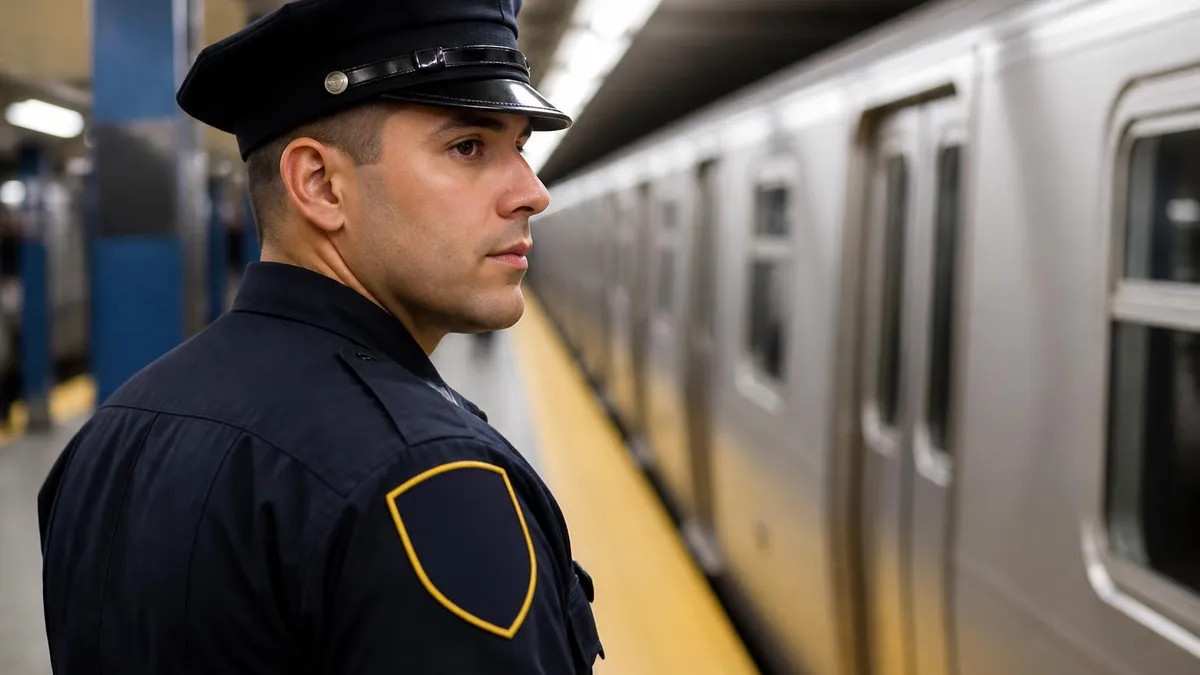
Nassau County Police Exam: Requirements, Written Test, Physical Agility, and How to Pass the Civil Service Test
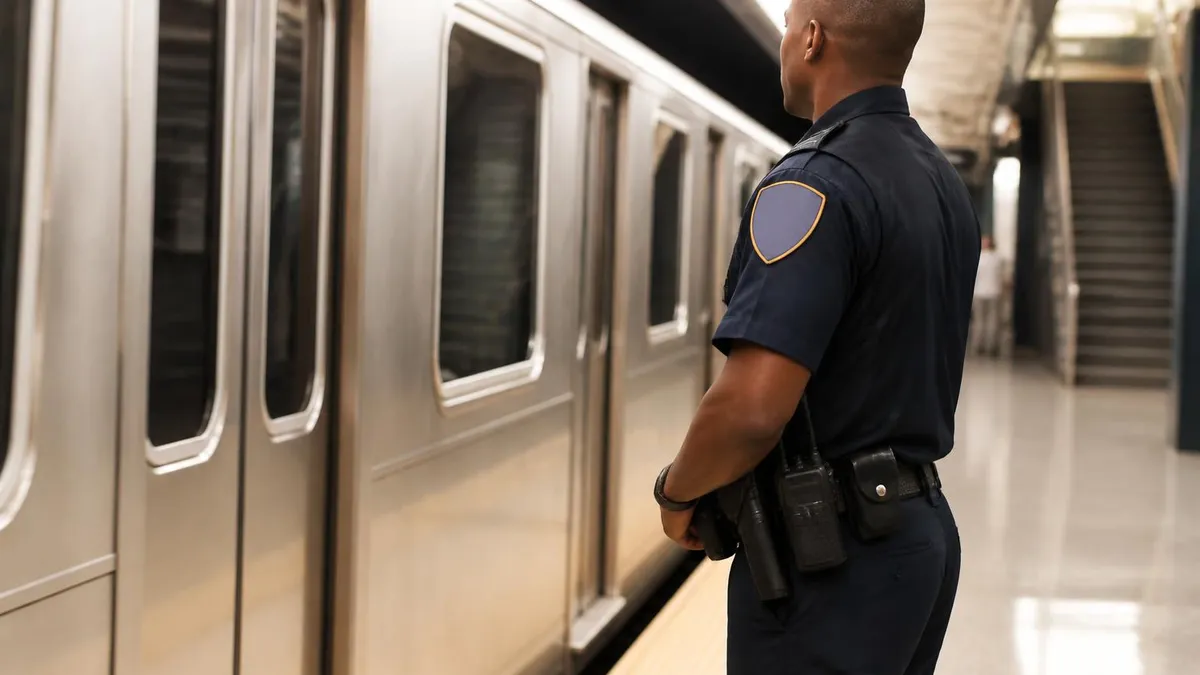
MTA Police Salary: Complete Pay Guide, Benefits, Overtime, Step Increases, and Career Earnings for MTAPD Officers

MTA Bus Operator Exam: Complete Guide to Requirements, Test Format, Training, and Career Path
About the Author

Educational Psychologist & Academic Test Preparation Expert
Columbia University Teachers CollegeDr. Lisa Patel holds a Doctorate in Education from Columbia University Teachers College and has spent 17 years researching standardized test design and academic assessment. She has developed preparation programs for SAT, ACT, GRE, LSAT, UCAT, and numerous professional licensing exams, helping students of all backgrounds achieve their target scores.