
MRI Scan Price: What You Actually Pay in 2026 September (With and Without Insurance)
MRI scan price by body part, hospital vs imaging center, with and without insurance. 🟢 Real 2026 September ranges and how to lower your bill.
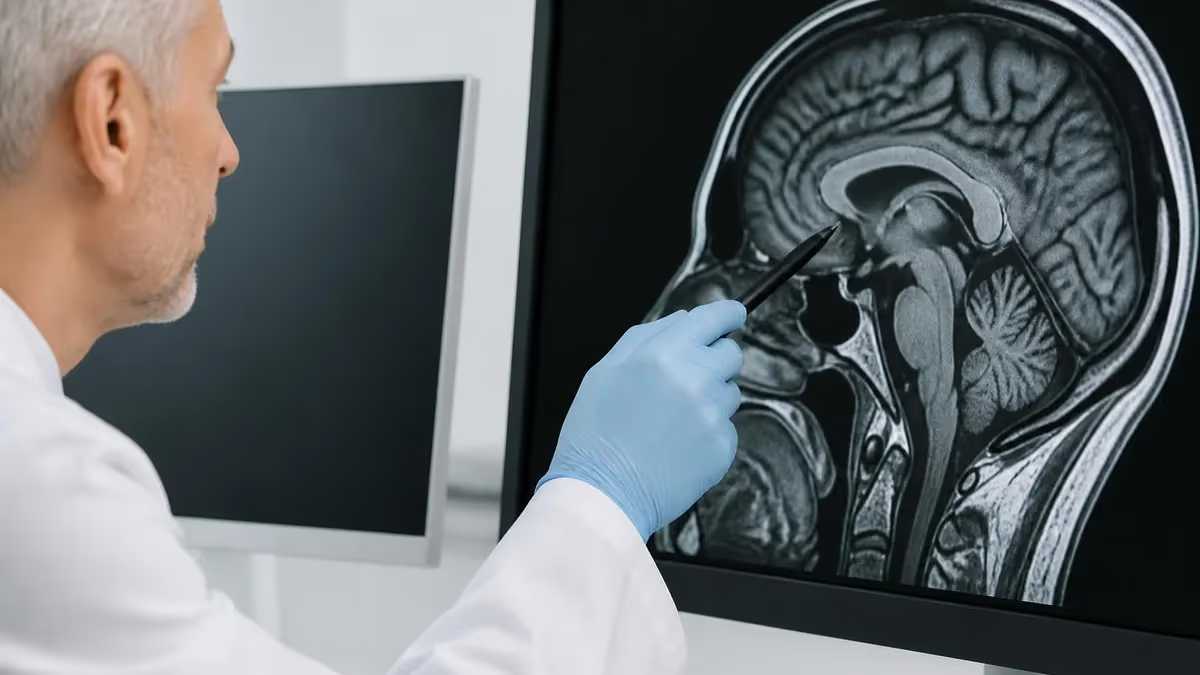
The price of an MRI scan is one of the few medical figures that almost nobody can quote with confidence, and the reason for that is simple. There is no single price. The same scan, ordered for the same body part, performed by the same kind of machine, can cost $400 in one zip code and $5,400 in another.
Patients walk into the same imaging center on consecutive Tuesdays and leave with bills that differ by a factor of five. None of this is an accident. It reflects a system where contracts, ownership structures, and the difference between cash-pay and insurance billing carry more weight than the actual cost of producing the image.
If you are about to schedule one, or you have just opened a bill that does not seem to match what the receptionist said on the phone, the first thing worth knowing is what the price is actually composed of. There is a technical fee, which pays for the scanner, the technologist's time, the contrast agent if any, and the facility overhead.
Then there is a professional fee, which pays the radiologist who interprets your images. The two arrive on separate bills in most cases. That alone surprises a lot of people, because it means the price you were quoted by the imaging center was only part of the total.
The other thing worth knowing up front is that you have more leverage than you think. Imaging is one of the most negotiable line items in American healthcare. Cash-pay discounts, online aggregators, choice of facility, and a few well-timed phone calls can routinely cut the bill in half. The rest of this guide walks through the numbers, the strategies, and the small details that determine whether you pay $700 or $3,500 for the same exact scan.
Those four numbers cover a lot of ground. The first one is the headline. A single MRI in the United States can land anywhere between a few hundred dollars and over five thousand, depending entirely on where you go and how you pay. The second number explains most of the spread. A hospital outpatient department charges two to three times what a freestanding imaging center charges for the identical exam, because hospitals carry facility fees and contractual overhead that imaging centers do not.
The third number reminds you that contrast is not free. Gadolinium, the IV setup, and the longer scan time add real money to the bill. The fourth number is the most useful one for patients. Ask for a cash-pay discount, in writing if possible, and the price often drops by ten to thirty percent on the spot.
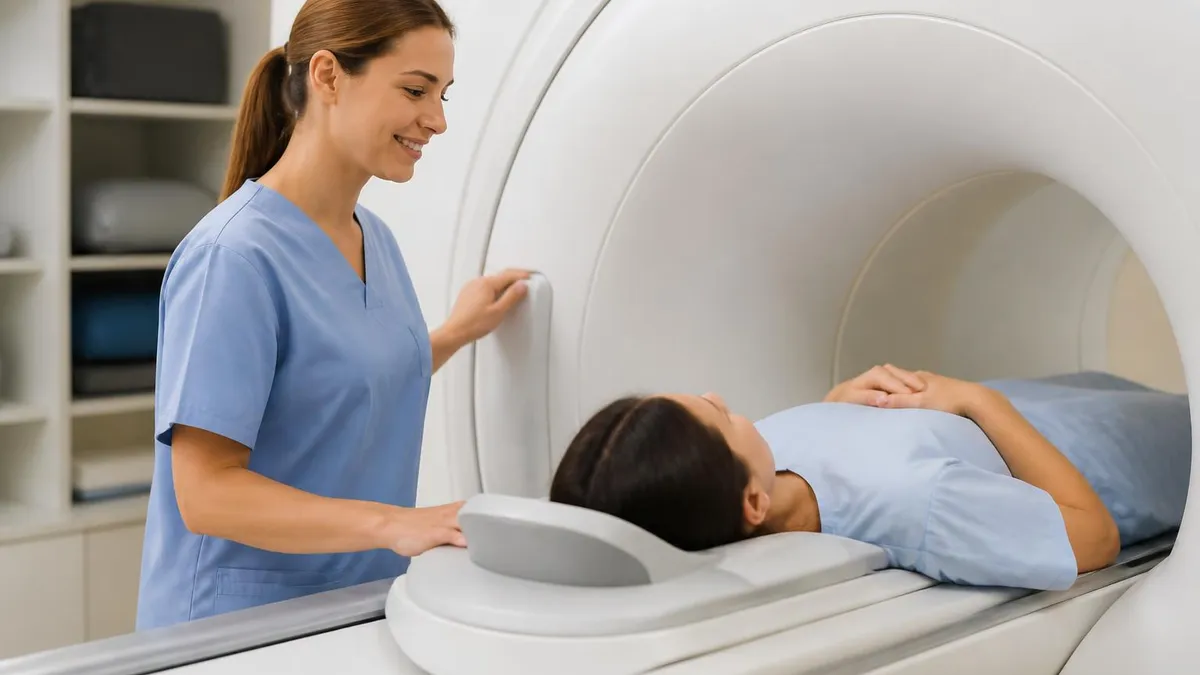
Three forces drive the variation. First, ownership: hospital-owned imaging carries facility fees that freestanding centers do not. Second, contracts: each insurer negotiates separate rates with each facility, which is why your in-network price differs from your neighbor's. Third, the cash-pay market, which behaves like a real market with shoppable prices, while the insurance market behaves like a contracted utility. Knowing which one you are in changes what the price looks like.
Let us put real numbers on each body part. These are typical 2026 cash-pay ranges in the United States, drawn from public price disclosures, aggregator data, and direct calls to facilities in multiple regions. Your actual quote will sit somewhere inside these ranges. A brain MRI without contrast generally runs $1,000 to $2,000. Add contrast and the price climbs to roughly $1,500 to $3,000. Spine MRI, whether cervical, thoracic, or lumbar, lands in the $1,000 to $2,500 zone.
Joint MRIs of the knee, shoulder, hip, ankle, or wrist tend to be cheaper, between $700 and $1,800, because the protocols are shorter and contrast is less commonly required. Abdominal and pelvic MRI sits higher, $1,500 to $3,500, because the sequences are more complex and contrast is usually part of the protocol. Breast MRI is the most expensive of the common studies, $1,500 to $4,500, because it requires specialized coils, bilateral imaging, and contrast in nearly every case.
Those are the cash-pay numbers. If you have insurance, the picture changes in ways that depend almost entirely on your plan. A traditional PPO with a low deductible will typically leave you with a copay between $0 and $500 for an in-network MRI. A high-deductible health plan, the kind paired with an HSA, will often hand you the full negotiated rate until the deductible is met, which usually means $400 to $1,500 out of pocket on a single scan.
Medicare Part B covers 80 percent of the approved amount for medically necessary outpatient MRI, leaving the beneficiary responsible for the 20 percent coinsurance unless a supplemental plan picks it up. Medicaid coverage varies by state but generally has minimal out-of-pocket cost for approved studies.
$1,000-$2,000 without contrast. $1,500-$3,000 with contrast. Add-on cost reflects gadolinium and longer protocol time.
$1,000-$2,500 for cervical, thoracic, or lumbar. Lumbar is the most commonly ordered and usually the cheapest of the three.
$700-$1,800 for knee, shoulder, hip, ankle, or wrist. Shortest protocols, lowest cost, contrast often not required.
$1,500-$3,500. More complex sequences, contrast in most protocols, longer table time.
$1,500-$4,500. Bilateral imaging, dedicated coils, contrast in nearly every case. The most expensive routine study.
$1,500-$3,500 at screening-focused centers. Marketed direct to consumers and usually not covered by insurance.
Two patients with identical scans at identical facilities can end up paying wildly different amounts depending on whether the imaging is billed through a hospital outpatient department or through a freestanding imaging center. The gap is real, it is documented, and it is sometimes shocking.
One frequently cited example puts a Stanford-affiliated outpatient MRI at roughly $5,400, while a RadNet imaging center in the same metropolitan area charges $800 to $1,200 for the same study. The scanner is similar. The radiologist is similar. The protocol is similar. What differs is the facility fee built into hospital-based billing. That fee alone can account for two to three thousand dollars on a single bill.
Knowing where to go is therefore worth more than almost any other piece of price advice. The major low-cost imaging chains have made themselves easy to find. RadNet operates over three hundred outpatient centers across multiple states. Akumin runs a similar network with a strong presence in the Southeast and Midwest. SimonMed is one of the largest independent operators, with hundreds of locations and aggressive cash-pay pricing.
Touchstone Medical Imaging is the dominant player across Texas and the South. Diagnostic Imaging Center and Express Pain Imaging round out the field in many regional markets. None of these chains are perfect, but their prices are consistently a fraction of what hospital-based imaging departments charge.
If you do not know where to start calling, the online aggregators are the next-best tool. MDsave.com lets you type your zip code, choose your body part, and see negotiated cash-pay prices at participating facilities, often with the option to buy the scan voucher online before you walk in. SaveOnMedical.com works similarly. NewChoiceHealth.com aggregates published prices and lets patients see what facilities in their area are charging. None of these sites cover every market, but in most metros you will find at least one option that is meaningfully cheaper than the first quote you received from a hospital scheduling line.
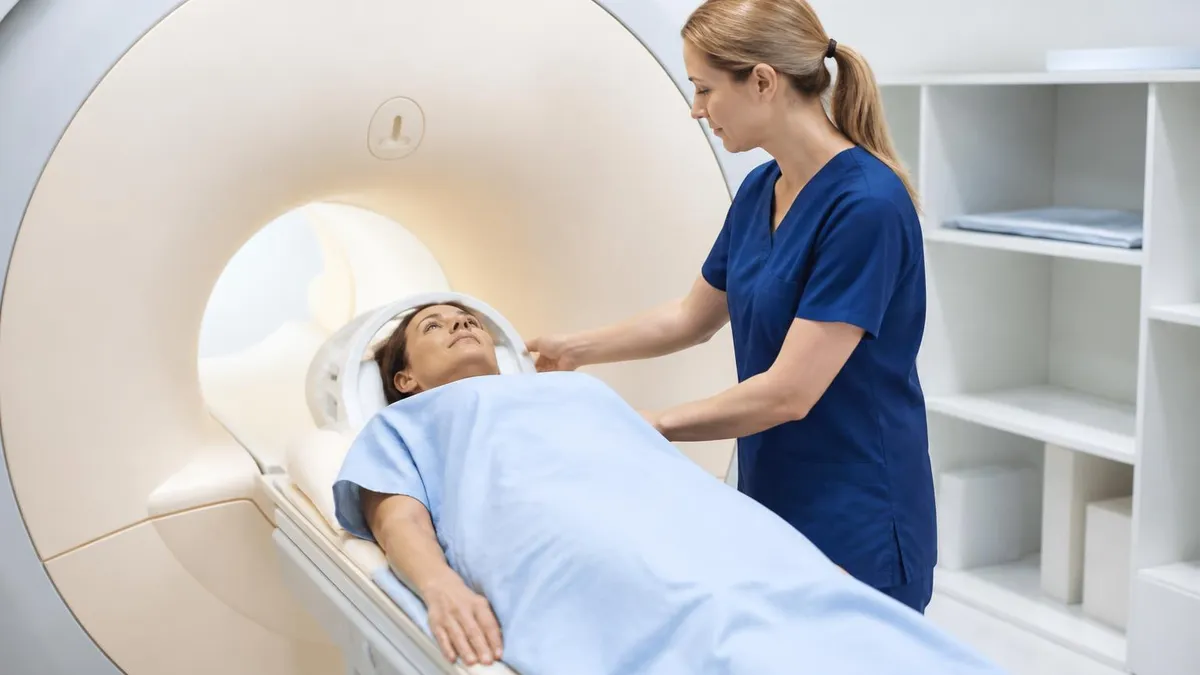
Highest typical price. Includes a separate facility fee on top of the technical and professional charges. Often the default if your physician sits inside a hospital system. Stanford-type pricing in the $4,000 to $5,400 range is not unusual for a single MRI in major metros.
The international comparison is the part of this discussion that surprises American patients most. An MRI in India can be done at a private hospital with 1.5T or 3T equipment for $80 to $200. The same exam in Thailand, often at facilities catering specifically to medical tourists, runs $200 to $500. Mexico sits in between, with $300 to $700 typical for the major border-city imaging centers. None of those numbers are typos.
They reflect a different cost structure entirely, where labor, real estate, and the regulatory burden of operating an imaging center are all lower. The image quality at the top facilities in these markets is genuinely comparable to U.S. imaging centers. Medical tourism for MRI is most attractive for uninsured patients facing four-figure quotes at home, or for those who are already traveling for another reason.
Closer to home, the federal Hospital Price Transparency rule that took effect in January 2021 was supposed to make all of this easier to navigate. The rule requires hospitals to publish their standard charges, payer-specific negotiated rates, and discounted cash prices for a long list of shoppable services. MRI is on that list. In practice, hospital compliance has been uneven. Some hospitals publish clean, searchable price files.
Others publish files that are technically compliant but practically unreadable. The Centers for Medicare and Medicaid Services has stepped up enforcement, and third-party tools that parse the published files have made the data far more accessible than it was at launch. If you are willing to do the work, you can usually find the contracted price your insurer pays at a specific hospital for a specific scan. That number is your real benchmark.
Two charges, usually billed separately. The technical fee covers the scanner, the technologist, the contrast if any, and the facility overhead. The professional fee covers the radiologist's interpretation and the written report, and is typically 20 to 30 percent of the total. If your scan included contrast, you may also see a small charge for the IV setup. Hospital-based studies add a facility fee that freestanding imaging centers do not charge.
Hidden costs catch a lot of patients off guard. The most common is the contrast surcharge. A standard non-contrast study might be quoted at $900, and then the order arrives with contrast, and suddenly the same scan is billed at $1,400. Gadolinium itself is not expensive, but the IV setup, the extra scanner time, and the higher technical code together add $100 to $500 to the bill.
The second common surprise is the professional fee. The technical fee is what the facility quotes you on the phone. The radiologist's interpretation arrives later, usually from a separate billing entity, and adds another 20 to 30 percent on top. If you are price-shopping, always ask whether the quote includes both the technical and the professional charge. Half the time it does not.
The third hidden cost is the facility fee. This is the line item that turns a $1,000 imaging center scan into a $3,500 hospital bill. It is a legitimate charge in the sense that hospitals are allowed to bill it, but it reflects the cost of operating a full hospital rather than the cost of producing your particular image. If you are at a hospital-owned outpatient facility, the facility fee will be on your bill. Some hospitals will waive it on request, particularly for cash-pay patients. It is worth asking.
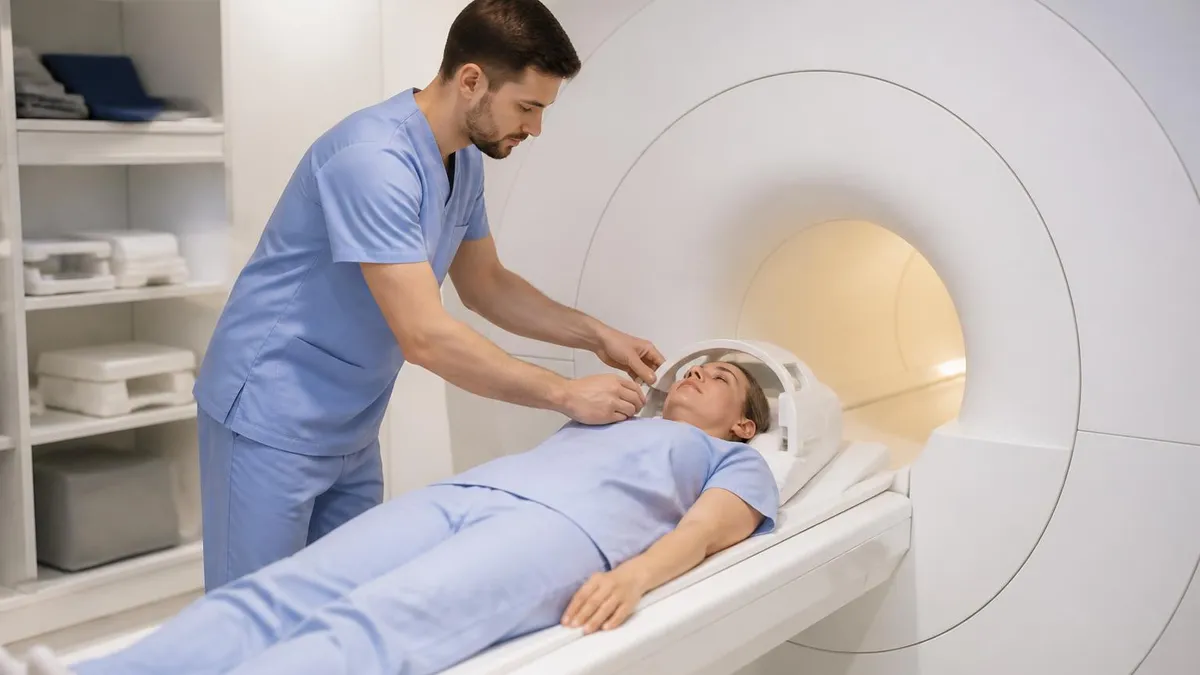
How to Lower Your MRI Bill
- ✓Call at least three facilities and ask for the total cash-pay price, including the radiologist's interpretation
- ✓Request a cash-pay discount in writing — most facilities will take 10 to 30 percent off if you ask
- ✓Check MDsave, SaveOnMedical, and NewChoiceHealth for a negotiated voucher in your zip code
- ✓Ask whether an open MRI or 1.5T machine is available — both are usually cheaper than 3T
- ✓Ask whether the facility fee can be waived, especially at hospital-owned outpatient centers
- ✓Use HSA or FSA funds — paying with pre-tax dollars saves 20 to 30 percent depending on your bracket
- ✓Confirm in-network status with your insurer the morning of the scan, not the week before
- ✓If the order is for contrast, ask whether a non-contrast study would answer the clinical question
Insurance navigation deserves its own paragraph because it is where most of the avoidable expense lives. The single biggest mistake patients make is assuming that having insurance means the bill is taken care of. It is not. Most outpatient MRI orders require pre-authorization, which means your physician's office has to submit clinical documentation to your insurer, and the insurer has to approve the study before it is performed.
Skip that step and the claim will likely be denied, leaving you holding the full retail charge. Pre-authorization is also where insurers push back on whether the scan is medically necessary at all. If the request is denied, your physician's office can appeal, and appeals are won far more often than patients realize. The appeal letter should include the specific clinical findings, the failed conservative treatment, and the imaging guideline that supports the request.
In-network status is the other leverage point. An out-of-network MRI, even with insurance, can result in a balance bill that wipes out months of premium payments. Confirm in-network status the morning of the scan, not the week before. Networks change without notice. The receptionist at the imaging center sometimes does not know which networks they participate in.
The number to call is on the back of your insurance card, and the answer takes a minute. If the scan turns out to be out-of-network and you have already had it done, the No Surprises Act limits balance billing in certain scenarios, particularly for emergency care and for services provided at in-network facilities. Outpatient elective imaging is not always protected, so prevention is much easier than recovery.
MRI Scan Price Pros and Cons
- +Cash-pay market is genuinely shoppable, with online tools that show real prices
- +Freestanding imaging centers often charge a fraction of hospital outpatient rates
- +Federal price transparency rule has made hospital prices increasingly findable
- +Cash-pay discounts of 10 to 30 percent are routinely available on request
- +International options exist for uninsured or high-deductible patients willing to travel
- −Insurance billing adds layers of opacity that make true cost hard to predict
- −Hospital facility fees can triple the price of an otherwise identical scan
- −Pre-authorization denials require time and paperwork to overturn
- −Out-of-network charges can produce surprise bills even with good insurance
- −Contrast and professional fees are often quoted separately, inflating the final bill
Outside the United States the conversation looks very different. In the United Kingdom, MRI through the National Health Service is free at the point of care for residents, although waiting lists for non-urgent scans can stretch into months. Private MRI in the UK is also widely available, with cash-pay prices in the £350 to £900 range, well below American private rates.
Canada provides MRI through provincial health insurance with no out-of-pocket cost for medically necessary studies, though mri results wait times have become a significant issue and private clinics have opened in some provinces to offer faster access at out-of-pocket cost. Australia covers MRI through Medicare for approved indications, with a gap payment in some cases for private clinic studies. Most European countries operate similar single-payer or hybrid models in which the patient sees little or no direct cost for an approved scan.
None of those systems are perfectly efficient. Wait times are the usual complaint. But the cost variability that American patients experience, where the same scan can cost ten times more depending on the building, is largely absent. That contrast is part of why American patients are so often surprised when they finally read their bill. The variability is not a bug. It is a structural feature of a market where prices are set by contract rather than by what the mri scan cost by locations to produce.
If you want one practical takeaway, it is this. Before you accept the first quote, call three facilities, ask for the total cash-pay price including interpretation, and check at least one online aggregator. That sequence takes about twenty minutes and saves the average patient several hundred dollars on a single MRI. Multiply that across a family or a chronic condition and the savings become serious money. The system rewards effort, and the effort required is genuinely small once you know what to ask.
One more thing to keep in mind. The cheapest MRI is not always the right MRI. A specialty study, particularly cardiac, breast, or a dedicated MR enterography for inflammatory bowel disease, requires a specific protocol that not every imaging center is set up to perform. If you are price-shopping a routine knee or lumbar scan, almost any accredited center will do.
If the order is for something specialized, ask your physician which facilities in your area have the equipment and the radiologist subspecialty needed to read it well. Saving four hundred dollars and ending up with an incomplete study that has to be repeated is the worst outcome of all. Quality first, then price within the field of qualified providers.
MRI Questions and Answers
One last piece of practical advice. Keep your imaging records. After the scan, ask for a copy of the report and a CD or download link for the images. Most facilities provide both at no charge or for a small fee. Having your own copy means that if a follow-up scan is ever recommended, you can hand the prior images to the new radiologist directly.
That comparison adds enormous clinical value and sometimes eliminates the need for a repeat scan entirely, which is the cheapest scan of all. Patients who carry their own records also avoid the situation where a hospital cannot find a prior study and orders another one, doubling the cost for the same clinical question. The records belong to you. Hold on to them.
About the Author

Medical Laboratory Scientist & Clinical Certification Expert
Johns Hopkins UniversityDr. Sandra Kim holds a PhD in Clinical Laboratory Science from Johns Hopkins University and is certified as a Medical Technologist (MT) and Medical Laboratory Scientist (MLS) through ASCP. With 16 years of clinical laboratory experience spanning hematology, microbiology, and molecular diagnostics, she prepares candidates for ASCP board exams, MLT, MLS, and specialist certification tests.
Join the Discussion
Connect with other students preparing for this exam. Share tips, ask questions, and get advice from people who have been there.
View discussion (8 replies)