
Cost of MRI Without Insurance: 2026 August US Price Guide
Cost of MRI without insurance ranges from $400 to $3,500+ in the US. 🏆 See cash prices by body part, hospital vs imaging center savings, and ways to
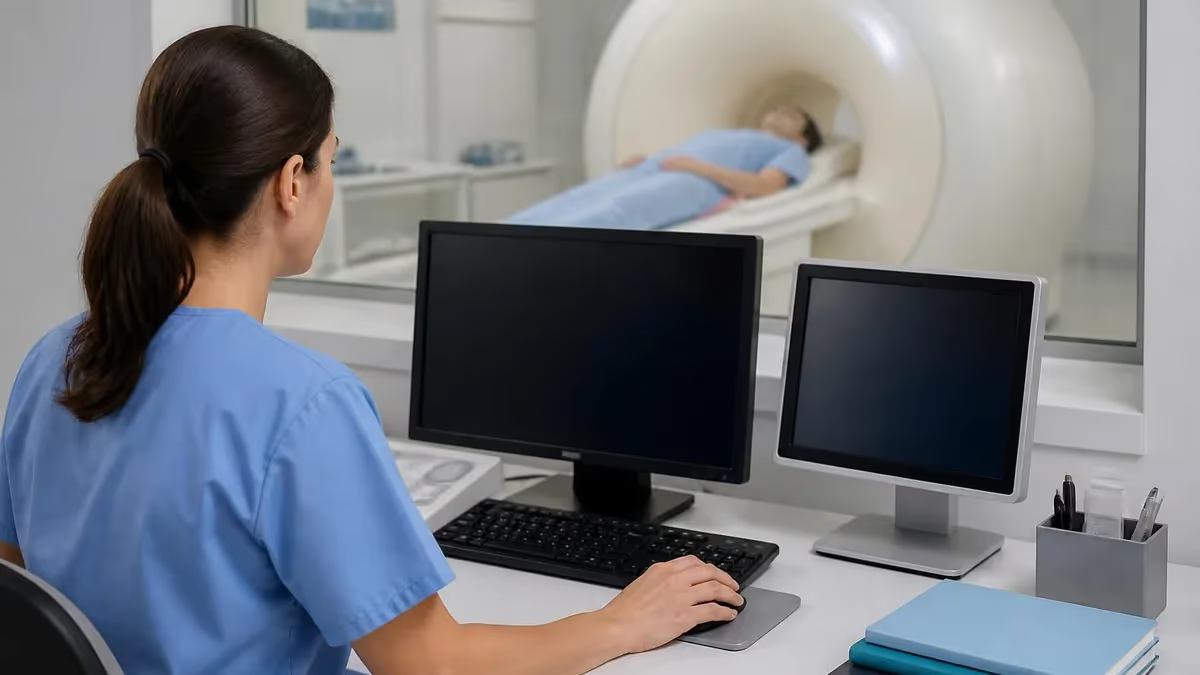
Sticker shock hits hard the second a doctor orders an MRI and you don't have coverage. The bill can swing from a few hundred dollars at a freestanding imaging center to north of $5,000 at a big-city hospital, even for the same exact scan. That's not a typo. Same scanner, same body part, same radiologist credentials — the price tag just depends on who's billing you.
Here's the thing most people miss: cash patients often pay less than insured patients, if they know to ask for a self-pay rate. Hospitals quietly post negotiated rates that can be ten times higher than the cash price hanging on the wall next door. You just have to know the questions to ask, and where to scan-shop.
This guide walks through real 2026 cash prices in the United States, broken down by body part, facility type, and whether you need contrast. You'll see how to slash the bill, how financial assistance works, and when to push back on a quote. If you're prepping for an MRI tech career instead, jump over to the MRI practice test hub for exam prep.
MRI Cash Price Snapshot
Average Cash Price for an MRI in 2026
The blunt answer: most uninsured patients pay between $600 and $2,800 for a single MRI scan in the United States as of 2026. The national average sits near $1,325 for a routine scan without contrast, based on aggregated cash-pay data from imaging centers and hospital chargemaster files.
But the spread is wild. A knee MRI at a standalone center in Phoenix might run $475 cash. The same scan billed through a downtown academic hospital in Boston? Try $4,200 before any discounts. Roughly a 9x gap. Geography matters. So does facility type, scanner strength, and whether contrast dye gets injected.
Three factors drive the bottom-line number more than anything else. First, where you go — hospital outpatient departments charge two to four times what freestanding imaging centers do. Second, the body part — brain and spine MRIs cost more than extremity scans because they take longer and need more interpretation time. Third, contrast — adding gadolinium contrast bumps the bill by $200 to $700.
Cash-pay pricing has actually improved for uninsured patients in the past few years. Federal price transparency rules forced hospitals to publish chargemaster files, which in turn pushed freestanding imaging centers to compete more aggressively on quoted prices. The result — anyone willing to make a few phone calls can usually beat the default quote.
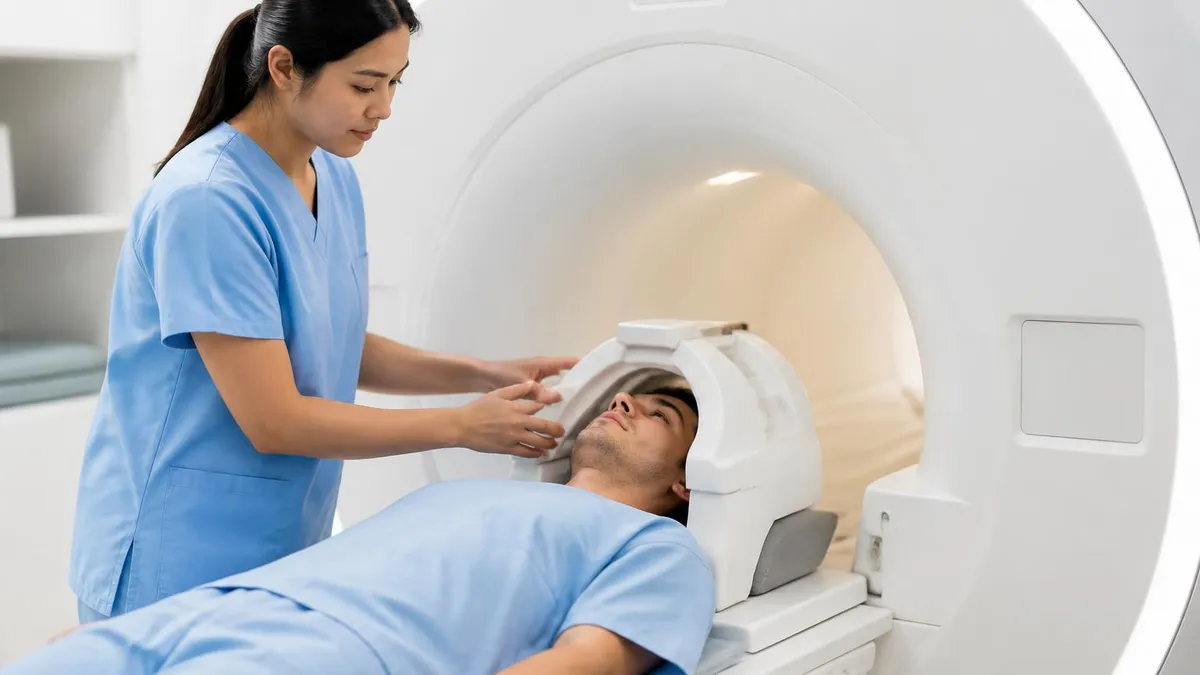
Cash Price Ranges by Body Part
$600-$2,500 without contrast. $850-$3,200 with contrast. Adds 30-45 minutes of scan time per region. Common for headaches, dizziness, stroke workup, tumor surveillance.
$700-$2,800 per region (cervical, thoracic, lumbar). Multi-region orders sometimes discount slightly at imaging centers. Most common scan for back pain and sciatica.
$400-$1,800 without contrast. Quick 20-30 minute scans, cheapest tier. Sports clinics often run $399-$599 specials for cash-pay athletes.
$900-$3,500 cash. Usually requires contrast and longer protocols. Cardiac MRI runs higher at $1,500-$5,500 due to specialized reading.
MRI Cost Without Insurance by Body Part
Not every MRI costs the same. A wrist scan takes 20 minutes; a full abdomen with contrast can stretch past an hour. Time on the magnet, sequences ordered, and contrast all push the price. Here's what cash patients are actually paying in 2026.
Brain MRI without contrast usually lands between $600 and $2,500 cash. Add contrast and you're looking at $850 to $3,200. Spine MRIs — lumbar, cervical, or thoracic — typically run $700 to $2,800 per region. Order all three at once and centers often discount the bundle, but hospitals rarely do.
Knee, shoulder, hip, ankle, and wrist MRIs are the cheapest because they're quick. Cash prices commonly sit in the $400 to $1,800 range without contrast. Sports medicine clinics sometimes negotiate flat-fee MRI packages around $399 to $599 for athletes and weekend warriors.
Abdominal and pelvic MRIs are pricier — figure $900 to $3,500 cash because they often need contrast and longer scan times. Cardiac MRI is the most expensive routine MRI you'll encounter, with cash quotes ranging $1,500 to $5,500 because the protocol is complex and requires specialized cardiac radiologists.
Breast MRI for cancer screening or workup typically costs $1,000 to $4,000 cash. Many breast centers offer self-pay rates around $1,200 to $1,800, well below what insurance gets billed.
The One Question That Cuts Bills in Half
Before you schedule any MRI, ask the imaging center this exact question: "What's your cash or self-pay rate if I pay in full on the day of service?" The price you'll be quoted is often 50% to 80% less than the chargemaster price. Get it in writing. The discount usually only applies if you ask before the scan.
Hospital vs Imaging Center: The Single Biggest Price Lever
If you remember one thing from this whole guide, make it this: skip the hospital outpatient department whenever you safely can. Freestanding imaging centers — places like RadNet, SimonMed, Touchstone, and independent radiology groups — routinely charge 40% to 70% less than hospitals for identical scans.
Why such a gap? Hospitals carry massive overhead: emergency departments, 24/7 staffing, complex billing systems, facility fees layered on top of professional fees. A freestanding center just runs scanners. Lower overhead, lower price. Same image quality.
Here's a real-world example pulled from 2026 transparency data. A lumbar spine MRI without contrast in suburban Dallas: hospital outpatient system A quoted $3,180 chargemaster with $2,290 cash discount. Hospital system B quoted $2,540 chargemaster with $1,950 cash discount. The freestanding imaging center across the highway? $695 cash, all-in.
Same exam. Different billing model. The hospital won't volunteer the freestanding option, but your doctor's office can usually send the order anywhere you ask. Just say: "Please send the MRI order to [imaging center name] instead." Done.
Anyone curious about how techs operate the magnet itself can dig into the MRI physics fundamentals — same hardware regardless of whether the scan happens in a hospital or a strip-mall imaging suite. The scanner doesn't care which entity is billing.
Contrast or No Contrast — How Gadolinium Changes the Price
About 30% to 40% of MRIs use contrast dye, typically gadolinium-based. The radiologist orders contrast when they need better visualization of blood vessels, tumors, inflammation, or active disease. It's not optional once it's ordered — but it does add cost.
Expect contrast to add $200 to $700 to the bottom line. Some centers price it as a flat add-on, others itemize the gadolinium dose separately. The drug itself isn't that expensive at wholesale, but facilities mark it up significantly.
If your order says "with and without contrast," the scanner runs the protocol twice — once dry, once after injection. That nearly doubles scan time and often the price. Ask the ordering physician if contrast is truly necessary. Sometimes it's a default checkbox and a plain MRI would answer the clinical question fine.
Where to Get Scanned
Most expensive option. Cash prices for routine MRI range $1,500-$4,500 even with self-pay discounts. Layered facility fees, professional fees, and chargemaster markups push prices high. Use only if charity care brings the bill under freestanding-center prices, or if your provider insists on hospital billing for a specific clinical reason.
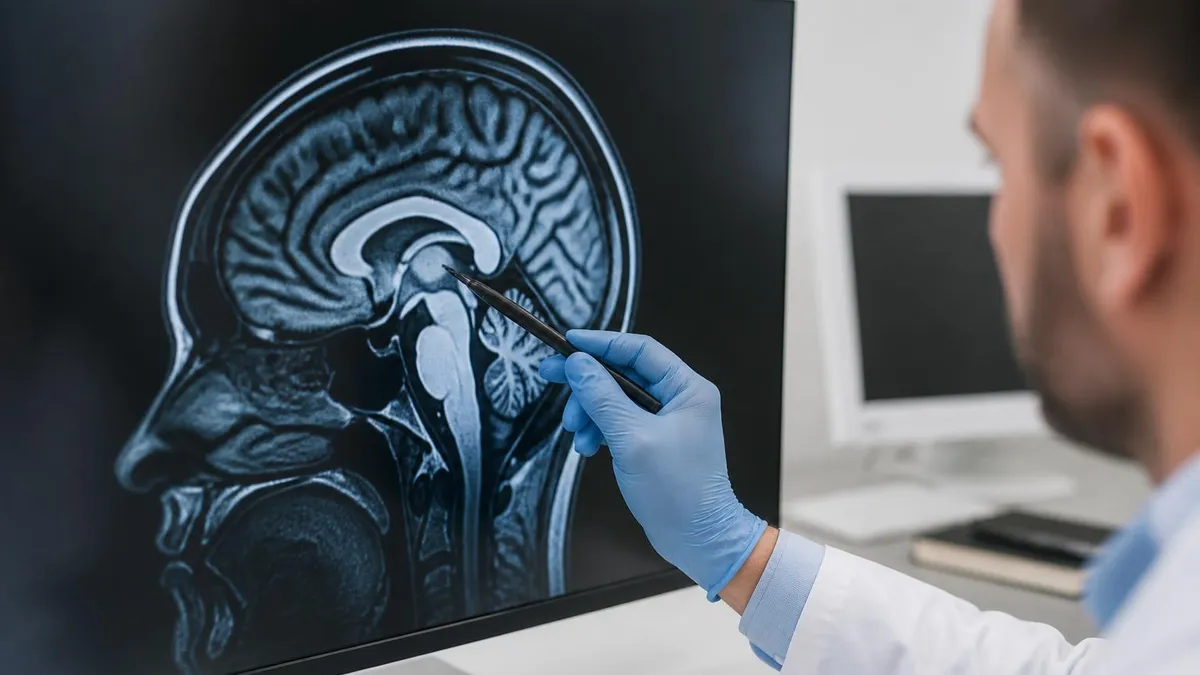
How to Cut the Cash Price in Half (or More)
Walking in and paying the first quoted price is the most expensive mistake uninsured patients make. There are eight proven tactics to lower an MRI bill in 2026. Let's run through them.
1. Ask for the self-pay or prompt-pay rate
This is rule number one. Hospitals and imaging centers maintain published cash rates that are often 50% to 80% below their chargemaster prices. The catch — they only honor the discount if you ask before the scan and pay at the time of service. Call. Ask: "What's your cash price if I pay upfront on the day of service?" Get the quote in writing if possible.
2. Compare at least three facilities
Prices vary so much within a single zip code that calling three places can save four-figure money. Use New Choice Health, MDsave, or Mira for price comparison. Or just call imaging centers directly — most have a billing line that quotes cash prices.
3. Try medical bill marketplaces
MDsave and Sesame let cash patients pre-purchase MRIs from contracted facilities at flat rates, often $400 to $900 for routine scans. You pay the marketplace, get a voucher, show up, walk out. No surprise billing.
4. Drive to a cheaper market
If you live in a high-cost metro like New York, San Francisco, or Boston, an hour's drive to a smaller city can cut the price 50% or more. Same scan quality, dramatically different overhead. Worth a half-day road trip if you're paying $2,000+ either way.
More Ways to Lower the MRI Bill
5. Apply for hospital financial assistance
Nonprofit hospitals are required by federal law (Section 501(r) of the IRS code) to offer charity care to patients below certain income thresholds. Many waive 60% to 100% of the bill for households under 200% of the federal poverty line. Ask financial counseling before the scan. The form takes 20 minutes.
6. Negotiate after the scan if you forgot to negotiate before
Even with a bill in hand, you can still call billing and request a self-pay discount. Many systems quietly knock 25% to 50% off if you offer to pay the balance in full immediately. Ask for the "uninsured discount" or "prompt-pay reduction."
7. Set up a payment plan
If you can't pay in full, almost every facility will spread the bill over 6 to 24 months interest-free. Don't put MRI bills on a credit card if you can help it — the hospital's internal plan is almost always cheaper.
8. Use HSA or FSA dollars
If you have a high-deductible plan with an HSA, or a workplace FSA, MRI fees qualify as eligible medical expenses. You're paying with pre-tax dollars, effectively saving your marginal income tax rate (often 22% to 32%).
A quoted MRI price often covers only the technical fee — the scan itself. The radiologist who reads the images bills separately, usually $150 to $400. Always ask: "Does that price include the radiologist read?" If not, get a quote for that too before scheduling. Some hospitals also tack on contrast fees, IV start fees, and disc copies as separate line items. Insist on an itemized estimate.
What's Actually Included in the MRI Price
A common gotcha — the quoted "MRI price" sometimes only covers the technical fee (the scan itself). The professional fee (the radiologist reading the images) bills separately. So a $700 scan can turn into a $700 scan plus a $250 read fee.
Always ask: "Does that price include the radiologist read?" Reputable freestanding centers bundle both fees into one quote. Hospitals usually don't. The radiologist bill arrives separately a few weeks later from a third-party reading group.
Other potential add-ons that show up in itemized bills include contrast media ($150 to $500 if used), IV start fee ($30 to $90), sedation for claustrophobic patients ($150 to $500 — rare), CD or USB of images ($15 to $40, often free if you ask), and disc duplication or records release ($10 to $25).
Get an itemized estimate before scheduling. If the facility refuses to itemize, that's a yellow flag — go somewhere else. Transparency around line-item costs is the easiest signal that a facility is genuinely trying to price-compete for cash patients.
Pre-Scan Checklist
- ✓Confirm the ordering physician sent the order to the cheapest qualified facility, not the nearest hospital by default.
- ✓Call at least three facilities and ask each for the self-pay or prompt-pay rate.
- ✓Verify whether the radiologist read fee is included in the quote.
- ✓Ask if contrast is truly necessary or if a non-contrast study would answer the question.
- ✓Check MDsave and Sesame for pre-negotiated voucher pricing in your zip code.
- ✓Apply for hospital charity care if your income is below 250% of the federal poverty line.
- ✓Get the cash quote in writing before showing up on scan day.
- ✓Negotiate the bill after the fact if you missed the pre-scan discount — most facilities still knock 25-50% off.
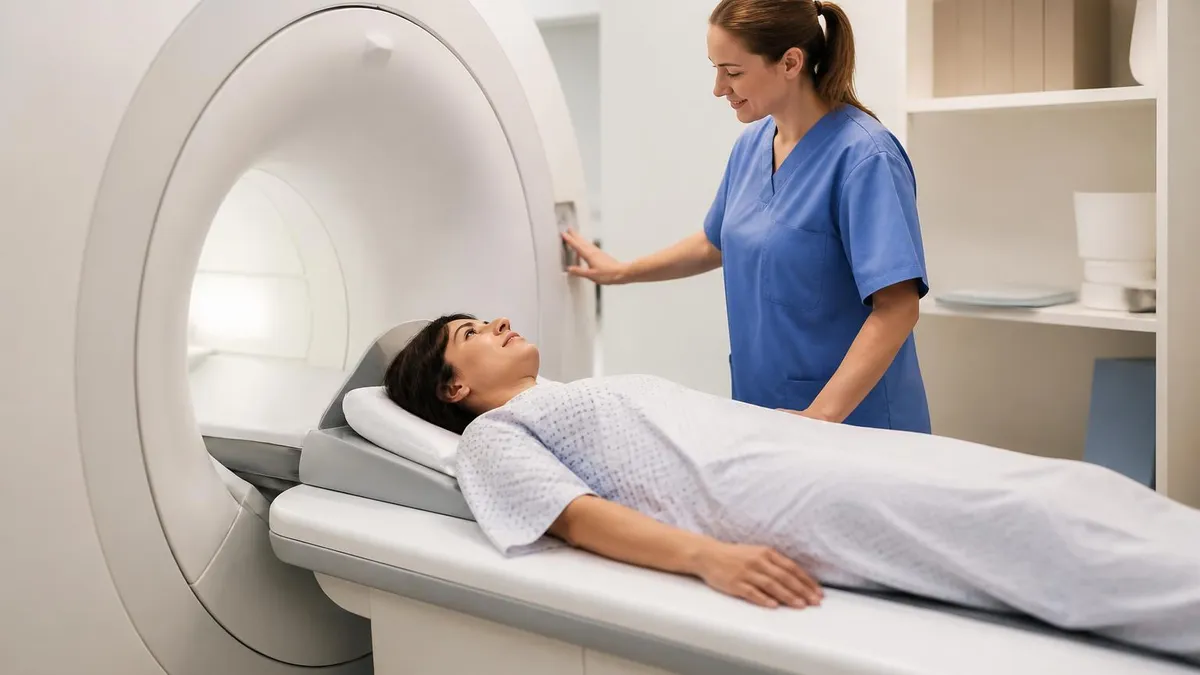
Cheaper Alternatives Worth Considering
Sometimes an MRI isn't the only option. Talk to your provider about whether one of these would answer the clinical question for less money.
X-rays cost $30 to $300 cash and are appropriate for most acute bone injuries. CT scans run $300 to $1,500 cash and are faster than MRI — better for trauma and lung imaging. Ultrasound costs $100 to $500 and works great for soft tissue around joints, the abdomen, and pregnancy.
If your ordering provider seems flexible, ask: "Is there a less expensive imaging study that could rule out what we're worried about?" Many minor injuries get MRI'd by default when an ultrasound or X-ray would suffice. Defensive medicine drives a lot of unnecessary imaging.
That said, certain conditions truly require MRI — torn ligaments, disc herniations, soft tissue tumors, brain lesions, multiple sclerosis workups. Don't downgrade the test if your doctor explains why MRI is the right tool.
What If You Have Some Coverage But High Out-of-Pocket
Some readers technically have insurance but face huge deductibles or out-of-network exposure. Here's the calculus.
If you haven't met your deductible and the MRI is in-network, you'll pay the negotiated rate (often $800 to $2,500) toward your deductible. Sometimes that negotiated rate is higher than the cash price at the same facility. Worth checking — and you can sometimes opt out of insurance and self-pay if the cash rate is lower. Ask the front desk to run both numbers.
If the facility is out-of-network, the insurer might pay nothing, leaving you with the full charge. Worse, balance billing rules can leave you on the hook for the difference between the facility's bill and the insurer's allowed amount. The No Surprises Act protects some scenarios but not scheduled outpatient imaging.
HMO and EPO plans require pre-authorization for MRI. Skipping that step usually means zero coverage. PPO plans are more flexible but still require pre-auth on most MRIs. Get it locked in before scheduling.
Cash vs Insurance Trade-Offs
- +Cash rates at freestanding centers often beat insurance negotiated rates
- +No surprise bills, no balance billing, no out-of-network shocks
- +Discount applies immediately at time of service
- +Eligible for HSA/FSA pre-tax dollars
- +Marketplaces like MDsave bundle scan + read into one flat price
- −Out-of-pocket spend doesn't count toward insurance deductible or out-of-pocket max
- −Need to call around to compare prices — takes time
- −Some specialty MRIs (cardiac, breast, prostate) may not have cheap freestanding options nearby
- −Charity care applications require income documentation and can take weeks
- −Hospitals sometimes refuse to give cash quotes over the phone
Real Cash-Price Examples by Region in 2026
Geography swings prices more than almost any other variable. Here are real cash-pay quotes pulled from hospital and imaging-center transparency files in 2026 for a routine lumbar spine MRI without contrast.
In Houston, Texas, freestanding centers quote $475 to $695 cash. The big hospital systems in the Texas Medical Center quote $2,400 to $3,800. Phoenix, Arizona is one of the cheapest metros for outpatient imaging — expect $395 to $650 cash at freestanding centers, with hospital prices around $1,900 to $3,100.
Los Angeles is more expensive: freestanding centers run $650 to $1,150, hospitals $2,800 to $4,800. New York City is the worst of all — freestanding cash prices start around $850 and hospital outpatient bills often exceed $5,000. Chicago sits in the middle, with freestanding pricing around $550 to $900 and hospitals around $2,500 to $3,800.
Smaller cities in Florida, Tennessee, the Carolinas, and the Midwest tend to have the most aggressive freestanding pricing — often $400 to $700 cash for a routine MRI. Rural areas have fewer options but the hospitals there often quote lower than urban systems because of less local competition for high-deductible patients.
If MRI Cost Is on Your Radar Because You're Considering the Field
The price-tag side of MRI is also a hint at why the career pays well. MRI technologists earn a median salary around $85,000 in the US, with experienced techs in major markets clearing $110,000 to $135,000. The training pathway runs through an ARRT-accredited radiography or MRI program, followed by the ARRT MRI registry exam for certification.
Anyone studying for that registry can use the MRI practice test to drill the registry blueprint sections: patient care, safety, image production, and procedures. The cash-price knowledge helps too — techs who understand the business side of imaging tend to advance into lead and supervisor roles faster.
Bottom Line on MRI Cash Pricing
An uninsured MRI in the US in 2026 costs $400 to $3,500 in most realistic scenarios. The price depends mostly on facility type, body part, and contrast use. Freestanding imaging centers save you 40% to 70% over hospitals for the exact same scan quality.
Call before you go. Compare three facilities. Ask for the self-pay rate. Use marketplaces like MDsave. Apply for charity care if you qualify. With a couple of phone calls, almost everyone can cut their MRI bill in half or more.
Walking into the hospital and paying whatever the bill says is the single most expensive choice — and the one almost everybody makes by default. Don't be that person. The system rewards patients who ask questions, and an MRI is no exception.
MRI Questions and Answers
About the Author

Medical Laboratory Scientist & Clinical Certification Expert
Johns Hopkins UniversityDr. Sandra Kim holds a PhD in Clinical Laboratory Science from Johns Hopkins University and is certified as a Medical Technologist (MT) and Medical Laboratory Scientist (MLS) through ASCP. With 16 years of clinical laboratory experience spanning hematology, microbiology, and molecular diagnostics, she prepares candidates for ASCP board exams, MLT, MLS, and specialist certification tests.
Join the Discussion
Connect with other students preparing for this exam. Share tips, ask questions, and get advice from people who have been there.
View discussion (8 replies)