
Cervical MRI CPT Code Guide: 72141, 72142, 72156, Modifiers, Contrast, and Costs
🎯 Find the right CPT cervical MRI code: 72141, 72142 or 72156. Learn billing rules, modifiers, contrast codes, costs, and how to avoid claim denials.
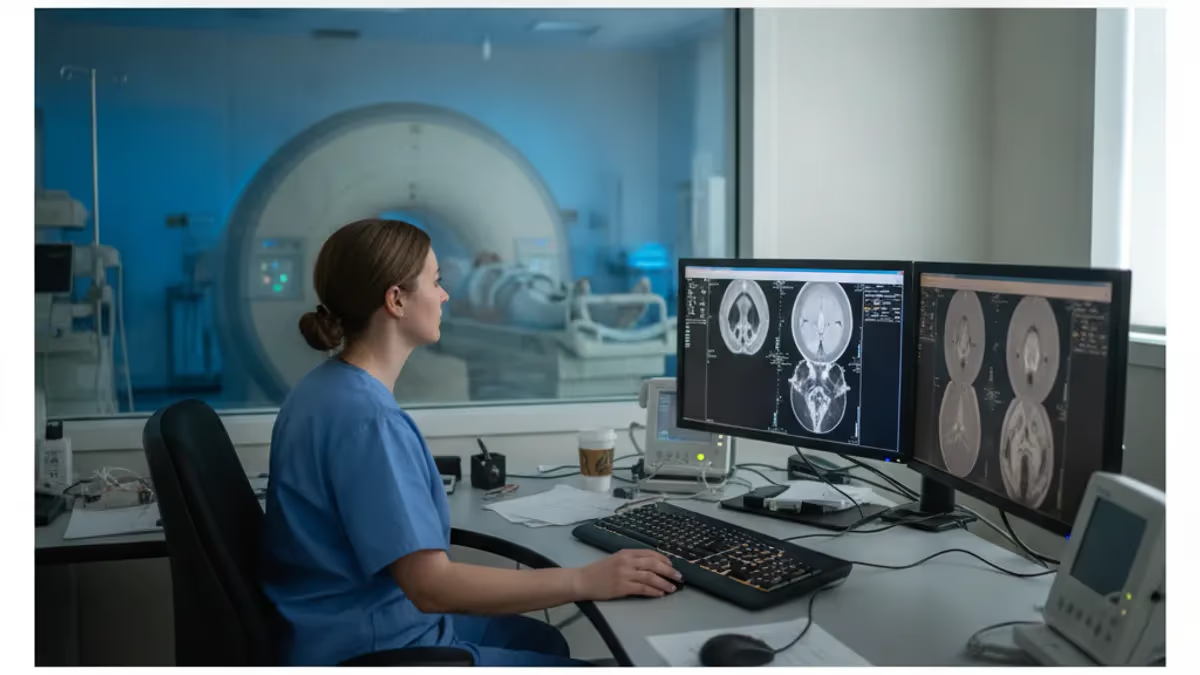
Understanding the correct cpt cervical mri code is the difference between a clean claim and a denial that drags on for weeks. A cervical spine MRI images the neck portion of the spine, including the vertebrae, intervertebral discs, spinal cord, and exiting nerve roots. Because payers reimburse by procedure code rather than by narrative description, the code on the claim must match exactly what the radiologist performed. This guide walks through every code, modifier, and billing rule you need.
Three primary Current Procedural Terminology codes describe a cervical spine MRI. Code 72141 covers an MRI of the cervical spinal canal and contents without contrast material. Code 72142 covers the same study performed with contrast only. Code 72156 describes a study done without contrast first, followed by contrast and further sequences. The American Medical Association publishes and maintains these codes, and Medicare uses them to set payment rates, which many commercial insurers then use as a benchmark.
Choosing among them is rarely arbitrary. Most neck pain, radiculopathy, and disc herniation work-ups begin with a non-contrast study, because T1 and T2 sequences show discs, cord signal, and foraminal narrowing very well. Contrast enters the picture when the clinical question involves infection, tumor, inflammation, or prior surgery. Knowing the cervical mri cpt code options also helps patients, who can ask whether the order on their referral matches the study their doctor actually intends.
Every one of these codes is a global code, meaning it bundles two parts. The technical component covers the scanner, the technologist, the room, and the supplies. The professional component covers the radiologist's interpretation and written report. When a hospital owns the scanner and a separate radiology group reads the images, each party bills its own piece using modifier TC or modifier 26. When one entity does both, it bills the global code with no modifier at all.
Contrast itself is billed separately from the scan. The scan code only describes the imaging service, so the gadolinium-based agent is reported with a HCPCS Level II supply code, such as A9585 for gadobutrol or A9575 for gadoterate meglumine, each reported per 0.1 mL. A patient who receives 15 mL of an agent reported per 0.1 mL would generate 150 billing units. Miscounting those units is among the most common causes of contrast underpayment.
Related codes cause confusion, so it helps to separate them early. MRI of the neck soft tissues uses 70540, 70542, and 70543, while MR angiography of the neck uses 70547 through 70549. Those studies look at the throat, glands, and carotid or vertebral arteries rather than the spinal canal. Thoracic spine MRI uses 72146, 72147, and 72157, and lumbar spine MRI uses 72148, 72149, and 72158. Selecting the wrong anatomical family almost guarantees a denial.
This article covers what each code means, when it applies, how modifiers and contrast units work, what reimbursement and patient costs typically look like, and the documentation that keeps claims from bouncing. Whether you are a student preparing for a registry exam, a technologist who wants to understand the paperwork behind the scan, or a patient decoding an explanation of benefits, the sections below give you clear, practical answers with real numbers and examples.
Cervical MRI Coding by the Numbers
The Three CPT Cervical MRI Codes at a Glance
The default cervical spine MRI. No contrast is injected, and the study evaluates discs, cord, canal width, and nerve root exits. It supports most neck pain, radiculopathy, and degenerative disease work-ups and carries the lowest cost of the three codes.
A cervical MRI performed with contrast only, with images acquired after the gadolinium injection. It is uncommon because radiologists usually want a pre-contrast baseline, and payers often question it, so documentation of the clinical reason matters.
The complete study: pre-contrast sequences, a contrast injection, then post-contrast sequences. It is used for tumor, infection, inflammatory disease, and postoperative scarring questions, and it pays more because it uses more scanner time.
The contrast agent is billed separately from the scan. Codes such as A9585 (gadobutrol) and A9575 (gadoterate) are reported per 0.1 mL, so a 15 mL dose equals 150 units. Matching the agent and units to the record prevents underpayment.
Selecting the correct code starts with the order, not the scanner. The ordering clinician states the clinical indication, such as cervical radiculopathy, suspected myelopathy, trauma, or a known mass. The imaging center then protocols the exam, and the final code reflects what was actually performed. If the order says without contrast but the radiologist adds contrast because of an unexpected finding, the billed code must reflect the study as it was done, supported by documentation of medical necessity.
Medical necessity is the heart of payer review. Common covered indications include persistent neck pain with neurological deficits, arm weakness or numbness lasting beyond six weeks of conservative care, suspected spinal cord compression, infection, cancer staging, and pre-surgical planning. Uncomplicated neck pain without red flags often fails coverage criteria in the first few weeks. Linking a supporting ICD-10-CM diagnosis, such as one from the M50.1 family for cervical disc disorder with radiculopathy, strengthens the claim.
Modifiers refine how the code is paid. Modifier 26 identifies the professional component only, and modifier TC identifies the technical component only. Modifier 59 or the X-series modifiers (XE, XS, XP, XU) occasionally apply when two imaging procedures are performed in separate sessions or on distinct anatomical sites and a payer's edits would otherwise bundle them. Modifier 52 reports a reduced service, and modifier 53 reports a discontinued one, for example when a patient cannot finish the scan.
Many patients have cervical and thoracic or lumbar scans in the same visit. Each spinal region has its own code, so a cervical and lumbar study would be reported as two separate codes, such as 72141 and 72148. Payers usually apply multiple procedure reductions to the technical component, commonly paying the second and later imaging studies at a reduced percentage. Check each payer contract, because the exact reduction varies by insurer, by plan, and by year.
Prior authorization is now routine for advanced imaging. Commercial plans and Medicare Advantage plans frequently require approval before a cervical MRI is scheduled, often through a radiology benefit manager. The request must list the planned CPT code, the diagnosis, symptom duration, and any conservative therapy tried. If the code changes after approval, for example from 72141 to 72156, the authorization may need to be updated before the claim is submitted, or the added service can be denied.
Reimbursement varies widely. Medicare's national payment for a global non-contrast cervical MRI has generally landed in the low-to-mid hundreds of dollars, with the professional component representing a small fraction of that total. Commercial rates are often higher, and self-pay prices at hospital outpatient departments can run from roughly 500 to 2,500 dollars, while freestanding imaging centers often charge far less. Always confirm current rates, since fee schedules change every calendar year.
The most frequent denial reasons are straightforward. They include missing prior authorization, a diagnosis that does not support the code, duplicate billing within a short period, mismatched contrast units, and the wrong place-of-service code. Working a denial usually means obtaining the radiology report, confirming the order, and filing a corrected claim or a written appeal within the payer's deadline, which is often 60 to 180 days from the denial date, depending on the plan.
CPT Cervical MRI Codes: Without, With, and Combined Studies
CPT 72141 describes magnetic resonance imaging of the spinal canal and contents in the cervical region, performed without contrast material. It is the workhorse code for degenerative disease. Radiologists use it to evaluate disc herniations, spinal stenosis, foraminal narrowing, cord compression, syrinx, and vertebral alignment. Because no injection is required, the visit is faster, typically 20 to 45 minutes, and carries little added risk beyond standard MRI safety screening. Clear communication prevents costly rework.
Billing 72141 is straightforward. No contrast supply code is reported, and no kidney function screening is needed. Typical diagnoses that support it include radiculopathy, myelopathy symptoms, neck pain with neurological findings, and trauma follow-up. The main error to avoid is billing 72141 when a contrast injection actually occurred. Under-coding in that situation loses payment and creates a documentation mismatch that can trigger an audit or a records request later. Always read the final report before choosing a code.
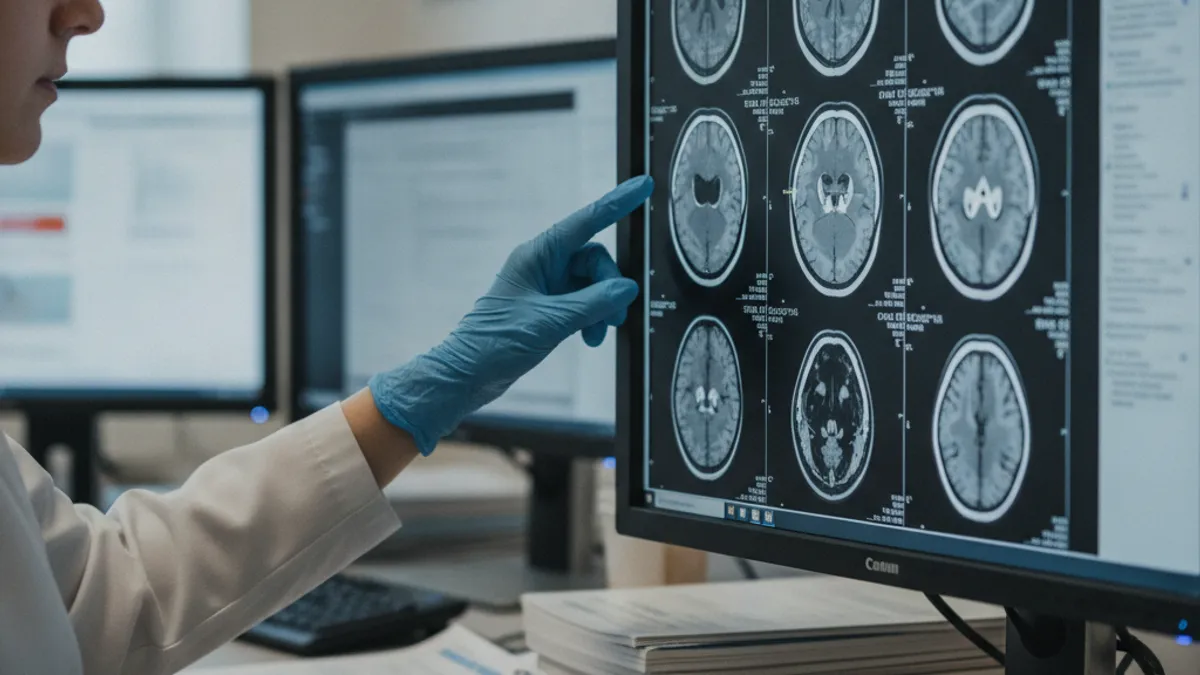
Is a Contrast Cervical MRI Worth It Compared With a Non-Contrast Scan?
- +Shows enhancing tumors, abscesses, and active inflammation clearly
- +Separates postoperative scar from recurrent disc material
- +Helps stage and monitor multiple sclerosis and cord lesions
- +Gives the radiologist more certainty and fewer repeat scans
- +Supports surgical planning when masses or infection are suspected
- +Modern macrocyclic agents have a very low rate of serious reactions
- −Costs more because of the extra scan code and separate contrast billing
- −Requires an IV and adds 15 to 25 minutes to the visit
- −Is more likely to need prior authorization
- −Needs allergy and kidney screening in some patients
- −Is unnecessary for routine disc and degenerative questions
- −Small amounts of gadolinium can be retained in the body
Cervical MRI CPT Code Billing Checklist
- ✓Confirm the order states the body region as cervical spine.
- ✓Verify whether the study was without, with, or without then with contrast.
- ✓Match the final code to the sequences actually acquired.
- ✓Record the contrast agent, dose in mL, and lot number.
- ✓Convert the dose into correct HCPCS billing units.
- ✓Check whether prior authorization covers the exact CPT code.
- ✓Attach a diagnosis code that supports medical necessity.
- ✓Apply modifier TC or 26 when billing only one component.
- ✓Confirm the correct place-of-service code for the facility.
- ✓Review payer edits and file the claim within the filing deadline.
Without, With, Both
In every spinal region the first code is without contrast, the second is with contrast, and the 7215x code is without followed by with. Cervical is 72141, 72142, and 72156. Thoracic is 72146, 72147, and 72157. Lumbar is 72148, 72149, and 72158.
Consider a worked example of a non-contrast study. A 52-year-old patient has six weeks of neck pain radiating into the right arm, with weakness in grip strength. The physician orders an MRI of the cervical spine without contrast. The technologist acquires sagittal T1, T2, and STIR sequences plus axial T2 or gradient echo images. The radiologist documents a C5-C6 disc protrusion compressing the right C6 nerve root. The correct code is 72141, billed globally if one entity performs both parts.
Now consider a contrast example. A 61-year-old patient with a prior cervical fusion reports new pain and fever, and the physician suspects an infection near the hardware. The radiology team reviews allergies and kidney history, acquires pre-contrast images, injects a gadolinium-based agent, and then acquires post-contrast sequences. Because the exam includes both phases, 72156 is correct. The contrast agent is reported separately, with units that match the documented dose.
Code 72156 deserves special attention because it is easy to under-code. It requires that sequences be acquired before contrast, that contrast be administered, and that further sequences follow. Some facilities run a full non-contrast protocol and then add a few post-contrast sequences only to answer a question that arises mid-exam. As long as the radiologist documents the contrast administration and the post-contrast images are archived, billing 72156 rather than 72141 is appropriate, supported by the report.
Contrast units are the second place where revenue and compliance risk meet. In settings where contrast is separately payable, such as physician offices and some freestanding centers, Medicare asks providers to report discarded amounts from single-dose containers with the JW modifier, or to attest that no waste occurred with the JZ modifier. Policies differ by setting and payer. A consistent workflow of recording dose, lot number, and waste every time protects against later audits.
Documentation also covers patient safety. Before a contrast study, the center typically screens for kidney function, allergies to gadolinium agents, pregnancy, and implanted devices. American College of Radiology guidance considers the risk of nephrogenic systemic fibrosis very low with group II macrocyclic agents, which is why many facilities do not require lab testing for every patient. These screening notes are not billed separately, but they support medical necessity and help defend a claim during audit.
Other add-ons can change the claim. Patients with severe claustrophobia may need moderate sedation, reported with separate sedation codes such as 99152 when performed by the same physician who performs the study and documented properly. Anesthesia services for children or patients unable to remain still are reported by the anesthesia provider using the anesthesia code set, commonly 01922 for anesthesia for noninvasive imaging or radiation therapy.
Finally, think about facility type. Hospital outpatient departments bill the technical component on a facility claim, often using revenue code 0610 for MRI, while freestanding centers and physician practices bill on a professional claim form with a place-of-service code. Place of service 11 indicates a physician office, 22 an on-campus outpatient hospital, and 19 an off-campus outpatient hospital. Matching those details to the CPT code prevents avoidable rejections and speeds payment.
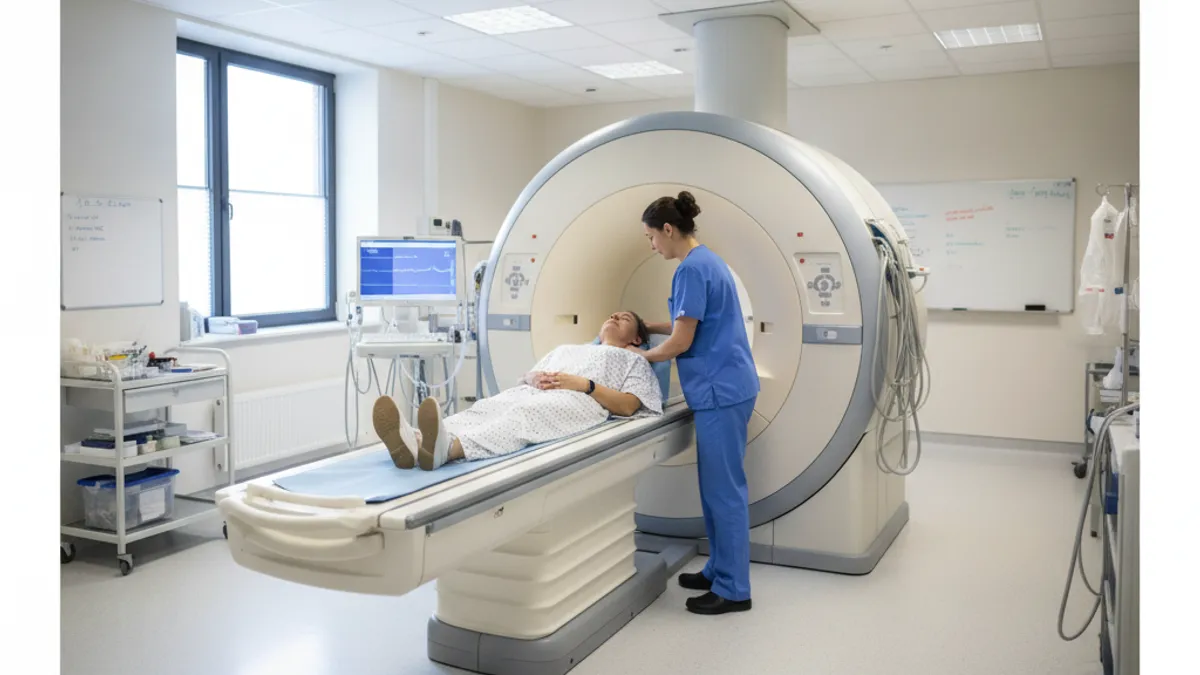
If contrast is added during the exam, the CPT code, the contrast supply code, and the units must all change together. Billing 72141 with a contrast charge, or 72156 without documentation of both phases, is a leading cause of denials and audits. Update the authorization before billing.
Patients experience the CPT code through their bill, so understanding it pays off. After a scan, the explanation of benefits lists the CPT code, the allowed amount, what the insurer paid, and what you owe. If you see 72141 but remember receiving an injection, ask whether 72156 and a contrast supply code were intended. Errors in either direction are common and can change your cost share, so a quick call to billing often resolves them before payment.
Your out-of-pocket cost depends on your plan design. Under a high-deductible plan, you may pay the entire negotiated rate until the deductible is met, which might be 400 to 1,200 dollars for a non-contrast study at an in-network freestanding center. Under a copay plan, you may owe a flat advanced-imaging copay, often 50 to 250 dollars. Coinsurance plans typically charge 10 to 30 percent of the allowed amount after the deductible.
Price shopping works because the same CPT code can carry very different prices. Hospital outpatient departments commonly charge more than freestanding imaging centers for identical 72141 studies, since hospital facility fees and overhead are built into the rate. Federal price transparency rules require hospitals to publish shoppable service prices, including negotiated rates by CPT code. Searching a hospital's price file for the code, then calling two or three independent centers, can reveal differences of several hundred dollars.
Cash-pay patients have additional leverage. Many imaging centers offer a bundled self-pay price that includes the technologist, the radiologist read, and sometimes the contrast agent. Ask whether the quoted price is global or technical-only, because a low technical price can be followed by a separate radiologist bill. Request the CPT code in writing before you schedule, and confirm whether a with-and-without study would change the price you were quoted.
The No Surprises Act protects patients in certain scenarios, such as receiving out-of-network radiology services at an in-network facility. Radiologists who read your images remotely may belong to a different group than the facility, so a separate professional bill can arrive weeks later. If the facility is in-network, protections often cap your cost at in-network levels for those professional services. Keep your paperwork, and dispute any bill that looks inconsistent with the CPT code you were told.
Medicare beneficiaries follow Part B rules. After the annual deductible, Part B generally pays 80 percent of the Medicare-approved amount for a medically necessary MRI, leaving 20 percent coinsurance unless a supplemental policy covers it. Original Medicare does not generally require prior authorization for cervical MRI, though Medicare Advantage plans often do. Beneficiaries should confirm that the imaging provider accepts assignment, which means it agrees to the Medicare-approved amount as full payment.
If you disagree with a bill, move step by step. First, request an itemized statement showing every CPT and HCPCS code. Second, compare it to your report and your order. Third, call the insurer with the claim number and ask for reprocessing if the code is wrong. Fourth, file a formal appeal if needed. Most insurers allow 180 days for a first-level appeal, and external review is available if the plan still denies the claim.
Study tips begin with a code map. Create a one-page chart listing body region, contrast status, and code: cervical 72141, 72142, 72156; thoracic 72146, 72147, 72157; lumbar 72148, 72149, 72158. Notice the pattern that the first code in each family is without contrast, the second is with contrast, and the third in the 7215x series is without followed by with. Memorizing that pattern lets you derive any spinal MRI code in seconds.
Pair the code map with anatomy and sequence knowledge. Cervical MRI protocols typically use sagittal T1, sagittal T2, sagittal STIR, and axial T2 or gradient echo images, with slice thickness near 3 mm and a field of view around 24 cm. Knowing why these sequences are chosen helps you answer registry questions about artifacts, such as cerebrospinal fluid flow pulsation, swallowing motion, and metal from fusion hardware, all of which are common in the neck.
Practice with scenarios rather than flashcards alone. Write five short cases: a patient with arm numbness, a trauma patient with ligament injury concerns, a post-surgical patient, a patient with suspected multiple sclerosis, and a patient with known cancer. For each, decide whether contrast is likely, state the code, and name the supporting diagnosis. Then compare your answers with a coding reference. This builds the judgment that exam questions and real billing departments both demand.
Technologists can add value by documenting clearly. Record start and stop times, the exact contrast agent, dose in milliliters, lot number, injection site, and any patient reaction. Note whether pre-contrast sequences were acquired before injection, because that detail supports 72156. Clear notes help coders select the right code without guessing and reduce the number of queries sent back to the department, saving time for everyone involved.
Coders should rely on current references. Review the annual CPT code book, the CMS Physician Fee Schedule, National Correct Coding Initiative edits, and each payer's imaging policy every January, since changes take effect on a calendar-year basis. Subscribe to updates from the AMA and your professional association. Using a prior year's code set is a quiet but common cause of rejection, especially for revised descriptors or contrast-related HCPCS changes.
Patients can prepare too. Before scheduling, ask the ordering provider for the exact planned study, then call your insurer with the code to ask about coverage, prior authorization, and cost share. Remove metal items on the day of the scan, report implants such as pacemakers or aneurysm clips, and arrive early to complete screening forms. Bring prior imaging for comparison, because a radiologist can often reach a more certain conclusion with older scans to compare against.
Finally, test yourself regularly. Short, repeated quizzes are among the most effective ways to lock in codes, sequences, and safety rules. Take a practice set, review every missed item, and return to it two days later. Within a few weeks, the cervical codes, contrast units, and modifier rules will feel automatic, whether you are facing a registry exam, a coding certification, or a billing call with an insurer.
MRI Questions and Answers
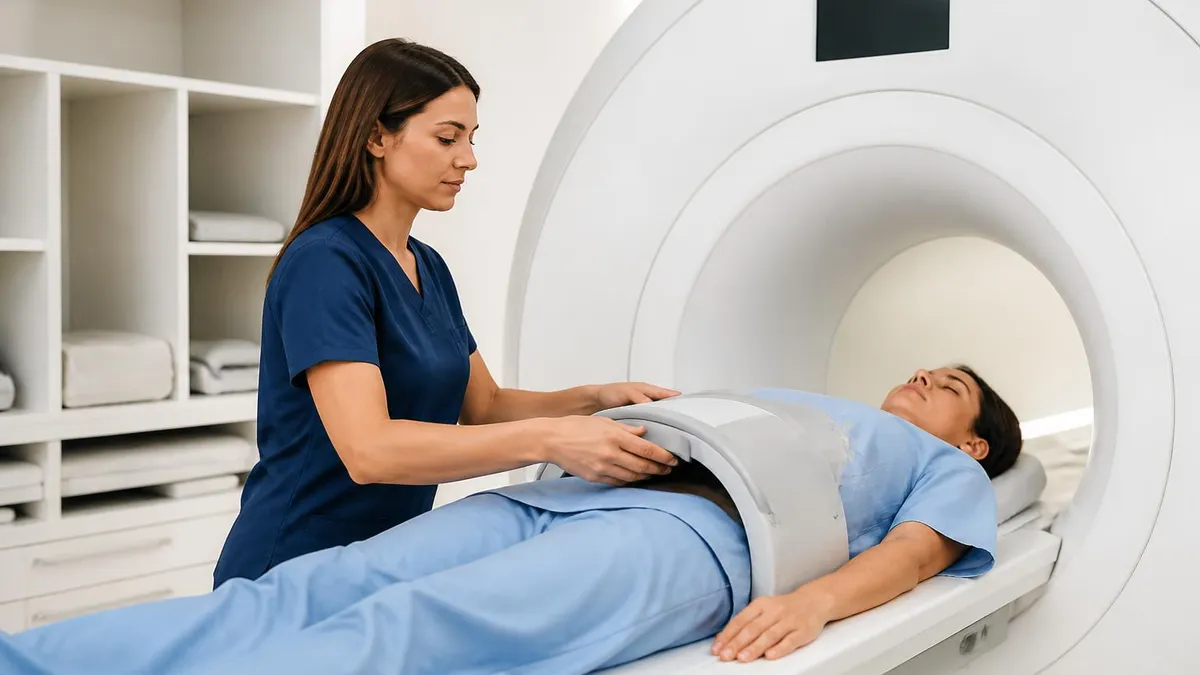
Contrast MRI: How It Works, Safety, Side Effects, and What to Expect

Can You Feel an MRI? What to Expect During Your MRI Procedure Experience

Where to Get an MRI: Facilities, Costs, and How to Choose

MS Brain MRI: Complete Guide to Lesions, Diagnosis, Monitoring, and Imaging Protocols

Brain MRI Scan: What It Shows, Why Doctors Order One, and What to Expect
About the Author

Medical Laboratory Scientist & Clinical Certification Expert
Johns Hopkins UniversityDr. Sandra Kim holds a PhD in Clinical Laboratory Science from Johns Hopkins University and is certified as a Medical Technologist (MT) and Medical Laboratory Scientist (MLS) through ASCP. With 16 years of clinical laboratory experience spanning hematology, microbiology, and molecular diagnostics, she prepares candidates for ASCP board exams, MLT, MLS, and specialist certification tests.
Join the Discussion
Connect with other students preparing for this exam. Share tips, ask questions, and get advice from people who have been there.
View discussion (8 replies)