

MEOC Practice Test
Updated for October 2026The construction industry is evolving rapidly, and with that evolution comes the growing need for skilled and certified heavy equipment operators. One increasingly in-demand credential is the Mini Excavator Operator Certification (MEOC), which equips individuals with the specialized skills to safely and efficiently operate compact excavating machinery. This certification is vital for both newcomers looking to enter the field and experienced workers seeking to formalize their expertise.
Mini excavators are commonly used in tight urban spaces, landscaping, small construction projects, and utility work. Due to their size and versatility, they require operators who are trained not only in machine mechanics but also in job site safety, terrain assessment, and proper load handling techniques. Earning a Mini Excavator Operator Certification demonstrates a commitment to professionalism, enhances job prospects, and ensures compliance with safety regulations and employer expectations.
MEOC Practice Test Questions
Prepare for the MEOC - Mini Excavator Operator Certification exam with our free practice test modules. Each quiz covers key topics to help you pass on your first try.
MEOC Case Analysis & Practical Application
MEOC Exam Questions covering Case Analysis & Practical Application. Master MEOC Test concepts for certification prep.
MEOC Communication & Client Relations
Free MEOC Practice Test featuring Communication & Client Relations. Improve your MEOC Exam score with mock test prep.
MEOC Equipment Operation & Controls
MEOC Mock Exam on Equipment Operation & Controls. MEOC Study Guide questions to pass on your first try.
MEOC Excavation Techniques & Site Management
MEOC Test Prep for Excavation Techniques & Site Management. Practice MEOC Quiz questions and boost your score.
MEOC Hydraulic Systems & Fluid Management
MEOC Questions and Answers on Hydraulic Systems & Fluid Management. Free MEOC practice for exam readiness.
MEOC Maintenance & Inspection
MEOC Mock Test covering Maintenance & Inspection. Online MEOC Test practice with instant feedback.
MEOC Professional Standards & Competencies
Free MEOC Quiz on Professional Standards & Competencies. MEOC Exam prep questions with detailed explanations.
MEOC Quality Control & Process Improvement
MEOC Practice Questions for Quality Control & Process Improvement. Build confidence for your MEOC certification exam.
MEOC Regulatory Compliance & Legal Framework
MEOC Test Online for Regulatory Compliance & Legal Framework. Free practice with instant results and feedback.
MEOC Research Methods & Evidence-Based Pra...
MEOC Study Material on Research Methods & Evidence-Based Practice. Prepare effectively with real exam-style questions.
MEOC Risk Assessment & Mitigation
Free MEOC Test covering Risk Assessment & Mitigation. Practice and track your MEOC exam readiness.
Key Takeaways
Free MEOC Practice Test Online
The Mini Excavator Operator Certification validates an individual’s ability to operate compact excavators in a safe and effective manner.
Certified operators are highly valued in construction, landscaping, agriculture, and public utility sectors.
MEOC programs emphasize safety protocols, excavation techniques, and machine maintenance.
Earning the certification often leads to increased job opportunities and higher earning potential.
Training includes both classroom instruction and hands-on equipment operation.
The certification process is accessible through accredited institutions and training centers.
Costs vary by provider but typically include training fees, exam registration, and safety gear.
What Is Mini Excavator Operator Certification?
Mini Excavator Operator Certification is a professional credential that verifies an individual's competence in operating a mini excavator—also known as a compact excavator—in compliance with safety and efficiency standards. These machines are widely used in confined spaces where larger equipment cannot maneuver, making precise handling and control a priority.
The certification ensures that operators are knowledgeable in:
Equipment controls and functionality
Pre-operational checks and routine maintenance
Safety procedures and OSHA regulations
Proper digging, grading, and lifting techniques
Site awareness and hazard recognition
Most certification programs include written assessments, equipment demonstrations, and field exercises that mimic real-world scenarios. This ensures that graduates are ready for employment in construction, landscaping, and utility installation projects.

How to Become a Mini Excavator Operator
To earn your Mini Excavator Operator Certification, follow these steps:
1. Meet Basic Eligibility Requirements:
Be at least 18 years old.
Hold a valid driver’s license (depending on the training provider or employer).
2. Enroll in an Accredited Training Program:
Choose a program recognized by professional associations or regulatory bodies such as the National Center for Construction Education and Research (NCCER) or the Occupational Safety and Health Administration (OSHA).
Training programs are often offered at technical schools, community colleges, and union-sponsored centers.
3. Complete Classroom Instruction:
Topics typically include equipment theory, workplace safety, excavation regulations, load limits, and environmental awareness.
4. Participate in Hands-On Training:
Gain real-time experience operating a mini excavator under supervision.
Practice tasks like trenching, backfilling, lifting loads, and navigating different types of terrain.
5. Pass the Certification Exam:
Exams include both written and practical components.
You must demonstrate proper use of controls, accurate digging, and adherence to safety protocols.
6. Receive Certification:
After successful completion, candidates receive a certificate or wallet card, valid for a specified period (usually 2 to 5 years).
Renewal may require refresher training or continuing education.
Job Description: Mini Excavator Operator
A certified Mini Excavator Operator is responsible for operating compact excavation equipment to dig trenches, clear sites, demolish small structures, or load materials in tight or restricted environments. Their tasks may vary depending on the job site but typically include:
Performing equipment inspections and basic maintenance
Interpreting construction plans or blueprints
Excavating earth and grading terrain
Working in coordination with ground crews and other equipment operators
Ensuring safety compliance at all times
Documenting work and communicating progress to supervisors
Operators must have strong spatial awareness, physical stamina, and a solid understanding of mechanics and safety practices. They are often employed by construction companies, landscaping firms, agricultural operations, and public works departments.
Salary: Mini Excavator Operator
Certified mini excavator operators enjoy competitive pay, especially as the demand for skilled labor continues to rise in the construction industry. Salary ranges are influenced by experience, location, employer, and union status.
Entry-Level Operators: $36,000 – $45,000 annually
Mid-Level Operators: $46,000 – $60,000 annually
Experienced or Union Operators: $65,000 – $75,000+ annually
In metropolitan areas or on government-funded projects, wages may be even higher. Certification adds value by making candidates more attractive to employers, often leading to bonuses or faster advancement.
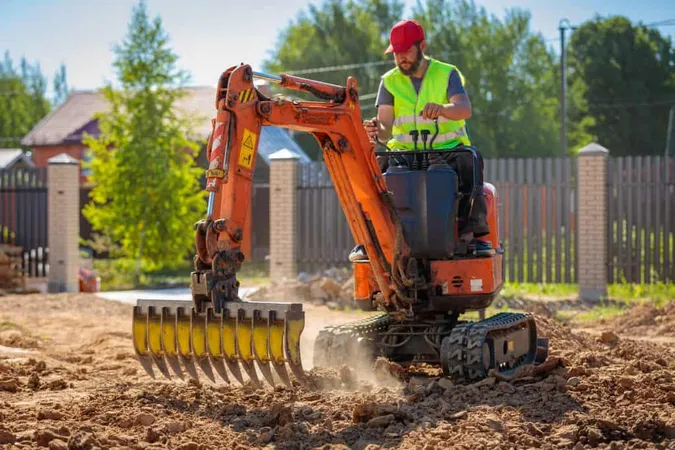
Exam Cost: Mini Excavator Operator Certification
The cost of earning the Mini Excavator Operator Certification varies depending on the training provider and location. However, typical expenses include:
Tuition for Training Course: $500 – $2,000 (depending on program length and location)
Certification Exam Fee: $100 – $300
Safety Equipment Costs (if not provided): $50 – $150
Renewal Fees (every few years): $100 – $200
Some employers may cover training and certification costs as part of onboarding or workforce development programs. Scholarships and union-sponsored programs may also reduce the out-of-pocket expense.

Conclusion
The Mini Excavator Operator Certification (MEOC) offers a practical and valuable path for individuals seeking to enter or advance in the construction and landscaping industries. As job sites become more compact and projects demand greater precision, certified operators are proving indispensable. This credential not only ensures safer worksites but also increases career stability and earning potential.
By completing the certification process—combining classroom theory with hands-on practice—you position yourself as a reliable and knowledgeable professional. Whether you're starting a new career or upgrading your skills, the MEOC provides the foundation for success in a growing and respected field.
- +Industry-recognized credential boosts your resume
- +Higher earning potential (10-20% salary increase on average)
- +Demonstrates commitment to professional development
- +Opens doors to advanced career opportunities
- −Exam preparation requires significant time investment (4-8 weeks)
- −Certification fees can be $100-$400+
- −May require continuing education to maintain
- −Some employers may not require certification
Sample Mini Excavator Operator Certification Practice Questions
Try these questions from our free Mini Excavator Operator Certification practice tests. The correct answer and an explanation follow each question.
What is the value of case studies in Mini Excavator Operator Certification professional literature?
- A. They are unreliable anecdotes
- B. They provide detailed examples of practice that illustrate principles in real-world contexts
- C. They replace the need for controlled studies
- D. They are only useful for teaching beginners
Answer: B. They provide detailed examples of practice that illustrate principles in real-world contexts
Case studies in Mini Excavator Operator Certification literature provide rich, contextualized examples that illustrate professional principles in real-world applications.
What is the benefit of standardized digital reporting in Mini Excavator Operator Certification practice?
- A. It unnecessarily limits professional creativity
- B. It ensures consistency, enables comparison, and facilitates compliance
- C. It is only needed for government-related work
- D. It replaces the need for professional communication
Answer: B. It ensures consistency, enables comparison, and facilitates compliance
Standardized digital reporting creates consistency across Mini Excavator Operator Certification practice, enables meaningful comparisons, and streamlines regulatory compliance.
What is the role of internal audits in Mini Excavator Operator Certification compliance management?
- A. They are only needed for large organizations
- B. They verify adherence to regulations and identify areas needing improvement
- C. They replace external regulatory inspections
- D. They only assess financial compliance
Answer: B. They verify adherence to regulations and identify areas needing improvement
Internal audits proactively verify compliance, identify gaps, and drive improvement before external inspections or incidents reveal problems.
What distinguishes risk mitigation from risk avoidance in Mini Excavator Operator Certification practice?
- A. They are identical concepts
- B. Mitigation reduces impact or likelihood while avoidance eliminates the activity entirely
- C. Mitigation is always preferred
- D. Avoidance is never appropriate
Answer: B. Mitigation reduces impact or likelihood while avoidance eliminates the activity entirely
Risk mitigation allows the activity to continue with reduced risk, while avoidance eliminates the risk by not engaging in the activity at all.
Take the full Mini Excavator Operator Certification practice test
(MEOC) Mini Excavator Operator Certification Questions and Answers
About the Author

Certified Professional Development Expert & Niche Certification Advisor
University of Pennsylvania Graduate School of EducationDr. Alexandra Kim holds a PhD in Professional Studies from the University of Pennsylvania and is a Certified Professional in Learning and Performance (CPLP) and Certified Professional in Talent Development (CPTD). With 17 years of corporate training and professional certification advisory experience, she helps professionals navigate specialized, emerging, and cross-industry certification programs.