
Millwright vs. Electrician: Duties, Pay, and Which Trade Fits You 2026 August
Millwright what is vs electrician — compare duties, salary, training & career paths. Find which skilled trade fits your goals. 🎯

Understanding the difference between a millwright and an electrician is one of the most common questions among people entering the skilled trades. The term millwright what is comes up constantly in career research because the role overlaps with several other industrial professions — including electricians — in ways that can confuse newcomers. A millwright electrician comparison reveals two highly skilled, well-compensated trades that share industrial environments but diverge sharply in their daily responsibilities, certification paths, and long-term earning potential. Knowing which path fits your strengths is the first step toward a rewarding career.
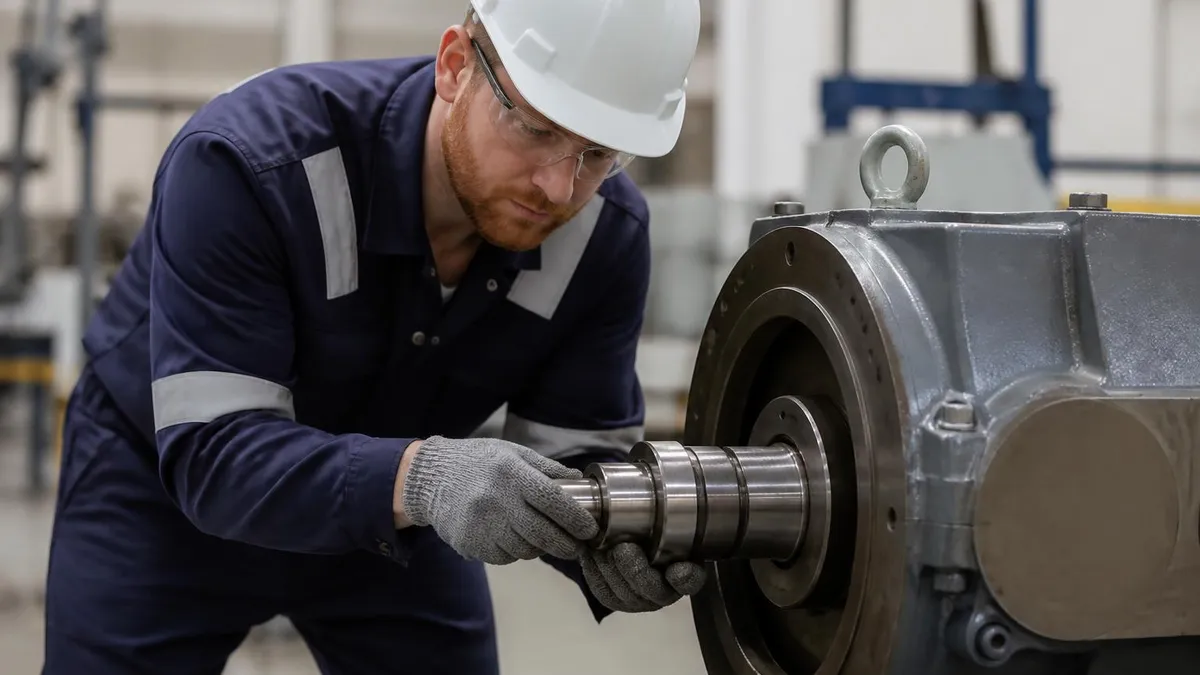
Millwrights specialize in the installation, alignment, maintenance, and repair of heavy industrial machinery. They work with conveyor systems, turbines, pumps, compressors, gearboxes, and production-line equipment in factories, power plants, mining operations, and construction sites across the United States. Their work requires precise mechanical skill, the ability to read complex blueprints, and a deep understanding of how industrial systems interact. Without millwrights, the machinery that drives American manufacturing would quickly fall into disrepair, costing employers millions of dollars in lost productivity and equipment damage.
Electricians, by contrast, focus on electrical systems — wiring, circuit breakers, conduit, panels, motors, and controls. Industrial electricians work alongside millwrights in many of the same facilities, handling the power distribution and control systems that run the same machines millwrights install and maintain. Residential and commercial electricians extend that scope to buildings, infrastructure, and consumer spaces. The two trades occupy different ends of the mechanical-electrical spectrum, yet in large industrial settings they must communicate and coordinate daily to keep complex systems running safely and efficiently.
One important distinction is the licensing structure. Electricians in every U.S. state must hold a state-issued license — typically progressing from apprentice to journeyman to master electrician — and those licenses are often not portable across state lines. Millwrights, on the other hand, are typically certified through union apprenticeship programs managed by the United Brotherhood of Carpenters and Joiners of America (UBC) or through employer-sponsored training, with certification validated by bodies like the National Center for Construction Education and Research (NCCER). This difference has real implications for job mobility and career flexibility.
Salary data from the U.S. Bureau of Labor Statistics places industrial electricians at a median annual wage of approximately $61,590, while millwrights earn a median of about $59,380. However, union millwrights in heavy industry — particularly in automotive, aerospace, and energy sectors — frequently earn $75,000 to $95,000 or more annually when overtime and benefits are factored in. Both trades offer strong job security, as demand for skilled trades workers continues to outpace supply in virtually every region of the country, creating favorable conditions for anyone entering either field today.
Physical demands differ as well. Millwrights regularly lift heavy components, work in confined spaces, operate overhead cranes, and use precision alignment tools such as laser shaft alignment systems and dial indicators. Electricians often work in cramped electrical panels, on scaffolding, and in attic or crawl space environments. Both trades require attention to safety — millwrights because of the crush and entanglement hazards from machinery, electricians because of the life-threatening risks of arc flash and electrocution. Personal protective equipment and lockout/tagout (LOTO) procedures are critical in both fields.
This article provides a comprehensive, side-by-side comparison of millwrights and electricians, covering job duties, training timelines, pay scales, union membership, advancement paths, and the specific technical skills each trade demands. Whether you are a high school graduate weighing apprenticeship options, a working tradesperson considering a career change, or a hiring manager trying to understand which trade to recruit, the following sections will give you the detailed, accurate information you need to make an informed decision.
Millwright vs. Electrician by the Numbers

Core Job Duties: Millwright vs. Electrician
Install, align, and maintain heavy machinery including conveyors, turbines, pumps, and gearboxes. Use precision tools like laser aligners and dial indicators. Read mechanical blueprints and perform preventive maintenance to minimize production downtime.
Install and maintain electrical wiring, circuit panels, conduit, motors, and control systems. Interpret electrical schematics, troubleshoot faults, and ensure compliance with the National Electrical Code (NEC) and local safety regulations.
Both trades work in industrial facilities and must follow lockout/tagout (LOTO) procedures, collaborate on equipment commissioning, interpret technical drawings, and adhere to OSHA safety standards to protect themselves and their coworkers.
Millwrights focus on mechanical systems — gears, bearings, shafts, and structural alignment. Electricians focus on power distribution and control circuits. In large plants, these specialists coordinate closely but hold distinct certifications and union affiliations.
The training pathways for millwrights and electricians share a common structure — multi-year apprenticeships that combine on-the-job training with classroom instruction — but the specifics differ in ways that matter for career planning. What is a millwright in terms of formal training? In the United States, aspiring millwrights typically enter a four- to five-year apprenticeship program registered with the U.S. Department of Labor.
The United Brotherhood of Carpenters and Joiners of America (UBC) manages the largest and most recognized of these programs, offering apprentices a structured curriculum that covers rigging and lifting, machinery installation, precision alignment, hydraulics, pneumatics, blueprint reading, and welding fundamentals.
Electrician apprenticeships run on a similar timeline — typically four to five years — but are administered through the International Brotherhood of Electrical Workers (IBEW) in partnership with the National Electrical Contractors Association (NECA). Apprentice electricians study the National Electrical Code in depth, covering residential, commercial, and industrial wiring methods, motor controls, transformers, conduit bending, and electrical theory. Some programs offer specialized tracks in solar, data centers, or industrial automation, reflecting the expanding scope of modern electrical work.
Licensing requirements represent one of the sharpest divergences between the two trades. Every state in the U.S. requires electricians to obtain a state-issued journeyman or master electrician license before working independently. These exams test knowledge of the NEC and local amendments, and licenses are typically not transferable across state lines without additional testing. A licensed journeyman electrician in Texas, for example, must pass California's exam separately if they want to work in California — a real limitation for workers who want to follow high-paying projects across the country.
Millwrights face a different regulatory landscape. While some states and localities have millwright-specific licensing requirements — particularly for work involving pressure vessels, boilers, or elevators — most millwright certification is voluntary and industry-driven. The NCCER offers a standardized millwright curriculum with formal assessments at each level, and many large employers and union halls require NCCER certification as a condition of hire. Red Seal certification in Canada provides a similar nationally recognized standard, though U.S. millwrights working near the Canadian border should understand this distinction.
Both apprenticeships are earn-while-you-learn programs, meaning apprentices receive wages from the first day on the job. Starting wages typically range from 40 to 50 percent of journeyman scale, increasing with each completed year of the apprenticeship. By the final year, apprentices often earn 80 to 90 percent of journeyman pay. This structure allows workers to avoid student loan debt while gaining hands-on experience that classroom-only education cannot replicate — a major financial advantage over traditional four-year degree programs that can cost $50,000 to $150,000 or more.
Continuing education is required in both trades, though again the specifics differ. Electricians in most states must complete continuing education hours to renew their licenses, covering code updates, new technologies, and safety practices. Millwrights who are union members participate in ongoing training through their local halls, with courses covering new machinery types, updated alignment software, rigging safety, and specialized industrial systems. Employers in heavy industry often pay for this training as part of the total compensation package, making it a hidden benefit that does not show up in base wage comparisons.
For those interested in advancing beyond journeyman status, both trades offer distinct pathways. Journeyman millwrights can become foremen, general foremen, or superintendents on large industrial projects. Some move into roles as machinery alignment specialists, vibration analysts, or predictive maintenance technicians — positions that command premium pay and are increasingly valued as Industry 4.0 sensor technology makes real-time machinery monitoring standard practice. Electricians who earn master electrician licenses can start their own contracting businesses, a path that offers significant income potential for entrepreneurially minded tradespeople willing to manage the business side of operations.
Millwright Jobs vs. Electrician Jobs: Industries, Settings & Demand
Millwrights are employed across a wide range of heavy industries in the United States. The largest employers include automotive manufacturing plants, steel mills, paper and pulp facilities, chemical plants, food and beverage processing facilities, power generation stations, and mining operations. Construction millwrights follow large capital projects — building new factories, installing production lines, or commissioning power plants — and frequently travel between job sites, which appeals to workers who prefer variety over routine desk-bound roles.
Industrial maintenance millwrights, by contrast, work at a single facility long-term, maintaining and repairing the machinery that drives daily production. These positions offer stability, benefits, and predictable schedules compared to the travel demands of construction work. According to BLS data, the states with the highest concentration of millwright jobs include Michigan, Ohio, Indiana, Pennsylvania, and Texas — all states with significant manufacturing and energy infrastructure that requires skilled mechanical tradespeople to keep running at peak efficiency.

Pros and Cons: Millwright vs. Electrician Career
- +Millwrights earn strong union wages with top earners exceeding $95,000 annually in heavy industry
- +Both trades offer earn-while-you-learn apprenticeships that eliminate the need for student loan debt
- +Electricians have broader work settings — from residential to industrial — providing more career flexibility
- +Millwrights develop rare precision alignment and mechanical systems expertise that commands premium pay
- +Both trades offer excellent job security with faster-than-average projected employment growth through 2032
- +Union membership in either trade provides health insurance, pension benefits, and standardized wage scales
- −Electrician licenses are state-specific and not portable, limiting geographic mobility without re-testing
- −Millwright work in construction settings requires frequent travel and time away from home
- −Both trades involve significant physical demands — heavy lifting, confined spaces, and exposure to industrial hazards
- −Entry-level apprentice wages in both trades can feel low compared to journeyman pay during the first two years
- −Millwright certification standards vary more than electrician licensing, creating inconsistency across employers
- −Electricians face serious arc flash and electrocution risks that require constant vigilance and PPE compliance
Skills & Certifications Checklist for Millwrights and Electricians
- ✓Complete a registered 4–5 year apprenticeship with the UBC (millwright) or IBEW (electrician)
- ✓Obtain NCCER millwright certification at Levels 1–4 to validate your skills for union and non-union employers
- ✓Earn your journeyman electrician license in your state before working independently on electrical installations
- ✓Pass OSHA 10-hour or 30-hour construction safety training required by most large industrial employers
- ✓Complete rigging and signaling certification (ASME B30.9) if you will work with overhead cranes or hoists
- ✓Learn to use laser shaft alignment equipment such as Pruftechnik or SKF systems for precision millwright work
- ✓Study the National Electrical Code (NFPA 70) thoroughly if pursuing electrician licensure in any state
- ✓Get certified in lockout/tagout (LOTO) procedures — mandatory for working on any energized industrial equipment
- ✓Pursue forklift and elevated work platform (EWP) operator certifications required on most industrial job sites
- ✓Consider vibration analysis (ISO 18436-2) certification for advancement into predictive maintenance roles as a millwright
Many Industrial Facilities Hire Both — And Cross-Training Pays Off
In large manufacturing plants and power generation facilities, millwrights and electricians frequently work side by side on the same equipment. Millwrights who develop a working knowledge of motor controls and basic electrical theory — and electricians who understand mechanical alignment and power transmission — are significantly more valuable to employers and command higher wages. Some workers pursue dual certification in both trades, though this requires considerable time and commitment beyond a standard apprenticeship.
Career advancement looks different for millwrights and electricians, but both trades offer clear upward pathways for workers who invest in their skills and professional development. For millwright jobs, the most common advancement route is from apprentice to journeyman to foreman to general foreman to superintendent. In unionized environments, these promotions come with defined pay scales and are governed by seniority and demonstrated competency. In non-union settings, advancement is often faster for high performers but less structured, relying more on employer recognition than collective bargaining agreements.
Beyond supervisory roles, millwrights can specialize in areas that command premium compensation. Precision alignment specialists — millwrights who master laser shaft alignment, geometric leveling, and bore alignment — are among the highest-paid workers in industrial maintenance. Vibration analysts certified under ISO 18436-2 use accelerometers and spectrum analysis software to detect bearing failures and imbalance conditions before they cause catastrophic equipment failure. This predictive maintenance skill set is increasingly valuable as manufacturers adopt Industry 4.0 sensor networks and seek to minimize unplanned downtime, which can cost large facilities $250,000 or more per hour of lost production.
Millwrights with strong rigging and heavy lift experience can also advance into crane operator or rigging supervisor roles, which are separately licensed in many states and carry their own pay premiums. On large capital construction projects — new semiconductor fabs, LNG plants, or automotive assembly facilities — experienced rigging supervisors manage multi-crane lifts of equipment weighing hundreds of tons, work that requires both deep technical knowledge and strong leadership capability. These roles can pay $45 to $65 per hour or more, depending on the region and the complexity of the project.
Electricians have arguably more diverse advancement options due to the breadth of their trade. After earning a journeyman license, electricians can pursue master electrician status — a credential that typically requires an additional two to four years of work experience and a comprehensive licensing exam. Master electricians can pull permits, sign off on electrical installations, and most importantly, start their own electrical contracting businesses. Successful electrical contractors in high-demand markets can earn well into six figures annually, though they also take on business management responsibilities that pure tradespeople do not.
Industrial electricians who specialize in programmable logic controllers (PLCs) — the computerized control systems that run modern automated production lines — occupy a particularly well-compensated niche. PLC programming and troubleshooting skills bridge the gap between traditional electrical work and industrial automation engineering, and employers in automotive, food processing, and pharmaceutical manufacturing consistently report difficulty finding workers with this combination of hands-on electrical skill and programming capability. Pay for experienced industrial PLC technicians regularly exceeds $40 per hour, with some senior-level roles offering $80,000 to $110,000 annually in total compensation.
Both trades are also seeing growing opportunities in the renewable energy sector. Wind turbine technicians perform work that combines millwright mechanical skills with electrician electrical knowledge — they install, maintain, and repair turbine gearboxes, blade pitch systems, and the electrical generation and power conversion equipment inside each tower. The Bureau of Labor Statistics projects wind turbine technician employment to grow by 60 percent from 2022 to 2032, making it one of the fastest-growing occupations in the entire U.S. economy. Workers from either millwright or electrician backgrounds who add wind-specific certifications are well positioned to enter this expanding field.
Construction management is another avenue available to both trades. Experienced millwrights and electricians who develop project management skills — scheduling, cost estimation, subcontractor coordination, and safety planning — can transition into general contractor or construction manager roles. These positions typically require additional education in business or construction management, either through community college programs or industry association courses offered by organizations like the Associated General Contractors of America (AGC) or the National Electrical Contractors Association (NECA). The transition from tool-wielding tradesperson to project manager represents one of the most significant income jumps available in either field.

Most UBC millwright and IBEW electrician apprenticeship programs accept applications on a rolling basis, though competitive programs in major metro areas may have waiting lists of six to eighteen months. Contact your local union hall directly to ask about current openings, testing dates, and any prerequisites such as math aptitude tests or drug screening requirements. Starting the application process early gives you the best chance of entering the next available cohort.
Choosing between a millwright career and an electrician career ultimately comes down to your personal strengths, interests, and lifestyle preferences. If you are drawn to heavy machinery, mechanical systems, precision measurement, and the satisfaction of bringing massive industrial equipment into perfect alignment, the millwright trade is likely a better fit.
If you are more interested in electrical theory, circuit design, troubleshooting invisible problems through systematic testing, and the versatility of working in residential, commercial, and industrial environments, the electrician path may suit you better. Neither choice is wrong — both trades offer rewarding, well-compensated careers with strong long-term outlooks. Understanding millwright salary data and union benefits in detail can help you make a more informed comparison against electrician pay in your specific region.
Geographic considerations matter as well. If you live near a major auto manufacturing hub like Detroit, Toledo, or Spartanburg, millwright opportunities in automotive plants may be exceptionally plentiful and well-paying. If you live in a fast-growing Sun Belt city like Phoenix, Austin, or Charlotte, the construction boom in those markets creates strong demand for both commercial and industrial electricians. Research the specific labor markets in your region by checking prevailing wage data on the U.S. Department of Labor website and talking to local union halls about current job conditions and apprenticeship wait times before committing to either path.
Physical stamina and tolerance for specific working conditions should also factor into your decision. Millwrights frequently work in loud, heavy industrial environments with exposure to heat, oil, and chemical hazards. They regularly perform tasks that require upper body strength for moving heavy components and fine motor control for precision adjustment work — sometimes both in the same hour.
Electricians work in a wider variety of environments but face their own physical challenges: working in cramped electrical rooms, pulling heavy wire through conduit, and spending extended periods on ladders or scaffolding. Neither trade is easy on the body, and both require consistent attention to ergonomic best practices to sustain a full career.
If you are still undecided, consider speaking with working millwrights and electricians in your area. Job shadowing opportunities — spending a day on a job site with a journeyman in either trade — can give you direct insight into the daily reality of each career that no article or job posting can fully convey.
Many union apprenticeship programs actively encourage prospective applicants to attend open house events or informational sessions where you can ask questions and get an honest picture of what the work actually involves day to day, including the less glamorous aspects like shift work, weather exposure, and seasonal layoffs in construction-heavy millwright roles.
Industry certifications can also help you explore both trades before committing fully to one. The NCCER offers introductory industrial courses in both millwright skills and electrical fundamentals that can be completed at community colleges and technical schools. Taking one or both of these courses gives you a structured introduction to each trade's technical content and helps you identify which type of problem-solving — mechanical or electrical — feels more natural and engaging. Many community colleges offer these programs at low cost, making exploratory coursework a low-risk way to inform a high-stakes career decision.
Financial planning is another important factor. Both trades start apprentices at lower wages than journeyman rates, meaning you should plan your budget for a four- to five-year period of earnings growth rather than expecting immediate peak income. The long-term financial picture is strong in both trades — journeyman millwrights and electricians consistently earn above the U.S. median household income — but the path there requires patience and commitment during the apprenticeship years. Union apprenticeships also typically include health insurance and pension contributions from the first day, which significantly improves the total compensation picture even when base wages are still climbing.
Finally, consider the lifestyle associated with each career. Construction millwrights travel extensively, which some workers love and others find exhausting and disruptive to family life. Maintenance millwrights at a single facility enjoy more predictable schedules but may face mandatory overtime during production outages or emergency breakdowns. Electricians in commercial construction also follow project-based work cycles, while those employed by a single facility maintenance department enjoy more stability. Understanding these lifestyle factors — not just the wage rates — is essential to making a career choice you will feel good about five or ten years down the road.
Whether you are preparing for a millwright certification exam or exploring this trade for the first time, building a strong foundation in the technical areas that matter most will dramatically improve both your exam performance and your on-the-job effectiveness. Millwright certification exams administered through NCCER or union apprenticeship programs test knowledge across a broad curriculum, and targeted preparation in each area is far more effective than generic studying. Start by identifying which knowledge domains carry the most weight on the specific exam you are preparing for, then allocate your study time proportionally.
Bearing maintenance and failure analysis is one of the most heavily tested areas in millwright certification programs. Apprentices must understand different bearing types — ball, roller, needle, and thrust — along with correct installation procedures, lubrication requirements, clearance specifications, and the visual and auditory indicators of bearing distress. Improper bearing installation is one of the leading causes of premature machinery failure in industrial settings, making this a critical skill that employers test rigorously and expect journeyman millwrights to execute flawlessly under production pressure.
Blueprint reading and mechanical drawing interpretation is another core competency tested on millwright exams. Millwrights must be able to read orthographic projections, isometric drawings, assembly drawings, and piping and instrumentation diagrams (P&IDs). They must understand geometric dimensioning and tolerancing (GD&T) symbols, surface finish callouts, and the weld symbols used on structural drawings. Practice with real industrial drawings — not just simplified textbook examples — is essential for developing the speed and accuracy needed on a timed certification exam.
Hydraulic and pneumatic systems knowledge is tested extensively because these systems power the actuators, clamps, presses, and motion-control devices found throughout industrial machinery. Millwrights must understand hydraulic circuit symbols, be able to trace fluid flow through complex schematics, calculate pressure and flow relationships using Pascal's law and Bernoulli's equation, and identify common hydraulic failure modes such as internal leakage, contamination, and cavitation. Pneumatic systems add the complexities of air compressor maintenance, moisture control, and proportional pressure regulation.
Precision measurement skills — using micrometers, vernier calipers, dial indicators, feeler gauges, and laser alignment equipment — must be developed through hands-on practice that written study alone cannot replicate. If you are preparing for a certification exam while not currently working in the trade, look for community college lab courses or maker-space environments where you can practice measuring actual machined components. Understanding tolerance stacks, thermal expansion effects on precision alignment, and the difference between runout and flatness measurements separates strong millwright candidates from weak ones on practical assessments.
Mechanical systems knowledge — covering gears, chains, belts, couplings, and power transmission components — forms the backbone of millwright technical knowledge. You should be able to calculate gear ratios, identify different coupling types and their appropriate applications, select the correct chain or belt drive for a given speed ratio requirement, and diagnose common mechanical failures such as misalignment, imbalance, resonance, and lubrication breakdown. Many of these concepts appear on certification exams in scenario-based questions that require you to apply principles rather than simply recall definitions.
Study resources for millwright certification include the NCCER published curriculum books, which are the most authoritative and exam-aligned materials available. Supplement these with manufacturer technical manuals from companies like SKF, Timken, Rexnord, and Parker, which provide detailed real-world information about the components you will encounter on the job. Online practice exams — like those available on PracticeTestGeeks.com — are particularly valuable for identifying your knowledge gaps before the real exam. Timed practice under realistic testing conditions builds both knowledge and the test-taking stamina needed to perform well on exams that may run two to three hours or longer.
Millwright Questions and Answers

Millwright Certification Test: Your Complete Guide

Construction Millwright: What Is a Millwright, Job Duties, and Career Path

Millwright Salary: Pay by State, Experience, and Trade

Millwright Union Guide: Membership, Pay, and Apprenticeship Paths
What is a Millwright? Trade, Duties, Pay, and How to Become One
About the Author

Educational Psychologist & Academic Test Preparation Expert
Columbia University Teachers CollegeDr. Lisa Patel holds a Doctorate in Education from Columbia University Teachers College and has spent 17 years researching standardized test design and academic assessment. She has developed preparation programs for SAT, ACT, GRE, LSAT, UCAT, and numerous professional licensing exams, helping students of all backgrounds achieve their target scores.