
What Does It Take to Be a Millwright? Complete Training & Career Guide
What does it take to be a millwright? 🎯 Learn training paths, apprenticeship steps, certification, and salary in this complete US career guide.

If you have ever asked yourself what does it take to be a millwright, you are exploring one of the most technically demanding and financially rewarding trades in American industry. Millwrights are industrial machinery specialists who install, align, maintain, and repair the heavy equipment that keeps factories, power plants, paper mills, and construction sites running. Understanding what is a millwright is the first step toward a career that blends precision mechanical work with problem-solving skills that few other trades can match.
The path to becoming a millwright typically begins with a formal apprenticeship program, most commonly offered through the United Brotherhood of Carpenters and Joiners of America (UBC) or through independent industrial employers. These programs last four to five years and combine on-the-job training with classroom instruction covering hydraulics, pneumatics, rigging, welding, blueprint reading, and precision alignment. Apprentices earn wages from day one, making this one of the most accessible skilled trades for workers who cannot afford to go without income while training.
The demand for qualified millwrights across the United States remains strong, particularly in states with heavy manufacturing bases such as Texas, Michigan, Ohio, Pennsylvania, and California. Automotive plants, steel mills, chemical processing facilities, and renewable energy projects all rely on millwrights to keep complex machinery running at peak efficiency. The Bureau of Labor Statistics consistently lists millwrights among the better-compensated construction and extraction occupations, with median annual wages well above the national average for all occupations.
What separates millwrights from general mechanics is the breadth of their technical knowledge. A journeyman millwright must be comfortable reading precision measuring instruments accurate to thousandths of an inch, interpreting complex mechanical blueprints, performing laser alignment on rotating equipment, and troubleshooting hydraulic circuits under pressure. This combination of skills makes the certification process rigorous but also means that certified millwrights command respect and competitive compensation throughout their careers.
Physical fitness and a willingness to work in challenging environments are also essential qualities. Millwrights regularly work at heights, in confined spaces, in extreme temperatures, and on rotating equipment that demands strict safety discipline. OSHA regulations and site-specific safety protocols govern every aspect of the work, so a thorough understanding of lockout/tagout procedures, fall protection, and rigging safety is non-negotiable from the earliest days of your apprenticeship.
Many aspiring millwrights wonder whether union or non-union paths offer better opportunities. The answer depends on your location and the industries dominant in your region. Union apprenticeships through the UBC offer structured wage progression, portable benefits, and access to a national network of contractors. Non-union industrial training programs offered by large manufacturers such as Toyota, Nucor Steel, or Dow Chemical can also lead to excellent careers, sometimes with faster advancement but less geographic portability of credentials.
This guide covers every stage of the millwright career path: the educational prerequisites you need before applying, how apprenticeships work, what the journeyman certification exam tests, salary expectations at each stage, and the practical study strategies that help candidates pass their certification exams on the first attempt. Whether you are a high school senior weighing trade school against college, a veteran transitioning to civilian employment, or a maintenance worker looking to formalize your skills, this article gives you an honest, detailed roadmap to becoming a millwright in the United States.
Millwright Career by the Numbers

How to Become a Millwright: Step-by-Step Path
Meet Basic Entry Requirements
Apply to an Apprenticeship Program
Complete the 4–5 Year Apprenticeship
Pass the Journeyman Certification Exam
Pursue Continuing Education and Specialization
The apprenticeship is the heart of millwright training in the United States, and understanding how it works in detail will help you choose the right program and succeed once you are enrolled. Most union apprenticeship programs are administered jointly by the United Brotherhood of Carpenters (UBC) and signatory contractors, meaning both labor and management share responsibility for your training.
This joint structure ensures that the skills taught in the classroom directly reflect what employers need on job sites today, and it provides apprentices with strong protection against exploitation or unsafe working conditions. Knowing millwright what is expected at each wage step helps you plan your finances and set realistic advancement goals throughout the program.
During the first year of your apprenticeship, you will spend significant time on fundamental skills: reading blueprints and technical drawings, using hand and power tools safely, and performing basic rigging operations under close supervision. You will learn to identify machine components — shafts, couplings, bearings, gears, belts, and chains — and understand how each part contributes to a machine's overall function. Classroom instruction during this period typically covers approximately 144 to 200 hours per year, held in the evenings or on designated training days so they do not conflict with your on-the-job hours.
By the second and third years, the technical complexity escalates significantly. You will work on hydraulic and pneumatic systems, learning to read schematic diagrams, trace circuits, test pressures, and diagnose faults in both high-pressure and low-pressure systems. Precision alignment becomes a core focus: you will practice dial indicator shaft alignment, reverse-dial alignment, and eventually laser alignment techniques, striving for tolerances measured in thousandths of an inch. Welding is also introduced at this stage, with most programs covering both SMAW (stick) and GTAW (TIG) processes at a competency level sufficient for light structural and mechanical repair work.
The fourth and fifth years of the apprenticeship focus on consolidating all prior learning and introducing advanced topics such as vibration analysis, predictive maintenance techniques, and programmable logic controllers (PLCs) at a basic operational level. Many apprentices at this stage take on more independent work assignments, acting as the lead worker on smaller jobs while still technically under journeyman supervision. This gradual increase in responsibility is intentional: it prepares you for the independent judgment that journeyman status requires and gives contractors a chance to evaluate your potential as a future foreman.
Non-union training paths are structurally different but can be equally rigorous. Large industrial employers like automotive manufacturers, petrochemical companies, and steel producers often run their own in-house maintenance apprenticeship programs lasting two to four years. These programs may not carry the UBC credential that union contractors recognize, but they frequently lead to full-time employment at the sponsoring company with competitive benefits packages. If you complete a non-union program and later wish to work union jobs, you may be able to challenge the journeyman exam or receive partial credit toward union apprenticeship hours, depending on your local council's policies.
Community colleges and technical schools also play a supporting role in millwright education. Many offer certificate or associate degree programs in industrial maintenance technology, millwright technology, or maintenance mechanics. These programs typically run one to two years and cover theory-heavy content such as electricity fundamentals, fluid power, and mechanical systems. A graduate who completes one of these programs before entering an apprenticeship may receive credit for a portion of the related technical instruction hours, potentially shortening their overall apprenticeship period by six months to a year.
Regardless of the path you choose, the quality of your on-the-job experience is the single most important factor in your development as a millwright. Seek out assignments that expose you to as many different types of machinery and industries as possible during your apprenticeship. A millwright who has worked on paper machines, centrifugal pumps, conveyor systems, and CNC machine tools is far more versatile — and more employable — than one who has spent five years on a single type of equipment in a single facility.
Millwright Jobs: What You Will Actually Do on the Job
When new machinery arrives at a plant, millwrights are responsible for reading the manufacturer's installation drawings, preparing foundations and anchor bolts, positioning equipment with overhead cranes and precision jacks, and performing shaft alignment using dial indicators or laser systems. Tolerances are extremely tight — a pump coupled to a motor may need to be aligned to within 0.002 inches of parallel and angular misalignment — and errors at installation dramatically shorten equipment life. Grouting, shimming, and final torquing of hold-down bolts are all part of this phase of work.
Laser alignment tools have transformed the precision and speed of this work over the past two decades. Modern systems like those from PRÜFTECHNIK or SKF provide real-time graphical feedback as the millwright makes corrections, reducing alignment time from hours to minutes on straightforward two-bearing machines. However, understanding the underlying geometry — why soft foot matters, how thermal growth affects cold alignment targets, and how to handle machines with multiple bearings or right-angle drives — still requires the deep mechanical intuition that only years of hands-on experience can build.

Is a Millwright Career Right for You? Pros and Cons
- +Earn competitive wages from day one of your apprenticeship — no unpaid internship required
- +High job security driven by continuous industrial demand for qualified machinery specialists
- +Broad skill set makes you employable across many industries including manufacturing, energy, and construction
- +Union membership provides portable benefits, pension contributions, and strong labor protections
- +Intellectually stimulating work that requires ongoing problem-solving and precision craftsmanship
- +Clear career advancement path from apprentice to journeyman, foreman, and management roles
- −Physically demanding work involving heavy lifting, confined spaces, heights, and extreme temperatures
- −Shift work and emergency call-outs are common, especially at facilities that run 24/7 production
- −Four to five year apprenticeship requires a long-term commitment before reaching journeyman wages
- −Exposure to industrial hazards including noise, chemicals, rotating equipment, and electrical systems
- −Work can be geographically variable — some areas have abundant opportunities while others have few union contractors
- −Keeping up with evolving technology such as PLCs, laser systems, and predictive maintenance tools requires continuous learning
Pros and Cons at a Glance
| Pros | Cons |
|---|---|
| Earn competitive wages from day one of your apprenticeship — no unpaid internship required | Physically demanding work involving heavy lifting, confined spaces, heights, and extreme temperatures |
| High job security driven by continuous industrial demand for qualified machinery specialists | Four to five year apprenticeship requires a long-term commitment before reaching journeyman wages |
| Broad skill set makes you employable across many industries including manufacturing, energy, and construction | Exposure to industrial hazards including noise, chemicals, rotating equipment, and electrical systems |
| Union membership provides portable benefits, pension contributions, and strong labor protections | Work can be geographically variable — some areas have abundant opportunities while others have few union contractors |
| Intellectually stimulating work that requires ongoing problem-solving and precision craftsmanship | Keeping up with evolving technology such as PLCs, laser systems, and predictive maintenance tools requires continuous learning |
Millwright Certification Checklist: What You Need Before Exam Day
- ✓Confirm you have completed the minimum required OJT hours (typically 8,000 for union programs)
- ✓Verify all related technical instruction (RTI) course completions are recorded with your JATC
- ✓Obtain a letter of recommendation or work verification from your journeyman supervisor
- ✓Review the exam content outline and identify your weakest knowledge areas for focused study
- ✓Complete at least three full-length practice exams under timed conditions to build exam stamina
- ✓Study precision measurement procedures including micrometer reading, dial indicator setup, and unit conversions
- ✓Review hydraulic and pneumatic schematic symbols and practice tracing circuit diagrams end-to-end
- ✓Brush up on rigging calculations including load weights, sling angles, and hitch configurations
- ✓Confirm your testing appointment, required ID documents, and any materials allowed in the exam room
- ✓Get a good night's sleep before the exam and arrive at least 30 minutes early to reduce test-day anxiety
Precision Measurement Is the Gatekeeper Skill
Experienced millwright trainers consistently report that precision measurement is the topic that most often determines whether an apprentice graduates on schedule or struggles through retesting. Invest extra practice time in micrometer reading, dial indicator interpretation, and tolerance analysis early in your apprenticeship — these skills underpin alignment, fitting, and nearly every other millwright task you will perform throughout your career.
Salary expectations are one of the most common questions from people researching millwright careers, and the good news is that the numbers are genuinely compelling at every stage of the career path. According to the Bureau of Labor Statistics Occupational Employment and Wage Statistics program, the median annual wage for millwrights in the United States was approximately $64,200 as of the most recent survey period.
This places millwrights well above the median wage for all occupations and above many other construction and maintenance trades. In high-demand states like Texas, Michigan, Washington, and Louisiana, experienced journeymen frequently earn $75,000 to $90,000 per year in base wages alone, before overtime and premium pay.
Apprentice wages are structured as a percentage of the journeyman rate and increase at regular intervals throughout the program. A first-period apprentice typically earns 50% to 55% of the local journeyman scale, which in many markets means starting wages of $18 to $24 per hour. By the third year, wages usually reach 70% to 75% of journeyman scale, and in the final period before graduation, apprentices frequently earn 90% of full journeyman pay. This progressive structure rewards staying in the program and completing each competency evaluation on time, so consistent performance matters financially as well as professionally.
Union millwright journeymen in strong union markets — particularly in the Great Lakes industrial region, the Pacific Northwest, and parts of the Northeast — can earn total compensation packages that are even more impressive when benefits are included. Health insurance, pension contributions, annuity fund contributions, and vacation pay can add $12 to $20 per hour on top of base wages, making the effective total compensation for a union journeyman in these markets $85,000 to $110,000 per year or more. These benefits are particularly valuable compared to non-union positions that may offer similar base wages but weaker benefit packages.
Non-union millwright positions at large industrial facilities also offer competitive compensation, particularly in sectors such as petrochemicals, semiconductor manufacturing, and automotive production. These employers often offset lower pension contributions with profit sharing, performance bonuses, and company-sponsored 401(k) matches. Job stability is also typically higher at large industrial employers compared to construction-focused union work, where employment can be more project-dependent and subject to seasonal slowdowns.
Geographic location has a significant impact on millwright earnings. The highest-paying states for millwrights include Alaska, Washington, Illinois, Oregon, and New Jersey, where industrial activity and union density both drive wages upward. Entry-level millwrights in these markets can earn more than experienced journeymen in lower-wage states. If you have geographic flexibility, researching wages in different markets before committing to an apprenticeship program can meaningfully increase your lifetime earnings. Many union members in lower-wage areas choose to travel for work, taking high-pay temporary assignments in other states through their union's out-of-work hall system.
Career advancement opportunities further improve the financial picture for motivated millwrights. Foremen typically earn 115% to 125% of journeyman scale plus additional responsibility pay in union agreements. General foremen and superintendents can earn $90,000 to $130,000 or more annually. Some experienced millwrights transition into reliability engineering or maintenance management roles that offer salary-based compensation at similar or higher levels with less physical demand. Others open their own millwright contracting businesses, where the upside is theoretically unlimited but the risks and administrative burdens of business ownership apply.
The long-term career trajectory for millwrights is also supported by strong job market fundamentals. Aging industrial infrastructure across the United States requires constant maintenance and modernization, creating steady demand for qualified millwrights independent of new construction activity. The growing renewable energy sector — particularly wind and solar installations — is creating new millwright opportunities as turbines, trackers, and balance-of-plant equipment require the same precision installation and maintenance skills that traditional millwrights bring to industrial machinery. This diversification of the millwright market provides additional career security for workers who invest in broad training across multiple machinery types and industries.

Many millwright apprenticeship programs administer a math aptitude test covering algebra, geometry, fractions, and basic trigonometry as part of the application process. Applicants who score below the cutoff are rejected regardless of their work experience or references. If it has been years since you studied math, invest two to three months in a community college remedial math course or a structured online program before you apply — it could be the difference between acceptance and rejection.
Preparing effectively for the millwright journeyman certification exam requires a strategic approach that goes well beyond simply reviewing your apprenticeship notes. The exam covers a wide range of technical domains simultaneously, and many candidates underestimate how quickly knowledge fades when it is not actively applied.
The most successful exam candidates begin their structured study at least 12 weeks before their scheduled test date, dedicating a minimum of 10 to 15 hours per week to systematic review and practice testing. Understanding millwright jobs in the contracting sector also gives you practical context for why specific knowledge domains appear on the exam in the proportions they do.
Start your exam preparation by obtaining the official content outline for your specific certification exam. Different certifying bodies — including the UBC, provincial apprenticeship bodies in states with formal Red Seal equivalents, and some state-level programs — use different exam blueprints with slightly different weightings of topic areas. Knowing exactly what percentage of questions covers hydraulics versus rigging versus electrical fundamentals allows you to allocate your study time proportionally rather than guessing. Precision measurement and mechanical systems typically account for the largest share of questions, followed by hydraulics and pneumatics, then rigging and safety.
Blueprint reading is a topic that many candidates assume they already know well because they read drawings every day at work, but the exam tests specific knowledge of drawing conventions, GD&T (geometric dimensioning and tolerancing) symbols, and the ability to extract precise dimensional information from complex multi-view drawings under time pressure. Practice reading unfamiliar drawings — not just the types you see on your regular job — to build the cognitive flexibility the exam demands. Millwright-specific blueprint sets often appear in trade training publications and are worth seeking out for exam practice.
Hydraulics and pneumatics questions on the certification exam tend to focus on schematic reading and circuit analysis rather than hands-on repair procedures. You need to be able to identify every standard ISO symbol for hydraulic and pneumatic components — relief valves, directional control valves, flow control valves, cylinders, motors, filters, and pressure switches — without hesitation. Practice tracing circuits from pump to actuator and identifying how each valve affects pressure, flow, and direction. Understanding Pascal's law, Boyle's law, and the relationships between pressure, flow, and power in fluid systems provides the theoretical foundation for answering calculation-based questions correctly.
Rigging questions test your ability to calculate load weights, determine appropriate sling capacities, evaluate hitch configurations, and identify when rigging hardware should be taken out of service due to wear or damage. Wire rope inspection criteria — broken wires per lay, corrosion, kinking, and reduction in diameter — frequently appear on exams. Sling angle factors are another common calculation topic: as sling angles decrease from vertical, the tension in each leg of the sling increases dramatically, and the exam may ask you to calculate the actual load on each sling leg for a given lift configuration and sling angle.
Safety knowledge is tested throughout the exam and also appears as a dedicated section in many certification blueprints. OSHA standards for lockout/tagout (29 CFR 1910.147), confined space entry (29 CFR 1910.146), and fall protection (29 CFR 1926.502) are the most frequently tested regulatory references. Understand the steps of a compliant lockout procedure — notify, shut down, isolate, lockout, release stored energy, verify — in the correct sequence and be able to identify situations where specific OSHA requirements apply. This knowledge is not just exam content: it is the foundation of working safely throughout your career.
In the final two to three weeks before your exam, shift from content review to intensive practice testing. Take full-length timed practice exams under realistic conditions — no phone, no notes, in a quiet environment — to identify remaining weak spots and build the mental endurance needed to maintain focus through a three-hour examination. Review every incorrect answer carefully, not just to learn the right answer but to understand why the wrong answers are wrong. This active error analysis is the most efficient way to close knowledge gaps quickly in the weeks before test day.
Beyond the formal certification exam, building a strong professional reputation as a millwright requires habits and attitudes that go beyond technical knowledge. The millwrights who advance fastest in their careers are universally described by foremen and contractors as dependable, detail-oriented, and proactive about safety.
Showing up on time every day, completing paperwork accurately, and communicating clearly with supervisors about job status and any problems encountered are professional basics that significantly influence how quickly you are trusted with more complex assignments and eventually considered for foreman roles. Understanding what does a millwright do at the journeyman and foreman level helps you visualize the career arc and stay motivated through the long apprenticeship period.
Investing in personal tools is another mark of a serious millwright. While most employers provide specialty tools, precision instruments, and large equipment, journeyman millwrights are typically expected to own a comprehensive set of hand tools and at minimum a quality set of precision measuring instruments.
A good dial indicator set, a vernier caliper, a quality micrometer set, and a strong combination square are foundational investments that pay for themselves many times over in efficiency and professional credibility. Many experienced millwrights also invest in personal vibration analyzers and ultrasonic inspection tools, particularly if they work in facilities where predictive maintenance programs are active.
Continuing education after journeyman certification is not optional if you want to remain competitive in the evolving industrial landscape. Programmable logic controllers (PLCs) from Siemens, Allen-Bradley, and Mitsubishi now control most industrial machinery, and millwrights who understand how to read ladder logic diagrams and navigate PLC fault codes are significantly more valuable than those who must wait for an electrician every time a machine trips on a sensor error.
Basic PLC training is available through community colleges, manufacturer training centers, and online platforms, and the investment of 40 to 60 hours of study can dramatically increase your diagnostic speed on modern automated equipment.
Welding credentials are another high-value add-on for millwrights who want to differentiate themselves. An AWS Certified Welder qualification in a process like TIG or stick welding allows millwrights to perform certified structural repairs that would otherwise require a separate certified welder to be called in, saving contractors time and money. Some facilities also require CWB (Canadian Welding Bureau) certification for millwrights working on pressure-containing equipment, and holding this credential opens doors to premium-pay positions in oil and gas and petrochemical facilities.
Networking within the trade is underutilized by many millwrights, particularly those who have spent their entire careers with a single employer or contractor. Attending local UBC council meetings, participating in trade association events, and maintaining good relationships with foremen and superintendents at multiple contractors gives you access to the informal job referral network that drives hiring in the skilled trades. Many of the best millwright positions — whether at prestigious facilities, high-paying out-of-town projects, or promising new industrial developments — are filled through personal referrals before they are ever posted publicly.
Finally, take care of your body. Millwright work is physically intensive, and career longevity requires attention to ergonomics, strength maintenance, and injury prevention from the very beginning of your career. Use proper lifting techniques, wear appropriate PPE without being asked, and report minor injuries and near-misses rather than working through them in silence.
Many experienced millwrights who have long, productive careers credit their physical durability to developing good work habits early rather than treating their bodies as expendable in their twenties. A millwright who stays healthy and active into their fifties and sixties has a career worth of compounding experience that makes them enormously productive and valuable to employers.
The millwright trade rewards patience, precision, and a genuine passion for understanding how machines work. It is not a career for people who want quick credentials and easy advancement — the apprenticeship is long, the technical demands are real, and the standards are high. But for those who commit fully to the craft, the result is a career that offers strong wages, genuine job security, intellectual satisfaction, and the pride of knowing that the machinery powering American industry runs reliably because of the skill and care you bring to your work every day.
Sample Millwright Certification Practice Questions
Try these questions from our free Millwright Certification practice tests. The correct answer and an explanation follow each question.
A millwright discovers a Safety Data Sheet (SDS) for a lubricant being used on machinery. Which section of the SDS should be consulted first to understand the immediate steps to take if the chemical is splashed into a worker's eyes?
- A. Section 2 – Hazard Identification
- B. Section 7 – Handling and Storage
- C. Section 4 – First-Aid Measures
- D. Section 9 – Physical and Chemical Properties
Answer: C. Section 4 – First-Aid Measures
Section 4 of a GHS-compliant SDS is dedicated to First-Aid Measures and lists the specific response actions for each exposure route, including eye contact, skin contact, inhalation, and ingestion. This is the go-to section for emergency treatment guidance.
What is the first corrective step a millwright should take after discovering a 'soft foot' condition on a motor?
- A. Proceed with the alignment and compensate for the reading.
- B. Add or remove shims under the appropriate foot to eliminate the rock.
- C. Tighten all the hold-down bolts to maximum torque.
- D. Replace the motor bearings.
Answer: B. Add or remove shims under the appropriate foot to eliminate the rock.
A soft foot creates a strain on the machine's frame, which can interfere with alignment readings. It must be corrected by adding or removing shims under the problem foot before proceeding with any alignment adjustments.
Which welding process uses a non-consumable tungsten electrode and a separate filler metal?
- A. Shielded Metal Arc Welding (SMAW)
- B. Gas Metal Arc Welding (GMAW)
- C. Gas Tungsten Arc Welding (GTAW)
- D. Flux-Cored Arc Welding (FCAW)
Answer: C. Gas Tungsten Arc Welding (GTAW)
GTAW, also known as TIG welding, is characterized by its non-consumable tungsten electrode which creates the arc. A separate filler rod is manually fed into the weld pool, and an inert shielding gas protects the weld from atmospheric contamination.
What is the primary goal of Root Cause Failure Analysis (RCFA)?
- A. To quickly repair the failed component and return the machine to service
- B. To assign blame for the equipment failure
- C. To identify and correct the underlying systemic reasons for a failure to prevent recurrence
- D. To document the cost of the failure for accounting purposes
Answer: C. To identify and correct the underlying systemic reasons for a failure to prevent recurrence
RCFA is a problem-solving method that aims to go beyond the immediate cause of a failure to find the fundamental, or 'root,' causes. Correcting the root cause is the only way to prevent the problem from happening again.
Millwright Questions and Answers

Millwright Certification Test: Your Complete Guide

Millwright Apprentice Wage: What Is a Millwright and How Much Do Apprentices Earn?

Millwright Contractor: What Is a Millwright and How Contractors Work in the Trade
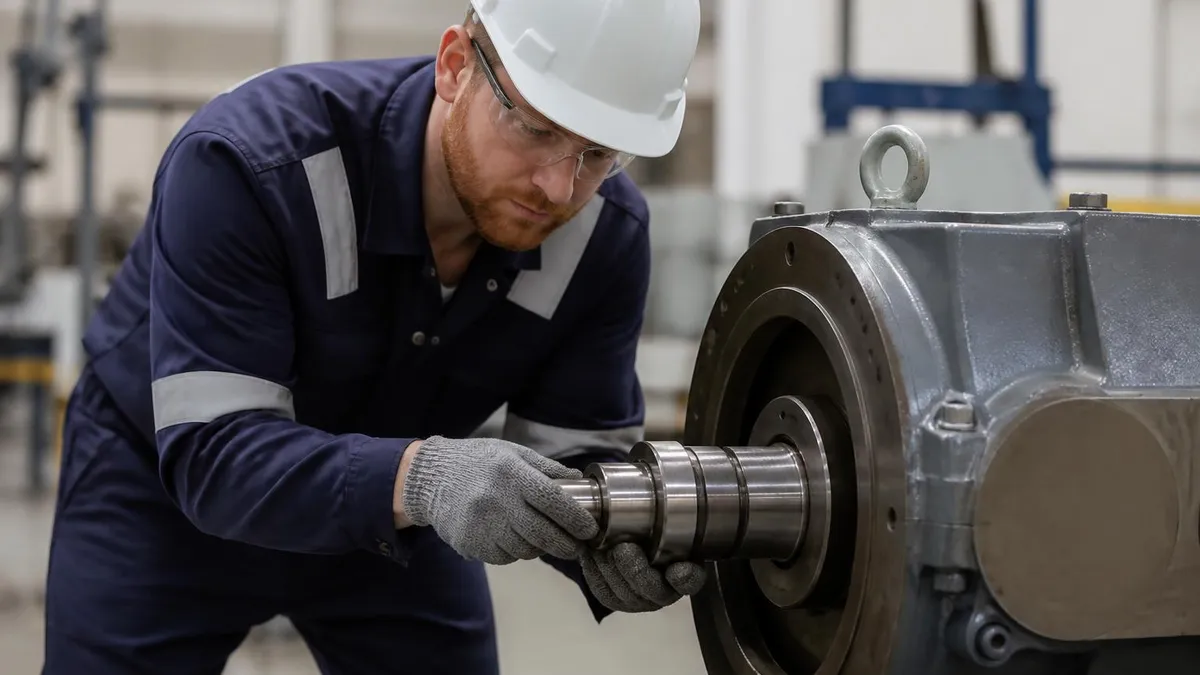
What is a Millwright? Trade, Duties, Pay, and How to Become One

Millwright Union Guide: Membership, Pay, and Apprenticeship Paths
About the Author

Educational Psychologist & Academic Test Preparation Expert
Columbia University Teachers CollegeDr. Lisa Patel holds a Doctorate in Education from Columbia University Teachers College and has spent 17 years researching standardized test design and academic assessment. She has developed preparation programs for SAT, ACT, GRE, LSAT, UCAT, and numerous professional licensing exams, helping students of all backgrounds achieve their target scores.