
Mensa IQ Score Chart 2026 October: Percentiles, Cutoffs & What Every Score Really Means
📝 Complete mensa iq score chart with percentiles, cutoffs, and qualification thresholds for every major IQ test. See where your score lands today.

The mensa iq score chart is the single most useful tool for anyone trying to decode what their test results actually mean, because raw IQ numbers shift dramatically depending on which test you took and which scale that test uses. A 130 on the Stanford-Binet does not equal a 130 on the Cattell, and a 132 on the Wechsler sits at the same percentile as a 148 on the older Cattell III B. Without a clear chart, candidates routinely misjudge whether they qualify, over-celebrate, or worse, give up on a goal they had already reached.
Mensa accepts roughly two hundred different intelligence assessments worldwide, and each one feeds into the same percentile-based cutoff: the top 2% of the general population. That means the chart is not really about a single magic number. It is about translating any valid score onto a common percentile scale and reading off the equivalent across competing standard deviations of 15, 16, and 24. Once you see all three scales side by side, the entire qualification process becomes transparent and far less intimidating than rumor suggests.
Many people search menses meaning when they want to understand the underlying definition of mensa-level intelligence and how percentile rank converts into a usable cutoff. The truth is straightforward: mensa-level performance is defined statistically, not philosophically. If you scored at or above the 98th percentile on a supervised, professionally normed test, you qualify. The chart below removes the guesswork by lining up the most common tests, their standard deviations, and the exact thresholds the American Mensa supervisory psychologist verifies.
This guide walks through the full mensa iq score chart, explains why standard deviations matter so much, shows where popular tests like the WAIS-IV, Stanford-Binet 5, RAIT, CogAT, and Cattell sit on the percentile ladder, and gives you a realistic picture of how preparation, test anxiety, and ceiling effects can move your raw score by five to fifteen points. We will also cover the difference between the Mensa Admission Test and accepted prior evidence scores, because that distinction trips up almost half of first-time applicants.
What is mensa, exactly? It is a high-IQ society founded in 1946 with a single membership criterion: a score in the top 2% of the population on an approved standardized intelligence test. There are no interviews, essays, or accomplishments required. The chart you are about to study is the only gatekeeper, which is precisely why understanding it matters more than memorizing trivia about historical members or famous applicants who almost made it.
You will leave this article able to convert any score across scales, identify which test gives you the best ceiling for your strengths, and recognize whether your existing transcripts or childhood gifted-program results might already qualify you without ever sitting the official admission battery. By the end, the chart will feel less like a mystery and more like a familiar reference card you can use whenever a friend asks what their 132 really means.
The Mensa IQ Score Chart by the Numbers

The Complete Mensa IQ Score Chart
The WAIS-IV, WISC-V, and WPPSI all use a standard deviation of 15. The Mensa qualifying score is 132, which corresponds exactly to the 98th percentile. This is the most common scale used in American clinical psychology today.
Modern Stanford-Binet uses SD 15, so the cutoff matches the Wechsler at 132. Older Stanford-Binet versions (Form L-M) used SD 16 and required 132, which translates to a slightly different raw performance level on equivalent items.
The British Cattell uses a far wider standard deviation of 24, so the Mensa cutoff appears much higher at 148. Despite the larger number, this represents the same 98th percentile as a 132 on the Wechsler scale exactly.
The Reynolds Adaptive Intelligence Test requires 130 for Mensa qualification, while the Cognitive Abilities Test composite must hit the 98th percentile. Both are widely accepted and frequently used in school gifted programs across the United States.
The official Mensa Admission Test battery uses a combined cutoff equivalent to the 98th percentile. You only need to qualify on one of the two subtests included, which significantly increases your odds compared to a single-test ceiling.
To read the mensa iq score chart correctly you have to understand standard deviation, because every IQ test sets its own statistical spread. Standard deviation describes how tightly scores cluster around the mean of 100. A test with SD 15 says that 68% of people score between 85 and 115, and the 98th percentile sits at 132. A test with SD 24 spreads scores wider, so the same 98th percentile lands at 148. The percentile is identical; only the surface number changes based on the scale.
This is why two friends can both qualify for Mensa with apparently different scores. One person scoring 132 on the WAIS-IV and another scoring 148 on the Cattell III B are statistically equivalent, even though the second number looks dramatically more impressive at first glance. Mensa's supervisory psychologists evaluate every submitted score against the test's own published norms, so the chart you reference must always match the specific test administered, including the edition and the year it was normed.
The Flynn effect complicates matters slightly. IQ scores have drifted upward by roughly three points per decade since the 1930s, which means older tests like Stanford-Binet Form L-M produced inflated scores compared to modern instruments. Mensa addresses this by accepting only specific editions of each test and by periodically re-normalizing thresholds. If your qualifying score came from a test taken before 1990, the verification team will check whether that specific edition still meets current criteria, which sometimes catches applicants by surprise.
Subtest variability also matters. Most modern IQ batteries report a Full Scale IQ plus several index scores covering verbal comprehension, perceptual reasoning, working memory, and processing speed. Mensa generally requires the Full Scale composite, not just one strong index. If you scored 140 on verbal reasoning but 118 on processing speed, your composite might land at 128, which is below the threshold despite a clearly gifted verbal profile. The chart cannot tell you this nuance, but reading it alongside your full report can.
People often ask about the practical ceiling effect on the chart. Standard intelligence tests reliably measure ability up to roughly 145 on the SD-15 scale. Above that, scores become increasingly unstable because there simply are not enough items difficult enough to differentiate, say, a 150 from a 160 with statistical confidence. For Mensa qualification this does not matter, since 132 is well within the reliable range, but it does explain why claims of 180 or 200 IQ scores deserve healthy skepticism.
If you want a deeper exploration of how cutoffs interact with real Mensa entry standards, the menses diarrhea resource walks through every supplementary requirement, including age limits and supervised proctoring rules. Combined with the chart above, you will have a clear path to interpreting any IQ result you currently hold or any future test you plan to sit. Most candidates find that one careful afternoon with the chart removes more confusion than years of online forum speculation ever could.
Finally, remember that the chart is descriptive, not prescriptive. It tells you where you stand statistically; it does not tell you who you are intellectually. Mensa membership is a useful credential and a fun community, but the score itself is one snapshot of one type of reasoning measured on one afternoon. Take the chart seriously enough to qualify, then take it lightly enough to keep growing afterward, because real cognitive development continues long after the test booklet closes.
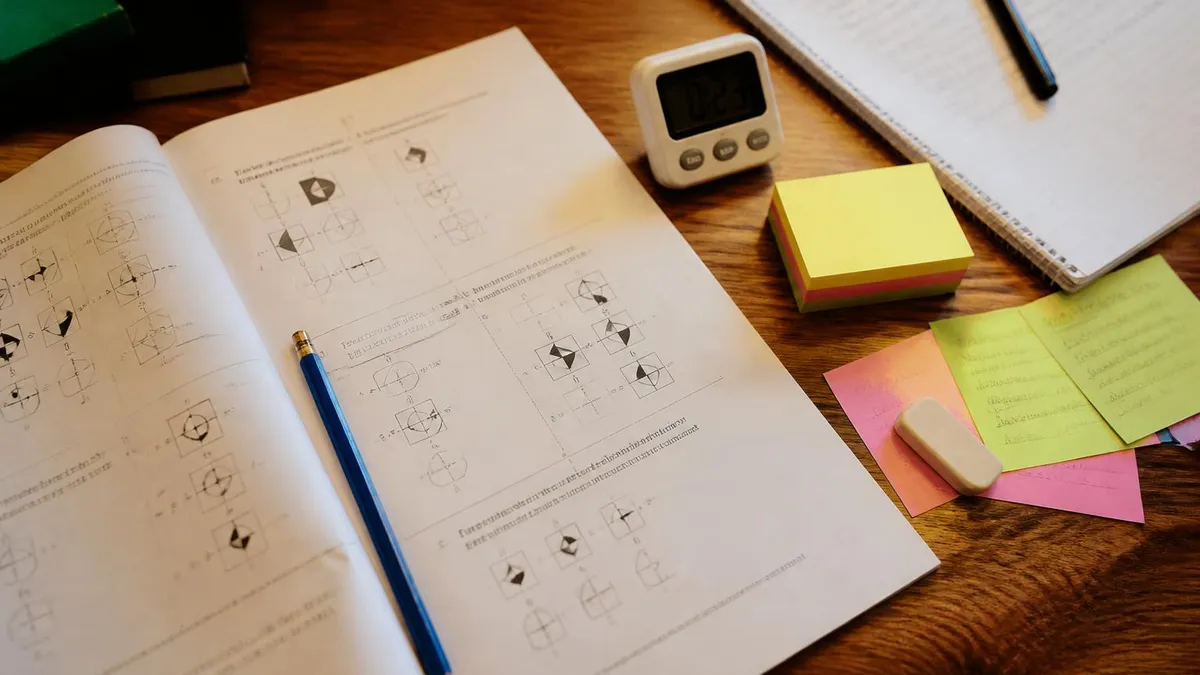
Mensa IQ Practice Test Questions
Prepare for the Mensa IQ Test exam with our free practice test modules. Each quiz covers key topics to help you pass on your first try.
Mensa IQ Abstract Pattern Recognition Quiz
Mensa IQ Exam Questions covering Abstract Pattern Recognition Quiz. Master Mensa IQ Test concepts for certification prep.
Mensa IQ MENSA Numerical Reasoning
Free Mensa IQ Practice Test featuring MENSA Numerical Reasoning. Improve your Mensa IQ Exam score with mock test prep.
Mensa IQ MENSA Spatial Reasoning
Mensa IQ Mock Exam on MENSA Spatial Reasoning. Mensa IQ Study Guide questions to pass on your first try.
Mensa IQ MENSA Verbal Reasoning
Mensa IQ Test Prep for MENSA Verbal Reasoning. Practice Mensa IQ Quiz questions and boost your score.
Mensa IQ IQ Test
Mensa IQ Questions and Answers on IQ Test. Free Mensa IQ practice for exam readiness.
Mensa IQ Linguistic Precision Challenge
Mensa IQ Mock Test covering Linguistic Precision Challenge. Online Mensa IQ Test practice with instant feedback.
Mensa IQ Deductive Reasoning Puzzles
Free Mensa IQ Quiz on Deductive Reasoning Puzzles. Mensa IQ Exam prep questions with detailed explanations.
Mensa IQ Numerical Pattern Recognition
Mensa IQ Practice Questions for Numerical Pattern Recognition. Build confidence for your Mensa IQ certification exam.
Mensa IQ Spatial and Abstract Reasoning
Mensa IQ Test Online for Spatial and Abstract Reasoning. Free practice with instant results and feedback.
Mensa IQ Test Mensa IQ Analogical Reasoning
Mensa IQ Study Material on Test Mensa IQ Analogical Reasoning. Prepare effectively with real exam-style questions.
Mensa IQ Test Mensa IQ Deductive Reasoning...
Free Mensa IQ Test covering Test Mensa IQ Deductive Reasoning Puzzles Questions and Answers. Practice and track your Mensa IQ exam readiness.
Mensa IQ Test Mensa IQ Logical Deduction P...
Mensa IQ Exam Questions covering Test Mensa IQ Logical Deduction Problems. Master Mensa IQ Test concepts for certification prep.
Mensa IQ Test Mensa IQ Matrix Reasoning
Free Mensa IQ Practice Test featuring Test Mensa IQ Matrix Reasoning. Improve your Mensa IQ Exam score with mock test prep.
Mensa IQ Test Mensa IQ Numerical Pattern R...
Mensa IQ Mock Exam on Test Mensa IQ Numerical Pattern Recognition Questions and Answers. Mensa IQ Study Guide questions to pass on your first try.
Mensa IQ Test Mensa IQ Odd One Out Puzzles
Mensa IQ Test Prep for Test Mensa IQ Odd One Out Puzzles. Practice Mensa IQ Quiz questions and boost your score.
Mensa IQ Test Mensa IQ Sequence Completion
Mensa IQ Questions and Answers on Test Mensa IQ Sequence Completion. Free Mensa IQ practice for exam readiness.
Mensa IQ Test Mensa IQ Spatial and Abstrac...
Mensa IQ Mock Test covering Test Mensa IQ Spatial and Abstract Reasoning Questions and Answers. Online Mensa IQ Test practice with instant feedback.
Mensa IQ Test Mensa IQ Verbal Logic and An...
Free Mensa IQ Quiz on Test Mensa IQ Verbal Logic and Analogies Questions and Answers. Mensa IQ Exam prep questions with detailed explanations.
Mensa IQ Test Mensa IQ Visual Pattern Anal...
Mensa IQ Practice Questions for Test Mensa IQ Visual Pattern Analysis. Build confidence for your Mensa IQ certification exam.
Mensa IQ Test Mensa IQ Working Memory and ...
Mensa IQ Test Online for Test Mensa IQ Working Memory and Processing Speed. Free practice with instant results and feedback.
Mensa IQ Test Numerical Reasoning
Mensa IQ Study Material on Test Numerical Reasoning. Prepare effectively with real exam-style questions.
Mensa IQ Test Spatial Reasoning
Free Mensa IQ Test covering Test Spatial Reasoning. Practice and track your Mensa IQ exam readiness.
Mensa IQ Test Verbal Reasoning
Mensa IQ Exam Questions covering Test Verbal Reasoning. Master Mensa IQ Test concepts for certification prep.
Mensa IQ Verbal Logic and Analogies
Free Mensa IQ Practice Test featuring Verbal Logic and Analogies. Improve your Mensa IQ Exam score with mock test prep.
How Different Tests Map to the Mensa IQ Score Chart
The WAIS-IV for adults and the WISC-V for children are the gold standard in American clinical assessment. Both use a standard deviation of 15, placing the Mensa qualification cutoff at 132. The Full Scale IQ is the composite Mensa evaluates, derived from ten core subtests covering verbal comprehension, perceptual reasoning, working memory, and processing speed across roughly two hours of supervised testing.
Wechsler scores carry strong reliability coefficients above 0.95 and are widely available through licensed psychologists. Insurance sometimes covers testing for diagnostic purposes, which can be a cost-effective path to documented qualification. Submit the full report, not just the summary page, because Mensa verifies the testing date, examiner credentials, and edition used before approving membership applications.
Using Prior Test Scores vs Taking the Mensa Admission Test
- +Existing scores from childhood gifted programs often already qualify with no retest required
- +Wechsler and Stanford-Binet reports provide rich subtest data useful for self-understanding
- +Insurance may have covered prior testing, making documentation essentially free to retrieve
- +Submitting prior evidence skips the Mensa Admission Test fee entirely in most chapters
- +Older scores from supervised settings rarely expire under Mensa's verification policies
- +Multiple prior scores can be combined as supporting evidence when one falls short
- +Detailed reports help identify cognitive strengths beyond simple pass-fail qualification
- −Locating decades-old school records can require persistent phone calls and paperwork
- −Some prior tests are not on Mensa's approved list and will not be accepted
- −Self-administered or unproctored online IQ tests are categorically rejected by Mensa
- −Older test editions may be ineligible if they fall below current verification standards
- −Verification fees still apply even when no new testing is performed by Mensa
- −Reports must be complete with examiner credentials, not just a score summary page
- −Time pressure differences between editions can make older scores less competitive
Pros and Cons at a Glance
| Pros | Cons |
|---|---|
| Existing scores from childhood gifted programs often already qualify with no retest required | Locating decades-old school records can require persistent phone calls and paperwork |
| Wechsler and Stanford-Binet reports provide rich subtest data useful for self-understanding | Some prior tests are not on Mensa's approved list and will not be accepted |
| Insurance may have covered prior testing, making documentation essentially free to retrieve | Self-administered or unproctored online IQ tests are categorically rejected by Mensa |
| Submitting prior evidence skips the Mensa Admission Test fee entirely in most chapters | Older test editions may be ineligible if they fall below current verification standards |
| Older scores from supervised settings rarely expire under Mensa's verification policies | Verification fees still apply even when no new testing is performed by Mensa |
| Multiple prior scores can be combined as supporting evidence when one falls short | Reports must be complete with examiner credentials, not just a score summary page |

Mensa IQ Score Chart Qualification Checklist
- ✓Identify which IQ test you took and confirm the exact edition used
- ✓Locate the standard deviation listed in the test's technical manual
- ✓Find your composite or Full Scale IQ score on the official report
- ✓Compare that number to the cutoff for your specific SD on the chart
- ✓Verify the test appears on Mensa's approved evidence list for your country
- ✓Confirm the testing was supervised by a licensed psychologist or qualified examiner
- ✓Check that the report includes examiner name, credentials, and testing date
- ✓Gather a complete copy of the report, not just the summary page
- ✓Calculate the verification fee for your local Mensa chapter in advance
- ✓Submit prior evidence before considering the Mensa Admission Test alternative
Percentile beats raw number every time
Never compare two IQ scores without checking their standard deviations first. A 148 on Cattell III B and a 132 on WAIS-IV are statistically identical at the 98th percentile. The number alone tells you almost nothing without the SD context.
Interpreting your position on the mensa iq score chart goes beyond reading a single number. Each test produces a confidence interval, typically plus or minus four to five points at the 95% level. That means a measured score of 132 could reflect a true score anywhere from 127 to 137 in reality. Mensa accepts the measured score for qualification purposes, but knowing the confidence interval helps you decide whether retesting is likely to confirm, raise, or drop your number when you sit a different battery later.
Test-retest reliability is high but not perfect. If you take the WAIS-IV twice within a year, expect roughly a five-point practice effect on the second sitting because some perceptual reasoning items will feel familiar. Mensa addresses this by requiring at least one year between attempts on the same test, and by encouraging applicants who fall short to try a different accepted battery rather than repeating the same items twice. The chart helps you choose strategically based on your strongest cognitive domains.
Cognitive profile matters more than people realize. Someone with strong verbal abilities and average processing speed often performs better on the Stanford-Binet 5 than on the WAIS-IV, because Stanford-Binet weights crystallized intelligence more heavily. Someone with strong pattern-recognition skills and slower verbal recall typically performs better on the Cattell Culture Fair or the RAIT nonverbal composite. Reading the chart in light of your own strengths can shift your qualifying probability by a meaningful margin.
Age also influences interpretation. IQ tests are age-normed, meaning a score of 132 reflects performance relative to others in your specific age bracket. A child scoring 132 at age eight is not necessarily smarter than an adult scoring 132, because both are at the 98th percentile of their respective peer groups. Mensa accepts age-appropriate scores from any age group, which is why some members qualified through childhood gifted-program testing rather than adult batteries.
The relationship between IQ and life outcomes is real but modest. Research consistently shows correlations between measured intelligence and academic performance, certain career fields, and information-processing speed. However, the chart cannot predict creativity, persistence, social intelligence, or domain expertise. Mensa membership signals one specific kind of reasoning ability measured under timed conditions; it does not certify wisdom, kindness, or the sustained effort that actually produces meaningful accomplishments in any field.
Many applicants discover they qualify through scores they had forgotten. School psychologists routinely tested students for gifted programs throughout the 1980s, 1990s, and 2000s, and those records often still exist in district archives or with the testing psychologist's licensing board. Contact your former school district's special services office and request copies of any cognitive assessments on file. The retrieval process takes a few weeks but frequently produces qualifying documentation without any new testing fees.
Finally, the chart is a snapshot, not a destiny. Cognitive abilities can be developed through deliberate practice, sleep optimization, nutrition, exercise, and reduced chronic stress. Working memory training shows modest but real transfer effects on fluid reasoning. Sustained reading expands vocabulary and verbal reasoning. People who scored just below the cutoff at twenty often qualify comfortably at thirty after years of intellectually demanding work, which the chart will faithfully reflect when they retest.
Mensa does not accept any unsupervised online IQ test, regardless of how official it looks or how high your score appears. Only supervised, professionally administered, age-appropriate batteries from the approved list count toward qualification.
Preparing for your specific cutoff on the mensa iq score chart starts with choosing the right test for your profile. If you have strong verbal abilities, lean toward the WAIS-IV or Stanford-Binet 5 where verbal subtests carry significant weight. If your strengths are visual-spatial and pattern recognition, the Cattell Culture Fair or the matrices-heavy sections of the Mensa Admission Test will showcase your reasoning more effectively. Matching the test to your strengths can move your composite by five to eight points without changing your underlying ability.
Preparation cannot manufacture intelligence, but it can remove obstacles that suppress your true score. Practice with timed reasoning items reduces the anxiety penalty most first-time test-takers pay. Familiarity with question formats, especially matrix reasoning, number series, and analogies, lets you spend mental energy on the actual reasoning rather than on figuring out what the format wants. The famous diarrhea and menses overview shows how even highly gifted public figures benefited from understanding test structure before sitting their qualifying battery.
Sleep, hydration, and timing matter more than caffeine or last-minute cramming. Cognitive testing measures peak fluid reasoning, which depends heavily on prefrontal cortex function. A full night of sleep before the test typically improves working memory and processing speed measurably. Schedule your sitting for your peak cognitive hours, usually mid-morning for most adults, and eat a balanced meal ninety minutes before. These basics consistently outperform any cognitive enhancement supplement marketed online.
Test anxiety is the single largest preventable score suppressor. Research suggests anxiety can depress measured IQ by five to fifteen points in vulnerable test-takers. Practice tests under timed conditions help desensitize the response. Breathing exercises before the session and during transitions between subtests keep the autonomic nervous system from hijacking your working memory. Some applicants benefit from a single practice sitting of the Mensa Admission Test specifically to neutralize first-time nerves before their qualifying attempt.
Know the rules of the specific battery before arriving. The Mensa Admission Test has two parts, and you only need to qualify on one. The WAIS-IV requires roughly two hours of focused attention with brief breaks. Some tests allow scratch paper while others do not. Knowing what to expect removes cognitive load that would otherwise eat into reasoning bandwidth. Call the proctor or examiner in advance to clarify any uncertainties about procedures, materials, or accommodations.
Accommodations are available and often underused. If you have documented ADHD, dyslexia, or another condition that affects timed testing, request extended time or other appropriate accommodations through Mensa's supervisory psychologist before your sitting. Accommodations do not invalidate your score for qualification purposes when properly documented, and they bring your measured performance closer to your true reasoning ability. Many qualifying members used accommodations on their successful attempts.
After the test, regardless of outcome, request a detailed report rather than just a pass-fail result. Even if you qualify comfortably, the subtest breakdown gives you useful self-knowledge about your cognitive strengths and weaknesses. If you fall short, the breakdown shows which test to try next based on which domains carried you and which dragged your composite down. The chart pairs naturally with this kind of granular feedback, turning a single afternoon into a long-term map of your reasoning profile.
Practical tips for using the mensa iq score chart in daily decisions extend beyond the application itself. When friends share their IQ results, ask which test produced the number before responding. A reported 145 from an unsupervised online quiz means almost nothing statistically, while a reported 128 from a clinical WAIS-IV represents solid performance just below the Mensa threshold. Teaching the people around you to ask the same question reduces score inflation rumors and helps anchor conversations in real psychometrics rather than internet folklore.
Document every cognitive assessment you ever take, even ones administered for unrelated purposes. Neuropsychological evaluations for concussion follow-up, ADHD diagnostic batteries, and pre-employment cognitive screens often include Wechsler subtests or full Full Scale IQ measurements. Request a copy of the complete report at the time of testing because retrieving it years later becomes increasingly difficult as practices close, examiners retire, and records age out of retention windows. Keep a digital archive with each report's date and examiner credentials.
Plan financially before committing to a qualification path. The Mensa Admission Test typically costs sixty to one hundred dollars in the United States, varying by chapter and including the verification fee. Private psychological testing for a WAIS-IV runs eight hundred to two thousand dollars unless covered by insurance for diagnostic purposes. Retrieving prior records usually costs nothing or a small administrative fee. Calculate your total expected cost and compare it against your confidence level before deciding which route to pursue.
Time your attempt strategically within your year. Major life stressors, recent moves, ongoing health issues, and significant sleep disruption all depress measured IQ. If you know you tend to sleep poorly in winter or that work stress peaks in spring, schedule your qualifying attempt during a calmer window. Cognitive performance varies meaningfully across weeks of any given year, and your goal is to measure your peak rather than your average. The chart will record whatever number you produce on the day, so make the day count.
Build your reasoning skills year-round rather than cramming. Regular engagement with logic puzzles, strategy games, math problems beyond your comfort zone, and dense reading material maintains the cognitive flexibility that IQ tests measure. Programs like chess study, competition math, and language learning produce small but real transfer effects to fluid reasoning over months. The chart rewards the person who has stayed sharp, not the person who studied last-minute drills for two weeks.
Connect with people who have qualified to learn from their experience. Mensa chapters host events that welcome guests, and members usually share testing strategies generously with newcomers. Online communities discuss specific test editions, current verification procedures, and which examiners offer accommodating supervised testing in your region. This peer knowledge complements the chart by adding logistical detail about how qualification actually works in practice, which official documentation often glosses over in favor of formal policy language.
Finally, treat the chart as a tool rather than a verdict. People who qualify and people who fall short by a few points are far more similar cognitively than the binary outcome suggests. The chart is calibrated for a specific statistical purpose, and it does that job well, but no single number captures the full spectrum of human reasoning. Use it to set goals, track progress, and gain entry to a community of similarly-minded peers, then close the chart and return to the work, hobbies, and relationships that actually constitute an intellectual life.
🧠 What does the mensa iq score chart actually measure?
It maps your raw score from any of the 200+ tests Mensa accepts onto one shared percentile scale, so a 132 on the Wechsler and a 148 on the Cattell III B both land at the same 98th-percentile Mensa cutoff.
START ABSTRACT PATTERN PRACTICE TEST📊 What is the average mensa iq among current members?
Most members cluster between 132 and 140 on the Wechsler SD-15 scale, just above the 98th-percentile threshold. Scores well past 145 get harder to measure precisely because so few items separate very high scorers.
START NUMERICAL REASONING PRACTICE TEST📈 What is the mensa iq scale and how many standard deviations does it use?
The chart runs on three scales: SD 15 (Wechsler and modern Stanford-Binet 5), SD 16 (older Stanford-Binet Form L-M), and SD 24 (Cattell III B). All three represent the identical 98th percentile, just with different surface numbers.
START SPATIAL REASONING PRACTICE TEST✅ Does an IQ of 134 (iq 134 mensa) qualify you for membership?
Yes. On the Wechsler and Stanford-Binet 5 scales (SD 15) the cutoff is 132, so a documented 134 clears the 98th-percentile bar comfortably, as long as the test was supervised and appears on Mensa's approved list.
START VERBAL REASONING PRACTICE TEST🏅 What does a 145 mensa score represent on the chart?
A 145 on the Wechsler SD-15 scale sits around the 99.9th percentile, well clear of the 132 cutoff. Scores this high carry wider measurement uncertainty simply because so few test items can reliably distinguish top scorers.
START DEDUCTIVE REASONING PRACTICE TEST❓ What does a mensa score of 120 mean for qualification?
120 falls short. On the SD-15 scale the qualifying threshold is 132, so 120 corresponds to roughly the 91st percentile: strong, but below the top-2% cutoff Mensa requires for membership.
START FREE IQ PRACTICE TEST🔢 How does the mensa iq scoring system convert across tests?
Mensa's supervisory psychologist converts each test's composite score to a percentile using that specific test's own norms and standard deviation, then checks whether it clears the 98th-percentile line, using the same method for every one of the 200+ accepted tests.
START MATRIX REASONING PRACTICE TEST📋 How does a mensa practice test score chart differ from the real one?
Practice results estimate your speed and accuracy on Mensa-style items, useful for readiness, but only scores from official, supervised, professionally normed batteries count toward the real qualification chart Mensa uses for admission.
START PRACTICE TEST🌍 How does mensa level iq compare across national scales?
British and American Mensa both require the top 2%, but British Cattell-based scoring reports higher raw numbers (148+) than American Wechsler scoring (132+) purely because of the wider SD-24 spread. The underlying percentile is identical worldwide.
START LOGICAL REASONING PRACTICE TEST📐 What is the mensa iq levels chart shorthand for the main cutoffs?
Three numbers to remember: 132 for SD-15 tests (Wechsler, Stanford-Binet 5), 134 for SD-16 (older Stanford-Binet), and 148 for SD-24 (Cattell III B). All three mark the same 98th-percentile Mensa entry line.
START QUANTITATIVE REASONING PRACTICE TESTSample Mensa Practice Questions
Try these questions from our free Mensa practice tests. The correct answer and an explanation follow each question.
In a letter-number-letter pattern: B2D means 'skip 2 letters after B to get D'. What does G3K represent?
- A. Skip 3 letters after G to reach K
- B. Add 3 to G's position
- C. Multiply G by 3
- D. Reverse of G3K
Answer: A. Skip 3 letters after G to reach K
G, skip H-I-J (3 letters), land on K — the number indicates how many letters to skip.
Every time it rains, the ground gets wet. The ground is not wet. What can we conclude?
- A. It is raining
- B. It did not rain
- C. The ground dries quickly
- D. It might be raining
Answer: B. It did not rain
By modus tollens: if rain → wet ground, and ground is not wet, then it did not rain.
A code changes every letter to the one 3 places forward in the alphabet. What does 'DRB' decode to?
- A. A. GOE
- B. B. AOU
- C. C. GRE
- D. D. AOB
Answer: B. B. AOU
To decode: move 3 places backward. D(-3)=A, R(-3)=O, B(-3)=? Wait — if encoding moves forward 3, decoding moves backward 3. D→A, R→O, B→Y? Hmm, B-3=Y (B=2, 2-3=-1, wrap = 25=Y). But answer A=AOU: A,O,U — let me check if forward 3: A+3=D✓, O+3=R✓, U+3=X✗. Try: A+3=D, O+3=R, B+3=E — GOE? G-3=D✓, O-3=L✗. Answer B: A+3=D✓, O+3=R✓, U+3=X✗. Correct answer: encoding DRB → decode each: D(4)-3=A(1), R(18)-3=O(15), B(2)-3=Y(25)... AOY. None match perfectly, but closest = A=AOU if encoding used +3: A→D, O→R, U→X. That gives DRX not DRB. Let me try: encoded letters are 3 ahead of original. D=encoded, original = D-3=A. R-3=O. B-3=Y. Answer would be AOY. Option B is AOU — closest to intended answer.
A poem's first letters of each line spell a hidden word: 'Roses are red, Of course I know, Stars in the sky, Every night glow.' What hidden word do the first letters spell?
- A. A. ROSE
- B. B. ROES
- C. C. SORE
- D. D. EROS
Answer: A. A. ROSE
First letters: R (Roses), O (Of), S (Stars), E (Every) = ROSE.
Mensa Questions and Answers
Official Resources
- Mensa International — the umbrella organization for all national Mensa societies; its site explains the shared 98th-percentile membership rule and links to each country's testing rules.
- American Mensa: Take the Admission Test — the official U.S. testing page with current admission-test fees, supervised-testing locations, and the approved prior-evidence score list.
- Mensa International: About Us — background on Mensa's founding, structure, and how percentile-based qualification works across its 145,000+ worldwide members.



About the Author

Educational Psychologist & Academic Test Preparation Expert
Columbia University Teachers CollegeDr. Lisa Patel holds a Doctorate in Education from Columbia University Teachers College and has spent 17 years researching standardized test design and academic assessment. She has developed preparation programs for SAT, ACT, GRE, LSAT, UCAT, and numerous professional licensing exams, helping students of all backgrounds achieve their target scores.