
Famous Mensa Members 2026 October: Celebrities, IQ Scores & Membership
Members of Mensa include Quentin Tarantino, Steve Wozniak, Sharon Stone & Geena Davis. See famous Mensa member IQ scores, qualifications and how to join. 💡

Mensa Membership in Numbers
What the world's oldest high-IQ society actually looks like in 2026.
What the Members of Mensa Actually Have in Common
The short answer: a score in the top 2% of the general population on a supervised intelligence test. The longer answer is messier and more interesting. Members of Mensa include filmmakers who never finished college, actors who never mentioned their score until a magazine pulled it out of them, NASA scientists, an Apple co-founder, a Nobel-nominated chemist, a Vice President of the society who happened to also be one of the most prolific writers of the twentieth century, and a four-year-old British boy who tested in two years ago.
Mensa is the world's oldest and largest high-IQ society. It was founded in 1946 by Lancelot Lionel Ware and Roland Berrill at Lincoln College, Oxford. The plan back then was modest — bring together smart people from every background and let them talk. Eighty years later that's still the entire pitch.
What makes Mensa unusual among professional networks is that it doesn't care what you do for a living. The doorman test is one number. Past it, you're in for life. About 134,000 people sit on that roster today across more than 90 national chapters. American Mensa, the biggest national group, holds around 50,000 members.
British Mensa runs roughly 20,000. The rest scatter from Mensa Australia (around 3,000) down to Mensa Mongolia (a few hundred). Members range from teenagers to centenarians. The youngest current members are under five years old. The oldest are well into their nineties. None of that matters to membership. The score does.
If you're curious whether you'd qualify, the cleanest first step is a supervised mensa iq test or a mensa practice test to see where your score lands on the population curve. Most adults who pass have scored at or above the 98th percentile somewhere — either on a Wechsler test administered by a psychologist, on Mensa's own admission battery, or on one of the older standardized tests Mensa still accepts.
We'll go through the full list of accepted tests in a minute, but the headline is this: a 130 IQ on a Wechsler scale, a 132 on Stanford-Binet (Form L-M), or a 1250 combined SAT taken before September 1974 will all open the door.
Mensa publishes membership rolls only with permission. That's why the famous-members list circulates as a mix of confirmed cases (people who've spoken publicly about joining), well-documented historical members, and a longer murky tail of celebrities who've claimed scores in interviews without ever sending the certificate to Mensa headquarters. We'll keep those two buckets separate in the lists below. The confirmed group is shorter but more interesting because it tells you something about who actually pays $79 a year to stay on the rolls — versus who just enjoys the credibility of the number in a press kit.
The 1946 Oxford Origin
Mensa was founded by Australian barrister Roland Berrill and British scientist Lancelot Lionel Ware at Lincoln College, Oxford in October 1946. The Latin word mensa means "table" — chosen because the society's founding idea was equals sitting at a round table regardless of profession, background, or age.
Mensa Membership Requirements: The 98th Percentile Rule
Every Mensa qualification path ends at the same place — a score that puts you in the top 2% of the general adult population on a normed intelligence test. That's the 98th percentile. On a Wechsler scale (mean 100, standard deviation 15), that's a full-scale IQ of 130 or higher. On Stanford-Binet Form L-M (older test, standard deviation 16), it's a 132. On Cattell Culture Fair III, it's a 148. The numbers look different, but they all measure the same cut-off — only two people out of every hundred clear that bar.
Mensa accepts roughly 200 different prior test scores. The official accepted-test list in the United States runs to 28 named instruments, but the practical takeaway is shorter.
If you've ever taken any of the following and scored at or above the listed cutoff, you qualify on the psychometric side: Wechsler Adult Intelligence Scale (WAIS-IV or WAIS-5) at 130, Stanford-Binet Intelligence Scales (5th Edition) at 130, Cattell Culture Fair III at 148, Raven's Advanced Progressive Matrices at the 95th percentile, and California Test of Mental Maturity at 132.
On the standardized academic side, Mensa accepts the SAT taken before September 30, 1974 with a combined 1250 or higher, the GRE taken before September 30, 2011 with a combined V+Q of 1250 or higher, the LSAT at 95th percentile (roughly 167+), and the older Miller Analogies Test at 66.
The pre-1994 SAT and pre-2011 GRE cutoffs are the ones most adult applicants actually use — they're old scores they already have on file.
What Mensa doesn't accept matters too. Online IQ tests don't count. Mensa-themed games on phone app stores don't count. The free online tests on Mensa's own national websites are diagnostic tools only — they don't grant membership. A test administered by anyone other than a licensed psychologist, a registered Mensa proctor, or a verified educational testing service won't get through verification.
About 25% of submitted scores are rejected at the documentation stage because the test wasn't normed, wasn't proctored, or was self-administered from a workbook. If you want to know the cleanest path, look at the mensa iq requirement page for a full chart of accepted instruments and their exact cutoffs.
The second path is Mensa's own supervised admission test. It's a two-part battery — typically Cattell III B and Cattell Culture Fair — administered at a test session by a national Mensa proctor. American Mensa charges $99 for the supervised test as of 2026. British Mensa charges £24.95.
The session runs about ninety minutes and you find out on the spot whether you scored in the top 2%. Pass either of the two sub-tests at the 98th percentile or higher and you're invited to join. This is the path most adults take when they don't have a qualifying score on file. It's the most efficient option because it skips the documentation back-and-forth that derails about a third of prior-evidence applications.
The third path is sending a psychologist's report to Mensa for evaluation. This is the route taken by anyone who's already been tested as part of a school psych eval, a workplace assessment, or a clinical evaluation. The report has to show the test name, the date, the proctor's credentials, and the full-scale or matched composite score — not just an IQ number on a letterhead.
Famous Mensa Members: Confirmed Names, IQ Scores, and Stories
Most public Mensa lists conflate two different things — people Mensa has confirmed as paying members, and people who've claimed IQ scores in interviews without ever joining. The list below splits them. Start with the confirmed group. Isaac Asimov, the science-fiction writer and biochemist, didn't just join Mensa — he served as one of its Vice Presidents. Asimov reportedly tested at 160 and wrote roughly 500 books across nearly every Dewey Decimal category.
He famously called Mensa "brain-proud and aggressive about their IQs" in a 1980s essay but stayed a member anyway. He liked the conversation. R. Buckminster Fuller, the architect and futurist who patented the geodesic dome, was an early American Mensa member. He served on the society's advisory board in the 1960s before his death in 1983.
Marilyn vos Savant is the most famous Mensan after Asimov. She's listed in the Guinness Book of World Records (1986-1989 editions) as the person with the highest recorded IQ — 228 on the Stanford-Binet, taken as a child, though that score is contested by modern psychometricians who note that the test wasn't validated for the extreme upper tail. She writes the "Ask Marilyn" column for Parade Magazine. Vos Savant is a Mensa member.
She's used the Mensa platform to argue against treating IQ as destiny. "Knowledge is power," she wrote in 2014, "but only when applied — and intelligence alone does not produce knowledge." That tension between intelligence and outcome runs through almost every public Mensa interview, which is why Mensa Foundation research grants now fund work on the gap between potential and achievement.
Quentin Tarantino joined American Mensa in the 1990s. He's spoken about his IQ score (160, by his own account) on multiple talk shows but rarely brings up the membership itself. Geena Davis, the Oscar-winning actress, joined Mensa in 1997 after taking the supervised admission test. She also founded the Geena Davis Institute on Gender in Media and qualified for the 2000 US Olympic archery trials — she's a serial overachiever in a way that fits the Mensa median.
Asia Carrera, the adult-film actress who later became a programmer and Nintendo modder, joined Mensa in college after a 156 IQ test result. Her Mensa membership is the most-cited example of the society's deliberately broad demographic mix. James Woods, the actor, joined Mensa in the 1980s. He tested at 184, claims he was admitted to MIT at 16, and majored in political science before becoming a full-time actor. Glenn Sears, the NASA chief engineer who led the Saturn V launch operations team, was a confirmed member through the 1970s.
Famous Mensa Members at a Glance
Quentin Tarantino (director) joined American Mensa in the 1990s; reported IQ 160.
Geena Davis (actress, Oscar winner) joined in 1997 via the supervised admission test.
James Woods (actor) joined in the 1980s; reported IQ 184; admitted to MIT at 16.
Asia Carrera (programmer and former adult-film actress) joined in college with a 156 IQ score.
Now the second group — the famous claimed-IQ list. These names appear on most clickbait Mensa rosters but the membership records are unclear. Steve Wozniak (Apple co-founder) is frequently listed; reported scores range from 200 to 220 depending on the source, but Mensa's official member directory has never publicly confirmed his name. Sharon Stone has talked about her childhood IQ score (claimed 154) in interviews but hasn't publicly confirmed Mensa membership. Sigourney Weaver appears on many lists with a claimed 132 IQ; she's never confirmed it.
Joyce Carol Oates, the novelist, has been mentioned in connection with Mensa but the link is unverified. Sir Jimmy Savile, the disgraced British TV presenter, was confirmed as a British Mensa member in the 1980s — that membership is documented but obviously carries reputational issues the society would rather not discuss. The lesson from the second list isn't that these people aren't smart. Most of them clearly are. The lesson is that Mensa membership and IQ-test results aren't the same thing, and the public record blurs them constantly.
Two younger names round out the modern era. Adam Kirby from Mitcham, UK, joined British Mensa at age four in 2013 after testing at 141 — the youngest member in the society's history at the time of admission. He could read by 18 months. Alexis Martin, an American five-year-old, joined American Mensa in 2017 with a tested IQ of 160.
Both cases sparked debate about whether young children's IQ scores are stable enough to predict adult performance. The current research says they're moderately stable from about age six onward but volatile below that. Mensa accepts the score either way — the cutoff is the cutoff.

Famous Mensa Members by Field
Quentin Tarantino (director), Geena Davis (actress, Oscar winner), James Woods (actor), Sir Jimmy Savile (UK presenter, historical).
Isaac Asimov (writer & biochemist, former VP), Buckminster Fuller (architect, geodesic dome), Glenn Sears (NASA Saturn V engineer).
Marilyn vos Savant (columnist, Guinness IQ record holder), Joyce Carol Oates (claimed), Isaac Asimov (500+ books published).
Asia Carrera (programmer, adult film, 156 IQ), Adam Kirby (UK, joined at age 4), Alexis Martin (US, joined at 5).
Several US senators have claimed Mensa-qualifying scores. Public confirmations are rare; Mensa keeps member lists private without permission.
Lancelot Lionel Ware and Roland Berrill (1946 founders), Victor Serebriakoff (long-time international chairman), Isaac Asimov (Vice President).
Celebrity IQ Scores: What the Numbers Actually Mean
Celebrity IQ numbers float around the internet in dramatic forms — "Steve Wozniak has a 220 IQ," "Stephen Hawking had a 160 IQ," "Marilyn vos Savant tested at 228." Most of these claims are tabloid-level shaky. Some are real but misunderstood. Here's the rough framework for reading them. A score above 145 on a modern test (Wechsler scale, standard deviation 15) puts someone in roughly the top 0.1% of the population — about 1 in 1,000. A score above 160 is roughly 1 in 30,000.
A score above 175 is below 1 in a million. Scores reported above 180 on properly normed adult tests are essentially statistical phantoms — the tests aren't validated that far out into the tail. When you see a claim of 200 or 220, you're almost always looking at either a deviation IQ from an older test (Stanford-Binet Form L-M used SD=16, which inflates the apparent number), a childhood ratio IQ that doesn't translate to adult scoring, or a number invented for a press release.
Marilyn vos Savant's reported 228 falls into the second category — it was a Stanford-Binet score taken when she was a child. The Guinness Book later retired the "highest IQ" category in 1990 specifically because the methodology problems made the numbers meaningless. Steve Wozniak's reported 200-220 is unverified and almost certainly a media exaggeration.
Stephen Hawking famously refused to disclose his IQ in interviews, saying "people who boast about their IQ are losers." That quote should be the framing device for every celebrity-IQ list, but it never is. The real takeaway: Mensa membership is binary, not graduated. You're either above the 98th percentile (in) or below it (out). The exact number above 130 doesn't change your membership status or your access to Mensa events. Asimov at 160 and a member who barely cleared at 131 sat at the same table.
That binary framing also explains why Mensa attracts a particular type of person. The society isn't a meritocracy ladder — it's a flat club. Everyone above the line is equal inside the room. That makes it appealing to people who feel underrecognized in their day jobs (engineers, accountants, mid-level managers who never finished a degree) and slightly less appealing to people who already have a public marker of intelligence (Harvard PhD, Nobel laureate, billion-dollar exit). That's the social pattern Mensa research has documented for decades.
The famous-members list overrepresents writers, performers, and self-made entrepreneurs because those careers don't have a credentialing system that publicly validates intelligence. The list underrepresents academics, research scientists, and tenured faculty for exactly the opposite reason. They already have their certificate. The mensa iq data Mensa publishes in its 2022 internal demographics report confirmed this pattern — professional services and entertainment careers were overrepresented; academic research was underrepresented.
Notable Past Mensa Members in History
Science-fiction giant and biochemist. Served as Mensa Vice President. Wrote roughly 500 books spanning sci-fi, popular science, history, and Shakespeare commentary. Tested at a reported 160 IQ. Publicly critiqued Mensa culture in essays yet stayed an active member for decades.
Architect, futurist, inventor of the geodesic dome. Joined American Mensa in the 1960s and sat on its advisory board until his death. Holder of more than 30 US patents. Coined the phrase Spaceship Earth and authored Operating Manual for Spaceship Earth in 1969.
NASA chief engineer who led the Saturn V launch operations team. Confirmed Mensa member through the 1970s. Career spanned the Apollo program from Apollo 8 through Apollo 17. Part of the engineering team awarded the Presidential Medal of Freedom for the moon landings.
Listed in Guinness Book of World Records 1986-1989 for the highest recorded IQ (228 on Stanford-Binet, taken as a child). Writes the Ask Marilyn column for Parade Magazine since 1986. Active American Mensa member. Famous for resolving the Monty Hall problem in 1990.
Russian-British engineer and long-serving Honorary International President of Mensa. Wrote multiple books on intelligence testing including the popular IQ and You. Credited with growing Mensa's international membership during the 1970s and 1980s.
British inventor and entrepreneur. Founded Sinclair Research and built the ZX80, ZX81, and ZX Spectrum home computers. Served as chairman of British Mensa from 1980 to 1997 — the longest-serving chairman in the society's history. Knighted in 1983 for services to British industry.
Cost and Membership Benefits at Mensa
What You Actually Get for Your $79 a Year
American Mensa annual dues sit at $79 in 2026, with a $40 one-time joining fee for new members. That gets you access to all local chapter events (more than 200 American Mensa local groups host monthly dinners, lectures, game nights, and Special Interest Group meetups), the digital Mensa Bulletin magazine, the searchable national member directory, and discounts at hotels, car rental, and a handful of retailers.
The Annual Gathering (the AG, held over US Independence Day weekend in a different city each year) draws 1,500-2,000 members. The World Gathering rotates internationally every four years and pulls members from 50+ countries. Add $10 to your annual dues and you get the print magazine. Members can also pay a higher tier for life membership at $1,650 (American Mensa), which most members under 50 don't take.
The real value most members report isn't the discounts. It's the SIGs (Special Interest Groups), which are member-run themed sub-communities within Mensa. American Mensa runs about 200 active SIGs covering everything from board games and bridge to cryptography, sci-fi conventions, polyamory, libertarian politics, classical music, programming languages, Latin, calligraphy, and dozens of regional and identity-based groups. Each SIG has its own newsletter, mailing list, and sometimes its own annual conference. The SIG list reads like a sampler of every adult-education catalog ever published, which is roughly the point. Members join Mensa for the score validation. They stay for the SIGs.
Mensa Foundation grants and scholarships are the other ongoing benefit. The Foundation funds research into intelligence, learning, and gifted education. Scholarship awards run from $600 up to $2,500+ per recipient, with about 100 scholarships awarded annually across the United States. Most are open to the general public, not just Mensa members. Mensa for Kids (mensaforkids.org) is a separate free program that offers gifted-child resources to parents, teachers, and homeschoolers — lesson plans, reading lists, qualifying tests, and the Excellence in Reading program.
Members under 14 join Young Mensans, which has its own newsletter and youth events. Older teens transition to full membership automatically at 18. None of these resources require deep involvement — most members participate in their local chapter once or twice a year and read the magazine. About 15-20% of members are active in SIGs or chapter leadership. The rest treat membership the way they treat their alumni association: pay the dues, attend nothing, keep the credential.

Joining Mensa — Honest Tradeoffs
What people who've been members for 10+ years actually report.
- +Validated proof of high IQ — useful for some careers and personal confidence
- +Local chapter social events with cognitively diverse, intellectually curious adults
- +200+ SIGs covering hobbies and identity groups, often very tight-knit
- +Mensa Foundation scholarship eligibility — even small awards offset dues
- +Annual Gathering and Mensa World Gatherings — strong travel social network
- +Lifetime membership badge once you pass; no re-testing or re-validation
- −Annual dues with no major practical benefit for many corporate professionals
- −Some chapters skew older — younger members report demographic mismatch
- −Public perception of Mensa as elitist or self-congratulatory makes it awkward to mention
- −Local chapter quality varies wildly — strong in some metros, sparse in others
- −Membership doesn't accelerate career outcomes the way many applicants assume
- −Some members find chapter politics or in-group dynamics exhausting after 2-3 years
How Your IQ Score Maps to Mensa Status
Mensa membership requires the top 2% — the 98th percentile or higher. Here is where common IQ scores fall.
| Score Range | Interpretation | Percentile | Recommendation |
|---|---|---|---|
| 📊Below 115 | Below Mensa threshold | Under 84th | Not Mensa eligible. The top 84th percentile is roughly average to above-average range. |
| 📈115-129 | Above average; below Mensa | 84th-97th | Strong cognitive ability but below the 98th percentile cutoff. Practice and retest may close the gap. |
| 🎯130-144 | Mensa-eligible (top 2%) | 98th-99.6th | You qualify for Mensa membership. This is the band where about 90% of admitted members score. |
| 🌟145-159 | Highly gifted | 99.6th-99.97th | Top 0.4% of the population. Eligible for additional high-IQ societies like Intertel. |
| 🏆160+ | Exceptionally gifted | Top 0.003% | Roughly 1 in 30,000. Score reliability declines above 160 on modern tests — older Stanford-Binet scores at 200+ are mostly artifact. |
How to Actually Join Mensa in 2026
Two paths, same destination. Path one: send in a prior test score. If you already have a Wechsler, Stanford-Binet, SAT (pre-1994), GRE (pre-2011), LSAT, or one of the other ~200 accepted tests with a documented 98th-percentile result, you submit a copy of the score report to American Mensa (or your national equivalent) with a $40 documentation fee. Reviews take three to six weeks.
About 70% of submissions pass on the first try. The most common rejection reasons are missing percentile scores, partial test results (verbal-only or quantitative-only when a composite is required), and tests administered outside the accepted instrument list. The full accepted-test list with cutoffs is available at americanmensa.org under "Qualify with Prior Evidence."
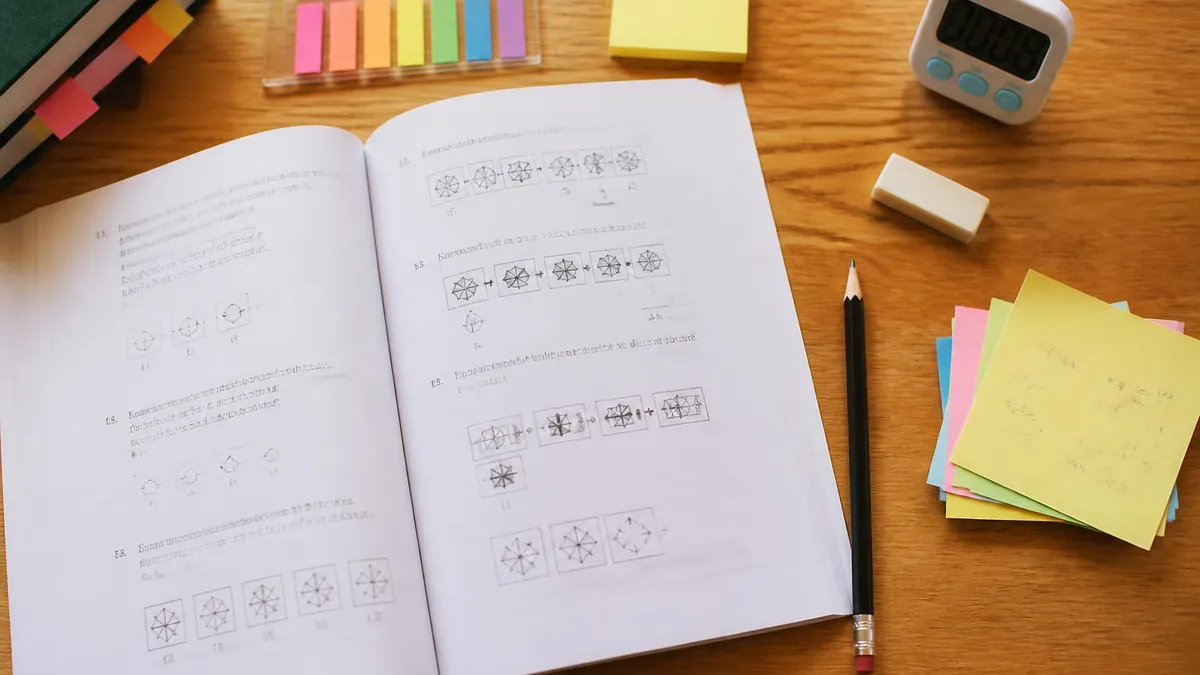
Path two: take Mensa's own supervised admission test. American Mensa charges $99 for the two-part battery. It's offered at proctored test sessions across the country — typically one or two sessions per major metro per quarter. The session runs ninety minutes. You complete the Cattell III B (verbal and number puzzles, 50 minutes) and the Cattell Culture Fair (pattern-only, 30 minutes). You need to score in the top 2% on either one to qualify — not both.
Results come back in two to four weeks. About 30-35% of test-takers pass. That pass rate is consistent with the underlying statistics — Mensa's test is normed so 2% of the general population should pass, but Mensa applicants self-select for high IQ, so the in-the-room pass rate is much higher than the population rate.
The fastest practical route for someone without a prior score is to spend a week or two doing supervised mensa practice questions at the kind of difficulty Cattell III B uses (analogies, number sequences, pattern recognition, verbal classification), then book the supervised test. The Cattell tests reward speed and pattern fluency more than vocabulary or general knowledge.
Practice doesn't change your underlying IQ, but it familiarizes you with the test format, which closes the gap between your true ability and your measured score on test day. Most test-prep research suggests this familiarization effect is worth 5-10 points on a first-time test taker. That can be the difference between passing at the 98th percentile and missing at the 95th.
If you have a documented Wechsler, Stanford-Binet, SAT (pre-1994), or GRE (pre-2011) at the 98th percentile, mail it in for $40 and a 3-6 week review. If you don't, book the $99 supervised Cattell test in your nearest metro and pass on the day. About 30-35% of test-takers clear the cutoff first time.
Mensa Kids, Young Mensans, and the Youngest Members in History
Mensa has no minimum age. The youngest member ever admitted to British Mensa was Adam Kirby at age four (2013), tested at 141 on a children's scale. American Mensa has admitted members as young as two and three on rare occasion. The practical lower bound is whatever age a child can sit still for a 90-minute psychological assessment, which most psychologists place around age four or five.
Above the line, Mensa accepts children at any age — they receive the same membership benefits as adults, though they participate through Young Mensans (a separate sub-organization within American Mensa for members under 18) and the free Mensa for Kids program. The Excellence in Reading program (free, open to the public) gives kids a Mensa-branded reading list by grade level and a certificate for completing it. Schools and homeschoolers use the reading lists heavily even when the family doesn't pursue Mensa membership.
The contested question with under-18 members is whether childhood IQ scores predict adult intelligence well enough to grant lifetime membership. The research consensus is that scores below age six are unstable — they correlate weakly with adult performance — but scores from age six onward correlate moderately (r ≈ 0.6 to 0.7) with adult tested IQ. Mensa's position is that the test result is the test result.
If a four-year-old hits the 98th percentile on a normed children's test, that child is admitted. The score doesn't have to predict adult performance — it just has to be valid on the day of testing. Most members admitted as children re-test informally at some point in adulthood. About 85% retain their 98th-percentile status. The remaining 15% don't, but they keep their membership anyway. Mensa doesn't kick people out for re-testing below cutoff. Once you're in, you're in.
Famous past child members include several Olympiad medalists and a handful of musicians and chess players. The most public recent case is Alexis Martin (admitted at five, IQ 160) who became a media figure briefly in 2017 and 2018 before her family withdrew from public attention. Her story is a useful counterpoint to the celebrity-IQ narrative because it shows what young Mensans actually do — most don't go into a single track. They pursue music, athletics, writing, or quiet careers.
The myth that high IQ guarantees prodigy-level output is exactly that, a myth. Mensa's own member surveys consistently show that high-IQ adults are slightly more likely than the general population to hold advanced degrees and earn above-median salaries, but the effect sizes are small (correlation r ≈ 0.3 for income, r ≈ 0.5 for educational attainment). IQ is one predictor among many. Conscientiousness, opportunity, mental health, and luck all matter at least as much over a working career.
Mensa Membership Application Timeline
Decide Your Path
Submit Prior Score (or Book Test)
Take the Supervised Test
Results Returned
Pay First-Year Dues
Join Local Chapter
Pre-Application Checklist for Mensa Candidates
- ✓Check the official accepted-test list at americanmensa.org for your exact prior score
- ✓Confirm your test report shows the test name, date, proctor credentials, and a percentile (not just an IQ number)
- ✓If your prior test is partial (verbal-only, for example), plan to take the supervised test instead
- ✓For supervised testing, locate the nearest test session — major metros host one or two per quarter
- ✓Practice Cattell-style number sequences, analogies, and pattern recognition for 1-2 weeks before the test
- ✓Bring valid photo ID and the $99 test fee (American Mensa) on test day
- ✓Avoid caffeine spikes; the Cattell tests reward steady pattern-fluency more than peak alertness
- ✓Plan for 90 minutes of seated test time plus 30 minutes of check-in and instructions
Mensa Practice Test Questions and Answers
About the Author

Educational Psychologist & Academic Test Preparation Expert
Columbia University Teachers CollegeDr. Lisa Patel holds a Doctorate in Education from Columbia University Teachers College and has spent 17 years researching standardized test design and academic assessment. She has developed preparation programs for SAT, ACT, GRE, LSAT, UCAT, and numerous professional licensing exams, helping students of all backgrounds achieve their target scores.