
Medical Laboratory Technician Skills: Complete Career Guide 2026 October
Master medical laboratory technician skills, salary, certification, and job outlook. Complete 2026 October career guide. 🎓

Medical laboratory technician skills form the foundation of one of the most important yet often overlooked careers in modern healthcare. A skilled medical laboratory technician (MLT) performs critical diagnostic tests that physicians rely on to diagnose diseases, monitor patient health, and guide treatment decisions. From analyzing blood samples and urine specimens to culturing bacteria and running complex chemistry panels, these professionals work behind the scenes to deliver the accurate data that drives clinical outcomes every single day in hospitals, clinics, and reference labs across the country.
Understanding what it takes to succeed as an MLT begins with recognizing the breadth of competencies required. Technical proficiency is only one part of the equation. Strong analytical thinking, careful attention to detail, and the ability to operate sophisticated automated analyzers are equally important. MLTs must also demonstrate solid communication skills, since they regularly interact with nurses, physicians, and other allied health professionals to clarify specimen requirements, report critical values, and troubleshoot unexpected results that could affect patient care.
The demand for qualified MLTs continues to grow at a strong pace. According to the U.S. Bureau of Labor Statistics, employment for clinical laboratory technologists and technicians is projected to increase approximately 5% through 2032, faster than the average for all occupations. An aging population that requires more diagnostic testing, combined with advances in personalized medicine, is fueling this steady expansion. Knowing the skills employers look for gives prospective MLTs a competitive edge when applying for jobs and negotiating a competitive medical laboratory technician salary.
This article covers every essential skill category in depth — from the core technical competencies tested on national certification exams to the soft skills that separate an average technician from an exceptional one. We also explore education pathways, certification requirements, salary expectations, and the daily realities of working in a clinical laboratory environment. Whether you are a student researching the field, a healthcare professional considering a career transition, or an experienced MLT preparing for advancement, this guide provides actionable, up-to-date information to support your goals.
One of the most important early decisions prospective MLTs face is choosing the right educational program. Accredited associate degree programs typically run two years and blend classroom instruction with hands-on clinical rotations. During these rotations, students practice specimen collection, instrument operation, quality control procedures, and result verification under the supervision of experienced laboratory professionals. The practical exposure gained in clinical rotations is invaluable because it translates textbook knowledge into real-world competency — exactly the kind of applied skill that hiring managers and credentialing boards assess.
Certification is a pivotal milestone that validates an MLT's skill set on a national level. The American Society for Clinical Pathology (ASCP) Board of Certification offers the most widely recognized credential, the MLT(ASCP). Passing this exam demonstrates that a candidate has mastered the six major laboratory disciplines: hematology, clinical chemistry, microbiology, blood banking, immunology, and urinalysis. Many employers make ASCP certification a baseline requirement for hiring, and holding the credential directly influences earning potential and career advancement opportunities across the United States.
Throughout this guide, we break down each skill domain with concrete examples, explain how those skills appear on the ASCP exam, and offer practical preparation strategies. We include salary data by state, typical job duties, and tips for standing out in a competitive job market. By the time you finish reading, you will have a clear, comprehensive understanding of what it means to build a career as a medical laboratory technician and how to position yourself for long-term success in this rewarding allied health profession.
Medical Laboratory Technician by the Numbers

Core Technical Skills Every MLT Must Master
MLTs must correctly receive, label, centrifuge, aliquot, and store a wide variety of specimen types — including whole blood, serum, plasma, urine, CSF, and microbiology swabs — while maintaining strict chain-of-custody and preventing pre-analytical errors.
Operating hematology analyzers, chemistry platforms, coagulation analyzers, and flow cytometers requires in-depth calibration knowledge, routine preventive maintenance, and the ability to troubleshoot instrument flags and error codes quickly and accurately.
Reviewing Levey-Jennings charts, applying Westgard rules, documenting QC failures, and taking corrective action are non-negotiable daily responsibilities. Strong QC skills protect patient safety and keep the laboratory compliant with CAP and CLIA regulations.
MLTs must recognize abnormal results, apply reference intervals correctly, and immediately communicate critical values — such as a glucose below 40 mg/dL or a platelet count below 20,000 — to nursing staff or physicians per laboratory protocol.
Strict adherence to Standard Precautions, proper use of PPE, safe handling of biohazardous materials, and correct disposal of sharps and chemical reagents are foundational safety skills that protect laboratory personnel and prevent healthcare-associated infections.
Earning a medical laboratory technician certification is the single most impactful step a new MLT can take to validate their skills and accelerate their career. The ASCP Board of Certification (BOC) administers the MLT(ASCP) examination, which is a computer-adaptive test consisting of 100 scored questions drawn from six major discipline areas. Candidates have three hours to complete the exam at a Pearson VUE testing center. Meeting the eligibility requirements — typically an associate degree from a NAACLS-accredited program plus a clinical practicum — is the gateway to sitting for this nationally recognized credential.
Accredited medical laboratory technician program coursework typically covers anatomy and physiology, medical terminology, hematology, clinical chemistry, microbiology, immunohematology, and laboratory mathematics. These foundational courses are complemented by laboratory practicum hours where students learn to operate real instrumentation, prepare reagents, perform quality control, and interpret patient results. Programs accredited by the National Accrediting Agency for Clinical Laboratory Sciences (NAACLS) meet rigorous academic standards, and graduating from one ensures eligibility for most national certification examinations including ASCP and AMT.
Beyond the ASCP credential, the American Medical Technologists (AMT) organization offers the Medical Laboratory Technician (MLT) certification, which is another respected pathway recognized by many employers and state licensing boards. Both credentials require periodic recertification to ensure that practicing MLTs stay current with evolving laboratory technologies, updated reference intervals, and changes in regulatory requirements. Most recertification cycles run three years and require completion of continuing education units (CEUs) in relevant scientific areas such as molecular diagnostics, point-of-care testing, or laboratory management.
Online and hybrid MLT programs have expanded access to laboratory education significantly over the past decade. Many community colleges and regional universities now offer didactic coursework fully online, requiring students to complete only the clinical rotation component in person at an affiliated hospital or reference laboratory. This flexibility has been significant for career changers, rural students, and working adults who cannot attend traditional on-campus programs. When evaluating online MLT programs, prospective students should confirm that the program holds NAACLS accreditation and has established clinical site partnerships in their geographic area before enrolling.
State licensure requirements for MLTs vary considerably across the United States. States such as California, Florida, New York, and Tennessee require MLTs to obtain a state license in addition to national certification. Other states have no licensure requirement beyond holding a recognized certification. It is essential for MLTs to research the specific requirements of the state in which they plan to practice. Licensing fees, continuing education mandates, and renewal cycles differ, and failing to maintain an active license can jeopardize employment and expose the laboratory to regulatory penalties during inspections.
The educational and certification journey for an MLT typically spans two to three years from enrollment to credentialed practice. During this time, students develop a layered skill set that begins with foundational science knowledge and culminates in the practical proficiency required for independent laboratory work. Mentorship from experienced medical laboratory scientists (MLS) during clinical rotations accelerates this development considerably. Many programs encourage students to join professional organizations such as the American Society for Clinical Laboratory Science (ASCLS), which provides networking opportunities, journal access, and advocacy resources that support long-term professional growth.
Planning your certification timeline strategically makes a meaningful difference in exam performance. Most candidates benefit from beginning dedicated exam review approximately eight to twelve weeks before their scheduled test date. Structured review using ASCP-style practice questions, discipline-specific flashcards, and full-length timed simulations helps identify knowledge gaps while building the test-taking stamina needed to maintain accuracy through 100 questions. Spacing review sessions over multiple weeks rather than cramming in the final days uses the cognitive science of spaced repetition, leading to stronger long-term retention of the laboratory facts and calculations the exam tests most heavily.
What Does a Medical Laboratory Technician Do? Daily Roles Explained
In a hospital setting, MLTs work around the clock in rotating shifts to support inpatient and emergency care. They process STAT specimens — those requiring results within 30 to 60 minutes — from the emergency department, intensive care units, and operating rooms. Common urgent tests include complete blood counts, basic metabolic panels, troponin levels, coagulation studies, and blood cultures. The ability to prioritize workflow under pressure and communicate critical values immediately to bedside nurses is essential in this high-acuity environment.
Hospital laboratory MLTs also perform regular maintenance on high-volume automated analyzers and participate in proficiency testing programs required by CLIA and the College of American Pathologists (CAP). They document all quality control activities, investigate out-of-control QC events, and escalate complex cases to the laboratory medical director or supervising MLS when results are ambiguous. Cross-training across multiple laboratory departments — hematology, chemistry, microbiology, and blood bank — is standard practice at many hospitals, giving MLTs broad exposure and significant career versatility.

Is a Career as a Medical Laboratory Technician Right for You?
- +Strong and stable job demand driven by an aging US population requiring more diagnostic testing
- +Clear certification pathway through ASCP or AMT with widely recognized credentials
- +Diverse work settings including hospitals, reference labs, clinics, and public health facilities
- +Competitive salary with median earnings above $57,000 and meaningful advancement potential
- +Intellectually stimulating work requiring continuous learning as laboratory technology evolves
- +Direct contribution to patient care outcomes without high-stress direct patient contact typical of nursing
- −Rotating shift work including nights, weekends, and holidays is common in hospital settings
- −Significant upfront education investment of two or more years plus clinical rotation hours
- −Physical demands include extended standing, repetitive pipetting, and potential exposure to biohazards
- −Certification recertification requires ongoing continuing education and associated fees every three years
- −Salary ceiling as an MLT is lower than for a Medical Laboratory Scientist (MLS) without degree advancement
- −High-stakes accuracy requirements create mental pressure, as errors can directly harm patients
Pros and Cons at a Glance
| Pros | Cons |
|---|---|
| Strong and stable job demand driven by an aging US population requiring more diagnostic testing | Rotating shift work including nights, weekends, and holidays is common in hospital settings |
| Clear certification pathway through ASCP or AMT with widely recognized credentials | Significant upfront education investment of two or more years plus clinical rotation hours |
| Diverse work settings including hospitals, reference labs, clinics, and public health facilities | Physical demands include extended standing, repetitive pipetting, and potential exposure to biohazards |
| Intellectually stimulating work requiring continuous learning as laboratory technology evolves | Certification recertification requires ongoing continuing education and associated fees every three years |
| Direct contribution to patient care outcomes without high-stress direct patient contact typical of nursing | Salary ceiling as an MLT is lower than for a Medical Laboratory Scientist (MLS) without degree advancement |
MLT Skills Mastery Checklist: Are You Exam and Career Ready?
- ✓Correctly identify and explain the Westgard multi-rule QC system and apply it to simulated Levey-Jennings charts.
- ✓Perform and interpret a complete blood count (CBC) including differential, flagging abnormal morphologies such as sickle cells or blasts.
- ✓Execute forward and reverse ABO/Rh blood grouping and resolve common discrepancies in pre-transfusion testing.
- ✓Identify at least 20 common bacterial organisms by colony morphology, Gram stain, and key biochemical reactions.
- ✓Calculate anion gap, osmolality, and creatinine clearance from patient data using standard laboratory formulas.
- ✓Demonstrate proper operation of a hematology analyzer including startup, calibration verification, and linearity checks.
- ✓Describe the coagulation cascade in detail and explain how PT, aPTT, TT, and fibrinogen results are affected by specific deficiencies.
- ✓Identify the sensitivity, specificity, and clinical utility of common immunoassay methods including ELISA and chemiluminescence.
- ✓Explain CLIA complexity categories and describe the quality control requirements for each testing category.
- ✓Communicate a mock critical value using SBAR format accurately and document the interaction per laboratory policy.
Certification Doubles Your Hiring Power
According to ASCP workforce surveys, MLTs who hold the MLT(ASCP) credential are hired at significantly higher rates and command starting salaries 8–12% above non-credentialed applicants. Employers consistently rank ASCP certification as their top screening criterion when evaluating entry-level candidates — even above GPA or clinical site reputation. Pursuing certification before your job search is not optional; it is the single highest-return investment you can make in your early MLT career.
The question of how much do MLT make is one of the most common searches among people exploring the field, and the answer varies meaningfully by geography, experience level, and practice setting. The Bureau of Labor Statistics reports a national median annual wage of approximately $57,800 for clinical laboratory technicians, but this figure masks considerable regional variation.
MLTs practicing in California, Alaska, Washington, and Massachusetts consistently earn above $70,000 per year, while those in rural Southern states may earn closer to $42,000 to $48,000. Urban hospital systems and large reference laboratories tend to offer the highest total compensation packages, including shift differentials, tuition reimbursement, and strong retirement benefits.
Experience is the most reliable driver of salary growth within the MLT classification. Entry-level technicians with zero to two years of experience typically start between $40,000 and $50,000 annually. After five years on the bench, many MLTs reach the $55,000 to $65,000 range, particularly if they have cross-trained across multiple laboratory departments and taken on charge technician responsibilities. Those who hold specialty certifications — such as the ASCP's Specialist in Blood Banking (SBB) or Specialist in Microbiology (SM) — or who transition into laboratory supervisory or management roles can exceed $80,000 annually in metropolitan markets.
Tracking a vacancy for medical laboratory technician positions reveals that demand is especially strong in oncology centers, public health laboratories, veterans' affairs facilities, and federally qualified health centers (FQHCs). Travel MLT positions, offered through healthcare staffing agencies such as AMN Healthcare and Aya Healthcare, command premium hourly rates — often $45 to $65 per hour — plus tax-free housing and meal stipends, making travel work an attractive option for experienced MLTs who have the flexibility to relocate for 13-week contract assignments.
The long-term salary trajectory for MLTs who pursue degree completion is substantially higher. Many MLTs transition from their associate degree to a bachelor's degree in Medical Laboratory Science (MLS) through online bridge programs offered by universities such as the University of Cincinnati, Purdue University Global, and Ferris State University. This credential upgrade qualifies them for the MT(ASCP) or MLS(ASCP) examination, which opens doors to supervisory, research, and specialty reference laboratory roles that carry significantly higher compensation. The return on investment for degree completion is typically realized within two to three years through salary differential alone.
Beyond traditional clinical roles, MLTs with strong analytical and communication skills increasingly find opportunities in laboratory informatics, healthcare IT, molecular diagnostics, and pharmaceutical quality control. These adjacent career paths use the core scientific training of an MLT while offering different working environments and often higher earning potential. Informatics-focused roles, for example, involve optimizing laboratory information systems (LIS), building test ordering workflows, and analyzing laboratory data for operational efficiency — work that pairs perfectly with an MLT's deep understanding of how laboratory processes function at a technical level.
Geographic mobility significantly expands an MLT's salary negotiation power. States with mandatory laboratory personnel licensure — California, Florida, Georgia, Hawaii, Louisiana, Montana, Nevada, New York, North Dakota, Rhode Island, Tennessee, and West Virginia — create tighter local labor markets where licensed MLTs command premium wages. Understanding which states require licensure and proactively obtaining reciprocity approval when relocating can accelerate employment and maximize starting compensation. Employers in licensure states are often willing to assist with relocation expenses for credentialed candidates willing to commit to a minimum service period.
The broader economic picture for MLT employment remains favorable through at least 2035. Demographic trends — particularly the continued aging of the Baby Boomer generation and the expansion of chronic disease management programs — will sustain demand for diagnostic testing regardless of macroeconomic fluctuations. Unlike many healthcare roles, clinical laboratory work cannot yet be meaningfully replaced by artificial intelligence alone; human oversight of instrument performance, specimen quality, and result plausibility remains essential. For students entering the healthcare workforce today, the MLT career offers a compelling combination of job security, scientific engagement, and upward mobility.

ASCP certification applications require verified transcripts and official documentation of clinical practicum hours, which can take four to six weeks to process. Submit your application at least 60 days before your planned exam date to avoid losing your testing window. Authorization-to-test (ATT) letters expire within 90 days, and rescheduling fees apply if you miss your original appointment without a documented emergency.
Preparing effectively for the ASCP MLT examination requires a disciplined, multi-week strategy that mirrors how the test itself is structured. The exam draws approximately 26% of questions from hematology and coagulation, 26% from clinical chemistry, 16% from microbiology, 16% from blood banking and transfusion, 8% from immunology and serology, and 8% from urinalysis and body fluids. Understanding this weighting is critical because it tells you exactly where to invest your study time. Spending equal hours on every topic is an inefficient strategy; prioritizing hematology and chemistry gives you the greatest point-per-hour return during preparation.
High-quality practice questions are the most powerful tool in any MLT exam candidate's arsenal. Working through ASCP-style questions in timed, exam-simulation mode forces you to recall information under pressure, identify reasoning patterns, and sharpen the elimination skills that distinguish a 75th-percentile score from a passing one. Reviewing every incorrect answer — not just noting the right answer but understanding WHY a distractor was wrong — builds the conceptual clarity needed to handle novel question presentations on exam day. Aim to complete at least 500 to 700 practice questions across all six discipline areas before sitting for the real examination.
Hematology requires mastery of cell morphology identification, RBC indices, hemoglobin variants, and coagulation pathway mechanics. Chemistry demands fluency in enzymatic assays, electrolyte interpretation, endocrine panels, and renal function markers. Microbiology tests knowledge of bacterial identification algorithms, fungal and parasitic life cycles, and antimicrobial susceptibility testing methods. Blood banking is widely considered the most challenging section for many candidates because ABO discrepancy resolution, antibody identification panels, and compatibility testing involve multi-step logical reasoning rather than pure memorization.
Creating a structured eight-week study schedule dramatically improves both preparation depth and confidence on exam day. Weeks one and two might focus on hematology and coagulation, including CBC interpretation, peripheral blood smear review, and coagulation cascade diagrams. Weeks three and four can address clinical chemistry, covering enzyme kinetics, liver function panels, metabolic acidosis/alkalosis interpretation, and therapeutic drug monitoring. Weeks five and six are ideal for microbiology and blood banking — the two disciplines most candidates find most challenging. Weeks seven and eight should be devoted to immunology, urinalysis, comprehensive review, and full-length timed practice tests to simulate exam conditions.
Flashcard systems — whether physical index cards or digital platforms like Anki — are particularly effective for memorizing the bacterial identification characteristics that constitute a significant portion of the microbiology section. Creating cards for organisms such as Staphylococcus aureus (coagulase positive, beta-hemolytic, Gram-positive cocci in clusters), Streptococcus pyogenes (Group A, beta-hemolytic, bacitracin sensitive), and Pseudomonas aeruginosa (non-fermenter, oxidase positive, grape-like odor) builds the rapid recall needed to work through microbiology questions efficiently without getting bogged down in indecision.
Study groups, when well-organized, provide significant benefits for MLT exam preparation. Explaining a concept aloud to a peer — for example, walking through the steps of a type and screen or describing how a low haptoglobin points toward intravascular hemolysis — deepens understanding in ways that passive reading cannot replicate.
Peer teaching also surfaces knowledge gaps you might not have recognized through solo study, giving you the opportunity to address weak areas before they cost you points on the examination. Many MLT students find that online study communities through ASCLS student chapters or Reddit forums dedicated to laboratory science offer peer accountability and shared resource recommendations.
On exam day itself, test-taking strategy matters as much as content knowledge. Read each question stem carefully, identify what is actually being asked before looking at the answer choices, and use process of elimination aggressively to narrow four-option questions to two. Flag questions you are uncertain about and return to them after completing the rest of the section — your subconscious processing often produces clearer insight the second time around.
Avoid changing answers unless you have a concrete, logical reason to do so; statistically, first instincts tend to be correct when a candidate has prepared thoroughly. Arrive at the testing center early, complete the tutorial calmly, and trust the months of preparation you have invested.
Beyond passing the certification exam, building a sustainable and fulfilling MLT career requires intentional professional development. New graduates should seek positions that offer cross-department rotation, even if starting pay is slightly lower, because the breadth of experience gained in the first two to three years of practice is worth far more than a marginal salary premium at a single-department job. Cross-training in hematology, chemistry, microbiology, and blood bank during early career creates the versatility that makes an MLT genuinely indispensable to their laboratory team and highly competitive when pursuing advancement opportunities.
Continuing education should be viewed not as a recertification checkbox but as a genuine investment in clinical competence. Laboratory technology evolves rapidly — next-generation sequencing (NGS) panels, mass spectrometry-based toxicology, and MALDI-TOF microbial identification systems represent the direction the field is moving. MLTs who pursue targeted continuing education in these emerging areas position themselves for specialty roles that command premium compensation and offer intellectually stimulating work. Many professional organizations including ASCLS, ASCP, and AACC offer affordable online webinars, workshops, and annual meeting presentations that fulfill CEU requirements while delivering genuinely current scientific content.
Mentorship relationships accelerate professional development in ways that formal education and solo study cannot fully replicate. Seeking out a senior MLS or laboratory manager as a mentor during your first years in practice provides access to institutional knowledge, career navigation advice, and professional network connections that would otherwise take years to develop independently.
Many state ASCLS chapters operate formal mentorship matching programs specifically designed to connect newer laboratory professionals with experienced practitioners willing to share their expertise. Taking advantage of these programs demonstrates professional commitment and builds the collegial relationships that often translate into job referrals, promotional support, and collaborative research opportunities.
Leadership development is an underappreciated aspect of the long-term MLT career trajectory. Laboratory supervisors, section leads, and quality assurance coordinators are in consistently high demand, yet the pipeline of MLTs prepared to step into these roles remains limited. Volunteering for quality improvement projects, serving on laboratory policy committees, or taking on preceptor responsibilities for student clinical rotations builds the leadership portfolio that positions an MLT for promotion into management.
Many healthcare organizations provide internal leadership development programs and tuition assistance for pursuing graduate certificates in healthcare management, healthcare informatics, or laboratory management — investments that pay dividends across an entire career.
Professional networking outside your immediate workplace expands both your knowledge base and your career opportunities significantly. Attending state and national laboratory science conferences, joining special interest groups within ASCLS or ASCP, and participating in online communities of practice connects you with peers facing similar challenges and exposes you to innovative solutions developed at other institutions.
These networks also surface job openings, locum tenens opportunities, and collaborative projects that never appear in formal job postings. In a field where word-of-mouth recommendations from respected colleagues carry enormous weight, investing time in professional relationships is as important as investing time in technical skill development.
Workplace wellness and ergonomic awareness are practical career-longevity skills that experienced MLTs take seriously. Extended bench work involving repetitive pipetting, microscope work, and centrifuge operation creates musculoskeletal risks that accumulate over years of practice. Proactively using anti-fatigue mats, adjustable workstation heights, proper pipette grips, and taking regular microbreaks for stretch exercises protects long-term physical health. Similarly, the emotional demands of working in a high-accuracy, high-stakes environment — particularly in oncology or blood bank departments where errors can have severe patient consequences — make stress management, peer support, and healthy work-life boundaries essential professional skills for sustainable practice.
The future of the MLT profession is bright, dynamic, and increasingly technology-rich. Automation and artificial intelligence are transforming the laboratory, but they are creating new skill demands rather than eliminating jobs. Tomorrow's MLT will need competency in data analytics, LIS configuration, automation troubleshooting, and molecular technique operation in addition to traditional bench skills. Those who embrace continuous learning, pursue advanced credentials, and develop both technical mastery and professional leadership will find that the medical laboratory technician career offers not just stable employment but a deeply meaningful contribution to the health and wellbeing of the communities they serve every day.
Sample Medical Laboratory Technician Exam Practice Questions
Try these questions from our free Medical Laboratory Technician Exam practice tests. The correct answer and an explanation follow each question.
DNA sequencing by the Sanger method uses which modified nucleotides to terminate chain elongation?
- A. Deoxyribonucleotides (dNTPs)
- B. Dideoxyribonucleotides (ddNTPs)
- C. Ribonucleotides (rNTPs)
- D. Phosphorylated nucleotides
Answer: B. Dideoxyribonucleotides (ddNTPs)
Sanger sequencing incorporates dideoxynucleotides (ddNTPs), which lack a 3'-OH group, causing chain termination at specific bases, producing fragments of different lengths for sequence determination.
A latex agglutination test for Cryptococcus neoformans detects which antigen?
- A. Beta-glucan cell wall component
- B. Polysaccharide capsular antigen
- C. Ergosterol membrane lipid
- D. Chitin synthase enzyme
Answer: B. Polysaccharide capsular antigen
The cryptococcal antigen test detects polysaccharide capsular antigen of C. neoformans in serum or CSF.
Which quality control measure is most important in a molecular diagnostics laboratory to prevent false-positive results?
- A. Using heat-inactivated samples
- B. Strict physical separation of pre- and post-amplification areas
- C. Running all samples in duplicate
- D. Using only fresh specimens
Answer: B. Strict physical separation of pre- and post-amplification areas
Physical separation of pre-amplification (specimen prep and PCR setup) from post-amplification (detection) areas prevents amplicon contamination, the primary cause of false-positive PCR results.
A medical laboratory technician performs a Rapid Plasma Reagin (RPR) test on a patient's serum. The test slide shows visible black clumps against the white background of the card. How should this result be interpreted?
- A. Non-reactive, indicating the absence of treponemal antibodies
- B. Invalid, as the carbon particles have precipitated
- C. Reactive, indicating the presence of non-treponemal (reagin) antibodies
- D. Positive for neurosyphilis
Answer: C. Reactive, indicating the presence of non-treponemal (reagin) antibodies
The RPR test is a non-treponemal flocculation test used to screen for syphilis. The antigen suspension contains cardiolipin coated with carbon particles. If the patient's serum contains reagin antibodies, they will bind to the cardiolipin, causing the carbon particles to flocculate or clump together, which appears as black clumps. This is interpreted as a reactive result.
Take the full Medical Laboratory Technician Exam practice test
Medical Laboratory Technician Questions and Answers

Medical Laboratory Technician License: Requirements & Steps

Medical Laboratory Technician Exam

MLT Medical Laboratory Technician Practice Test PDF (Free Printable 2026)
What Does a Medical Laboratory Technician Do? Role, Duties, and Career Guide
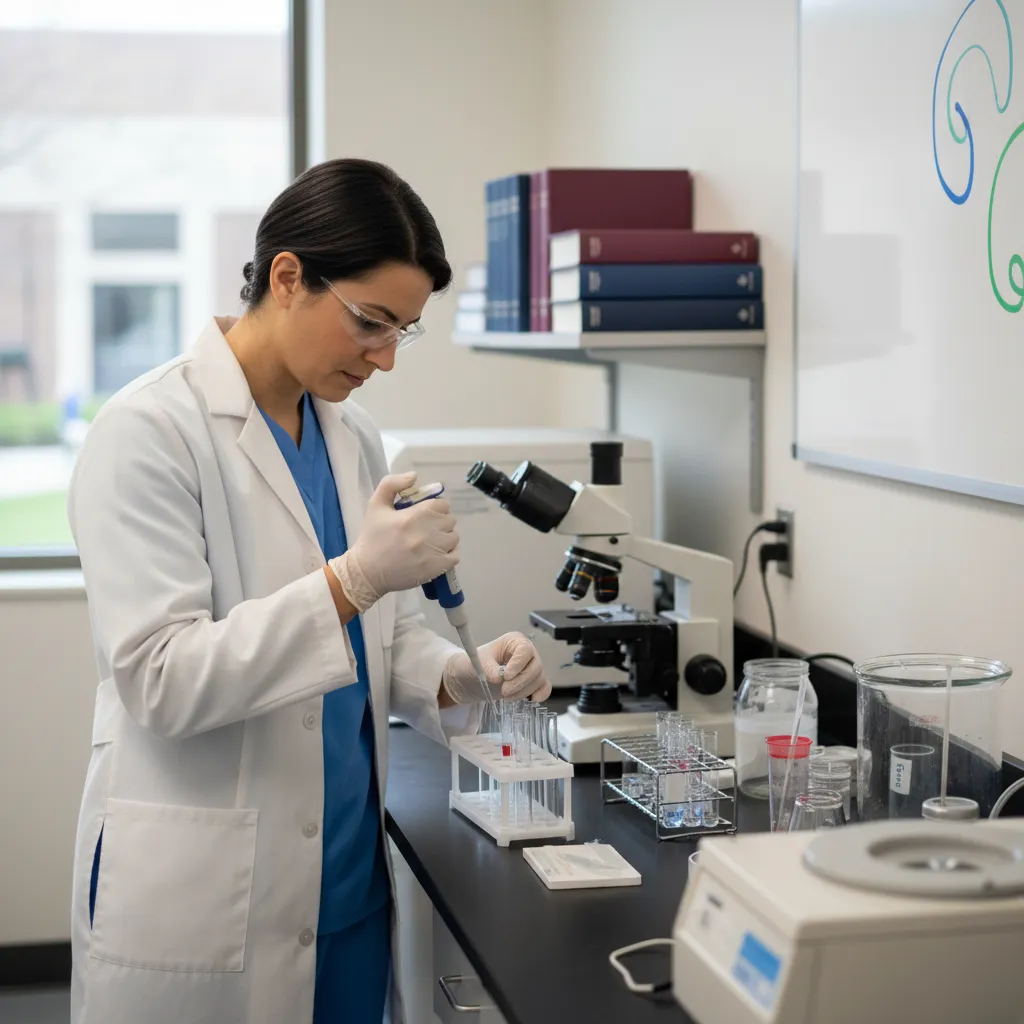
Medical Laboratory Technician Exam: Complete Study Guide 2026
About the Author

Medical Laboratory Scientist & Clinical Certification Expert
Johns Hopkins UniversityDr. Sandra Kim holds a PhD in Clinical Laboratory Science from Johns Hopkins University and is certified as a Medical Technologist (MT) and Medical Laboratory Scientist (MLS) through ASCP. With 16 years of clinical laboratory experience spanning hematology, microbiology, and molecular diagnostics, she prepares candidates for ASCP board exams, MLT, MLS, and specialist certification tests.
Join the Discussion
Connect with other students preparing for this exam. Share tips, ask questions, and get advice from people who have been there.
View discussion (4 replies)