
Mastering the CSWA: Your Path to Certified SOLIDWORKS Associate Success 2026
Free Mastering the CSWA: Your Path to practice test with instant feedback and detailed answer explanations. Prepare for your exam.
The Certified SOLIDWORKS Associate (CSWA) certification is a globally recognized credential that showcases a professional’s expertise in SOLIDWORKS, a leading 3D CAD (computer-aided design) software. This certification is aimed at individuals who are starting their careers in engineering and design and want to demonstrate their proficiency in using SOLIDWORKS tools and techniques. Whether you're aiming to enhance your resume or take your skills to the next level, the CSWA certification is an essential step in your professional journey. Practice with the free Blog practice test on PracticeTestGeeks (14 questions with answer explanations).
In this article, we'll explore the details of the CSWA exam, including its structure, key preparation strategies, and tips for success. If you’re considering taking the exam, you’re in the right place to learn how to approach the preparation process and gain a competitive edge in the field of CAD design.
- The CSWA Academic exam has 14 questions worth a total of 240 points. (Dassault Systèmes SOLIDWORKS Corporation)
- The Certified SOLIDWORKS Associate (CSWA) exam lasts 3 hours. (Dassault Systèmes SOLIDWORKS Corporation)
- The CSWA Academic exam takes up to 180 minutes as one sitting, or 90 minutes for each part of the two-part version. (Dassault Systèmes SOLIDWORKS Corporation)
- Candidates need a score of at least 70% to pass the Certified SOLIDWORKS Associate (CSWA) exam. (Dassault Systèmes SOLIDWORKS Corporation)
- Students need at least 165 of 240 points to pass the CSWA Academic exam. (Dassault Systèmes SOLIDWORKS Corporation)
- Candidates must wait at least 14 days between attempts at the Certified SOLIDWORKS Associate (CSWA) exam and must buy a new exam credit for each attempt. (Dassault Systèmes SOLIDWORKS Corporation)
- Students must wait at least 14 days between attempts at the CSWA Academic exam, and each attempt needs its own exam credit. (Dassault Systèmes SOLIDWORKS Corporation)
- All Certified SOLIDWORKS Associate (CSWA) testing is done online through the TesterPRO Client software, with candidates logging in to the VirtualTester Web Client. (Dassault Systèmes SOLIDWORKS Corporation)
- The CSWA Academic exam is offered only through qualified schools and SOLIDWORKS Academic Certification Providers, and only in a proctored setting. (Dassault Systèmes SOLIDWORKS Corporation)
Facts verified Oct 20, 2026 against Dassault Systèmes SOLIDWORKS Corporation. Dates that have passed are removed automatically.
CSWA Exam at a Glance
| Item | Detail | Official source |
|---|---|---|
| Number of questions (CSWA - Academic) | 14 questions, 240 points | Dassault Systèmes SOLIDWORKS Corporation |
| Time limit | 3 hours | Dassault Systèmes SOLIDWORKS Corporation |
| Time limit (CSWA - Academic) | 180 min full exam, or two 90-min parts | Dassault Systèmes SOLIDWORKS Corporation |
| Passing score | 70% | Dassault Systèmes SOLIDWORKS Corporation |
| Passing score (CSWA - Academic) | 165 of 240 points | Dassault Systèmes SOLIDWORKS Corporation |
| Retake policy | 14-day wait between attempts; new exam credit per attempt | Dassault Systèmes SOLIDWORKS Corporation |
| Retake policy (CSWA - Academic) | 14-day wait between attempts; credit per attempt | Dassault Systèmes SOLIDWORKS Corporation |
| Delivery | Online via TesterPRO / VirtualTester | Dassault Systèmes SOLIDWORKS Corporation |
| Delivery (CSWA - Academic) | Proctored, only through qualified schools and Academic Certification Providers | Dassault Systèmes SOLIDWORKS Corporation |
| Eligibility | For users new to SOLIDWORKS who have completed a beginner course; no formal prerequisite | Dassault Systèmes SOLIDWORKS Corporation |
| Eligibility (CSWA - Academic) | Recommended: at least 150 hours of classroom instruction | Dassault Systèmes SOLIDWORKS Corporation |
Facts verified Oct 20, 2026 against Dassault Systèmes SOLIDWORKS Corporation. Dates that have passed are removed automatically.
Free Blog Study Tools
Interactive Blog resources on PracticeTestGeeks, free to start:
- Blog practice test — 14 questions with instant scoring and answer explanations
- Blog flashcards — review key terms and concepts card by card
- Blog study guide — topic-by-topic overview of what the exam covers
- Blog cheat sheet — one-page printable summary for last-minute review

What is the CSWA Certification?
The Certified SOLIDWORKS Associate (CSWA) certification is designed to validate your knowledge and skills in using SOLIDWORKS to create and modify 3D models and assemblies. It’s recognized by industry professionals as a standard for measuring a candidate's abilities in mechanical design, solid modeling, and part assembly.
The exam is a combination of multiple-choice questions and practical tasks that test your ability to handle SOLIDWORKS software. By earning the CSWA, you're not only proving your technical skills but also setting yourself apart from other job candidates in the highly competitive field of engineering and design.
Why Should You Get Certified?
Here are a few compelling reasons to pursue the CSWA certification:
Career Advancement: Many employers look for certified professionals when hiring for engineering and design positions. The CSWA certification can increase your job prospects and help you stand out in a crowded field.
Increased Earning Potential: Certified professionals often have higher earning potential than non-certified peers. The CSWA can open doors to higher-paying roles and opportunities in the engineering sector.
Demonstrated Expertise: The CSWA certification proves your skills in using SOLIDWORKS software. This can help you earn the trust and respect of colleagues, employers, and clients, showcasing your dedication to your craft.
Expanded Job Opportunities: Industries such as automotive, aerospace, and product design rely heavily on SOLIDWORKS software. A CSWA certification can give you an edge when applying for jobs in these sectors.
Preparing for the CSWA Exam
Preparation for the CSWA exam is crucial to passing it with confidence. Here are some tips to help you succeed:
Use Online Resources and Practice Tests:
Use online resources such as the CSWA practice exam to familiarize yourself with the types of questions you’ll encounter on the exam. Practice tests are an excellent way to assess your readiness and identify areas where you need to improve.
Study the SOLIDWORKS Help Documentation:
SOLIDWORKS provides detailed documentation on all its features. Review the official user manuals and knowledge base to deepen your understanding of the software.
Take Online Training Courses:
Many platforms offer online courses that cover the fundamentals of SOLIDWORKS. These courses often include video tutorials, exercises, and quizzes to reinforce your knowledge.
Hands-On Practice:
The best way to prepare for the CSWA exam is through hands-on experience. Spend time working on different design projects in SOLIDWORKS to improve your speed and efficiency.
Review Past Projects:
If you’ve worked with SOLIDWORKS in the past, review your past projects and try to replicate the processes used. This will help you get more comfortable with the software’s tools.
Join Study Groups:
Joining a study group or online forum can be beneficial. You can discuss difficult topics, share study materials, and get advice from others who are preparing for the same exam.
CSWA Practice Exam: What to Expect on Test Day
The CSWA practice exam mirrors the real Certified SolidWorks Associate test, which gives you 3 hours to complete 8 questions covering part modeling, assembly creation, and drawing interpretation. Expect multiple-choice and single-answer format questions where you build a part in SolidWorks and report the mass or center of mass to match one of the provided options within a tight tolerance.
Scoring and Passing Requirements
You need a minimum score of 70% to pass the CSWA, meaning you can miss roughly 2 of the 8 questions and still earn certification. Timed practice exams help you pace yourself at around 20-25 minutes per modeling question so you leave buffer time for the drawing and assembly sections.
CSWA Exam Topics and Question Breakdown
The CSWA exam tests five core competency areas: drafting competencies (3 questions), basic part creation and modification (2 questions), intermediate part creation (1 question), advanced part creation (1 question), and assembly creation (1 question). Questions require you to apply dimensions, materials like 1060 Alloy or AISI 1020 Steel, and coordinate systems exactly as specified to get the correct mass property answer.
Software Version and Prerequisites
Candidates take the exam using the Tangix TesterPRO Client on SolidWorks 2014 or later, so practice with a recent version to match the interface. Dassault Systemes recommends at least 6-9 months of SolidWorks experience and 45+ hours of hands-on modeling before attempting the $99 exam.

Exam Structure and Format
The CSWA exam consists of two primary sections: multiple-choice questions and practical tasks. Let’s break down the structure:
Multiple-Choice Questions (MCQs):
These questions assess your theoretical knowledge of SOLIDWORKS, including basic design principles, materials, and assembly techniques.
You'll need to demonstrate your understanding of topics such as part modeling, assembly design, drawings, and motion studies.
Practical Tasks:
This section of the exam challenges you to apply your skills in a hands-on manner. You’ll be required to solve real-world problems using SOLIDWORKS.
Tasks may include creating 3D models, assembling parts, and modifying designs based on specific parameters.
The CSWA exam typically lasts 3 hours and is offered through the SOLIDWORKS certification portal. You'll be evaluated on both your ability to perform design tasks efficiently and your understanding of key SOLIDWORKS concepts.
Exam Topics
The CSWA exam covers a wide range of topics, including:
Part Design:
Creating and modifying parts using SOLIDWORKS tools.
Understanding basic sketching and modeling techniques.
Assembly Design:
Assembling parts into larger systems.
Applying assembly mates, constraints, and configurations.
Drawing Creation:
Generating 2D drawings from 3D models.
Understanding drawing views, dimensions, and annotations.
Advanced Part Features:
Using features such as sweeps, lofts, and fillets.
Working with patterns, mirroring, and other advanced techniques.
Motion Studies:
Using SOLIDWORKS motion simulation to test the behavior of assemblies.
The certification exam ensures that candidates are proficient in all these aspects of SOLIDWORKS, providing a comprehensive assessment of their skills.
Tips for Success
Time Management:
During the exam, manage your time effectively. Allocate enough time for both the multiple-choice section and the practical tasks. Prioritize easier tasks first, and return to the more challenging ones if time permits.
Understand the Exam Software:
Familiarize yourself with the exam environment and SOLIDWORKS interface. Knowing where the tools and options are located will save you time during the practical section of the exam.
Double-Check Your Work:
Before submitting your practical tasks, double-check your models and drawings. Ensuring everything is accurate can prevent you from losing valuable points.
Stay Calm and Focused:
The CSWA exam can be challenging, but staying calm and focused is key. Take deep breaths, and approach each task methodically.
Where to Find Practice Tests and Resources
Preparing for the CSWA exam requires reliable study materials and practice tests. You can find excellent resources and practice exams. They offer comprehensive practice exams and study guides that closely resemble the real CSWA exam format. Whether you're just starting your preparation or are looking for a final review, these resources are invaluable.
Additionally, you can check out other relevant practice tests such as:
- CSWE Test
- CSWP Test
These exams will further sharpen your skills and help you become exam-ready.
- +Industry-recognized credential boosts your resume
- +Higher earning potential (10-20% salary increase on average)
- +Demonstrates commitment to professional development
- +Opens doors to advanced career opportunities
- −Exam preparation requires significant time investment (4-8 weeks)
- −Certification fees can be $100-$400+
- −May require continuing education to maintain
- −Some employers may not require certification
Sample Blog Practice Questions
Try these questions from our free Blog practice tests. The correct answer and an explanation follow each question.
Which element is most effective for hooking readers in a blog post introduction?
- A. Opening with a dictionary definition of the main topic
- B. Listing every subtopic the post will cover in bullet points
- C. Starting with a compelling question, anecdote, or surprising statistic
- D. Beginning with a lengthy description of the author's credentials
Answer: C. Starting with a compelling question, anecdote, or surprising statistic
A strong hook — such as a question, story, or startling fact — captures the reader's attention and motivates them to keep reading.
Which writing style is generally most effective for blog content?
- A. Formal academic language with complex, discipline-specific vocabulary
- B. Passive voice used consistently throughout the post
- C. Conversational, clear language written in the second person (addressing 'you')
- D. Third-person narrative that avoids any direct address to the reader
Answer: C. Conversational, clear language written in the second person (addressing 'you')
Conversational, second-person writing creates a personal connection with the reader and is easier to understand than formal or passive styles.
What is 'pillar content' in content marketing and blogging?
- A. Content published on the home page of a blog
- B. Short, frequent posts written about trending topics
- C. A comprehensive, authoritative resource covering a broad topic in depth
- D. Guest posts contributed by outside industry experts
Answer: C. A comprehensive, authoritative resource covering a broad topic in depth
Pillar content is a long, in-depth resource on a broad subject that serves as the hub linking to related 'cluster' articles across the blog.
What is a 'call to action' (CTA) in a blog post?
- A. A headline that tells readers what the post is about
- B. A prompt that encourages readers to take a specific next step
- C. The introductory paragraph of a blog post
- D. A technique for writing more engaging subheadings
Answer: B. A prompt that encourages readers to take a specific next step
A CTA guides readers to take a desired action — such as subscribing, leaving a comment, or making a purchase — after consuming the content.
Conclusion
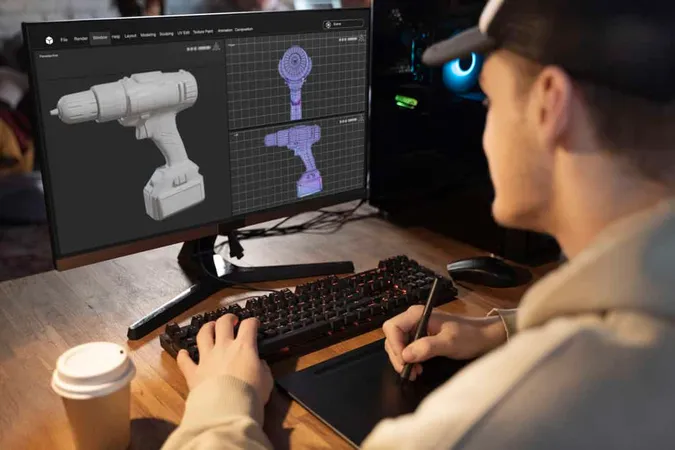
The CSWA certification is a powerful credential for those looking to advance their careers in engineering and product design. It not only validates your proficiency with SOLIDWORKS but also demonstrates your commitment to mastering industry-standard tools. By following a structured study plan and using available resources like practice exams and online tutorials, you can increase your chances of passing the CSWA exam and take your career to the next level.
How this page was made: written with AI tools and published by Nathan Beja, founder of Practice Test Geeks, who is responsible for its content. Exam facts are checked against the official sources listed below. Not reviewed by a subject-matter expert. Editorial policy
Sources & references
Exam facts on this page (fees, format, dates, passing scores) are checked against these official sources; the date is our last check. Editorial policy
- solidworks.com — Test delivery, eligibility, exam format, passing score, retake policy, time limit · verified Oct 2026