

MCAP Practice Test
Updated October 2026Facts verified Oct 21, 2026 against Maryland State Department of Education
MCAP: upcoming dates and official changes
- Jun 30, 2027: Under MSTAR, which replaces Maryland's MCAP tests, official student results reach school districts no later than June 30, within 30 business days of the test once standard setting is done. (Maryland State Department of Education)
Facts verified Oct 21, 2026 against Maryland State Department of Education. Dates that have passed are removed automatically.
- Maryland students may not retake an MCAP end-of-course exam on its own, separate from the course, to earn a higher score. (Maryland State Department of Education)
- Maryland's statewide MCAP/MSTAR assessments are given in schools in both online and paper-based formats. (Maryland State Department of Education)
- For students who were first-time ninth graders in 2023-24 or later, the MCAP American Government and Life Science (LS MISA) end-of-course exams count for 20% of the final grade in those courses. (Maryland State Department of Education)
- For the MCAP high school end-of-course exams, a grade conversion score goes to Local Accountability Coordinators nine business days after the student's exam is submitted digitally. (Maryland State Department of Education)
- Under MSTAR, which replaces Maryland's MCAP tests, official student results reach school districts no later than June 30, within 30 business days of the test once standard setting is done. (Maryland State Department of Education)
Facts verified Oct 21, 2026 against Maryland State Department of Education. Dates that have passed are removed automatically.
MCAP Exam at a Glance
| Item | Detail | Official source |
|---|---|---|
| Retake policy (High School EOC (LS MISA, American Government)) | No standalone retakes to raise a grade | Maryland State Department of Education |
| Delivery | Online (computer-based) and paper-based, given in schools | Maryland State Department of Education |
| Eligibility (High School EOC (LS MISA, American Government)) | Students in American Government and Life Science courses (ninth-grade cohorts from 2023-24 onward) | Maryland State Department of Education |
| Score release (High School EOC (LS MISA, American Government)) | 9 business days after digital submission | Maryland State Department of Education |
| Score release (MSTAR) | Results reach districts by June 30 | Maryland State Department of Education |
Facts verified Oct 21, 2026 against Maryland State Department of Education. Dates that have passed are removed automatically.
The Maryland Comprehensive Assessment Program (MCAP) is an essential standardized testing program that evaluates the academic progress of students in Maryland public schools. The focus keyword, Maryland Comprehensive Assessment Program (MCAP), holds critical importance in today’s education system as it serves as a tool to assess students' readiness for college and career paths based on state academic standards. It is administered annually to students from grades 3 to 8 and in high school, covering core subjects such as English Language Arts/Literacy, Mathematics, Science, and Social Studies. Practice with the free MCAP - Maryland Comprehensive Assessment Program practice test on PracticeTestGeeks (9 questions with answer explanations).
Students preparing for multiple standardized assessments often benefit from broadening their practice scope, so consider working through our AASA practice test to sharpen core academic skills that transfer directly to MCAP question formats.
If you are supporting English language learners alongside MCAP prep, our AAPPL practice test offers targeted listening, reading, and writing exercises that reinforce the literacy foundations measured on the MCAP.
Free MCAP - Maryland Comprehensive Assessment Program Study Tools
Interactive MCAP - Maryland Comprehensive Assessment Program resources on PracticeTestGeeks, free to start:
- Free MCAP Reading Questions and Answers — 9 questions with answer explanations
- MCAP - Maryland Comprehensive Assessment Program flashcards — review key terms and concepts card by card
- MCAP - Maryland Comprehensive Assessment Program study guide — topic-by-topic overview of what the exam covers
- MCAP - Maryland Comprehensive Assessment Program cheat sheet — one-page printable summary for last-minute review
MCAP Practice Test Questions
Prepare for the MCAP - Maryland Comprehensive Assessment Program exam with our free practice test modules. Each quiz covers key topics to help you pass on your first try.
MCAP Mathematics
MCAP Exam Questions covering Mathematics. Master MCAP Test concepts for certification prep.
MCAP Reading
Free MCAP Practice Test featuring Reading. Improve your MCAP Exam score with mock test prep.
MCAP Social Studies & Government
MCAP Test Prep for Social Studies & Government. Practice MCAP Quiz questions and boost your score.
MCAP Best Practices & Methodologies
MCAP Questions and Answers on Best Practices & Methodologies. Free MCAP practice for exam readiness.
MCAP Communication & Stakeholder Relations
MCAP Mock Test covering Communication & Stakeholder Relations. Online MCAP Test practice with instant feedback.
MCAP Core Concepts & Fundamentals
Free MCAP Quiz on Core Concepts & Fundamentals. MCAP Exam prep questions with detailed explanations.
MCAP Industry Regulations & Compliance
MCAP Practice Questions for Industry Regulations & Compliance. Build confidence for your MCAP certification exam.
MCAP Professional Standards & Ethics
MCAP Test Online for Professional Standards & Ethics. Free practice with instant results and feedback.
MCAP Quality Assurance & Improvement
MCAP Study Material on Quality Assurance & Improvement. Prepare effectively with real exam-style questions.
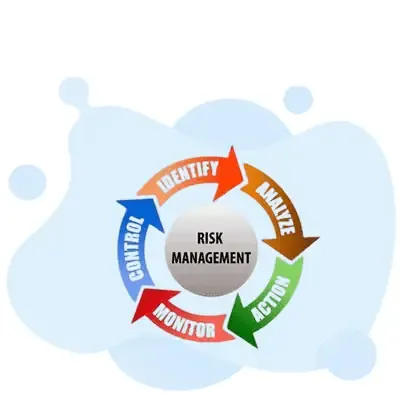
MCAP Risk Management & Assessment
Free MCAP Test covering Risk Management & Assessment. Practice and track your MCAP exam readiness.
Key Takeaways
Free MCAP Practice Test Online
-
The Maryland Comprehensive Assessment Program (MCAP) evaluates student achievement in core academic subjects.
-
MCAP assessments are conducted from grades 3 through high school.
-
The program aligns with the Maryland College and Career Ready Standards (MCCRS).
-
Students are tested in English Language Arts/Literacy, Mathematics, Science, and Social Studies.
-
MCAP results are used by schools, teachers, and policymakers to guide academic decisions.
-
Performance levels classify students from Beginning Learner to Distinguished Learner.
-
Effective test preparation strategies are essential for achieving high MCAP scores.

Understanding the MCAP Testing Format
The Maryland Comprehensive Assessment Program (MCAP) uses a computer-based format designed to efficiently measure student knowledge and skill application. The program tests students in specific academic subjects, each with its own section, time limits, and question types, including multiple-choice, short-answer, essay, and performance-based tasks.
English Language Arts/Literacy assessments focus on reading comprehension, text analysis, writing skills, and language conventions. Students are asked to read passages and answer questions that test their understanding and critical analysis abilities. Mathematics tests require problem-solving, calculations, and applying math concepts to real-world scenarios.
Science and Social Studies are assessed in selected grade levels. Science tests measure students' grasp of life sciences, earth and space sciences, and physical sciences. Social Studies tests examine knowledge in history, geography, government, and economics. Each subject’s testing format is carefully structured to challenge and assess higher-order thinking skills.
How Performance Levels Are Determined
Maryland Comprehensive Assessment Program (MCAP) results are categorized into performance levels, ranging from Beginning Learner to Distinguished Learner. These levels are determined based on the total number of points a student earns across all sections of the test. The performance levels help identify where students excel and where they may need targeted academic support.
The four primary performance levels are:
-
Beginning Learner
-
Developing Learner
-
Proficient Learner
-
Distinguished Learner
Students scoring in the Proficient or Distinguished Learner categories demonstrate mastery of grade-level standards and are considered prepared for the next academic level. Those in the Beginning and Developing categories are identified for intervention and support services, ensuring no student is left behind.
Importance of MCAP for Maryland Students
The Maryland Comprehensive Assessment Program (MCAP) plays a vital role in shaping the academic experience of students across Maryland. It provides a standardized measure to track student achievement and identify educational gaps. The insights gathered from MCAP results guide instructional decisions and curriculum development, ensuring alignment with Maryland College and Career Ready Standards.
For students, performing well on the MCAP can boost academic confidence and open opportunities for advanced programs, scholarships, and honors classes. For educators and schools, MCAP data highlights areas requiring instructional adjustments and resource allocation. Additionally, statewide performance reports are shared with parents and policymakers to drive broader educational improvements.
The MCAP is not merely a test but a comprehensive academic evaluation system that impacts educational policy, classroom instruction, and student outcomes in Maryland.
Effective Preparation Strategies for MCAP
Preparing for the Maryland Comprehensive Assessment Program (MCAP) involves a mix of content review, skill-building exercises, and strategic test-taking practices. Students should start by familiarizing themselves with the test format and question types. Practicing with sample questions or previous test papers can build confidence and reduce anxiety on test day.
Time management is another critical component. Students must learn how to pace themselves during each section, ensuring they have sufficient time to answer all questions thoughtfully. Reviewing core concepts in English, Math, Science, and Social Studies is essential, focusing on areas identified as personal weaknesses.
Parental involvement and teacher support are equally important. Parents can help by creating structured study schedules and providing encouragement, while teachers can offer targeted tutoring and practice assessments. Together, these strategies create a supportive environment for students to excel.
Common Challenges Students Face with MCAP
Many students experience test-related anxiety when approaching the Maryland Comprehensive Assessment Program (MCAP). The pressure to perform well on standardized tests can lead to nervousness, affecting concentration and performance. Recognizing and addressing these challenges is key to helping students succeed.
Another common issue is difficulty in understanding complex, multi-part questions, especially in reading comprehension and mathematics sections. Students should practice breaking down questions into manageable parts and developing systematic approaches to problem-solving.
Time management during the test can also be challenging. Students often spend too much time on difficult questions, leaving insufficient time for easier sections. Learning to quickly identify and tackle easier questions first can help maximize overall scores.

What Parents Should Know About MCAP
Parents play an important role in helping their children prepare for and succeed in the Maryland Comprehensive Assessment Program (MCAP). Understanding the purpose, structure, and content areas of the test enables parents to better support their children academically.
Parents should regularly communicate with teachers to track their child’s progress and identify subjects requiring additional focus. Encouraging healthy study habits, balanced nutrition, and adequate sleep during the testing period can also significantly improve test performance.
Additionally, parents can access practice materials and resources provided by schools or educational websites to help their children become familiar with MCAP question formats. Creating a positive and supportive home environment helps build student confidence and reduces test-day anxiety.
Conclusion
The Maryland Comprehensive Assessment Program (MCAP) is more than a standardized test — it’s a comprehensive evaluation system that influences student learning, teaching strategies, and educational policies across the state. By assessing students’ mastery of academic content and readiness for the next grade level, MCAP plays a vital role in shaping Maryland’s educational landscape.
Students who understand the structure and expectations of the Maryland Comprehensive Assessment Program (MCAP) are better equipped to prepare effectively. With the right study habits, access to resources, and support from teachers and parents, students can improve their performance and achieve their academic goals.
Ultimately, MCAP provides valuable feedback that benefits not only students but also educators and school administrators. It ensures accountability in the education system and supports the continuous improvement of academic programs to meet the needs of Maryland students.
- +Validates your knowledge and skills objectively
- +Increases job market competitiveness
- +Provides structured learning goals
- +Networking opportunities with other certified professionals
- −Study materials can be expensive
- −Exam anxiety can affect performance
- −Requires dedicated preparation time
- −Retake fees apply if you don't pass
Pros and Cons at a Glance
| Pros | Cons |
|---|---|
| Validates your knowledge and skills objectively | Study materials can be expensive |
| Increases job market competitiveness | Exam anxiety can affect performance |
| Provides structured learning goals | Requires dedicated preparation time |
| Networking opportunities with other certified professionals | Retake fees apply if you don't pass |
Sample MCAP - Maryland Comprehensive Assessment Program Practice Questions
Try these questions from our free MCAP - Maryland Comprehensive Assessment Program practice tests. The correct answer and an explanation follow each question.
What is the primary objective of Maryland Comprehensive Assessment Program certification?
- A. To validate professional competence in maryland comprehensive assessment program
- B. To fulfill a government mandate
- C. To replace formal education requirements
- D. To provide tax benefits to employers
Answer: A. To validate professional competence in maryland comprehensive assessment program
The Maryland Comprehensive Assessment Program certification validates that professionals have demonstrated competence and knowledge in their field.
Which Maryland city served as the temporary U.S. capital from 1783-1784?
- A. Baltimore
- B. Annapolis
- C. Frederick
- D. Rockville
Answer: B. Annapolis
Annapolis served as the temporary capital of the United States from 1783 to 1784, following the Revolutionary War. During this period, the Continental Congress met there, and significant events such as George Washington's resignation as commander-in-chief and the ratification of the Treaty of Paris occurred.
What Maryland landmark is considered the birthplace of the national anthem?
- A. Fort McHenry
- B. Annapolis State House
- C. Antietam Battlefield
- D. Chesapeake Bay Bridge
Answer: A. Fort McHenry
Fort McHenry is renowned as the birthplace of the U.S. national anthem, "The Star-Spangled Banner." During the War of 1812, Francis Scott Key witnessed the bombardment of the fort by the British in 1814 and, seeing the American flag still flying at dawn, was inspired to write the poem that became the anthem.
What document established Maryland as a British colony in 1632?
- A. The Mayflower Compact
- B. The Maryland Toleration Act
- C. The Charter of Maryland
- D. The Fundamental Orders
Answer: C. The Charter of Maryland
The Charter of Maryland, granted by King Charles I to Cecil Calvert (Lord Baltimore) in 1632, officially established Maryland as a proprietary colony. This document outlined the colony's boundaries, granted extensive powers to the proprietor, and laid the legal foundation for its governance and settlement.
Take the full MCAP - Maryland Comprehensive Assessment Program practice test
MCAP Questions and Answers
How this page was made: written with AI tools and published by Nathan Beja, founder of Practice Test Geeks, who is responsible for its content. Exam facts are checked against the official sources listed below. Not reviewed by a subject-matter expert. Editorial policy
Sources & references
Exam facts on this page (fees, format, dates, passing scores) are checked against these official sources; the date is our last check. Editorial policy
- msde.maryland.gov — Eligibility, retake policy, score release, test delivery · verified Oct 2026