
LPN License: Complete Guide to Getting, Verifying, and Renewing Your Practical Nurse License
🎓 Complete LPN license guide. Get your state license after NCLEX-PN, verify any LPN via NURSYS, renew every 2 years, use NLC for multi-state work.

What Every LPN License Boils Down To
Your LPN license is the legal authority — issued by your state's Board of Nursing — that lets you practice as a licensed practical nurse. You earn it by finishing an approved program, passing the NCLEX-PN, clearing a background check, and paying state fees. Renew every two years. Join the Nurse Licensure Compact and one license covers 41+ states automatically.
An LPN license is the state-issued credential that legally authorizes you to practice as a licensed practical nurse. Without it, you cannot touch a patient in a clinical role. Each state's Board of Nursing (BON) hands out its own license — and the rules vary more than most new grads expect. California's process bears little resemblance to Florida's, which itself differs from New York's. Same job title. Wildly different paperwork.
Finishing an LPN program doesn't make you a nurse. Passing the NCLEX-PN doesn't either. Only the license does. It's the legal authority — plain, simple, non-negotiable. Lose it through discipline or expiration, and you're done. You can hold every credential in the country, but if your license isn't active in the state where you're working, you're practicing illegally. Period. Employers verify this before every shift in some settings.
If you're still planning your route in, the how to become an LPN guide walks you through the full sequence from prerequisites to first paycheck. This article picks up where that one leaves off — the license itself, not the path to it. We'll cover applications, renewals, verification lookups, multi-state compact privileges, fees by state, endorsement to a new state, and the disciplinary traps that end careers. Read everything before you submit your first BON application. The mistakes are easier to avoid than to recover from once they're filed.
LPN License By the Numbers
Key Facts at a Glance
| Item | Value | Details |
|---|---|---|
| Typical renewal cycle | 2 years | |
| Initial license fee range | $75–$300 | |
| NCLEX-PN exam fee | $200 | |
| Time to receive license | 1–3 months | |
| CEUs required (varies) | 12–30 hrs |
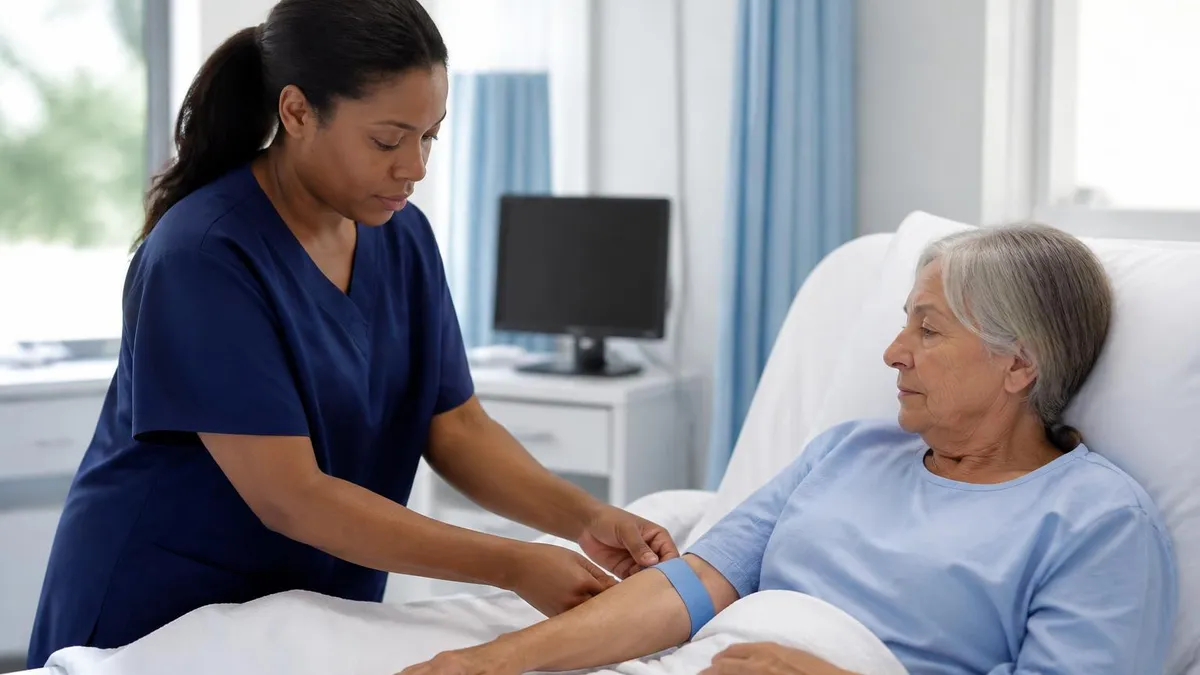
The route is straightforward — though never quick. First, finish a state-approved LPN program. Most run 9 to 15 months. Pick one that's accredited and BON-approved in your state, because using an unapproved school will sink your application before it even starts. See the LPN school breakdown for help choosing the right program for your state and schedule. Don't skip this step.
Next: pass the NCLEX-PN. Submit your license application to the state Board of Nursing. Get fingerprinted at an approved vendor. Pay the fee — anywhere from $75 to $300 depending on state. Then wait. The board reviews everything — education, exam result, criminal history, employment history — before issuing your license number. From NCLEX pass to license in hand is usually one to three months. Sometimes longer if anything in your record needs explanation or your school's transcripts get held up at the registrar.
Many states let you file the license application before you take the NCLEX. Smart move. The background check runs in parallel that way, shaving weeks off your total wait. Once your exam result clears Pearson VUE, the BON pulls it automatically and finishes review.
Don't sit around waiting after you pass — be ready to start work the moment your license number drops. Have your scrubs, your stethoscope, your immunization records, and a job offer lined up. Time is money. Every week you spend unlicensed is a week of lost wages plus continued student loan accrual. Apply early, follow up weekly, and answer every BON request the same day it lands in your inbox.
LPN License Cycle: Step by Step
Apply to the BON
Background check
Education verification
Board review
Initial license issued
Renewal application
CEU verification + payment
Renewed license issued
Repeat every 2 years
Maintain NLC privileges
You cannot get licensed without passing the NCLEX-PN. It's a computerized adaptive test administered at Pearson VUE centers nationwide. The exam adapts to your ability level as you go. Answer correctly, questions get harder. Answer wrong, they get easier. You'll see anywhere from 85 to 205 questions. The test cuts off when the algorithm has enough data to confidently score you above or below the pass line.
Time limit's five hours. The exam costs $200 plus testing center fees. Pass/fail only — no numeric score, no curve, no second-place ribbon. Every U.S. state accepts the same NCLEX-PN result, which makes endorsing into a second state much simpler later on. The exam tests safe and effective care, health promotion, psychosocial integrity, and physiological integrity — four broad categories aligned with day-one LPN responsibilities. Roughly 84% of first-time test-takers pass nationwide. Retake policy varies — most states allow up to eight attempts per year, with a mandatory 45-day wait between sittings.
For prep strategy, see the LPN certification deep-dive. Note: certification and license are different things — covered in detail further down this guide. Don't confuse them on a resume or in a hiring conversation. The NCLEX-PN is the gate. The license is the practice authority. Certification is the optional polish you add later for specialty work. Each plays its own role. Each has its own cost. Each follows its own renewal cycle. Skip the gate and nothing else matters — no certification rescues you from a missing license number.
License Process: Apply, Renew, Go Multi-State
Apply directly to your state Board of Nursing — most have online portals now. Have your school send transcripts straight to the board (you can't mail them yourself in most states). Schedule fingerprinting at an approved vendor. The BON pulls your NCLEX-PN result from Pearson VUE automatically once you pass. Pay the state license fee, which runs $75 to $300 depending on the state. Then wait. Board review takes anywhere from 4 to 12 weeks. You'll receive a license number and effective date — that's the moment you can legally work. Some states issue temporary or graduate permits while you wait; ask the BON directly.

LPN License Costs by State
- Initial fee: $150
- Renewal (2 yr): $150
- CE required: 30 hours
- NLC member: No
- Initial fee: $115
- Renewal (2 yr): $69
- CE required: 20 hours
- NLC member: Yes
- Initial fee: $143
- Registration (3 yr): $73
- CE required: None
- NLC member: No
- Initial fee: $90
- Renewal (2 yr): $55
- CE required: 24 hours
- NLC member: Yes
- Initial fee: $135
- Renewal (2 yr): $76
- CE required: 30 hours
- NLC member: Yes
- Initial fee: $50
- Renewal (2 yr): $40
- CE required: 20 hours
- NLC member: No
License verification matters. Employers check it before hire. Patients sometimes look it up. Hospital credentialing teams pull it monthly. And honestly? You should verify your own status before every renewal cycle just to be safe. Mistakes happen — wrong expiration dates, missing CEU credits, even clerical mix-ups with another nurse who shares your name. Catch them early.
The best tool is NURSYS — nursys.com — a free national database run by the National Council of State Boards of Nursing. Type in a name and state, and you'll see license number, expiration date, status, and any disciplinary actions across every NURSYS-participating state. Each state BON also runs its own lookup portal for the moments NURSYS lags. Both are free. Both are public. Both are the gold standard for verification across the industry. Hospitals, agencies, and credentialing companies all use one or the other — usually both — before any new hire steps onto a unit.
Statuses to watch for: Active, Probation, Suspended, Revoked, Lapsed, or Encumbered. "Encumbered" is the red flag — it signals a disciplinary action on file, even if the license still technically reads active. Always save a verification screenshot or PDF for HR records, because rechecking later can show a different status if anything changed in the interim. Employers want dated proof. Give them dated proof. Don't trust phone confirmations or email screenshots without timestamps and source URLs visible.
License Lookup Tips That Save Time
- ✓Use NURSYS for free national lookup — covers most states in one search
- ✓Verify across multiple states if you suspect compact-state privileges
- ✓Check exam status separately at Pearson VUE if license is brand new
- ✓Always look for disciplinary history, not just license status
- ✓Confirm middle name matches to avoid identity confusion with same-name nurses
- ✓Save a verification screenshot or PDF for HR before every job start
- ✓Re-verify your own license before each new employer onboarding
- ✓Check if license expires within 90 days — renew before, not after
Most denials trace back to a few patterns. Failed background checks top the list. Open felony charges almost always trigger a hold while the board investigates further. Drug-related convictions — even old ones — can stop an application cold, though policies vary by state and by how long ago the conviction was. Past disciplinary actions in other states show up via NURSYS, so don't try to hide them. Boards talk to each other. Always.
Incomplete applications, missing transcripts, unpaid fees, and (in some states) outstanding child support also delay things. Pennsylvania, Texas, and Mississippi all suspend license issuance for unpaid child support arrears. California holds applications if tax payments are delinquent. New York demands a separate child abuse training certificate for first-time licensees. Every state has its own quirk. Read the application instructions twice before submitting — three times if you have any complications in your background.
The fix? Disclose everything upfront. Boards punish concealment far harder than they punish the original offense. Be honest, attach explanations, and let the board decide. Concealment turns a recoverable issue into a permanent denial — almost every time. Bring a written letter explaining the circumstances, any rehabilitation steps you've taken, character references from licensed nurses or supervisors, and proof of completed obligations.
Show the board you've grown. They want to license safe practitioners, not punish you for the past. Many candidates with concerning histories — DUIs, old drug charges, even bankruptcies — get licensed every year because they disclosed everything and demonstrated rehabilitation. The applicants who get denied are the ones who lied or omitted material facts. Honesty isn't just the right move. It's the strategically smart move.

The moment your license expires without renewal, you lose the legal authority to work as an LPN. Working anyway? That's practicing without a license — a felony in most states, and a career-ending move. Set calendar reminders 90, 60, and 30 days before expiration. If you miss it, stop working immediately and contact your BON. Most states offer a grace period for late renewal, but you cannot practice during the lapse — even one shift. Your employer also faces penalties for keeping you on. Don't risk it.
Move to a new state? You don't re-take the NCLEX. You apply by endorsement instead. The new state pulls your record, verifies your active license, and issues their own — provided you've practiced enough hours recently (usually 200+ in the past five years). Endorsement fees run $50 to $200 per state. Processing takes 4 to 12 weeks. Plan ahead. Don't quit your current job until the new state's license number is in hand.
Pro tip: if you live in a Nurse Licensure Compact state, you've already got multi-state privileges baked in — no endorsement needed for the other 40+ NLC states. That's why so many travel nurses establish residency in compact states first. It's a one-time setup that pays off forever. Texas and Florida are popular choices because they have no state income tax, large nursing markets, and full NLC participation. Set up a real residence — driver's license, voter registration, lease or deed — before claiming compact eligibility.
The financial side matters too — see the LPN salary breakdown by state before you commit to relocating, because pay scales vary by tens of thousands annually. A California LPN out-earns a Mississippi LPN by 60% or more, but cost of living eats most of that gap. Don't move chasing salary alone. Factor housing, taxes, license fees, CEU costs, and whether your destination state participates in the compact. Travel nurses especially need to think strategically about residency before signing leases. The difference between compact and non-compact states adds up — fast.
LPN License: The Honest Trade-Offs
- +Legal authority to work as an LPN — without it, you simply cannot practice
- +Opens the door to the broader nursing career ladder, including LPN-to-RN bridges
- +Portable across 41+ states via the Nurse Licensure Compact
- +Well-recognized credential employers trust on sight
- +Regulated profession — the title means something and is protected by law
- −State-specific bureaucracy can drag on for months
- −Renewal fees and CEU costs run every two years for your entire career
- −Background check is stressful even with a clean record
- −Disciplinary risk follows you — one incident can end the career
- −NCLEX-PN must be passed first, and not everyone passes on attempt one
This trips up almost every new grad. A license is the legal authority to practice — issued by your state Board of Nursing, mandatory, non-negotiable. A certification is a voluntary specialty credential — issued by a national organization, optional, and proves added expertise in a niche area. You need the license to work. You don't need a certification, though some employers prefer it and some specialty units require it.
CCMA, CMA, and similar acronyms are certifications for different roles entirely (medical assisting). The NCLEX-PN is the exam that qualifies you to apply for licensure — it's not itself a certification. National federations issue certifications like IV therapy, hospice, gerontology, and wound care. State BONs issue licenses. Different bodies. Different processes. Different costs. Different renewal cycles. Different consequences if they lapse.
Don't mix them up on a resume — hiring managers notice, and it makes you look unprepared for a field where credentials are everything. List your license number and state first. List certifications underneath, with the issuing body and expiration date.
If you let a certification lapse, the world keeps turning. If you let your license lapse, you're unemployable as a nurse until you reinstate it. The hierarchy matters. The license sits at the top, always. Everything else stacks beneath it — certifications, specialty training, advanced degrees, even decades of experience. None of it works without an active license number in the state where you're practicing on any given shift.
LPN License Questions and Answers
Getting licensed is the start, not the finish. Many LPNs use the credential as a launchpad — working a few years to build clinical experience, then bridging to RN through an accelerated program. The LPN to RN guide breaks down the fastest paths, including hybrid online options that let you keep working while you study. Most bridges take 12–24 months and dramatically expand your earning ceiling.
Other LPNs pick up specialty certifications — IV therapy, geriatrics, hospice, wound care — to boost pay and open doors to specific units. Some move into telehealth, school nursing, or correctional facilities, where LPN demand is high and competition is lower. School nursing in particular offers summers off and predictable hours. Correctional facilities pay premium rates because the work is harder to staff. Each setting trades something — pay for stress, schedule for variety, autonomy for security. Pick the trade that fits your life right now. You can always pivot later. The license travels with you.
The license is the foundation. What you build on top is entirely up to you. Some people stay LPN their entire career and love it. Others use it as a stepping stone to RN, then nurse practitioner, then specialty roles. There's no wrong path — just paths that fit your life and paths that don't.
Don't let anyone tell you LPN is "just" anything — it's a legitimate career with real demand, real pay, and real respect wherever you choose to take it. The Bureau of Labor Statistics projects steady LPN job growth through the next decade. Your license is the ticket to all of it.
Disciplinary actions stay on your record permanently. The most common types: probation (you can still work but under supervision and reporting), suspension (temporary loss of practice rights), revocation (permanent loss — extremely hard to reverse), reprimand (formal warning on file), and voluntary surrender (usually a pre-emptive move when discipline is coming anyway). Each one shows up on NURSYS instantly.
Common triggers? Drug diversion is the biggest by far — taking patient medications for yourself or for sale. Falsifying patient records. Causing patient harm through negligence. Criminal convictions outside work — especially anything involving theft, violence, or controlled substances. Boundary violations with patients. Practicing while impaired. Failing mandatory drug tests after a workplace incident. Every action shows up on NURSYS for any future employer to see. Once it's there, it's there. Forever.
The lesson: protect your license like the career-defining asset it is. One bad decision can erase a decade of work. If you're ever investigated, get an attorney immediately — one who specializes in nursing license defense. Don't try to handle it alone. Don't respond to board letters without legal review. Don't talk to investigators casually thinking honesty alone will save you. Discipline cases are legal proceedings. Treat them that way. The cost of an attorney is trivial compared to losing your livelihood.
License Protection — Daily Habits That Matter
- ✓Document everything in patient charts — late entries are scrutinized harder
- ✓Never sign off on tasks you didn't personally witness or perform
- ✓Report errors immediately — concealment is the worst response
- ✓Keep your CEU certificates for 4+ years in case of audit
- ✓Maintain a personal copy of every renewal receipt and confirmation
- ✓Don't accept gifts or money from patients or families
- ✓Stay out of patient social media — no friend requests, no comments
- ✓Never practice when impaired — fatigue, illness, or substances
An LPN license is the state-issued legal authority to practice as a licensed practical nurse. You earn it by finishing an approved program, passing the NCLEX-PN, clearing a background check, and paying the fees. You renew it every two years with continuing education. You verify yours — and any colleague's — through NURSYS. And you protect it like the career-defining asset it is. Everything else flows from this single credential.
If you live in a Nurse Licensure Compact state, one license covers 41+ states — huge for travel nurses and anyone considering a move. Skip the compact and you'll be juggling separate endorsement applications every time you cross a state line. Plan your residency accordingly. Texas, Florida, Arizona, and the Carolinas are popular compact-state choices for people who want flexibility built into their license from day one. Set yourself up right at the start.
Whether you're applying first time, renewing after a lapse, or verifying credentials for a new hire, the same rule applies: go to the source. Your state BON website and NURSYS are the only databases that matter. Everything else is rumor — Reddit threads, Facebook groups, that one nurse at orientation who "heard something." Don't trust them. Verify with the board directly.
Get it in writing. Save the PDFs with the URL and timestamp visible. Your career sits on this credential, so treat it accordingly. Set the renewal reminders today, not next year. Submit your CEUs as you complete them, not in a panic the week before expiration. Build the habits that protect your license — they're cheap to start, expensive to neglect, and impossible to retrofit after discipline already landed on your record.
About the Author

Registered Nurse & Healthcare Educator
Johns Hopkins University School of NursingDr. Sarah Mitchell is a board-certified registered nurse with over 15 years of clinical and academic experience. She completed her PhD in Nursing Science at Johns Hopkins University and has taught NCLEX preparation and clinical skills courses for nursing students across the United States. Her research focuses on evidence-based exam preparation strategies for healthcare certification candidates.
Join the Discussion
Connect with other students preparing for this exam. Share tips, ask questions, and get advice from people who have been there.
View discussion (7 replies)