
LMSW Jobs NYC: Salaries, Top Employers, and How to Land Your First Role
Explore lmsw jobs nyc — top employers, salary ranges, licensing steps, and tips to launch your social work career in New York City. ✅

If you are searching for lmsw jobs nyc, you are stepping into one of the most dynamic and in-demand social work markets in the United States. New York City employs tens of thousands of licensed social workers across hospitals, schools, nonprofits, government agencies, and private practices. The demand for qualified lmsw professionals continues to outpace supply in many specialty areas, which means job seekers who hold an active LMSW license can often negotiate strong salaries and choose from multiple offers simultaneously.
Understanding what an LMSW credential means is the first step toward navigating this competitive market. The Licensed Master Social Worker designation indicates that you have completed an accredited MSW degree program and passed the Association of Social Work Boards (ASWB) Master-level examination. In New York State, the LMSW is the entry-level advanced license that permits you to practice social work under supervision while you accumulate the clinical hours required for the higher-tier LCSW credential. Employers across the five boroughs recognize the LMSW as proof of rigorous graduate-level training.
New York City's social service infrastructure is enormous. The city operates through agencies like the Administration for Children's Services, the Department of Homeless Services, the Department of Health and Mental Hygiene, and NYC Health + Hospitals — all of which hire LMSWs in large numbers every single year. Beyond government work, major hospital systems such as NewYork-Presbyterian, Mount Sinai, NYU Langone, and Montefiore Medical Center maintain large social work departments where LMSWs handle case management, discharge planning, and patient advocacy on a daily basis.
The nonprofit sector in New York City is equally substantial. Organizations like the Urban Justice Center, Covenant House, Safe Horizon, Goddard Riverside, and hundreds of smaller community-based organizations rely almost entirely on licensed social workers to deliver services to vulnerable populations. These roles often come with meaningful mission-driven work, strong benefits packages, loan forgiveness eligibility through the Public Service Loan Forgiveness program, and real pathways to supervisory and clinical advancement over time.
Salary expectations for LMSW jobs in New York City vary considerably depending on the sector, setting, and level of specialization. Entry-level positions at nonprofits typically start between $52,000 and $62,000 annually, while hospital and health system roles often begin at $65,000 to $75,000. Government positions tend to offer structured pay scales with generous pension benefits. As you gain experience and move toward obtaining your LCSW, earning potential increases substantially, with many mid-career professionals reaching $85,000 to $95,000 or more in clinical and supervisory roles.
Passing the ASWB Master exam is a prerequisite for all of these opportunities. The exam tests your knowledge across human development, assessment, intervention, ethics, and professional relationships. Many candidates underestimate the difficulty of the exam and the importance of structured preparation. Using high-quality lmsw practice questions and full-length simulated exams is one of the most reliable ways to build the exam confidence you need before test day arrives.
This guide walks you through everything you need to know about pursuing LMSW jobs in New York City — from understanding the licensing requirements and navigating the city's top employers to negotiating your salary and building toward your LCSW. Whether you are a recent MSW graduate or a mid-career professional relocating to New York, the information here will help you take purposeful, informed steps toward your next role.
LMSW Jobs NYC by the Numbers

Top NYC Employers Hiring LMSWs
The largest public hospital system in the United States employs hundreds of LMSWs across 11 acute care hospitals, post-acute facilities, and community health centers. Roles focus on case management, discharge planning, and behavioral health integration throughout the five boroughs.
ACS hires LMSWs as child protective specialists, family service coordinators, and program supervisors. The agency serves over 50,000 children annually and offers structured career ladders, union protections, and New York City pension benefits for long-term employees.
DHS operates over 200 shelters and service sites and relies heavily on LMSW professionals for intake assessment, housing navigation, and crisis stabilization. Many positions qualify for Public Service Loan Forgiveness after ten years of qualifying payments.
NewYork-Presbyterian, Mount Sinai Health System, NYU Langone, and Montefiore Medical Center all maintain large social work departments. Hospital-based LMSWs handle psychosocial assessments, insurance navigation, and coordination with community resources for diverse patient populations.
Organizations like Safe Horizon, Covenant House, Goddard Riverside, and the Urban Justice Center offer mission-driven LMSW roles in areas including domestic violence services, youth development, immigrant support, and mental health counseling under clinical supervision.
When evaluating lmsw salary expectations in New York City, it helps to break down compensation by sector and setting. Hospital-based LMSWs typically earn the highest starting salaries, often between $65,000 and $78,000 per year at major academic medical centers. These roles come with comprehensive benefits packages that include health insurance, retirement contributions, and professional development funding. Hospitals also tend to invest in continuing education, which accelerates the path to clinical licensure and higher pay grades over time.
Government positions with New York City agencies offer a different value proposition. While base salaries may start slightly lower — often around $58,000 to $68,000 — the full compensation picture includes a defined-benefit pension plan, generous paid leave, job security, and union representation through organizations like DC 37 or the Social Service Employees Union. Over a full career, the total lifetime value of a government LMSW position frequently surpasses many private-sector roles because of these structural financial benefits.
Nonprofit salaries in New York City have historically lagged behind hospital and government positions, but that gap has been narrowing. Increased public and philanthropic funding, combined with growing competition for licensed professionals, has pushed starting salaries at many nonprofits into the $55,000 to $65,000 range. Organizations that receive city or state government contracts often follow prevailing wage standards. Additionally, most nonprofit positions in social services qualify for the Public Service Loan Forgiveness program, which can effectively be worth tens of thousands of dollars for professionals carrying graduate school debt.
Understanding the difference between lmsw vs lcsw is critical when evaluating salary trajectories. The LMSW is the entry-level advanced license in New York State, while the LCSW (Licensed Clinical Social Worker) requires an additional 3,000 hours of supervised post-degree clinical experience plus a second, more demanding examination. Once you earn your LCSW, salary expectations jump considerably — many clinical social workers in New York City earn between $80,000 and $110,000, especially those in private practice, outpatient mental health, or senior leadership positions.
Geographic variation within New York City also affects compensation. Positions in Manhattan, particularly in large hospital systems or corporate settings, tend to pay higher base salaries than equivalent roles in the outer boroughs. However, cost-of-living differences across neighborhoods mean that a role in the Bronx or Queens with a slightly lower salary may offer a better quality of life for professionals who live nearby and have shorter commutes. Always factor in the full compensation picture — not just the headline salary number — when comparing offers.
Experience and specialization are among the strongest predictors of earning potential. LMSWs who develop expertise in high-demand areas such as oncology social work, forensic social work, substance use disorder treatment, school-based mental health, or geriatric care consistently command higher salaries than generalists. Bilingual professionals, especially those fluent in Spanish, Mandarin, Haitian Creole, or Bengali, are also in exceptionally high demand across New York City agencies and healthcare systems and often receive additional compensation or preference in hiring.
Negotiating your salary effectively requires preparation and market awareness. Research salary data from sources like Glassdoor, LinkedIn Salary Insights, the Bureau of Labor Statistics, and the National Association of Social Workers before entering any negotiation. Know your bottom line, understand what the role is worth to the organization, and do not hesitate to negotiate — particularly in hospital and nonprofit settings where there is often more flexibility than the initial offer suggests. Coming in with documented expertise, strong references, and a clear value proposition makes a meaningful difference in the final number.
LMSW vs LCSW: Understanding the Difference in NYC
The LMSW (Licensed Master Social Worker) is the foundational advanced license in New York State. To earn it, you must hold an MSW degree from a CSWE-accredited program and pass the ASWB Master-level examination. The LMSW authorizes you to practice social work under supervision in non-clinical settings and to perform clinical work under the direct supervision of an LCSW. It is the credential most entry-level MSW graduates hold when they begin their professional careers in New York City agencies, hospitals, and nonprofits.
In New York City, LMSW holders are eligible for a wide range of positions including case manager, child protective specialist, hospital social worker, school social worker, and community health worker. The license is administered by the New York State Education Department and must be renewed every three years with 45 hours of continuing education. Understanding lmsw meaning in practical terms means recognizing both what it permits you to do and what additional experience will eventually qualify you for the clinical license.

LMSW Jobs NYC: Pros and Cons to Consider
- +High and growing demand across hospitals, government, and nonprofit sectors in all five boroughs
- +Diverse practice settings — from acute care hospitals to schools, courts, and community health centers
- +Clear pathway to LCSW licensure with supervision hours accumulated on the job
- +Public sector positions offer defined-benefit pensions, union protections, and strong job security
- +Nonprofit roles frequently qualify for Public Service Loan Forgiveness after 10 years
- +Bilingual professionals and specialists in high-need areas command strong salaries and hiring preference
- −Entry-level nonprofit salaries can be modest relative to New York City's high cost of living
- −Accumulating 3,000 LCSW supervision hours takes two to four years of additional work post-LMSW
- −Emotionally demanding work with high caseloads in many agency and hospital settings
- −ASWB Master exam has a national first-time pass rate of approximately 54%, requiring rigorous preparation
- −Bureaucratic processes in large government agencies can limit clinical autonomy and creative problem-solving
- −Competition for coveted hospital and specialized clinical positions is intense in the NYC metro area
Steps to Obtain Your LMSW License in New York
- ✓Complete an MSW degree from a CSWE-accredited graduate social work program
- ✓Apply for the ASWB Master examination through the New York State Education Department portal
- ✓Pay the ASWB registration fee ($195) and the New York State application fee ($293)
- ✓Schedule your exam at a Pearson VUE testing center within your 90-day eligibility window
- ✓Study for a minimum of 8 to 12 weeks using full-length practice exams and content review
- ✓Pass the 170-question ASWB Master exam with a scaled score of 93 or higher
- ✓Submit your LMSW license application with official MSW transcripts and exam score verification
- ✓Obtain your LMSW license number and activate your credential on the NYSED license portal
- ✓Begin your first LMSW job and identify a qualified LCSW supervisor for future clinical hours
- ✓Complete 45 continuing education hours every three years to maintain your active LMSW license
Public Service Loan Forgiveness Can Be Worth $50,000+
Most LMSW positions at New York City government agencies, public hospitals, and 501(c)(3) nonprofits qualify for the Public Service Loan Forgiveness program. After 10 years of qualifying full-time employment and 120 on-time income-driven repayment payments, your remaining federal student loan balance is forgiven tax-free. For an MSW graduate with $60,000 to $80,000 in student debt, this benefit can be more financially valuable than a higher salary at a private employer that does not qualify.
Finding and applying for LMSW jobs in New York City requires a strategic approach that combines online job boards, professional networking, and targeted outreach to specific employers. The most productive job search platforms for social work positions in NYC include Indeed, LinkedIn, Idealist (which specializes in nonprofit roles), NYC's own government jobs portal at nyc.gov/careers, and the New York City chapter of the National Association of Social Workers job board. Setting up automated email alerts for new postings using keywords like "LMSW," "licensed master social worker," and "social work" will ensure you see openings as soon as they are listed.
Your resume for an LMSW position should lead with your license number and expiration date — hiring managers scan for this immediately to confirm eligibility. Below that, structure your experience using results-oriented language that quantifies your impact wherever possible. Instead of writing "provided case management services," write "managed a caseload of 45 clients monthly, coordinating services across housing, behavioral health, and benefits systems with a 78% positive placement rate." Concrete numbers and outcomes make your application stand out from candidates who describe duties without demonstrating results.
Networking remains one of the most effective job search strategies in the social work field. Attend events hosted by the New York City chapter of NASW, join relevant LinkedIn groups, and stay connected with former classmates and field placement supervisors from your MSW program. Many LMSW positions in New York City are filled through referrals before they are ever publicly posted. A single strong professional connection at a target organization can get your resume in front of the right hiring manager weeks before the job appears on an external board.
Field placement experience from your MSW program carries significant weight with NYC employers, particularly if you completed a placement in the same type of setting you are now applying to. If your placement was in a hospital, lean into that experience when applying to health system roles. If you worked in a school, highlight that when targeting Department of Education or school-based mental health positions. Continuity between your training experience and your target role signals to employers that you already understand the culture, pace, and expectations of their environment.
Cover letters for social work positions should be specific, concise, and mission-aligned. Research the organization's current priorities, populations served, and recent initiatives before writing your letter. Reference a specific program, value statement, or community need that resonates with your professional motivation. Hiring managers in mission-driven organizations notice when candidates have done their homework, and a tailored cover letter communicates genuine interest far more effectively than a generic template that could have been sent to any employer.
Interview preparation for LMSW jobs in New York City should include familiarity with common interview formats used in the field. Many agencies use structured behavioral interviews with questions like "Describe a time you worked with a client in crisis" or "How do you manage a caseload when demands compete?" Prepare three to five strong STAR-format stories (Situation, Task, Action, Result) that demonstrate your clinical reasoning, ethical decision-making, and ability to work within systems. Practice articulating your approach to supervision, self-care, and cultural humility — all topics that come up frequently in social work interviews.
Once you receive a job offer, take time to evaluate the full compensation package before accepting. Look beyond the base salary to consider health insurance premium costs, retirement contributions, loan forgiveness eligibility, supervision arrangements for your LCSW hours, professional development funding, and schedule flexibility. An offer of $60,000 at a qualifying nonprofit with full PSLF benefits and strong clinical supervision may be more valuable to your long-term career than a $70,000 offer at a private organization with no loan forgiveness and limited growth trajectory. Think three to five years ahead when making your decision.

New York State LMSW licenses expire every three years on your birthday. You must complete 45 continuing education hours — including at least 3 hours on child abuse identification and reporting — before renewing. Failing to renew on time results in license lapse, which can make you ineligible for employment in licensed positions. Set a calendar reminder 90 days before your expiration date and begin tracking CE credits from your first day of licensure to avoid a last-minute scramble.
Preparing for the LMSW exam is one of the most important investments you will make in your social work career, and how you prepare has a direct impact on your first-time pass rate. The ASWB Master examination contains 170 questions across four major content areas: Human Development, Diversity, and Behavior in the Environment; Assessment and Intervention Planning; Interventions with Clients/Client Systems; and Professional Relationships, Values, and Ethics. Each section tests different knowledge domains, and successful candidates develop a balanced preparation strategy that addresses all four rather than over-studying in one area while neglecting others.
The most effective preparation strategies combine content review with extensive lmsw practice exam simulations. Content review builds your foundational knowledge of theories, interventions, and ethical frameworks. Practice questions and full-length mock exams develop your test-taking stamina, help you recognize question patterns, and reveal knowledge gaps you can target in subsequent study sessions. Research consistently shows that candidates who complete 500 or more practice questions before their exam perform significantly better than those who rely on content review alone.
Time management during the actual exam is a skill that many candidates underestimate. You have three hours to complete 170 questions, which works out to approximately 63 seconds per question. Some questions will take far less time; others may require more careful analysis. Practicing under timed conditions is essential for building the pace awareness and decision-making speed you need on test day. If you find yourself consistently running out of time during practice sessions, focus on reducing second-guessing and trusting your first instinct on straightforward questions.
The ethics content on the LMSW exam is among the most challenging sections for many candidates because the NASW Code of Ethics questions often present scenarios with no clearly wrong answer — only better and worse professional judgments. Familiarize yourself deeply with the NASW Code of Ethics, paying particular attention to sections on client self-determination, confidentiality and its limits, dual relationships, informed consent, and professional boundaries. When faced with an ethics question, ask yourself: which answer best protects the client while upholding professional standards?
Using the lmsw license study resources effectively means creating a structured 8-to-12-week study plan rather than cramming in the final weeks before your exam date. Divide your preparation into phases: spend the first three to four weeks on content review, the middle weeks on intensive practice question sets with detailed review of explanations, and the final two weeks on full-length timed practice exams and targeted review of your weak areas. Take at least two full-length simulated exams under realistic testing conditions to build stamina and confidence before the real thing.
Test anxiety is a genuine obstacle for many LMSW candidates, and it deserves direct attention in your preparation. Strategies that help include establishing a consistent daily study routine rather than marathon weekend sessions, practicing mindfulness and stress-reduction techniques, getting adequate sleep in the week before your exam, and developing a calming pre-test routine for the morning of your appointment. Many candidates report that their anxiety peaks in the first fifteen to twenty questions and then subsides as they get into their rhythm — knowing this in advance can help you stay calm during those initial moments.
Finally, remember that passing the LMSW exam is not just about memorizing facts — it is about demonstrating professional judgment and the ability to prioritize client welfare within ethical and systems constraints. Approach every practice question as an opportunity to strengthen that judgment, not just to accumulate correct answers. The skills you develop preparing for this exam will serve you throughout your career in every clinical decision, every supervisory conversation, and every ethical dilemma you navigate as a licensed social worker in New York City.
Building a long-term career as a licensed social worker in New York City requires more than securing your first job after passing the LMSW exam. The most successful social workers in NYC treat career development as an ongoing, intentional process that includes continuing education, professional networking, skill diversification, and strategic advancement toward the LCSW credential. Starting strong in your first LMSW role sets the trajectory for everything that follows, which means choosing your first position thoughtfully rather than simply accepting the first offer you receive.
Clinical supervision is the cornerstone of your professional development as an LMSW in New York State. You are required to accumulate 3,000 post-degree clinical hours under the supervision of a licensed LCSW before you can apply for the clinical license. The quality of your supervisor matters enormously — a skilled, engaged supervisor will help you develop your clinical identity, challenge your thinking, and prepare you for the ASWB Clinical examination. When evaluating job opportunities, ask specifically about supervision arrangements: How often does supervision occur? Is it individual or group? Does the supervisor have experience preparing LMSWs for the LCSW exam?
Specialization is one of the most powerful ways to accelerate your career and increase your earning potential as a New York City social worker. The city's scale and diversity mean that there is genuine, sustained demand for LMSWs with expertise in areas including oncology, pediatric health, geriatrics, forensic social work, immigration and asylum services, LGBTQ+ affirming practice, substance use disorder treatment, and school-based mental health.
Investing in training and continuing education in a specific practice area early in your career can distinguish you from generalist candidates and open doors to roles that are both more financially rewarding and more professionally fulfilling.
Professional associations provide essential support, advocacy, and networking opportunities for New York City social workers. The New York City chapter of the National Association of Social Workers (NASW-NYC) hosts continuing education events, advocacy campaigns, and networking mixers that connect practitioners across sectors and specializations. Membership in NASW also provides access to professional liability insurance at discounted rates, which many employers require for social workers in direct practice roles. Joining your state and local chapter early in your career is a relatively low-cost investment with high returns in professional connection and visibility.
Technology is transforming social work practice in New York City, and LMSWs who are comfortable with electronic health records, telehealth platforms, and data-driven outcome measurement tools have a significant advantage in the current job market. Many NYC agencies and hospital systems have moved to platforms like Epic, Meditech, or Salesforce for case tracking and documentation. Telehealth has expanded access to social work services dramatically since 2020, and many positions now include a hybrid or fully remote component. Developing proficiency with these tools demonstrates adaptability and signals to employers that you can function effectively in modern healthcare and social service environments.
Leadership and supervision skills become increasingly important as you advance in your LMSW career. Many social workers discover a strong aptitude for program management, team leadership, and organizational development alongside their clinical interests. New York City offers abundant opportunities to develop these skills through project leadership within your current organization, volunteer board service with community nonprofits, and formal leadership development programs offered by organizations like the Human Services Council and the New York Community Trust. Demonstrating leadership capability early positions you for promotion to senior clinical or administrative roles well before you might otherwise be considered.
Finally, maintaining your own wellbeing is a professional obligation, not just a personal one. Social work in New York City can be emotionally exhausting, and secondary traumatic stress and burnout are genuine occupational hazards — particularly for practitioners working in crisis services, child welfare, and homeless services.
Developing robust self-care practices, seeking personal therapy when needed, and cultivating supportive professional relationships are all essential to sustaining a long and impactful career. The field needs its best practitioners to stay healthy, engaged, and effective for the long haul. Taking care of yourself is inseparable from taking care of the clients and communities you serve.
LMSW Questions and Answers

LMSW Questions & Answers Video
LMSW Licensed Master Social Worker Practice Test PDF 2026

What Does LMSW Stand For? Meaning, Requirements, and How to Get Licensed

LMSW - Licensed Master Social Worker: Complete Study Guide 2026
LMSW - Licensed Master Social Worker: Career Paths, Salary, and Requirements 2026
About the Author
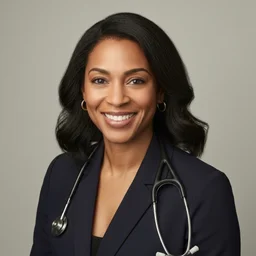
Licensed Social Worker & ASWB Exam Preparation Expert
Columbia University School of Social WorkDr. Maya Brooks holds a PhD in Social Work and is a Licensed Clinical Social Worker (LCSW) with an ASWB-approved supervision practice at Columbia University School of Social Work. With 14 years of clinical practice in mental health, child welfare, and community services, she coaches social work graduates through the ASWB Bachelor, Master, Advanced Generalist, and Clinical licensing examinations.
Join the Discussion
Connect with other students preparing for this exam. Share tips, ask questions, and get advice from people who have been there.
View discussion (8 replies)