
LCDC License: 7 Essential Tips to Know 2026
Free chemical dependency counselor practice test with questions and answer explanations. Prepare for the 2026 exam with instant scoring and study

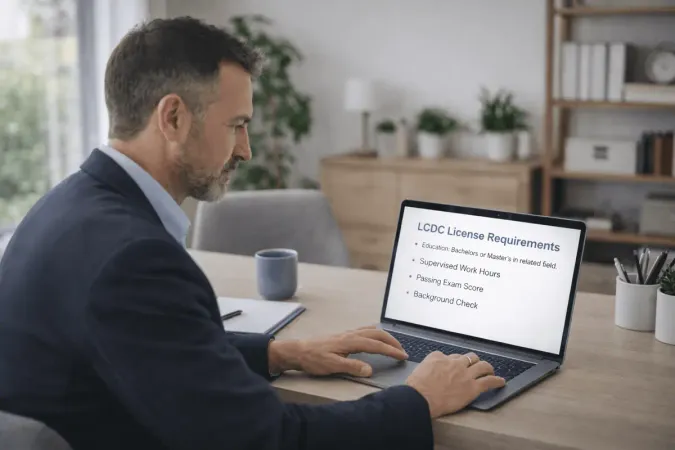
Pursuing a career as a Licensed Chemical Dependency Counselor (LCDC) is a rewarding path for individuals passionate about helping others overcome substance abuse and addiction. The LCDC license demonstrates your commitment to professional excellence and validates your expertise in chemical dependency counseling. Whether you are just starting your journey or looking to advance your credentials, understanding the licensing process is essential for success.
The demand for qualified chemical dependency counselors continues to grow as communities recognize the importance of addiction treatment services. Obtaining your LCDC credential opens doors to diverse career opportunities in hospitals, rehabilitation centers, private practices, and community health organizations. This guide presents seven critical tips that will help you navigate the licensing process efficiently and prepare you for a successful career in chemical dependency counseling.
Before diving into the specifics, it is important to understand that each state has its own requirements for licensure. This article focuses primarily on the Texas LCDC licensing process while providing general guidance applicable to aspiring counselors across the country. Armed with the right knowledge and preparation strategies, you can confidently work toward achieving your professional goals.
Candidates preparing for counselor preparation comprehensive will find our CPCE counseling exam 2026 essential for mastering the exam content, format, and scoring criteria.
Chemical Dependency Counselor License Practice Test Questions
Prepare for the Chemical Dependency Counselor License Exam exam with our free practice test modules. Each quiz covers key topics to help you pass on your first try.
Chemical Dependency Counselor License Case...
Chemical Dependency Counselor License Exam Questions covering Case Management and Referral. Master Chemical Dependency Counselor License Test concepts for certification prep.
Chemical Dependency Counselor License Coun...
Free Chemical Dependency Counselor License Practice Test featuring Counseling Theories and Skills. Improve your Chemical Dependency Counselor License Exam score with mock test prep.
Chemical Dependency Counselor License Exam...
Chemical Dependency Counselor License Mock Exam on Exam Co-Occurring Disorders and Dual Diagnosis. Chemical Dependency Counselor License Study Guide questions to pass on your first try.
Chemical Dependency Counselor License Exam...
Chemical Dependency Counselor License Test Prep for Exam Group Counseling and Family Dynamics. Practice Chemical Dependency Counselor License Quiz questions and boost your score.
Chemical Dependency Counselor License Phar...
Chemical Dependency Counselor License Questions and Answers on Pharmacology of Substance Use. Free Chemical Dependency Counselor License practice for exam readiness.
Chemical Dependency Counselor License Prof...
Chemical Dependency Counselor License Mock Test covering Professional and Ethical Responsibilities. Online Chemical Dependency Counselor License Test practice with instant feedback.
Chemical Dependency Counselor License Scre...
Free Chemical Dependency Counselor License Quiz on Screening and Assessment. Chemical Dependency Counselor License Exam prep questions with detailed explanations.
Chemical Dependency Counselor License Trea...
Chemical Dependency Counselor License Practice Questions for Treatment Planning and Documentation. Build confidence for your Chemical Dependency Counselor License certification exam.
Chemical Dependency Counselor License Case...
Chemical Dependency Counselor License Test Online for Case Management. Free practice with instant results and feedback.
Chemical Dependency Counselor License Cris...
Chemical Dependency Counselor License Study Material on Crisis Intervention. Prepare effectively with real exam-style questions.
Chemical Dependency Counselor License MCQ
Free Chemical Dependency Counselor License Test covering MCQ. Practice and track your Chemical Dependency Counselor License exam readiness.
Chemical Dependency Counselor License
Chemical Dependency Counselor License Exam Questions covering Chemical Dependency Counselor License. Master Chemical Dependency Counselor License Test concepts for certification prep.

Chemical Dependency Counselor License Exam: Pros and Cons
- +chemical dependency counselor assistant — chemical Dependency Counselor License Exam credential is recognized by employers and industry professionals
- +Higher earning potential compared to non-credentialed peers
- +Expanded career opportunities and professional advancement
- +Structured learning path builds comprehensive knowledge
- +Professional development that stays current with industry standards
- −Preparation requires significant time and study commitment
- −Associated costs for exams, materials, and renewal fees
- −Continuing education needed to maintain credentials
- −Competition for advanced positions can be challenging
- −Requirements and standards may vary by state or region
Pros and Cons at a Glance
| Pros | Cons |
|---|---|
| chemical dependency counselor assistant — chemical Dependency Counselor License Exam credential is recognized by employers and industry professionals | Preparation requires significant time and study commitment |
| Higher earning potential compared to non-credentialed peers | Associated costs for exams, materials, and renewal fees |
| Expanded career opportunities and professional advancement | Continuing education needed to maintain credentials |
| Structured learning path builds comprehensive knowledge | Competition for advanced positions can be challenging |
| Professional development that stays current with industry standards | Requirements and standards may vary by state or region |
Sample Chemical Dependency Counselor License Exam Practice Questions
Try these questions from our free Chemical Dependency Counselor License Exam practice tests. The correct answer and an explanation follow each question.
What is an essential component of client education on the anticipated results and potential hazards of the counseling process?
- A. Placement criteria
- B. Treatment process
- C. Referral management
- D. Informed consent
Answer: D. Informed consent
Informed consent is an ethical and legal requirement that ensures clients are fully aware of and agree to the counseling process. It involves providing clear information about the nature of treatment, its anticipated results, potential risks, benefits, and alternatives. This empowers clients to make autonomous decisions about their participation, making it an essential component of client education.
A client reports using kratom daily to manage opioid cravings without a prescription. The counselor should know that kratom's active alkaloids (mitragynine, 7-HMG) primarily act on:
- A. Cannabinoid CB1 receptors
- B. Mu and delta opioid receptors
- C. Alpha-2 adrenergic receptors
- D. Serotonin 5-HT1A receptors
Answer: B. Mu and delta opioid receptors
Kratom alkaloids are partial mu-opioid agonists and have opioid-like analgesic and euphoric effects, carrying dependence and withdrawal risks similar to traditional opioids.
Which of the following is an essential component of the initial informed consent process in chemical dependency counseling?
- A. A detailed schedule of all group therapy topics for the next six months.
- B. A guarantee that the client will achieve and maintain sobriety.
- C. An explanation of the limits of confidentiality, including mandatory reporting duties.
- D. The counselor's personal opinions on different recovery pathways.
Answer: C. An explanation of the limits of confidentiality, including mandatory reporting duties.
Informed consent is a foundational ethical requirement where clients are given adequate information to make a voluntary decision about treatment. A critical part of this is ensuring the client understands the boundaries of confidentiality, including situations where the counselor may be legally or ethically required to break confidentiality, such as cases of child abuse, imminent harm to self, or harm to others.
Plans for preventing relapse are an essential component of?
- A. Intervention
- B. Initial assessment
- C. Counseling session
- D. Discharge plan
Answer: C. Counseling session
Relapse prevention plans are a crucial and ongoing component of the therapeutic process, developed and refined during regular counseling sessions. While they inform the discharge plan, the active work of identifying triggers, developing coping strategies, and building support systems occurs throughout treatment. This continuous engagement helps clients build resilience and maintain sobriety long-term.
Take the full Chemical Dependency Counselor License Exam practice test
Chemical Dependency Counselor License Exam Questions and Answers
Conclusion
Obtaining your LCDC license represents a significant professional achievement that opens doors to meaningful career opportunities in addiction counseling. By understanding the licensing requirements, navigating the certification process effectively, and preparing thoroughly for the examination, you position yourself for success in this rewarding field. The seven tips outlined in this guide provide a roadmap for aspiring counselors at every stage of their licensing journey.
Remember that the licensing process requires patience, dedication, and attention to detail. Each component of the requirements serves a purpose in ensuring that licensed counselors possess the knowledge and skills necessary to help clients achieve recovery. Investing in quality education, gaining diverse clinical experience, and maintaining your credentials through ongoing professional development all contribute to your effectiveness as a counselor.

How this page was made: written with AI tools. Exam facts are checked against the official sources listed below. Not reviewed by a subject-matter expert. Editorial policy
Sources & references
Exam facts on this page (fees, format, dates, passing scores) are checked against these official sources; the date is our last check. Editorial policy
- ocdp.ohio.gov — Renewal · verified Oct 2026
- hhs.texas.gov — Renewal · verified Oct 2026
- ocdp.ohio.gov — Test delivery, eligibility, fees · verified Oct 2026
- hhs.texas.gov — Score validity · verified Oct 2026
- tcbap.org — Eligibility, retake policy, score release · verified Oct 2026
- tcbap.org — Test delivery, fees · verified Oct 2026
- tcbap.org — Registration deadline, test dates · verified Oct 2026
- internationalcredentialing.org — Passing score, score release · verified Oct 2026