
LAPD Southeast Division: Everything You Need to Know About Serving South LA
Explore LAPD Southeast Division: 🔎 salary ranges, ranks, SWAT, gear, and how to file an lapd online report. Complete 2026 September guide for South LA policing.

The LAPD Southeast Division is one of the most storied and challenging assignments in the Los Angeles Police Department, covering a densely populated stretch of South Los Angeles that has historically seen some of the city's highest crime rates. Officers who serve here deal with everything from gang-related violence to community outreach programs, making it a posting that demands both tactical skill and interpersonal savvy. Understanding what it means to work — or live — in the Southeast Division requires a close look at LAPD salary structures, rank progressions, and the daily realities of policing in urban South LA.
LAPD Southeast covers a geographic area roughly bounded by Florence Avenue to the north, Imperial Highway to the south, and stretches from Central Avenue westward through historic neighborhoods like Watts and Green Meadows. The division is headquartered along 108th Street and operates multiple patrol deployment areas that each carry their own unique crime patterns, community relationships, and resource demands. The division's boundaries have shifted over the decades as the department reorganized for efficiency, but Southeast has remained a core operational unit throughout the LAPD's modern history.
For anyone interested in an LAPD career, Southeast Division offers real-world experience that accelerates professional development quickly. Recruits who volunteer for South Bureau assignments often progress faster through field training because the call volume is high and the variety of incidents is extraordinary.
From felony arrests to juvenile interventions to major accident responses, officers in Southeast rarely find themselves without active calls during a shift, and that operational intensity builds the kind of competency that distinguishes LAPD veterans. If you want to file a lapd online report related to an incident in the Southeast area, the department's online portal handles minor crimes while more serious matters require in-person reporting at the division station.
The LAPD salary structure is a major draw for candidates considering the department over other Southern California agencies. Entry-level Police Officers in Class I start at approximately $64,034 annually, with step increases pushing the salary toward $101,000 or higher as officers advance through experience and rank. Southeast Division assignments do not carry a special geographic differential, but officers who qualify for specialized units — including SWAT, Homicide, or Gang Enforcement — can earn significant bonus pay on top of their base LAPD salary, making a career trajectory through Southeast a financially rewarding path.
Community policing is not just a catchphrase in Southeast Division — it is an operational philosophy enforced from the top down by division captains who answer directly to South Bureau command. Officers are expected to attend community meetings, develop informant relationships respectfully within legal frameworks, partner with schools and churches, and participate in youth programs like the Police Activities League. This community integration is part of what makes Southeast Division officers among the most experienced communicators in the entire LAPD, capable of de-escalating tense situations that might overwhelm officers from lower-volume divisions across the city.
LAPD news coverage of Southeast Division tends to spike around high-profile incidents — officer-involved shootings, major gang takedowns, or significant community demonstrations. The division has been the site of landmark events in LA's history, including the 1965 Watts Riots and subsequent community rebuilding efforts that shaped how the LAPD approaches minority-community relations to this day. Those historical lessons are taught formally in the police academy and informally through mentorship chains within Southeast, giving new officers a rich institutional memory to draw from when navigating complex community dynamics on the street.
Whether you are a prospective recruit, a resident trying to understand your local policing resources, or a civilian wanting to know more about how the LAPD functions in South Los Angeles, this guide covers every major dimension of Southeast Division — from the LAPD ranks and gear used on patrol, to SWAT deployment protocols, to practical tips for interacting with law enforcement in the area.
The sections that follow draw on official LAPD data, publicly available budget documents, and the department's own published materials to give you an accurate, up-to-date picture of one of Los Angeles's most important law enforcement commands.
LAPD Southeast Division by the Numbers

Key Units and Functions Within Southeast Division
The backbone of Southeast Division, patrol officers respond to 911 calls, conduct proactive enforcement, and maintain a visible presence across the division's deployment areas. Officers work 10-hour shifts in radio car pairs and are the primary contact for most community members.
Southeast Division's Gang Enforcement Detail (GED) tracks active gang members, monitors known hotspots, and coordinates with the LAPD's Metropolitan Division on large-scale enforcement actions. The unit works closely with federal partners including the DEA and FBI task forces targeting South LA criminal networks.
Southeast's Detective Bureau handles follow-up investigations for crimes reported within the division. Specialized tables include Homicide, Robbery, Burglary, Juvenile, and Domestic Violence. Detectives in Southeast carry among the highest caseloads in the department due to the area's elevated serious crime rates.
Senior Lead Officers (SLOs) are the primary community liaison for each Basic Car area within the division. They attend neighborhood council meetings, develop crime prevention partnerships, and serve as the human face of the LAPD for residents who want to address concerns without filing a formal report.
Southeast's Community Relations Unit coordinates youth programs, school resource officer partnerships, and outreach events throughout the division. This unit works with the Los Angeles Police Foundation and community nonprofits to fund programs that the LAPD's operational budget does not directly cover.
LAPD salary and rank progression form the structural backbone of any officer's career, and understanding both systems is essential whether you are applying to the department or trying to understand who you are dealing with during a police interaction. The LAPD maintains a highly formalized rank structure with clear insignia distinctions, compensation tiers, and promotion requirements at each level. Southeast Division officers span every rank from Police Officer I all the way up to Captain II, who commands the division and reports to a Deputy Chief at South Bureau headquarters on Figueroa Street.
Police Officer I is the entry-level rank, assigned immediately after graduating from the LAPD Academy and completing a 12-to-18-month field training program. The base LAPD salary at this rank starts at approximately $64,034 per year, with step increases every year of service.
By the time an officer reaches Police Officer III — the top patrol rank, achieved after roughly five years of service — annual compensation can reach $101,000 or more before overtime. Southeast Division officers routinely log significant overtime due to the high call volume, and total compensation packages including overtime, court time, and specialty pays regularly push experienced officers well past $120,000 annually.
Promotion to Detective is a lateral move rather than a traditional promotion, requiring an officer to test for the Detective classification and then be selected by a division. Detectives assigned to Southeast earn Detective I through III pay, with Detective III earning roughly the same base as a Police Sergeant I. The investigative experience gained in Southeast — working complex gang homicides, commercial robberies, and domestic violence cases — makes Southeast detectives highly sought after by specialized units throughout the LAPD, including Robbery-Homicide Division, which handles the department's most high-profile investigations.
Those interested in understanding lapd swatting and rank insignia at each tier will find the department's official promotion guide an invaluable resource when preparing for a career in law enforcement.
Sergeants in Southeast Division supervise patrol teams of four to seven officers and are responsible for reviewing reports, handling supervisory use-of-force reviews, and mentoring younger officers through complex situations. A Sergeant I earns approximately $112,000 to $128,000 in base salary annually, while a Sergeant II — who may serve as a Watch Commander on overnight shifts — earns up to $134,000 base. These numbers are publicly available through the City of Los Angeles's budget transparency portal and reflect 2025 MOU rates negotiated by the Los Angeles Police Protective League.
Lieutenants command individual watch shifts or specialized units within the division, typically overseeing 15 to 30 personnel across multiple supervisory levels. A Lieutenant I earns roughly $142,000 to $156,000 annually, while a Lieutenant II who serves as the Officer in Charge of a specialized bureau can earn close to $165,000 in base salary. The Captain II who commands Southeast Division earns approximately $185,000 to $210,000, making the divisional command position one of the most financially rewarding civilian-accessible law enforcement jobs in Southern California.
Beyond base salary, LAPD officers in Southeast can qualify for a range of specialty pays that significantly inflate total compensation. Bilingual pay for officers certified in Spanish or another approved language adds roughly $200 per month. Education incentive pay for officers with a bachelor's or master's degree adds 2.75% to 5.5% on top of base salary. Motorcycle officers, SWAT operators, and K-9 handlers all receive additional assignment pay. When stacked together, a Senior SWAT operator with a master's degree and bilingual certification in Southeast Division could legitimately earn total compensation exceeding $160,000 annually even at the Police Officer III level.
The LAPD also provides an exceptionally strong benefits package that adds substantial value beyond the cash salary figures. Officers are covered by the Los Angeles City Employees' Retirement System (LACERS) or the Fire and Police Pension fund, depending on their date of hire. The pension system allows officers who retire after 30 years of service to collect up to 90% of their final salary for life — one of the most generous public safety pensions in the United States.
Combined with health insurance, dental and vision coverage, a deferred compensation program, and 26 days of annual leave, the total compensation picture for an LAPD Southeast Division officer is significantly more valuable than the base salary numbers alone suggest.
LAPD SWAT, Gear, and Specialized Equipment in Southeast
LAPD SWAT — formally designated as Special Weapons and Tactics — is one of the oldest and most respected tactical units in American law enforcement, having been founded in 1967 by Inspector Daryl Gates. The unit is organized under the Metropolitan Division and deploys to Southeast Division for high-risk warrant service, barricaded-suspect incidents, hostage rescues, and counter-terrorism responses. SWAT operators are drawn from the patrol force through a competitive selection process that evaluates marksmanship, physical fitness, tactical decision-making, and psychological stability under stress. Serving in Southeast, with its elevated violent crime rates, means SWAT is called to the area with above-average frequency compared to lower-crime divisions across the city.
LAPD SWAT is divided into four platoons that rotate on-call responsibilities around the clock. Each platoon consists of approximately 15 to 20 operators led by a sergeant and supervised by a lieutenant. Operators are required to maintain monthly qualification scores with department-issued and unit-specific weapons, including the Colt M4 carbine, Remington 870 shotgun, Heckler & Koch MP5 submachine gun, and precision rifle platforms. Physical fitness standards for SWAT are significantly more demanding than general patrol requirements, with operators expected to complete regular timed runs, swimming qualification, and tactical movement drills that mirror real-world deployment scenarios in dense urban environments like those found throughout Southeast Division's patrol area.

Is a Southeast Division Assignment Right for You?
- +Extremely high call volume builds patrol skills and field judgment faster than most LAPD divisions
- +Diverse crime types — gang violence, property crime, domestic violence — create well-rounded investigative experience
- +Strong mentorship culture from experienced officers who understand South LA policing history
- +Above-average overtime opportunities translate into significantly higher total compensation
- +Community policing programs offer meaningful relationship-building that distinguishes Southeast officers
- +Competitive path to Metro Division, SWAT, and Homicide assignments given the quality of field experience
- −High call volume leads to officer fatigue and limits time for thorough report writing on routine calls
- −Elevated exposure to traumatic incidents increases risk of operational stress and PTSD over a career
- −Community-police tensions with historical roots require constant relationship maintenance and emotional labor
- −Gang environment creates officer-safety risks that are statistically higher than lower-crime divisions
- −Heavy workload in the Detective Bureau means cold cases and lower-priority crimes often receive limited follow-up
- −Geographic sprawl of the division means patrol response times to some outlying areas can exceed department targets
How to Report a Crime or Access LAPD Services in Southeast Division
- ✓Call 911 immediately for any crime in progress, medical emergency, or situation posing immediate danger to life or property.
- ✓Use the non-emergency line (877-275-5273) to report crimes that have already occurred and do not require an immediate patrol response.
- ✓Visit the Southeast Division station at 145 W. 108th Street, Los Angeles, CA 90003 to file an in-person report for theft, vandalism, or harassment.
- ✓File a report online through the LAPD's Online Reporting System for qualifying property crimes including vehicle break-ins and petty theft under $950.
- ✓Request a copy of a previously filed police report through the LAPD Records and Identification Division, which processes requests both in-person and by mail.
- ✓Contact your Senior Lead Officer directly to report neighborhood quality-of-life concerns that do not require a formal crime report.
- ✓Use the MyPD app, available for iOS and Android, to submit crime tips anonymously to Southeast Division detectives without providing personal information.
- ✓Attend the Southeast Community Police Advisory Board (CPAB) monthly meeting to raise systemic concerns directly with division command staff.
- ✓Contact the LAPD's Internal Affairs Group to file a complaint about officer conduct, available online, by mail, or in person at any LAPD division.
- ✓Check the LAPD's online crime mapping tool (LAPDOnline.org) to view reported crimes in your block-level area within Southeast Division over the past 30 days.
Senior Lead Officers Are Your Direct Line to LAPD
Every Basic Car area within Southeast Division has a dedicated Senior Lead Officer whose contact information is publicly listed on LAPDOnline.org. SLOs attend neighborhood council meetings, respond to community emails, and can expedite follow-up on stalled reports — making them far more accessible than general division command for most day-to-day quality-of-life concerns. Building a relationship with your SLO before you need help is one of the most effective crime-prevention strategies available to Southeast residents.
The LAPD chief occupies the top position in the department's command hierarchy and sets the strategic tone for every division, including Southeast. The Chief of Police is appointed by the Mayor of Los Angeles with confirmation from the City Council and the Police Commission, a civilian oversight board that reviews department policies, use-of-force incidents, and budget priorities. The Chief's decisions about resource allocation, community policing strategy, and accountability protocols directly shape how Southeast Division officers are trained, supervised, and evaluated on a daily basis.
LAPD headquarters, known formally as Police Administration Building (PAB), is located at 100 West 1st Street in downtown Los Angeles. This 500,000-square-foot facility houses the Chief's executive suite, the Board of Police Commissioners, the Office of the Inspector General, and numerous specialized bureaus.
While Southeast Division officers rarely visit PAB for operational reasons, the policies developed there — including use-of-force protocols, body camera activation requirements, and community engagement mandates — flow directly down to Southeast through South Bureau command. Major LAPD news stories involving Southeast incidents are typically addressed at PAB through formal press conferences with the Chief or a designated deputy.
The current command structure below the Chief includes five Deputy Chiefs who oversee the department's five geographic bureaus — Central, South, Valley, West, and Headquarters. South Bureau, which encompasses Southeast Division, is led by a Deputy Chief who also supervises Southwest, 77th Street, Newton, and Harbor Divisions. This bureau-level structure means that resource allocation decisions affecting Southeast — including how many additional patrol officers are deployed during gang surges or whether a specialized unit is assigned to a homicide investigation — are made at South Bureau rather than at individual division level.
The LAPD ranks below Deputy Chief include Commander, Captain, Lieutenant, Sergeant, Detective, and Police Officer in descending order. Southeast Division is commanded by a Captain II who manages a staff of roughly 300 sworn officers and 50 civilian employees. The Captain's command team typically includes two Lieutenants II serving as Commanding Officers of day and night operations, plus additional Lieutenant-level personnel overseeing the Detective Bureau and specialized units. This leadership structure ensures that at any given moment, there is a sworn officer of supervisory rank accountable for every operational decision made within Southeast Division's boundaries.
Understanding LAPD ranks is also important for civilians because rank determines what authority an officer has during an encounter. A Police Officer III has broad discretionary enforcement authority but requires supervisor approval for certain uses of force and arrest tactics. A Sergeant has supervisory authority to override a line officer's decision on scene and must respond to any use-of-force incident as the primary reviewing supervisor.
A Lieutenant authorizes tactics that involve significant risk, coordinates with other divisions during major incidents, and acts as Watch Commander during assigned shifts — a position that gives them authority over the entire division's operations during their tour.
The lapd badge worn by Southeast officers is one of the most recognized law enforcement insignia in the United States, partly due to decades of television and film exposure and partly because of the department's size and national prominence. The star-shaped badge carries an officer's individual serial number and rank designation, and is issued at graduation from the academy. The badge design has evolved several times over LAPD history, with current officers carrying a silver or gold shield depending on rank — gold for Detectives, Sergeants, and above, silver for Police Officers in all three classifications.
Civilian employees within Southeast Division play an increasingly important role in modern department operations. Community Service Officers (CSOs) handle non-emergency service calls, parking complaints, and minor administrative tasks that would otherwise consume sworn officer time. Senior Service Officers assist with traffic direction, crime scene preservation, and report routing. The LAPD also employs civilian analysts within the Real-Time Analysis and Critical Response (RACR) Division who support Southeast with crime pattern analysis, helping investigators and patrol supervisors anticipate where to deploy resources on any given shift based on historical crime data and current intelligence.

For insurance and legal purposes, most property crimes in Southeast Division should be reported within 24 to 48 hours of discovery. Delays in filing a police report can complicate insurance claims and reduce the likelihood of successful detective follow-up. If you were a victim of a crime and are unsure whether to file in person or online, contact Southeast Division's front desk during business hours — walk-in report services are available Monday through Friday, 7 a.m. to 3 p.m.
Preparing for an LAPD career and specifically targeting Southeast Division as an assignment requires a deliberate, multi-year strategy that begins well before the academy application. The LAPD hiring process is one of the most comprehensive in American law enforcement, including a written exam, physical agility test, structured oral interview, polygraph examination, psychological evaluation, and a thorough background investigation that can take six months or longer to complete. Candidates who want to maximize their chances of both getting hired and getting a competitive early assignment like Southeast need to understand each phase of this process in depth.
The written examination for LAPD Police Officer is a multiple-choice test that evaluates reading comprehension, spelling, vocabulary, spatial visualization, and deductive reasoning. The exam is administered by the City of Los Angeles Personnel Department and scored on a pass/fail basis, with passing candidates ranked on an eligibility list.
Scoring in the top tier of the eligibility list gives candidates more leverage when selecting preferred assignments after completing field training — making a high written exam score one of the most consequential early decisions in an LAPD career. Practice tests covering LAPD-specific terminology, department history, and logical reasoning are among the most effective preparation tools available.
The physical agility test evaluates candidates on a standardized battery of exercises designed to simulate real law enforcement tasks: climbing walls, dragging weighted dummies representing an incapacitated adult, running a timed obstacle course, and completing a 1.5-mile timed run. Candidates who fail the physical agility test are disqualified from that hiring cycle but may reapply after a waiting period. Given that Southeast Division patrol officers regularly pursue suspects on foot through complex urban environments, physical fitness is not just a hiring requirement — it is an ongoing career necessity that directly affects officer safety on the street.
The background investigation is where many otherwise qualified LAPD candidates are eliminated from the process. Investigators examine employment history, driving record, credit history, prior law enforcement contacts, drug use history, and references from former employers, neighbors, and personal contacts. Southeast Division, as a high-demand assignment, attracts candidates with clean backgrounds who can pass the stringent investigation without issue. Candidates who have prior marijuana use are not automatically disqualified, but more serious drug history or criminal conduct will typically result in disqualification regardless of how well a candidate performed on earlier phases of the process.
Candidates who successfully complete all pre-employment phases are invited to join an LAPD Academy class, which typically runs approximately six months. The academy curriculum covers constitutional law, California Penal Code, defensive tactics, firearms training, vehicle operations, report writing, and community policing philosophy. Southeast Division commanders frequently participate in academy presentations, giving recruits a preview of what South Bureau policing looks like before they ever complete their first field training shift. The LAPD phonetic alphabet, radio communication protocols, and department-specific terminology are drilled extensively throughout the academy to ensure recruits can function effectively on their first day of field training.
For candidates interested in eventually joining LAPD SWAT or other elite units that frequently operate in Southeast Division, the path begins with patrol experience — typically a minimum of five years — followed by competitive tryouts that are only open to officers who meet strict performance standards. SWAT selection involves a week-long tryout process that includes medical evaluation, written testing, physical performance benchmarks, and assessment by current SWAT operators and supervisors.
Officers who are selected serve a probationary period within the unit before being officially designated as SWAT operators. The experience gained in Southeast Division's high-volume, high-stakes environment is widely regarded as excellent preparation for the tactical decision-making demands of SWAT deployment. Filing a lapd police report accurately after a high-stress incident is a skill that SWAT operators must also master, since use-of-force documentation is subject to intensive review at every level of the department.
For candidates who want to understand what questions the department is actually asking during the oral board interview, preparation through practice testing and structured study guides is invaluable. The department's interview panels probe for situational judgment, ethical decision-making, knowledge of department policy, and ability to communicate clearly under pressure.
Candidates who can articulate why they want to serve a community like Southeast — with its complexity, its history, and its genuine need for skilled police officers — typically perform better in the oral board than candidates who give generic answers about wanting to help people. The specificity and authenticity that Southeast Division demands of its officers begins at the very first hiring interview.
Practical preparation for anyone targeting an LAPD Southeast Division career or wanting to understand the division's operations begins with immersion in the department's publicly available materials. LAPDOnline.org hosts annual reports, use-of-force transparency data, community meeting schedules, and recruitment information that together paint a comprehensive picture of what the department values, how it measures success, and where it acknowledges shortcomings. Recruits who arrive at oral boards having reviewed these materials demonstrate a level of seriousness that immediately distinguishes them from candidates who show up having only reviewed the basic job description.
Physical preparation for the LAPD academy cannot begin too early. The department publishes its fitness standards publicly, and candidates who begin training six to twelve months before their expected academy start date are significantly less likely to struggle with the physical demands of the six-month program.
Running, strength training, and functional movement exercises that build the core stability needed for defensive tactics should form the foundation of any preparation regimen. Southeast Division's demanding physical environment — officers routinely engage in foot pursuits, defensive encounters, and extended searches on foot through industrial and residential areas — means that physical fitness remains a career-long professional obligation, not just a hiring hurdle.
Understanding LAPD news coverage of Southeast incidents helps prospective officers develop realistic expectations about the assignment. Major incidents covered in local media — officer-involved shootings, community protests, gang enforcement operations — represent only a fraction of the daily work that Southeast officers perform.
The vast majority of shifts involve responding to domestic disputes, traffic accidents, theft reports, noise complaints, and quality-of-life calls that require communication skills as much as tactical proficiency. New officers who arrive expecting non-stop action are often surprised to find that the most important skill in Southeast policing is the ability to listen carefully, de-escalate tension through communication, and complete thorough documentation under time pressure.
Study resources for the LAPD written exam and oral board should be chosen carefully. Practice tests that specifically mirror the format and content of the Los Angeles City Personnel exam are more valuable than generic law enforcement study guides that do not account for the LAPD's specific policies, procedures, and organizational structure. Free online resources and paid practice platforms both exist, and candidates who use multiple preparation methods — timed practice tests, flashcard drills for terminology, group study sessions with other candidates — consistently report higher exam performance than those who rely on a single resource.
Mental health preparation is an increasingly important part of LAPD career development that the department now addresses formally through its Behavioral Science Services unit. Officers assigned to Southeast Division have access to peer support programs, confidential counseling services, and post-incident debriefing resources that were not available to previous generations of officers.
The department's recognition that psychological resilience must be cultivated proactively — not just responded to after a crisis — represents a meaningful shift in how the LAPD manages officer wellness. Prospective officers who research these resources and demonstrate awareness of the psychological demands of policing in an area like Southeast will distinguish themselves as candidates who are thinking seriously about a sustainable career rather than just a job.
Networking with current LAPD officers, attending department community meetings in Southeast Division, and volunteering with programs like the Police Reserve Corps or the Cadet program give prospective officers meaningful exposure to the department's culture before they commit to the hiring process.
Officers who have served in Southeast Division are generally willing to speak honestly about both the rewards and challenges of the assignment, and those conversations can be invaluable in helping candidates determine whether this specific posting aligns with their professional goals. The LAPD also hosts formal recruitment events where candidates can speak directly with hiring personnel, background investigators, and sworn officers about every aspect of the process.
Ultimately, success in Southeast Division — whether as a patrol officer, detective, supervisor, or specialized unit operator — comes down to a combination of technical competence, emotional intelligence, physical readiness, and genuine commitment to the communities served.
Officers who thrive in Southeast are those who see the complexity of the assignment as an opportunity rather than a burden: a chance to do meaningful work, build lasting community relationships, and develop the full range of skills that define an exceptional law enforcement career. For those candidates, Southeast Division represents not just an assignment, but a professional calling that can sustain a 20 to 30-year LAPD career with purpose and distinction.
LAPD Questions and Answers
LAPD Inmate Search: How to Find Someone in LA Custody, Online Tools, and What Information You Need
Los Angeles Police Department Rank Structure: Insignia & Promotion Path
LAPD Scanner: How to Listen to Los Angeles Police Radio in 2026
LAPD Metro Division: Inside LA's Elite Tactical Unit — SWAT, Gear, Ranks, and What You Need to Know
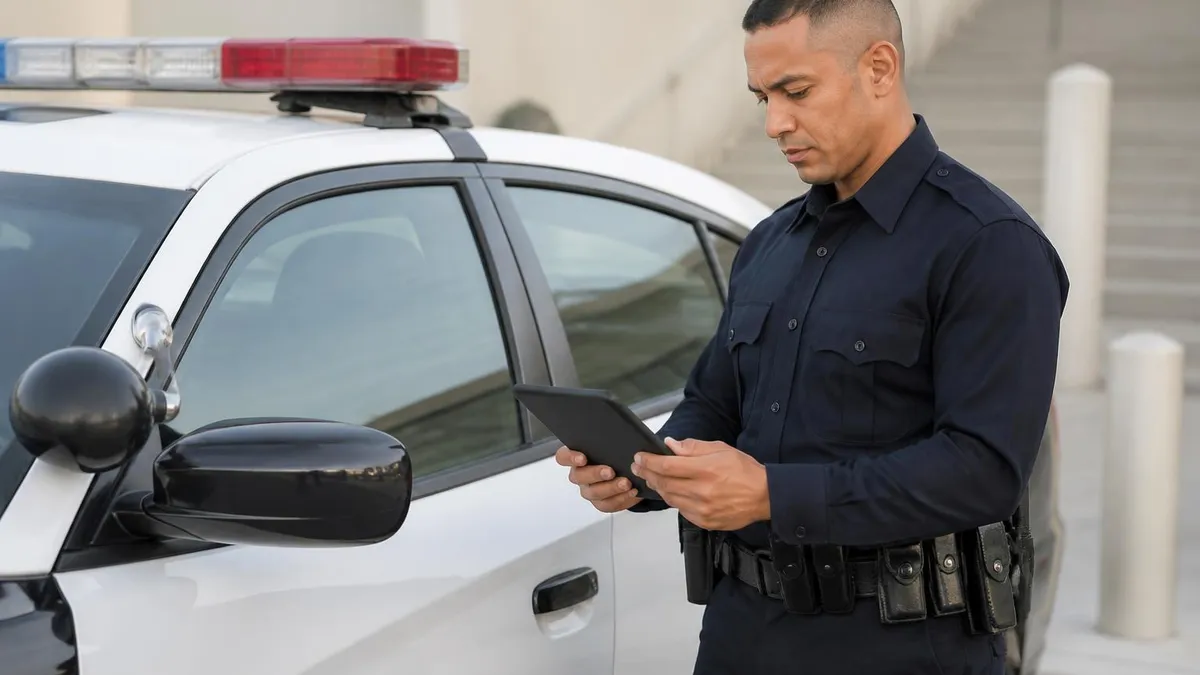
LAPD Chief: Role, Salary, Selection & History
About the Author
Law Enforcement Trainer & Civil Service Exam Specialist
John Jay College of Criminal JusticeMarcus B. Thompson earned his Master of Arts in Criminal Justice from John Jay College of Criminal Justice and served 12 years as a law enforcement officer before transitioning to full-time academy instruction. He is a POST-certified instructor who has prepared candidates for police entrance exams, firefighter assessments, and civil service examinations across dozens of agencies.
Join the Discussion
Connect with other students preparing for this exam. Share tips, ask questions, and get advice from people who have been there.
View discussion (9 replies)