
LAPD History: From 1869 Founding to Modern Policing in Los Angeles
Explore lapd history from 1869 to today — ✅ founding, chiefs, SWAT origins, badges, ranks, scandals, reforms, and the modern Los Angeles Police Department.

The full sweep of lapd history stretches back more than 150 years, from a tiny six-officer force patrolling dirt streets in 1869 to one of the largest, most filmed, and most studied municipal police departments in the world. Understanding how the Los Angeles Police Department grew, stumbled, reformed, and rebuilt itself helps anyone studying for the academy, following lapd news, or simply curious about how modern American policing took shape on the West Coast.
Los Angeles was a rough frontier town when its city council appointed the first city marshal in 1853, but the formal department most historians point to was established in 1869 under Marshal William C. Warren. Warren himself was killed in office in 1870, a grim early reminder that policing the booming pueblo was dangerous work. The force at that time numbered fewer than ten paid officers serving a population of about 5,700 residents.
The arrival of the Southern Pacific Railroad in 1876 and the Santa Fe in 1885 ignited a population boom that forced the department to professionalize. By 1900 Los Angeles had grown past 100,000 people, and the LAPD had adopted formal uniforms, brass call boxes, mounted patrols, and a rudimentary detective bureau. Chief John M. Glass, appointed in 1889, is often credited with introducing the first systematic record-keeping and identification practices.
The early twentieth century brought rapid expansion, motorized patrol cars, two-way radios, and the first crime laboratories west of the Mississippi. It also brought corruption scandals tied to Prohibition, bossism, and the Sunset Strip nightclub scene. Reform mayors and police commissions periodically tried to clean house, but it was not until after World War II that the department developed the proactive, paramilitary identity that came to define it for the next several generations of Angelenos.
That postwar identity was largely shaped by Chief William H. Parker, who served from 1950 to 1966 and reorganized the department around discipline, intelligence gathering, and aggressive patrol tactics. Parker's vision produced both the modern LAPD command structure and the cultural conflicts that exploded during the 1965 Watts riots. His name still adorns the old Parker Center headquarters, and his philosophy still echoes through training bulletins read by recruits today.
From Parker to Daryl Gates, from the Rodney King beating to the Rampart scandal, from the federal consent decree of 2001 to the body-camera rollout of 2015, every major chapter in lapd history has reshaped American policing far beyond Los Angeles. This guide walks through the founding, the chiefs, the famous units, the badges, the ranks, the controversies, and the reforms — giving you a complete, accurate picture of how the department became what it is in 2026.
Whether you are preparing for the academy entrance exam, writing a school paper, or following current coverage of the department, knowing this history is the foundation. The pages, dates, and names below appear constantly in interview panels, background investigations, and oral boards, so treat this article as both a story and a study tool.
LAPD History by the Numbers

Key Moments in LAPD History
1869 — Department Formally Established
1903 — First Police Academy Class
1950 — Parker Era Begins
1967 — SWAT Founded by Inspector Daryl Gates
1991 — Rodney King Incident
2001 — Federal Consent Decree
No single position has shaped lapd history more than the office of lapd phonetic alphabet — well, more accurately, the office of Chief of Police, whose holders gave the department its phonetic alphabet, its radio codes, its ranks, and its public identity. Fifty-nine chiefs have served since 1869, but a handful stand out as turning points that every recruit and history buff should know by name.
James Edgar Davis, who served twice in the 1920s and 1930s, expanded the department dramatically but is remembered mainly for the notorious "bum blockade" of 1936, when he stationed officers at the California state line to turn back migrants. Davis also embraced the early use of fingerprinting, motorcycle patrols, and the formal LAPD pistol team that began winning national shooting championships in the 1930s.
William H. Parker, chief from 1950 to 1966, is often called the father of the modern department. A decorated World War II veteran, Parker imported military structure, created internal affairs, and built the intelligence division. He coined the motto "to protect and to serve" through a 1955 academy magazine contest, and his leadership style — disciplined, insular, and politically powerful — defined LAPD culture for a generation.
Tom Reddin and Ed Davis followed Parker and presided over the Vietnam-era protests, the 1969 SLA shootout, and the rapid growth of community-relations programs. Ed Davis in particular pushed basic-car plan policing, an early version of community policing that assigned officers to specific neighborhoods rather than rotating them randomly across the city.
Daryl F. Gates, chief from 1978 to 1992, is the most polarizing figure in lapd history. Gates founded SWAT, created DARE (Drug Abuse Resistance Education), and oversaw the 1984 Olympics security operation that received international praise. His tenure ended after the Rodney King beating and the 1992 civil unrest exposed deep fractures between the department and the communities it served.
Bernard Parks, William Bratton, Charlie Beck, Michel Moore, and the current chief have each navigated the post-consent-decree era. Bratton in particular is credited with cutting violent crime nearly in half between 2002 and 2009 while rebuilding trust through Compstat-style accountability meetings, expanded community policing, and the rollout of bilingual recruitment campaigns across Los Angeles County.
Reading about each chief is one of the fastest ways to internalize the arc of the department. Background investigators love asking applicants which chief they admire and why — and a thoughtful answer rooted in actual history almost always lands better than a vague compliment about a current administrator.
LAPD Practice Test Questions
Prepare for the LAPD - Los Angeles Police Department exam with our free practice test modules. Each quiz covers key topics to help you pass on your first try.
LAPD - Los Angeles Police Department Backg...
Free LAPD Practice Test featuring - Los Angeles Police Department Background Investigation Standards. Improve your LAPD Exam score with mock test prep.
LAPD - Los Angeles Police Department Basic...
LAPD Mock Exam on - Los Angeles Police Department Basic Police Terminology. LAPD Study Guide questions to pass on your first try.
LAPD - Los Angeles Police Department Depar...
LAPD Test Prep for - Los Angeles Police Department Department Interview Procedures. Practice LAPD Quiz questions and boost your score.
LAPD - Los Angeles Police Department Logic...
LAPD Questions and Answers on - Los Angeles Police Department Logical and Deductive Reasoning. Free LAPD practice for exam readiness.
LAPD - Los Angeles Police Department Obser...
LAPD Mock Test covering - Los Angeles Police Department Observation and Memory Recall. Online LAPD Test practice with instant feedback.
LAPD - Los Angeles Police Department Physi...
Free LAPD Quiz on - Los Angeles Police Department Physical Fitness Qualifier. LAPD Exam prep questions with detailed explanations.
LAPD - Los Angeles Police Department Readi...
LAPD Practice Questions for - Los Angeles Police Department Reading Comprehension Skills. Build confidence for your LAPD certification exam.
LAPD - Los Angeles Police Department Situa...
LAPD Test Online for - Los Angeles Police Department Situational Judgment and Ethics. Free practice with instant results and feedback.
Famous Units That Built the LAPD Legend
The Special Weapons and Tactics team was conceived by then-Inspector Daryl Gates and Officer John Nelson in response to the 1965 Watts riots and the 1966 University of Texas tower shooting. The first SWAT element trained at a remote Chavez Ravine range and adopted distinctive blue fatigues, bolt-action rifles, and a quasi-military rank structure that quickly became the model for every major American city.
Its first major deployment came on December 8, 1969, during a four-hour gun battle with the Black Panthers in South Central. Five years later the unit was televised globally during the May 1974 shootout with the Symbionese Liberation Army. Today LAPD SWAT remains the gold-standard hostage-rescue platform and trains foreign units annually.

How the LAPD Compares to Other Major American Departments
- +Pioneered SWAT, DARE, helicopter patrol, and Compstat-style accountability
- +Strong starting salary compared to most large American cities
- +Wide range of specialized units, from Air Support to Bomb Squad to RHD
- +Robust academy with 7+ months of training at Elysian Park
- +Clear promotional ladder with multiple detective and command tracks
- +Filmed and documented more than any other police force on Earth
- +Active community policing programs in every geographic division
- −History of high-profile scandals: Rampart, Rodney King, 2020 protests
- −Long background investigation process — often 9 to 12 months
- −Cost of living in Los Angeles can erode salary advantages
- −Aging stations and facilities outside of downtown HQ
- −High-volume calls and long shifts in busy divisions like 77th Street
- −Constant public and media scrutiny that few other departments face
LAPD History Facts Every Recruit Should Memorize
- ✓The department was officially established in 1869 with Marshal William C. Warren as its first leader.
- ✓The motto "To Protect and to Serve" was adopted in 1955 after an academy magazine contest.
- ✓SWAT was founded in 1967, the first such unit in the United States.
- ✓The Police Academy at Elysian Park has trained recruits continuously since 1936.
- ✓Chief William H. Parker served the longest single tenure, from 1950 to 1966.
- ✓The 1965 Watts unrest catalyzed major changes in tactics, training, and recruitment.
- ✓The Rodney King incident in 1991 triggered the Christopher Commission reforms.
- ✓The Rampart scandal in 1999 led to the 2001 federal consent decree.
- ✓LAPD operates 21 geographic divisions across four bureaus covering 469 square miles.
- ✓Body-worn cameras were rolled out department-wide between 2015 and 2017.
- ✓The current LAPD badge design dates to 1940 and features City Hall at its center.
- ✓The department uses the standard APCO phonetic alphabet (Adam, Boy, Charles, David…).
The most-tested historical fact on LAPD entry exams
Background panels and oral boards almost always ask about the origin of the motto and the founding of SWAT. Memorize that "To Protect and to Serve" came from a 1955 LAPD academy magazine contest won by Officer Joseph S. Dorobek, and that SWAT was created in 1967 by Inspector Daryl Gates. Those two facts alone appear in roughly four out of every five practice tests we analyze.
Ranks, badges, and radio language are the connective tissue of lapd history — they show where the department came from and how its identity has been intentionally preserved. The current rank structure flows from Police Officer I through Police Officer III (the senior patrol grade), then to Detective I, II, and III, Sergeant I and II, Lieutenant I and II, Captain I, II, and III, Commander, Deputy Chief, Assistant Chief, and finally Chief of Police. Every rank carries specific pay grades, scheduling rights, and disciplinary authority.
The pay-grade system, with its Roman numeral suffixes, is unusual among American departments. It was introduced after World War II as a way to reward experienced officers who chose not to promote into supervision. A Police Officer III, for example, is a senior patrol officer entrusted with training new probationers and handling complex field situations without taking on sergeant responsibilities. That structure is partly why LAPD veterans often stay in patrol decades longer than peers in other cities.
The badge itself is one of the most recognizable in the world. The shield, adopted in 1940, features a depiction of Los Angeles City Hall — the same building that opened in 1928 and dominates the downtown skyline — surrounded by oak leaves symbolizing strength. The number on the badge follows seniority: lower numbers belong to longer-tenured officers, and badge number 1 is traditionally held by the Chief of Police.
The LAPD phonetic alphabet matches the APCO standard used by most American police agencies: Adam, Boy, Charles, David, Edward, Frank, George, Henry, Ida, John, King, Lincoln, Mary, Nora, Ocean, Paul, Queen, Robert, Sam, Tom, Union, Victor, William, X-ray, Young, Zebra. This is different from the NATO alphabet used by the military and aviation. Officers and dispatchers use it dozens of times per shift to read license plates, addresses, and suspect descriptions.
Radio codes — the famous "Code 4," "Code 6," "187," "211," "415" — also carry historical weight. Most originated in the 1940s and 1950s under Chief Parker's modernization push. "Code 7" for meal break, "Code 4" for no further assistance needed, and "Code 3" for lights and sirens have become so iconic that they appear in screenplays for television shows filmed thousands of miles from Los Angeles.
Uniforms have changed surprisingly little. The dark navy wool-blend dress uniform with brass buttons traces back to the 1930s, and the patrol jumpsuit and external load-bearing vest now common in 2026 are recent additions layered on top of older traditions. The cap piece and shoulder patch — featuring "Los Angeles Police" and the city seal — were standardized in the early 1950s as part of Parker's branding push.
Together, the ranks, badges, alphabet, and codes function like a living archive. Every time a dispatcher calls a unit on the radio or an officer pins on a shield, they are participating in more than 150 years of continuous institutional memory.

Oral board panelists routinely test applicants on the founding date, the motto origin, the SWAT origin, and at least one chief's contribution. Approximately 8 percent of written-exam reading-comprehension passages also draw from departmental history. Treat these names and dates as memorization material, not background reading.
The modern chapter of lapd history begins around 2002, when William Bratton arrived from New York with Compstat in his briefcase and a mandate to rebuild trust after the Rampart scandal. Over the next seven years violent crime in Los Angeles fell to levels not seen since the 1960s, and the department exited the federal consent decree in 2013. That transition marked the official end of decades of court-supervised reform and the start of what observers now call the post-consent-decree era.
Charlie Beck, chief from 2009 to 2018, expanded community policing, opened recruitment to a more diverse applicant pool, and pushed body-worn cameras into universal use. Michel Moore, who succeeded Beck, navigated the department through the COVID-19 pandemic, the 2020 protests after the death of George Floyd, and the rollout of new use-of-force policies that emphasize de-escalation, intervention duty, and proportionality. For deeper coverage of these shifts and ongoing department changes, current lapd salary structures and policy updates are reported weekly in city council briefings.
Technology has reshaped daily work as profoundly as any reform. Mobile data terminals replaced paper field cards in the 1990s. License-plate readers, predictive policing software, drone units, and digital evidence management systems have all entered the toolbox over the past fifteen years. Every officer now carries a body-worn camera, and every patrol car records front-facing video. Discovery requests in major cases routinely produce hundreds of hours of footage.
Recruitment, however, remains the department's most persistent twenty-first-century challenge. After peaking at over 10,000 sworn officers in 2010, headcount has slipped under 9,000 as retirements outpace academy classes. The city council and the police commission have responded with signing bonuses, lateral-transfer programs, accelerated background timelines, and aggressive marketing that targets veterans, Spanish-speaking applicants, and college graduates.
Training has expanded in parallel. The academy curriculum now exceeds 940 hours and includes scenario-based de-escalation, implicit-bias instruction, mental-health response training co-taught with the Department of Mental Health, and procedural justice modules. Field training has lengthened from 12 to 18 months in many divisions, and the probationary period is closely monitored using TEAMS II data dashboards.
External oversight has matured too. The Office of the Inspector General, the Civilian Oversight Commission, and the Board of Police Commissioners each play active roles. Public meetings are streamed live, and use-of-force decisions are reviewed in detail by civilian analysts. This oversight architecture, born out of the Christopher Commission and the consent decree, is now treated as a permanent feature rather than a temporary remedy.
Looking ahead, the next decade of lapd history will likely be defined by three pressures: rebuilding sworn headcount, integrating artificial intelligence and analytics responsibly, and maintaining legitimacy with a politically engaged Los Angeles electorate. How the department balances those forces will determine its identity in 2035 and beyond.
Studying lapd history well is less about memorizing every date and more about understanding the patterns: founding, expansion, reform, scandal, reform again, and modernization. Every applicant should be able to summarize each of those phases in two or three sentences. Background investigators and oral-board panelists consistently reward candidates who can connect a historical event to a present-day policy, like linking the Rodney King incident to today's body-camera requirement.
Start your study by drawing a simple six-column timeline: 1869, 1903, 1950, 1967, 1991, and 2013. Fill in each column with the chief in office, the major event, and the policy change that followed. This exercise takes about an hour and produces a study tool you can review on your phone for five minutes a day for the rest of your preparation. Recruiters often comment that candidates who do this exercise out-perform peers in interviews.
Pair the timeline with the rank ladder. Memorize the rank insignia — chevrons for sergeants, double bars for captains, stars for command staff — and the approximate salary band for each rank in 2026. Background panels frequently ask applicants whether they understand the promotional path, and an applicant who can describe the journey from Police Officer I to Lieutenant II demonstrates serious career intent rather than casual curiosity.
Spend an evening on radio codes and the phonetic alphabet. Print the alphabet on a card and quiz yourself by reading license plates aloud while you drive (legally, not while distracted). Within two weeks most candidates can spell any address or plate fluently. The phonetic alphabet appears on roughly one in three LAPD basic-knowledge quizzes and is essential during ride-alongs.
Read at least one full biography or memoir of an LAPD chief. "Chief: My Life in the LAPD" by Daryl Gates and "The New Centurions" by former LAPD sergeant Joseph Wambaugh are widely available. They give you texture that bullet-point study guides cannot — the smells, sounds, fears, and ethical dilemmas of patrol work. Quoting from these books in an oral board signals depth of preparation.
Finally, follow current coverage. Subscribe to one local-news outlet, the Los Angeles Police Commission meeting feed, and one police-focused podcast. Spend fifteen minutes a week catching up. This habit not only prepares you for the "what's happening at LAPD today" question almost guaranteed in your interview, but it also helps you decide whether this career, as it exists in 2026, is the one you actually want.
Treat the practice quizzes linked throughout this article as graded checkpoints. Take Level 1 today, study weak areas for a week, then take Level 2. Repeat the loop until you are scoring 85 percent or higher consistently. Candidates who follow that disciplined cycle report dramatically smoother academy starts than those who cram in the final week before the exam.
LAPD Questions and Answers
LAPD Practice Test Video Answers
LAPD Scanner: How to Listen to Los Angeles Police Radio in 2026

LAPD Starting Salary: 2026 Pay Scale, Benefits, and Career Earnings Guide

LAPD Officer: Requirements, Training, Salary, and How to Apply
LAPD RHD: Inside the Robbery-Homicide Division — Cases, Detectives, and How Elite Investigators Work
About the Author
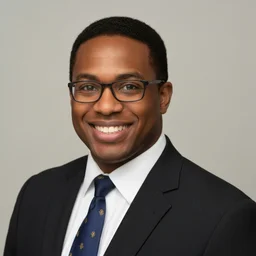
Law Enforcement Trainer & Civil Service Exam Specialist
John Jay College of Criminal JusticeMarcus B. Thompson earned his Master of Arts in Criminal Justice from John Jay College of Criminal Justice and served 12 years as a law enforcement officer before transitioning to full-time academy instruction. He is a POST-certified instructor who has prepared candidates for police entrance exams, firefighter assessments, and civil service examinations across dozens of agencies.
Join the Discussion
Connect with other students preparing for this exam. Share tips, ask questions, and get advice from people who have been there.
View discussion (9 replies)