
LAPD San Pedro: Everything You Need to Know About the Harbor Division
LAPD San Pedro Harbor Division explained — salary, ranks, SWAT, gear & how to file an online report. ✅ Full guide for residents & recruits.

LAPD news from the San Pedro area consistently highlights the Harbor Division as one of the Los Angeles Police Department's most strategically important geographic commands. Situated at the southernmost tip of the city, the Harbor Division serves the port community of San Pedro, Watts Harbor, Wilmington, and adjacent neighborhoods — a combined area that generates unique public-safety challenges distinct from anywhere else in Los Angeles. From commercial shipping crime to residential gang suppression, officers assigned here must master a broad operational skill set that reflects the full complexity of modern urban policing.
San Pedro itself is a working-class coastal neighborhood with deep roots in maritime labor and immigrant culture. The Port of Los Angeles — the busiest container port in the Western Hemisphere — sits directly adjacent, making Harbor Division responsible for coordinating with federal customs agencies, port police, and the Coast Guard on a daily basis. Understanding how the LAPD integrates with this multi-agency environment is essential background knowledge for anyone researching lapd careers or studying for a department entrance exam.
The LAPD Harbor Division station is located at 2175 John S. Gibson Blvd in San Pedro. The station serves approximately 115,000 residents spread across nearly 20 square miles of land — and that figure does not count the tens of thousands of dockworkers, truck drivers, and visitors who pass through the port zone every single day. Officers here routinely handle calls involving cargo theft, vessel-related incidents, hazardous materials, and waterfront crimes that require specialized knowledge beyond standard patrol training.
LAPD salary data shows that officers assigned to Harbor Division earn the same base pay as counterparts citywide, starting at roughly $64,000 per year for a probationary Police Officer I and rising significantly through the rank structure over a 20-to-30-year career. However, many Harbor officers qualify for additional pay enhancements tied to bilingual certification, specialized assignments, and shift differentials — meaning total compensation packages frequently exceed base figures by 20 to 30 percent when benefits and overtime are factored in.
The LAPD phonetic alphabet is used constantly on Harbor Division radio channels, where competing signals from port machinery and marine traffic can degrade audio quality. Officers must be completely fluent in NATO-based phonetic communication to ensure accurate transmission of license plates, suspect descriptions, vessel identification numbers, and evidence codes. This skill is tested on department entrance exams and reinforced throughout the police academy curriculum and field training program.
LAPD ranks within the Harbor Division follow the same command hierarchy as every other LAPD geographic bureau. A Basic Car — the fundamental patrol unit — is supervised by a Senior Lead Officer (SLO) who owns their assigned neighborhood beat and develops long-term community relationships. Above the SLO level, sergeants, lieutenants, and captains manage watch commands, detective units, and divisional administration. The Harbor Area Captain reports to a Commanding Officer within the South Bureau, which oversees the southern geographic portion of the department's patrol operations.
Whether you are a San Pedro resident wanting to understand local policing, a prospective recruit weighing deployment options, or a current officer researching a transfer, this comprehensive guide covers the division's structure, services, gear, specialized units, SWAT integration, and the practical steps every citizen should know — from how to file an LAPD online report to what the department's chief-level leadership means for frontline policing in one of LA's most distinctive coastal communities.
LAPD Harbor Division by the Numbers

Harbor Division: Core Operational Areas
Harbor officers collaborate daily with U.S. Customs, TSA, and Port Police to combat cargo theft, human trafficking, and contraband smuggling entering through the Port of Los Angeles — the nation's highest-volume container facility.
Senior Lead Officers run neighborhood watch programs, conduct school resource visits, and host town halls across San Pedro and Wilmington to build trust between residents and the division's patrol officers and detectives.
Harbor Area Gangs Unit officers track active street gangs operating in Wilmington and San Pedro, coordinating with federal task forces and the City Attorney's office to pursue civil gang injunctions and targeted suppression operations.
Harbor Division detectives handle property crimes, violent crimes, and crimes against persons assigned from the division's geographic area, working homicides, robberies, sex crimes, and auto theft cases through to prosecution.
Dedicated traffic officers enforce commercial vehicle regulations on the heavy-truck corridors connecting the port to the interstate freeway system, investigate collisions, and run DUI enforcement operations on PCH and major arterials.
LAPD salary schedules are publicly negotiated through the Police Officers Association and published in the city's annual budget. As of the most recent contract cycle, a Police Officer I starts at approximately $64,276 per year and reaches the Police Officer III+ level — the top of the patrol rank — at over $101,000 in base pay after roughly five years of service. With court overtime, specialized assignment pay, and the department's comprehensive benefits package, total annual compensation for a senior patrol officer regularly exceeds $130,000 when all components are included.
LAPD ranks form a well-defined promotional ladder. After completing probation as a Police Officer I, officers advance to Police Officer II upon satisfactory performance evaluation, then to Police Officer III after demonstrating superior tactical and leadership skills. The detective series begins at Detective I and progresses through Detective II and III based on caseload performance and examination scores. Supervisory ranks include Sergeant I, Sergeant II, Lieutenant I, Lieutenant II, Captain I, Captain II, Captain III, Commander, Deputy Chief, Assistant Chief, and Chief of Police — the LAPD chief being the highest-ranking sworn officer in the department.
LAPD gear issued to Harbor Division officers reflects the department's standard equipment list with some additional items suited to the maritime environment. Standard-issue equipment includes the Smith & Wesson M&P 9mm pistol, expandable baton, oleoresin capsicum spray, Taser X26P, and full ballistic vest. Officers in Harbor Area may also be equipped with binoculars, marine-grade flashlights, and waterproof gear bags when conducting joint operations along the waterfront. Specialized units carry additional equipment appropriate to their mission, including long rifles, ballistic helmets, and chemical protection equipment.
The LAPD chief's influence on Harbor Division operations flows through the department's formal chain of command. Chief Dominic Choi, who serves as the department's current chief of police, has emphasized community-centered policing and data-driven deployment strategies. Those priorities are implemented at the division level through CompStat meetings, where captains and commanders review crime statistics, analyze hot spots, and direct patrol resources accordingly. Harbor Division captains attend monthly CompStat reviews at LAPD headquarters at 100 W. 1st Street in downtown Los Angeles.
LAPD headquarters — officially called the Police Administration Building (PAB) — is where department-wide policy is set, budget negotiations occur, and most civil service functions are administered. However, for day-to-day policing in San Pedro, the Harbor Division station at Gibson Boulevard is the functional hub. This station houses the watch commander's office, detective squads, the gang unit, the senior lead officer bullpen, community relations staff, and the property room where evidence is logged, tagged, and secured pending court proceedings.
For those wondering about lapd raja jackson, it is worth noting that LAPD pension benefits are administered through the Los Angeles Fire and Police Pension System (LAFPP). Officers vest after five years and are eligible for retirement benefits calculated as a percentage of final salary multiplied by years of service. The pension system's long-term sustainability has been a recurring topic in city budget negotiations, and recruits entering today should study the Tier 6 benefit structure carefully to understand how their retirement income will be calculated compared to officers hired under earlier tiers.
LAPD phonetic alphabet training — using Alpha through Zulu designators for each letter — is drilled into recruits during the police academy's communications curriculum. Harbor Division radio operators must achieve near-perfect fluency because the division's geographic location means they frequently coordinate with Coast Guard sector Los Angeles-Long Beach, Port Police Communications, and California Highway Patrol dispatch on multi-agency incidents near the port. Mistaken phonetic transmissions in those high-stakes contexts can result in delayed response and compounded public safety risk, so fluency is treated as a non-negotiable competency throughout an officer's career.
LAPD SWAT and Specialized Units at Harbor Division
LAPD SWAT — Special Weapons and Tactics — is one of the most recognized tactical police units in the world, having pioneered many techniques that modern law enforcement agencies across the country have adopted. SWAT is a department-wide resource, not a division-specific unit, meaning Harbor Division officers can request SWAT activation when an incident exceeds the tactical capability of standard patrol. Common triggers include barricaded suspects, active shooter situations, high-risk warrant service, and dignitary protection assignments at the port.
Harbor Division has served as the staging ground for several notable SWAT activations over the years, particularly when maritime crime investigations led to high-risk arrest operations in Wilmington industrial yards and port-adjacent neighborhoods. SWAT officers who respond to Harbor area callouts must often adapt standard urban tactics to environments that include shipping container mazes, elevated crane platforms, and low-visibility warehouse interiors — terrain that demands exceptional situational awareness and team coordination at every level of the operation.
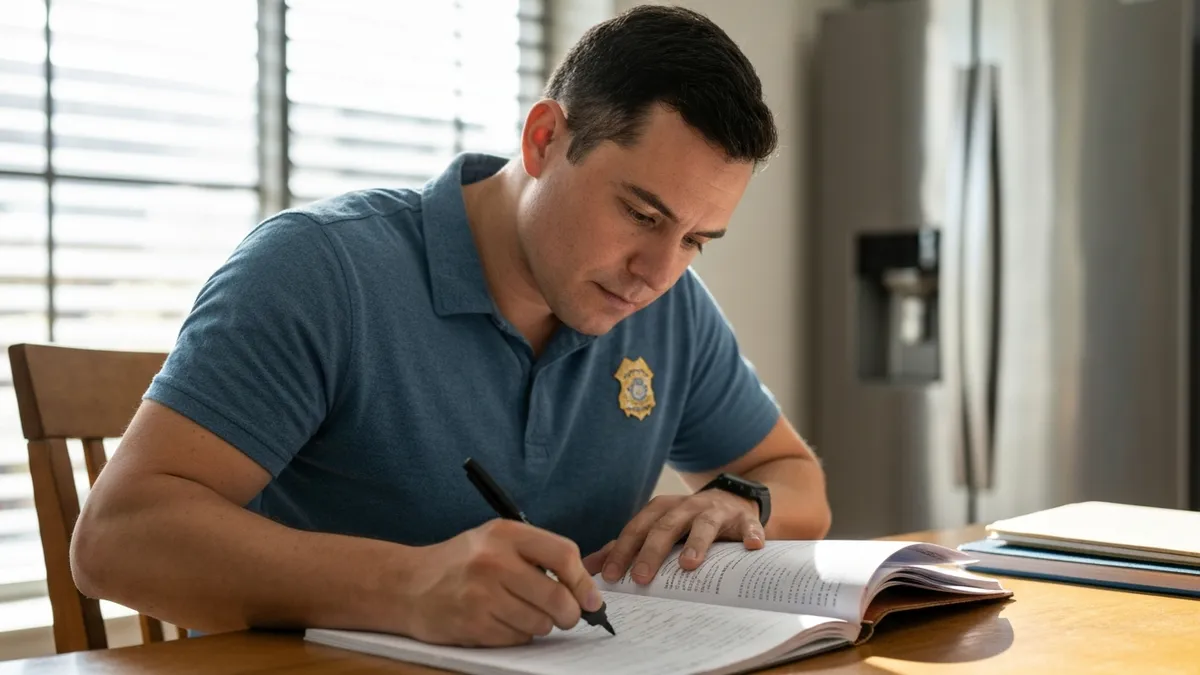
Pros and Cons of an LAPD Career in the Harbor Division
- +Unique multi-agency experience coordinating with federal customs, Coast Guard, and port police daily
- +Strong community identity in San Pedro creates meaningful long-term officer-resident relationships
- +Diverse call types — maritime crime, gang suppression, commercial enforcement, and waterfront incidents
- +Competitive LAPD salary with additional pay enhancements for specialized assignments and overtime
- +Proximity to the port provides early exposure to federal investigations and career-expanding task force opportunities
- +South Bureau CompStat culture emphasizes data-driven policing, rewarding analytically skilled officers with advancement
- −Geographic isolation at the southern tip of LA means longer response times for mutual aid from neighboring divisions
- −Heavy commercial truck traffic creates heightened collision risk on patrol routes near port corridors
- −Gang activity in Wilmington means patrol officers face elevated violent crime risk compared to some other divisions
- −Port-adjacent industrial environment limits visibility and creates tactical challenges for standard patrol response
- −Distance from downtown LAPD headquarters can slow administrative processing for transfers, promotions, and personnel matters
- −Marine-influenced weather including coastal fog can significantly reduce visibility during nighttime patrol operations
Pros and Cons at a Glance
| Pros | Cons |
|---|---|
| Unique multi-agency experience coordinating with federal customs, Coast Guard, and port police daily | Geographic isolation at the southern tip of LA means longer response times for mutual aid from neighboring divisions |
| Strong community identity in San Pedro creates meaningful long-term officer-resident relationships | Heavy commercial truck traffic creates heightened collision risk on patrol routes near port corridors |
| Diverse call types — maritime crime, gang suppression, commercial enforcement, and waterfront incidents | Gang activity in Wilmington means patrol officers face elevated violent crime risk compared to some other divisions |
| Competitive LAPD salary with additional pay enhancements for specialized assignments and overtime | Port-adjacent industrial environment limits visibility and creates tactical challenges for standard patrol response |
| Proximity to the port provides early exposure to federal investigations and career-expanding task force opportunities | Distance from downtown LAPD headquarters can slow administrative processing for transfers, promotions, and personnel matters |
| South Bureau CompStat culture emphasizes data-driven policing, rewarding analytically skilled officers with advancement | Marine-influenced weather including coastal fog can significantly reduce visibility during nighttime patrol operations |
How to File an LAPD Online Report or Contact Harbor Division
- ✓Visit the LAPD online report portal at lapdonline.org to file reports for non-emergency crimes including theft, vandalism, and vehicle break-ins
- ✓Select the correct report type — vehicle theft, petty theft, and lost property each have separate LAPD online report categories with different required fields
- ✓Enter the exact date, time, and location of the incident as precisely as possible to ensure accurate crime mapping and detective follow-up assignment
- ✓Record your case number immediately after submission — this number is required for insurance claims and all future inquiries about your report status
- ✓Call the Harbor Division station directly at (310) 726-7900 for non-emergency matters requiring an officer response or follow-up conversation with a detective
- ✓Dial 9-1-1 only for in-progress crimes, medical emergencies, fires, or any situation where immediate officer presence is needed to prevent harm
- ✓Request a Senior Lead Officer meeting through the division's community relations office if you have ongoing neighborhood safety concerns requiring sustained attention
- ✓Submit anonymous tips through LA Crime Stoppers at 1-800-222-TIPS or via the online tip portal when you have information but fear retaliation
- ✓Attend Harbor Division Community Police Advisory Board (CPAB) meetings held monthly at the station to engage directly with division leadership on policy and safety priorities
- ✓Contact the LAPD Central Records Division in writing to request copies of existing police reports using the LAPD police report request form and paying the applicable reproduction fee
LAPD Online Reports Save Time — But Know the Limits
The LAPD online report system handles non-emergency property crimes efficiently, but it cannot be used for crimes involving violence, threats, or any incident where a suspect is known and in custody. For those situations, calling the Harbor Division station directly at (310) 726-7900 or dialing 9-1-1 is the correct approach. Filing the wrong report type can delay detective follow-up by days.
Joining the LAPD from the San Pedro area follows the same recruitment pipeline as entering the department from any other Los Angeles neighborhood. Candidates must be at least 20 years old at time of application and 21 years old by graduation from the police academy. There is no upper age limit for application, though candidates over 40 should understand that the department's physical fitness standards remain constant regardless of age. The written exam, oral interview, background investigation, polygraph, medical examination, and psychological evaluation must all be passed before a conditional job offer is extended.
The background investigation is often cited by candidates as the most consequential and time-consuming phase of the LAPD hiring process. Investigators review financial history, employment records, driving history, drug use history, social media activity, and personal references covering the past ten years. San Pedro residents applying to the LAPD should be prepared for investigators to interview neighbors, former employers, teachers, and family members. Honesty throughout the process is essential — investigators are skilled at detecting inconsistencies, and misrepresentation is an automatic disqualifier even for minor issues that would not otherwise have prevented hiring.
The LAPD police academy in Elysian Park runs approximately six months for recruit officers. The curriculum covers laws of arrest, search and seizure, use-of-force policy, emergency vehicle operations, firearms qualification, defensive tactics, first aid, and community policing philosophy. Recruits from San Pedro typically commute to Elysian Park for academy training before returning to the Harbor Division for their 12-month field training program, during which they ride with experienced training officers in their home community. This arrangement gives harbor-area recruits an early advantage in community familiarity.
For a comprehensive understanding of how different lapd swatting incidents are handled up the chain of command — and why rank structure matters in divisional operations — it is important to study how authority flows from patrol officers through sergeants and lieutenants to the Harbor Division captain. The captain is the commanding officer of the entire division and bears accountability for all operational outcomes within the geographic area. Captains typically serve three-to-five-year command tours before rotating to another assignment or being promoted to commander.
San Pedro's demographics create a unique community policing environment. The neighborhood has significant Armenian, Croatian, Italian, and Latino populations reflecting its historical role as an immigrant port gateway to Los Angeles. Officers who speak Spanish, Armenian, or other community languages qualify for the department's bilingual pay supplement of approximately $50 per pay period — a modest but meaningful enhancement that compounds significantly over a career. The LAPD actively recruits bilingual candidates and has dedicated multilingual recruitment materials targeting harbor-area communities.
LAPD gear for Harbor Division officers also includes access to specialized marine-environment equipment when joint operations are conducted along the waterfront. While standard patrol officers are not typically issued marine vessels, they may participate in joint operations alongside the Port Police's harbor patrol boats during large-scale incidents. Training in this context emphasizes multi-agency communication protocols, jurisdiction boundaries, and the specific legal authorities that govern law enforcement activity on navigable waterways versus land-based port property.
LAPD news coverage of Harbor Division tends to spike during periods of elevated cargo theft activity at the port, during gang suppression operations in Wilmington, and following high-profile incidents along the San Pedro waterfront. Residents following local LAPD news should bookmark the department's official newsroom at lapdonline.org/newsroom, where press releases, crime statistics, and division-level announcements are posted. The Harbor Division captain also maintains a community relations presence on NextDoor and neighborhood Facebook groups, which has become an increasingly important channel for real-time public safety communication.

Certain background factors are automatic disqualifiers for LAPD employment regardless of other qualifications. These include felony convictions, domestic violence misdemeanor convictions, recent drug use (timelines vary by substance), and demonstrated dishonesty during any phase of the hiring process. Candidates with prior military service should ensure their discharge characterization is Honorable or General Under Honorable Conditions — other discharge types trigger enhanced scrutiny that may result in disqualification.
Preparing for the LAPD written exam requires a structured study plan that covers reading comprehension, written expression, logical reasoning, memorization, and situational judgment. The written exam is the first scored gate in the hiring process and determines whether candidates advance to the oral interview phase. Many candidates underestimate the reading comprehension section, which presents lengthy scenario-based passages followed by multiple-choice questions that require careful reading rather than quick pattern recognition. Strong readers have a measurable advantage in this section.
LAPD phonetic alphabet proficiency is tested implicitly throughout the department's written and practical examinations. Candidates who have already memorized the NATO phonetic alphabet before beginning the exam process will find that terminology recognition throughout written exam passages comes more naturally. Many practice test platforms include phonetic alphabet drills alongside standard exam prep materials, allowing candidates to build that baseline knowledge efficiently before concentrating on higher-weight exam domains like logical reasoning and written expression.
The oral interview phase of LAPD hiring evaluates six core competencies: interpersonal skills, communication, problem-solving, integrity, community sensitivity, and decision-making under pressure. Candidates are evaluated by a three-person panel and scored on a 100-point scale. Harbor Division candidates who have lived or worked in San Pedro can draw on specific community knowledge — awareness of port operations, familiarity with the neighborhood's ethnic diversity, understanding of maritime crime challenges — to provide concrete and authentic answers to situational questions about community policing scenarios.
LAPD headquarters administers the background investigation from downtown, but the field portion is often conducted in the candidate's home area. For San Pedro candidates, this means a Harbor Division background investigator will likely be assigned to conduct neighborhood canvasses and employer verification visits locally. Candidates can support this process by providing detailed, organized documentation of their employment history, residences, and personal references rather than forcing investigators to track down scattered records. Well-organized candidates move through background faster than disorganized ones.
For those interested in understanding the full scope of what a career in this department entails, reading an lapd police report overview article provides foundational context about how the department is organized, what its jurisdictional boundaries are, how it interacts with the Sheriff's Department and other LA County law enforcement agencies, and what the department's strategic plan priorities are for the coming decade. That foundational knowledge will make oral interview answers significantly more informed and credible in the eyes of the evaluation panel.
LAPD chief-level priorities filter down to divisional operations through the department's Strategic Plan and through weekly command staff meetings where deputy chiefs translate headquarters objectives into geographic bureau assignments. For Harbor Division, current strategic priorities include reducing cargo theft in collaboration with federal partners, expanding community engagement in Wilmington to reduce gang recruitment of minors, and improving response times to priority calls in the southernmost beats of the division where geographic distance from the station creates inherent delay challenges.
Practice test performance is a reliable predictor of written exam outcomes for most candidates. Research across civil service test-taking populations consistently shows that candidates who complete at least five full-length practice exams under timed conditions outperform those who study only from notes or review materials without simulating exam conditions. The LAPD Level 1 and Level 2 practice exams available on PracticeTestGeeks are specifically calibrated to match the knowledge domains assessed on the official department written exam, making them an efficient foundation for structured exam preparation regardless of whether your target assignment is Harbor Division or any other geographic command.
Practical preparation for the LAPD hiring process requires more than passing scores on written exams. Physical fitness preparation should begin at least four months before application, with candidates targeting the ability to complete 25 push-ups, 30 sit-ups, and a 1.5-mile run in under 14 minutes as baseline performance benchmarks consistent with the department's entry-level standards. Harbor Division candidates who are already active in water sports, hiking the Palos Verdes hills, or working physically demanding port-adjacent jobs often find that their baseline fitness exceeds minimum standards — but structured test-specific conditioning is still recommended to avoid surprises on test day.
The LAPD written exam is administered multiple times per year at testing centers across Los Angeles County. Candidates do not need to wait for a specific testing window and can typically schedule within a few weeks of submitting their online application.
Scoring above the department's minimum passing threshold earns a candidate placement on the eligible list, but higher scores result in earlier position in the hiring queue — making strong preparation directly correlated with how quickly a candidate reaches the conditional job offer stage. Every additional point on the eligible list score can represent weeks or months of difference in time-to-hire.
San Pedro residents who want to learn more about day-to-day policing in their community before committing to an application can attend Harbor Division's Volunteer Surveillance Program (VSP) or apply to participate in the department's Civilian Police Academy — a multi-week evening program that takes participants through simulated police training, station tours, ride-alongs, and presentations from specialized units including gang investigators and LAPD SWAT. These programs are free and open to residents who pass a basic background screening, and they provide authentic insight into what daily police work in the Harbor area actually looks like.
Mentorship from current LAPD officers is one of the most underutilized preparation resources available to candidates in the San Pedro area. Harbor Division recruiters actively maintain contact with local schools, veterans organizations, and community centers to identify and support interested candidates. Reaching out directly to the division's recruiting coordinator — accessible through the Harbor Division station's main phone line — can connect prospective candidates with officers willing to answer questions, provide preparation guidance, and help candidates understand what hiring panels are actually evaluating during each phase of the selection process.
The LAPD entrance exam's logical and deductive reasoning section is the section where inadequately prepared candidates most commonly fall short. This section presents abstract pattern problems, logical syllogisms, and deductive argument scenarios that are unfamiliar to many test-takers who have not encountered formal logic instruction since high school or college. Dedicated practice with logical reasoning question sets — particularly those modeled on actual civil service exam formats — significantly improves performance on this section. Candidates who feel weak in this area should allocate disproportionate study time to it rather than concentrating on domains where they already test strongly.
LAPD news from 2023 and 2024 has highlighted department-wide recruitment challenges that have led to enhanced signing incentives, streamlined hiring timelines, and expanded recruiting outreach to non-traditional candidate pools including military veterans, bilingual community members, and career-changers from related public safety fields. Harbor Division benefits directly from this department-wide push, as vacancies in specialized assignments like the Gang Unit and Traffic Division create upward mobility pathways for newly hired officers who demonstrate strong performance during their probationary years.
The LAPD offers a career that is genuinely different from policing in most other American cities. The scale of the department — approximately 9,000 sworn officers serving 4 million residents across 503 square miles — creates specialization and career diversification opportunities that smaller departments simply cannot provide. Harbor Division represents one of the department's most distinctive geographic commands, combining the community character of a small coastal town with the operational complexity of a major international port. For the right candidate, that combination is exactly what makes the job worth pursuing.
Sample Los Angeles Police Department Practice Questions
Try these questions from our free Los Angeles Police Department practice tests. The correct answer and an explanation follow each question.
During a Department Interview, a candidate is asked: "Tell me about a time you had a disagreement with a supervisor and how you handled it." Which response best demonstrates the qualities the LAPD is seeking?
- A. "I went to my supervisor's boss to explain the situation and how my supervisor's decision was negatively impacting the team."
- B. "I listened to my supervisor's perspective, professionally explained my own viewpoint with supporting reasons, and ultimately respected their final decision while committing to the team's goal."
- C. "I avoided confrontation by just doing what the supervisor said, even though I knew it was not the best way, because it's important to always follow orders without question."
- D. "I explained to my supervisor why their approach was completely wrong and eventually convinced them to do it my way, which was more efficient."
Answer: B. "I listened to my supervisor's perspective, professionally explained my own viewpoint with supporting reasons, and ultimately respected their final decision while committing to the team's goal."
This response demonstrates respect for the chain of command, strong communication skills, confidence, and the ability to be a team player. It shows the candidate can handle conflict professionally and constructively, which is a vital skill in law enforcement.
How are LAPD PFQ minimum performance standards structured for different candidates?
- A. One universal standard applies equally to all applicants
- B. Standards vary by age group and biological sex
- C. Standards vary based on height and weight only
- D. Standards vary based on prior law enforcement experience
Answer: B. Standards vary by age group and biological sex
The LAPD PFQ uses age- and sex-normed standards so performance expectations are adjusted to account for physiological differences.
Which driving-related history is most likely to disqualify an LAPD applicant?
- A. A single parking ticket within the past year
- B. One minor moving violation three years ago
- C. Multiple DUI convictions within a ten-year period
- D. A lapsed registration on a vehicle the applicant no longer owns
Answer: C. Multiple DUI convictions within a ten-year period
Multiple DUI convictions reflect poor judgment and disregard for public safety, making such applicants unlikely to meet LAPD's character standards.
A community member approaches you and offers information about drug activity in exchange for you 'looking the other way' on a minor warrant for his brother. What should you do?
- A. Accept the deal if the drug information seems credible and significant
- B. Decline the deal and explain that you cannot make such an arrangement
- C. Contact the detective unit first to see if the drug tip is worth the trade
- D. Take the information, then decide later whether to act on the warrant
Answer: B. Decline the deal and explain that you cannot make such an arrangement
Making unofficial deals to ignore warrants in exchange for information is unethical and illegal; it must be declined and reported if appropriate.
LAPD Questions and Answers

Los Angeles Police Department Rank Structure: Insignia & Promotion Path

LAPD Pension: Complete Guide to Benefits, Retirement Tiers, and What Officers Actually Earn

What Is LAPD? A Complete Guide to the Los Angeles Police Department
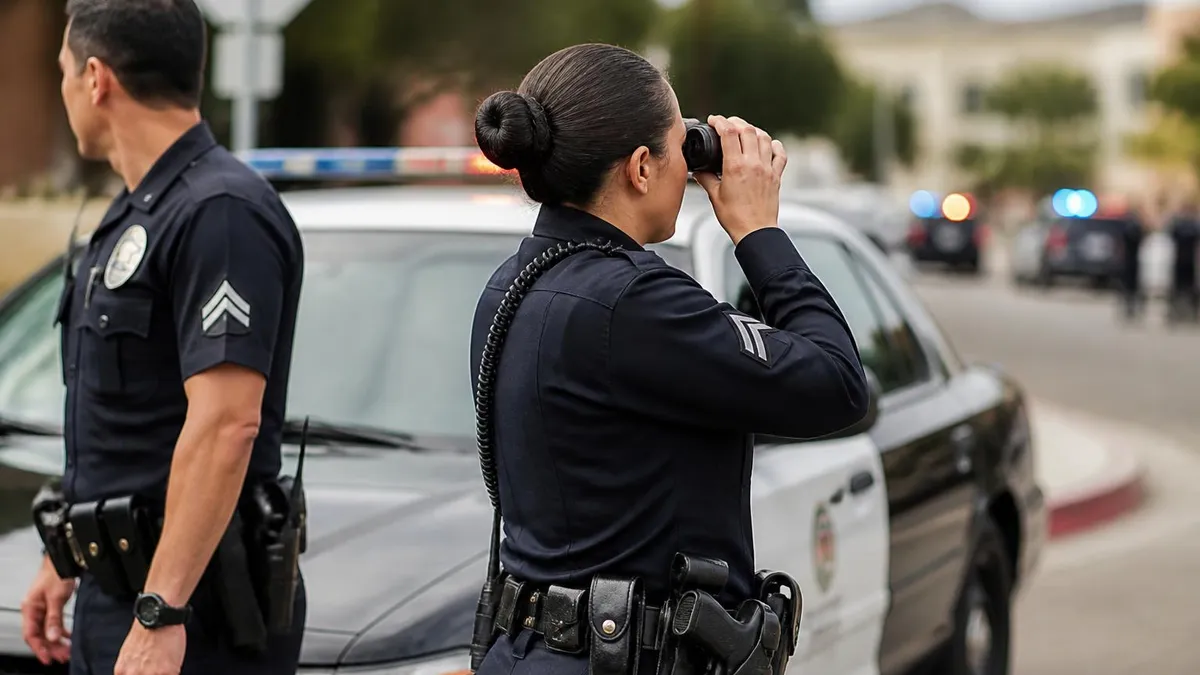
LAPD Metro Division: Inside LA's Elite Tactical Unit — SWAT, Gear, Ranks, and What You Need to Know

LAPD Credit Union: Complete Guide for Officers on Salary, Benefits, and Financial Services
About the Author

Law Enforcement Trainer & Civil Service Exam Specialist
John Jay College of Criminal JusticeMarcus B. Thompson earned his Master of Arts in Criminal Justice from John Jay College of Criminal Justice and served 12 years as a law enforcement officer before transitioning to full-time academy instruction. He is a POST-certified instructor who has prepared candidates for police entrance exams, firefighter assessments, and civil service examinations across dozens of agencies.
Join the Discussion
Connect with other students preparing for this exam. Share tips, ask questions, and get advice from people who have been there.
View discussion (9 replies)