
LAPD Jobs: Careers, Salary, Requirements and How to Apply 2026 October
🏆 Explore LAPD jobs from officer to civilian roles. See pay, requirements, hiring steps, training, and how to pass the LAPD selection process.

The Los Angeles Police Department runs one of the largest hiring operations in American law enforcement, and the pipeline never really shuts off. Sworn slots, civilian desks, specialized investigative roles, technical positions tied to forensics and crime analysis — the agency carries more than a thousand active vacancies at any given moment and processes thousands of applications every cycle.
If you have been circling the idea of a career in policing or public safety in Los Angeles, this guide pulls the whole picture together: what the jobs pay, what the hiring journey looks like, and how to actually get through it without losing six months to avoidable mistakes.
LAPD does not advertise itself like a regular employer. The department recruits aggressively because attrition, retirements, and the sheer footprint of the city create constant pressure on staffing. That works in your favor as a candidate, but only if you understand the structure. Sworn careers follow a strict promotional ladder governed by civil service rules. Civilian careers, which include everything from 911 dispatchers and crime analysts to fingerprint specialists, IT staff, and police service representatives, follow a parallel track with different exams and faster entry points.
Pay is competitive for the region. A new LAPD officer starts around $86,000 in base salary, climbs through pay grades during the academy, and crosses six figures within a few years once you stack night differential, bilingual pay, and overtime. Detectives, K9 handlers, SWAT operators, motor officers, and air support pilots earn more. On the civilian side, dispatchers start near $70,000, analysts move into the $80,000 to $110,000 range with experience, and the city packages everything with CalPERS retirement, full health benefits, education incentives, and a 4/10 schedule that most officers say is the biggest quality-of-life perk in the job.
The hiring process itself is where most candidates stumble. It is long, multi-stage, and demands real preparation: written exam, physical fitness qualifier, structured oral interview, background investigation, polygraph, psychological evaluation, and medical clearance. Each step has its own failure rate, and the cumulative pass-through is brutal.
Of the people who fill out an application, fewer than one in ten make it to the academy. None of these steps are trick gates. They are designed to filter for honesty, physical readiness, and judgment, and people who prepare deliberately get through. If you want a focused warm-up, our LAPD practice test mirrors the written portion and is the fastest way to find your weak spots.

What Kinds of LAPD Jobs Exist
LAPD splits its workforce into two large families: sworn and civilian. Sworn officers carry a badge, make arrests, and progress through ranks. Civilian staff keep the department running. They answer 911 calls, run records, analyze data, manage IT, handle community engagement, and a hundred other functions that the public rarely sees but the agency cannot operate without. Both tracks offer career-long employment, both come with full benefits, and both pay better than most people assume.
On the sworn side, every officer starts at Police Officer I, which is the academy rank. After graduation you move to Police Officer II as a probationary patrol officer, and after about a year of solid performance you advance to Police Officer III, the field training officer rank where most veterans spend several years before testing for detective or sergeant.
Detective work is its own specialty ladder. Homicide, robbery-homicide, gang and narcotics, sexual assault, juvenile, and internal affairs each recruit from within. SWAT, Metropolitan Division, Air Support, K9, mounted, motor, and dive team are all post-probation assignments you bid into after demonstrating fitness and tactical aptitude.
Civilian Careers Worth Looking At
If you do not want to wear a uniform, the civilian roster is enormous and often overlooked. Police Service Representatives are the 911 and non-emergency call takers and dispatchers. High-pressure work, well paid, and one of the fastest ways into the department. Crime and Intelligence Analysts dig into data, build threat assessments, and support detectives on long-running cases.
Latent Print Examiners, Forensic Print Specialists, and DNA Technologists work in the crime lab. Police Records Specialists, Property Officers, IT staff, accountants, attorneys for the Police Commission, and recruitment officers round out the picture. Civilian roles usually skip the academy entirely, have shorter hiring timelines often three to five months, and still come with full city benefits.
One underrated path: the Police Officer Trainee program lets you work as a civilian inside a station, usually as a Police Cadet or Office Trainee, while you complete the academic and physical requirements to enter the academy. You earn a paycheck, get inside the building, and learn the culture before you commit to sworn service. Many recruits we hear from say this was the single best decision they made.
Police Service Representative roles (911 dispatcher and call taker) hire on a near-continuous cycle, start above $70,000, and skip the academy entirely. If you want into LAPD quickly and you have strong communication skills under pressure, this is the door most candidates ignore.
LAPD Salary by Role
Salary is the question every candidate asks first, and the published city ranges only tell part of the story. Base pay is set by the Mayor's Office and the Police Protective League's bargaining unit. The practical take-home is significantly higher once you add overtime, bilingual pay (an extra $100 a month if you certify in a qualifying language), longevity steps, education pay (up to a 6.5% bump with an accredited degree), and special assignment pay for specialized units. Officers working night watch routinely clear $130,000 to $150,000 inside their first five years.
For sworn ranks, the standard ladder looks roughly like this. Police Officer I starts at $86,193 and climbs to $115,180 at top step. Detective I starts around $99,000 and tops out near $125,000. Sergeant I begins near $107,000 and reaches $138,000. Lieutenant I crosses $125,000 base and pushes past $160,000 at top step with longevity. Captain and above are six-figure executive ranks with discretionary pay grades.
Civilian salaries vary by classification. Police Service Representative I starts at about $69,800; PSR III, the supervisor tier, reaches $94,000. Crime and Intelligence Analyst starts near $79,500 and climbs into the low six figures with promotion. Latent Print Examiner I starts around $86,000. Background Investigators, Police Performance Auditors, and senior analysts top out in the $115,000 to $130,000 range. Every civilian role includes the same CalPERS pension, health package, and educational reimbursement that sworn officers receive.
Requirements to Apply
Sworn officer requirements are simple to state and harder to meet than people expect. You must be at least 21 years old at the date of academy entry (you can apply at 20.5). You need a high school diploma or GED. A two- or four-year degree is not required but adds points and pay.
U.S. citizenship is required, or you must be a permanent resident actively pursuing citizenship. You need a valid California driver license at the time of appointment, vision correctable to 20/20, no felony convictions ever, and no recent serious misdemeanors. The department also runs a thorough credit and financial responsibility check.
The Six Stages of LAPD Sworn Hiring
Online application followed by the Personal History Statement, a 70-page document the department uses to drive the background investigation.
Personal Qualification Essay (written exam) and Physical Abilities Test. Pass both on the same visit at the Recruitment HQ.
Investigators interview neighbors, employers, family, and friends. Driving record, credit history, social media all reviewed.
Polygraph covering drug use, criminal activity, and PHS truthfulness. Psychological exam with written tests plus a clinical interview.
Full medical, hearing, vision, drug screen. Chief's review board signs off on the complete candidate file before academy assignment.
Six-month residential training program at the Elysian Park Academy. Graduation makes you a Police Officer II on probation.

The Written Exam, What It Tests
The Personal Qualification Essay is not a multiple-choice trivia quiz. It is a writing assessment built around three prompts: one descriptive, one explanatory, one personal-experience. Scorers grade on grammar, sentence structure, clarity, and the ability to communicate a complete thought under time pressure. The same skills you will need every day for the rest of your career writing arrest reports and incident narratives. Candidates with weak grammar or who cannot organize a paragraph fail at this stage in higher numbers than any other.
The companion test you take the same day is the Physical Abilities Test, a four-event circuit covering a wall climb, an obstacle course, body drag, and a 500-yard run. Each event is timed. You don't need to be an elite athlete, but you do need consistent cardio and functional strength. Most failures happen on the wall climb (six-foot solid wall) and the body drag, where candidates underestimate how technique-dependent it is. Train both before you show up.
How to Apply, Step by Step
Open your LAPD practice test prep the same week you apply. The timeline moves faster than candidates expect, and you do not want to be cramming the night before the written exam. Create your account on the Personnel Department's online portal, complete the basic application, and respond to the recruitment officer who reaches out within 48 hours.
Schedule your written and physical test date as early as you can; slots fill weeks ahead. Begin the Personal History Statement immediately. It takes most candidates 40 to 60 hours to complete properly, and it is the single document that drives the rest of your hiring process.
Officer I: $86,193 starting, $115,180 top. Detective I: $99K to $125K. Sergeant I: $107K to $138K. Lieutenant I: $125K to $160K+. Night watch and bilingual pay add 5 to 10% on top of base. Overtime routinely adds $15,000 to $30,000 annually.
The Background Investigation
This is the longest stage. Once you pass the written and physical, your file moves to a Background Investigator who builds a complete picture of your life. They will contact every employer for the last ten years, every neighbor at every address, your references, your references' references, your family members, and anyone else they decide is worth talking to. They run your driving record from every state you have lived in, pull a credit report, and review your social media presence going back years. Expect this stage to take three to four months on its own.
The mistakes that disqualify candidates here are almost always lies of omission. You did not disclose a job you were fired from. You forgot about a fender bender in 2019. You said you tried marijuana twice when it was twenty times. Investigators are not looking for perfect humans. They are looking for honest ones.
The department knows you have a life history. What it cannot tolerate is a future officer who edits the truth under pressure. Be exhaustively honest on the PHS. List every job, every address, every traffic ticket, every romantic partner the form asks about, every drug experience. Disclose, disclose, disclose.
Polygraph and Psychological Evaluation
The polygraph is short, usually under two hours total. The examiner reviews your PHS in advance and asks pointed questions about the highest-risk areas: prior drug use, undisclosed criminal activity, integrity at past jobs. It is not adversarial. People fail the poly when their PHS answers and their poly answers do not match. People pass when both tell the same story.
The psychological evaluation is two parts: a battery of written instruments (MMPI-3, CPI, PAI, and others) followed by a one-on-one clinical interview with a department psychologist. The written tests cannot be cheated. They have validity scales built in to catch candidates trying to look healthier than they are. Answer honestly. The clinical interview is a structured conversation about your background, motivation for policing, life stressors, and judgment scenarios. Sleep well the night before, eat something, and treat it like a real conversation rather than an interrogation.

Lying or omitting information on the Personal History Statement ends more LAPD applications than any other factor. Investigators expect to find issues. They expect to read about them on your PHS first. If they discover something you did not disclose, you are done. There is no second chance with that department.
Academy Life
Once your file is approved by the Chief's review board, you receive an academy class date. The Elysian Park Academy runs roughly six months of intensive training: physical conditioning, defensive tactics, firearms, driving, criminal law, constitutional law, report writing, community policing, and scenario-based training. You report Monday morning and go home Friday evening for most classes; some weeks include weekend training. You earn full Police Officer I pay while in the academy, which is one of the better deals in American law enforcement training.
Academy attrition is real but not extreme. Most classes graduate 80 to 90% of their starters. Failures cluster in three areas: academic (constitutional law and criminal procedure exams), firearms qualification, and physical fitness re-tests. Show up in shape, study every night, and the academy is survivable. Treat it like a vacation and you wash out.
After Graduation
Graduation makes you a probationary Police Officer II. You are assigned to a patrol division, likely whichever division has the deepest manning need on your graduation date, and paired with a Field Training Officer for the first 12 months. FTOs grade you weekly on dozens of competencies. Pass probation, and you become a permanent Police Officer III with full assignment bidding rights. From there the career opens up: detective, specialized units, promotional exams, or a full 20 to 30 year career on patrol if that is where you find your fit.
Before You Apply, Your 30-Day Prep List
- ✓Pull your driving record from every state you have lived in
- ✓Pull a free credit report and clean up any errors or unpaid items
- ✓Make a list of every job, address, and romantic partner from the last 10 years
- ✓Audit your social media; remove anything you would not want a captain to see
- ✓Start running 3 miles three times a week to prep for the PAT 500-yard run
- ✓Practice timed writing: set a 30-minute timer and write a one-page essay
- ✓Take a free LAPD practice test to gauge your written exam readiness
- ✓Talk to two current officers or detectives; recruitment can connect you
- ✓Begin drafting your Personal History Statement before the form is even sent
- ✓Schedule a vision exam to confirm you meet the 20/20 corrected standard
Lateral Hires and Special Pathways
If you are already a sworn officer with another California agency, LAPD runs a Lateral Police Officer hiring track that compresses the academy down to a shorter modified course and credits your prior service toward step pay. You still complete the background, polygraph, psych, and medical, but you skip the recruit-level academic content. Out-of-state laterals can also apply but typically need to complete a longer modular course to align with California POST standards.
For military veterans, LAPD offers veteran preference points on the written exam, and active reservists have job protection and bidding priority under USERRA. The department runs an explicit Veterans Hiring Initiative and waives the four-year college points cap for service members in recognition of military training. If you are transitioning out and considering law enforcement, the LAPD recruitment office at Mission Division has a veterans liaison who walks you through the timeline.
Civilian Hiring Cycles
Civilian classifications open on the city's Personnel Department site rather than the LAPD recruitment portal. Police Service Representative exams run roughly twice a year; Crime and Intelligence Analyst exams open whenever the department has approved budget for new positions, sometimes only once every 18 months. Get on the city's exam notification list the day you decide you might apply. Missing the open window means waiting a year.
LAPD Career: Trade-offs
- +Six-figure earning potential within five years with overtime
- +Full CalPERS pension and lifetime medical for retirees
- +4/10 schedule means three days off every week for most patrol
- +Constant promotional and specialized assignment opportunities
- +Tuition reimbursement and education pay incentive
- +Bilingual pay bump for certified Spanish, Korean, Mandarin, Armenian, and others
- −Six to twelve month hiring process from application to academy
- −Background investigation is invasive and demanding
- −High-stress urban policing environment with mandatory overtime in busy divisions
- −Mandatory rotations through unfamiliar divisions during early career
- −Public scrutiny and body-worn camera review on every contact
- −Initial division assignment is dictated by department needs, not your preference
Pros and Cons at a Glance
| Pros | Cons |
|---|---|
| Six-figure earning potential within five years with overtime | Six to twelve month hiring process from application to academy |
| Full CalPERS pension and lifetime medical for retirees | Background investigation is invasive and demanding |
| Constant promotional and specialized assignment opportunities | High-stress urban policing environment with mandatory overtime in busy divisions |
| Tuition reimbursement and education pay incentive | Mandatory rotations through unfamiliar divisions during early career |
| Bilingual pay bump for certified Spanish, Korean, Mandarin, Armenian, and others | Public scrutiny and body-worn camera review on every contact |
How to Stand Out as a Candidate
Recruiters see thousands of applications. The ones who get accelerated through the process tend to share four traits. First, they are physically ready on day one, not on the day of the test, but the day they fill out the application. Second, they have a clean and complete PHS that does not generate follow-up questions from the investigator.
Third, they have a clear and honest answer to the question of why they want to be a police officer. Fourth, they have already done something (Explorer program, Cadet program, ride-alongs, criminal justice coursework, military service) that shows the department this is not a sudden idea.
The candidates who struggle, by contrast, often treat the application like a job application: fill it out, wait, hope. LAPD is not Amazon. It is a six-month investigation into whether you should be trusted with deadly force, and the department wants candidates who treat the process with the seriousness it deserves.
Final Thoughts
An LAPD career, sworn or civilian, is a real career, not just a job. The pension, the schedule, the salary, and the variety of work compare favorably with almost any private-sector path in the region. The catch is the gate. Six to twelve months of structured hiring is a long runway, and most people who start the process do not finish it.
Prepare for the written exam early, get and stay in shape for the physical, be ruthlessly honest on the PHS, and treat every step of the background investigation as the conversation it really is. Your future captain is trying to decide if you belong in the uniform.
Bookmark the official LAPD recruitment page, sign up for the Personnel Department's exam alerts, and take an LAPD practice test this week to see where you stand. The candidates who treat preparation as a 90-day project rather than a 30-day cram are the ones who walk across that academy stage.
Sample Los Angeles Police Department Practice Questions
Try these questions from our free Los Angeles Police Department practice tests. The correct answer and an explanation follow each question.
What is a 'coroner's case' in LAPD terminology?
- A. Any arrest involving a violent felony
- B. A death that must be investigated and reported to the Medical Examiner-Coroner
- C. A case transferred to a federal agency
- D. An incident involving a public official
Answer: B. A death that must be investigated and reported to the Medical Examiner-Coroner
A coroner's case involves a death under circumstances requiring investigation by the Medical Examiner-Coroner, such as unattended, suspicious, or violent deaths.
An applicant filed for Chapter 7 bankruptcy two years ago. How is this most likely addressed in the LAPD background investigation?
- A. It automatically disqualifies the applicant from further consideration
- B. It is evaluated in context, including the circumstances that led to the bankruptcy
- C. It is ignored because the applicant has legally discharged their debts
- D. Only bankruptcies within the past year are considered relevant
Answer: B. It is evaluated in context, including the circumstances that led to the bankruptcy
Bankruptcy is evaluated in full context — a bankruptcy caused by a medical emergency is treated differently than one resulting from reckless spending, and subsequent financial behavior also matters.
In LAPD radio communications, what does the term 'Code 4' signify?
- A. Officer needs assistance immediately
- B. No further assistance needed, situation under control
- C. Officer is responding to a call
- D. Suspect is in custody
Answer: B. No further assistance needed, situation under control
Code 4 means the situation is under control and no further assistance is required.
Which word choice is most appropriate in a formal LAPD report?
- A. The guy ran off down the alley.
- B. The male fled southbound through the alley.
- C. He took off and went down the alley.
- D. The dude bolted into the alley.
Answer: B. The male fled southbound through the alley.
Police reports require formal, precise language; 'the male fled southbound' is specific and professional.
LAPD Questions and Answers
About the Author
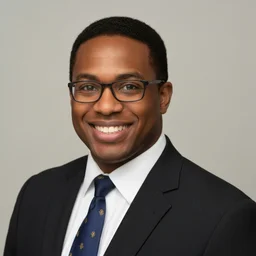
Law Enforcement Trainer & Civil Service Exam Specialist
John Jay College of Criminal JusticeMarcus B. Thompson earned his Master of Arts in Criminal Justice from John Jay College of Criminal Justice and served 12 years as a law enforcement officer before transitioning to full-time academy instruction. He is a POST-certified instructor who has prepared candidates for police entrance exams, firefighter assessments, and civil service examinations across dozens of agencies.
Join the Discussion
Connect with other students preparing for this exam. Share tips, ask questions, and get advice from people who have been there.
View discussion (9 replies)