
ITLS: International Trauma Life Support Certification Guide
ITLS guide: 16-hour course, 74% pass mark, Basic/Advanced/Pediatric levels, 3-year recert, ITLS vs PHTLS vs TNCC, free practice tests.
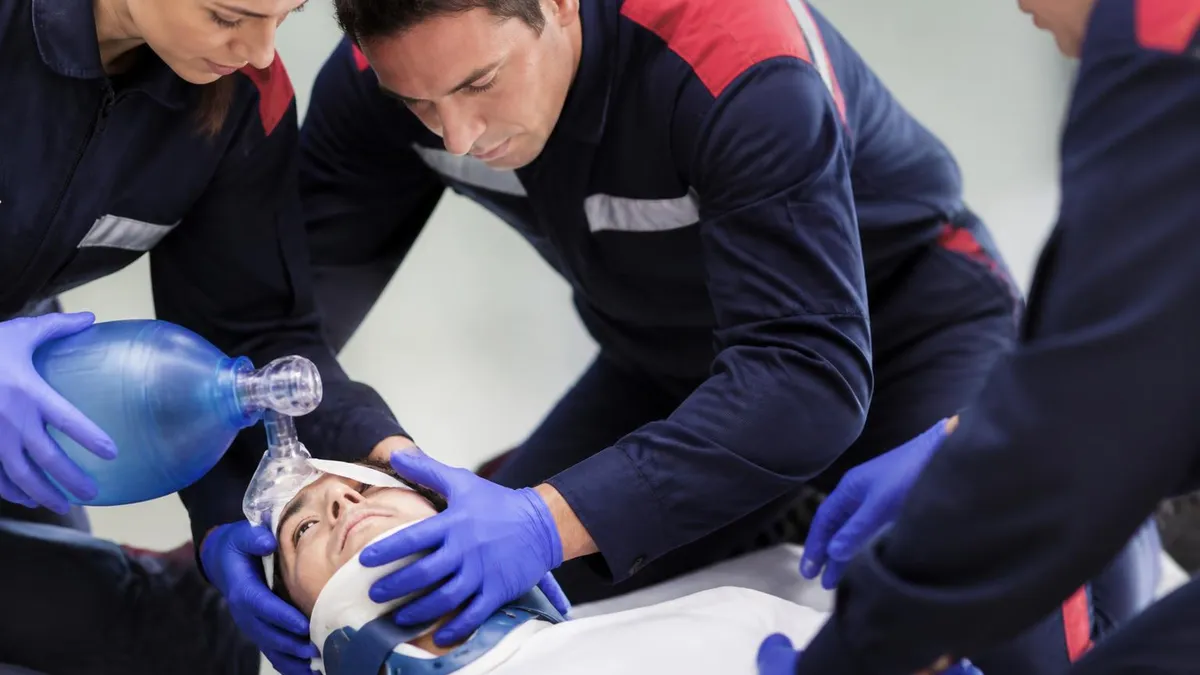
The ITLS International Trauma Life Support practice test sits at the heart of one of the most respected pre-hospital trauma certifications in the world. International Trauma Life Support — ITLS for short — trains EMTs, paramedics, nurses, physicians, and military medics in a structured, rapid approach to trauma assessment and management. The course was originally known as Basic Trauma Life Support (BTLS) and was launched in 1982 by the American College of Emergency Physicians chapter in Alabama. It rebranded to ITLS in 2005 to reflect a global membership that now spans more than 40 countries.
If you work in EMS, the emergency department, the military, or in any role that responds to traumatic injury, the ITLS provider card is one of the most useful credentials you can hold. It tells employers, agencies, and patients that you can take a chaotic scene, run a structured assessment in under two minutes, and prioritise the interventions that change outcomes — airway, hemorrhage, decompression, and rapid transport.
This guide walks you through everything candidates ask about: the ITLS organization itself, the provider levels, how the 16-hour course is structured, what is on the written exam, what to expect at the skills practical, recertification rules, and how ITLS compares to PHTLS and TNCC. We also share study tactics that the highest-scoring candidates use, plus links to free ITLS practice resources so you can test your readiness before exam day.
Before you book a class, it helps to know who runs the program. ITLS is governed by a non-profit corporation headquartered in Downers Grove, Illinois. The curriculum is reviewed every four years by a Course Committee of physicians, paramedics, and educators, and updates roll out through accredited chapters and training centres. That structure is why the ITLS card you receive in Stockholm or Singapore reflects the same Primary Survey approach as the one issued in Texas.
The shift from BTLS to ITLS in 2005 was more than a rebrand. The organisation widened its scope from basic-level providers to a full ladder that now includes Basic, Advanced, Pediatric, Military, and Access courses. The change also reflected the program's expansion outside North America, where international chapters now run a large share of total course volume. Today, more than half a million providers worldwide hold a current ITLS card, and the program is endorsed by the National Association of EMS Physicians among other major bodies.
Knowing this history matters for one practical reason: agencies sometimes still use the term BTLS in legacy policy documents. If your medical director's protocol references BTLS, it is the same program. Your modern ITLS card satisfies the requirement.
Why ITLS Matters
More than half a million providers worldwide currently hold an ITLS card. The program is endorsed by the National Association of EMS Physicians and is taught in over 40 countries. Whether you are an EMT, paramedic, nurse, physician, or military medic, ITLS gives you a standard, reproducible approach to trauma that travels with you across agencies and borders. Originally launched as Basic Trauma Life Support in 1982 and rebranded in 2005, the program now sits at the centre of a global trauma-care network that updates curriculum on a four-year cycle. The card you earn is portable, durable, and trusted by medical directors across the US, Canada, the UK, Australia, the Nordic countries, and many other regions.
The ITLS provider ladder is wider than most candidates realise on day one. Each level targets a different scope of practice, and choosing the right course is the first decision you need to make before you register. The good news is that the assessment philosophy — Scene Size-Up, Primary Survey, Secondary Survey, Ongoing Exam — stays identical across every level. What changes is the depth of intervention you are expected to perform.
Basic is built for EMTs, first responders, and nurses who do not have advanced airway or IV authority. Advanced is the standard paramedic, RN, and physician course and adds skills like rapid sequence intubation review, needle thoracostomy, IO access, and pelvic binder application. Pediatric ITLS is a half-day add-on focused on the unique anatomy and physiology of injured children, and most agencies recommend it for any provider who responds to multi-age scenes. Military ITLS folds in tactical casualty care principles for combat medics, and Access is a specialised course for technical rescue teams working in confined or vehicle-entrapment environments.
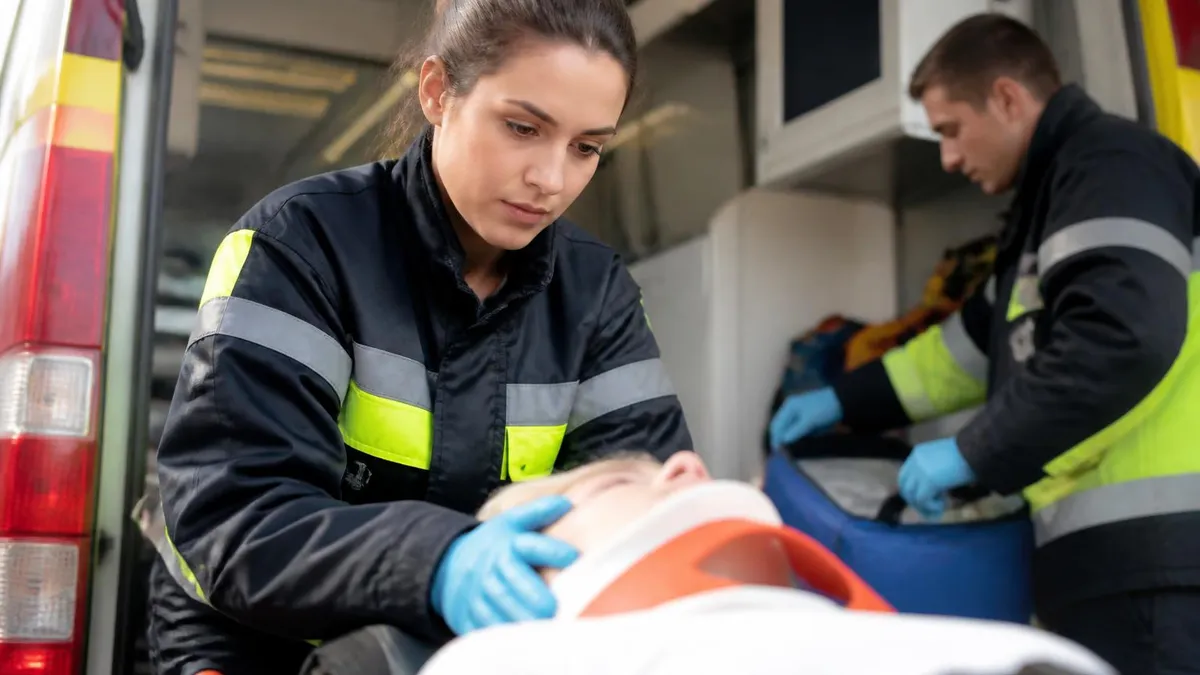
ITLS Provider Levels Explained
Designed for EMTs, first responders, military medics, and nurses without advanced airway or IV authority. Covers the full Primary Survey and Secondary Survey at the BLS scope of practice, including spinal motion restriction, hemorrhage control, and shock recognition. Sixteen hours total, with a 40-question written exam at the end and a skills practical that mirrors the live BLS scope. Many state EMS systems list ITLS Basic as an accepted continuing education credential for EMT recertification.
The standard paramedic, RN, and physician provider course and the most commonly taken level worldwide. Adds advanced airway management, needle thoracostomy, intraosseous access, pelvic binder application, and selected pharmacology to the Basic curriculum. Sixteen hours total with a 50-question written exam plus a more demanding skills practical that includes paramedic-level scope. Required by many flight medicine, critical care transport, and tactical EMS programs.
A half-day add-on course focused on the unique anatomy and physiology of injured children. Covers age-specific airway concerns, weight-based dosing, vital sign ranges by age, and pediatric trauma scoring. Highly recommended for any field provider who responds to multi-age scenes, especially in suburban EMS systems where pediatric trauma calls happen weekly rather than monthly.
Folds tactical combat casualty care principles into the standard Advanced curriculum, with added emphasis on care under fire, tourniquet doctrine, hemostatic dressings, and casualty extraction. Built for combat medics, Navy corpsmen, special operations medical personnel, and tactical EMS teams that operate in austere or hostile environments. Frequently delivered on military bases through chapter affiliates.
Specialised course for technical rescue providers working in confined spaces, motor vehicle entrapment, agricultural machinery, or industrial extrication scenarios. Pairs well with vehicle rescue training and is often delivered as a combined extrication-and-medicine programme. Teaches you how to deliver Primary Survey care to a trapped patient before extrication and how to package an injured victim for movement.
The standard ITLS course runs 16 hours and is typically delivered over two consecutive days, although hybrid options now spread the lecture half across an online module followed by one in-person skills day. Day one is heavy on classroom and skills stations: pathophysiology of shock, airway management, spinal motion restriction, hemorrhage control, and the integrated patient assessment sequence. Day two is almost entirely hands-on. You rotate through skills practice, then move to scenarios where you lead an assessment under instructor evaluation.
Class size matters more than people expect. ITLS limits student-to-instructor ratios to keep skills coaching meaningful, and most course sites cap registration at 24 students with at least one instructor per six learners. If you are looking at a class that is much larger than that, ask the coordinator how the ratio is being maintained. The single biggest predictor of passing on the first attempt is uninterrupted skill repetition during day two — and that only happens with proper ratios.
ITLS Exam Format Breakdown
The written test is multiple choice, closed book, and contains 40 questions for the Basic provider course and 50 questions for the Advanced provider course. You need a score of 74 percent or higher to pass, which works out to thirty correct answers on Basic and thirty-seven correct on Advanced. You are given roughly 60 to 75 minutes to complete it, although the average candidate finishes in 30 to 40 minutes. There is no negative marking, so always answer every question even if you have to guess. The question stems are clinical vignettes drawn directly from the textbook chapter learning objectives, not abstract recall.
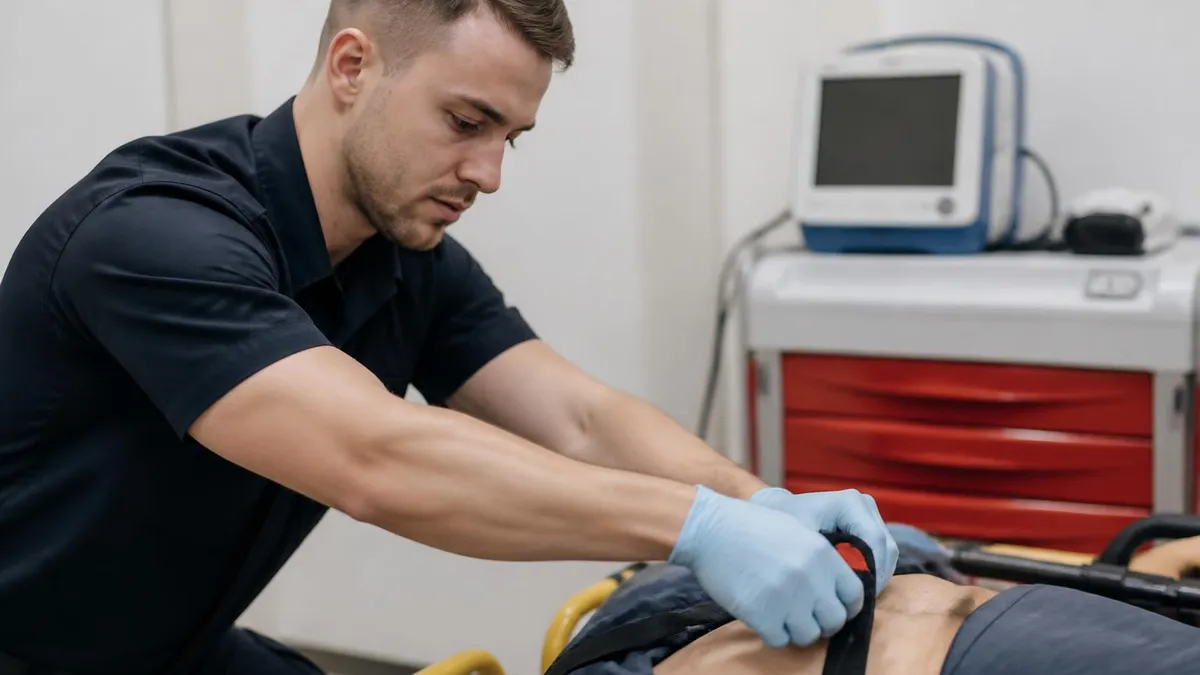
The ITLS assessment system is the part of the course that candidates remember years after the card expires. It is also the part that separates ITLS from a generic trauma lecture series. The Primary Survey is a roughly two-minute, choreographed sequence: general impression, level of consciousness, airway, breathing, circulation, with selected exposure. It ends with a transport decision — load and go, or stay and treat — based on whether life threats are present.
The Secondary Survey is a detailed head-to-toe that only happens if the patient is stable enough to allow it, and the Ongoing Exam reassesses vitals and interventions every five minutes during transport. Practising this rhythm matters because under stress, providers default to whatever they rehearsed most. ITLS is teaching you to default to a survey that catches the killer findings first.
If you only have time to read one chapter before class, make it the patient assessment chapter. Every other chapter folds into that single survey rhythm, and instructors will assume you know the sequence from minute one of day one.
Now to the question every candidate types into Google the week before class: what is the ITLS written exam actually like? The Basic and Advanced exams are multiple-choice, closed-book, and contain 50 questions for Advanced and 40 for Basic. You need 74% to pass, which works out to 37 correct on Advanced and 30 correct on Basic. You have approximately 60 to 75 minutes for the test, although most candidates finish in 30 to 40 minutes. The questions skew clinical — scenario stems with a vignette and four answer choices — rather than rote recall of numbers.
Topics are weighted in roughly the proportions you would expect from the textbook: patient assessment, airway, shock and hemorrhage, head and spine, chest trauma, abdominal trauma, extremity injuries, burns, pediatric trauma, and special populations. There is no negative marking, so answer every question. If you have studied the eight chapter learning objectives in the ninth edition, you will see almost every test item come straight from those objectives.
The skills practical is where most candidates lose sleep, and honestly where most candidates also pass on their first sitting if they have practised the Primary Survey out loud. The format is a scripted scenario: you are handed a patient situation, you state your scene size-up, you perform your survey with a partner or instructor playing the patient, and you verbalise every finding and decision. The instructor marks a competency sheet that maps to the ITLS critical actions.
Critical action failures are the trap. Examples include failing to control major bleeding before assessing breathing, failing to manage a flail chest, missing a tension pneumothorax, or making an incorrect transport decision when load-and-go is indicated. You can pass the scenario with minor errors as long as no critical action is missed. If you do miss one, you usually get a remediation attempt the same day. Speak out loud, narrate everything, and treat the manikin like a real patient — that habit alone resolves most fails.
Night-Before Course Checklist
- ✓Read the patient assessment chapter at least twice
- ✓Practise the Primary Survey out loud with a partner or in front of a mirror
- ✓Review airway, breathing, and shock chapter learning objectives
- ✓Charge your laptop or tablet if your chapter is using digital pre-work
- ✓Pack a watch with a second hand for timing scenarios
- ✓Bring snacks — day two is long and you will not want to leave for food
- ✓Get at least seven hours of sleep before day one
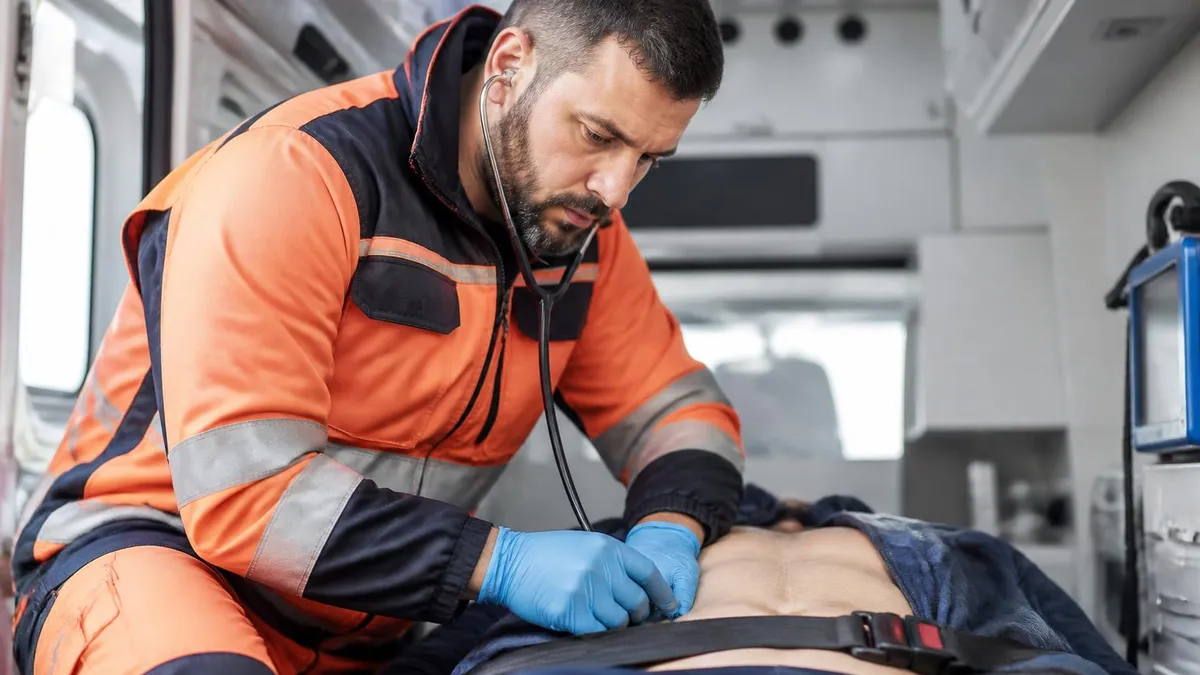
Your ITLS provider card is valid for three years from the date of completion. Recertification options have expanded considerably in the last few years and now include the traditional 8-hour in-person recert course, a hybrid format with online cognitive content plus an in-person skills evaluation, and full recert challenge formats for providers who can demonstrate currency through other trauma training. Whichever route you choose, you must pass the written exam and the skills scenarios at the recert level — they are scaled-down versions of the initial provider exams.
Plan ahead. If your card expires, you cannot simply recert; you must take the full 16-hour provider course again. Most chapters send renewal reminders 90 days before expiration through the ITLS member portal. Set a calendar alert when you receive your initial card and treat the renewal like any other licence cycle. The fee difference between a recert and a full re-take is substantial, so missing the window is an expensive mistake.
A focused review block of around 30 minutes per evening for the two weeks before your course pays back enormously on exam day. Treat your study like a clinical drill, not a passive read-through. If you can verbalise the Primary Survey from memory while walking your dog, you will sail through the skills practical.
Active recall beats passive reading every time. Close the book, write down the survey steps from memory, then check what you missed. Reopen and re-read only the sections you fumbled. Two or three repetitions of this cycle per chapter is enough to lock the material in. The same trick works for shock classification, burn rule of nines, and pediatric vital ranges — anything you have to recall under stress benefits from quizzing yourself out loud rather than re-reading.
ITLS vs PHTLS: Honest Comparison
- +Cleanest Primary Survey rhythm of any trauma course
- +Strong scene-management and field-applicable focus
- +Wide international recognition across 40+ countries
- +Accepted by virtually every US EMS agency and hospital
- +Skills stations use small-group ratios that protect repetition time
- −Recert window is unforgiving — miss it and you re-take the full 16 hours
- −Textbook is denser than PHTLS for first-time readers
- −Fewer course sites in some regions compared to PHTLS
- −Cost can exceed $300 USD for initial Advanced provider course
Should you take ITLS if your agency offers a choice between ITLS and PHTLS? Both programs are excellent and both satisfy nearly every employer requirement, but there are real differences in style, structure, and the populations the courses were originally built for. Here is the honest comparison so you can pick the course that fits your workflow.
Some employers — particularly in flight medicine, tactical EMS, and rural critical-access agencies — actually mandate ITLS rather than PHTLS, usually because the medical director trained on the ITLS curriculum or because the regional system standardised on it. Check your agency policy manual before you register. The reverse is also true in some metropolitan systems where PHTLS is the local default. Neither is better; they are simply parallel options. The right question is not which course is harder but which one your medical director, training officer, or hospital education team will accept on your record.
ITLS, PHTLS, and TNCC all teach the same destination — fast, accurate trauma care that prioritises the killers first — but they take slightly different routes. PHTLS, run by NAEMT and built around the PHTLS textbook, leans heavily into the XABCDE mnemonic and emphasises tactical military scenarios. TNCC, run by the Emergency Nurses Association, is hospital-centric and designed for trauma room nurses receiving patients post-arrival. ITLS sits in the field-medicine space with a strong scene-management emphasis and the cleanest, most teachable assessment rhythm of the three.
If your role is pre-hospital — EMT, paramedic, flight medic, military medic, or rural nurse who responds to scene calls — ITLS is the most directly applicable. If you work inside an ED trauma room, TNCC will feel more native. Many flight programs and air-medical agencies actually require both. Your medical director, training officer, or hospital education team will usually specify which card they accept, so check before you register.
Test yourself with a couple of full-length practice quizzes before you sit the real exam. Doing one each evening of the week before class lets you spot weak topic areas while there is still time to re-read those chapters. Aim for at least 85% on the practice sets — that gives you a comfortable buffer against test-day nerves.
Two final habits separate the candidates who pass with confidence from those who scrape through. First, do not skip the chapter learning objectives at the end of each textbook section. Every test question maps back to one of them. Second, practise the assessment sequence out loud with a partner. The skills station is essentially an oral exam — verbalising each step trains the same recall pattern the instructor wants to hear.
One more underrated tactic: in the week before your course, watch a few real trauma-scene videos and narrate the Primary Survey as if you were the lead provider. There are plenty of educational videos on YouTube from EMS training channels and Fire-EMS academies. Pause the video at the patient-contact moment, run your own assessment out loud, then resume to see how the demonstrated provider compared.
This single drill bridges the gap between book knowledge and exam-day performance better than any other study tool. By the time you walk into the classroom, the rhythm should feel automatic rather than something you are still trying to remember.
Finally, sleep. Both nights. Tired providers miss critical actions. The skills practical is essentially a stress test of recall and it punishes sleep deprivation more than any other variable. Plan your travel, your food, and your rest so the only thing you have to think about on day two is the patient in front of you.
The ITLS certification is more than a card on your badge. It is a way of thinking about an injured patient that, once internalised, makes every trauma response feel less chaotic and more sequential.
Whether you are heading into Basic as a brand new EMT, sitting Advanced for the first time as a paramedic, or recertifying after three years on the road, the steps that get you there are the same: read the chapters, drill the Primary Survey out loud, practise the skills with a partner, and walk into the exam having already done it a hundred times in your head.
One last thing worth saying. Some agencies treat ITLS as optional, others mandate it as a condition of employment, and a growing number of US states list it among the trauma credentials accepted for continuing education credit. If your agency does not currently require ITLS, taking it anyway puts you in a better position for promotion, lateral transfers, and flight-medicine applications down the line.
Many of the providers who eventually move into supervisory, training officer, or flight roles say their ITLS card was the first national credential that opened those doors. The course pays for itself many times over across a career, even before you count the patients whose outcomes change because their first responder ran a clean, fast, prioritised assessment.
Good luck on your course — and welcome to a community of providers who have decided that getting trauma care right matters enough to give up a weekend, study the book, and earn the card.
ITLS Questions and Answers
About the Author
Attorney & Bar Exam Preparation Specialist
Yale Law SchoolJames R. Hargrove is a practicing attorney and legal educator with a Juris Doctor from Yale Law School and an LLM in Constitutional Law. With over a decade of experience coaching bar exam candidates across multiple jurisdictions, he specializes in MBE strategy, state-specific essay preparation, and multistate performance test techniques.