
Internal Medicine ITE Reddit: What Residents Are Actually Saying (and What Works)
Discover what residents share about the in training exam internal medicine reddit — top strategies, scores, resources & tips. 🎯 Real advice that works.

If you have spent any time searching for advice about the in training exam internal medicine reddit threads are among the first places residents turn — and for good reason. The r/Residency and r/medicine communities have become some of the most candid, real-world sources of information about what the ITE actually feels like, which resources help, and how to benchmark your performance against peers across the country. Unlike official program guidelines, Reddit posts capture the raw anxiety, the surprising wins, and the hard-won lessons that residents accumulate year after year.
The Internal Medicine In-Training Examination, administered annually by the American College of Physicians, is a high-stakes formative assessment taken by nearly all internal medicine residents in the United States. It covers the full breadth of clinical medicine — from cardiovascular disease and endocrinology to nephrology, infectious disease, and beyond — and it carries real implications for board certification readiness and program evaluation.
Yet for many residents, the most useful guidance does not come from official ACP materials; it comes from a late-night Reddit thread posted by a PGY-2 who just figured out that UWorld explanations are more valuable than Amboss for ITE prep.
Reddit discussions about the ITE tend to cluster around a handful of recurring themes: which question banks actually mirror the exam, how to interpret your percentile score, how many hours per week are realistic to study during intern year, and whether a low score in PGY-1 is truly predictive of ABIM board failure. These are the questions residents desperately want answered, and the community has accumulated years of collective experience to draw on. The challenge is that individual advice can vary wildly based on program type, subspecialty interest, and baseline knowledge.
One of the most consistent findings across Reddit discussions is that passive reading of UpToDate or Harrison's alone is not an effective ITE strategy. Residents who improve their scores year over year almost universally report that active recall — spaced-repetition flashcards, timed question blocks, and deliberate review of wrong answers — makes the biggest difference. This aligns with well-established cognitive science, but hearing it from fellow residents in the trenches gives the advice a credibility that textbook recommendations often lack.
Score interpretation is another major Reddit topic. Many residents do not fully understand what their percentile or scaled score actually means for their career trajectory, and the anxiety around this can be disproportionate. A score in the 40th percentile during PGY-1 is very different from the same score in PGY-3, yet the emotional impact can feel identical. Understanding the normative data and what the ACP considers a passing benchmark is essential context that Reddit posts sometimes get right and sometimes get badly wrong.
This guide synthesizes the most useful, evidence-based advice found across Reddit threads, supplemented with data from the ACP and ABIM, to give you a comprehensive picture of how to approach the ITE strategically. Whether you are a nervous intern preparing for your first sitting or a senior resident trying to push into the top quartile before boards, the following sections will walk you through everything from exam format and resource selection to score benchmarks and last-minute prep tactics.
Throughout this article, you will find practice questions, study schedules, and honest comparisons of the most popular resources. The goal is to take the best of what the Reddit community has discovered and organize it into a plan you can actually follow during a busy residency year.
Internal Medicine ITE by the Numbers

ITE Exam Format
| Section | Questions | Time | Weight | Notes |
|---|---|---|---|---|
| Morning Session | 120 | 4 hours | 50% | Cardiovascular, pulmonary, GI, renal |
| Afternoon Session | 120 | 4 hours | 50% | Endocrine, neuro, heme, ID, rheum, derm |
| Total | 240 | 8 hours | 100% |
When it comes to choosing study resources, Reddit threads dedicated to the in training exam internal medicine reddit community return to the same handful of tools year after year. The most frequently recommended question bank is UWorld Step 3, which residents consistently report mirrors the clinical reasoning style of ITE questions more closely than any other commercially available resource. Unlike Step 1 or Step 2 question banks that emphasize basic science or initial diagnosis, UWorld Step 3 focuses on management decisions, follow-up testing, and nuanced treatment selection — exactly the cognitive skills the ITE rewards.
Amboss is the second most commonly cited resource, and it has genuine strengths that UWorld lacks. Its integrated library system means you can drill into explanations and immediately read a concise clinical overview without switching applications. Many residents use Amboss as their primary spaced-repetition flashcard platform alongside targeted question blocks. Reddit users frequently note that Amboss questions tend to skew slightly harder than actual ITE questions, which can be both discouraging and beneficial depending on how you interpret your practice scores.
The ACP's own MedStudy materials deserve more credit than they typically receive on Reddit. The Internal Medicine Essentials question bank, produced specifically for ITE preparation, uses questions vetted by the same organization that writes the exam. While the interface is less polished than UWorld or Amboss, the content validity is unmatched. Several Reddit threads from residents who jumped from the 50th to the 75th percentile in a single year cite MedStudy as a key differentiator, particularly for less glamorous topics like rheumatology and dermatology.
For supplementary reading, most Reddit veterans recommend against trying to read Harrison's cover to cover — a strategy virtually no one completes. Instead, the community gravitates toward UpToDate topic reviews for specific weak areas identified through question bank performance data. The workflow typically looks like this: do a block of twenty questions, identify the three topics you got wrong or guessed on, read the relevant UpToDate section within twenty-four hours, then add an Anki card for the key fact. This closed-loop approach is consistently cited as more effective than any passive reading strategy.
Anki flashcard decks specifically designed for internal medicine boards have become increasingly popular on Reddit. The most widely shared deck is the "IM Anki" compilation that covers ABIM Blueprint topics with pre-made cards. The advantage of using a community-vetted deck is that it encodes the highest-yield facts in a format proven to support long-term retention.
The disadvantage is that pre-made cards do not reinforce the same material you personally got wrong, so most experienced residents combine a shared deck with self-made cards targeting individual weak spots. For more on how scores break down, many residents also consult resources on internal medicine ite reddit score interpretation to contextualize their practice performance.
Podcasts and audio resources occupy a growing niche in the ITE prep ecosystem. CoreIM, The Curbsiders, and NEJM Evidence-Based Medicine are frequently mentioned on Reddit as resources that make commuting time educational. These are not primary study tools — they will not replace question banks — but they are excellent for reinforcing clinical reasoning frameworks and keeping you engaged with medicine when you are too tired for active studying. Several residents report that listening to a CoreIM episode on a topic immediately before doing a question block on that same topic improves both retention and performance.
The consensus from years of Reddit discussion is clear: diversify your resources, anchor everything to active recall rather than passive reading, and prioritize question banks above all else. No single resource is perfect, but the combination of UWorld Step 3 for primary question practice, Anki for spaced repetition, and targeted UpToDate reading for weak areas has the most consistent track record of producing meaningful score improvements across PGY years.
ITE Study Strategies by PGY Year
During intern year, the primary goal is exposure, not mastery. Most PGY-1 residents on Reddit report studying between two and five hours per week, focusing almost entirely on question banks rather than reading. The recommended approach is to do twenty questions per day in tutor mode — meaning you see the explanation immediately after each answer — and prioritize learning from wrong answers over accumulating volume. Your score will likely fall in the bottom half of the national distribution, and that is completely normal and expected for a first-year resident.
The most important PGY-1 habit Reddit veterans emphasize is building an Anki routine early. Even ten new cards per day, maintained consistently, compounds into thousands of retained facts by the time you sit for the actual board examination two years later. Intern year is also the best time to identify your weakest content areas by tracking question bank performance by topic, because you still have two full years to address those gaps systematically before the ABIM exam.

UWorld vs. Amboss for ITE Prep: Reddit Verdict
- +UWorld Step 3 questions closely mirror ITE clinical reasoning style and management focus
- +Amboss integrates library articles directly into question explanations for efficient learning
- +Both platforms track performance by topic, making weak-area identification straightforward
- +Amboss spaced-repetition flashcards reduce the need for a separate Anki subscription
- +UWorld explanations are widely regarded as the clearest and most board-relevant available
- +Both offer mobile apps, enabling consistent study during call nights and commutes
- −UWorld does not include integrated reading materials, requiring UpToDate as a supplement
- −Amboss questions tend to run harder than actual ITE questions, inflating perceived difficulty
- −Subscribing to both platforms simultaneously is expensive for residents on limited incomes
- −Neither platform is produced by the ACP, so content alignment is imperfect
- −UWorld question banks reset slowly, and repeat users may encounter memorized answers
- −Amboss interface can feel overwhelming for residents new to integrated question-bank systems
ITE Prep Checklist: 12 Weeks Out
- ✓Download your ITE score report and identify the lowest-performing content categories by percentage correct.
- ✓Subscribe to UWorld Step 3 and create a new question bank reset so all questions are available.
- ✓Set a daily Anki review goal of at least twenty cards per day and protect that time on your calendar.
- ✓Block eight to twelve weekly study hours in your schedule and treat them as non-negotiable clinical commitments.
- ✓Complete at least one full forty-question timed block per week to build test-day stamina and pacing.
- ✓Read the UpToDate or MedStudy section for every topic you answer incorrectly in question bank practice.
- ✓Focus the first four weeks on cardiovascular, endocrinology, pulmonology, and general internal medicine.
- ✓Use weeks five through eight to address nephrology, GI, infectious disease, and hematology weak areas.
- ✓In the final four weeks, switch to full timed practice sessions mimicking ITE test-day conditions.
- ✓Join or create a study group with co-residents to discuss difficult cases and share high-yield facts.
The Single Biggest Predictor of Score Improvement
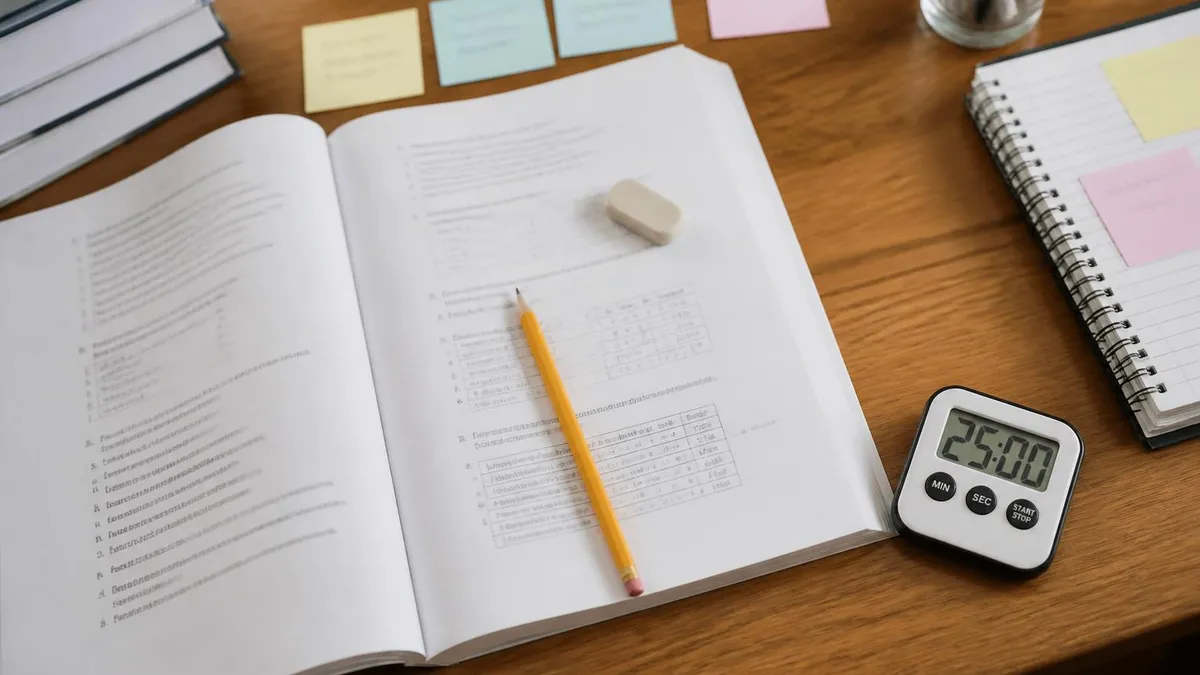
According to multiple Reddit threads tracking year-over-year ITE improvement, residents who do more than 1,500 practice questions before the exam and review every wrong answer within 24 hours consistently outperform those who study more hours passively. Volume plus deliberate review — not total study time alone — is the strongest predictor of meaningful score gains between PGY sittings.
Understanding how your ITE score is calculated and what it actually predicts is one of the most anxiety-producing topics on Reddit — and also one of the most frequently misunderstood. The ACP reports ITE results as a scaled score and a percentile rank compared to all residents at the same training level nationwide. A percentile of 50 means you performed at the median for your PGY year, not that you answered half the questions correctly. These are very different things, and conflating them is a common source of unnecessary distress in Reddit threads.
The scaled score itself is calculated using a complex psychometric formula that accounts for question difficulty. Two residents who answer the same number of questions correctly may receive slightly different scaled scores depending on which specific questions they happened to get right or wrong. This is why raw percentage correct is a less meaningful metric than your final scaled score, and why residents who obsessively track their practice percentage sometimes misinterpret their readiness relative to peers.
Research published in academic medicine journals has examined the correlation between ITE percentile scores and ABIM board certification pass rates. The data consistently show that residents scoring above the 50th percentile in their PGY-3 ITE sitting pass the ABIM at rates exceeding ninety percent on the first attempt. Residents scoring between the 25th and 50th percentile still pass at rates around seventy to eighty percent with targeted preparation. Only residents consistently below the 25th percentile by PGY-3 face a statistically meaningful increased risk of ABIM failure.
Reddit discussions about score interpretation often highlight a critical nuance: year-over-year improvement matters more than absolute percentile. A resident who moves from the 30th percentile in PGY-1 to the 55th percentile in PGY-3 has demonstrated exactly the kind of growth trajectory that program directors and ABIM view favorably. Conversely, a resident who scores at the 60th percentile in PGY-1 but stagnates at the 62nd percentile in PGY-3 may actually be underperforming their potential, despite having a higher absolute score.
The ACP provides national normative data that programs use to benchmark their residents collectively. Programs with a high proportion of residents scoring below the 25th percentile may face increased scrutiny during ACGME accreditation reviews. This institutional dimension is rarely discussed on Reddit, but it explains why some program directors take ITE preparation seriously enough to provide protected study time, question bank subscriptions, or formal review sessions. Your individual score exists within a larger institutional context that shapes how programs respond to ITE results.
Content-area subscores are often more actionable than the overall percentile for guiding study decisions. If your cardiovascular subscore is at the 40th percentile but your endocrine subscore is at the 70th percentile, spending additional study time on endocrinology delivers diminishing returns. Redirecting that time to cardiovascular topics where marginal improvement yields greater overall score gains is the more efficient strategy. Reddit residents who share detailed prep accounts consistently report this kind of subscore-guided prioritization as essential to their improvement plans.
One Reddit thread that resurfaces annually every March asks: "Does ITE score really matter?" The nuanced answer is that it matters most for residents whose scores signal potential board risk, for fellowship applications in competitive specialties where program directors sometimes request ITE data, and for your own peace of mind heading into ABIM preparation. For the majority of residents whose scores fall in the middle of the distribution, the ITE is best understood as a practice run — a valuable diagnostic with real but limited career implications.
Some competitive fellowship programs — particularly cardiology, gastroenterology, and hematology/oncology — request ITE scores as part of the application review process. If you are targeting a highly competitive subspecialty, consistently scoring below the 40th percentile by PGY-3 may be flagged as a concern. Proactively discussing low scores with your program director and demonstrating a clear upward trajectory is strongly recommended before fellowship applications go out.
Test-day logistics are an underappreciated element of ITE performance that Reddit threads address with surprising regularity. The exam is typically administered at your training program over one or two days in the spring, and unlike the ABIM, you cannot choose your test center or date. However, you can control several variables that meaningfully affect performance: sleep quality in the preceding week, nutrition on test morning, and whether you attempt any last-minute studying in the forty-eight hours before the exam begins.
The Reddit consensus on last-minute studying is unusually unified: do not do it. Residents who cram new information in the final forty-eight hours consistently report higher anxiety and poorer performance than those who shift to light review of already-mastered material or take a complete mental break. The information you have encoded through weeks of spaced repetition is far more accessible under test conditions than anything you read the night before. Trust your preparation and prioritize sleep over content review as the exam approaches.
Pacing strategy deserves specific attention because the ITE is longer than most other standardized examinations residents have encountered. At 240 questions over eight hours, you have an average of two minutes per question — which sounds generous until you are forty questions into a session and realize you have been spending four minutes on complex clinical vignettes. Reddit veterans consistently recommend using one minute and forty-five seconds as your internal target per question, leaving a buffer for the inevitably difficult cases that require rereading and careful reasoning.
Flagging questions for review is a built-in ITE feature that Reddit residents use strategically. The recommended approach is to flag any question where you are genuinely uncertain between two answer choices, complete the entire session, then return to flagged items with fresh eyes. Research on multiple-choice test-taking consistently shows that initial instincts are correct more often than second-guessing, so changing a flagged answer should only happen when you identify a clear logical reason — not simply because you feel more anxious about the question on review.
Managing the psychological experience of test day is discussed at length in Reddit posts from residents who have taken the ITE multiple times. The emotional arc of the exam is predictable: high confidence in the first thirty questions, increasing self-doubt in the middle hundred, and a mixture of relief and residual anxiety at the end of the second session. Experienced residents recommend acknowledging this arc as normal rather than interpreting mid-exam self-doubt as evidence of poor preparation. The questions feel hard because they are designed to be discriminating, not because you are failing.
Physical comfort during the exam is worth brief attention. Many programs administer the ITE at a computer testing station in a conference room or library, and conditions can vary significantly. Bringing a light layer in case the room is cold, eating a protein-rich breakfast to stabilize blood glucose, and staying hydrated without over-hydrating are all practical measures that Reddit residents mention as contributing to sustained concentration across the full eight-hour examination period.
After the exam, the waiting period for score release is itself a source of Reddit anxiety. Scores are typically released eight to twelve weeks after the administration date, and program directors usually review results before individual residents. Understanding how scores will be communicated in your program — whether through a one-on-one meeting with your program director, a group debrief, or simply a portal notification — can reduce the anxiety of waiting significantly. Asking your chief resident or program coordinator about the score release timeline and communication process is a simple step that many residents overlook.
The final weeks of ITE preparation require a shift in mindset from learning new material to consolidating what you already know. This consolidation phase is frequently neglected by residents who feel compelled to keep adding new content right up to exam day. The cognitive science behind retrieval practice is clear: the act of recalling information you have already learned — through practice questions, self-quizzing, or teaching a concept to a colleague — strengthens memory traces more effectively than re-reading the same material a second time.
Community study with fellow residents is one of the most consistently underutilized ITE strategies mentioned on Reddit. A weekly one-hour group session where each resident presents two or three questions they got wrong that week generates cross-pollination of knowledge and exposes you to clinical reasoning approaches you might not have considered independently. The social accountability of a study group also counteracts the isolation of solo studying during a demanding residency schedule, which several Reddit threads identify as a significant motivational factor.
High-yield topic lists published by the ACP and synthesized by Reddit community members every year are worth reviewing in the final two weeks before the exam. While the ITE blueprint covers the full breadth of internal medicine, certain topics appear with disproportionate frequency: heart failure management, diabetes pharmacotherapy, chronic kidney disease staging, community-acquired pneumonia treatment, thyroid disease workup, and rheumatoid arthritis versus lupus differentiation. These are not the only topics that matter, but ensuring complete mastery of these areas provides a reliable floor beneath your overall score.
Time management across the residency year matters as much as pre-exam cramming. Residents who study fifteen minutes per day every day for twelve weeks accumulate thirty hours of focused practice — the same total as someone who studies two hours per day for fifteen days before the exam, but with far superior retention due to spaced repetition. This is the central message that experienced Reddit contributors return to repeatedly: consistency beats intensity, and the residents who improve most dramatically year over year are almost never those who crammed the hardest in the final week.
Mental health during ITE season is a topic that Reddit addresses with increasing honesty. The intersection of clinical exhaustion, exam anxiety, and performance pressure creates conditions where burnout risk is elevated. Several Reddit threads from residents who sought counseling support during ITE season report that addressing the psychological burden of performance expectations was as important to their score improvement as any study resource. Programs that provide access to resident wellness resources — including confidential counseling — create conditions where academic performance and well-being reinforce each other rather than compete.
Looking beyond the ITE itself, residents who perform well consistently attribute their success to habits built over the entire year rather than heroic pre-exam preparation. Reading three to five UpToDate articles per week sparked by interesting clinical cases, maintaining an Anki deck with daily reviews, and discussing diagnostic reasoning with attendings during rounds all contribute to the kind of durable knowledge that ITE questions are designed to test. The exam is ultimately a reflection of your year-round engagement with medicine, not just your pre-exam preparation intensity.
The Reddit community's collective wisdom on the ITE, distilled across hundreds of threads and thousands of comments, converges on a simple framework: know the high-yield content cold, practice under realistic test conditions early and often, interpret your score in the context of your year and trajectory rather than as a fixed judgment, and use each ITE sitting as a diagnostic tool that makes you a better physician and a more prepared board candidate. That framework, applied consistently, is what separates the residents who plateau from those who improve meaningfully each year.
ITE Questions and Answers



About the Author

Educational Psychologist & Academic Test Preparation Expert
Columbia University Teachers CollegeDr. Lisa Patel holds a Doctorate in Education from Columbia University Teachers College and has spent 17 years researching standardized test design and academic assessment. She has developed preparation programs for SAT, ACT, GRE, LSAT, UCAT, and numerous professional licensing exams, helping students of all backgrounds achieve their target scores.
Join the Discussion
Connect with other students preparing for this exam. Share tips, ask questions, and get advice from people who have been there.
View discussion (8 replies)