
Internal Medicine Residency Programs: Tracks, Match, Top Programs & Application Guide
Internal medicine residency programs guide: 🏆 ACGME training tracks, NRMP match stats, top IM programs, application timeline, salary, hours, fellowship.

Internal Medicine Residency Programs: Tracks, Match, Top Programs & Application Guide
Internal medicine residency programs are three-year ACGME-accredited graduate medical education training programs that physicians complete after earning an MD or DO degree. Completing one of these internal medicine residency programs is the required pathway to American Board of Internal Medicine (ABIM) certification, fellowship training, and independent practice as an internist, hospitalist, or subspecialist.
With more than 580 accredited categorical IM programs across the United States and roughly 9,500 PGY-1 positions offered each NRMP Match, internal medicine remains the largest specialty in the Match. About 99% of US MD seniors and 95% of DO seniors who rank IM as their preferred specialty successfully match.
International medical graduates match at roughly 60-65%, with regional variation by state and program type. Understanding program structure, application strategy, and how to evaluate fit is the difference between matching at any program and matching at the right program. Choosing wisely shapes the next three to ten years of your career and influences which subspecialty fellowships will be realistically available to you.
This complete guide walks through every IM residency track, the full ERAS and NRMP timeline, what programs actually look for in applicants, how to evaluate fellowship-bound versus hospitalist-bound programs, salary and benefits at every PGY level, and the in-training exam (ITE) all residents take. You will also see the typical PGY-1, PGY-2, and PGY-3 schedules, ACGME 80-hour duty hour rules, and the differences between academic, university, and community programs.
Before you build your rank list, you should already know what an internist actually does day-to-day. Read our complete what is internal medicine guide and the longer-form internal medicine physician career deep-dive to confirm the specialty fits before you commit three years of training and another one to three years of fellowship.
What Is an Internal Medicine Residency Program?
An internal medicine residency is a structured three-year postgraduate training program that prepares physicians to diagnose, treat, and manage adult patients across virtually every organ system. Programs must be accredited by the Accreditation Council for Graduate Medical Education (ACGME) and meet specific requirements for case mix, supervision, faculty credentials, scholarly activity, and resident wellness.
Graduates are eligible to sit for the ABIM Certification Examination in Internal Medicine after completing the three-year curriculum. Programs are also responsible for documenting milestone-based competencies in patient care, medical knowledge, professionalism, communication, practice-based learning, and systems-based practice. These milestones are reported semi-annually to ACGME and form the backbone of resident evaluation.
The training is divided into PGY-1 (intern year), PGY-2, and PGY-3. Each year mixes inpatient ward rotations, intensive care, subspecialty consults, ambulatory continuity clinic, emergency medicine, and electives. Residents care for patients with hypertension, diabetes, heart failure, sepsis, COPD, kidney injury, GI bleeding, infections, cancer, and dozens of other conditions you can practice with our internal medicine exam question banks.
By the end of three years, an IM resident has logged thousands of patient encounters, performed dozens of procedures (paracentesis, thoracentesis, central lines, lumbar punctures), and completed enough scholarly work to enter a subspecialty fellowship or begin independent practice. Most programs require at least one quality improvement project, a peer-reviewed scholarly product or poster, and active participation in morbidity and mortality conferences as conditions for graduation.
Why Internal Medicine? The Strategic Career Argument
Internal medicine is the most flexible specialty in adult medicine. From a single 3-year residency, graduates can become hospitalists (the fastest-growing physician role in the US), outpatient general internists, or subspecialists across 14 ABIM-recognized fellowships. Few specialties offer this range of career exits from a single training pathway.
The compensation ceiling also varies dramatically by exit. General internists average $250K-$280K annually, hospitalists earn $280K-$330K with predictable shift work, and procedural subspecialists like cardiologists and gastroenterologists routinely clear $500K+. Compare these to the trainee earnings detailed in our internal medicine salary breakdown.
Geographic flexibility is another major advantage. IM physicians are in demand in all 50 states and across rural, suburban, and urban settings. Telehealth has further expanded practice options, especially for outpatient internists. Many residents end up working within 100 miles of their training program, but graduates routinely relocate for academic positions, fellowship training, or higher-paying community jobs in lower cost-of-living regions of the country after finishing.
- Length: 3 years (PGY-1 through PGY-3) for categorical IM
- Accreditation: ACGME (US) or AOA-recognized programs
- Match: NRMP — applications via ERAS in September of MS4, Match Day in March
- Programs: 580+ categorical IM programs in the US, ~9,500 PGY-1 spots
- Match rate: ~99% US MD seniors, ~95% US DO seniors, ~60-65% IMGs
- Outcome: ABIM board eligibility, fellowship eligibility, or direct practice
- Salary: $60K-$76K depending on PGY level and region
Types of Internal Medicine Residency Tracks
The standard internal medicine residency. Three years of broad inpatient and outpatient training across all major organ systems. Graduates are eligible to sit for the ABIM Internal Medicine Certification Exam and may pursue fellowship or independent practice as hospitalists or general internists. This is by far the largest track — roughly 8,800 of the 9,500 PGY-1 IM positions in each Match are categorical.

Internal Medicine Match Statistics (2025 NRMP Data)
How to Apply to Internal Medicine Residency: ERAS and NRMP Timeline
The application cycle for IM residency runs from the spring of MS3 through Match Day in March of MS4. Most applicants apply through the Electronic Residency Application Service (ERAS), submit a rank list to the National Resident Matching Program (NRMP), and learn their results on Match Day.
Couples may participate in the Couples Match to pair their rank lists and increase the odds that both partners train in the same metro. The Match algorithm prefers paired lists when both partners have overlapping rankings. Roughly 1,300 couples participate in NRMP each year, and the paired match rate consistently exceeds 95%.
A complete ERAS application includes a personal statement, three to four letters of recommendation (one ideally from the IM Chair or Program Director), the Medical Student Performance Evaluation (MSPE), official USMLE or COMLEX transcripts, a CV, and a photo. Most successful applicants apply to 25-40 programs, attend 10-15 interviews, and rank 10-12 programs.
Application costs add up quickly. ERAS charges $11 per program after the first 30, and most applicants spend $1,500-$2,500 on application fees alone. Add travel and lodging for in-person interviews (mostly returned in 2024-2025), and the average IM applicant spends $3,500-$6,000 on the full application cycle. Plan finances early.
What Programs Actually Look For
With USMLE Step 1 transitioning to pass/fail in January 2022, program directors now rely more heavily on Step 2 CK scores, clerkship grades (especially the internal medicine subinternship), the MSPE, and letters of recommendation. AOA membership, Gold Humanism, sustained research with publications, dedicated away rotations, and a clear narrative in the personal statement all materially improve match outcomes.
Subinternship grades carry outsized weight in IM applications. An Honors grade on the IM sub-I from a domestic medical school is one of the strongest single predictors of matching at a top-50 program. Program directors also weight letters from well-known IM faculty heavily — letters from the Chair, Program Director, or a published subspecialist consistently outperform generic clerkship-attending letters.
Top US Internal Medicine Residency Programs
Rankings vary by source, but the consistently highest-ranked IM residencies (by Doximity reputation, fellowship match outcomes, NIH funding, and clinical case mix) include Mass General Brigham, Brigham and Women's Hospital, Johns Hopkins, UCSF, Penn Medicine, Duke, NYU Grossman, Stanford, Cleveland Clinic, UCLA, Mayo Clinic Rochester, University of Michigan, Columbia, University of Washington, and BIDMC.
These programs typically place 60-80% of graduates into competitive subspecialty fellowships including cardiology, GI, hematology-oncology, and pulmonary-critical care. Outside the top 15, dozens of strong university and academic-affiliated programs offer equally rigorous training with less Match competition — UAB, UNC, OHSU, University of Texas Southwestern, Indiana University, University of Pittsburgh, Yale, Northwestern, and Vanderbilt all routinely place residents into top-tier fellowships.
Community-based programs (often unranked nationally) can be excellent for residents planning hospitalist or outpatient careers, especially when local hospital systems hire directly from their training programs. Many IMGs match best at community programs, where program directors have established track records of training and hiring graduates from international medical schools. Reading our internal medicine near me guide can help you scope local job markets near community programs you are considering.
Top-15 Doximity-Ranked IM Residency Programs
- ✓Mass General Brigham (Boston, MA) — flagship Harvard IM program with elite fellowship match
- ✓Brigham and Women's Hospital (Boston, MA) — second Harvard IM program, strong research focus
- ✓Johns Hopkins (Baltimore, MD) — historic Osler residency tradition, exceptional academic depth
- ✓UCSF (San Francisco, CA) — West Coast academic powerhouse with primary care and categorical tracks
- ✓Penn Medicine (Philadelphia, PA) — Hospital of the University of Pennsylvania, top-tier fellowship match
- ✓Duke (Durham, NC) — strong cardiology and oncology fellowship pipelines
- ✓NYU Grossman (New York, NY) — large urban catchment, diverse pathology
- ✓Stanford (Palo Alto, CA) — innovation-focused, smaller class size, research strength
- ✓Cleveland Clinic (Cleveland, OH) — procedural depth and cardiology powerhouse
- ✓UCLA (Los Angeles, CA) — strong primary care plus competitive fellowship outcomes
- ✓Mayo Clinic Rochester (Rochester, MN) — multidisciplinary clinical excellence
- ✓University of Michigan (Ann Arbor, MI) — strong academic and clinical infrastructure
- ✓Columbia (New York, NY) — historic urban academic program with strong subspecialties
- ✓University of Washington (Seattle, WA) — wide regional catchment plus global health focus
- ✓BIDMC (Boston, MA) — third Harvard IM program, supportive culture and strong match
Salary, Hours, and Benefits at Every PGY Level
PGY-1 salaries range from roughly $60,000 in lower cost-of-living areas to $75,000+ in major metro areas like San Francisco, Boston, and New York. PGY-2 and PGY-3 salaries increase by approximately $3,000-$5,000 per year. Programs in California, Massachusetts, and New York occasionally exceed $80,000 for PGY-3s to offset extreme housing costs.
Most programs include health and dental insurance, paid malpractice coverage, a $1,000-$3,000 annual educational stipend for board prep books and conferences, paid time off, parental leave, and meal allowances during on-call shifts. Some programs also offer housing stipends, childcare subsidies, retirement contributions, and free public transit passes for trainees.
ACGME caps duty hours at 80 per week averaged over 4 weeks. The maximum continuous shift is 24+4 hours (24 patient care + 4 hours for handoff and education). Residents must have at least 4 days off per month and 8 hours minimum between shifts. Programs cited for repeat duty hour violations risk losing accreditation, so most modern programs use night-float systems to comply.
Burnout is a serious concern in IM residency. Surveys consistently report burnout rates above 50% in internal medicine trainees, with intern year scoring highest. Wellness committees, peer mentorship, mental health stipends, scheduled mental health half-days, and process improvement around clinical workload have become standard expectations of any ACGME-accredited program. Ask current residents directly about wellness culture during your interview day — their unfiltered answers often reveal far more than glossy recruitment materials.

MS3 to PGY-3: Complete Residency Timeline
MS3 Spring (March-June)
MS3 Summer (June-August)
MS4 Early Fall (September)
MS4 Fall-Winter (October-January)
MS4 Late Winter (February)
Match Day (March)
PGY-1 Intern Year (July of MS4+1)
PGY-2 (Year 2)
PGY-3 (Year 3)
5 Things to Look For in an IM Residency Program
- Why it matters: Past fellowship match rates predict your own chances
- What to check: Last 3-5 years of subspecialty placement data
- Red flag: Programs that won't share fellowship outcomes
- Why it matters: Burnout rates exceed 50% in IM residencies
- What to check: Mental health services, mentorship, peer support
- Red flag: High attrition or chief residents leaving early
- Why it matters: Procedural confidence is essential for hospitalist and ICU careers
- What to check: Resident-driven procedure service, lines, intubations
- Red flag: Procedures done exclusively by fellows or attendings
- Why it matters: Outpatient training is half of internal medicine practice
- What to check: Patient panel size, support staff, EMR, mentor coverage
- Red flag: Clinic disrupted by inpatient call schedules
- Why it matters: Three years of burnout is real if you hate the city
- What to check: Cost of living vs salary, partner career, family proximity
- Red flag: Choosing prestige over sustainability
PGY-1 Through PGY-3: What You Actually Do
Intern year (PGY-1) is the steepest learning curve in all of medicine. Most programs front-load inpatient general medicine wards, cardiology, MICU, night float, and emergency medicine, with 1 half-day per week of outpatient continuity clinic. You will manage 8-12 patients on a typical ward day, present on rounds, write daily notes, place orders, and admit new patients from the ER overnight.
The volume can feel relentless. Interns typically work 65-75 hours per week and absorb a torrent of new knowledge in pharmacology, EKG interpretation, fluid management, antibiotic selection, end-of-life care, and procedural skills. The first three months are the hardest. By December most interns find their rhythm, and by spring of intern year clinical reasoning patterns start to feel automatic.
PGY-2 and PGY-3 years gradually shift toward senior resident responsibilities — supervising interns, running codes and rapid response teams, completing subspecialty electives (cardiology, GI, ID, pulm, nephrology, heme-onc, rheum, endocrine, palliative), and using protected time for board preparation, scholarly projects, and fellowship applications. By PGY-3, most residents have 4-6 weeks of elective time per year and substantially more autonomy.
Procedure training is concentrated heavily in PGY-1 and PGY-2. Common bedside procedures include central venous catheter placement (internal jugular and subclavian), arterial line placement, paracentesis, thoracentesis, lumbar puncture, intubation in MICU rotations, and ultrasound-guided peripheral IVs. Most programs require 5-10 supervised reps before granting independent practice privileges.
The ABIM In-Training Exam (ITE)
Every IM resident takes the ABIM In-Training Examination once per year in October. The ITE is a 4-section multiple-choice exam designed to predict performance on the eventual ABIM Internal Medicine Certification Exam. ITE scores are reported as percentiles compared to PGY-1, PGY-2, and PGY-3 residents nationally.
PGY-3 scores below the 35th percentile correlate with increased risk of failing the ABIM boards on first attempt. Programs use ITE results to target remediation — residents below the threshold may receive structured study plans, paired faculty mentorship, or additional protected time. Use our internal medicine ite exam guide and the longer internal medicine board exam preparation resource to build a sustainable study plan from PGY-1 onward.
Academic vs Community vs University Programs
Academic programs (Mayo, Hopkins, Mass General) emphasize subspecialty depth, research, and fellowship placement. They run dedicated research months, host T32 NIH training grants, and place residents into competitive procedural fellowships at high rates.
University programs (most state medical school-affiliated residencies) sit in the middle — strong clinical training plus reasonable fellowship match rates and a balanced research expectation. Programs like Indiana, UAB, UNC, and OHSU offer the academic infrastructure of large universities without the brutal competition of top-10 residencies.
Community programs (regional hospital-based residencies without medical school affiliation) typically have lighter research demands, more autonomous clinical decision-making, and excellent hospitalist or outpatient internist career pipelines. Many community programs offer guaranteed hospitalist jobs to graduating residents — an attractive pathway for residents who prioritize geographic stability and predictable schedules over academic prestige.
Choosing Programs by Career Path
- Best fit: Top-50 Doximity academic programs
- Ask about: Last 3 years of cardiology / GI / heme-onc match data
- Look for: Protected research time + fellowship advising
- Avoid: Programs that won't share fellowship outcomes
- Best fit: Community + regional university programs
- Ask about: Direct hospitalist hire rate post-graduation
- Look for: Predictable shifts + broad procedural exposure
- Avoid: Programs that pressure residents toward fellowship
- Best fit: University programs at major state schools
- Ask about: Both fellowship match data + hospitalist hires
- Look for: Balanced research expectations + good clinical depth
- Avoid: Programs that force early career commitment

IMG-Friendly Programs and Visa Sponsorship
International medical graduates should target programs with established track records of training and hiring IMGs — often community-based programs in the Midwest, Northeast, and Mid-Atlantic. Programs publish IMG percentages on FRIEDA, in NRMP charting outcomes data, and on their websites.
Visa sponsorship (J-1 or H-1B) is another critical filter — only some programs sponsor H-1B visas, which allow trainees to remain in the US without the J-1 home-residency requirement after graduation. Strong IMG applications combine 240+ Step 2 CK, 1-3 published abstracts, US clinical experience, recent graduation, and letters from US-based faculty.
Chief Residency and Post-Residency Career Paths
Each program selects 2-4 chief residents annually — a PGY-4 leadership year that adds approximately 50% to attending-track salary and bolsters academic CVs. Chiefs run resident schedules, conduct teaching rounds, lead morbidity and mortality conferences, and serve as liaisons between residents and program leadership.
Chief residency is especially valuable for residents pursuing competitive fellowships (cardiology, GI, heme-onc, pulm-CC) or academic faculty roles. After residency or chief year, IM physicians enter one of four broad pathways: hospitalist medicine (about 40%), subspecialty fellowship (about 35%), outpatient internal medicine (about 20%), or non-clinical paths like industry, consulting, and administration (about 5%).
One useful heuristic when choosing between offers: visit the program in person if possible, ask current residents directly about wellness, talk to recent graduates about their fellowship or job outcomes, and trust your gut about culture fit during the interview day. Three years is a long commitment.
Academic vs Community IM Residency Programs
- +Academic: Stronger fellowship match outcomes, especially for competitive subspecialties
- +Academic: Deep subspecialty exposure across cardiology, GI, heme-onc, pulm
- +Academic: Strong research infrastructure and mentorship for academic careers
- +Academic: National name recognition for future job applications
- +Community: More autonomous clinical decision-making earlier in training
- +Community: Often direct pipeline to local hospitalist jobs after graduation
- +Community: Generally better resident wellness and lower burnout rates
- +Community: Higher IMG-friendly cultures and visa sponsorship rates
- −Academic: Higher burnout, less autonomy, lower work-life balance during residency
- −Academic: Fellowship-focused culture can sideline residents pursuing hospitalist careers
- −Academic: Stricter research expectations even for non-academic-bound residents
- −Academic: Cost of living often higher in major academic metros
- −Community: Fewer fellowship-bound graduates may limit competitive fellowship match
- −Community: Less research infrastructure for physician-scientist pathways
- −Community: Limited subspecialty rotations may reduce exposure breadth
- −Community: Smaller alumni networks for academic faculty career paths
Pros and Cons at a Glance
| Pros | Cons |
|---|---|
| Academic: Stronger fellowship match outcomes, especially for competitive subspecialties | Academic: Higher burnout, less autonomy, lower work-life balance during residency |
| Academic: Deep subspecialty exposure across cardiology, GI, heme-onc, pulm | Academic: Fellowship-focused culture can sideline residents pursuing hospitalist careers |
| Academic: Strong research infrastructure and mentorship for academic careers | Academic: Stricter research expectations even for non-academic-bound residents |
| Academic: National name recognition for future job applications | Academic: Cost of living often higher in major academic metros |
| Community: More autonomous clinical decision-making earlier in training | Community: Fewer fellowship-bound graduates may limit competitive fellowship match |
| Community: Often direct pipeline to local hospitalist jobs after graduation | Community: Less research infrastructure for physician-scientist pathways |
Internal Medicine Residency Application Timeline Checklist
- ✓MS3 March: Identify 3-4 IM mentors and begin requesting letters of recommendation
- ✓MS3 April-May: Build target program list (10 reach, 15 mid, 10 safety = ~35 total)
- ✓MS3 May-June: Take Step 2 CK (target above your reach programs' median, typically 240+)
- ✓MS3 June-July: Schedule 1-2 away rotations at reach programs (do not over-rotate)
- ✓MS3 July-August: Draft personal statement, complete CV, gather official transcripts
- ✓MS4 September 1-15: Submit ERAS application to all target programs before AAMC release date
- ✓MS4 October-November: Interview season begins — attend virtual and in-person interviews
- ✓MS4 December-January: Continue interviews, send thank-yous if program policy permits
- ✓MS4 Late January: Begin building rank list — prioritize fit, fellowship outcomes, wellness
- ✓MS4 February 22: NRMP rank list deadline — certify rank order in NRMP portal
- ✓MS4 Third Friday in March: Match Day — results released at noon Eastern
- ✓MS4 May-June: Complete intern paperwork, license, NPI, EFDA, medical clearances
- ✓PGY-1 July 1: Begin internship — typically inpatient wards or general medicine
Sample Internal Medicine Exam Practice Questions
Try these questions from our free Internal Medicine Exam practice tests. The correct answer and an explanation follow each question.
A 65-year-old man presents with Hgb 7.5 g/dL, MCV 110 fL, and hypersegmented neutrophils on peripheral smear. What is the most appropriate next step?
- A. Bone marrow biopsy
- B. Serum B12 and folate levels
- C. Iron studies
- D. Peripheral blood smear for malaria
Answer: B. Serum B12 and folate levels
Macrocytic anemia with hypersegmented neutrophils strongly suggests megaloblastic anemia due to B12 or folate deficiency, which should be confirmed with serum levels.
What is the recommended follow-up chest X-ray interval after hospitalization for CAP in a patient over 50 who smokes?
- A. 1 week post-discharge
- B. 4–6 weeks post-discharge
- C. 3 months post-discharge
- D. No follow-up needed if improved
Answer: B. 4–6 weeks post-discharge
Follow-up CXR at 4–6 weeks is recommended in older smokers to confirm radiographic resolution and exclude underlying malignancy masquerading as CAP.
A 70-year-old lifelong smoker with a 50 pack-year history is screened by low-dose CT and found to have a 10 mm solid pulmonary nodule. What is the recommended next step per Fleischner Society guidelines?
- A. No follow-up needed
- B. Repeat CT in 3 months
- C. PET-CT scan or CT-guided biopsy
- D. Immediate surgical resection
Answer: C. PET-CT scan or CT-guided biopsy
In a high-risk patient, a solid nodule ≥8 mm warrants PET-CT, CT-guided biopsy, or surgical resection for definitive characterization per Fleischner guidelines.
A 33-year-old patient with type 1 diabetes is admitted with severe DKA. Initial management includes aggressive IV fluid resuscitation and a continuous regular insulin infusion. According to current guidelines, what is the recommended initial rate for the insulin infusion in most adult patients?
- A. 0.05 units/kg/hour without a bolus
- B. 0.1 units/kg/hour, with or without an initial bolus
- C. 0.2 units/kg/hour without a bolus
- D. A fixed rate of 20 units/hour until blood glucose is <300 mg/dL
Answer: B. 0.1 units/kg/hour, with or without an initial bolus
The standard and widely recommended initial dose for a continuous intravenous insulin infusion in adult DKA is 0.1 units/kg/hour. An initial IV bolus of 0.1 units/kg is sometimes given, but studies have shown that starting with an infusion of 0.14 units/kg/hr without a bolus is also effective. A lower rate may not be sufficient to suppress ketogenesis, while a higher rate increases the risk of hypoglycemia and hypokalemia without proven benefit. Fixed-rate infusions that are not weight-based are not standard practice.
Internal Medicine Questions and Answers
Related Internal Medicine Guides

What Is Internal Medicine? Complete Guide to the Specialty

Internal Medicine Physician: Career, Training & Daily Practice Guide

Internal Medicine Salary 2026: Complete Physician Earnings Guide
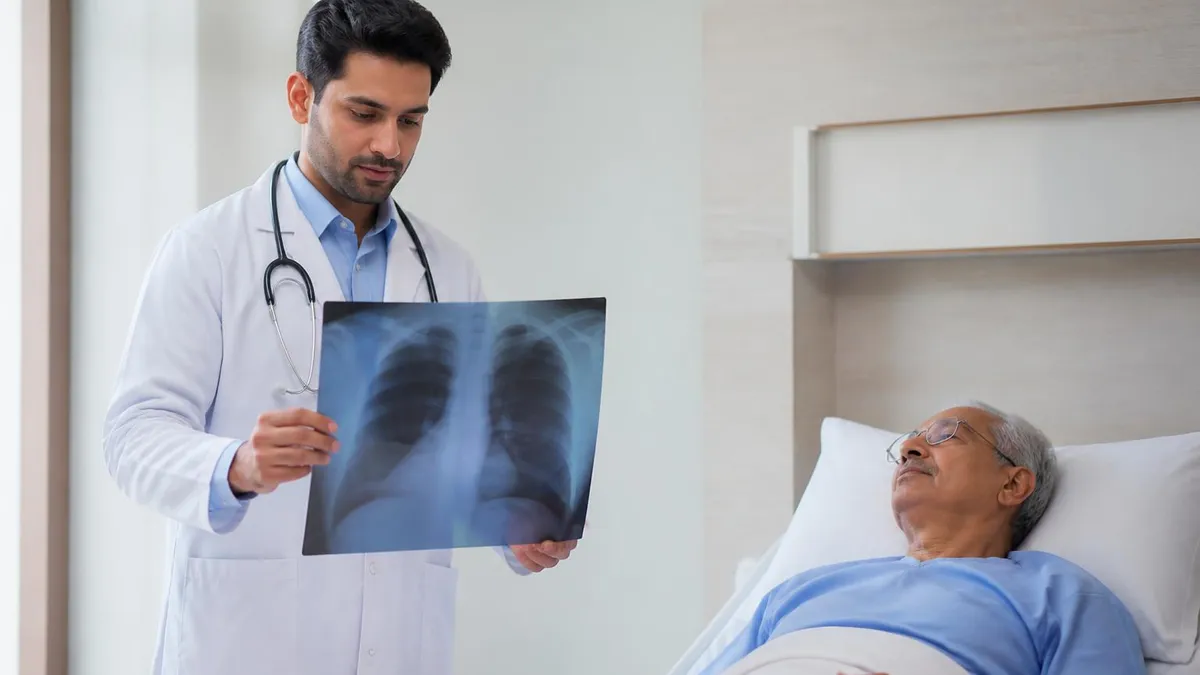
Internal Medicine Near Me: Find a Trusted Internist in Your Area

Internal Medicine vs Family Medicine: Key Differences Explained
Internal Medicine Board Exam Preparation: Complete ABIM Study Guide
ITE Exam Internal Medicine: Complete Resident Guide

Internal Medicine Exam Practice Test PDF 2026
About the Author

Educational Psychologist & Academic Test Preparation Expert
Columbia University Teachers CollegeDr. Lisa Patel holds a Doctorate in Education from Columbia University Teachers College and has spent 17 years researching standardized test design and academic assessment. She has developed preparation programs for SAT, ACT, GRE, LSAT, UCAT, and numerous professional licensing exams, helping students of all backgrounds achieve their target scores.
Join the Discussion
Connect with other students preparing for this exam. Share tips, ask questions, and get advice from people who have been there.
View discussion (6 replies)