
Ielts Worksheets: Free Printable Practice PDFs for Every Section 2026
📝 Ielts worksheets are free printable practice sheets for each section of the international english language testing system exam. Get PDFs and tips.
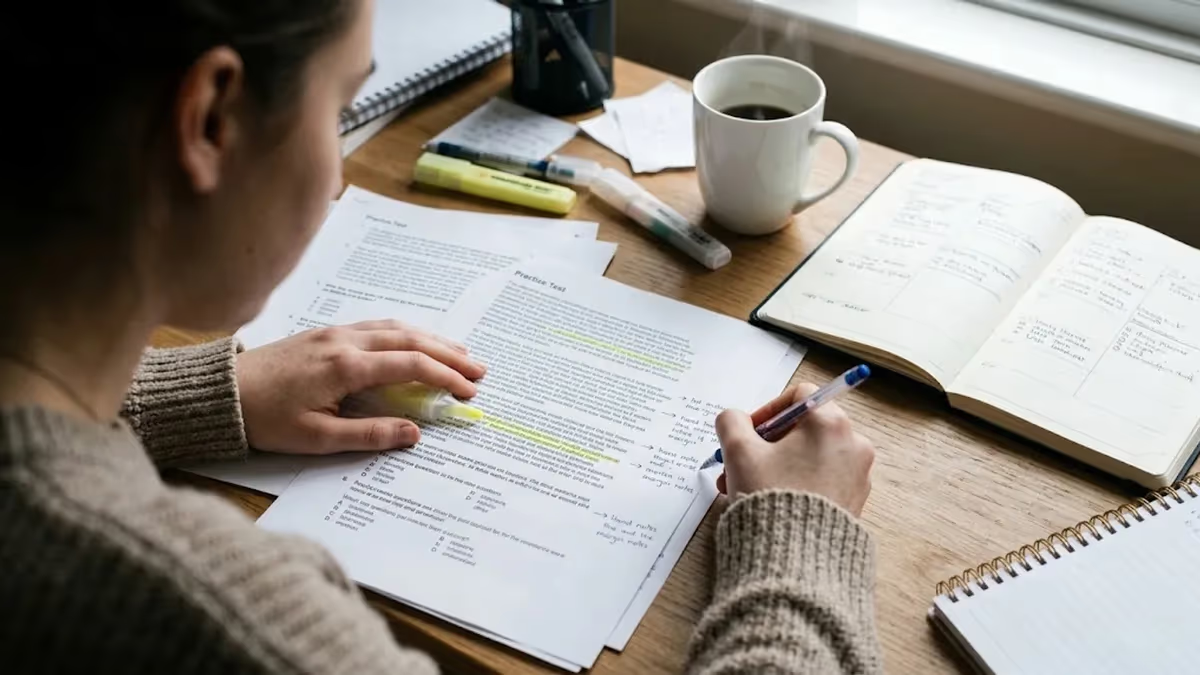
IELTS worksheets are printable or on-screen practice sheets that drill one skill at a time: Listening, Reading, Writing or Speaking. Most are free PDFs, and the best ones include answer keys and band-score guidance. Use them for targeted practice before you sit the International English Language Testing System exam, then switch to full timed tests.
Ielts Worksheets: Key Facts (Updated October 2026)
| Fact | Details | Source |
|---|---|---|
| Test delivery | From mid-2026, IELTS is no longer offered as a paper-based test. All IELTS tests are delivered on computer, with exact timelines varying by market. | IELTS |
| IELTS Online | Available only for IELTS Academic. You sit the test at home or in a suitable private location with a stable internet connection. | IELTS |
| IELTS for UKVI | Offered only in the fully digital format, at an official IELTS test centre. | IELTS |
| Scoring | Band scores run from 1 to 9 in whole or half bands. The Overall Band Score is the average of the four section scores, rounded to the nearest half band. | IELTS |
| Results | IELTS on computer results are usually available within 1–2 days. IELTS Online results usually take 6–8 days. | IELTS |
| Retakes | You can book the full test again as soon as you feel ready. One Skill Retake lets you retake one skill once, within 60 days of the original test, at centres that offer it. | IELTS |
| Validity | IELTS recommends treating a result as evidence of English ability for a maximum of two years. | IELTS (ielts.org) |
| Availability | IELTS is offered at more than 4,500 locations in over 160 countries. Dates are listed on the booking page. | IELTS |
Before you download anything, it helps to know what a worksheet can and cannot do. A good IELTS worksheet isolates a single task type, such as matching headings or Task 1 graph descriptions, so you can fix one weakness at a time. It is not a replacement for a complete ielts practice test, which measures stamina and timing across all four sections. Think of worksheets as the gym exercises and full tests as the match.
The International English Language Testing System exam is accepted by thousands of universities, employers and immigration authorities, and in the United States many colleges treat it as an alternative to TOEFL. Because the test is scored on a band scale from 1 to 9, worksheets should be chosen by the band you need, not by random difficulty. A student aiming for band 6.5 needs different material than someone targeting 8.0, and mixing the two wastes valuable weeks.
Start by confirming how the test works today. Our guide to the international english language test system ielts format explains each section's timing, task types and scoring, which tells you which worksheet categories actually matter. Since all IELTS tests are moving to computer delivery from mid-2026, worksheets should also help you practice reading from a screen, typing answers quickly, and handling the on-screen layout rather than only circling answers on paper.
Worksheets come in several flavors. Vocabulary sheets build topic words for Writing Task 2 essays, grammar sheets target complex sentences and tenses, and skills sheets drill skimming, scanning and prediction. Some are printable PDFs you can annotate with a pen, while others are interactive pages that mark your answers instantly. The format matters less than consistency: ten focused minutes a day on a single skill usually beats a single three-hour cram session every Sunday.
Quality varies widely, so check three things before you trust a sheet. First, does it include an answer key with explanations rather than bare answers? Second, does it follow the real task wording, such as no more than two words and a number? Third, is it current? Material written for the old paper format may show layouts you will not see on test day. If a sheet fails any of these, skip it and find a better one.
This article walks through where to find reliable worksheets, how to use them for each section, and how to combine them with full practice. You will also see a realistic weekly routine, a checklist for choosing material, and honest pros and cons. By the end you should be able to build a worksheet plan that fits your target band, your test date and the hours you actually have each week, without paying for resources you do not need.
How Many Skills, Bands and Test Locations Does IELTS Cover?
Which IELTS Practice Worksheet PDF Covers Each Skill?
These sheets pair a transcript or audio with form completion, map labelling and multiple-choice items. They train you to predict answer types, catch spelling traps and follow a speaker who corrects themselves. Always check the answer key against the transcript to understand each miss.
Reading sheets are grouped by question type: True/False/Not Given, matching headings, sentence completion and summary completion. They build skimming and scanning habits. The most useful ones highlight the sentence in the passage that proves every correct answer.
Writing sheets include Task 1 data descriptions or letters and Task 2 essay planning templates. Look for model answers with band descriptors attached. Planning grids and linking-word lists help you organize ideas quickly within the time limit.
Speaking sheets are prompt banks: Part 1 personal questions, Part 2 cue cards and Part 3 discussion topics. They only work when you answer aloud and record yourself. Use them to practice extending answers, giving examples and fixing hesitation.
Where Can I Find an IELTS Practice Worksheet PDF?
You can find a free IELTS practice worksheet PDF on the official IELTS website, in public library collections, and on university English-language centre pages. Start with official sample materials because they use the real task wording and scoring criteria. Third-party PDFs are useful for extra volume, but always compare their instructions with the official samples before treating them as accurate. Avoid downloads that ask for payment details just to open a free sheet.
Cambridge University Press and Assessment publishes the best-known books of past-style papers, and many learners use them as a benchmark. Each book usually has four full tests, audio for Listening, and model answers for Writing. When a worksheet seems too easy or too strange, compare it with one of these tests. If the question style, text length or vocabulary level is very different, the worksheet may be training you for the wrong target.
Your target score depends on where you are applying. Requirements differ widely, so check how the international english language testing system ielts exam is used for your university or visa before choosing worksheets. A program asking for 6.5 overall with no band below 6.0 needs balanced practice, while one that sets 7.0 in Writing means you should spend more of your worksheet time on essays and reports than on easier Listening drills.
If you are still learning what the test is, read the explainer on the international english language testing system online before you start printing. It covers what the acronym means, who takes the test and why. Knowing the purpose helps you pick the right module, because Academic and General Training worksheets differ in Reading texts and Writing Task 1. Downloading the wrong module is one of the most common ways learners waste their first week.
Look for worksheets organized by question type rather than by test number. For Reading, that means separate sheets for True/False/Not Given, matching headings, sentence completion and summary completion. For Listening, it means form completion, map labelling and multiple choice. Organizing by type lets you spot patterns in your mistakes. If you miss four True/False/Not Given items in a row, you know exactly what to practice tomorrow instead of guessing.
Printing is worth it for Reading and Writing. Holding a paper sheet lets you underline keywords, circle paragraph letters and write quick notes in the margin. But remember that most test takers will now answer on a screen, so also practice with on-screen PDFs or browser-based tools. Switch to typing at least once a week so the keyboard, the word counter and the scrolling feel normal long before test day.
Keep a simple folder system. Create one folder per skill, one sub-folder per task type, and a single spreadsheet that records the date, the sheet name, your raw score and the mistake type. After two weeks, the spreadsheet will tell you more about your real weaknesses than any diagnostic quiz. It also gives you a record to show a tutor, which makes paid lessons shorter and more focused.
What Does the International English Language Testing System Exam Test in Each Skill?
Listening and Reading are the two sections where worksheets pay off fastest because answers are objectively marked. Each has 40 questions, and a raw score converts to a band using a published table. For Listening, practice predicting answer types before the audio plays: is the gap a number, a name or a place? For Reading, train yourself to find the paragraph before you read the whole passage closely.
A useful drill is the two-minute scan. Give yourself two minutes to skim a passage and note the topic of every paragraph, then answer matching-heading questions. Next, redo the same sheet slowly and compare. Most learners discover they lost marks to distractors, not vocabulary. Track the error type each time, such as spelling, plural forms or word limits. Fixing those habits can lift a score by half a band without learning a single new word.
Are IELTS Worksheets Enough to Reach Your Target Band?
- +Worksheets target one task type at a time, so weak spots improve faster.
- +Many high-quality PDFs are free, which keeps preparation costs low.
- +Short sheets fit into a busy day, even in ten or fifteen minutes.
- +Answer keys give instant feedback on Listening and Reading.
- +Printable sheets let you annotate, underline and track patterns.
- +They make it easy to log errors and measure progress weekly.
- −Worksheets rarely train full-test stamina or exact timing.
- −Quality varies, and some free PDFs contain wrong answer keys.
- −Writing and Speaking need human feedback that a sheet cannot give.
- −Old paper-era layouts may not match the computer-delivered test.
- −It is easy to collect sheets and never review the mistakes.
- −Isolated drills can hide problems that appear only under pressure.
How Do I Choose a Free Printable IELTS Worksheet?
- ✓Confirm whether you need Academic or General Training before downloading.
- ✓Pick sheets that name the exact question type they practice.
- ✓Make sure an answer key with explanations is included.
- ✓Check that task instructions match the real IELTS wording.
- ✓Prefer sheets from a named publisher, school or official source.
- ✓Look for a date so you know the material is current.
- ✓Choose sheets that suit your target band, not just any difficulty.
- ✓Print Reading and Writing sheets so you can annotate them.
- ✓Pair every Listening sheet with its audio or transcript.
- ✓Log your score and mistake type after each sheet you finish.
Drill the weakness, then test the fix
Worksheets show you why you lose marks, while a full timed test shows whether you still lose them under pressure. Use one for diagnosis and the other for proof. If a mistake returns in a full test, go back to the worksheet bank and drill that task type again.
How Should I Use IELTS Worksheets Each Week?
Use IELTS worksheets in a weekly cycle of diagnose, drill, test and review. In week one, take a diagnostic to find your weakest skill, then spend most of your worksheet time there. A balanced split for a ten-hour week might be three hours on your weakest skill, two each on the next two, one on the strongest, and two on timed practice. Adjust the split every Sunday based on your mistake log.
Here is a sample plan for a learner at band 6.0 aiming for 7.0. Monday: a Reading True/False/Not Given sheet for 30 minutes, then error review. Tuesday: a Listening form-completion sheet plus a note on spelling. Wednesday: one Task 2 essay. Thursday: Speaking cue cards, recorded. Friday: a Task 1 report. Weekend: a full timed section from cambridge ielts practice tests, followed by an honest review of every wrong answer.
Timing is where worksheets and real tests part ways. Untimed practice builds accuracy, but the exam gives only 60 minutes for three Reading passages and 40 questions. So run each worksheet in two passes: first without a clock to learn the technique, then again with a strict timer a few days later. When your accuracy holds at speed, you are ready to move on to the next task type.
Some learners add a guided course for structure. Those comparing options such as e2 ielts and other online providers should apply the same test to each one. It should teach technique, give feedback on your own answers and match the current computer-based format. Otherwise you may be paying for content you could find free, and you still have to do the worksheet review yourself.
Vocabulary deserves its own weekly slot. Pick one common topic each week, such as education, technology, environment, health or work, and gather fifteen useful words and collocations. Use them in a Writing sentence and a Speaking answer the same day. Topic-based vocabulary sheets work because IELTS repeats themes constantly, and the same phrases can serve both Writing Task 2 and Speaking Part 3. Revisit the list after three days and again after a week.
Do not neglect rest and review. Spaced repetition beats massed practice, so schedule at least one rest day and revisit old mistakes. If you finish a worksheet and cannot explain why each wrong answer was wrong, you have not finished the worksheet. Spend as long on the review as on the attempt, and write one rule you will apply next time. Learners who do this usually see steadier gains than those who simply collect more sheets.
International English Language Testing System vs TOEFL: Which Should I Practice For?
Many applicants compare tests, so it is worth knowing how the International English Language Testing System compares with TOEFL. IELTS uses a speaking interview with an examiner and typed answers on computer, with a Writing on Paper option in selected countries, while TOEFL is delivered entirely on a computer. Either may be accepted, but each institution decides, so confirm before you commit. If you plan to take both, share skills worksheets such as academic vocabulary.
From mid-2026, all IELTS tests are delivered on computer, with timelines varying by market. IELTS Online is available only for Academic, and any IELTS test used for a UK visa application must be taken at an official IELTS test centre. Confirm your format on the official booking page so your worksheet practice matches test day.
Which IELTS Worksheets Work for Canada and the United States?
For Canada, the same worksheets apply, but the module you choose depends on your goal. Study permits and college admissions usually use IELTS Academic, while permanent residence and work routes usually use General Training. Always confirm the exact module and minimum scores on the official government or school page, because requirements change. Choosing the right module first saves you from drilling the wrong Reading passages and Writing Task 1 formats, which is a surprisingly common mistake.
In the United States, IELTS is accepted by many universities as proof of English proficiency, though each school sets its own minimum band and some prefer TOEFL or other tests. Graduate programs often ask for 6.5 to 7.0, and some professional programs may require higher section scores. Look up your program's policy early, then reverse-engineer a worksheet plan from the section scores required rather than the overall band alone. That keeps your practice focused on the real gap.
Reading is the section most learners can improve quickest with worksheets. A dedicated guide to the ielts reading test explains the three-passage structure, question types and answer-key use in detail. Pair that guide with sheets that include full explanations. When you review, write the sentence in the passage that proves each answer; this habit builds the evidence-based reading the exam rewards and cuts careless guesses significantly over a few weeks of consistent work.
Searching for an international english language testing system pdf can turn up hundreds of files, so filter ruthlessly. Prefer PDFs with a clear publisher, an answer key and a date. Be cautious with scanned photocopies, which often have missing pages or unreadable graphs. Official sample materials remain the safest anchor, while teacher-made PDFs from reputable schools are good for extra drills on grammar, linking words and topic vocabulary in each skill. Delete anything you cannot verify.
When you outgrow worksheets, move up to full-length papers. Our collection of free online practice for the international english language testing system ielts offers complete tests for all sections, which you can sit under real timing. Use worksheets for the weakness, then use a full test to check whether the weakness is gone. If the same error appears in the full test, return to the worksheet bank and drill it again.
Cambridge-style books deserve a place in your plan too. Searches such as cambridge ielts test practice show how many learners rely on them for realistic papers. Use each test once, under exam conditions, and keep the later ones for the final weeks. If you burn through all of them early, you will have nothing reliable left for your last mock exam, when accurate timing and stamina feedback matter most.
Budget matters. A strong worksheet plan can be built free: official samples, library books, public PDFs and a notebook. Pay only for what you cannot do yourself, such as expert marking of Writing or a live Speaking mock. One essay marked by a qualified tutor is worth more than fifty unmarked ones, because feedback shows you what the scoring criteria actually reward. Spend money where feedback is the bottleneck, and nowhere else.
What Are the Best Tips for Using IELTS Worksheets Before Test Day?
The best tip is to practice like the test. Sit at a desk, silence your phone, set a timer and work without dictionaries. Worksheets done on a sofa with music on will flatter your score. A realistic environment also trains concentration, which breaks down in the last twenty minutes of Reading for many test takers. Do at least one session per week in complete exam conditions and note how your accuracy changes toward the end.
Learn the instructions cold. Every question type comes with wording that rarely changes, such as the word limit, whether a word can be used more than once, and whether to write letters or words. Misreading these costs marks that you already earned. On each worksheet, underline the instruction before you start, and after a few weeks you will read them in seconds and spend your time on the content.
Build a spelling and grammar bank. Listening and Reading answers must be spelled correctly, and both British and American spelling are accepted as long as you stay consistent. Keep a list of words you misspell, such as accommodation, environment, necessary and separate, and test yourself weekly. Add plural endings and singular verbs to that list, since both are frequent causes of lost marks in short-answer questions.
Use worksheets to practice transfer. After finishing a Task 1 chart sheet, describe a different chart from a newspaper. After a Reading sheet on a science topic, read an article on a similar topic and write a three-sentence summary. This habit matters because the exam never repeats exact content, so skills must carry over. Real-world English in news, podcasts and talks builds the broad vocabulary no worksheet can fully supply.
Manage your emotional game as well. Plateaus are normal; many learners see scores flat for two or three weeks and then jump. Keep a graph of your weekly worksheet accuracy and look at the trend rather than the daily number. If you have a bad day, record what happened, rest and move on. Confidence on test day comes from evidence that you have done the work, and your log is that evidence.
In the final week, reduce volume and raise quality. Redo your five most-missed worksheets, check your ID and test confirmation, and plan the route or the home setup if you are sitting IELTS Online. Do a short Speaking warm-up the evening before and sleep properly. Cramming new vocabulary the night before rarely helps, while a calm review of your mistake log reminds you of the habits that matter most.
Finally, know your retake options so the pressure feels lower. You can book the full test again as soon as you are ready, and an IELTS One Skill Retake lets you retake any single skill once, within 60 days of the original test, at centres that offer it. Check availability and the price with your local test centre. Knowing there is a second chance often helps you perform better the first time.
IELTS Questions and Answers

IELTS Practice Tests 2026: Free Online Tests for All Sections

IELTS Meaning: International English Language Testing System Explained

Online IELTS Courses: Free & Paid Prep
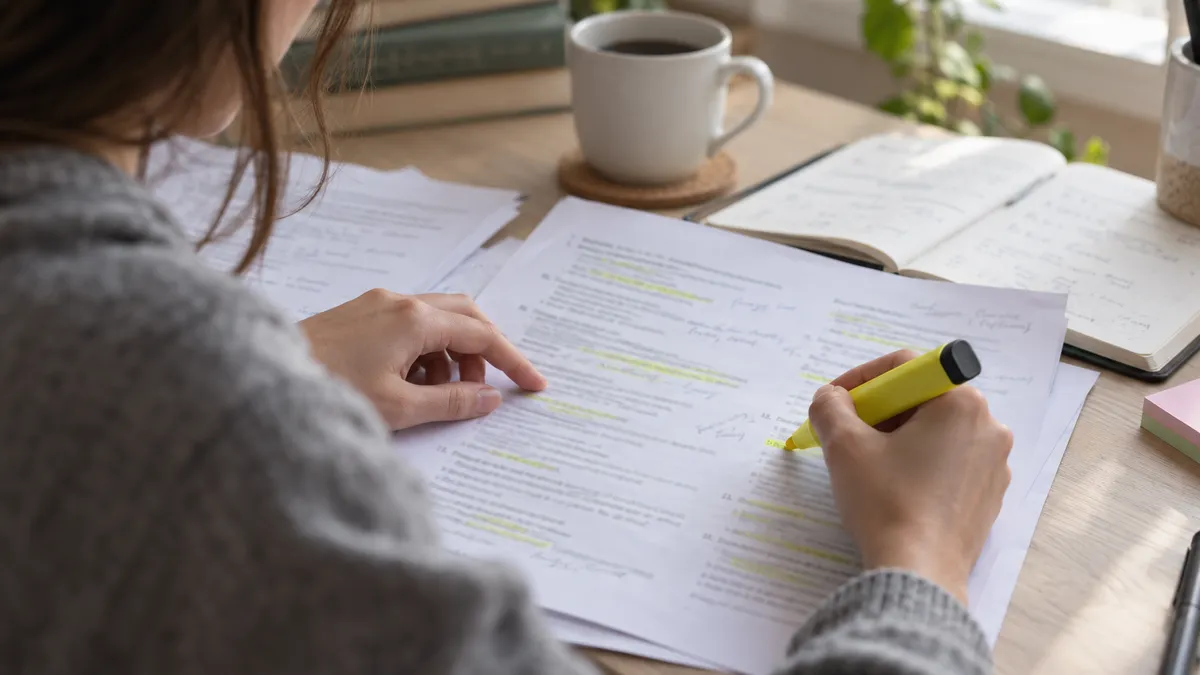
Ielts Reading PDF: Free Practice Tests, Answers and How to Use Them

IELTS Test Format 2026: Sections, Timing & Top Tips

IELTS Requirements by Country & University

IELTS Exam Prep: Complete Study Guide 2026

30-Day IELTS Study Plan — Pass on Your First Try
Sources & references
Prepared by the Practice Test Geeks editorial team using AI-assisted drafting; exam facts are checked against the official sources below. Editorial policy
- ielts.org — Score release · verified Oct 2026
- ielts.org — Test delivery, eligibility, score release · verified Oct 2026
- ielts.org — Retake fee, retake policy · verified Oct 2026
- ielts.org — Retake policy, score release · verified Oct 2026
- ielts.org — Test dates · verified Oct 2026
- ielts.org — Passing score, score validity · verified Oct 2026
- ielts.org — Test delivery · verified Oct 2026
- ielts.org — Exam information · verified Oct 2026