
ICAS Answer Sheet: What It Is, How to Use It, and How to Ace Your Practice Test
Learn how to open an ICA file, what ICAS means, and how to use the ICAS answer sheet to boost your practice test scores. 📝 Complete guide.

Understanding the ICAS answer sheet is one of the most overlooked yet critically important steps in preparing for the International Competitions and Assessments for Schools. Many students sit down on test day knowing the content well but losing valuable marks simply because they are unfamiliar with how the answer sheet works, how to open an ICA file that contains practice materials, or how to interpret their results report. Getting comfortable with the format before the real exam is not optional — it is essential for performing at your best.
So, what is an ICA file, and why does it keep coming up when students and parents search for ICAS resources? An ICA file is a type of document associated with Citrix Independent Computing Architecture, but in the ICAS context, many families encounter .ica file extensions when downloading digital practice packs from third-party platforms. Knowing how to open a ICA file — typically by using the Citrix Workspace app or a compatible viewer — removes a frustrating technical barrier that can otherwise derail study sessions the night before an assessment.
What is an ICA assessment, exactly? ICAS stands for International Competitions and Assessments for Schools, a series of independent academic competitions administered across Australia, New Zealand, the United States, and many other countries. Each competition targets a specific subject — English, Mathematics, Science, Writing, Spelling Bee, and Digital Technologies — and is graded against an international benchmark. The answer sheet is the student-facing document that records responses to multiple-choice and short-answer questions across every subject strand.
For students in the United States, the ICAS competitions offer a rare opportunity to compare academic performance against peers from dozens of countries on a single standardized instrument. Unlike state assessments that measure minimum proficiency, ICAS is designed to stretch high-achieving students and identify those who excel beyond grade-level expectations. The answer sheet format reflects that rigor: questions escalate in difficulty within each section, and the bubbling or written response format is deliberate and unforgiving of careless errors.
Parents frequently ask what does ICA stand for in the educational context versus the computing context, and the confusion is understandable because both definitions co-exist in search results. In education, ICA and ICAS are used interchangeably in casual conversation, though strictly speaking ICAS is the full acronym. The icas answer sheet documentation you receive from your school or from the official ICAS portal will always clarify which subject and year level the sheet corresponds to — so always double-check before you start practicing.
Effective preparation using practice answer sheets builds two separate but equally important skills: content knowledge and test-taking mechanics. Content knowledge is what most students focus on — understanding grammar rules, solving algebra problems, interpreting scientific data. But test-taking mechanics — knowing how much time to allocate per question, how to eliminate wrong answers, how to handle uncertainty without losing momentum — are equally decisive. The ICAS answer sheet is the physical and digital arena where both skill sets must work together under timed conditions, and practicing with realistic materials closes the gap between knowing the material and demonstrating it.
This guide walks through everything you need to know: the structure of the answer sheet by subject, how to open and run ICA files for digital practice, the key differences between ICAS year levels, and the study strategies that consistently produce high distinction results. Whether you are preparing for Mathematics, English, or Digital Technologies, the principles here apply across every ICAS subject and every grade band from Year 3 through Year 10.
ICAS Assessment by the Numbers

ICAS Exam Format by Subject
| Section | Questions | Time | Weight | Notes |
|---|---|---|---|---|
| English | 40 | 60 min | Reading & Language | Multiple choice; comprehension, grammar, vocabulary |
| Mathematics | 35 | 60 min | Number, Algebra, Measurement | Multiple choice + short answer for upper years |
| Science | 35 | 60 min | Physical, Life, Earth Sciences | Multiple choice; data interpretation included |
| Digital Technologies | 30 | 45 min | Coding, Systems, Data | Multiple choice; scenario-based questions |
| Writing | 1 | 40 min | Single extended response | Marked on criteria rubric; no bubbling |
| Spelling Bee | 70 | 80 min | 3 rounds of increasing difficulty | Audio administered; write spelling on answer sheet |
| Total | 40 | Up to 80 min | 100% |
The ICAS answer sheet is designed with clarity in mind, but students who see it for the first time on test day often make avoidable mistakes. The standard multiple-choice answer sheet presents options A, B, C, and D in a horizontal row next to each question number. Students must shade the corresponding oval fully and cleanly. Partially shaded ovals or marks that bleed outside the oval boundary can cause optical mark recognition systems to misread the response, especially in the digital scanning pipeline used by the assessment provider.
One of the most common errors is accidentally shading the wrong row. When students are rushing through the final questions, it is easy to shift one row up or down, especially if a question is skipped and returned to later. The safest strategy is to use a systematic skip-tracking method: when you skip a question, place a light dot next to the question number on the question booklet rather than leaving the answer sheet row blank. This way, when you return, you can cross-reference question numbers precisely before shading any oval.
The Writing assessment uses a different answer format entirely. Instead of ovals, students receive lined pages on which they write their extended response. Marks are awarded against a multi-dimensional rubric covering audience awareness, text structure, vocabulary choice, sentence fluency, and conventions such as spelling and punctuation. Unlike multiple-choice sections, the Writing answer sheet rewards planning time — students who spend the first five minutes outlining their response almost always produce more coherent, higher-scoring pieces than those who begin writing immediately without a plan.
For the Spelling Bee component, the answer sheet requires students to write the correct spelling of each word in a designated box. The words are read aloud by a proctor or played from an audio track, and students must listen carefully, process the word, and write it legibly within the time allowed. Capitalization and punctuation generally do not affect the spelling score, but unclear handwriting — letters that could be read as either a b or a d, for example — may be marked as incorrect at the marker's discretion. Printing neatly and consistently is strongly advised.
Digital Technologies assessments at the higher year levels (Years 9 and 10) may include scenario-based questions that require students to trace through pseudocode or interpret a flowchart before selecting an answer. These questions cannot be answered quickly by intuition — they require deliberate, step-by-step working. Even though the answer sheet only captures the final selected letter, students should work through the logic on their question booklet's scratch space before committing to an answer oval. ICAS explicitly permits working in the question booklet margins, and this habit significantly reduces careless errors on computational questions.
Parents researching icas canada and other regional ICAS programs should note that the answer sheet format is standardized internationally. Whether your child sits the exam in Sydney, Auckland, Toronto, or Dubai, the bubbling format, the time limits, and the scoring methodology are identical. This international standardization is precisely what gives ICAS results their value as a benchmark — a High Distinction in New Zealand represents the same level of achievement as a High Distinction in the United States or the United Kingdom.
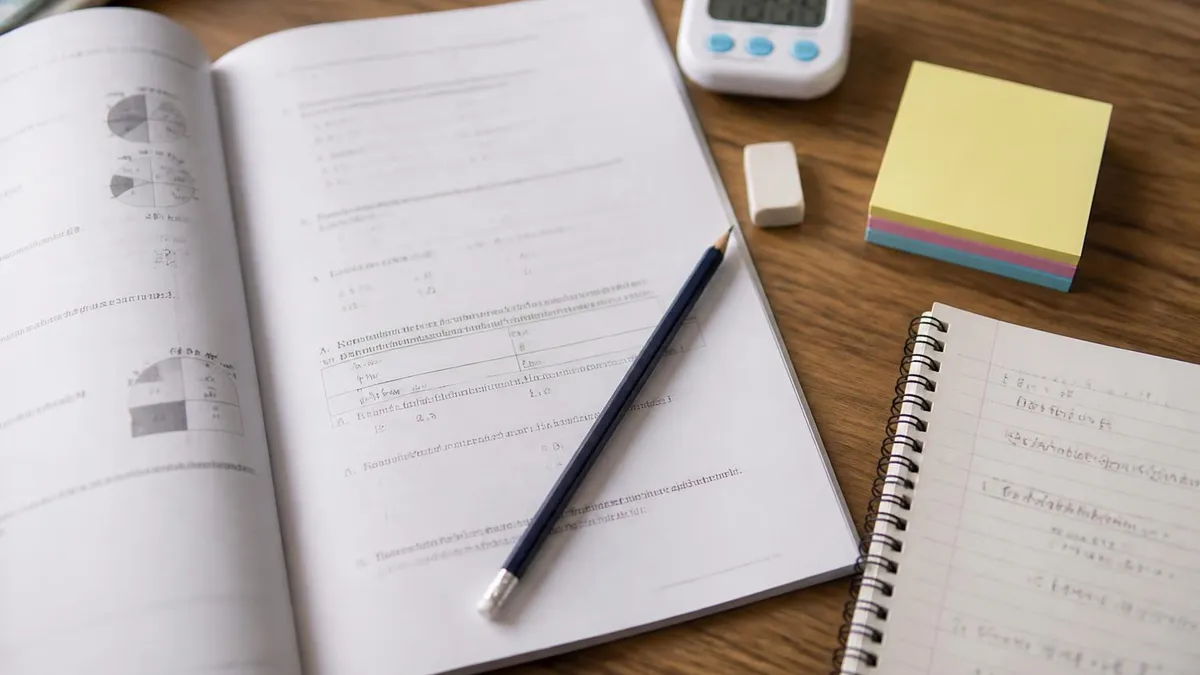
Before the exam, schools typically distribute a sample answer sheet or include one in the official practice paper packet. If your school has not provided one, the ICAS official website and several trusted preparation platforms offer downloadable practice answer sheets. Practicing with the actual physical format — using a pencil, shading ovals properly, and working within time limits — is vastly more effective than answering questions digitally through an app when the real exam is paper-based. Match your practice medium to the real exam format as closely as possible.
What Is an ICA File and How to Open It
An ICA file — short for Independent Computing Architecture — is a configuration file developed by Citrix Systems that tells the Citrix Workspace app how to connect to a remote server or virtual desktop. In the ICAS preparation context, some school platforms and third-party providers deliver digital practice assessments through Citrix-based virtual environments, which is why parents and students occasionally download a .ica file when accessing their practice materials. The file itself is not the exam content; it is a gateway file that launches the remote session containing the content.
Understanding what an ICA file is matters because attempting to open it with a standard text editor or PDF viewer will produce unreadable output. The file contains server addresses, authentication tokens, and session parameters in plain text, but it only functions correctly when launched through the Citrix Workspace application. If you see unfamiliar characters and connection strings when you accidentally open an ICA file in Notepad, do not be alarmed — close it and reopen it with the correct application instead.
ICAS Practice Tests: Benefits and Limitations to Know
- +International benchmarking reveals how your child performs against global peers, not just local classmates
- +Six distinct subject areas allow targeted preparation in the specific disciplines where improvement is needed most
- +High Distinction and Distinction certificates are recognized by selective schools and scholarship programs across the US and internationally
- +Practice answer sheets replicate the exact format of the real exam, eliminating format-related surprises on test day
- +Year-level calibration ensures questions are appropriately challenging without being inaccessible for grade-appropriate students
- +Results reports provide question-by-question performance data that parents and tutors can use to build targeted study plans
- −Registration costs can add up when entering multiple subjects across multiple children in the same household
- −Practice materials from unofficial sources vary widely in quality and may not accurately reflect the current exam format
- −The paper-based answer sheet format may feel unfamiliar to students who primarily work on tablets and laptops in school
- −ICA file technical issues can disrupt digital practice sessions and require IT support to resolve
- −ICAS does not provide individual question-level feedback in the standard results report — only category-level performance data
- −Preparation resources in the US market are less widely available than in Australia and New Zealand, where ICAS originated
Pros and Cons at a Glance
| Pros | Cons |
|---|---|
| International benchmarking reveals how your child performs against global peers, not just local classmates | Registration costs can add up when entering multiple subjects across multiple children in the same household |
| Six distinct subject areas allow targeted preparation in the specific disciplines where improvement is needed most | Practice materials from unofficial sources vary widely in quality and may not accurately reflect the current exam format |
| High Distinction and Distinction certificates are recognized by selective schools and scholarship programs across the US and internationally | The paper-based answer sheet format may feel unfamiliar to students who primarily work on tablets and laptops in school |
| Practice answer sheets replicate the exact format of the real exam, eliminating format-related surprises on test day | ICA file technical issues can disrupt digital practice sessions and require IT support to resolve |
| Year-level calibration ensures questions are appropriately challenging without being inaccessible for grade-appropriate students | ICAS does not provide individual question-level feedback in the standard results report — only category-level performance data |
| Results reports provide question-by-question performance data that parents and tutors can use to build targeted study plans | Preparation resources in the US market are less widely available than in Australia and New Zealand, where ICAS originated |
ICAS Answer Sheet Preparation Checklist
- ✓Download and review at least two official ICAS practice papers for your target subject and year level before exam day
- ✓Practice shading ovals fully and cleanly using a No. 2 pencil — avoid ballpoint pens, which may not scan correctly
- ✓Complete at least one timed practice session using a printed answer sheet to simulate real exam conditions
- ✓Install Citrix Workspace app if your school delivers digital practice materials through an ICA file gateway
- ✓Develop a skip-tracking system for difficult questions — mark skipped rows lightly in the question booklet, not on the answer sheet
- ✓Review your practice results to identify which question categories (e.g., inference, algebra, data interpretation) need the most work
- ✓Practice the Writing section with a timer and lined paper — do not rely on typing practice for a handwritten exam
- ✓Check that your pencil is sharpened and you have a good eraser — stray marks and incomplete erasures cause scanning errors
- ✓Read the answer sheet instructions at the top of the page carefully on exam day before shading any responses
- ✓Arrive at the exam venue with extra pencils — a broken pencil tip mid-exam with no backup creates unnecessary panic

High Distinction Is Awarded to the Top 1% of International Participants
The ICAS High Distinction is not awarded based on a fixed percentage score — it reflects performance in the top 1% of all students internationally who sat the same paper. This means that preparation quality, not just natural ability, determines whether your child crosses that threshold. Students who practice with realistic answer sheets, review their errors systematically, and build subject-specific strategies consistently outperform those who rely on natural aptitude alone.
Understanding how ICAS scores are calculated demystifies the results report and helps students set realistic, motivating goals. ICAS uses a scaled scoring system rather than raw marks. Raw marks — the number of questions answered correctly — are converted to a scaled score that adjusts for the difficulty of the specific paper sat in any given year. This means that a student who correctly answers 28 out of 35 Mathematics questions on a harder-than-usual paper may receive a higher scaled score than a student who answered 28 out of 35 on an easier paper from a previous year.
The scaled scores are then mapped onto five performance bands: High Distinction (top 1%), Distinction (next 10%), Credit (next 25%), Merit (next 30%), and Participation (remaining students). These bands are norm-referenced, meaning they are set by the distribution of actual student performance rather than by a fixed cut score. In practical terms, this means there is no predetermined magic number of correct answers that guarantees a Distinction — the threshold shifts slightly each year based on how well the overall cohort performs on that particular paper.
For students aiming at High Distinction, the math is sobering but not discouraging. In a typical ICAS Mathematics Year 6 paper with 35 questions, achieving High Distinction typically requires answering approximately 30 or more questions correctly — roughly 86% accuracy or better. The questions are not uniformly distributed across difficulty: the first 20 questions are designed to be accessible to most students, the middle 10 escalate significantly in complexity, and the final 5 are intended to challenge the strongest students in the cohort. Knowing this distribution should inform how you allocate your practice time.
Results are typically released around 15 business days after the exam date (Writing responses take about 4 to 6 weeks since they are manually marked), delivered through the school that administered the assessment. The results report includes the student's scaled score, their performance band, a comparison to state and national averages, and a breakdown by skill strand within each subject. For Mathematics, for example, the strand breakdown might show strong performance in Number and Algebra but weaker performance in Measurement and Geometry — a precise diagnostic that guides the next phase of preparation if the student intends to sit ICAS again in a future year.
What does ICA stand for in terms of practical results value? The answer is that ICAS results carry genuine weight with selective schools, extension programs, and scholarship committees because the assessment is independent, internationally normed, and difficult to game through test prep alone. A High Distinction or Distinction in ICAS English, for instance, signals genuine reading and language ability that is difficult to fake on a timed, proctored paper. Many selective high schools in the US, Australia, and New Zealand explicitly list ICAS results as a valued supplementary indicator in admissions portfolios.
Students who sit ICAS in Year 5 or 6 and achieve Credit or above often continue sitting the assessment annually through Year 10, building a longitudinal record of academic growth that becomes a compelling component of any selective school application. The improvement trajectory itself — from Merit in Year 5 to Distinction in Year 8, for example — tells a story about a student's commitment to learning and their capacity to rise to progressively harder challenges, which is exactly the profile that selective programs are looking for.
One often-overlooked aspect of ICAS results is the international comparison data. Because ICAS is sat by students across more than 20 countries, the results report can tell you not just how your child performed relative to their own state or country, but how they rank globally among same-age peers. For families considering international educational pathways — universities abroad, exchange programs, or international baccalaureate programs — this global benchmark is uniquely valuable and difficult to obtain from any other domestically administered standardized test.
ICAS registrations typically close six to eight weeks before the exam date, and late entries are rarely accepted. In the United States, exams are generally administered between August and October each year, which means registration windows open as early as May or June. Check with your school's assessment coordinator for exact dates, as deadlines vary by institution and country. Missing the registration window means waiting a full year to sit the assessment.
Building a subject-specific strategy for the ICAS answer sheet starts with understanding the question types that appear in each subject and the cognitive skills those questions are designed to test. ICAS English, for example, is not a test of grammar rules in isolation — it is primarily a test of reading comprehension and language in context. The majority of English questions are attached to reading passages, which means your ability to read quickly, retain information, and locate evidence in text is more important than memorizing comma rules or parts of speech.
For ICAS Mathematics, the most important strategic insight is that questions are sequenced from easiest to hardest within each strand, but the strands themselves appear in mixed order throughout the paper. A student who plows through questions sequentially may spend too long on a hard algebra question in the middle of the paper and never reach several easy measurement questions near the end. Previewing the paper in the first two minutes, flagging obviously difficult questions, and banking easy marks first is a far more effective approach than linear progression.
Science questions frequently present students with unfamiliar scenarios and ask them to apply scientific reasoning rather than recall memorized facts. A question might describe a fictional organism from another planet and ask which of four listed adaptations would help it survive in a described environment. Students who have been drilling science vocabulary but have not practiced applying logical reasoning to novel contexts often struggle with these questions even when they know the content. Reading science articles — from sources like Science News for Students — builds the flexible reasoning skills that ICAS Science rewards.
Digital Technologies is the fastest-evolving ICAS subject, and older practice papers may not fully reflect the current emphasis on algorithms, data representation, and cybersecurity concepts. Students preparing for Digital Technologies should supplement older practice papers with resources that cover computational thinking explicitly: what an algorithm is, how binary numbers work, what a flowchart represents, and how simple programs execute step by step. These concepts appear consistently across Year 5 through Year 10 papers, scaling in complexity with each year level.
The Writing assessment is unique because it is the only ICAS component where there is no single correct answer. Markers assess student writing against a rubric that rewards clear purpose, an awareness of audience, varied sentence structure, precise vocabulary, and accurate conventions. The most common mistake students make in Writing is misreading the prompt and writing off-topic. Before writing a single sentence, spend sixty seconds ensuring you have correctly identified the text type (narrative, persuasive, informative), the audience, and any specific requirements mentioned in the prompt.
For students who want to explore the broader context of how ICAS operates across different countries, the icas canada resource offers a detailed breakdown of how the assessment is administered, scored, and used by schools in the Canadian context — which shares significant overlap with the US implementation. Understanding the institutional context of ICAS helps families engage more productively with the results and make better-informed decisions about which subjects to prioritize in subsequent years.
Ultimately, a subject-specific strategy is only as good as the practice materials that support it. Using realistic answer sheets, working under accurate time constraints, and reviewing every incorrect answer with genuine curiosity — asking not just what the right answer was but why your initial reasoning led you astray — is the compound habit that separates students who plateau at Credit from students who break through to Distinction and High Distinction over successive years of sitting the assessment.
The final weeks of ICAS preparation should shift focus from learning new content to consolidating what you already know and building exam-day confidence. Research in cognitive science consistently shows that retrieval practice — actively recalling information rather than passively re-reading notes — is the single most effective study technique for improving performance on standardized assessments. Instead of reading through a chapter of Mathematics notes, close the book and write down everything you can remember about fractions, ratios, and proportions from memory. Then check your notes to find the gaps and repeat the process two days later.
Spaced repetition is the companion technique to retrieval practice. Rather than cramming all your ICAS preparation into the week before the exam, distribute practice sessions across at least four to six weeks, revisiting each subject every three to five days. This spacing forces your brain to reconstruct memories slightly harder each time, which strengthens long-term retention far more effectively than massed practice. A student who does thirty minutes of ICAS practice four times per week for six weeks will almost certainly outperform a student who does three hours per day for one week immediately before the exam.
On the day before the exam, the most productive thing a student can do is almost nothing academic. A light review of the exam format — how many questions, how long the paper is, which section comes first — is useful. But intensive cramming the evening before an assessment has been shown to increase anxiety and impair the retrieval of well-learned information. A good night's sleep — at least nine hours for primary school students and eight hours for high school students — does more for exam performance than any last-minute study session.
On exam morning, eat a proper breakfast that includes protein and complex carbohydrates. Blood glucose levels directly affect cognitive performance, and students who skip breakfast to arrive at school early consistently demonstrate lower focus and slower processing speed during the first twenty minutes of any timed assessment. A boiled egg, whole grain toast, and a glass of water is scientifically better exam preparation than an extra thirty minutes of practice questions on an empty stomach.
During the exam itself, pace management is the most important active skill. For a 35-question, 60-minute Mathematics paper, that works out to roughly 90 seconds per question on average. In practice, you should spend 45-60 seconds on questions 1 through 20, banking those easier marks quickly, and then use the remaining time for the harder middle and final questions.
Keep a watch or clock visible on the desk and check your position at the quarter-time, half-time, and three-quarter-time marks. Never sacrifice all remaining questions chasing a single difficult question — one correct answer is worth exactly the same as any other correct answer.
After the exam, resist the temptation to discuss every question with classmates immediately. Post-exam debriefing has a well-documented psychological cost: hearing that another student chose a different answer for a question you were confident about introduces doubt and anxiety without any productive benefit, since the answers cannot be changed. Instead, note any question types that felt unfamiliar or difficult, and add those to your study log for the next preparation cycle — whether that is preparation for ICAS next year or for a different assessment in the near term.
Finally, keep ICAS performance in perspective. A Distinction is an excellent result. A Credit is an above-average result. Even a Participation certificate represents the courage to sit an internationally benchmarked assessment and measure yourself against a global cohort, which is something most students never do.
Use your results as a diagnostic tool, not a verdict on intelligence or potential. The students who improve most dramatically between Year 5 and Year 9 ICAS results are typically those who treat each year's paper as information rather than judgment — and who return to the preparation process with curiosity and a specific plan for doing better next time.
Sample ICAS Practice Questions
Try these questions from our free ICAS practice tests. The correct answer and an explanation follow each question.
What happens when water is heated to 100°C?
- A. It freezes
- B. It condenses
- C. It boils
- D. It thickens
Answer: C. It boils
When water is heated to its boiling point, which is 100°C (or 212°F) at standard atmospheric pressure, it undergoes a phase change from liquid to gas. This process is called boiling, where water rapidly vaporizes, forming bubbles of steam.
What is the mode of the data set: 4, 7, 4, 9, 7, 4, 3?
- A. 7
- B. 4
- C. 9
- D. 3
Answer: B. 4
The value 4 appears 3 times, more than any other value, so it is the mode.
Read the passage: "Despite the forecast of clear skies, the campers packed raincoats. By evening, the first drops were falling." What does the word "despite" tell the reader?
- A. The campers trusted the forecast completely
- B. The campers acted in a way that contrasted with the forecast
- C. The forecast was correct
- D. The campers forgot their raincoats
Answer: B. The campers acted in a way that contrasted with the forecast
'Despite' signals a contrast: they packed raincoats even though rain wasn't expected.
A graph shows two lines: one for indoor temperature and one for outdoor temperature over 24 hours. The indoor line changes much less than the outdoor line. What does this tell us?
- A. Outdoor temperature is always warmer
- B. Indoor temperature fluctuates more
- C. Indoor conditions are more stable than outdoors
- D. The outdoor sensor is broken
Answer: C. Indoor conditions are more stable than outdoors
A line with smaller variation indicates more stable conditions, showing indoors is better regulated.
ICAS Questions and Answers




About the Author

Educational Psychologist & Academic Test Preparation Expert
Columbia University Teachers CollegeDr. Lisa Patel holds a Doctorate in Education from Columbia University Teachers College and has spent 17 years researching standardized test design and academic assessment. She has developed preparation programs for SAT, ACT, GRE, LSAT, UCAT, and numerous professional licensing exams, helping students of all backgrounds achieve their target scores.
Join the Discussion
Connect with other students preparing for this exam. Share tips, ask questions, and get advice from people who have been there.
View discussion (8 replies)