
How to Design a PCB? 2026 September
📚 Get ready for your How to Design a PCB? certification. Practice questions with step-by-step answer explanations and instant scoring.
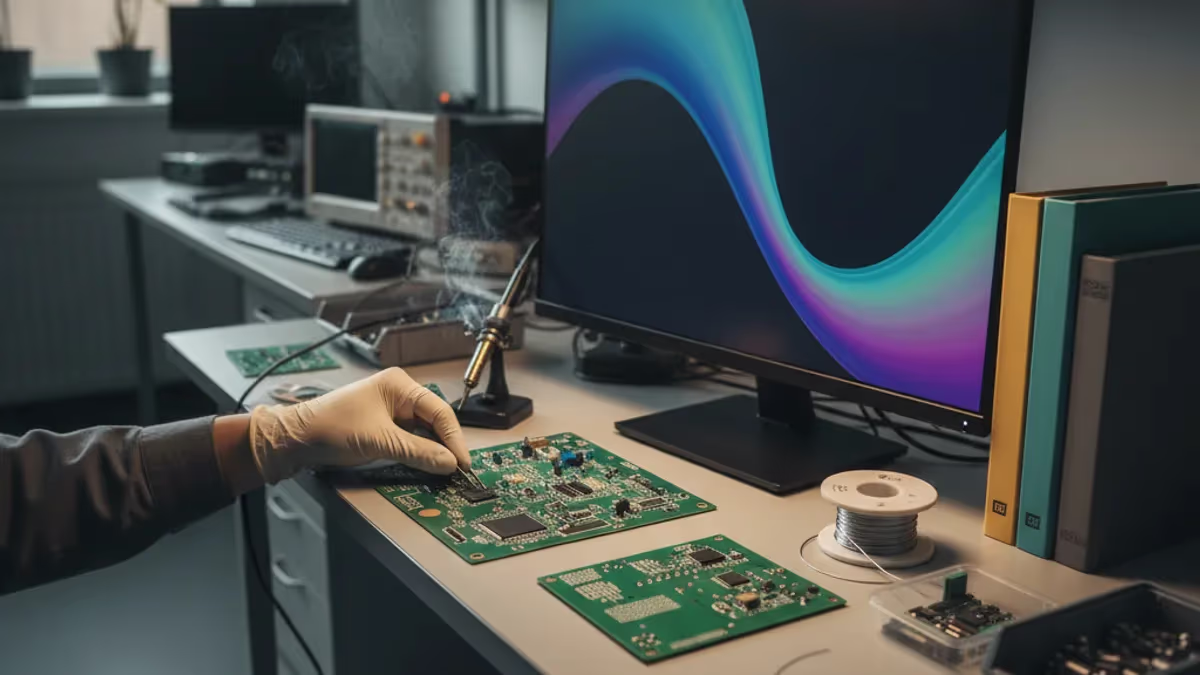
Designing a printed circuit board (PCB) is a crucial step in the development of electronic devices. With its intricate layout and complex connections, designing a PCB requires meticulous planning and attention to detail. One of the first steps in designing a PCB is to create a schematic diagram, which acts as a blueprint for your final design. This diagram helps you map out all the components and their interconnections, ensuring that everything fits together seamlessly. When it comes to component placement on your PCB, consider factors such as signal integrity, heat dissipation, and ease of assembly. Placing components strategically can minimize noise interference and optimize signal flow. Additionally, keeping high-power components away from sensitive ones can prevent overheating issues. It's also important to consider the physical constraints of your device's enclosure; by arranging components effectively, you can ensure that they fit within the allotted space.
Another critical aspect of PCB design is routing the electrical connections between components. Optimal routing involves finding the shortest path for each connection while avoiding any potential crosstalk or impedance mismatches along the way. Techniques such as differential signaling can be employed to improve noise immunity in high-speed designs. By employing efficient routing techniques and using dedicated power planes or ground planes when necessary, you can enhance electrical performance and reduce electromagnetic interference. Designing a PCB requires careful planning from start to finish. From creating an accurate schematic diagram to strategically placing components and routing connections efficiently, every step involves thoughtful considerations for optimal performance and reliability of your electronic device.
Important: The PCB exam covers multiple domains. Create a study schedule that allocates more time to unfamiliar topics while maintaining review of strong areas.
- ✓Confirm your exam appointment and location
- ✓Bring required identification documents
- ✓Arrive 30 minutes early to check in
- ✓Read each question carefully before answering
- ✓Flag difficult questions and return to them later
- ✓Manage your time — don't spend too long on one question
- ✓Review flagged questions before submitting

PCB Study Tips
What's the best study strategy for PCB?
Focus on weak areas first. Use practice tests to identify gaps, then study those topics intensively.
How far in advance should I start studying?
Most successful candidates begin 4-8 weeks before the exam. Create a structured study schedule.
Should I retake practice tests?
Yes! Take each practice test 2-3 times. Focus on understanding why answers are correct, not memorizing.
What should I do on exam day?
Arrive 30 min early, bring required ID, read questions carefully, flag difficult ones, and review before submitting.
PCB Practice Test Questions
Prepare for the PCB - Design exam with our free practice test modules. Each quiz covers key topics to help you pass on your first try.
PCB Case Studies & Practical Application
PCB Exam Questions covering Case Studies & Practical Application. Master PCB Test concepts for certification prep.
PCB Communication & Stakeholder Relations
Free PCB Practice Test featuring Communication & Stakeholder Relations. Improve your PCB Exam score with mock test prep.
PCB Design Practice Test
PCB Mock Exam on Design Practice Test. PCB Study Guide questions to pass on your first try.
PCB Data Analysis & Reporting
PCB Test Prep for PCB Data Analysis & Reporting. Practice PCB Quiz questions and boost your score.
PCB Ethics & Professional Conduct
PCB Questions and Answers on PCB Ethics & Professional Conduct. Free PCB practice for exam readiness.
PCB Program Development & Implementation
PCB Mock Test covering PCB Program Development & Implementation. Online PCB Test practice with instant feedback.
PCB Professional Standards & Competencies
Free PCB Quiz on Professional Standards & Competencies. PCB Exam prep questions with detailed explanations.
PCB Quality Control & Assurance
PCB Practice Questions for Quality Control & Assurance. Build confidence for your PCB certification exam.
PCB Regulatory Frameworks & Compliance
PCB Test Online for Regulatory Frameworks & Compliance. Free practice with instant results and feedback.
PCB Research & Evidence-Based Practice
PCB Study Material on Research & Evidence-Based Practice. Prepare effectively with real exam-style questions.
- +Validates your knowledge and skills objectively
- +Increases job market competitiveness
- +Provides structured learning goals
- +Networking opportunities with other certified professionals
- −Study materials can be expensive
- −Exam anxiety can affect performance
- −Requires dedicated preparation time
- −Retake fees apply if you don't pass
About the Author

Certified Professional Development Expert & Niche Certification Advisor
University of Pennsylvania Graduate School of EducationDr. Alexandra Kim holds a PhD in Professional Studies from the University of Pennsylvania and is a Certified Professional in Learning and Performance (CPLP) and Certified Professional in Talent Development (CPTD). With 17 years of corporate training and professional certification advisory experience, she helps professionals navigate specialized, emerging, and cross-industry certification programs.
Join the Discussion
Connect with other students preparing for this exam. Share tips, ask questions, and get advice from people who have been there.
View discussion (7 replies)