
How to Become a Licensed Electrical Contractor: Requirements by State 2026 October
Prepare for the How to Become a Licensed Electrical certification. Practice questions with answer explanations covering all exam domains. 📝
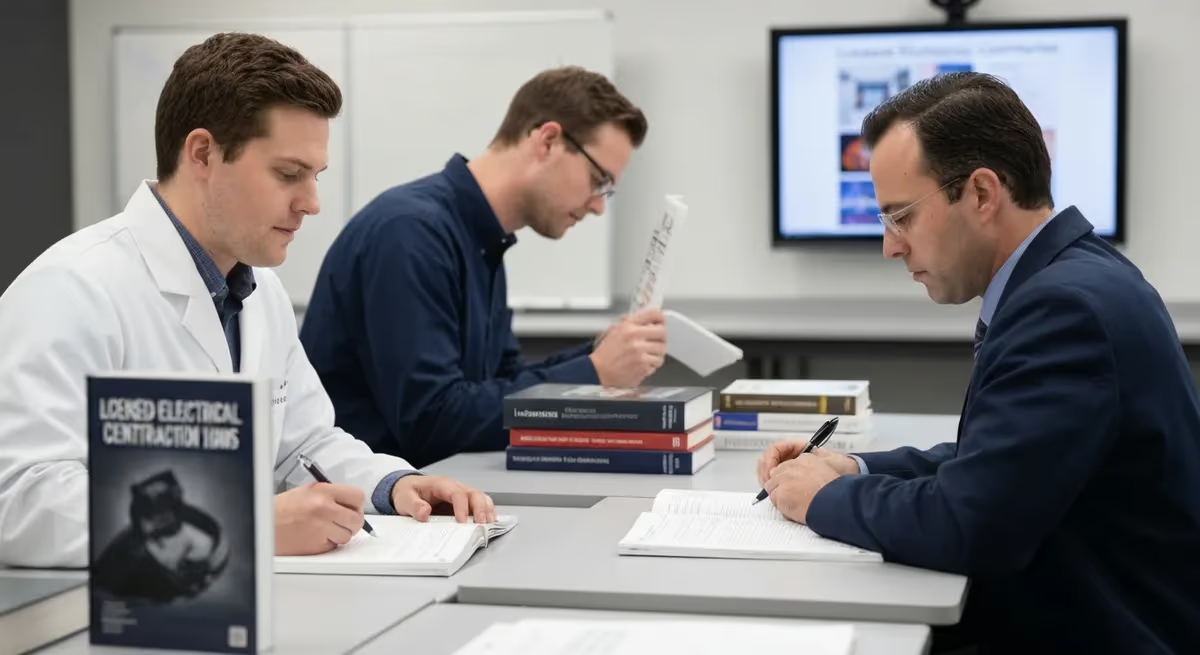
A licensed electrical contractor is authorized to plan, design, install, and maintain electrical systems and to pull permits for electrical work. Licensing requirements vary by state but generally include 4 to 8 years of documented field experience, passing an exam covering the National Electrical Code and business law, and obtaining a surety bond and liability insurance.
Test-takers preparing for psi will find our PSI exam 2026 invaluable for mastering the content and format before exam day.
Skilled trades candidates can test their technical knowledge with our journeyman electrician exam practice test 2026, covering the code sections, calculations, and safety regulations tested in journeyman and master licensing exams.

Licensing Requirements Overview
Every state regulates electrical contractors differently, but the core requirements follow a consistent pattern. Understanding these common elements helps you prepare regardless of which state you plan to work in.
Education
Most states do not require a college degree to become a licensed electrical contractor. However, you will need to complete an apprenticeship program or equivalent combination of education and on-the-job training. Apprenticeships typically last 4 to 5 years and combine classroom instruction with supervised field work. Some states accept an associate degree in electrical technology as a partial substitute for apprenticeship hours.
Experience
After completing your apprenticeship and working as a journeyman electrician, you will need additional experience before qualifying for a contractor license. Most states require a total of 4 to 8 years of verifiable electrical experience, with at least 2 to 4 years at the journeyman level. Experience must be documented through employer affidavits or W-2 records.
Examination
All states require passing a licensing exam that covers the National Electrical Code (NEC), state-specific electrical regulations, and business law. Some states use standardized exams from PSI or Prometric, while others administer their own tests. The exam is typically open-book for the NEC portion but closed-book for business law.
Insurance and Bonding
Licensed electrical contractors must carry general liability insurance (typically $500,000 to $1,000,000 minimum) and a surety bond ($5,000 to $25,000 depending on the state). Workers' compensation insurance is required in all states if you have employees.
Begin preparing for the exam portion with the Licensed Electrical Contractor Business Law and Safety practice test.
State-by-State Licensing Requirements
Licensing structures vary significantly across states. Some states issue a single contractor license, while others have tiered systems with different classes based on project size and voltage limits.
States with Statewide Licensing:
The following states regulate electrical contractors at the state level, meaning one license covers the entire state:
- California — C-10 Electrical Contractor license through CSLB. Requires 4 years experience, trade exam + law exam. Bond: $25,000.
- Florida — Certified Electrical Contractor (statewide) or Registered (county). Requires 4 years experience. PSI exam covering NEC, business, and Florida building code.
- Texas — Master Electrician license through TDLR. Requires 12,000 hours (about 6 years). Exam covers NEC and state electrical laws.
- New York — Licensed at city and county level, not state level. NYC requires 7.5 years experience plus master electrician exam.
- Arizona — Dual license: ROC contractor license + state electrical license. Requires 4 years experience, trade exam + business management exam.
- Georgia — Unrestricted, Restricted, or Non-Restricted Electrical Contractor. Requires 4 years experience. Exam through PSI.
States with Local Licensing Only:
Several states do not have statewide electrical contractor licensing and instead defer to city or county jurisdictions. These include Colorado, Illinois (outside Chicago), Kansas, Missouri, New York, and Pennsylvania. In these states, you may need separate licenses for each municipality where you work.
Reciprocity Agreements:
Some states accept licenses from other states through reciprocity agreements. For example, Alabama and Mississippi have reciprocal recognition. Georgia and North Carolina share a similar arrangement. Always verify current reciprocity status with your target state's licensing board, as agreements change periodically.
- ✓Confirm your exam appointment and location
- ✓Bring required identification documents
- ✓Arrive 30 minutes early to check in
- ✓Read each question carefully before answering
- ✓Flag difficult questions and return to them later
- ✓Manage your time — don't spend too long on one question
- ✓Review flagged questions before submitting
The Licensing Exam Format
The electrical contractor licensing exam is the most challenging step in the process. Understanding the format and content areas helps you allocate study time effectively.
Exam Structure:
Most state exams consist of two parts:
- Trade/Technical Section — 80 to 100 questions covering NEC code, electrical theory, installation methods, load calculations, grounding, and safety. This section is usually open-book (NEC codebook allowed). Time: 4 to 5 hours.
- Business and Law Section — 40 to 60 questions covering contract law, lien law, OSHA regulations, workers' compensation, insurance requirements, and state-specific regulations. This section may be closed-book. Time: 2 to 3 hours.
Passing Score:
Most states require a score of 70% to 75% on each section. You must pass both sections to receive your license. Some states allow you to retake a failed section without repeating the passed section, while others require you to retake the entire exam.
Common Exam Providers:
- PSI Exams — Used by Florida, Georgia, Alabama, Louisiana, and several other states
- Prometric — Used by California, Virginia, and others
- State-administered — Texas, New York City, and several states run their own exams
Practice both sections with the Licensed Electrical Contractor Business and Law Practices practice test to identify your weak areas before the real exam.
NEC Code Knowledge You Need
The National Electrical Code (NFPA 70) is the backbone of every electrical contractor exam. You do not need to memorize the entire code — you need to know where to find answers quickly and understand the most frequently tested articles.
Most Tested NEC Articles:
- Article 210 — Branch Circuits: receptacle spacing, GFCI/AFCI requirements, circuit ratings
- Article 220 — Branch-Circuit, Feeder, and Service Load Calculations: demand factors, general lighting loads, appliance circuits
- Article 230 — Services: service entrance requirements, overcurrent protection, grounding
- Article 240 — Overcurrent Protection: fuse and breaker sizing, conductor protection
- Article 250 — Grounding and Bonding: grounding electrode systems, equipment grounding conductors, bonding requirements
- Article 300 — General Requirements for Wiring Methods: conductor installation, boxes, raceways
- Article 310 — Conductors: ampacity tables, temperature ratings, derating factors
- Article 430 — Motors: motor circuit sizing, overload protection, disconnect requirements
Tab and Index Your NEC Book:
Since the trade portion is open-book, your ability to navigate the NEC quickly determines your success. Use color-coded tabs for the major articles listed above. Practice looking up answers until you can find any article within 30 seconds. On exam day, this speed advantage makes the difference between finishing comfortably and running out of time.
Load Calculation Mastery:
Expect 15 to 20 questions on load calculations. You need to be comfortable with dwelling unit load calculations (Article 220), service sizing, demand factors for ranges and dryers, and commercial load calculations. Practice these calculations by hand — calculators are allowed, but you need to know which NEC tables and formulas to apply.
How to Pros and Cons
- +Licensed certification is recognized across employers as evidence of verified competency, often required for specific roles
- +Certification provides a structured framework for professional knowledge that benefits daily work, not just the credential itself
- +Many certified professionals report salary increases of 10–20% compared to non-certified peers in the same role
- +Certification maintenance requirements create ongoing professional development that keeps knowledge current
- +The certification credential differentiates candidates in competitive hiring processes and promotion decisions
- −Licensed certification fees can be substantial — exam costs, study materials, and renewal fees add up over a career
- −Certification requirements change over time; candidates who delay testing may face updated content requirements
- −Not all employers or markets equally value or require certification — the salary return varies significantly by geography and industry
- −Exam preparation requires significant time investment alongside existing work and personal responsibilities
- −Certification does not guarantee competency in practice — it validates knowledge at a point in time, not ongoing performance
Licensed Electrical Contractor Questions and Answers
About the Author

Licensed Master Electrician & Journeyman Exam Specialist
Texas State Technical CollegeFrank Rodriguez is a licensed master electrician with a Bachelor of Science in Electrical Technology from Texas State Technical College. He has 20 years of commercial and industrial electrical contracting experience and 10 years teaching apprenticeship and licensing exam prep programs. Frank specializes in NEC code mastery, load calculations, and electrical theory for journeyman and master electrician candidates.
Join the Discussion
Connect with other students preparing for this exam. Share tips, ask questions, and get advice from people who have been there.
View discussion (7 replies)